
What chibi means
At heart, chibi just means small, and it is used mostly for people. It is usually written in hiragana, ちび, or in katakana, チビ, which can feel a little more blunt or more like a nickname. There is no kanji in everyday use.
These four uses cover nearly everything you will meet.
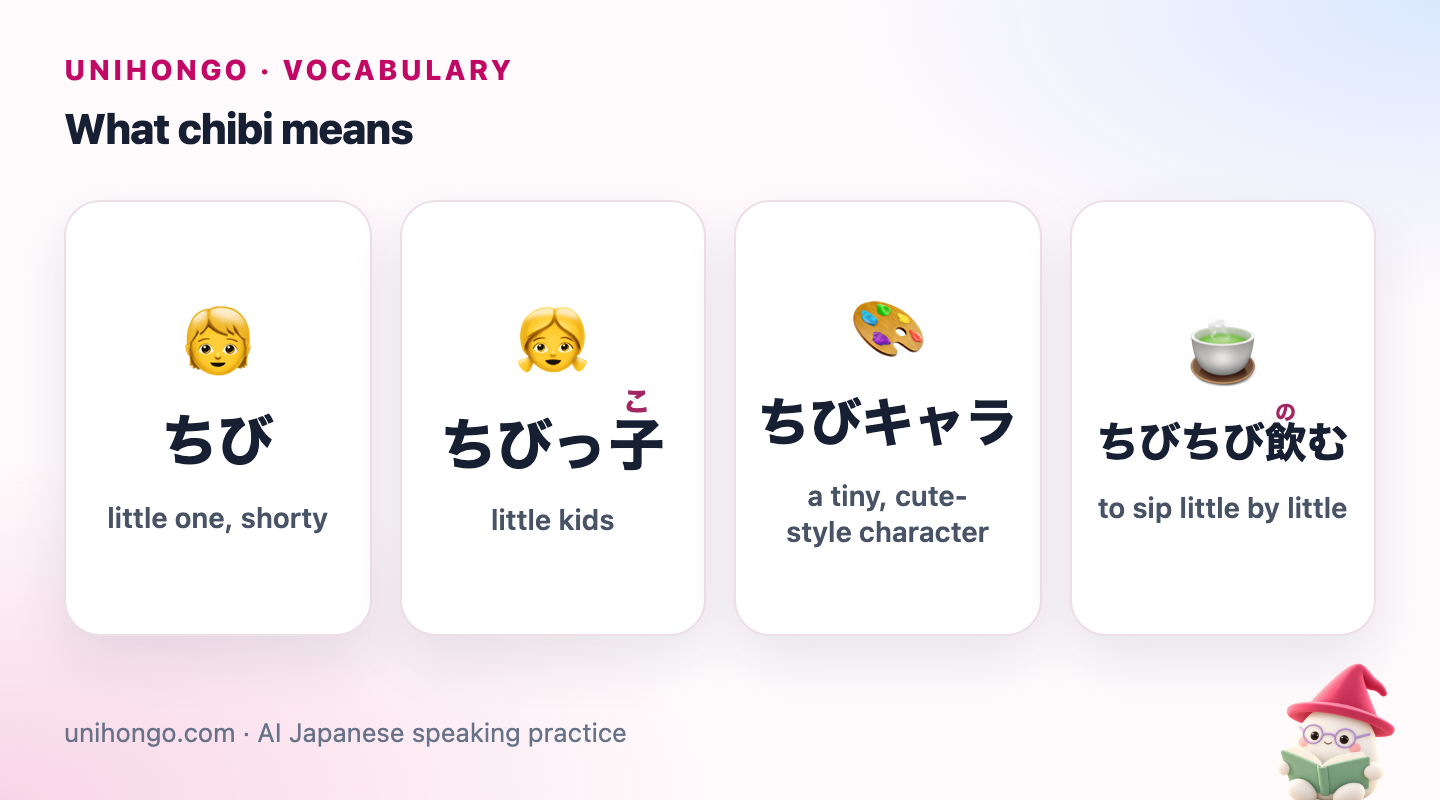
| Japanese | Romaji | Meaning |
|---|---|---|
| ちび | chibi | little one, shorty |
| ちびっ子 | chibikko | little kids |
| ちびキャラ | chibi kyara | a tiny, cute-style character |
| ちびちび飲む | chibichibi nomu | to sip little by little |
Little ones and shorties: affection or teasing
The same word can be warm or cutting, and the difference is who says it, to whom, and how. A parent talking about their youngest, a grandparent greeting a toddler or an owner talking about a small dog all use chibi with love. Older siblings use it to tease younger ones, which is family banter.
Said to an older child, a teenager or an adult as a comment on height, chibi is a taunt, and children often use it as a schoolyard insult. If you need to describe someone's height, choose a neutral or polite word.
Nicknames are a special case. In some families and friend groups the smallest person is called chibi for years, even as an adult, and they may not mind at all. That is a private joke inside a relationship; as an outsider, do not copy it unless the person clearly invites you to.
| Japanese | Romaji | Meaning |
|---|---|---|
| うちのちびが熱を出して。 | Uchi no chibi ga netsu o dashite. | My little one has a fever. (parent, casual) |
| ちびちゃん、こんにちは。 | Chibi chan, konnichiwa. | Hello there, little one. (to a toddler) |
| チビって言うな! | Chibi tte iu na! | Don't call me shorty! (rough, casual) |
| 小柄な方です。 | Kogara na kata desu. | She's petite. (polite) |
| 背はあまり高くないです。 | Se wa amari takakunai desu. | He's not very tall. (neutral) |
| Word | Meaning | Tone |
|---|---|---|
| chibi | Little one, shorty | Fond with small kids, rude about height |
| chiisai ko | A small child | Neutral, always safe |
| kogara | Petite, small-framed | Polite, kind |
| se ga hikui | Short | Neutral fact, can sound blunt |
| gaki | Brat, kid | Rough, often rude |
Chibikko: a warm word for kids
Add the diminishing ko and chibi becomes chibikko, a cheerful, general word for little children. Unlike chibi on its own, it is rarely insulting, and it often appears in community events: kids' corners at festivals, children's sumo, play areas in parks. Adults use it with a smile when they talk about children as a group.
| Japanese | Romaji | Meaning |
|---|---|---|
| ちびっ子たちが元気に遊んでいる。 | Chibikkotachi ga genki ni asonde iru. | The little ones are playing happily. |
| ちびっ子相撲大会 | chibikko sumō taikai | a children's sumo event |
| ちびっ子コーナー | chibikko kōnā | a kids' corner |
| ちびっ子のころ、よくここで遊んだ。 | Chibikko no koro, yoku koko de asonda. | When I was a little kid, I often played here. |
Adults also use chibikko about their own childhood, as in the last line, and it gives the memory a fond, nostalgic tone.
Chibi in anime and fan art
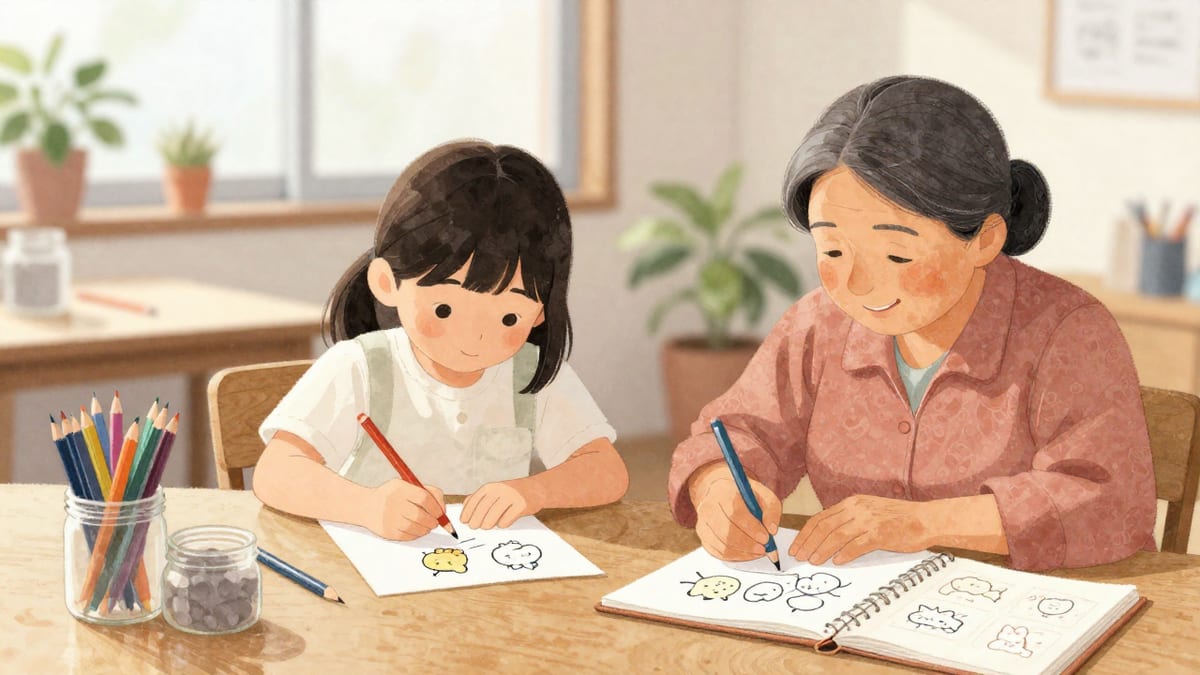
Around the world, chibi is the word fans use for the tiny, big-headed version of a character, often with a huge face and a stubby body, used in comedy scenes, stickers and merchandise. In Japan you will hear chibi kyara too, along with deforume, from the French and English deformer idea, and SD kyara, short for super deformed.
Fans draw chibi versions to make characters funnier or cuter, and many artists sell chibi stickers and keyrings at fan events.
Outside fandom, the same squashed proportions appear on mascots, stationery and character goods all over Japan, so even people who never say chibi recognise the look instantly.
If you ask an artist for this style at a fan event, chibi kyara de onegai shimasu will be understood by most fans, and deforume shita kanji de, in a simplified cute style, is a safe alternative.
| Japanese | Romaji | Meaning |
|---|---|---|
| ちびキャラを描くのが好きです。 | Chibi kyara o kaku no ga suki desu. | I love drawing chibi characters. |
| デフォルメされたキャラ | deforume sareta kyara | a character drawn in a cute, simplified style |
| ちびキャラのシール | chibi kyara no shīru | chibi character stickers |
Chibichibi: little by little
Doubled, chibi becomes an adverb: chibichibi, in small bits, slowly and carefully. It is the sound of someone sipping a precious drink, nibbling a snack to make it last, or saving coins one by one. It can be neutral or slightly comic, and occasionally it suggests stinginess.
| Japanese | Romaji | Meaning |
|---|---|---|
| 日本酒をちびちび飲む。 | Nihonshu o chibichibi nomu. | To sip sake slowly. |
| お小遣いをちびちび貯めた。 | Okozukai o chibichibi tameta. | I saved my pocket money bit by bit. |
| お菓子をちびちび食べている。 | Okashi o chibichibi tabete iru. | Nibbling at my snacks to make them last. |
| ビールをごくごく飲む。 | Bīru o gokugoku nomu. | To gulp down a beer. |
The opposite of chibichibi is gokugoku, the sound of gulping, or ikki ni, all at once. Saying you drink chibichibi can also be a gentle way to tell friends you will pace yourself tonight.
Chibiru: two slang meanings to know
The verb chibiru has two uses. One is harmless: an object that has worn down becomes chibita, such as a stubby pencil. The other is crude slang for wetting yourself a little from fear, which friends say as a joke after a horror film or a scary ride. Recognise it, but keep it for very casual talk.
| Japanese | Romaji | Meaning |
|---|---|---|
| ちびた鉛筆 | chibita enpitsu | a worn-down stub of a pencil |
| 怖すぎてちびりそう。 | Kowasugite chibirisō. | So scary I nearly wet myself. (crude, casual) |
Mini dialogue: visiting the neighbours
| Japanese | Romaji | Meaning |
|---|---|---|
| お、ちびちゃん、大きくなったね。 | O, chibi chan, ōkiku natta ne. | Neighbour: Oh, little one, you've grown! |
| ちびじゃないもん! | Chibi ja nai mon! | Child: I'm not little! |
| ごめんごめん。もう小学生だもんね。 | Gomen gomen. Mō shōgakusei da mon ne. | Neighbour: Sorry, sorry. You're at school now. |
| うん、一年生! | Un, ichinensei! | Child: Yes, first grade! |
Sort kind from rude with Mocchi
- Ask Mocchi: Is it okay to call my friend's five-year-old chibi chan? Mocchi explains the tone and offers safer options, and it remembers this kind of question so later quizzes check your register.
- Then /quiz yourself on chibi, chibikko, kogara and chibichibi: Mocchi gives a situation and you choose the word.
- Add the words to your Flash Card list and race through them in Vocabulary Dash, the 3D word runner, until the kind choice comes first.
Common learner mistakes
- Calling an adult chibi as a joke. Even friends may take it badly; height is a sensitive topic for many people.
- Thinking chibi is only an art term. In Japan, the everyday meaning is a small child or a short person.
- Using chibi chan with an older child who dislikes it. Use their name once they protest.
- Saying chibiru in polite company. The fear meaning is crude slang.
- Confusing chibichibi with chotto. Chotto is a little; chibichibi is doing something in small, slow bits.