
Pika and pikapika: a bright, clean shine
Pika is a sudden, sharp flash of light, and doubling it to pikapika makes the shine continuous or repeated. Japanese mimetic words often work this way: a single form with tto, such as pikatto, describes one quick moment, and the doubled form describes a lasting state or something that keeps happening.
In everyday use, pikapika most often describes a surface that shines because it is clean or polished. The feeling is satisfaction: the job is done, and the thing looks fresh. It is the word on the lips of anyone who has just cleaned a bathroom, washed a car or polished a pair of leather shoes.
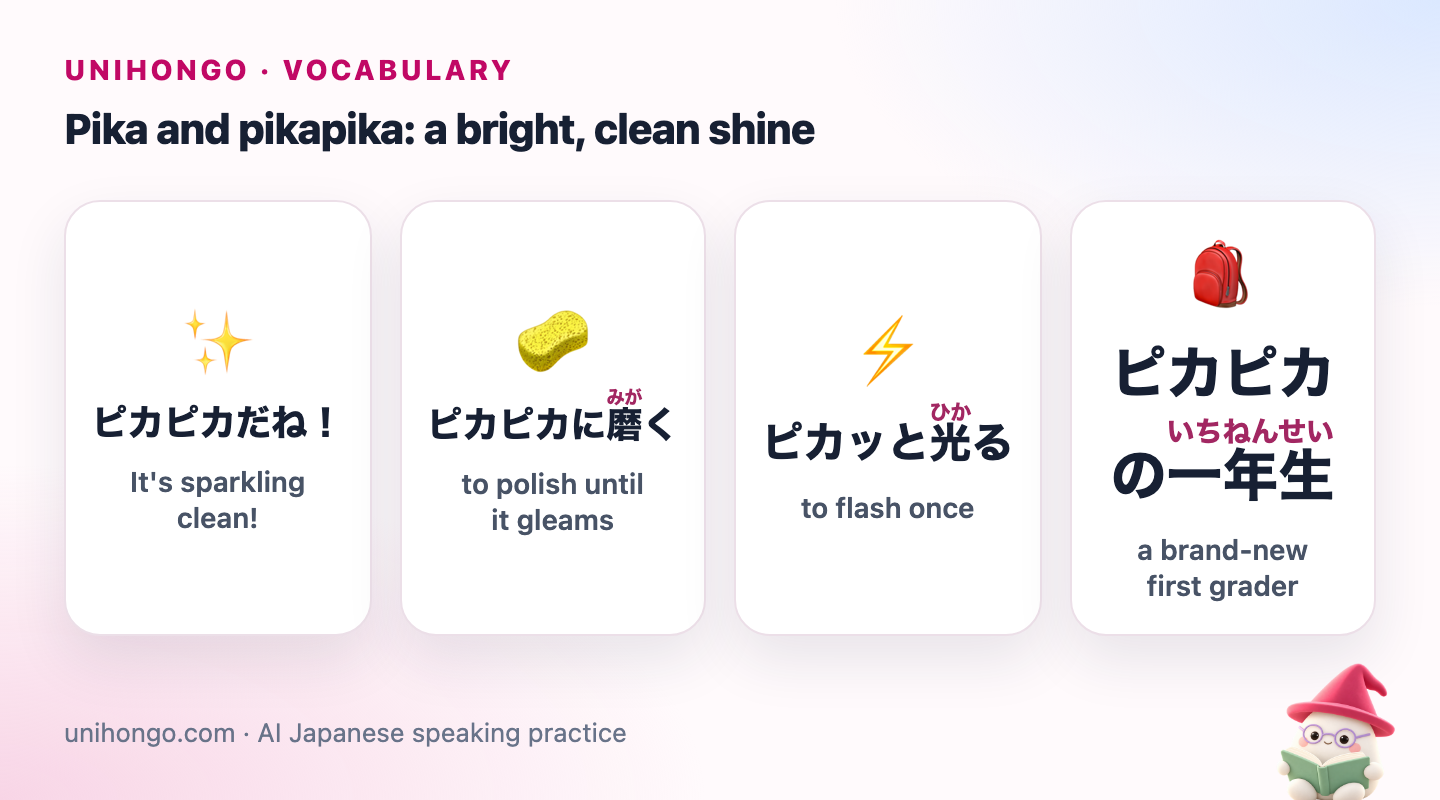
| Japanese | Romaji | Meaning |
|---|---|---|
| ピカピカだね! | Pikapika da ne! | It's sparkling clean! |
| ピカピカに磨く | pikapika ni migaku | to polish until it gleams |
| ピカッと光る | pikatto hikaru | to flash once |
| ピカピカの一年生 | pikapika no ichinensei | a brand-new first grader |
Clean and polished: the everyday meaning
Most of the time, pikapika is about cleaning. Floors, windows, mirrors, sinks, pots and shoes all become pikapika. You can describe the result, yuka ga pikapika da, the floor is gleaming, or the process, kuruma o pikapika ni arau, to wash the car until it shines. Pikapika ni naru, to become sparkling, is the natural way to report the change.
The word is especially common around ōsōji (大掃除), the big clean that many households and offices do at the end of the year before New Year. It also appears on cleaning products and in cleaning videos, where the shiny before-and-after moment is the whole point.
| Japanese | Romaji | Meaning |
|---|---|---|
| 窓がピカピカになった。 | Mado ga pikapika ni natta. | The windows are gleaming now. |
| 鍋をピカピカに洗いました。 | Nabe o pikapika ni araimashita. | I scrubbed the pot until it shone. (polite) |
| 靴をピカピカに磨いておいてね。 | Kutsu o pikapika ni migaite oite ne. | Polish your shoes nice and shiny, OK? |
| 大掃除で家中ピカピカにしよう。 | Ōsōji de iejū pikapika ni shiyō. | Let's make the whole house sparkle in the big clean. |
Pikapika also expresses the pleasure of a job well done. Parents praise a child who cleaned up with pikapika ni shite kureta ne, you made it all sparkly for me, and a shoe-shine stand or car wash might promise pikapika ni shiagemasu, we will finish it to a gleaming shine. The word is nearly always positive, and it carries the satisfying click of clean, fresh things.
For a polite description in writing, such as a hotel review, kirei or seiketsu, clean and hygienic, sound more neutral: heya ga totemo seiketsu deshita. Pikapika is perfect in speech, chats and friendly posts.
Brand new: pikapika no...
Something new and unused still has its factory shine, so pikapika also means brand new. Pikapika no shinsha is a gleaming new car, pikapika no randoseru a new school backpack. The phrase pikapika no ichinensei, a brand-new first grader, is heard every April when children start elementary school, and it carries a warm, proud feeling.
By extension it can describe people who are new to something, such as new employees in fresh suits: pikapika no shinnyū shain. This use is affectionate and a little playful. It suggests freshness and inexperience, so it is said kindly about others rather than as a formal description.
| Japanese | Romaji | Meaning |
|---|---|---|
| ピカピカの新車ですね。 | Pikapika no shinsha desu ne. | What a gleaming new car. (polite compliment) |
| ランドセルがまだピカピカだ。 | Randoseru ga mada pikapika da. | The school bag is still shiny and new. |
| ピカピカの新入社員が入ってきた。 | Pikapika no shinnyū shain ga haitte kita. | The brand-new recruits have arrived. |
Flashing lights: pikapika, pikatto and pikari
The third meaning goes back to the root: light. Lights that blink on and off, such as winter illuminations, a bicycle light or a firefly, flash pikapika. A single flash, such as lightning or a camera, is pikatto: kaminari ga pikatto hikatta, the lightning flashed. Pikari is a slightly softer single flash and is common in stories and writing.
Pikatto also has a figurative use: an idea that suddenly lights up in your head. Children's cartoons often show it as a light bulb, and people say ii aidea ga pikatto hirameita, a great idea flashed into my mind.
| Japanese | Romaji | Meaning |
|---|---|---|
| イルミネーションがピカピカ光っている。 | Iruminēshon ga pikapika hikatte iru. | The illuminations are twinkling on and off. |
| 空がピカッと光った。 | Sora ga pikatto hikatta. | The sky lit up with a flash. |
| ピカッとひらめいた! | Pikatto hirameita! | An idea just flashed into my head! |
Pikapika, kirakira, giragira and tsuyatsuya
Japanese has a whole palette of shine words, and choosing the right one is a sign of natural Japanese. Kirakira (きらきら) is a twinkle or glitter, beautiful and lively: stars, sequins, sunlight on the sea, a child's eyes full of hope. Giragira (ぎらぎら) is a harsh, aggressive glare, such as the midsummer sun, or eyes burning with ambition. Tsuyatsuya (つやつや) is a soft, healthy gloss, like shiny hair, glossy rice or smooth skin. Pikapika sits between them: clean, bright and satisfying. Kirakira is also the word for glitter in a figurative sense, such as a kirakira life on social media, which pikapika never covers.
| Japanese | Romaji | Meaning |
|---|---|---|
| 星がキラキラ光っている。 | Hoshi ga kirakira hikatte iru. | The stars are twinkling. |
| 夏の太陽がギラギラしている。 | Natsu no taiyō ga giragira shite iru. | The summer sun is blazing. |
| 炊きたてのご飯がつやつやだ。 | Takitate no gohan ga tsuyatsuya da. | The freshly cooked rice is glossy. |
| 子どもの目がキラキラしていた。 | Kodomo no me ga kirakira shite ita. | The children's eyes were sparkling. |
| Word | Kind of shine | Typical things |
|---|---|---|
| pikapika | Clean, polished, brand new; flashing | Floors, shoes, a new car, blinking lights |
| kirakira | Twinkling, glittering, beautiful | Stars, sequins, the sea, hopeful eyes |
| giragira | Harsh, glaring, intense | The summer sun, ambitious eyes |
| tsuyatsuya | Soft, healthy gloss | Hair, freshly cooked rice, skin |
| pikatto | One sudden flash | Lightning, a camera flash, an idea |
Grammar: da, ni suru, no and suru
Pikapika fits into four common patterns. As a description with da or desu, it says something is shiny: yuka ga pikapika da. With ni, it becomes the result of an action: pikapika ni suru, migaku or naru. Before a noun it takes no: pikapika no kutsu, shiny shoes. With suru, especially in te iru, it describes something that is shining or flashing: hikari ga pikapika shite iru.
In casual speech you can also use it alone as a happy exclamation after cleaning: yatta, pikapika! In writing for children, hiragana ぴかぴか is common; katakana ピカピカ looks punchier and is common in ads and casual posts. Both are correct.
| Japanese | Romaji | Meaning |
|---|---|---|
| 床がピカピカです。 | Yuka ga pikapika desu. | The floor is gleaming. (polite) |
| ピカピカの靴を履いて出かけた。 | Pikapika no kutsu o haite dekaketa. | I went out in freshly polished shoes. |
| やった、ピカピカ! | Yatta, pikapika! | Yes, it's sparkling! (after cleaning) |
Mini dialogue: the big year-end clean
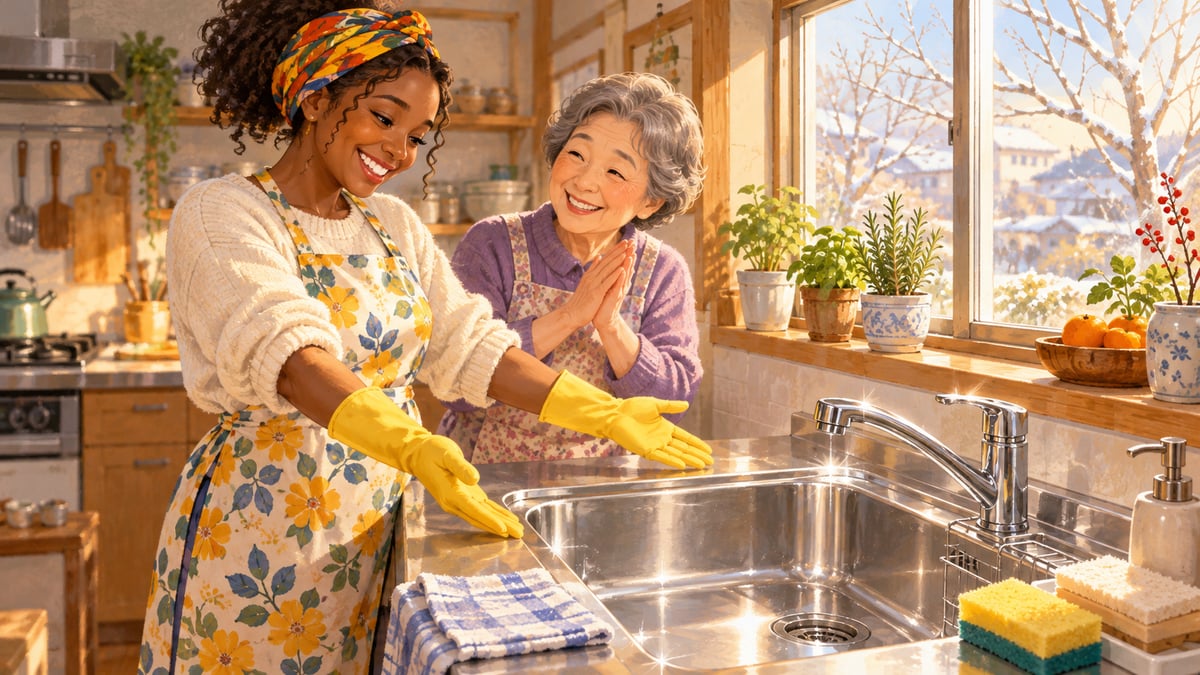
At the end of December, Nora helps her host family with ōsōji. She has been given the kitchen and the windows, while her host mother works on the living room. Notice how pikapika works for both the result and the praise.
| Japanese | Romaji | Meaning |
|---|---|---|
| お母さん、見て!シンクがピカピカになりました。 | Okāsan, mite! Shinku ga pikapika ni narimashita. | Nora: Look! The sink is sparkling now. |
| わあ、すごい。新品みたいだね。 | Wā, sugoi. Shinpin mitai da ne. | Host mother: Wow, amazing. It looks brand new. |
| 窓もピカピカに拭きました。 | Mado mo pikapika ni fukimashita. | Nora: I wiped the windows until they shone too. |
| ありがとう。これで気持ちよく新年を迎えられるね。 | Arigatō. Kore de kimochi yoku shinnen o mukaerareru ne. | Host mother: Thank you. Now we can welcome the New Year feeling fresh. |
| 次は玄関ですか。 | Tsugi wa genkan desu ka. | Nora: Is the entrance next? |
A five-minute shine-word drill with Mocchi
- Type to Mocchi: give me short scenes and let me choose pikapika, kirakira, giragira or tsuyatsuya. Mocchi checks each choice, explains the image behind the right word, and keeps a note of the one you keep mixing up for your next review.
- Ask for /create-flashcards with the five shine words, choosing a photo for each: a polished shoe, a starry sky, a blazing sun, a bowl of glossy rice, a lightning flash.
- Then play Mocchi Flight with your own flashcards and guide Mocchi through the gate with the right shine word. Speed makes the difference between kirakira and pikapika feel automatic.
Common learner mistakes
- Describing sparkling eyes as pikapika. Hopeful, excited eyes are kirakira; pikapika eyes sound oddly like flashing lights.
- Using pikapika for stars. Children sometimes do, but adults and songs usually say kirakira.
- Confusing pikapika ni suru and pikapika ni naru. Suru is your action; naru is the result.
- Using pikapika for a person's glossy hair. Tsuyatsuya, a soft healthy gloss, is the usual word.
- Calling a colleague pikapika no shinnyū shain to their face in a formal setting. It is affectionate, but it highlights inexperience; save it for friendly moments.