

Why Japanese talks about food in sounds
Japanese has hundreds of mimetic words. Some copy real sounds, such as the paripari of a cracker breaking, and are called giongo. Others describe a feeling or state that makes no sound at all, such as fuwafuwa for fluffy, and are called gitaigo. For food, the two groups blur together, and most speakers do not think about the distinction: they simply reach for the word that matches the bite.
These words matter for a learner because they replace whole adjective phrases. Where English needs crisp on the outside and soft and airy in the middle, Japanese says soto wa sakusaku, naka wa fuwafuwa. They are also the language of praise: oishii on its own is polite but flat, while torotoro de oishii shows you noticed something specific. The general guide to Japanese onomatopoeia on this site covers the wider system; this post stays at the table.
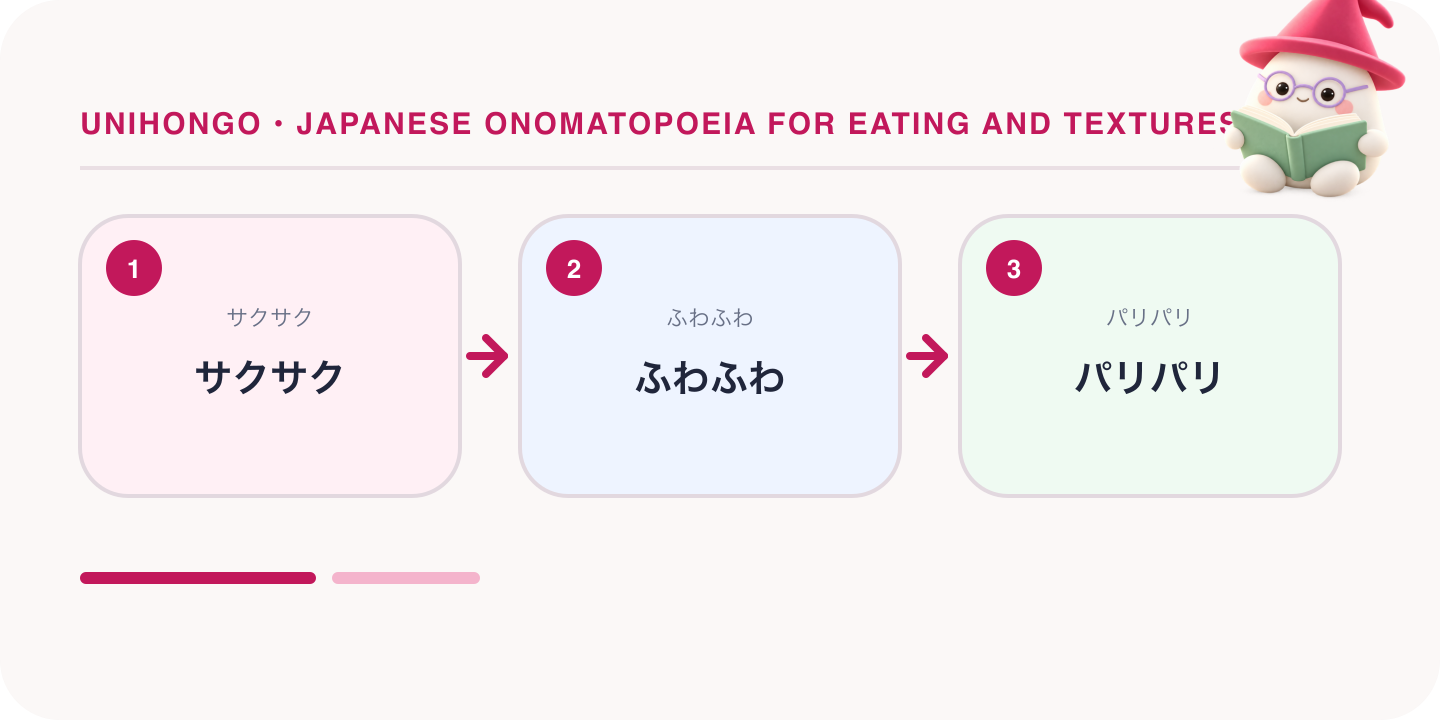
| Japanese | Romaji | Meaning |
|---|---|---|
| 外はサクサク、中はふわふわです。 | Soto wa sakusaku, naka wa fuwafuwa desu. | It's crisp on the outside and fluffy inside. |
| この皮、パリパリだね。 | Kono kawa, paripari da ne. | This skin is really crispy, isn't it? |
| 食感がすごくいいですね。 | Shokkan ga sugoku ii desu ne. | The texture is really good. |
| どんな食感ですか。 | Donna shokkan desu ka. | What kind of texture is it? |
Crisp and crunchy: paripari, sakusaku, karikari
Crispness comes in several kinds, and Japanese keeps them apart. Paripari is thin and brittle: a sheet of nori that snaps, a senbei, the skin on grilled chicken, a fresh lettuce leaf in some contexts. Sakusaku is lighter and has layers or air in it: a croissant, a shortbread biscuit, tonkatsu breading, tempura batter fried properly. Karikari is harder and drier, the sound of something well toasted: crisp bacon, the burnt edge of rice at the bottom of a pot, hard-baked bread crust.
Beyond these three, poripori is a small, dry, repeated crunch, typical of pickles or a cucumber. When a crisp thing loses its crispness it has shiketa, gone soft from damp, which is what happens to a bag of crackers left open in the rainy season. Cooks use the short tto forms as instructions or results: paritto yaku, grill until crisp; sakutto ageru, fry until light and crisp. The tto form describes a single moment rather than an ongoing state, which is why it sits well with a verb.
| Japanese | Romaji | Meaning |
|---|---|---|
| このせんべい、パリパリしていておいしい。 | Kono senbei, paripari shite ite oishii. | This rice cracker is nice and crisp. |
| クロワッサンがサクサクで最高です。 | Kurowassan ga sakusaku de saikō desu. | The croissant is wonderfully flaky and crisp. |
| ベーコンはカリカリに焼いてください。 | Bēkon wa karikari ni yaite kudasai. | Please fry the bacon until crispy. |
| 皮がパリッと焼けていますね。 | Kawa ga paritto yakete imasu ne. | The skin is grilled nicely crisp. |
| クッキーがしけってサクサクじゃない。 | Kukkī ga shikette sakusaku ja nai. | The cookies have gone soft and aren't crisp any more. |
Soft, springy and fluffy: mochimochi, fuwafuwa, purupuru
Softness is where Japanese food vocabulary is richest, because so many prized foods are soft in different ways. Mochimochi is the springy chew of mochi, udon, dango and a good bread crumb. Fuwafuwa is fluffy and airy: pancakes, sponge cake, shokupan, a well-made omelette. Funwari is the gentler cousin, soft and light, often used for whipped cream.
Purupuru describes a wobble: jelly, pudding, warabi mochi. Hokuhoku is soft, warm and floury, the word for a baked potato or kabocha pumpkin in autumn. Nebaneba is sticky and stringy, the texture of nattō, okra and grated yam, said with pleasure by people who like those foods and with a shudder by people who do not. On menus these words form compounds: fuwatoro is fluffy on top and runny inside, mochifuwa is chewy and fluffy bread. Learning the parts lets you decode the compounds.
| Japanese | Romaji | Meaning |
|---|---|---|
| このうどん、もちもちしているね。 | Kono udon, mochimochi shite iru ne. | This udon is nicely springy and chewy. |
| ふわふわのパンケーキをください。 | Fuwafuwa no pankēki o kudasai. | The fluffy pancakes, please. |
| このプリン、ぷるぷるで可愛い。 | Kono purin, purupuru de kawaii. | This pudding is wobbly and cute. |
| 焼き芋がほくほくで甘い。 | Yakiimo ga hokuhoku de amai. | The baked sweet potato is soft, floury and sweet. |
| ふわとろオムライスが人気メニューです。 | Fuwatoro omuraisu ga ninki menyū desu. | The fluffy, runny omelette rice is the popular dish. |
Melting, juicy and fresh: torotoro, juwatto, shakishaki
Torotoro is the word for anything cooked until it melts: braised pork belly, beef stew, a soft-boiled egg yolk, cheese on a gratin, the fatty part of tuna, which is where the sushi word toro comes from. It also covers thick, slow-moving liquids such as a rich curry. Juicy food is jūshī, borrowed from English and used daily for karaage and gyōza, and the sound of juice bursting out is juwatto, which television reporters say the moment they bite a dumpling. Fat that melts on the tongue gets the set phrase kuchi no naka de tokeru, it dissolves in the mouth.
Fresh vegetables have their own crunch words. Shakishaki is the clean, watery crispness of lettuce, cabbage and bean sprouts. Korikori is a firm, cartilage-like crunch, the word for chicken cartilage on a yakitori skewer, jellyfish and the crunchy part of a scallop.
| Japanese | Romaji | Meaning |
|---|---|---|
| 角煮がとろとろで、口の中でとけます。 | Kakuni ga torotoro de, kuchi no naka de tokemasu. | The braised pork belly is meltingly soft and dissolves in the mouth. |
| 卵の黄身がとろとろですね。 | Tamago no kimi ga torotoro desu ne. | The egg yolk is lovely and runny. |
| この唐揚げ、ジューシーでおいしい。 | Kono karaage, jūshī de oishii. | This fried chicken is juicy and delicious. |
| 噛んだ瞬間に肉汁がジュワッと出てきた。 | Kanda shunkan ni nikujiru ga juwatto dete kita. | The moment I bit in, the juices burst out. |
| レタスがシャキシャキで新鮮です。 | Retasu ga shakishaki de shinsen desu. | The lettuce is crisp and fresh. |
| 軟骨のコリコリした食感が好きです。 | Nankotsu no korikori shita shokkan ga suki desu. | I like the firm crunch of chicken cartilage. |
The sounds of eating and drinking
The words so far describe the food. A second group describes the person eating, and these are used for children, friends and yourself, rarely for a guest you are being polite to. Mogumogu is chewing with a full mouth, usually closed, and has a cosy, contented feel. Pakupaku is eating quickly and eagerly, the word for a hungry child clearing a plate. Mushamusha is a louder, greedier chew.
For drinking, gokugoku is gulping something down, cold beer or milk on a hot day. Gabugabu is drinking in large, careless gulps. Chibichibi is sipping slowly, the way you nurse a drink you want to last. Zuruzuru is slurping noodles, which is acceptable for ramen and soba in Japan, and fūfū is blowing on hot food to cool it. These words sit before the verb as adverbs, sometimes with to: mogumogu taberu, chibichibi to nomu.
| Japanese | Romaji | Meaning |
|---|---|---|
| 子どもがおにぎりをもぐもぐ食べている。 | Kodomo ga onigiri o mogumogu tabete iru. | The child is munching on a rice ball. |
| お腹がすいていたので、ぱくぱく食べてしまった。 | Onaka ga suite ita node, pakupaku tabete shimatta. | I was hungry, so I wolfed it all down. |
| 暑い日にビールをごくごく飲むのが最高だ。 | Atsui hi ni bīru o gokugoku nomu no ga saikō da. | Gulping down a beer on a hot day is the best. |
| ウイスキーをちびちび飲んでいます。 | Uisukī o chibichibi nonde imasu. | I'm sipping whisky slowly. |
| 熱いから、ふうふうして食べてね。 | Atsui kara, fūfū shite tabete ne. | It's hot, so blow on it before you eat it. |
Texture words at a glance
The table below collects the food-texture words from this post, grouped roughly from crisp to soft to wet. The reading column gives the romaji you will hear; on menus the words usually appear in katakana or hiragana rather than kanji.
| Word | Reading | Meaning |
|---|---|---|
| パリパリ | paripari | Thin, brittle crisp: nori, senbei, chicken skin |
| サクサク | sakusaku | Light, layered crisp: croissants, tempura, biscuits |
| カリカリ | karikari | Hard, dry crunch: crisp bacon, toast |
| ポリポリ | poripori | Small dry crunch: pickles, cucumber |
| シャキシャキ | shakishaki | Fresh, watery crunch: lettuce, bean sprouts |
| コリコリ | korikori | Firm, cartilage-like crunch: nankotsu, jellyfish |
| もちもち | mochimochi | Springy and chewy: mochi, udon, bread |
| ふわふわ | fuwafuwa | Fluffy and airy: pancakes, sponge, omelettes |
| ぷるぷる | purupuru | Wobbly: jelly, pudding, warabi mochi |
| ほくほく | hokuhoku | Warm, soft and floury: potatoes, pumpkin |
| とろとろ | torotoro | Melting, runny: braised pork, egg yolk, cheese |
| ねばねば | nebaneba | Sticky and stringy: nattō, okra, grated yam |
Two negative words complete the set. Pasapasa is dry and crumbly, the texture of overcooked chicken breast. Bechabecha is soggy, what happens to fried food that sat too long. Both are fine about your own cooking and best avoided about a host's.
Eating sounds and how to build a sentence
This second table lists the words that describe eating and drinking rather than the food. After it, the list gives the sentence patterns you need, because the grammar is what makes these words sound natural instead of childish.
| Word | Reading | Meaning |
|---|---|---|
| もぐもぐ | mogumogu | Chewing with a full, usually closed mouth |
| ぱくぱく | pakupaku | Eating quickly and eagerly |
| むしゃむしゃ | mushamusha | Loud, greedy chewing |
| ごくごく | gokugoku | Gulping a drink down |
| がぶがぶ | gabugabu | Drinking in big careless gulps |
| ちびちび | chibichibi | Sipping slowly, making it last |
| ずるずる | zuruzuru | Slurping noodles |
| ふうふう | fūfū | Blowing on hot food |
- Word plus shite iru or shite imasu to describe a state: pan ga fuwafuwa shite iru, the bread is fluffy
- Word plus no before a noun to label it: mochimochi no udon, chewy udon
- Word plus de to link into a longer sentence: torotoro de oishii, melting and delicious
- Word plus da or desu on its own as a comment: kore, paripari da ne
- Short form plus tto before a verb for a single moment: paritto yaku, sakutto ageru
- Word plus to, or nothing, before an eating verb: gokugoku to nomu, mogumogu taberu
- Word plus shita before a noun for a completed texture: karikari shita bēkon
The pattern you will use most is the first, and it sounds natural at any politeness level once you switch iru to imasu.
Common mistakes and how to sound natural
The first mistake is overuse. Native speakers drop one or two of these words into a conversation about food, not one in every sentence. Pick the texture that stands out, say it once, then move on to oishii or to what you would order next time.
The second is mixing the food words with the eater words. Kono pan wa mogumogu desu makes no sense, because mogumogu describes chewing, not bread. The eater words are also casual: describing your manager as eating mushamusha at a work dinner is a joke, not a compliment.
The third is the wrong crisp. Calling a croissant paripari sounds like it has shattered into thin shards. When you are unsure, shokkan ga ii, the texture is good, is always safe and lets a Japanese friend supply the exact word, which is the best way to learn it.
| Japanese | Romaji | Meaning |
|---|---|---|
| この食感、なんて言えばいいですか。 | Kono shokkan, nante ieba ii desu ka. | What should I call this texture? |
| サクサクというより、パリパリですね。 | Sakusaku to iu yori, paripari desu ne. | It's more paripari than sakusaku. |
| ちょっとぱさぱさしているかな。 | Chotto pasapasa shite iru ka na. | It's a bit dry, I think. |
| 揚げたてだから、まだサクサクだよ。 | Agetate da kara, mada sakusaku da yo. | It's just been fried, so it's still crisp. |
| もちもち感がたまらない。 | Mochimochi-kan ga tamaranai. | That chewy bounce is irresistible. |