
The night out in four lines
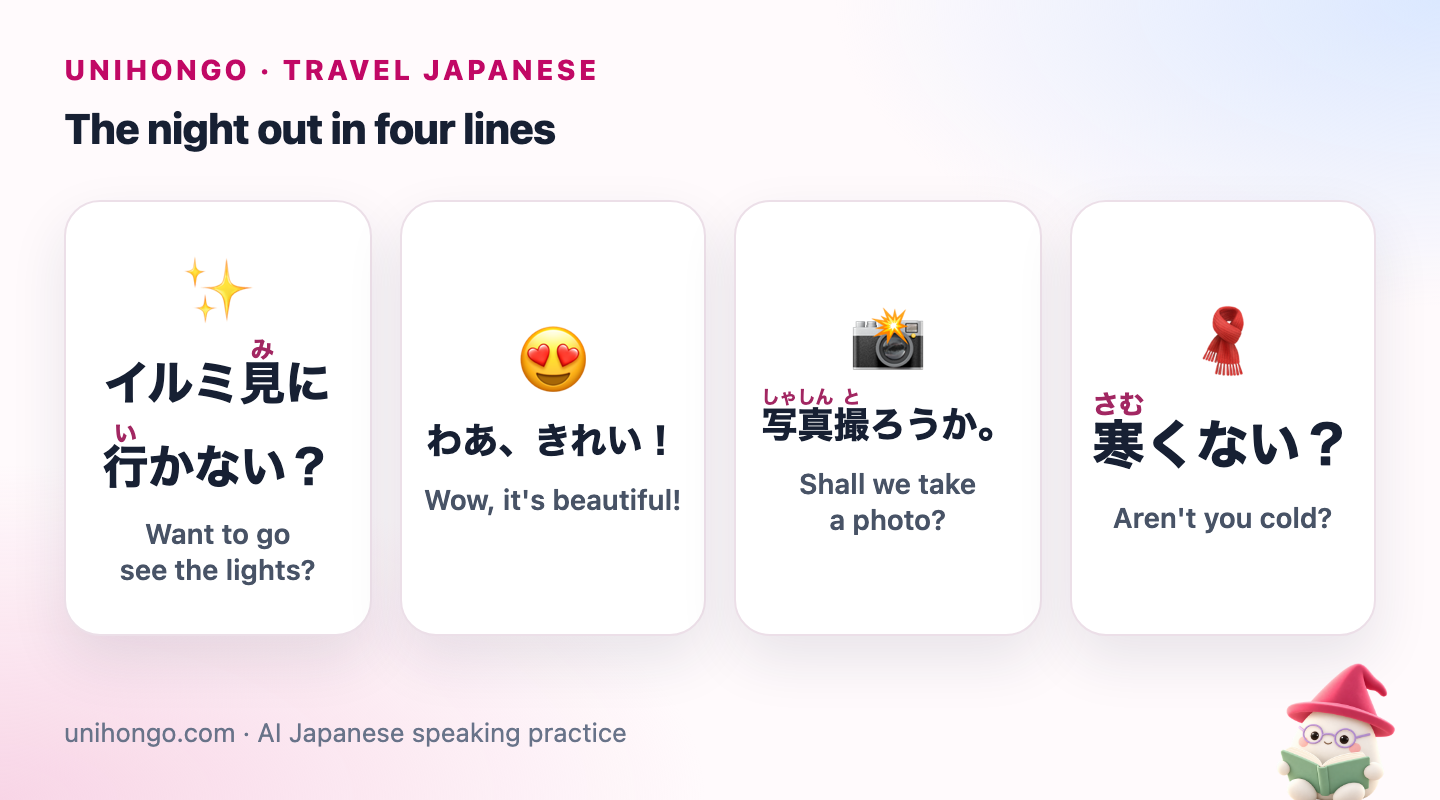
Four casual lines carry the whole evening: the invitation, the first reaction to the lights, the offer to take a photo, and the caring question in the cold. They are all in plain, friendly Japanese, the register you would use with a friend or someone you are getting to know well. The polite versions follow in the next sections.
| Japanese | Romaji | Meaning |
|---|---|---|
| イルミ見に行かない? | Irumi mi ni ikanai? | Want to go see the lights? |
| わあ、きれい! | Wā, kirei! | Wow, it's beautiful! |
| 写真撮ろうか。 | Shashin torō ka. | Shall we take a photo? |
| 寒くない? | Samukunai? | Aren't you cold? |
Illumination season and its words
Illuminations are a big part of winter in Japan. Many begin in November with a lighting ceremony, run through the Christmas season, and some continue into January or February. Dates and hours differ from place to place, so check the official information for the one you want to visit. Popular sites are crowded on weekends and especially around 24 December, which many people treat as a couples' evening, while 25 December is an ordinary working day for most.
A handful of words help you read plans and talk about them: the lighting-up, its hours, crowds, and the best time to go.
| Japanese | Romaji | Meaning |
|---|---|---|
| イルミネーション | iruminēshon | illuminations, winter lights |
| 点灯式 | tentōshiki | lighting-up ceremony |
| 点灯時間は何時からですか。 | Tentō jikan wa nanji kara desu ka. | What time do the lights come on? |
| 週末はすごく混むらしいよ。 | Shūmatsu wa sugoku komu rashii yo. | Apparently it gets really crowded at weekends. |
| 平日の方が空いてるかも。 | Heijitsu no hō ga suiteru kamo. | It might be quieter on a weekday. |
Inviting someone, casually or politely
Choose the register by the relationship. With a friend, a partner or a classmate you talk to casually, use the plain negative question ikanai? With a coworker, someone older, or a person you are still polite with, use ikimasen ka and soften it with yokattara, if you like. Checking that the person is free first, before naming the plan, is a common and kind way to start.
If you want to keep the invitation clearly friendly, invite a group. If you hope it is a date, a quiet invitation for two on a weekend evening sends that message without saying the word.
| Japanese | Romaji | Meaning |
|---|---|---|
| 今度の土曜、空いてる? | Kondo no doyō, suiteru? | Are you free this Saturday? |
| 駅前のイルミ、一緒に見に行かない? | Ekimae no irumi, issho ni mi ni ikanai? | Want to go see the lights by the station with me? |
| よかったら、一緒にイルミネーションを見に行きませんか。 | Yokattara, issho ni iruminēshon o mi ni ikimasen ka. | If you'd like, shall we go and see the illuminations together? (polite) |
| みんなで行こうよ。 | Minna de ikō yo. | Let's all go together. |
| 仕事のあと、ちょっと寄っていこうか。 | Shigoto no ato, chotto yotte ikō ka. | Shall we stop by after work? |
Saying yes, saying not that day, and fixing a time
A clear yes is easy. A no in Japanese is usually soft and incomplete: sono hi wa chotto, that day is a little..., is enough, and the listener understands. If you want to go but not that day, offer another date right away so your no is not taken as a no to the person.
Then fix the time and place. People often meet at a station ticket gate, kaisatsu, or a well-known spot nearby, and say the day, time and place in one sentence ending in dō?, how about?
| Japanese | Romaji | Meaning |
|---|---|---|
| いいね、行こう! | Ii ne, ikō! | Sounds great, let's go! |
| ごめん、その日はちょっと…。 | Gomen, sono hi wa chotto... | Sorry, that day's a bit difficult. |
| 来週なら行けるよ。 | Raishū nara ikeru yo. | I can go next week. |
| 何時に待ち合わせする? | Nanji ni machiawase suru? | What time shall we meet? |
| 土曜の六時に、駅の改札でどう? | Doyō no rokuji ni, eki no kaisatsu de dō? | How about six on Saturday at the station gate? |
At the lights
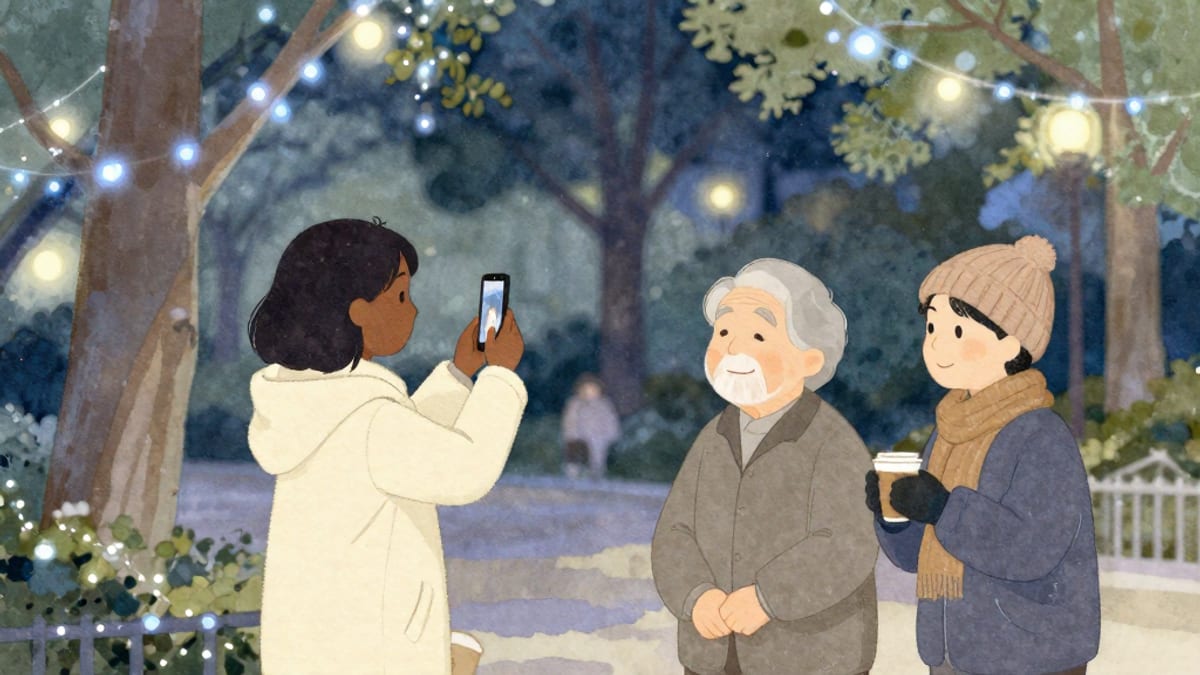
The lights themselves give you plenty to say. People gasp, point out their favourite part, take photos, and look after each other in the crowd and the cold. Asking a stranger to take a photo of the two of you is common and usually welcomed, and offering to take one for another couple is a friendly gesture that often gets the same offer back.
In a dense crowd, staff may ask people to keep walking and not stop on the path. Move to the side to take photos.
| Japanese | Romaji | Meaning |
|---|---|---|
| すごい人だね。はぐれないようにね。 | Sugoi hito da ne. Hagurenai yō ni ne. | So many people. Let's not lose each other. |
| あっちのツリー、すごくきれい。 | Atchi no tsurī, sugoku kirei. | That tree over there is gorgeous. |
| すみません、写真を撮っていただけますか。 | Sumimasen, shashin o totte itadakemasu ka. | Excuse me, could you take our photo? |
| 撮りましょうか。 | Torimashō ka. | Shall I take one for you? |
| 手、冷たいね。 | Te, tsumetai ne. | Your hands are cold. |
| あったかい飲み物、買おうか。 | Attakai nomimono, kaō ka. | Shall we get a hot drink? |
Mini dialogue: the walk under the lights
Here is the start of an evening between two people who know each other from a class and speak casually. The conversation is simple on purpose: thanks, a reaction, a little shared history, and a small plan to stay warm. That is what real conversations at the lights sound like.
| Japanese | Romaji | Meaning |
|---|---|---|
| 来てくれてありがとう。 | Kite kurete arigatō. | You: Thanks for coming. |
| こちらこそ、誘ってくれてありがとう。 | Kochira koso, sasotte kurete arigatō. | Friend: Thank you for inviting me. |
| わあ、思ったよりずっときれいだね。 | Wā, omotta yori zutto kirei da ne. | Friend: Wow, it's much prettier than I expected. |
| でしょう?ここ、毎年来たかったんだ。 | Deshō? Koko, maitoshi kitakatta n da. | You: Right? I've wanted to come here for years. |
| ちょっと寒いね。 | Chotto samui ne. | Friend: It's a bit cold. |
| じゃあ、あそこでホットココア飲もう。 | Jā, asoko de hotto kokoa nomō. | You: Then let's get hot cocoa over there. |
Kite kurete arigatō and sasotte kurete arigatō, thanks for coming and thanks for inviting me, are small lines with a lot of warmth. Saying them at the start of the evening sets a kind tone for both of you.
Afterwards: the goodbye and the next-day message
At the end of the evening, a simple thanks and a hint about next time is enough. The next day, a short message, often in a chat app, is expected between friends and almost essential after a date. Keep it light: thanks, one detail you enjoyed, and perhaps another plan.
| Japanese | Romaji | Meaning |
|---|---|---|
| 今日は楽しかった。ありがとう。 | Kyō wa tanoshikatta. Arigatō. | I had a great time today. Thank you. |
| また行こうね。 | Mata ikō ne. | Let's go again sometime. |
| 気をつけて帰ってね。 | Ki o tsukete kaette ne. | Get home safely. |
| 昨日は楽しかったね!写真送るね。 | Kinō wa tanoshikatta ne! Shashin okuru ne. | Yesterday was fun! I'll send you the photos. |
Common mistakes and nuance
- Hearing ikanai? as a refusal. With a rising tone it is an invitation: won't you go? It is softer than ikō.
- Using the word dēto too early. Calling the outing a date out loud makes your intention very clear; many people let the situation speak instead.
- Saying samui for cold hands. Samui is about the air and your whole body; for things you touch, say tsumetai.
- Mispronouncing iruminēshon with a short e. The long ē is part of the loanword; or simply say irumi.
- Stopping in the middle of a crowded path for photos. Step to the side first.
Plan the evening with Mocchi first
Before you send the invitation, write it in Japanese and give it to Mocchi with /correct, adding who it is for: a classmate I am still polite with, or a friend. Mocchi checks the register, suggests a softer version if you need one, and remembers how you like to sound. Ask for a short /quiz on samui and tsumetai, or on ikanai and ikō, and Mocchi folds the ones you miss into your next review.
To make the invitation feel natural on the spot, play the whole evening through with Haru-sensei in AI Sensei, starting from are you free on Saturday?