

Why Byōdō-in and Uji are worth the day trip
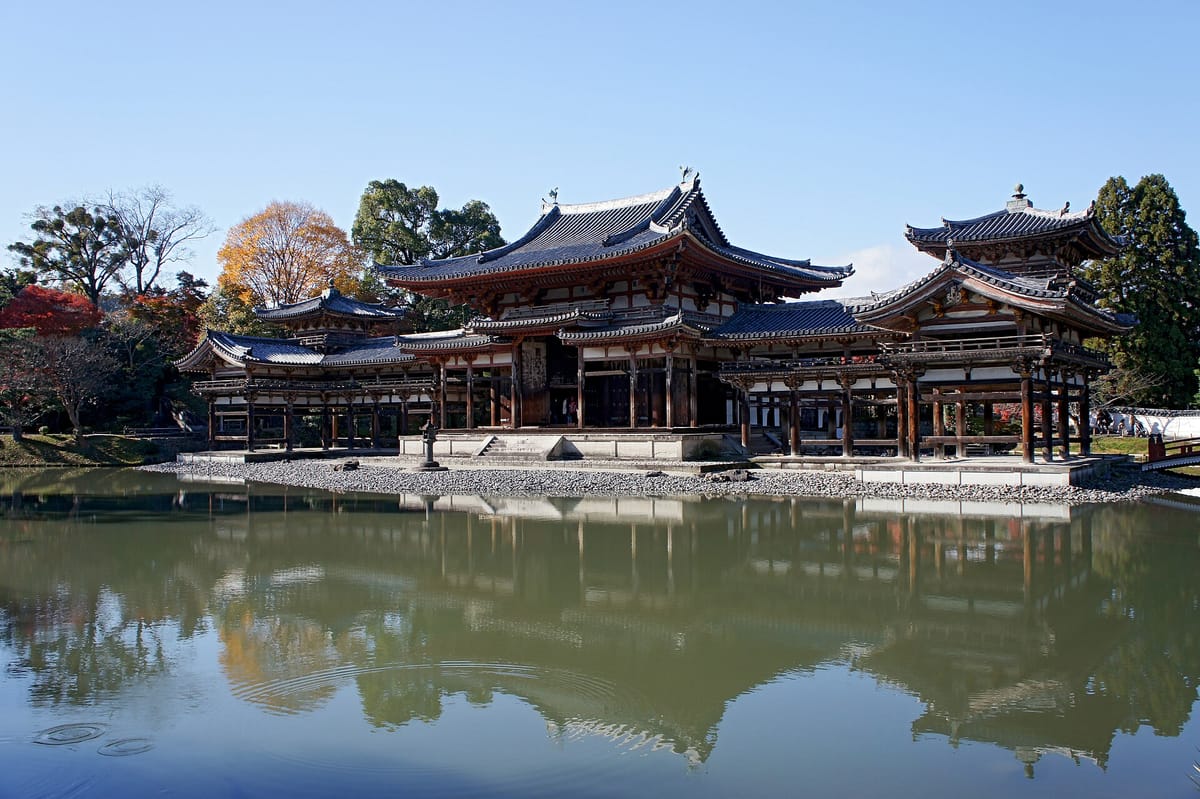
In the eleventh century, many people in Japan believed the world was entering mappō, an age of decline in which enlightenment by one's own efforts was out of reach. The hope lay in Amida Buddha, who promised rebirth in his Pure Land to anyone who called on him. Fujiwara no Yorimichi, the most powerful man of his day, built the Phoenix Hall as a vision of that paradise: a gold statue of Amida in a hall that seems to float on the water, with wings and a tail corridor stretching out like a bird about to take flight.
Almost a thousand years later, it is one of the very few buildings of the Heian aristocracy still standing. The statue of Amida, by the master sculptor Jōchō, is a National Treasure, and so are the fifty-two small bodhisattvas riding on clouds around the walls, half of which are now kept in the temple's museum. The phoenixes on the roof today are replicas; the originals are in the museum too.
Uji adds a second reason to come. The town has grown tea since the Middle Ages, and Uji tea is still a byword for quality in Japan. The lane to the temple gate smells of roasting tea, and every second shop sells matcha ice cream, tea sweets or tins of leaves. For a Japanese learner, it is an ideal place to practise ordering, asking questions and talking about taste.
Getting there: JR Uji or Keihan Uji
From Kyoto Station, the JR Nara Line reaches Uji Station in about twenty minutes by rapid train, a little longer by local. From central Kyoto near the river, the Keihan Main Line runs south to Chūshojima, where you change to the short Keihan Uji Line to its last stop, Keihan Uji. The JR station is south of the river and Keihan's is on the north bank by Uji Bridge; Byōdō-in is about ten minutes on foot from either.
From JR Uji, walk to the river and turn right along the Byōdō-in omotesandō, the tea-shop street that leads to the temple gate. From Keihan Uji, cross Uji Bridge and turn left. Across the river are Ujigami Shrine, also part of the World Heritage site, and the Tale of Genji Museum, and the islands in the river are linked by bridges for a riverside walk.
| Japanese | Romaji | Meaning |
|---|---|---|
| 宇治に行くのはどのホームですか。 | Uji ni iku no wa dono hōmu desu ka. | Which platform is the train to Uji? |
| この電車は宇治に止まりますか。 | Kono densha wa Uji ni tomarimasu ka. | Does this train stop at Uji? |
| 中書島で乗り換えですか。 | Chūshojima de norikae desu ka. | Do I change at Chūshojima? |
| 平等院の表参道はこちらですか。 | Byōdō-in no omotesandō wa kochira desu ka. | Is this the way to the Byōdō-in approach street? |
| 宇治上神社へは橋を渡りますか。 | Ujigami Jinja e wa hashi o watarimasu ka. | Do I cross the bridge to get to Ujigami Shrine? |
Inside the gate: the garden, the museum and the Phoenix Hall
The entry ticket covers the garden and the Hōshōkan museum; there is no garden-only ticket. Once inside, go straight to the kiosk for the interior visit of the Phoenix Hall and buy a timed slot, because groups are small and waits can be long in spring and autumn. With that ticket you can leave and re-enter while you wait, which the temple otherwise does not allow.
Walk round the Ajiike pond for the classic views of the hall from the east, where the reflection is best, and then visit the Hōshōkan, built partly underground so it does not interfere with the view. It holds the original phoenixes, the temple bell and many of the cloud-riding bodhisattvas. The interior visit itself is short and guided in Japanese: you enter the central hall, stand before Amida and see the painted walls and doors. Photography is not permitted inside.
- Hōōdō: the Phoenix Hall, a National Treasure, built in 1053.
- Amida Nyorai: the gilded Buddha by Jōchō inside the hall.
- Ajiike: the pond that sets the hall on the water.
- Hōshōkan: the museum with the original phoenixes, the bell and the bodhisattvas on clouds.
- Wisteria trellis: the fuji near the pond, in bloom from late April.
- Tōka: the temple's own tea room, closed on Mondays to Wednesdays except holidays.
- Ujicha monument: a large carved stone in the grounds honouring Uji's tea.
Words on the signs at Byōdō-in and in Uji
The key sign inside the garden is 内部拝観, naibu haikan, interior visit, with the next time slot beside it. The phoenix itself is 鳳凰, hōō, two kanji for the male and female bird, and the museum's name 鳳翔館 means hall of the soaring phoenix.
In town the signs switch to tea: 抹茶, matcha, 煎茶, sencha, 玉露, gyokuro, and 宇治茶, Ujicha. Shops that roast tea on the spot put up the word ほうじ茶, hōjicha, roasted green tea, and you will usually smell it before you see it.
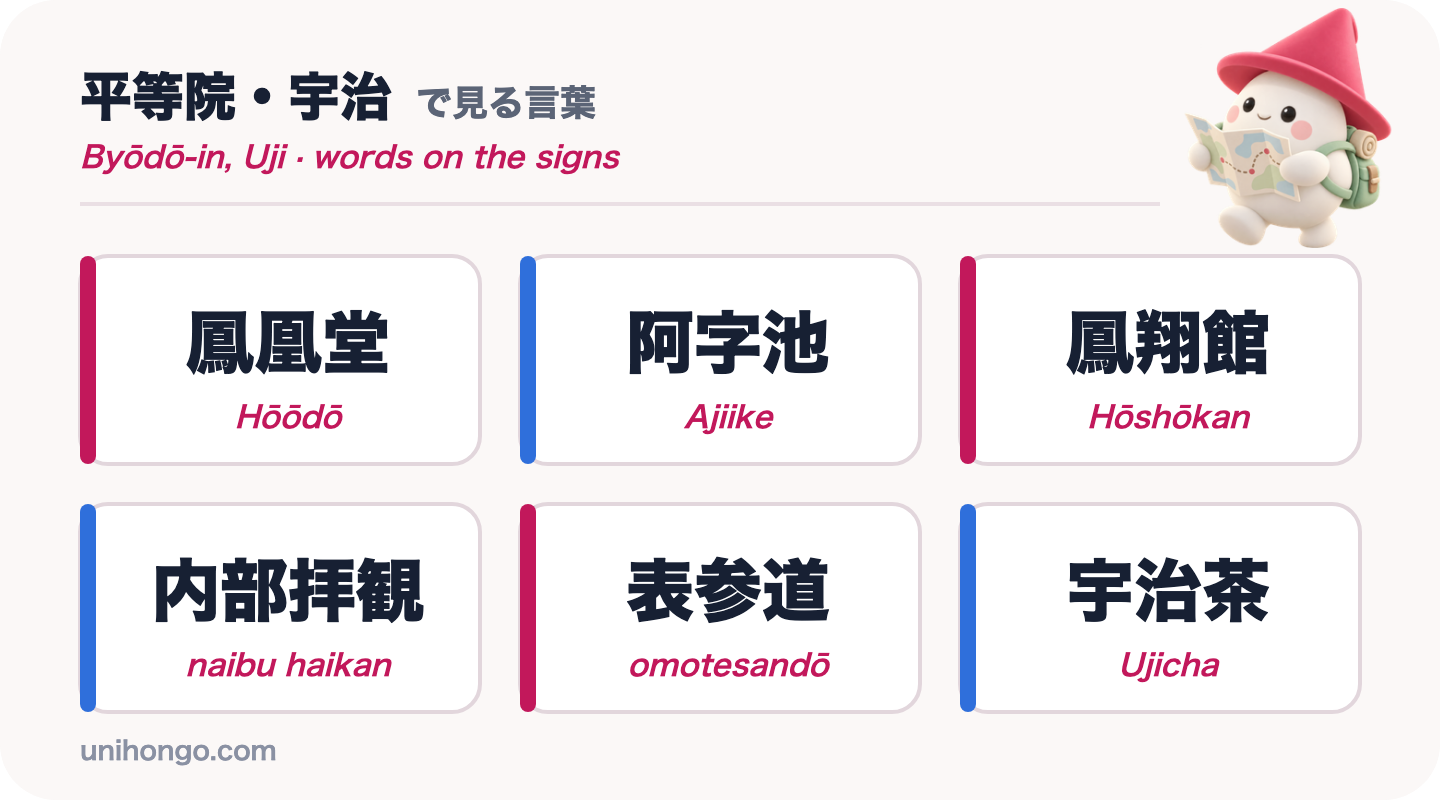
| Word | Reading | Meaning |
|---|---|---|
| 鳳凰堂 | Hōōdō | The Phoenix Hall |
| 阿字池 | Ajiike | The pond in front of the hall |
| 鳳翔館 | Hōshōkan | Byōdō-in's museum |
| 内部拝観 | naibu haikan | Guided visit inside the Phoenix Hall |
| 表参道 | omotesandō | The main approach street to the temple |
| 宇治茶 | Ujicha | Tea from the Uji area |
| 抹茶 | matcha | Powdered green tea, whisked |
| 煎茶 | sencha | Steeped loose-leaf green tea |
| 玉露 | gyokuro | Shaded, sweet loose-leaf tea |
| ほうじ茶 | hōjicha | Roasted green tea |
Japanese for matcha, tea rooms and tea shops
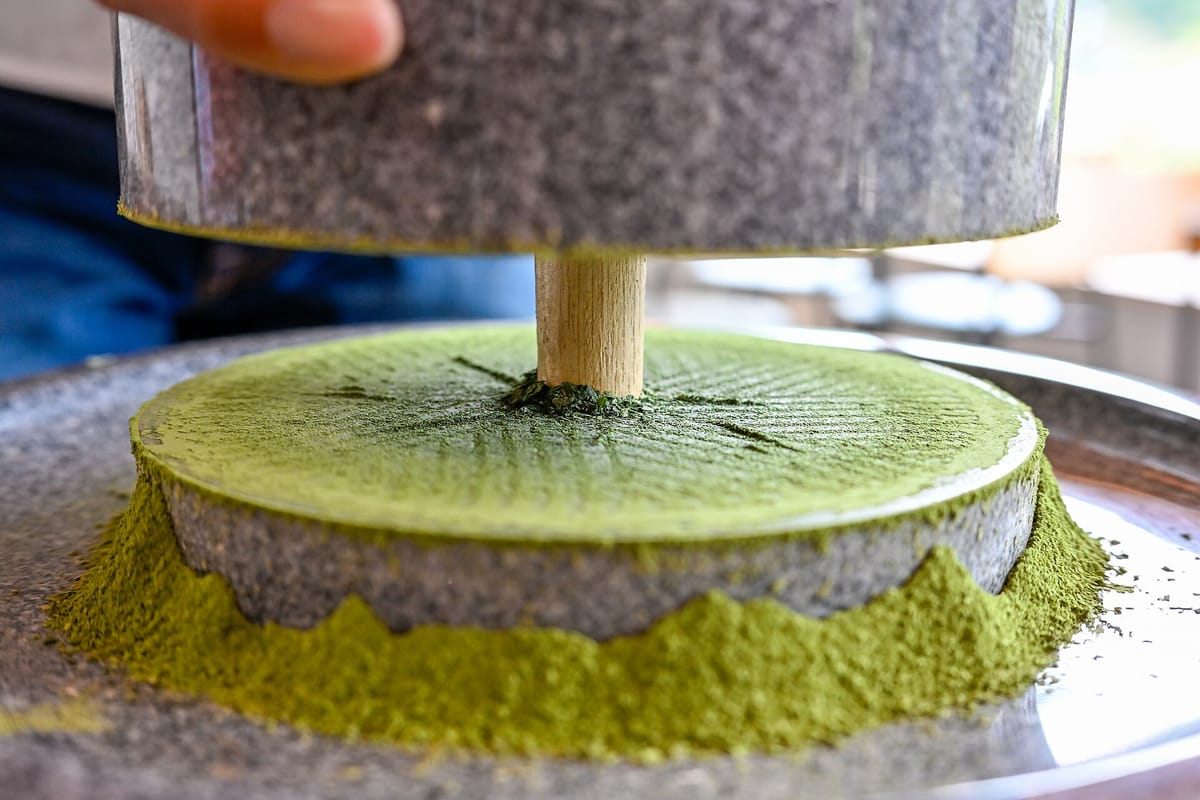
There are three ways to drink tea in Uji. Tea shops and cafés on the omotesandō and near the bridge serve matcha, tea sets and desserts, and many sell tea to take home. Taihō-an, a tea room run by the city on the riverbank facing the Phoenix Hall, serves Uji tea with a seasonal sweet in a proper tea-ceremony setting; book online in advance and collect your ticket at the Uji City Tourist Center opposite. Some shops also offer experiences such as grinding your own matcha.
In a tea room the host prepares the tea in front of you and you receive it with a few set phrases. In a shop you will be asking about differences, strength and sweetness, and whether something is for drinking now or for a gift.
| Japanese | Romaji | Meaning |
|---|---|---|
| 抹茶のセットを一つお願いします。 | Matcha no setto o hitotsu onegai shimasu. | One matcha set, please. |
| あまり甘くないお菓子はありますか。 | Amari amakunai o-kashi wa arimasu ka. | Do you have a sweet that is not too sweet? |
| お先にいただきます。 | O-saki ni itadakimasu. | Excuse me for going first. |
| お点前ちょうだいいたします。 | O-temae chōdai itashimasu. | I gratefully receive your tea. |
| この玉露は何度のお湯でいれますか。 | Kono gyokuro wa nando no o-yu de iremasu ka. | What temperature water do I use for this gyokuro? |
| お土産用に小さい缶はありますか。 | O-miyage-yō ni chiisai kan wa arimasu ka. | Do you have a small tin as a gift? |
Etiquette, crowds and timing
Byōdō-in is compact but extremely popular, and the interior visit is the bottleneck. Uji itself is relaxed once you leave the gate.
- Buy the Phoenix Hall interior ticket before anything else, and keep an eye on your slot time; missed slots are not changed or refunded.
- Do not eat or drink in the temple grounds, apart from water outdoors and the Tōka tea room.
- Large camera gear, tripods and drones are not allowed, and do not step over ropes into the planting for photos.
- Late April to early May brings the wisteria and the biggest crowds; weekday mornings are calmest.
- Walk to the river after the temple: the tea houses there are quieter than the main street.
- Taihō-an is open from January to December with some closed days each month; reserve ahead.
Practise the tea shop before you go
The four lines below are a natural exchange in any Uji tea shop. You ask how two teas differ, the assistant explains in one sentence, and you say you want to compare. Listen for kona, powder, and osusume, recommendation, in the answers.
Say the lines aloud until you can do it without reading, then practise with a partner who can describe different teas. In Unihongo, choose the Café topic or the Order at a Café mission and ask your AI Sensei to play a tea shop assistant in Uji, or choose Tea Ceremony to rehearse the tea room. Hearing the words for tea at natural speed before you go makes the shop far easier to enjoy.
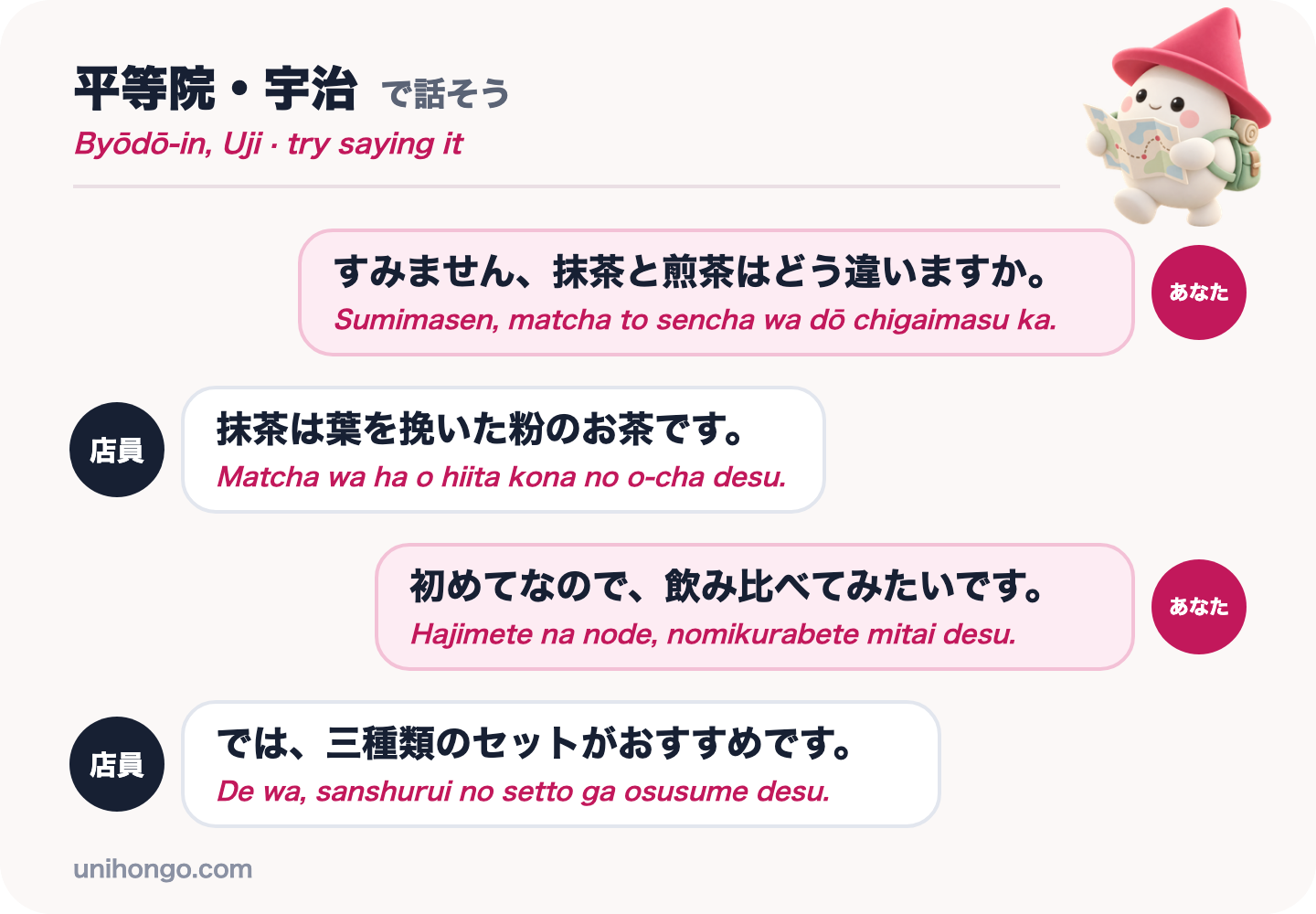
| Japanese | Romaji | Meaning |
|---|---|---|
| すみません、抹茶と煎茶はどう違いますか。 | Sumimasen, matcha to sencha wa dō chigaimasu ka. | Excuse me, what is the difference between matcha and sencha? |
| 抹茶は葉を挽いた粉のお茶です。 | Matcha wa ha o hiita kona no o-cha desu. | Matcha is tea made from ground leaves. |
| 初めてなので、飲み比べてみたいです。 | Hajimete na node, nomikurabete mitai desu. | It is my first time, so I would like to compare them. |
| では、三種類のセットがおすすめです。 | De wa, sanshurui no setto ga osusume desu. | Then I recommend the set with three kinds. |
Official information
Byōdō-in publishes its hours, fees, interior-visit arrangements and notices on its website, in English and Japanese, and the Uji City Tourism Association has details of Taihō-an and other tea experiences. Check both before you go, especially the interior-visit rules, which change by season.