

Why Ibusuki's hot sand is worth the trip south
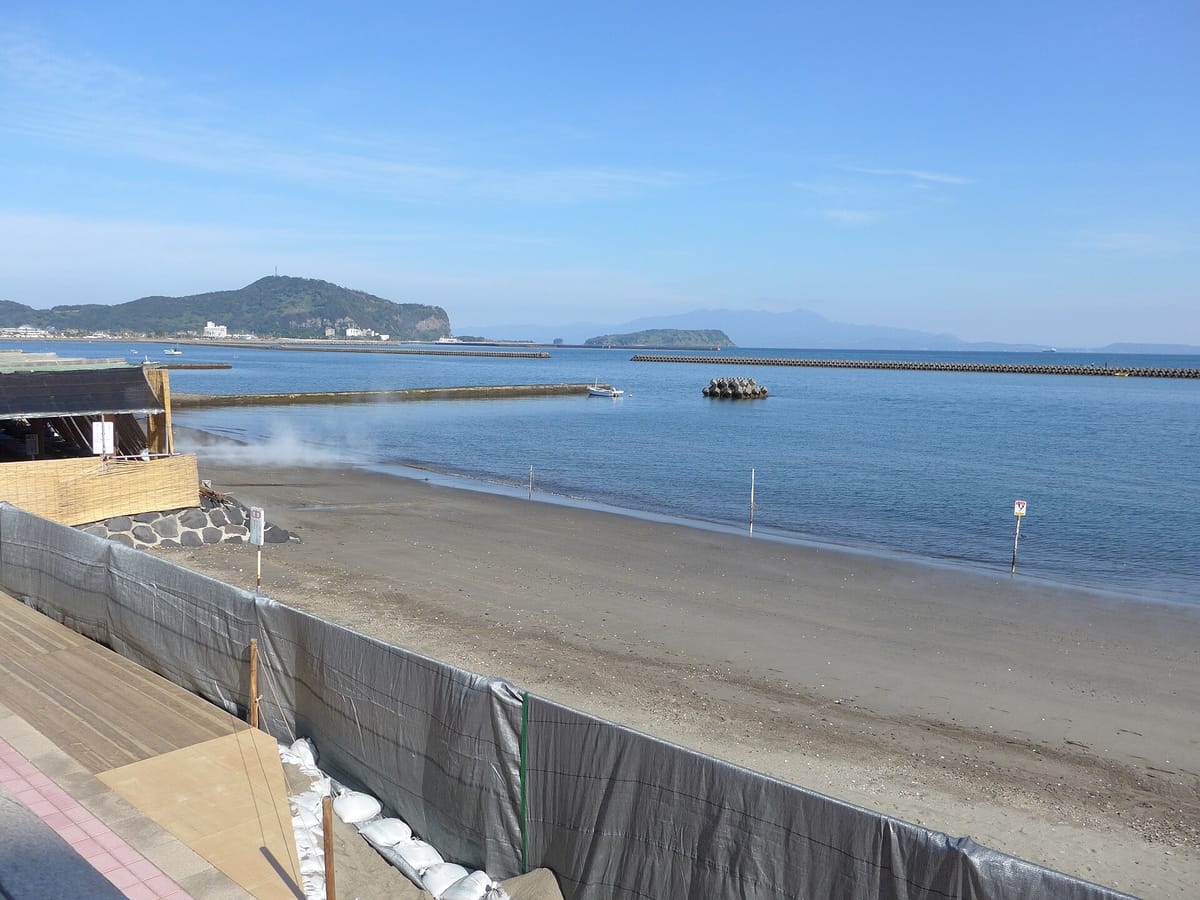
Ibusuki is a hot spring town on the south-east coast of the Satsuma Peninsula in Kagoshima Prefecture. What makes it different from Japan's many other onsen towns is what happens on its beach. Hot spring water flows beneath the shore and heats the dark volcanic sand, and sand bathing has been practised here since the Edo period, traditionally as a cure for aches and poor circulation.
The experience is simple and memorable. You change into a yukata, walk down to a covered area on the beach, lie on your back in a shallow trench, and staff shovel warm sand over you until only your head is showing. The weight and the heat are surprising at first. Within a few minutes you feel your pulse and start to sweat, and the sea is right in front of you.
For a Japanese learner, the sand bath is a gentle place to use real phrases with real staff. Every step, from paying at reception to asking how long to stay in, is a short exchange with people who speak to visitors all day, and the vocabulary carries straight over to any onsen in Japan.
Getting there: Kagoshima-Chūō to Ibusuki Station
Ibusuki is on the JR Ibusuki Makurazaki Line, which starts at Kagoshima-Chūō Station, the shinkansen station in Kagoshima city, and follows the western shore of Kinkō Bay south. Local trains run once or twice an hour and take a little over an hour; sit on the left, the sea side, heading south for views of the bay and Sakurajima.
The faster option is the limited express Ibusuki no Tamatebako, a restyled train painted black on the land side and white on the sea side, which runs three return trips a day and takes around fifty minutes. It is named after the treasure box in the folk tale of Urashima Tarō, and seats are limited, so reserve at a JR ticket office in advance. The Japan Rail Pass covers both trains.
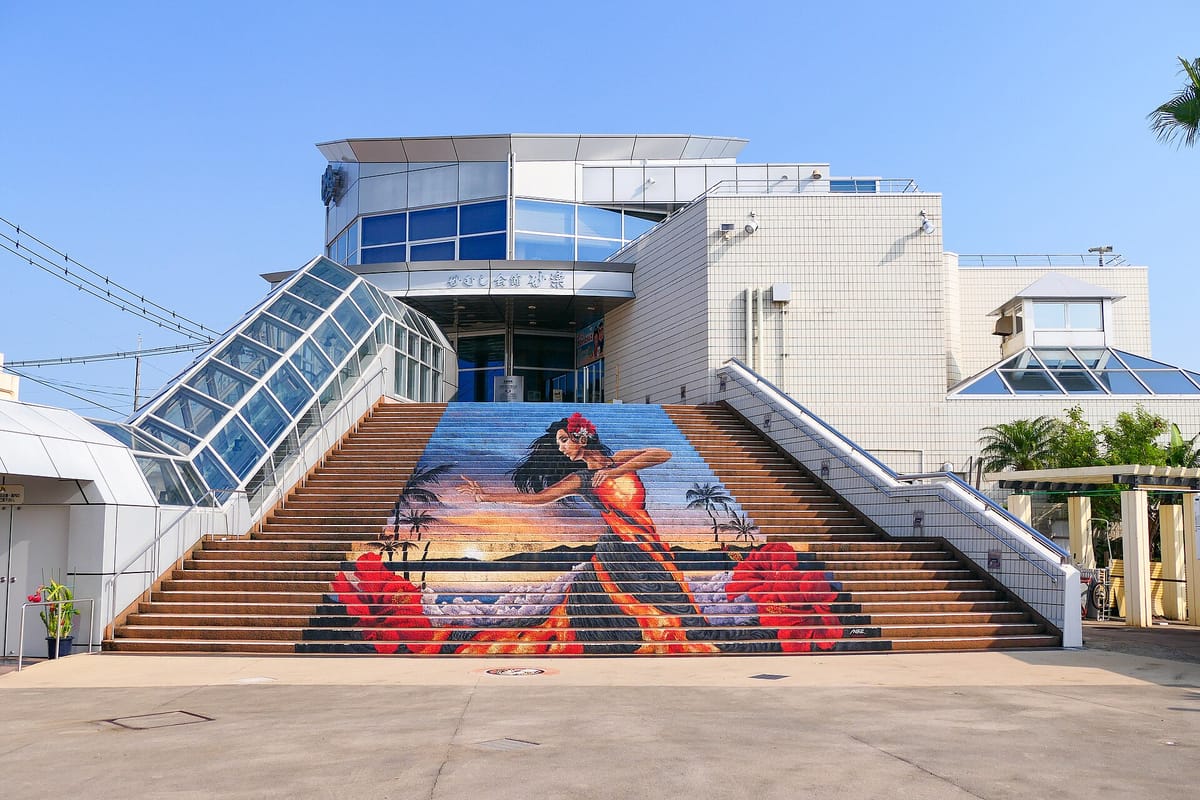
From Ibusuki Station, Saraku is about fifteen minutes on foot towards the sea, or a short ride by local bus or taxi. The station has a small tourist information counter where you can ask the way and pick up a map.
| Japanese | Romaji | Meaning |
|---|---|---|
| 指宿までの特急の指定席をお願いします。 | Ibusuki made no tokkyū no shiteiseki o onegai shimasu. | A reserved seat on the limited express to Ibusuki, please. |
| 海側の席はありますか。 | Umigawa no seki wa arimasu ka. | Is there a seat on the sea side? |
| 次の指宿行きは何時ですか。 | Tsugi no Ibusuki-yuki wa nanji desu ka. | What time is the next train to Ibusuki? |
| 砂むし会館にはどう行けばいいですか。 | Sunamushi kaikan ni wa dō ikeba ii desu ka. | How do I get to the sand bath hall? |
| 歩いて行けますか。 | Aruite ikemasu ka. | Can I walk there? |
How the sand bath works, step by step
At Saraku the whole visit follows a set route, and the building is laid out to guide you through it. The sequence below follows the facility's own guidance; small details may change, so read the signs and follow staff directions on the day.
- Reception, uketsuke: go up to the second floor, pay, and receive a yukata in your size and a towel.
- Changing room: take off your shoes and clothes, put on the yukata with nothing else except rental underwear if you chose it, and lock your things away.
- The beach: men and women use separate routes. Put on sandals and follow the path down to the covered sand area by the sea.
- The sand: lie down where the staff show you, with the towel under or around your head, and they will cover you with sand up to the neck.
- Getting out: when you are ready, sit up and brush yourself off, walk back, and return the sandals and yukata.
- Rinse and bathe: wash off every grain of sand, then wash your hair and body before entering the indoor hot spring baths and sauna.
Words on the signs at the sand bath
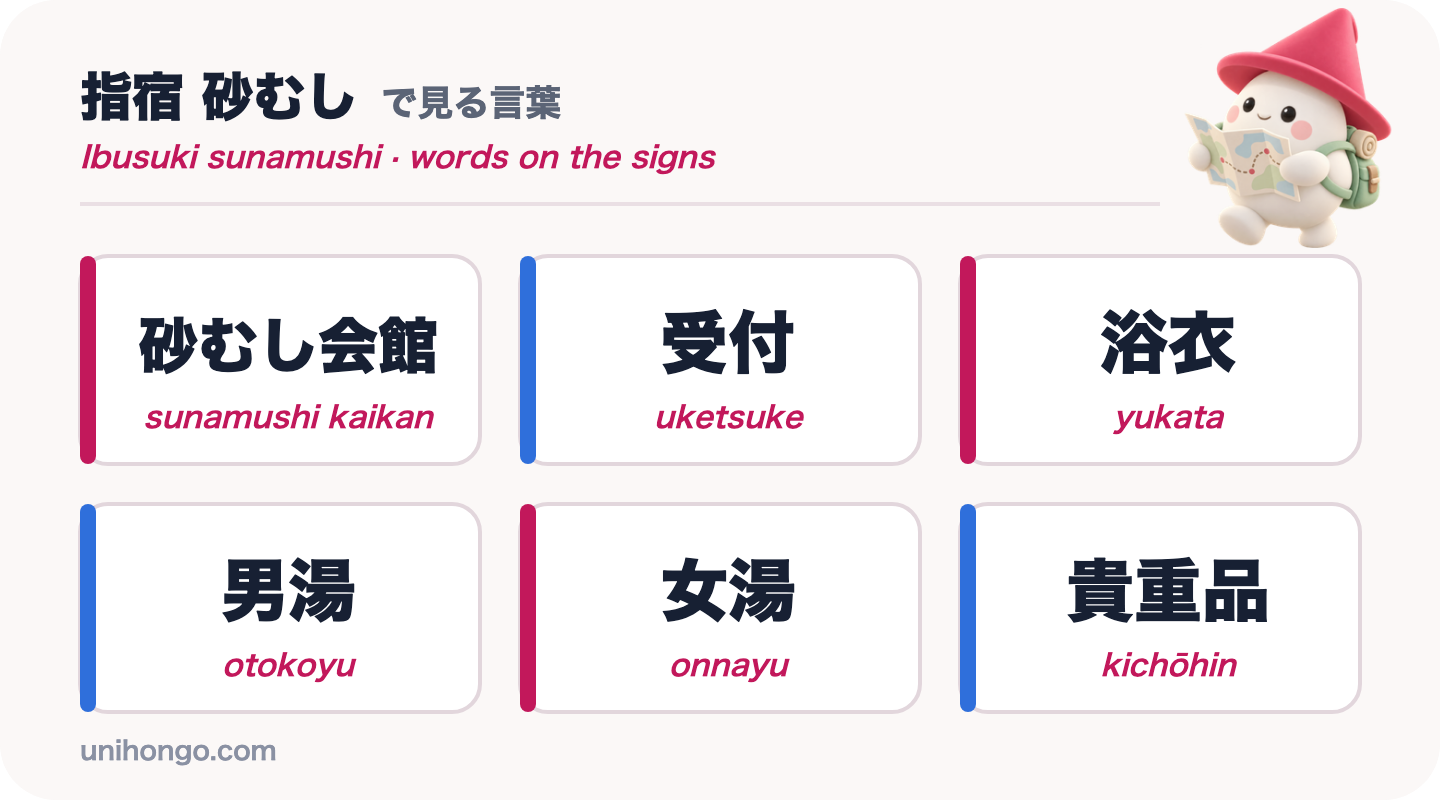
The signs at a sand bath are the signs of any onsen, plus the word sunamushi itself. The most important pair is 男 and 女, man and woman. At the baths they usually appear as 男湯 and 女湯, and in many places the entrances are also marked with coloured curtains, noren, but do not rely on the colour: read the kanji.
Kichōhin, valuables, appears on signs by the lockers and at reception telling you to lock away money, phones and cameras. Leave your phone in the locker; the sand is fine and gets everywhere.
| Word | Reading | Meaning |
|---|---|---|
| 砂むし会館 | sunamushi kaikan | Sand bath hall |
| 砂むし | sunamushi | Sand steaming, the hot sand bath |
| 受付 | uketsuke | Reception, where you pay |
| 浴衣 | yukata | Light cotton robe worn in the sand |
| 男湯 | otokoyu | Men's bath |
| 女湯 | onnayu | Women's bath |
| 貴重品 | kichōhin | Valuables, lock them away |
| 更衣室 | kōishitsu | Changing room |
| 温泉 | onsen | Hot spring |
Japanese to use with the sand bath staff
The staff on the beach speak a few words of English, but they are busy with shovels, and a short phrase in Japanese is quicker and friendlier. Most of what you need is about heat, time and where to go next.
When you are buried, you cannot move much, so it helps to have the words for too hot, a little and heavy ready. Staff can add or remove sand over a part that feels too hot.
| Japanese | Romaji | Meaning |
|---|---|---|
| 大人一人、砂むしをお願いします。 | Otona hitori, sunamushi o onegai shimasu. | One adult for the sand bath, please. |
| 浴衣のサイズを替えてもらえますか。 | Yukata no saizu o kaete moraemasu ka. | Could I change the size of my yukata? |
| 足のところが熱いです。 | Ashi no tokoro ga atsui desu. | It is hot around my feet. |
| 少し重いです。 | Sukoshi omoi desu. | It is a little heavy. |
| もう出てもいいですか。 | Mō dete mo ii desu ka. | May I come out now? |
| 砂はどこで流せばいいですか。 | Suna wa doko de nagaseba ii desu ka. | Where do I rinse off the sand? |
| 気持ちよかったです。 | Kimochi yokatta desu. | That felt wonderful. |
Etiquette, timing and the rest of the peninsula
A sand bath follows the same etiquette as any onsen, with a few extra points because you are outdoors and covered in sand.
- Drink water before and after; you will sweat a lot, and alcohol beforehand is a bad idea.
- Wear only the rented items in the sand, and take nothing into the sand you are not willing to have full of grit.
- Rinse off the sand completely, then wash your body and hair before you get into the indoor baths.
- On rainy or windy days take care on the outdoor path between the building and the beach.
- Get out as soon as you feel dizzy or too hot. There is no prize for staying in longest.
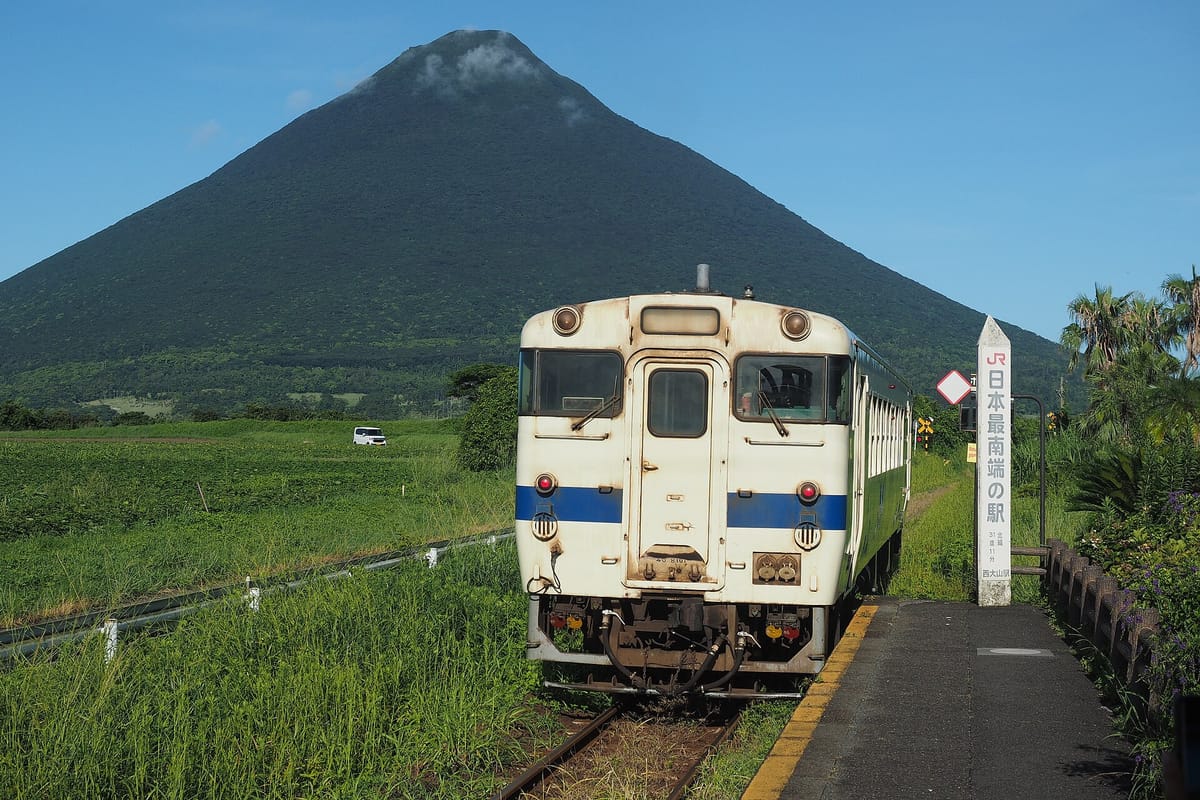
- Nearby sights: Mount Kaimon, a 924-metre cone often called Satsuma Fuji; Lake Ikeda, a round caldera lake; Cape Nagasakibana; and Nishi-Ōyama, the southernmost JR station, with the mountain behind the platform.
Practise the sand bath conversation before you go
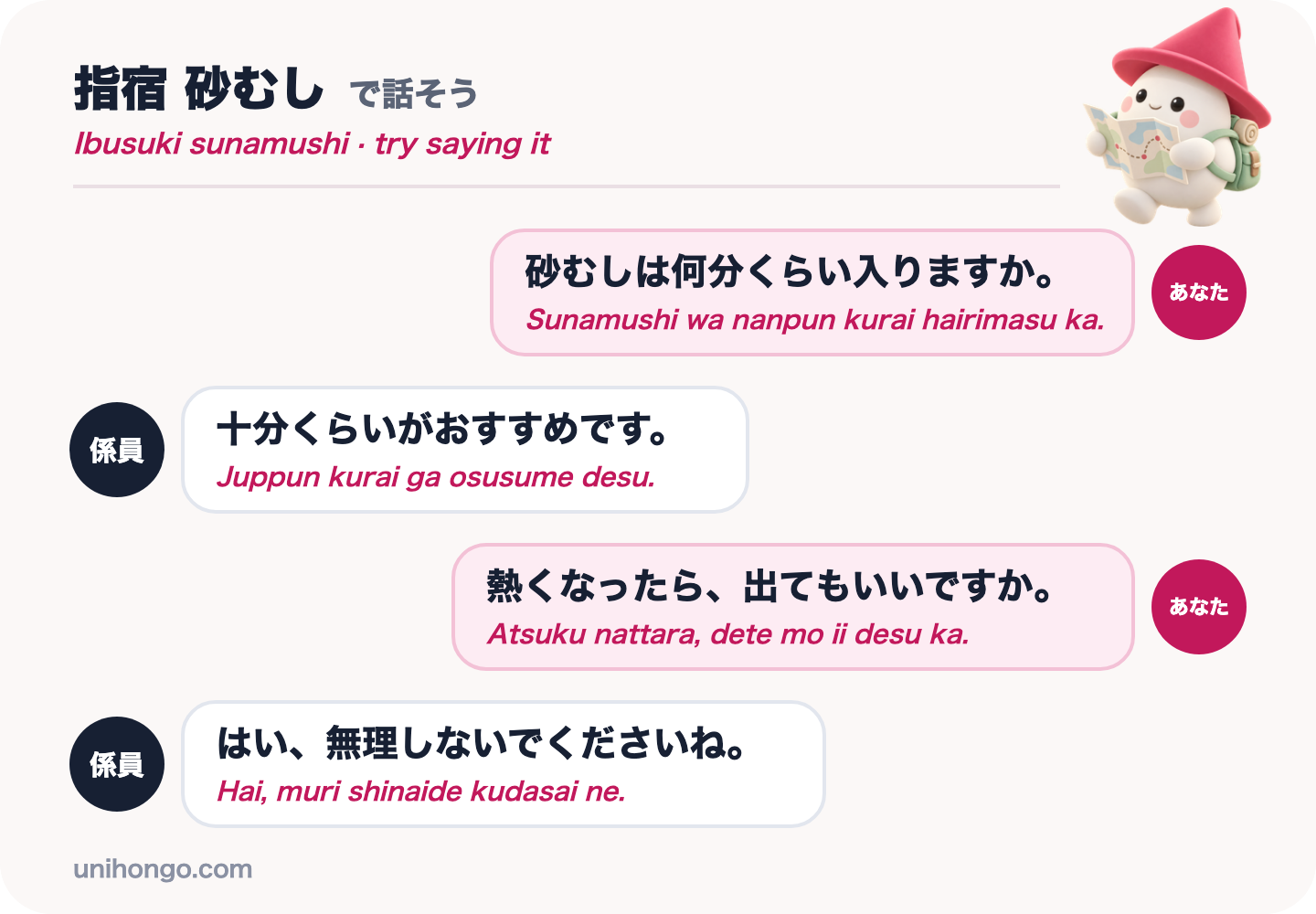
The one conversation almost every visitor has on the beach is about time. Practise the four lines below until you can say them without reading. Listen for the number in the reply, and for muri shinaide, do not push yourself, which Japanese staff say in many situations where your comfort matters more than the rules.
Then practise with someone who answers back. In Unihongo, choose the Onsen topic and ask your AI Sensei to play the staff at a sand bath, or pick the Ryokan Stay topic if you will stay the night in Ibusuki. Saying the lines once before you arrive is what makes them come out when you are lying in the sand.
| Japanese | Romaji | Meaning |
|---|---|---|
| 砂むしは何分くらい入りますか。 | Sunamushi wa nanpun kurai hairimasu ka. | About how many minutes do you stay in the sand bath? |
| 十分くらいがおすすめです。 | Juppun kurai ga osusume desu. | About ten minutes is what we recommend. |
| 熱くなったら、出てもいいですか。 | Atsuku nattara, dete mo ii desu ka. | If it gets hot, may I come out? |
| はい、無理しないでくださいね。 | Hai, muri shinaide kudasai ne. | Yes, please don't push yourself. |
Official information
Hours, fees and any temporary notices for the sand bath are published by the facility itself, and train times are on the JR Kyushu site. Check both before you go, especially on public holidays.