

Why Sapporo is more than a gateway city
Many travellers use Sapporo only as a place to land before heading to the ski slopes, the lavender fields or the lakes. That is a pity, because the city itself is one of the most pleasant in Japan to explore on foot. It is young by Japanese standards: in the 1870s the government's Hokkaido Development Commission, the Kaitakushi, chose this spot as the capital of the new territory and laid out a grid of wide, straight streets. The result is a city that is easy to navigate, generous with space and, unusually for Japan, built around a park rather than a castle or a shrine.
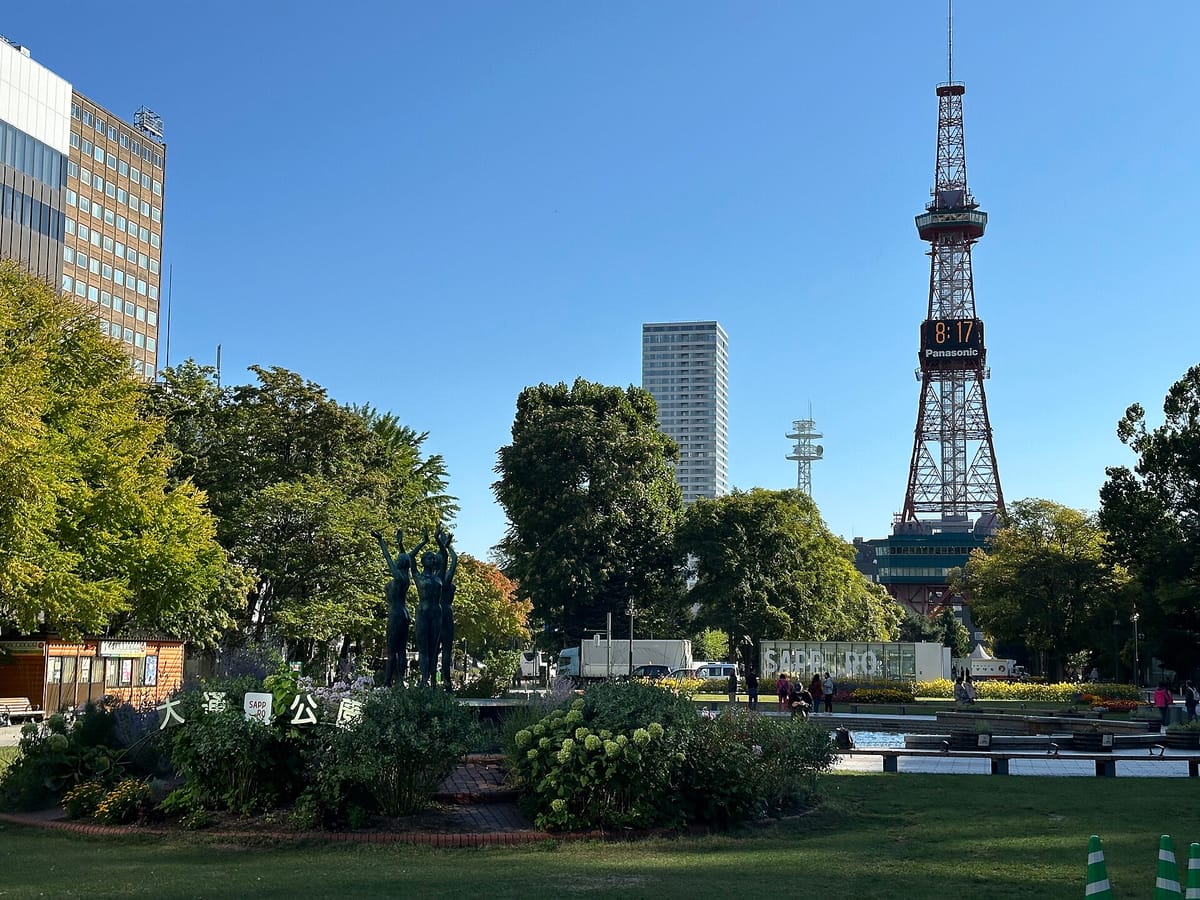
That park is Ōdōri Kōen, a green strip about 1.5 kilometres long that stretches across twelve blocks from east to west. It was first laid out as a firebreak between the government district to the north and the residential and commercial district to the south. Today it hosts the city's big events in every season, from the Snow Festival in February to summer beer gardens and the autumn food fair. North of it stand the Clock Tower and the red-brick former Hokkaido Government Office; south of it lies Susukino, one of the biggest entertainment districts in Japan.
For a learner, Sapporo has a special bonus: its addresses make sense. Once you know four words, north, south, east and west, you can read the blocks around you like coordinates, and that makes asking for and understanding directions much easier than in the tangled lanes of older cities.
Getting there and around: Sapporo Station, Ōdōri and the underground
Most visitors arrive at New Chitose Airport, Shin-Chitose Kūkō. The JR Rapid Airport train leaves from the station beneath the domestic terminal and reaches JR Sapporo Station in around forty minutes. Shinkansen passengers from Honshu currently change at Shin-Hakodate-Hokuto onto a limited express, since the line has not yet reached Sapporo.
Inside the city, three subway lines cross at Ōdōri Station: the Namboku Line running north to south through Sapporo, Ōdōri and Susukino, the Tōzai Line running east to west, and the Tōhō Line. A streetcar loop also serves Susukino and the southern districts. IC cards such as Kitaca, SAPICA and Suica work on the subway and JR, so you can tap in without buying paper tickets.
In winter, the underground is your friend. The Sapporo Ekimae-dōri Underground Walkway, known as Chi-Ka-Ho, links Sapporo Station to Ōdōri in a warm, bright corridor with seating and exhibitions, and from Ōdōri the Aurora Town and Pole Town shopping arcades continue east and south towards Susukino. You can walk from the station to the ramen alleys without stepping into the snow.
| Japanese | Romaji | Meaning |
|---|---|---|
| 札幌駅までの切符はどこで買えますか。 | Sapporo-eki made no kippu wa doko de kaemasu ka. | Where can I buy a ticket to Sapporo Station? |
| 大通駅は南北線ですか。 | Ōdōri-eki wa Namboku-sen desu ka. | Is Ōdōri Station on the Namboku Line? |
| すすきのへ行くには、どの出口が近いですか。 | Susukino e iku ni wa, dono deguchi ga chikai desu ka. | Which exit is closest for going to Susukino? |
| 地下を通って大通まで行けますか。 | Chika o tōtte Ōdōri made ikemasu ka. | Can I get to Ōdōri underground? |
| この住所はどこですか。 | Kono jūsho wa doko desu ka. | Where is this address? |
Ōdōri Park, the Clock Tower and Susukino: what you will see
A good first walk starts at the Sapporo TV Tower, terebi-tō, at the eastern end of Ōdōri Park. Its observation deck, reached for a fee, looks straight down the length of the park towards the mountains. From there, walk west through the park's twelve blocks, past fountains, flower beds, sculptures and more than ninety kinds of trees, including the lilacs the city is proud of. The full length takes about half an hour without stops.
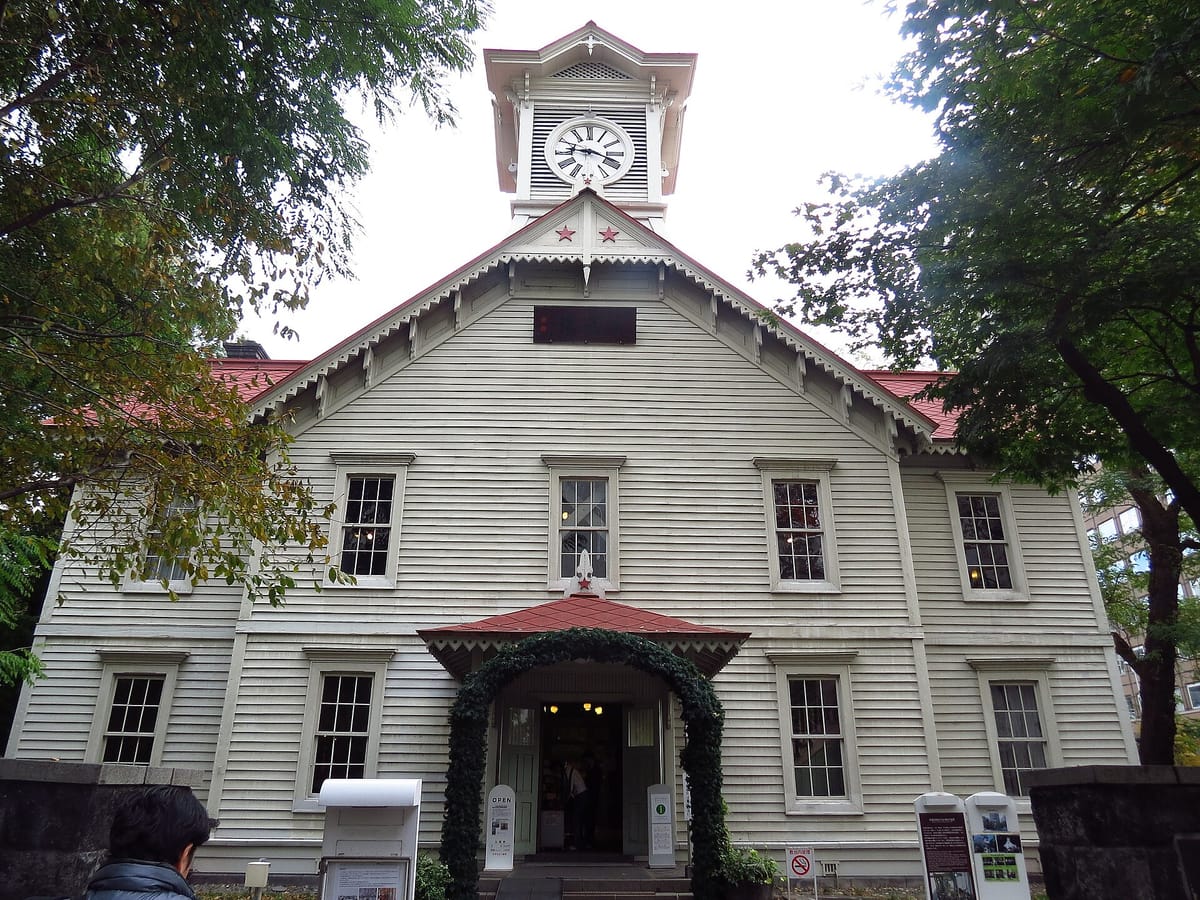
One block north of the park is the Sapporo Clock Tower, Sapporo-shi Tokeidai. It was built in 1878 as the drill hall of the Sapporo Agricultural College, the school that later became Hokkaido University, and the clock, made by the E. Howard company of Boston, was added in 1881. The building is a nationally designated Important Cultural Property. It is small and hemmed in by office blocks, which is why it often appears on lists of Japan's gakkari meisho, disappointing sights, but the museum inside is interesting and the hall upstairs is lovely.
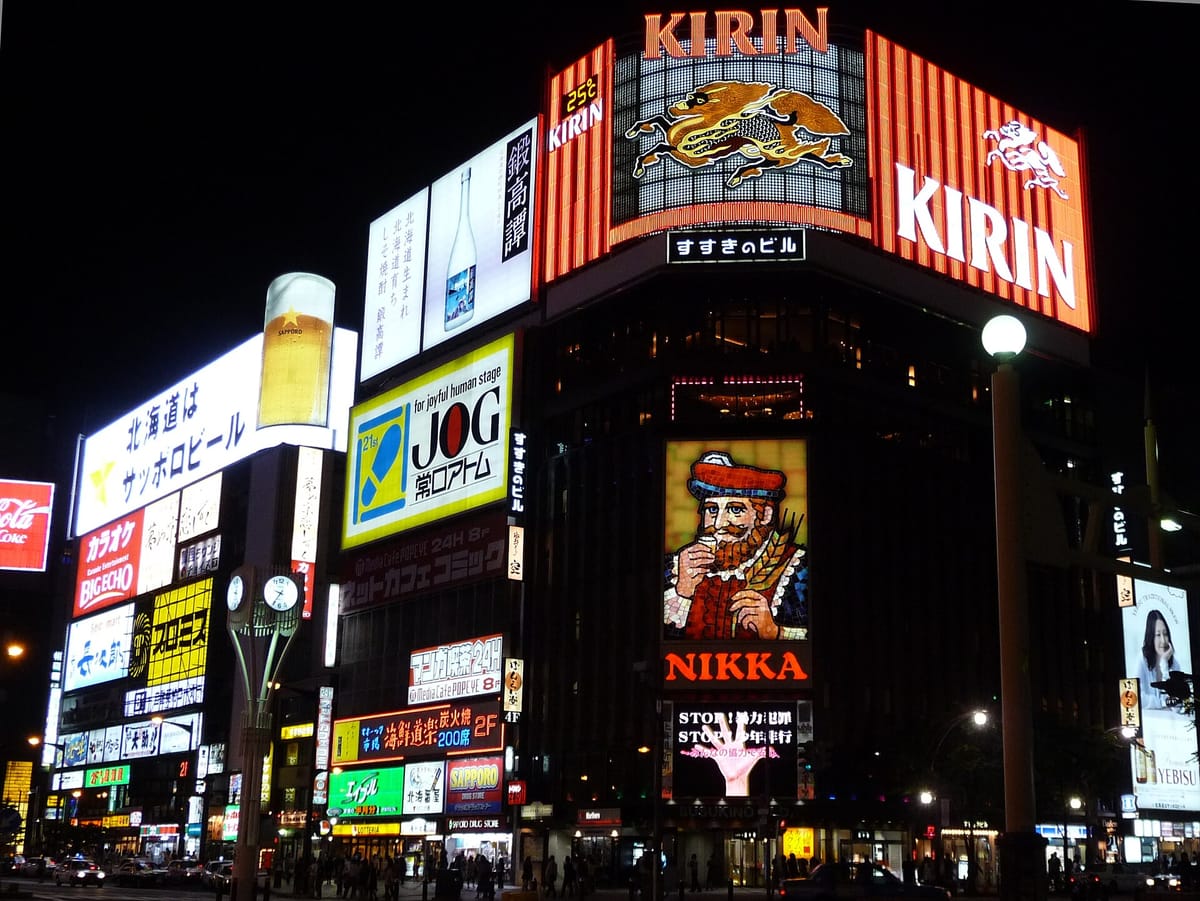
South of the park, the streets grow brighter until you reach the Susukino crossing, lit by giant signs including the famous Nikka Whisky figure. Susukino began as a pleasure quarter in 1871 and is now a dense district of restaurants, bars, karaoke and hotels. Tucked into the side streets are the ramen alleys, rāmen yokochō, where small counters serve Sapporo's miso ramen.
- Sapporo TV Tower: the lattice tower at the park's east end, with an observation deck.
- Ōdōri Park: twelve blocks of gardens and event space, about 1.5 km long.
- Sapporo Clock Tower: the 1878 wooden drill hall and museum, one block north of the park.
- Former Hokkaido Government Office, Akarenga: the 1888 red-brick building a short walk north-west, reopened in 2025 after restoration.
- Nijō Market: a morning seafood market a few blocks east of Susukino.
- Ganso Rāmen Yokochō: the original ramen alley in Susukino.
- Susukino crossing: the neon heart of the nightlife district.
Signs, addresses and the Sapporo grid
Sapporo addresses are built from four direction words. Blocks north and south of Ōdōri Park are counted in jō, and blocks east and west of the Sōsei River are counted in chōme. The Clock Tower is at Kita 1-jō Nishi 2-chōme, one block north and two blocks west, and Susukino sits around Minami 4-jō Nishi 4-chōme. Street corners carry small signs with these numbers, so you can always work out where you are.
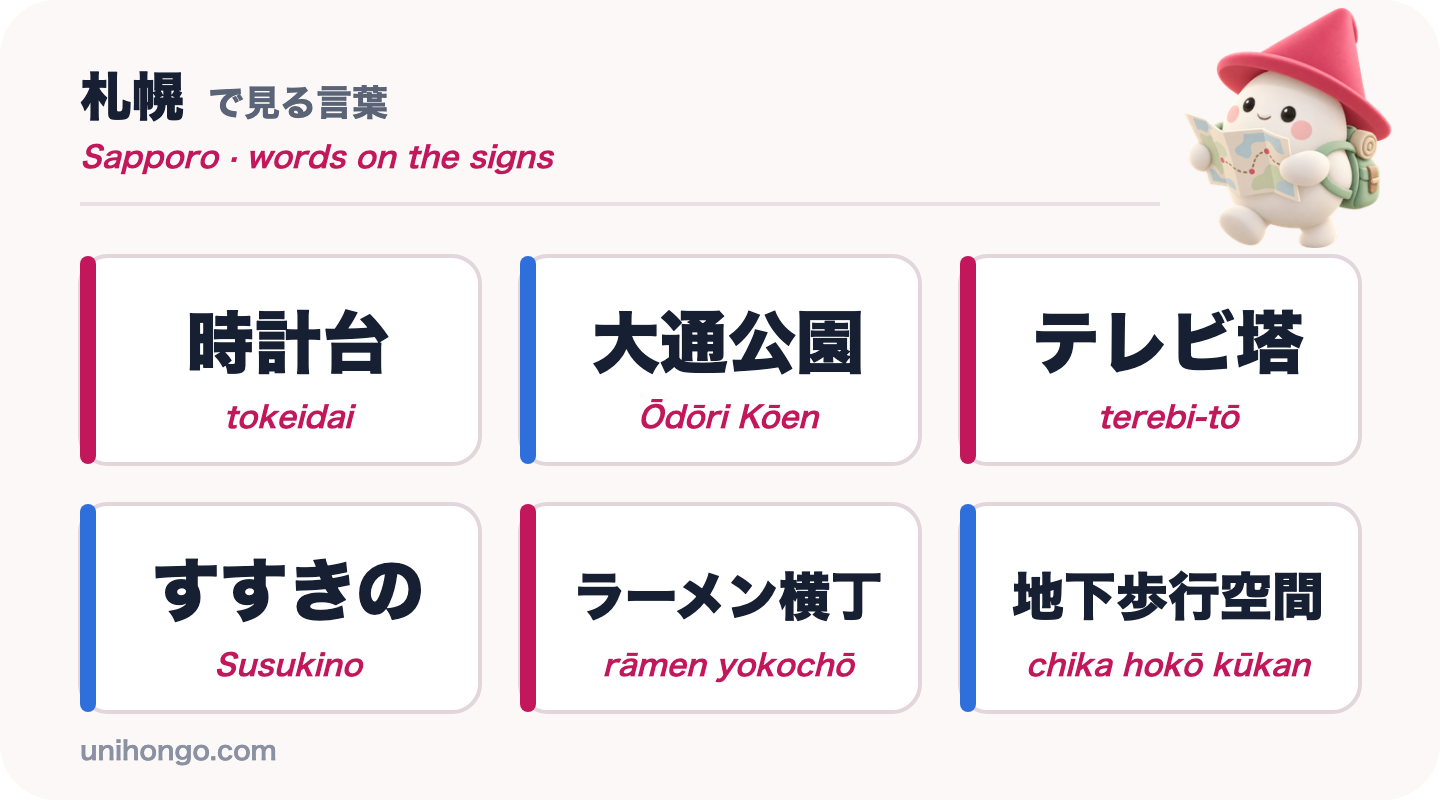
The words below cover the sights, the directions and the signs you will see most. Susukino is usually written in hiragana, すすきの, even though the old name was written with the kanji 薄野, meaning a field of pampas grass.
| Word | Reading | Meaning |
|---|---|---|
| 時計台 | tokeidai | Clock tower; the Sapporo Clock Tower |
| 大通公園 | Ōdōri Kōen | Ōdōri Park, the long central park |
| テレビ塔 | terebi-tō | TV tower |
| すすきの | Susukino | The entertainment district south of the park |
| ラーメン横丁 | rāmen yokochō | Ramen alley |
| 地下歩行空間 | chika hokō kūkan | Underground walkway (Chi-Ka-Ho) |
| 北/南 | kita / minami | North / south of Ōdōri Park |
| 東/西 | higashi / nishi | East / west of the Sōsei River |
| 条 | jō | Block counted north or south |
| 丁目 | chōme | Block counted east or west |
Japanese for a Susukino dinner: miso ramen and jingisukan
Sapporo's signature bowl is miso ramen, rich and often topped with stir-fried vegetables, sweetcorn or butter. The shops in the ramen alleys are tiny, with a counter and a handful of stools, so you may wait outside in a short queue. Some take your order at the counter and some use a ticket machine, kenbaiki, by the door. The other must-eat is jingisukan, thinly sliced lamb or mutton grilled with vegetables on a domed iron pan at your table.
The phrases below cover the whole meal: getting a seat, ordering, choosing a flavour and paying. Short and polite is exactly right at a ramen counter.
| Japanese | Romaji | Meaning |
|---|---|---|
| 一人です。カウンターでもいいですか。 | Hitori desu. Kauntā demo ii desu ka. | Just one. Is the counter OK? |
| 味噌ラーメンを一つお願いします。 | Miso rāmen o hitotsu onegai shimasu. | One miso ramen, please. |
| おすすめはどれですか。 | Osusume wa dore desu ka. | Which do you recommend? |
| バターのトッピングをお願いします。 | Batā no toppingu o onegai shimasu. | A butter topping, please. |
| 食券は先に買いますか。 | Shokken wa saki ni kaimasu ka. | Do I buy a meal ticket first? |
| ジンギスカンを二人前ください。 | Jingisukan o ninin-mae kudasai. | Jingisukan for two, please. |
| お会計をお願いします。 | O-kaikei o onegai shimasu. | The bill, please. |
Seasons, weather and practical tips
Sapporo is a four-season city, and what you do depends heavily on when you come.
- February: the Sapporo Snow Festival fills Ōdōri Park with snow and ice sculptures; book rooms early.
- Late May: the Sapporo Lilac Festival, when the park's lilacs bloom.
- Summer: the beer garden along Ōdōri Park and the Sapporo Summer Festival, with mild weather compared with Tokyo.
- September: the Sapporo Autumn Fest brings Hokkaido food stalls to the park.
- Winter: pavements are icy from December to March; wear shoes with good grip and use the underground walkways.
- Carry an IC card: it works on the subway, streetcar and JR, and at many convenience stores.
Practise the walk before you go
In a grid city, directions come back as compass points and blocks: kita e, to the north, minami e, to the south, hito-burokku, one block. Practise the four lines below until you can say them without reading, and listen for the direction word in the answer.
Then practise with someone who answers back. In Unihongo, choose the Directions topic and ask your AI Sensei to play a local in central Sapporo, or try the Ask the Way to the Station mission. Hearing the answer at natural speed before your trip makes it much easier to catch on the street.
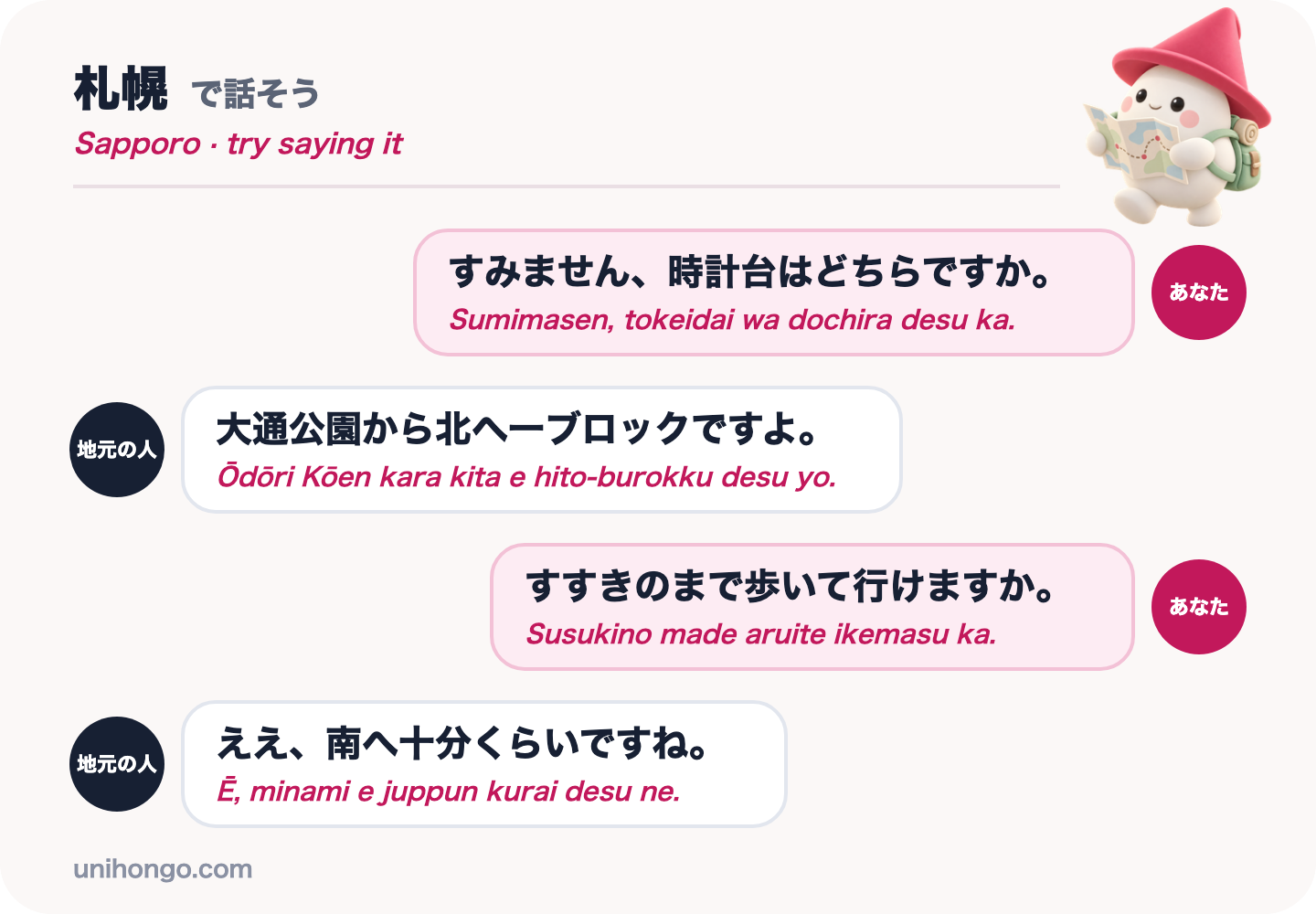
| Japanese | Romaji | Meaning |
|---|---|---|
| すみません、時計台はどちらですか。 | Sumimasen, tokeidai wa dochira desu ka. | Excuse me, which way is the Clock Tower? |
| 大通公園から北へ一ブロックですよ。 | Ōdōri Kōen kara kita e hito-burokku desu yo. | It's one block north of Ōdōri Park. |
| すすきのまで歩いて行けますか。 | Susukino made aruite ikemasu ka. | Can I walk to Susukino? |
| ええ、南へ十分くらいですね。 | Ē, minami e juppun kurai desu ne. | Yes, about ten minutes to the south. |
Official information
Event dates in Ōdōri Park and opening times for the Clock Tower change by season and are published by the city's tourism site and the Clock Tower itself. Check them before you go, especially around the Snow Festival and New Year.