

Why Noboribetsu is Hokkaido's classic hot spring town
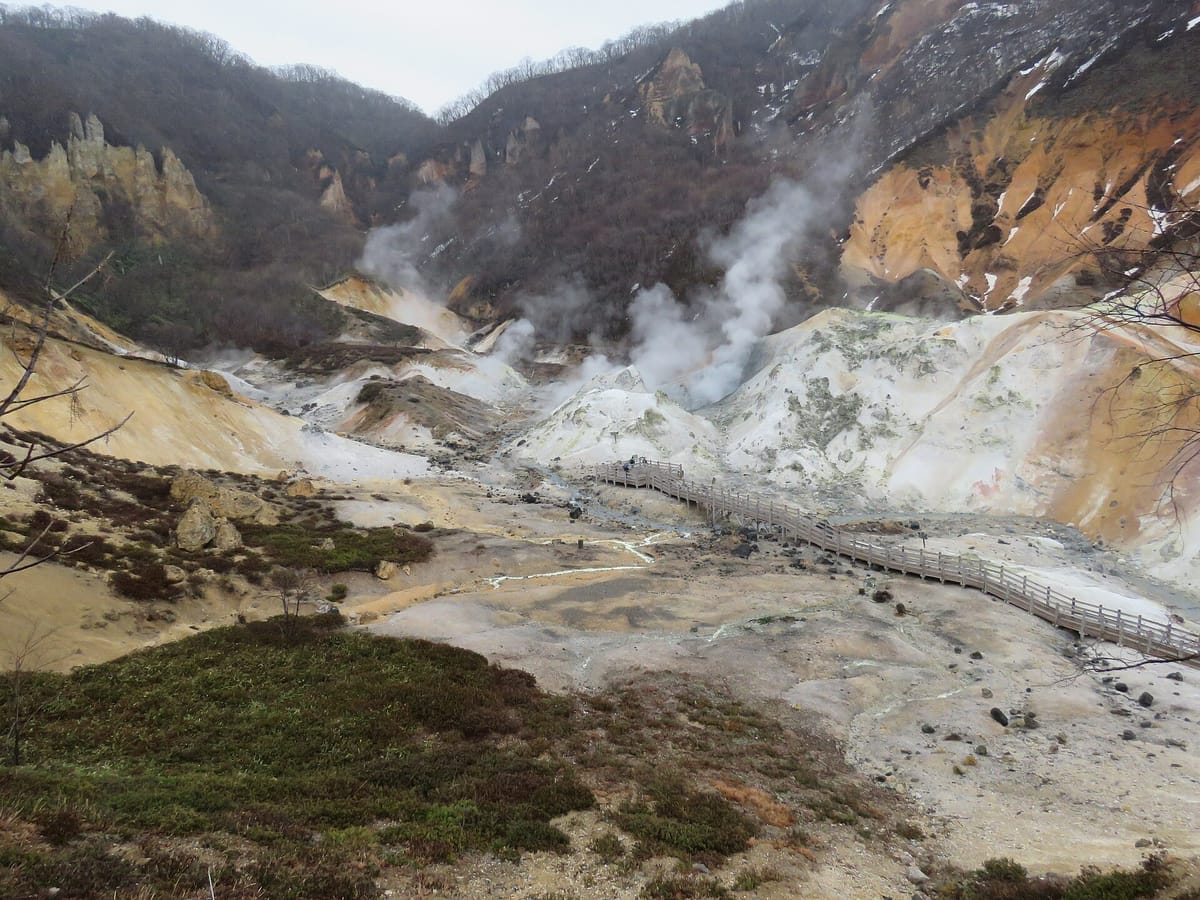
Most hot spring towns have a source you never see. In Noboribetsu, it is the main sight. Jigokudani is an explosion crater on the edge of town, a bowl of bare, colourful rock where steam pours from vents and grey water bubbles in pools. It supplies the hotels below with a remarkable variety of spring waters, from milky sulphur springs to salty and iron-rich ones, which is why Noboribetsu has long been called one of Japan's great onsen towns.
The town leans into its infernal neighbour. Giant oni statues stand along the main street, the Gokuraku-dōri shopping street, and at the Enma-dō, a hall for Enma, the judge of the dead in Buddhist belief, a mechanical figure of Enma changes from a calm face to a furious one at set times each day. On the last weekend of August the town holds its Jigoku Matsuri, Hell Festival, when Enma and his oni parade through the streets.
Noboribetsu is also one of the easiest onsen towns to reach from New Chitose Airport and Sapporo, which makes it a perfect first taste of Japanese bathing culture. It is small, walkable and used to visitors, and the bath is the place where a few words of polite Japanese make the biggest difference.
Getting there: Noboribetsu Station and the bus up the hill
Noboribetsu Station is on the JR line between Sapporo and Hakodate, and limited express trains from Sapporo reach it in a little over an hour. The hot spring town is several kilometres inland, so from the station take a local bus up the hill to the Noboribetsu Onsen bus terminal, around fifteen to twenty minutes. Jigokudani is a five-minute walk uphill from the terminal.
Direct buses also run to Noboribetsu Onsen from Sapporo and from New Chitose Airport, and some hotels run their own shuttles for guests. If you are driving, the town is a short distance from the Noboribetsu-Higashi interchange on the Hokkaido Expressway. Noboribetsu pairs well with Lake Tōya to the west and with Upopoy, the National Ainu Museum, in Shiraoi to the east.
| Japanese | Romaji | Meaning |
|---|---|---|
| 登別温泉行きのバスはどこから出ますか。 | Noboribetsu Onsen-yuki no basu wa doko kara demasu ka. | Where does the bus to Noboribetsu Onsen leave from? |
| このバスは温泉のバスターミナルまで行きますか。 | Kono basu wa onsen no basu tāminaru made ikimasu ka. | Does this bus go to the hot spring bus terminal? |
| 地獄谷はどちらですか。 | Jigokudani wa dochira desu ka. | Which way is Jigokudani? |
| 大湯沼まで歩いてどのくらいですか。 | Ōyunuma made aruite dono kurai desu ka. | How long is it on foot to Ōyunuma? |
| 荷物を預けられますか。 | Nimotsu o azukeraremasu ka. | Can I leave my luggage? |
Jigokudani, Ōyunuma and the natural footbath: what you will see
Start at the Jigokudani observation deck and walk the boardwalk into the valley, where the path passes vents, sulphur-streaked rock and bubbling pools. Stay on the path: the ground is hot, and the gases are strong in places. From the valley, walking trails climb through the woods to Ōyunuma, a large pond of grey sulphurous water whose surface is around 50 degrees Celsius, with a smaller, hotter pond next to it. The walk from Jigokudani to Ōyunuma takes around twenty to thirty minutes.
Below Ōyunuma, the Ōyunuma River flows warm through the forest, and a short walk downstream brings you to the natural footbath, where you can sit on wooden decking and soak your feet in the stream. It is free and open to all, one of the nicest spots in the town. Bring a small towel to dry your feet.
Back in town, walk Gokuraku-dōri, the main street, past the oni statues and the Enma-dō, and try an onsen tamago, an egg boiled in the hot spring. Above the town, a ropeway climbs to Noboribetsu Bear Park, and nearby is Noboribetsu Date Jidaimura, a recreated Edo-period village.
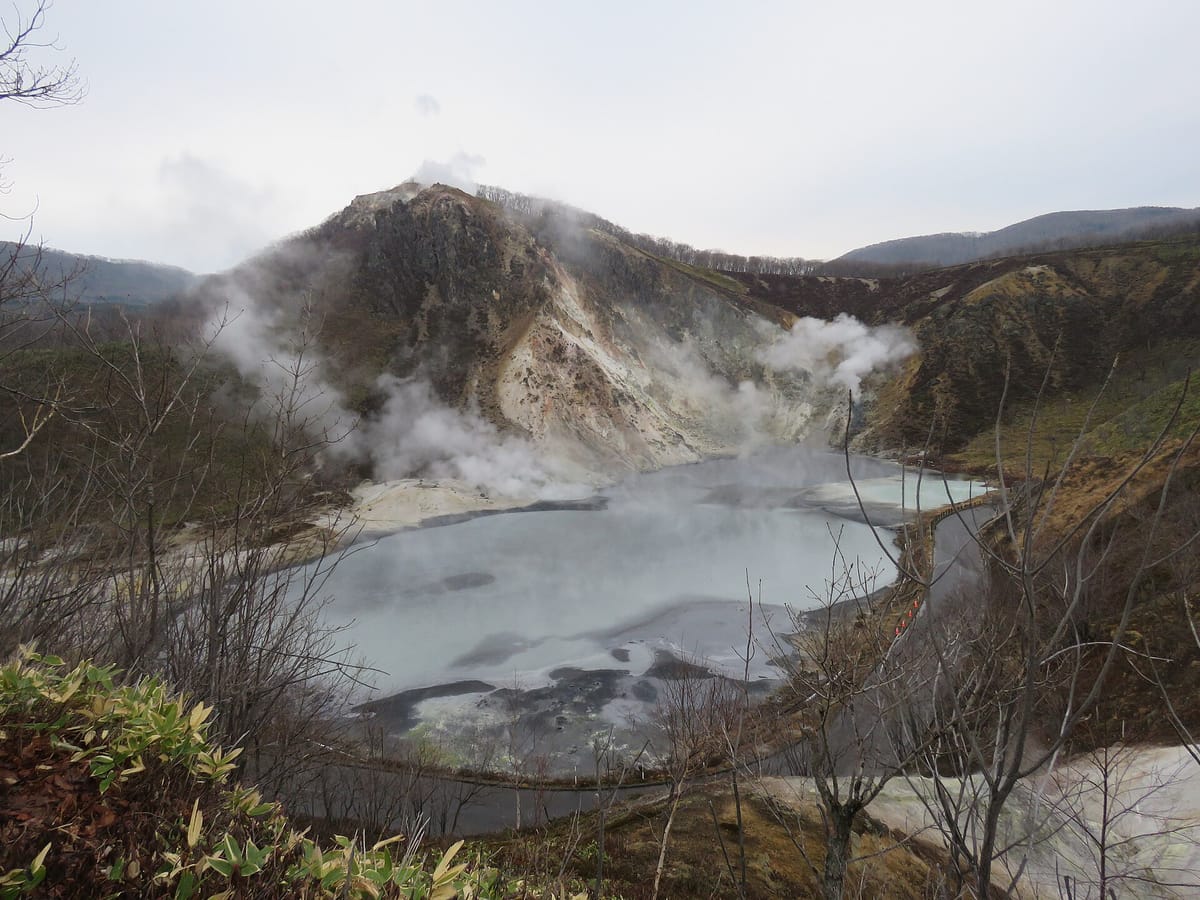
- Jigokudani: the steaming Hell Valley, free, five minutes from the bus terminal.
- Ōyunuma: the sulphur pond reached by forest trails above the valley.
- Ōyunuma River natural footbath: a warm stream in the woods, free.
- Enma-dō: the hall of Enma, whose face changes at set times each day.
- Oni statues along Gokuraku-dōri, the main street.
- Onsen tamago: eggs cooked in the hot spring, sold in town.
Onsen signs and words to read
The words on Noboribetsu's signs split neatly into two groups: the volcanic sights and the bath. 地獄, jigoku, hell, appears everywhere, from Jigokudani to the Jigoku Matsuri. 湯, yu, hot water, is the key kanji for the bath: it appears in 足湯, ashiyu, footbath, in 大湯沼, Ōyunuma, great hot water pond, and on the curtain at every bath entrance.
At the bath itself, look for 男, men, and 女, women, on the curtains, often in blue and red. Mixed-up curtains are a classic traveller's mistake, and some hotels swap the men's and women's baths at set times, so read them every time.
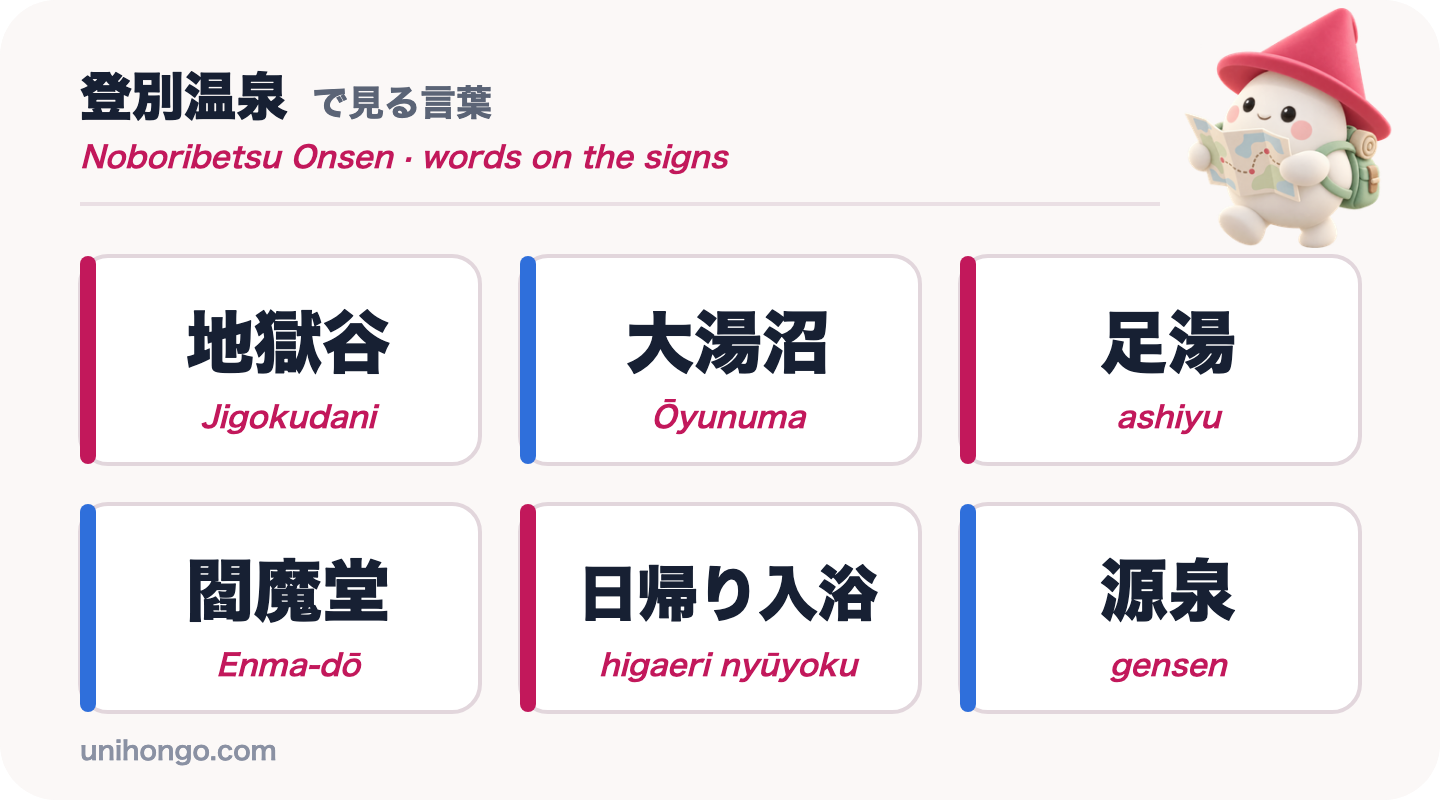
| Word | Reading | Meaning |
|---|---|---|
| 地獄谷 | Jigokudani | Hell Valley, the volcanic crater |
| 大湯沼 | Ōyunuma | The large hot sulphur pond |
| 足湯 | ashiyu | Footbath |
| 閻魔堂 | Enma-dō | Hall of Enma, king of hell |
| 日帰り入浴 | higaeri nyūyoku | Day-use bathing for non-guests |
| 源泉 | gensen | Spring source |
| 露天風呂 | rotenburo | Outdoor bath |
| 男湯/女湯 | otokoyu / onnayu | Men's bath / women's bath |
| 鬼 | oni | Demon, ogre |
Japanese for a day-use bath and the bathing rules
If you are not staying overnight, you can still bathe: many hotels open their large baths to day visitors for a fee, higaeri nyūyoku. Ask at the front desk, pay, and you will be shown to the changing room. Towels are usually for rent or sale if you did not bring one. Bathing rules are the same everywhere in Japan: wash thoroughly at the showers before you get in, keep your towel out of the water, tie up long hair, and do not swim or splash.
Tattoo policies vary from hotel to hotel, so ask before you pay rather than at the bath door. The phrases below cover the whole visit, from the desk to the bath.
| Japanese | Romaji | Meaning |
|---|---|---|
| 日帰りで温泉に入れますか。 | Higaeri de onsen ni hairemasu ka. | Can I use the hot spring as a day visitor? |
| タオルを借りられますか。 | Taoru o kariraremasu ka. | Can I borrow a towel? |
| 露天風呂はありますか。 | Rotenburo wa arimasu ka. | Is there an outdoor bath? |
| タトゥーがあるんですが、大丈夫ですか。 | Tatū ga aru n desu ga, daijōbu desu ka. | I have a tattoo. Is that all right? |
| 貸切風呂はありますか。 | Kashikiri-buro wa arimasu ka. | Do you have a private bath? |
| 男湯はどちらですか。 | Otokoyu wa dochira desu ka. | Which way is the men's bath? |
| ロッカーの鍵はどこで返しますか。 | Rokkā no kagi wa doko de kaeshimasu ka. | Where do I return the locker key? |
Timing, safety and practical tips
A little planning makes Noboribetsu more comfortable, especially in the colder months.
- Stay on the boardwalks and marked paths in Jigokudani; the ground and water can be scalding.
- Some trails above Jigokudani may be closed or icy in winter; check before walking to Ōyunuma.
- Day-use bath hours are limited and vary by hotel; go in the early afternoon for the widest choice.
- Mid-October brings autumn colours to the valley and the forest trails.
- Bring a small towel for the footbath and a spare pair of socks.
- Day-trippers can link Noboribetsu with Lake Tōya or Upopoy by bus or car.
Practise the front desk before you go
The front desk exchange is short, but staff use polite forms you may not know: o-mochi desu ka, do you have, and o-kashi shimasu, we will lend it to you. Practise the four lines below until you can say them without reading, and listen for these polite verbs in the reply.
Then practise with someone who answers back. In Unihongo, choose the Onsen topic and ask your AI Sensei to play the front desk staff at a hotel in Noboribetsu, including the question about tattoos and the way to the outdoor bath. Speaking it once before your trip makes the real exchange quick and relaxed.
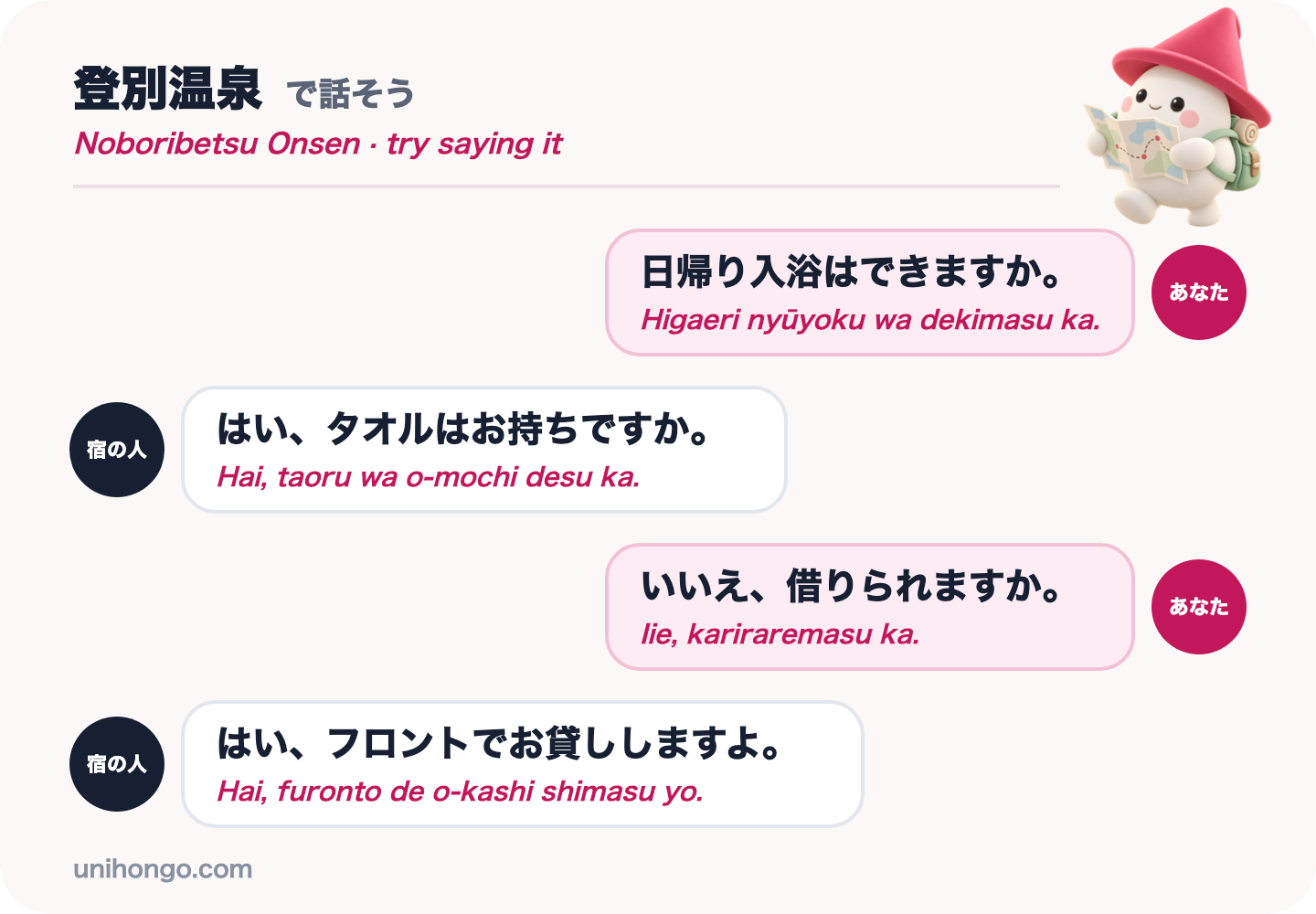
| Japanese | Romaji | Meaning |
|---|---|---|
| 日帰り入浴はできますか。 | Higaeri nyūyoku wa dekimasu ka. | Can I use the bath as a day visitor? |
| はい、タオルはお持ちですか。 | Hai, taoru wa o-mochi desu ka. | Yes. Do you have a towel? |
| いいえ、借りられますか。 | Iie, kariraremasu ka. | No. Can I borrow one? |
| はい、フロントでお貸ししますよ。 | Hai, furonto de o-kashi shimasu yo. | Yes, we lend them here at the front desk. |
Official information
Day-use bathing options, event dates such as the Hell Festival, trail closures and access information are published by the Noboribetsu tourism association. Check it before you go, especially in winter.