

Why Nara Park is more than a deer park
Nara was Japan's capital in the eighth century, and the great temples and shrines built for that court are still standing in and around the park that bears the city's name. Nara Park, Nara Kōen, opened as a public park in 1880 and covers a huge area of lawns, ponds, woodland and temple grounds on the eastern edge of the city. Tōdai-ji and its Great Buddha, the lantern-lined shrine of Kasuga Taisha, the pagodas of Kōfuku-ji and the Nara National Museum all sit inside it, several of them part of the Historic Monuments of Ancient Nara World Heritage Site.
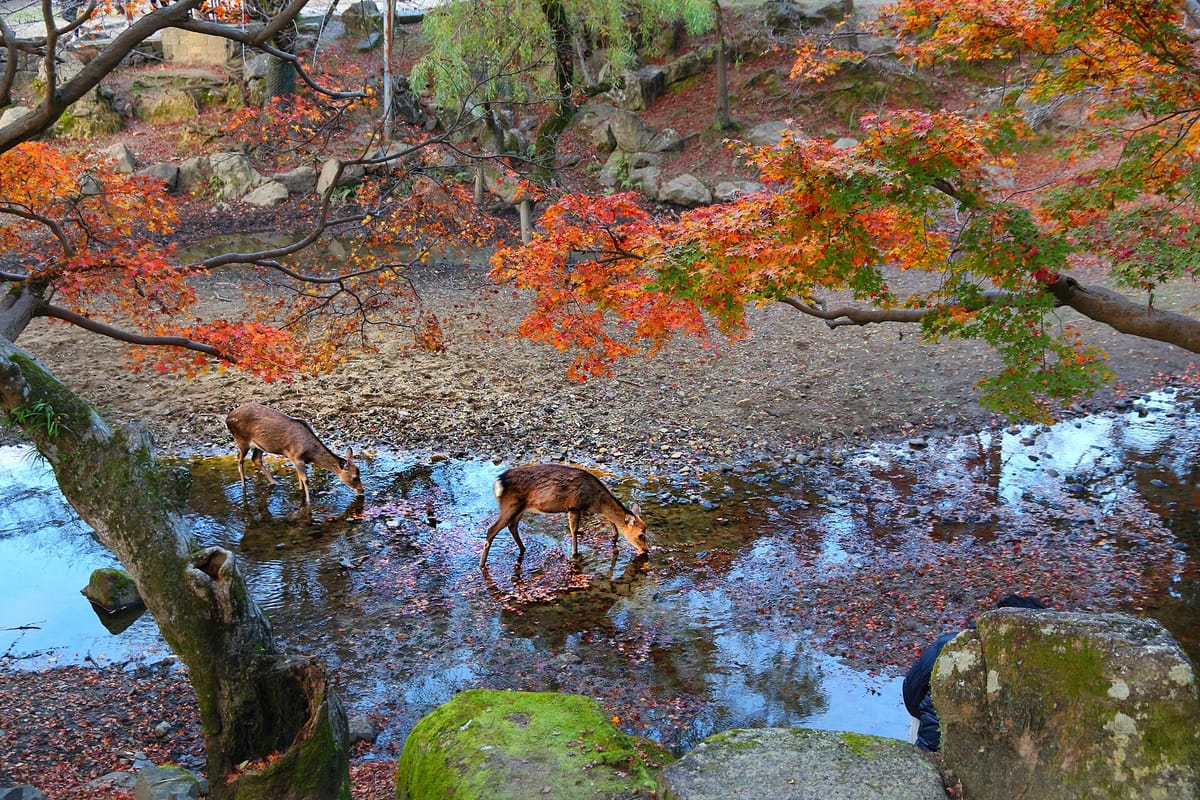
Then there are the deer. According to the shrine's founding legend, the deity of Kasuga Taisha arrived in Nara riding a white deer, and the deer of the park have been treated as sacred messengers ever since. They are sika deer, shika in Japanese, and they are wild: nobody herds them, and they wander freely across roads, shop fronts and temple courtyards. The Nara Deer Preservation Foundation counted 1,687 of them in its July 2026 survey, the highest number since its counts began.
For a learner of Japanese, the park is a gentle place to start speaking. Stallholders selling crackers, temple ticket offices and the people walking between sights are used to visitors, the phrases you need are short, and the signs repeat the same handful of kanji. The character 鹿, deer, will be the first one you read without thinking.
Getting there: Kintetsu Nara and JR Nara stations
Kintetsu Nara Station, Kintetsu Nara-eki, is the closest station to the park. Trains on the Kintetsu Nara Line come from Osaka Namba, and Kintetsu Kyoto Line trains run from Kyoto, often with a change at Yamato-Saidaiji. From the station exits, walk east up the covered street and along Noboriōji, the main road, and you reach the first lawns and the first deer in under ten minutes.
JR Nara Station, on the JR Yamatoji Line from Osaka and the JR Nara Line from Kyoto, is further west, about twenty minutes on foot from the park along Sanjō-dōri, a street of shops and cafés that climbs gently towards Kōfuku-ji. City buses run from both stations along the edge of the park; the Kenchō-mae stop, in front of the prefectural office, is a convenient place to get off for the western lawns and Tōdai-ji.
| Japanese | Romaji | Meaning |
|---|---|---|
| 奈良公園はどちらですか。 | Nara Kōen wa dochira desu ka. | Which way is Nara Park? |
| 近鉄奈良駅から歩いて行けますか。 | Kintetsu Nara-eki kara aruite ikemasu ka. | Can I walk there from Kintetsu Nara Station? |
| 東大寺まで歩いて何分くらいですか。 | Tōdai-ji made aruite nanpun kurai desu ka. | About how many minutes to Tōdai-ji on foot? |
| このバスは県庁前に止まりますか。 | Kono basu wa Kenchō-mae ni tomarimasu ka. | Does this bus stop at Kenchō-mae? |
| 帰りはJR奈良駅に行きたいです。 | Kaeri wa JR Nara-eki ni ikitai desu. | On the way back I want to go to JR Nara Station. |
Around the park: Kōfuku-ji, Ukimidō and the quieter lawns
Most people walk straight from the station to Tōdai-ji and back, and the path between them can be crowded with both visitors and deer. The park is large enough to escape that. Head south from Kōfuku-ji to Sarusawa-ike pond and the Ukimidō pavilion, or east through the woods towards Kasuga Taisha, and within ten minutes you may share a lawn with a few deer and nobody else.
Kōfuku-ji, the family temple of the powerful Fujiwara clan, is the first big temple you meet coming from Kintetsu Nara. Its grounds are free to walk through. The five-storey pagoda, one of the symbols of Nara, has been covered for a major renovation since 2023, but the rebuilt Central Golden Hall and the treasure museum, with its famous three-faced statue of Ashura, remain open for a fee.
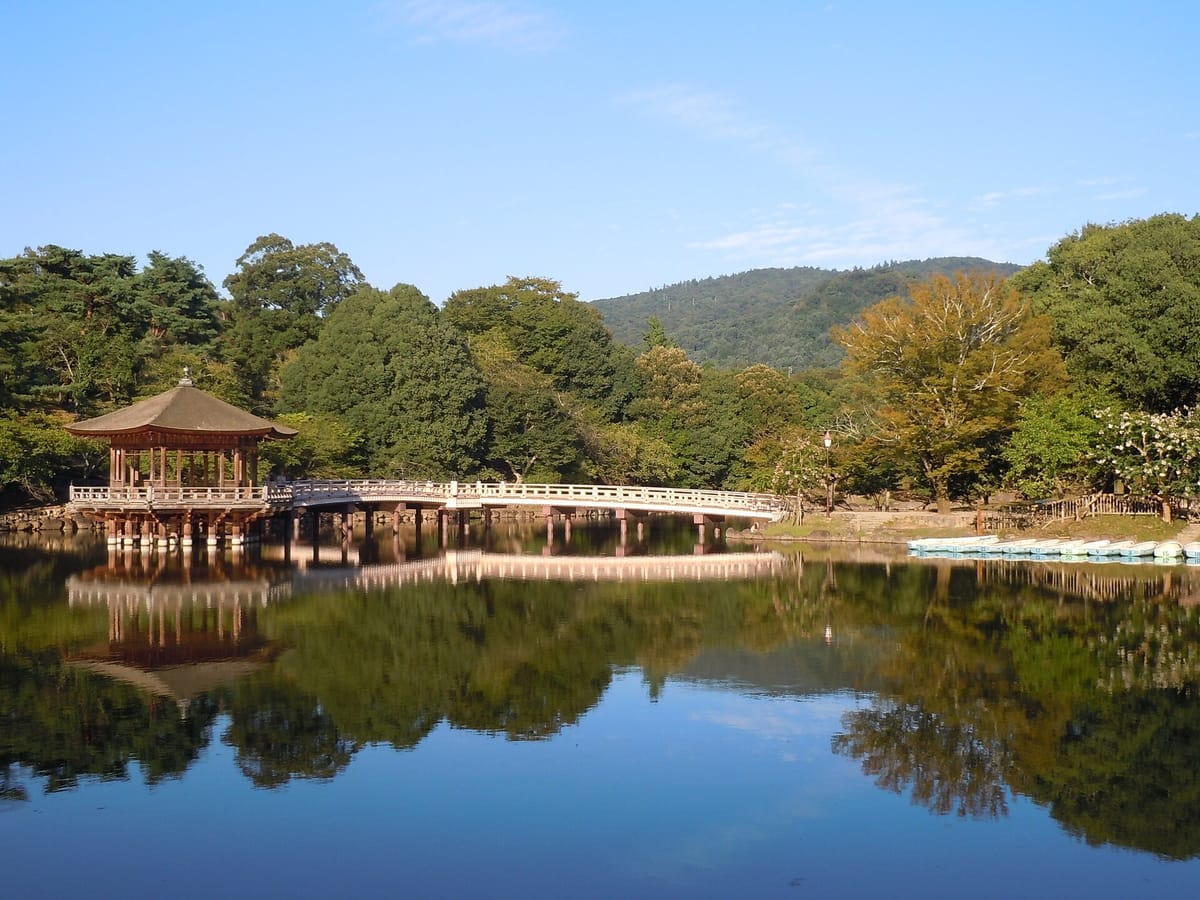
- Kōfuku-ji: the temple nearest Kintetsu Nara, with halls and a treasure museum; the grounds are free.
- Sarusawa-ike: the pond below Kōfuku-ji, with views up to the temple roofs.
- Ukimidō: a pavilion standing on a pond, a quiet spot for a rest.
- Nara National Museum: Buddhist art from Nara's temples, next to the main lawns.
- Tobihino: the wide open lawn between Kasuga Taisha and the museum, popular with resting deer.
- Wakakusayama: the grassy hill on the east side, open to walkers for most of the year outside winter.
- Isuien and Yoshikien: two Japanese gardens near Tōdai-ji, a short detour from the main path.
Deer, crackers and the words on the signs
The deer are protected as a natural monument, tennen kinenbutsu, and the park's rules exist for their safety as much as yours. The most important is simple: give them shika senbei and nothing else. Bread, fruit, snacks and especially paper or plastic bags can make them seriously ill, so keep your own food in your bag and take your rubbish with you.
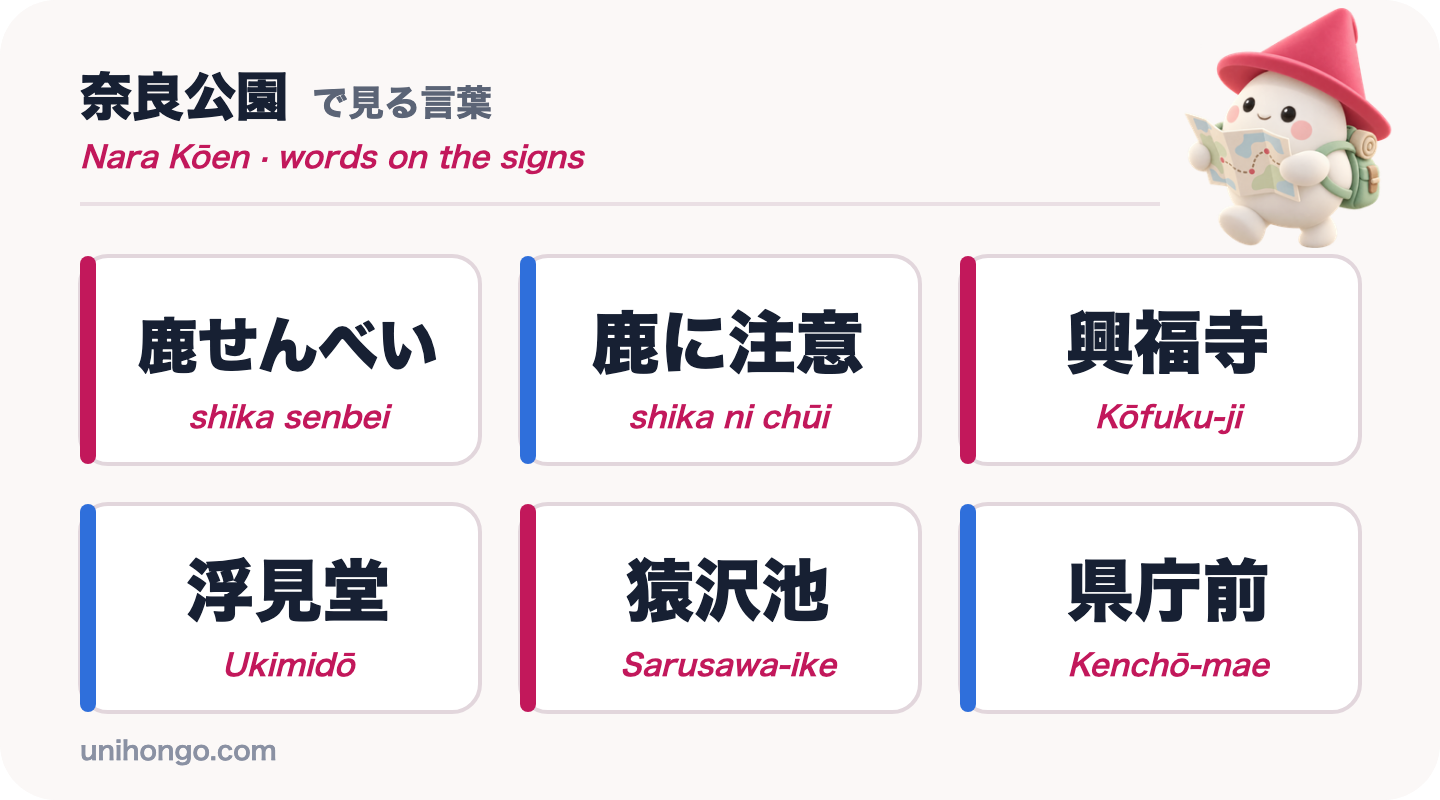
Many deer have learned to bob their heads when they see a cracker, and visitors love to bow back. It is charming, but a bow is also how an impatient deer starts to butt, so do not stand holding crackers out of reach. Warning signs, often illustrated with a deer kicking or biting, use the words below.
| Word | Reading | Meaning |
|---|---|---|
| 鹿 | shika | Deer |
| 鹿せんべい | shika senbei | Deer crackers, the only food for the deer |
| 鹿に注意 | shika ni chūi | Beware of the deer |
| 天然記念物 | tennen kinenbutsu | Natural monument, the deer's protected status |
| 興福寺 | Kōfuku-ji | The temple nearest Kintetsu Nara Station |
| 猿沢池 | Sarusawa-ike | The pond below Kōfuku-ji |
| 浮見堂 | Ukimidō | The pavilion on the pond in the south of the park |
| 県庁前 | Kenchō-mae | Bus stop in front of the prefectural office |
| えさを与えないで | esa o ataenaide | Do not feed (anything other than crackers) |
Japanese for buying shika senbei and feeding the deer
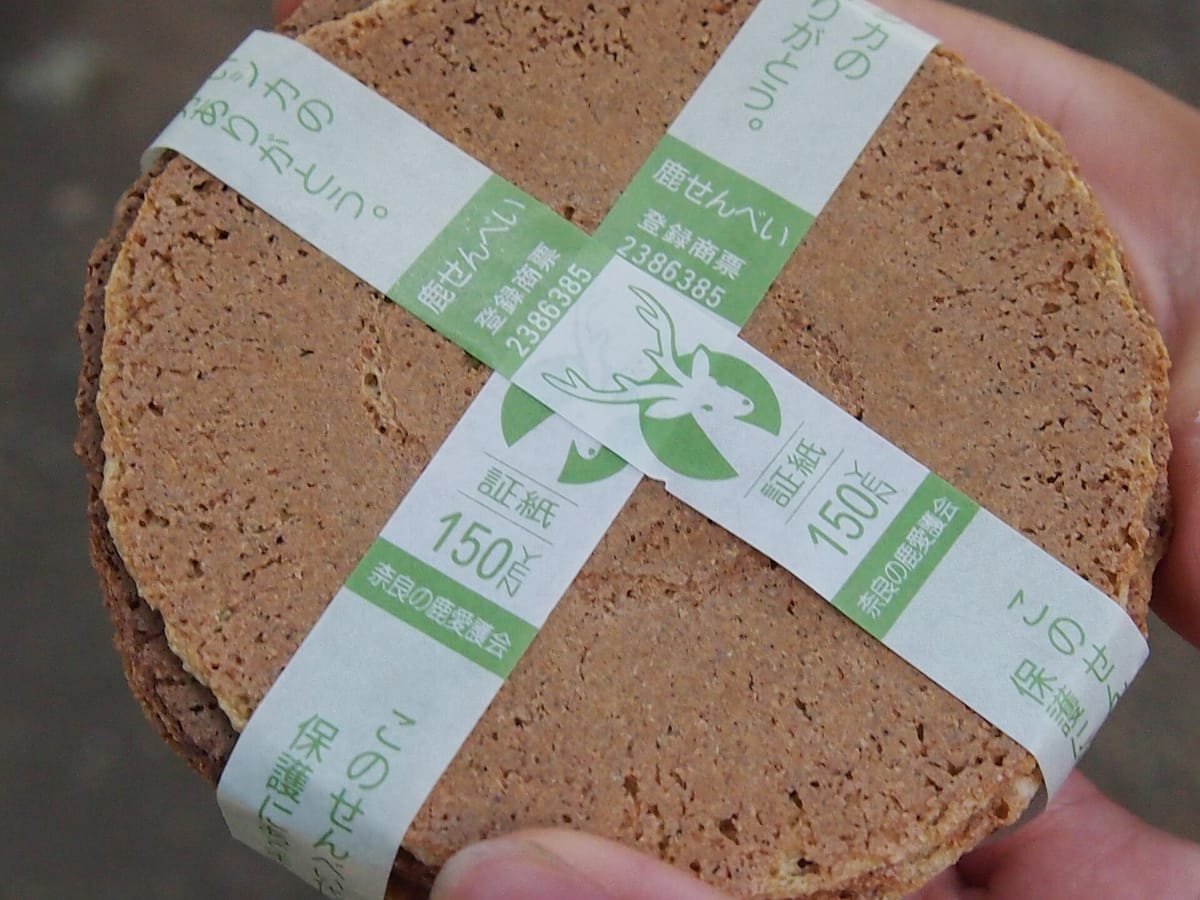
Shika senbei are sold in small bundles at stalls all over the park, often under a parasol with deer waiting patiently nearby. The price is small and printed on the stall; have coins ready. The moment you pay, expect company: several deer will usually come over, so break the crackers into pieces and give them out one at a time.
When you have finished, the Japanese habit is to show your open hands and say mō nai yo, all gone. The deer seem to understand the gesture, and people around you will smile at the phrase.
| Japanese | Romaji | Meaning |
|---|---|---|
| 鹿せんべいを一つください。 | Shika senbei o hitotsu kudasai. | One pack of deer crackers, please. |
| 二つください。 | Futatsu kudasai. | Two, please. |
| 子どもがあげても大丈夫ですか。 | Kodomo ga agete mo daijōbu desu ka. | Is it all right for a child to feed them? |
| この鹿、かみますか。 | Kono shika, kamimasu ka. | Does this deer bite? |
| もうないよ。 | Mō nai yo. | All gone (said to the deer, with open hands). |
| 鹿と写真を撮ってもいいですか。 | Shika to shashin o totte mo ii desu ka. | May I take a photo with the deer? |
Etiquette, seasons and practical tips
The deer live here all year, and each season changes how they behave. A few habits keep both you and them safe.
- Feed only shika senbei, and never tease a deer by holding food out of reach.
- Keep maps, tickets and paper bags out of sight; deer will try to eat paper.
- Watch the males in autumn, when they are in rut and more aggressive. Their antlers are cut in a traditional ceremony each October.
- Give mothers and fawns space in early summer, when the young are born.
- Do not chase, pat roughly or pick up the deer; they are wild animals.
- Take all rubbish home: bins are scarce, and litter can kill a deer.
- Arrive early. The lawns near Tōdai-ji are busiest from late morning, and the park grows quieter again in the early evening.
Practise the visit before you go
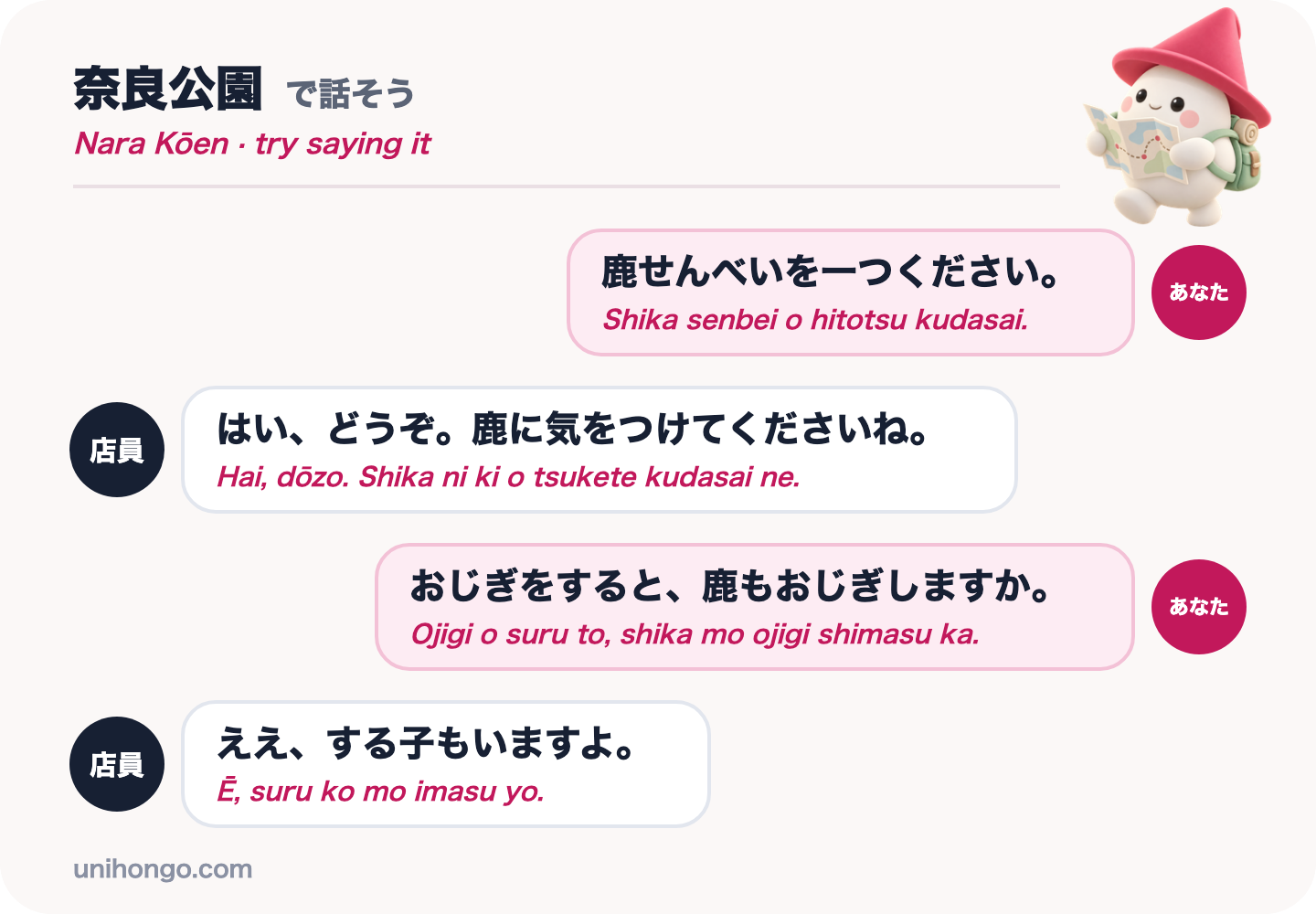
Your first conversation in Nara will almost certainly be at a cracker stall. It takes only a few seconds, but it is a real exchange: you ask, the seller hands over the crackers with a warning, and you can add a question of your own. Practise the four lines below until you can say them without reading.
Then practise with a partner who answers back. In Unihongo, choose the Sightseeing topic and ask your AI Sensei to play a stallholder in Nara Park or a local walking a dog past Kōfuku-ji. Ask the way to Tōdai-ji, ask how long it takes, and ask where the nearest bus stop is.
| Japanese | Romaji | Meaning |
|---|---|---|
| 鹿せんべいを一つください。 | Shika senbei o hitotsu kudasai. | One pack of deer crackers, please. |
| はい、どうぞ。鹿に気をつけてくださいね。 | Hai, dōzo. Shika ni ki o tsukete kudasai ne. | Here you are. Watch out for the deer. |
| おじぎをすると、鹿もおじぎしますか。 | Ojigi o suru to, shika mo ojigi shimasu ka. | If I bow, will the deer bow too? |
| ええ、する子もいますよ。 | Ē, suru ko mo imasu yo. | Yes, some of them do. |
Official information
The Nara city tourism association and Visit Nara publish up-to-date guidance on the park and the deer, and the Nara Deer Preservation Foundation posts its annual deer count. Check them before you go for events such as the antler cutting in October.