

Why the Chūreitō view is worth the climb
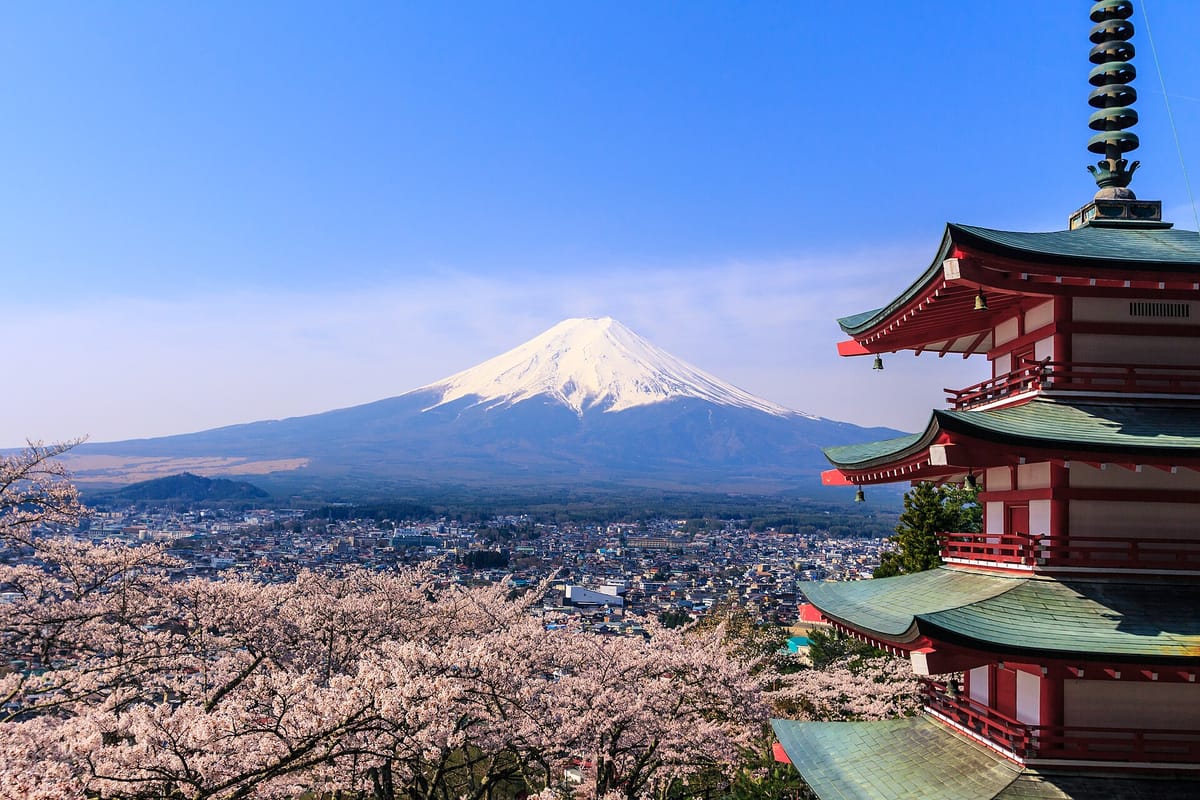
From the viewing deck above the Chūreitō, three things line up: the five-storey pagoda in the foreground, the town of Fujiyoshida in the valley and Mount Fuji rising behind it. With cherry blossom in April or red maples in November it is the picture on countless posters and guidebook covers, and it is surprisingly easy to reach from Tokyo.
The pagoda is not an old temple building. It was completed in 1962 as the city's memorial to its war dead, built in the style of a traditional five-storey pagoda, and it stands 19.5 metres tall. The park around it, Arakurayama Sengen Park, opened in 1959 on the lower slopes of Mount Arakura and belongs to the Arakura Fuji Sengen Shrine, whose deity, Konohanasakuya-hime, is the goddess of Mount Fuji.
It is also a lesson in how popular places are changing. Visitor numbers have grown so much that Fujiyoshida cancelled its cherry blossom festival in 2026 because of the effect on residents. Coming early, staying on the paths and speaking a few polite words of Japanese are the easiest ways to be a welcome visitor.
Getting there: Shimoyoshida Station and the walk up
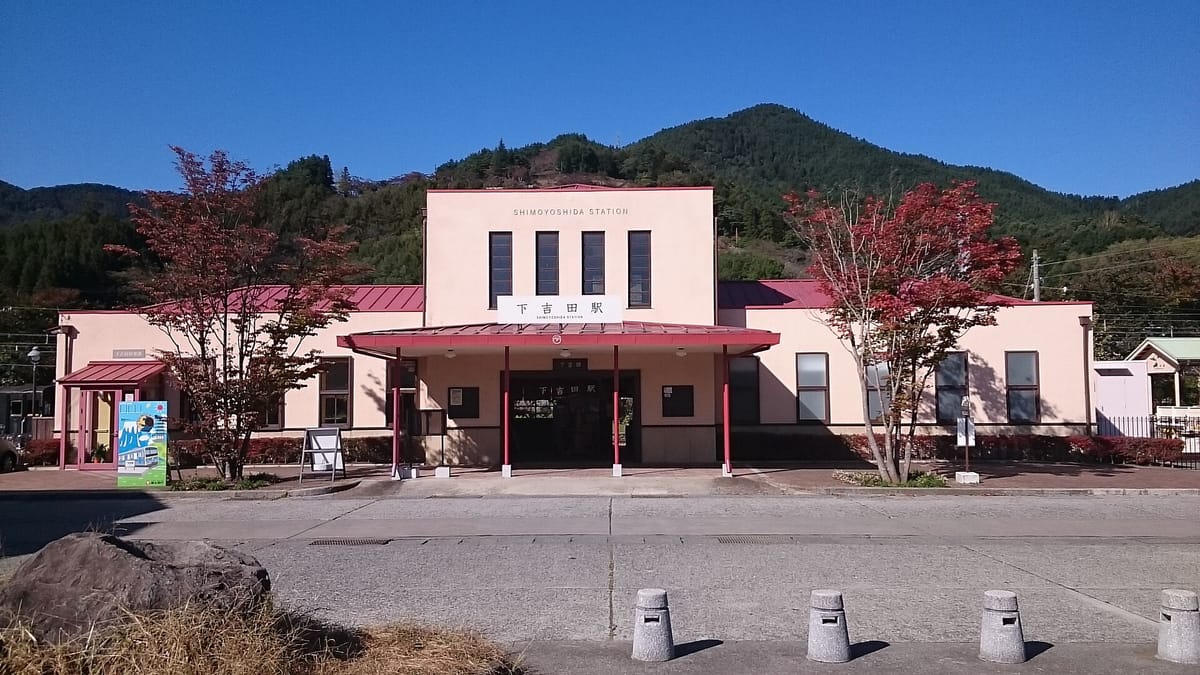
The nearest station is Shimoyoshida, Shimoyoshida-eki, on the Fujikyū line between Ōtsuki and Kawaguchiko. Local trains and the Fuji Excursion limited express from Shinjuku both stop there, and the railway now adds the park's name to the station's, so you may see it written 下吉田<新倉山浅間公園> on timetables. From Kawaguchiko the ride back to Shimoyoshida is only a few stops.
From the station, walk up through a residential area to the park entrance, about ten minutes. Signs and road markings point the way. At the foot of the hill are the shrine's torii and the Arakura Fuji Sengen Shrine, and from there you choose between the Sakuyahime staircase straight up to the pagoda or a gentler sloping path. Allow about twenty-five minutes from the station to the pagoda at a steady pace.
The walk passes people's homes. Keep to the pavement, keep your voice down early in the morning and do not step into gardens or private driveways for a photo.
| Japanese | Romaji | Meaning |
|---|---|---|
| 下吉田駅に止まりますか。 | Shimoyoshida-eki ni tomarimasu ka. | Does this stop at Shimoyoshida Station? |
| 新倉山浅間公園はどちらですか。 | Arakurayama Sengen Kōen wa dochira desu ka. | Which way is Arakurayama Sengen Park? |
| 階段じゃない道もありますか。 | Kaidan ja nai michi mo arimasu ka. | Is there a way that isn't stairs? |
| トイレはどこにありますか。 | Toire wa doko ni arimasu ka. | Where is the toilet? |
| 帰りの電車は何時ですか。 | Kaeri no densha wa nanji desu ka. | What time is the train back? |
The shrine, the steps and the deck: what you will see
The visit is short but steep. Most people spend an hour or so, longer if they wait for the clouds to clear from Fuji. The deck was rebuilt and reopened in 2022 with more space, handrails and step-free features, and there are toilets near the shrine and the pagoda.
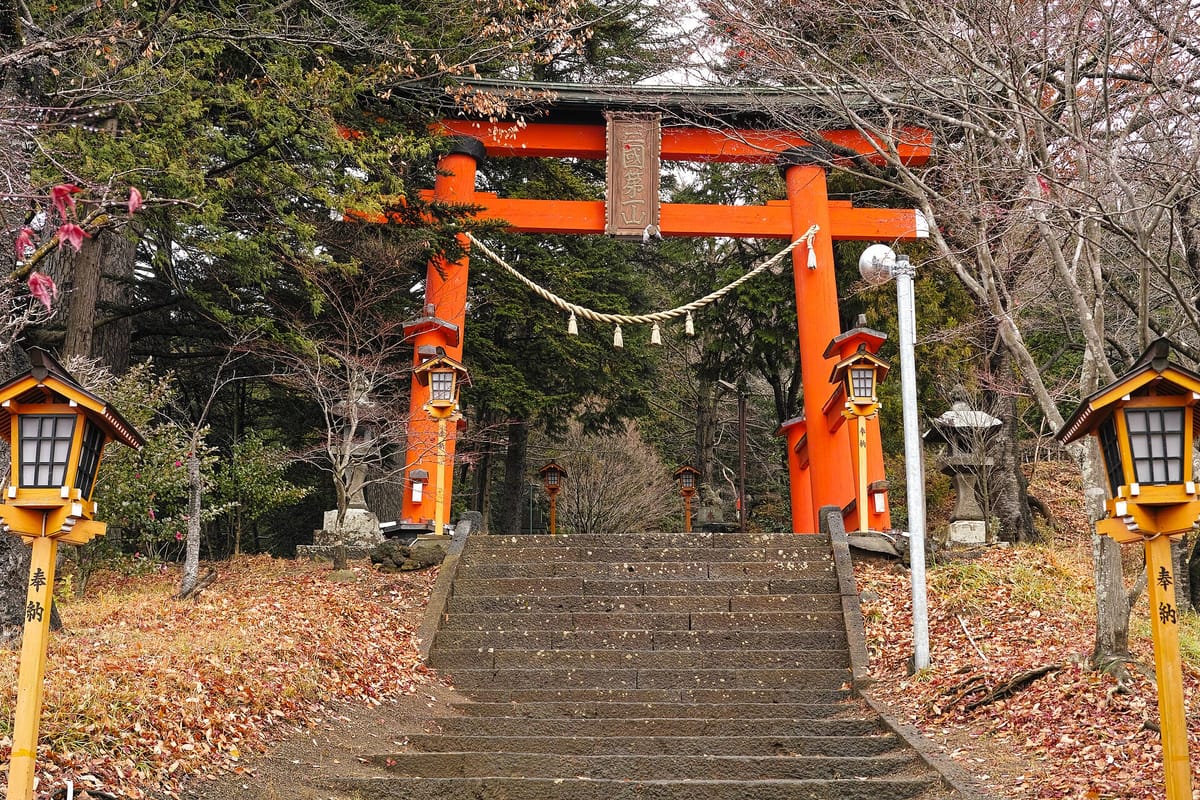
- Arakura Fuji Sengen Shrine (新倉富士浅間神社): the shrine at the foot of the hill, dedicated to the goddess of Mount Fuji; a good place for a short prayer and a goshuin.
- Sakuyahime kaidan (咲くや姫階段): the 398-step staircase, named after the shrine's goddess.
- Chūreitō (忠霊塔): the five-storey memorial pagoda, painted vermilion with green tiers.
- Tenbō dekki (展望デッキ): the viewing deck above the pagoda, where the classic photo is taken.
- Cherry trees: around 650 Yoshino cherries across the park, in bloom in early to mid-April in most years.
- Autumn colour: maples around the pagoda from late October to mid-November.
Words on the signs at Arakurayama
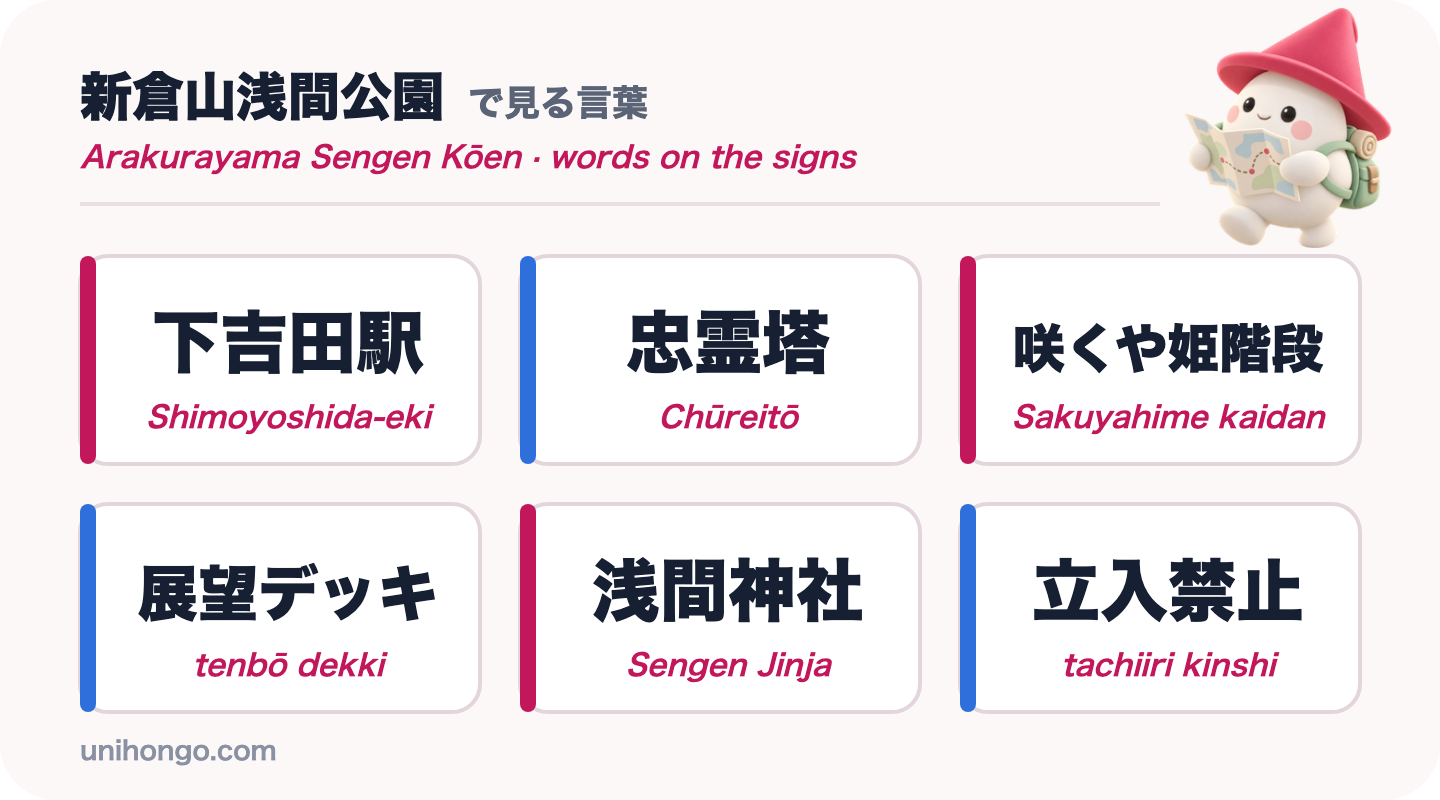
Signs in the park and on the streets below are mostly directions, plus a few requests. 立入禁止, tachiiri kinshi, no entry, appears on slopes, fenced areas and private land, and it is taken seriously here. You may also see 私有地, shiyūchi, private property, on the approach streets.
The name of the park itself is a useful reading exercise. 新倉山 is Mount Arakura, 浅間 is read sengen here (not asama as in other places), and 公園 is park.
| Word | Reading | Meaning |
|---|---|---|
| 下吉田駅 | Shimoyoshida-eki | Shimoyoshida Station, the nearest stop |
| 忠霊塔 | Chūreitō | Memorial tower for the war dead, the pagoda |
| 咲くや姫階段 | Sakuyahime kaidan | The 398-step Sakuyahime staircase |
| 展望デッキ | tenbō dekki | Viewing deck |
| 浅間神社 | Sengen Jinja | Sengen shrine, dedicated to the goddess of Fuji |
| 立入禁止 | tachiiri kinshi | No entry |
| 私有地 | shiyūchi | Private property |
| 五重塔 | gojū no tō | Five-storey pagoda |
Japanese for photos and polite requests
At the deck, space is limited and everyone wants the same frame. A few short phrases let you ask for a turn, offer to take someone's photo or apologise for getting in the way without any awkwardness. Japanese visitors use exactly these lines with each other.
At the shrine office at the bottom, the usual shrine phrases work: ask for a goshuin, or for an omamori, a charm. Remember that the shrine takes cash only.
| Japanese | Romaji | Meaning |
|---|---|---|
| すみません、写真を撮ってもいいですか。 | Sumimasen, shashin o totte mo ii desu ka. | Excuse me, is it OK to take a photo? |
| シャッターを押していただけますか。 | Shattā o oshite itadakemasu ka. | Could you take our photo? |
| よかったら撮りましょうか。 | Yokattara torimashō ka. | Shall I take one for you? |
| すみません、邪魔でしたか。 | Sumimasen, jama deshita ka. | Sorry, was I in your way? |
| お先にどうぞ。 | O-saki ni dōzo. | Please, go ahead. |
| 御朱印をお願いできますか。 | Goshuin o onegai dekimasu ka. | Could I ask for a goshuin? |
Etiquette, crowds and timing
The city's decision to cancel the festival came after residents reported people walking into gardens, using private toilets and leaving rubbish in the streets. Most visitors never do any of this, but it is worth knowing what matters most to the people who live here.
- Stay on public roads and park paths; never enter gardens, driveways or fields for a photo.
- Use the park's public toilets, and take all your rubbish away with you.
- Remember the Chūreitō is a war memorial: no climbing, sitting on or leaning against it.
- Do not fly drones or block the stairs with tripods.
- Come early. Fuji is clearest in the morning, the light is on the mountain's face and the crowds arrive later.
- In April and in the autumn colours season, expect crowd control, one-way routes and staff directing people; follow their instructions.
- The steps are steep and can be icy in winter; wear shoes with grip.
Practise asking the way before you go
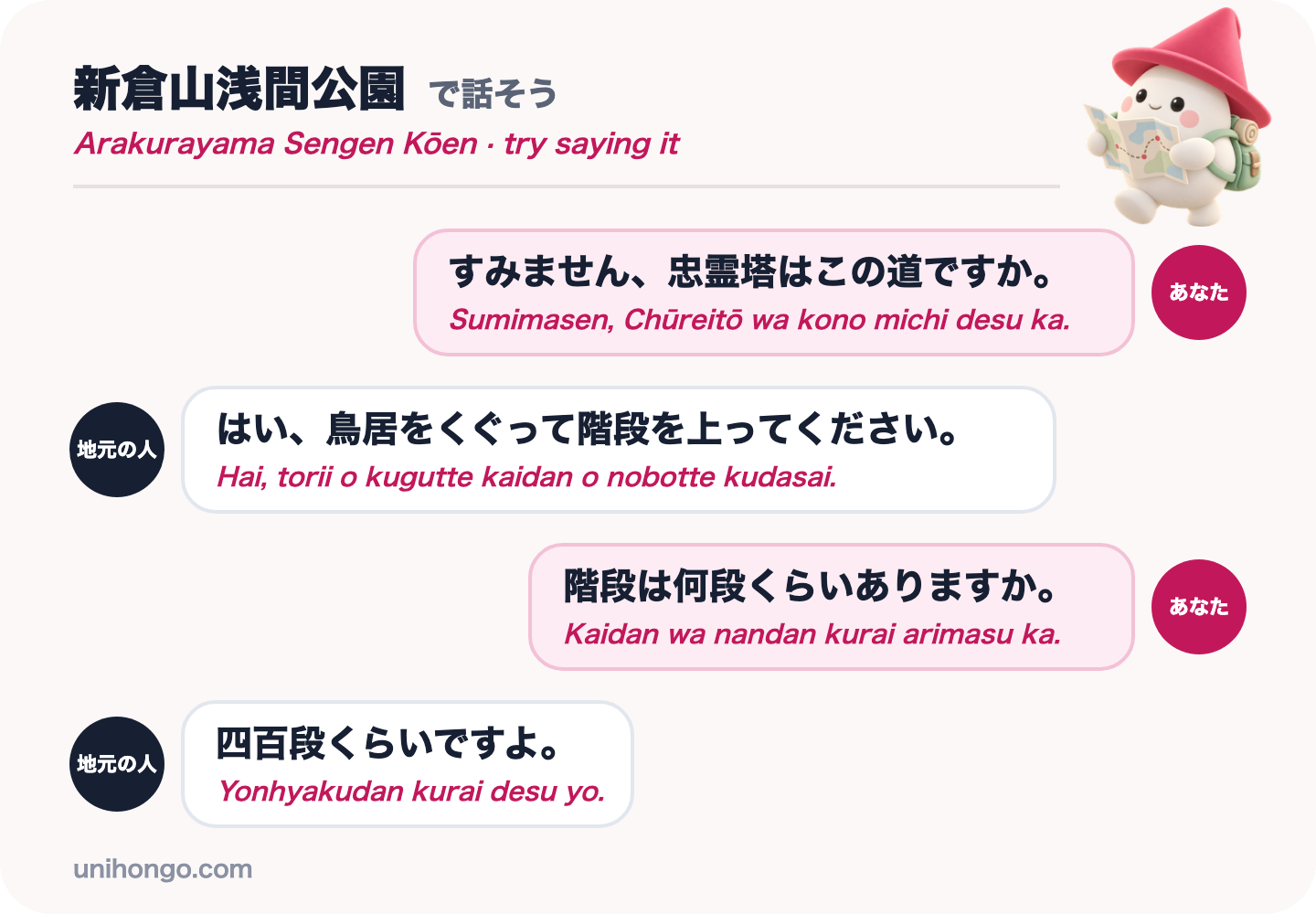
On the walk from Shimoyoshida Station you may want to check the way once. Locals will answer quickly and point, so listen for torii, kaidan, stairs, and numbers with dan, the counter for steps.
Practise the four lines until you can say them from memory. Then practise with a partner who answers back: in Unihongo, choose the Directions topic and ask your AI Sensei to play a Fujiyoshida local, and try both the stairs and the sloping path.
| Japanese | Romaji | Meaning |
|---|---|---|
| すみません、忠霊塔はこの道ですか。 | Sumimasen, Chūreitō wa kono michi desu ka. | Excuse me, is this the way to the Chūreitō? |
| はい、鳥居をくぐって階段を上ってください。 | Hai, torii o kugutte kaidan o nobotte kudasai. | Yes, go through the torii and climb the stairs. |
| 階段は何段くらいありますか。 | Kaidan wa nandan kurai arimasu ka. | About how many steps are there? |
| 四百段くらいですよ。 | Yonhyakudan kurai desu yo. | About four hundred. |
Official information
Crowd-control dates, parking arrangements and illumination times are set by Fujiyoshida City each season. Check the city tourism guide and the prefecture's tourism site before you go, especially in April and November.