

Why Shinjuku is the best evening in Tokyo
Shinjuku is less a single sight than a sequence. In one late afternoon and evening you can look down on the whole city from a government skyscraper for free, eat grilled skewers elbow to elbow in an alley that has barely changed since the post-war years, walk through the brightest entertainment district in Japan, and end the night in a bar with room for six. All of it is within about twenty minutes' walk of the station.
The station itself is the hinge. It is served by around a dozen railway and subway lines and handles millions of passengers a day, and the two sides of the tracks feel like different cities. The west side, Nishi-Shinjuku, is planned and tall: office towers, hotels and the Tochō. The east side is dense and noisy: department stores, electronics shops, cinemas, and the lanes of Kabukichō and Golden Gai.
For a learner, Shinjuku is where Japanese becomes a key. The tiny counters of Omoide Yokochō and Golden Gai are run by one or two people, menus are often handwritten, and a polite question at the door gets a much warmer answer than pointing.
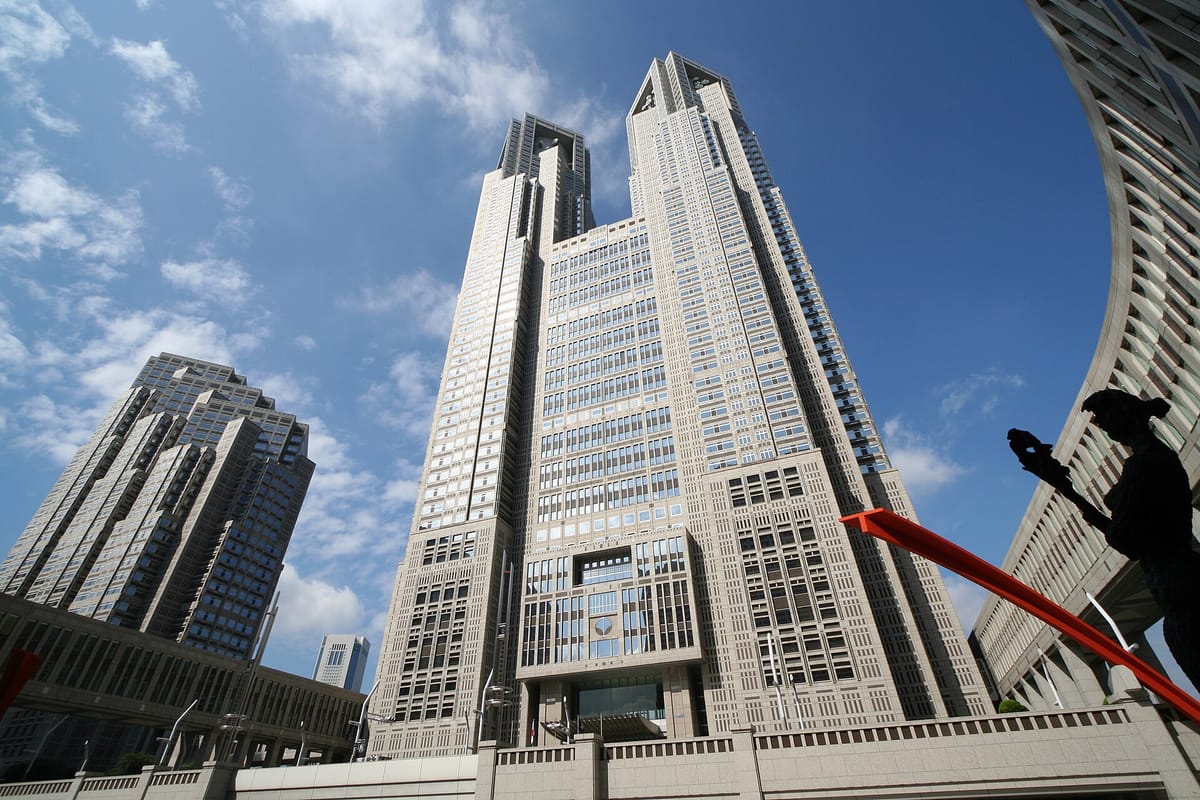
Getting there: west exit, east exit and Tochōmae
Shinjuku Station is served by JR lines including the Yamanote and Chūō lines, the Odakyū and Keiō private railways, and the Marunouchi, Shinjuku and Ōedo subway lines. The exit decides your evening. Take the west exit, 西口, for the skyscrapers, the Tochō and Omoide Yokochō, whose entrance is a couple of minutes north along the tracks. Take the east exit, 東口, for the shopping streets, Kabukichō and Golden Gai.
The Tochō is about ten minutes on foot from the west exit through the underground walkway, or you can ride the Toei Ōedo Line to Tochōmae Station, which connects to the building. Golden Gai is about ten minutes' walk from the east exit, beside Hanazono Shrine; Kabukichō starts just across Yasukuni-dōri from the east side of the station.
| Japanese | Romaji | Meaning |
|---|---|---|
| 西口はどちらですか。 | Nishiguchi wa dochira desu ka. | Which way is the west exit? |
| 都庁へはどうやって行けばいいですか。 | Tochō e wa dō yatte ikeba ii desu ka. | How do I get to the Tochō? |
| 展望室の入口はどこですか。 | Tenbōshitsu no iriguchi wa doko desu ka. | Where is the entrance to the observatory? |
| 今日はどちらの展望室が開いていますか。 | Kyō wa dochira no tenbōshitsu ga aite imasu ka. | Which observatory is open today? |
| ゴールデン街はここから遠いですか。 | Gōruden-gai wa koko kara tōi desu ka. | Is Golden Gai far from here? |
From the Tochō to Kabukichō: what you will see
Start at the Tochō in the late afternoon. The building, designed by Kenzō Tange and completed in 1991, has an express lift from the first floor of the main building to observatories on the 45th floor, 202 metres up, with views across the city and, on clear winter days, to Mount Fuji. After dark, projection-mapping shows play across the building's facade in the evenings.
Walk back towards the station for dinner in Omoide Yokochō, then cross to the east side. Kabukichō is Japan's best-known entertainment district, full of restaurants, karaoke, cinemas and bars; the Godzilla head that peers over the Toho cinema building on its main street is the classic photo. On its eastern edge, beside the quiet grounds of Hanazono Shrine, Golden Gai's narrow lanes hold a couple of hundred tiny bars, many with a theme or a regular crowd of their own.
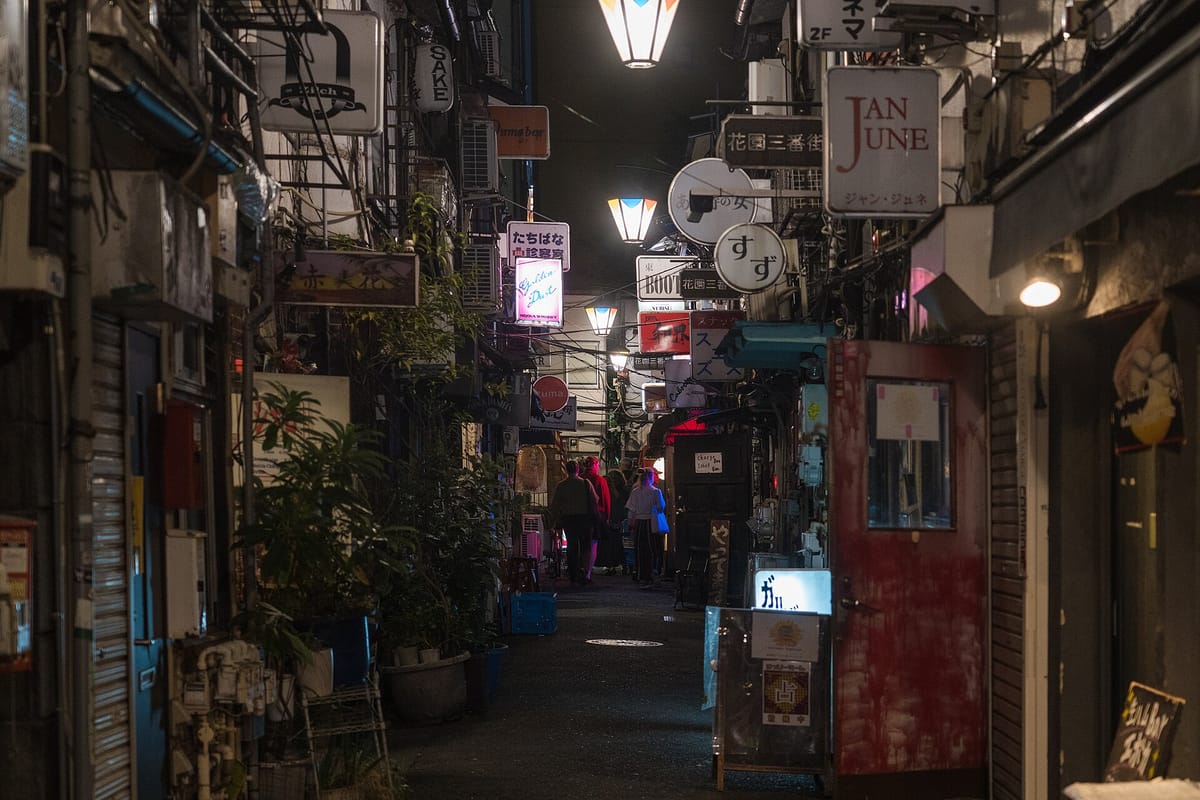
- Tochō tenbōshitsu (都庁展望室): the free observatories on the 45th floor.
- Omoide Yokochō (思い出横丁): the alley of yakitori counters by the west exit.
- Kabukichō (歌舞伎町): the entertainment district east of the station.
- Godzilla head (ゴジラヘッド): the giant Godzilla on top of the Toho building.
- Golden Gai (ゴールデン街): lanes of bars with room for a handful of guests each.
- Hanazono Jinja (花園神社): a shrine beside Golden Gai, calm even at night.
The words on Shinjuku's signs
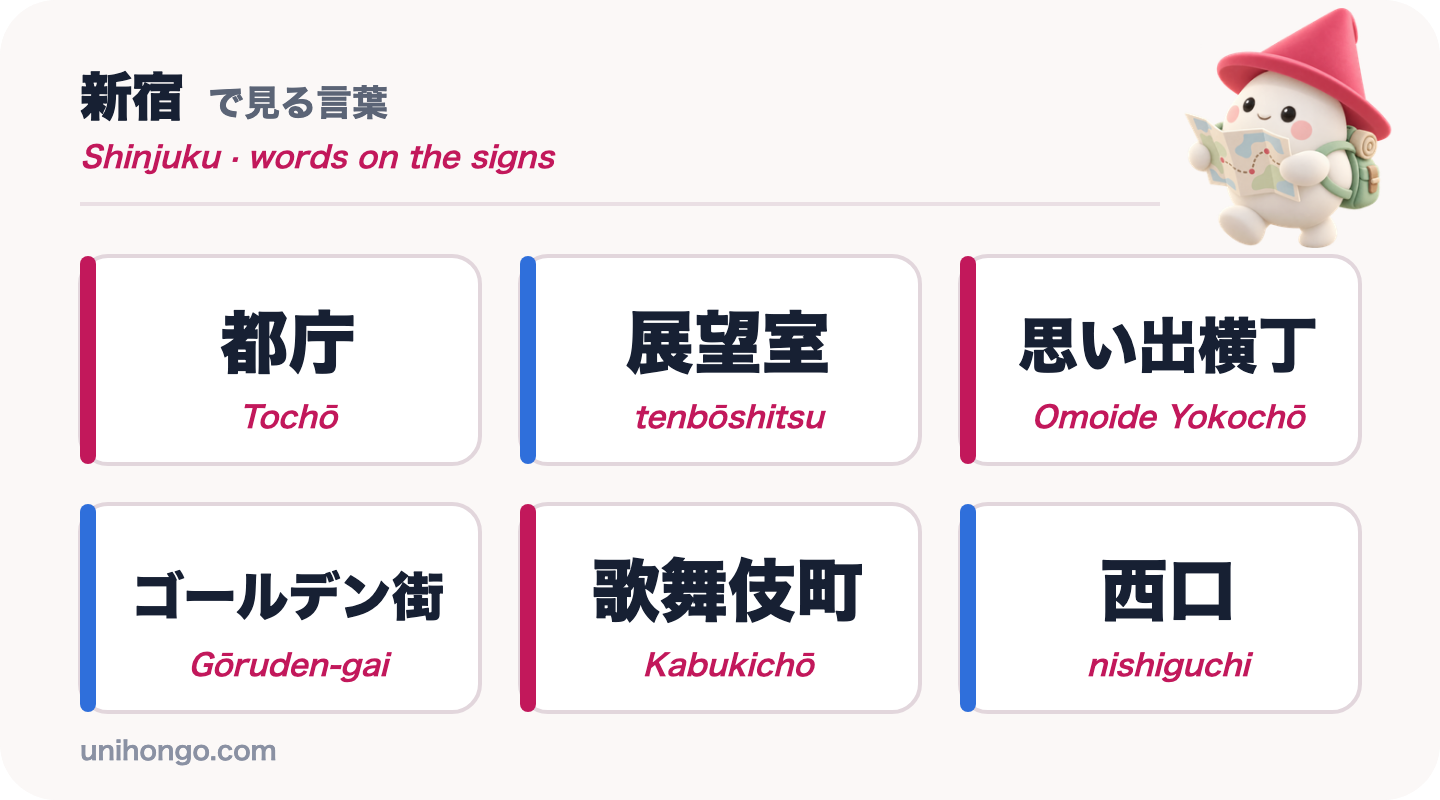
Shinjuku's big signs are bilingual, but the small ones that matter at night are not: the boards outside bars, the handwritten menus and the notes about charges. The words below cover the places, and the rest of the table covers what you will read at the door.
Two signs are worth knowing before you go out. チャージ, chāji, is a seat or cover charge, and お通し, otōshi, is a small starter served automatically in many izakaya and included on the bill. Neither is a trick; they are normal in Japan, and knowing the words lets you ask about them calmly.
| Word | Reading | Meaning |
|---|---|---|
| 都庁 | Tochō | Tokyo Metropolitan Government Building |
| 展望室 | tenbōshitsu | Observatory |
| 思い出横丁 | Omoide Yokochō | Memory Lane, the alley by the west exit |
| ゴールデン街 | Gōruden-gai | Golden Gai, the lanes of small bars |
| 歌舞伎町 | Kabukichō | The entertainment district |
| 西口 | nishiguchi | West exit |
| チャージ | chāji | Seat or cover charge |
| お通し | otōshi | Starter served with the first drink, charged on the bill |
| 満席 | manseki | All seats taken |
| 撮影禁止 | satsuei kinshi | No photography |
Japanese at the counter: seats, charges and yakitori
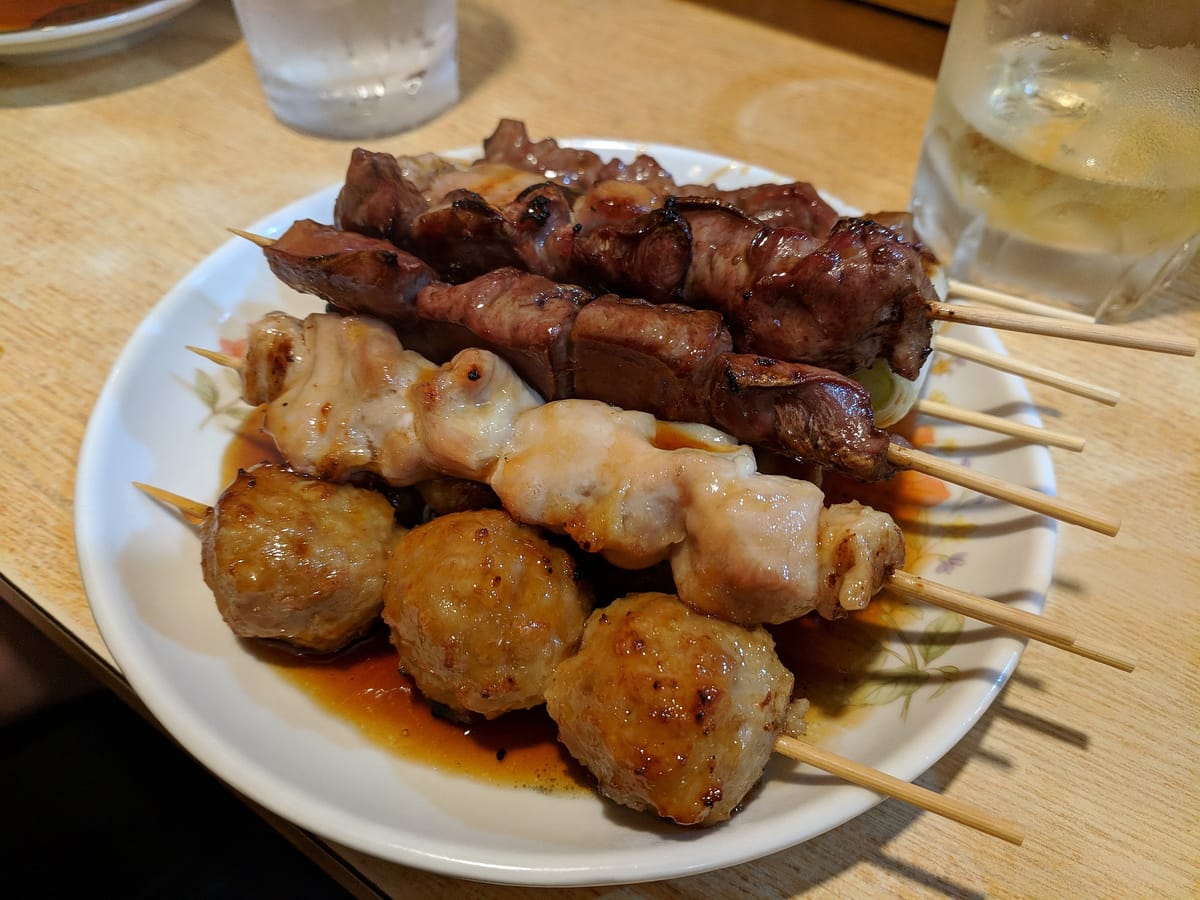
At a counter with eight seats, the first exchange happens at the door. Say how many you are, ask if there is room, and wait to be shown a seat. Then order a drink first; the food follows. At yakitori places, the master may ask whether you want each skewer with salt, shio, or with the sweet soy glaze, tare.
In Golden Gai, ask about the charge before you sit down. It is a fair question and bar owners hear it all the time. Many places are cash only, so carry some, and pay with o-kaikei onegai shimasu when you are ready to go.
| Japanese | Romaji | Meaning |
|---|---|---|
| 二人ですが、入れますか。 | Futari desu ga, hairemasu ka. | There are two of us. Can we come in? |
| チャージはありますか。 | Chāji wa arimasu ka. | Is there a cover charge? |
| 生ビールを二つください。 | Nama bīru o futatsu kudasai. | Two draught beers, please. |
| ねぎまを塩で二本お願いします。 | Negima o shio de nihon onegai shimasu. | Two negima skewers with salt, please. |
| おすすめは何ですか。 | Osusume wa nan desu ka. | What do you recommend? |
| 写真を撮ってもいいですか。 | Shashin o totte mo ii desu ka. | May I take a photo? |
| お会計お願いします。 | O-kaikei onegai shimasu. | The bill, please. |
Night-out etiquette and staying safe
Shinjuku at night is lively and generally safe, but it has its own rhythm, and a few habits keep the evening easy.
- Ignore touts, kyakuhiki, who approach you on the street in Kabukichō; choose bars and restaurants yourself.
- Check the price list and the charge before you order, and be wary of any place without a menu.
- In Omoide Yokochō and Golden Gai, order at least a drink per person; seats are few and owners rely on them.
- Do not photograph other customers or the inside of a bar without asking, and respect 撮影禁止 signs.
- Go up the Tochō before sunset for daylight views, then stay for the city lights; check which observatory is open that day.
- Many small places close one day a week and open only in the evening, so have a second choice in mind.
Practise the evening before you go
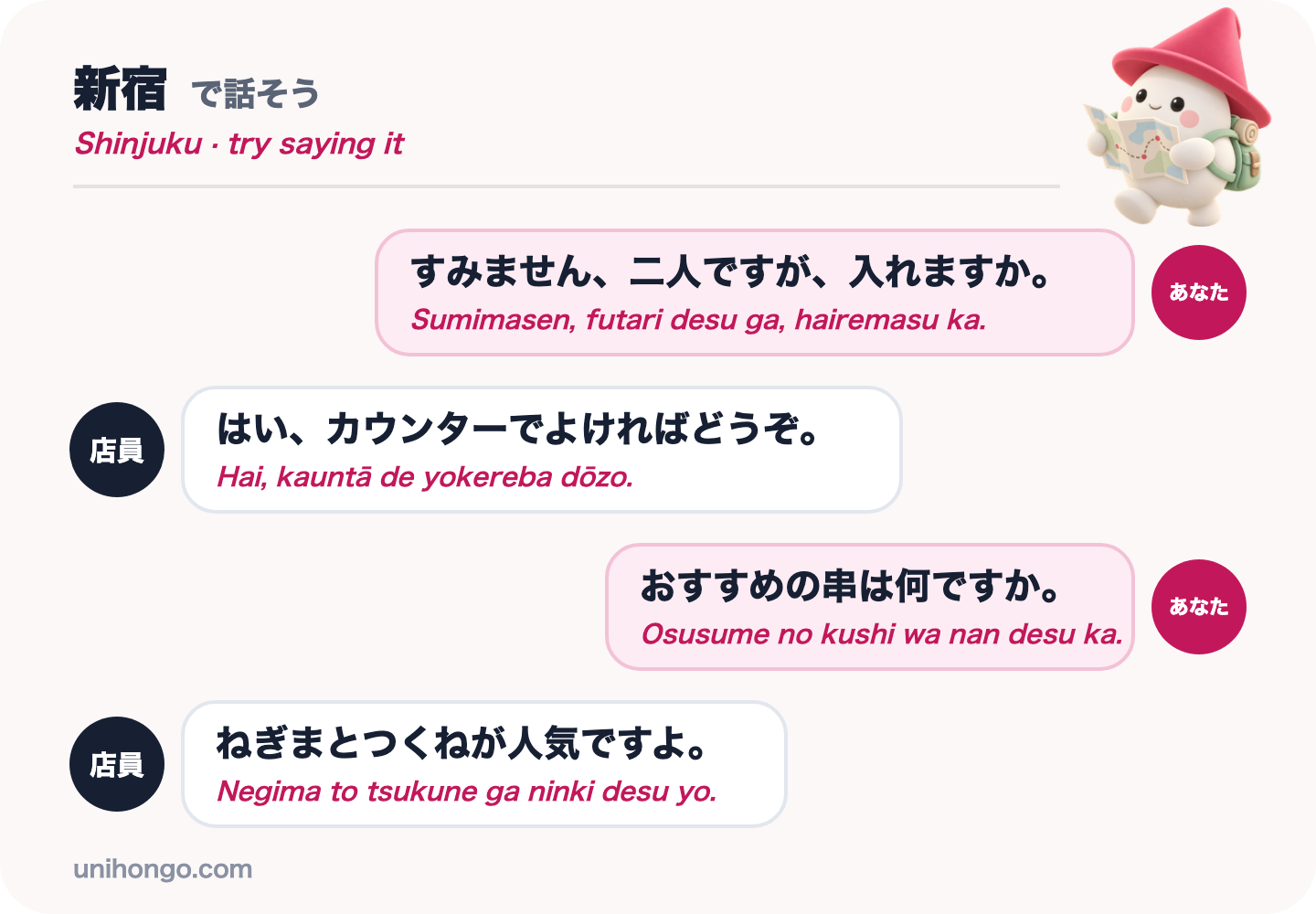
The exchange below is the first minute at any small counter in Omoide Yokochō. The reply kauntā de yokereba, if the counter is fine, is typical: the seats are almost always at the counter. Practise the four lines until you can say yours without looking.
Then practise with a partner who answers back. In Unihongo, try the First Round at an Izakaya mission, or choose the Izakaya topic and ask your AI Sensei to play the owner of a tiny counter in Shinjuku. Speaking the lines once before you go makes the door much easier to open.
| Japanese | Romaji | Meaning |
|---|---|---|
| すみません、二人ですが、入れますか。 | Sumimasen, futari desu ga, hairemasu ka. | Excuse me, there are two of us. Can we come in? |
| はい、カウンターでよければどうぞ。 | Hai, kauntā de yokereba dōzo. | Yes, come in if the counter is fine. |
| おすすめの串は何ですか。 | Osusume no kushi wa nan desu ka. | Which skewers do you recommend? |
| ねぎまとつくねが人気ですよ。 | Negima to tsukune ga ninki desu yo. | Negima and tsukune are popular. |
Official information
The Tokyo Metropolitan Government lists the observatories and their closures, and the Tokyo tourism board covers the wider Shinjuku area. Omoide Yokochō and Golden Gai have their own websites with maps of the shops.