
Wagyū is not the same as beef from Japan
Wagyū (和牛) literally means Japanese cattle, but on a label it has a specific meaning: four breeds developed in Japan, and crosses between them. The one you will nearly always be served is Japanese Black, written kuroge wagyū (黒毛和牛) on menus.
Kokusangyū (国産牛) is a wider word. It covers any cattle raised in Japan, including dairy breeds and crossbreeds. So a menu that says only kokusangyū is telling you where the animal was raised, not its breed. Outside Japan the word wagyu is sometimes used more loosely, for crossbred cattle as well.
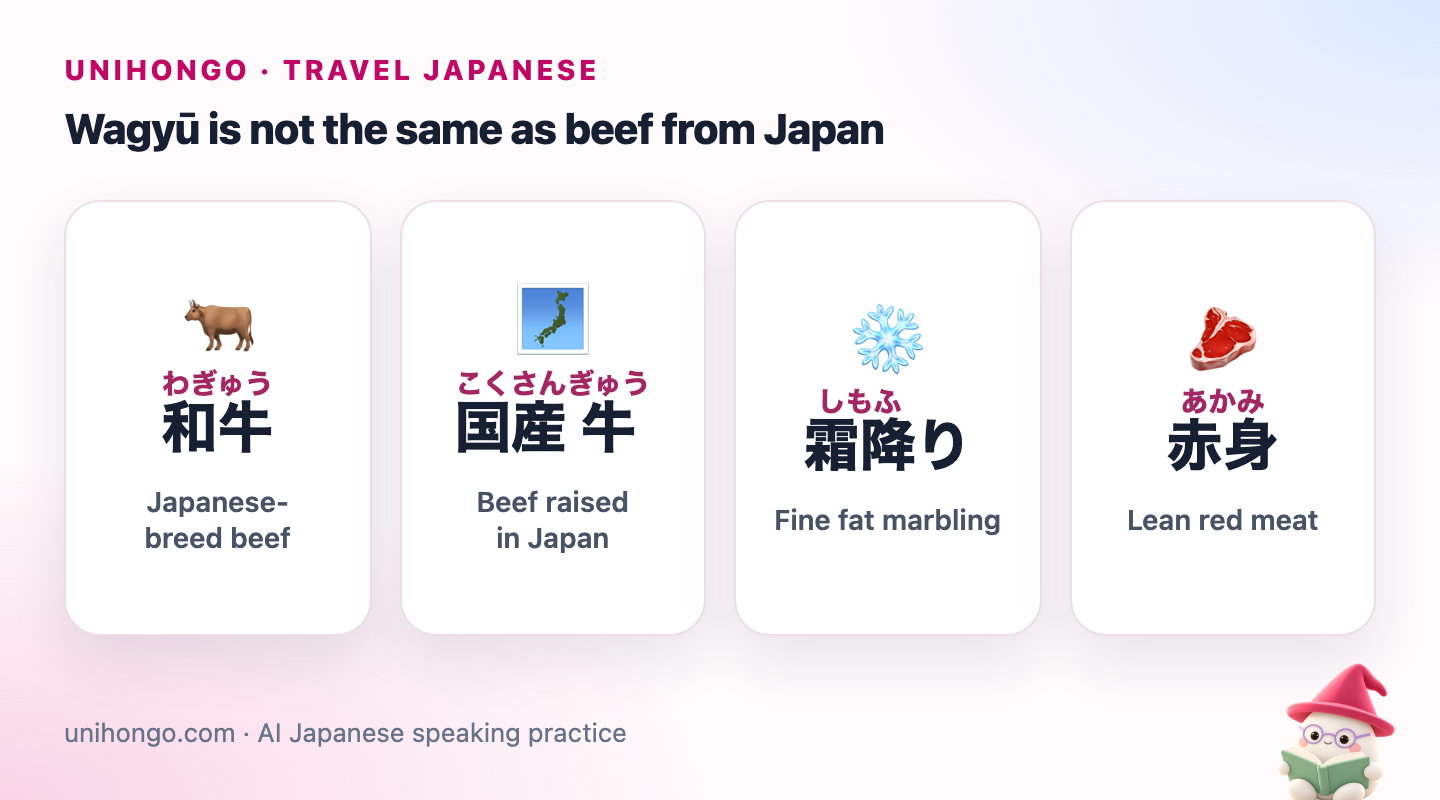
| Japanese | Romaji | Meaning |
|---|---|---|
| 和牛 | Wagyū | Japanese-breed beef |
| 国産牛 | Kokusangyū | Beef raised in Japan |
| 霜降り | Shimofuri | Fine fat marbling |
| 赤身 | Akami | Lean red meat |
| 黒毛和牛 | Kuroge wagyū | Japanese Black wagyu |
| サシ | Sashi | Marbling, in trade talk |
What A5 really says
The grade is given to the whole carcass by trained graders, not to the steak on your plate. It has two parts, and they measure different things.
| Part | Scale | What it measures |
|---|---|---|
| Letter | A, B or C; A is highest | Yield: how much usable meat the carcass gives |
| Number | 1 to 5; 5 is highest | Meat quality: marbling, meat colour, firmness and texture, fat colour and quality |
The letter matters mostly to the trade. The number is what diners notice, and the lowest of its four checks sets the result, so a 5 must score well on all of them. A5 therefore means very heavily marbled beef. Whether that makes the most enjoyable steak is a matter of taste: plenty of people prefer A4 or a leaner cut for a full meal, because top-grade marbling is very rich.
Shimofuri or akami: choosing by fat
Shimofuri (霜降り) literally means frost has fallen: the fine white fat looks like frost on red meat. Butchers and regulars also say sashi (サシ), as in sashi ga haitte iru (サシが入っている), the marbling runs through it. The opposite is akami (赤身), lean red meat.
Menus use these words to help you choose. A plate marked shimofuri will melt in the mouth and feel rich after a few slices. Akami has more chew and a clearer beef taste. Abura (脂) is the fat itself, and you can ask about it directly.
| Japanese | Romaji | Meaning |
|---|---|---|
| 脂が少ない部位はどれですか。 | Abura ga sukunai bui wa dore desu ka. | Which cut has less fat? |
| 赤身が好きです。 | Akami ga suki desu. | I like lean meat. |
| おすすめの部位はどれですか。 | Osusume no bui wa dore desu ka. | Which cut do you recommend? |
Cut names on the menu
Cuts are called bui (部位). Most are written in katakana, and several are loanwords whose meaning has drifted, so trust the gloss and not the English lookalike.
| Japanese | Romaji | Meaning |
|---|---|---|
| ロース | Rōsu | Loin, well marbled |
| サーロイン | Sāroin | Sirloin |
| ヒレ | Hire | Fillet, lean and tender |
| カルビ | Karubi | Boneless short rib, fatty |
| ハラミ | Harami | Skirt, from the diaphragm |
| タン | Tan | Tongue |
| ランプ | Ranpu | Rump, lean |
Rōsu comes from the English word roast and refers to the loin along the back, from kata rōsu at the shoulder end to ribu rōsu at the rib end. Hire is the fillet, also written フィレ (fire). Karubi comes from the Korean word for rib and is a yakiniku staple, as are harami and tan. An existing post on this blog covers how a yakiniku restaurant works; the cut names are the same there.
Three place names you will see
Brand beef is named after the place where it is raised. Three names are so famous that they are often called the three great wagyu, sandai wagyū (三大和牛), although people do not fully agree on which brand is the third.
| Japanese | Romaji | Meaning |
|---|---|---|
| 神戸ビーフ | Kōbe bīfu | Kobe beef, from Hyōgo |
| 松阪牛 | Matsusaka-ushi | Matsusaka beef, from Mie |
| 近江牛 | Ōmi-gyū | Ōmi beef, from Shiga |
The character 牛 is read ushi or gyū depending on the brand and the speaker: you will hear both Matsusaka-ushi and Matsusaka-gyū, and both Ōmi-ushi and Ōmi-gyū. Kobe beef is also called Kōbe-gyū. Each brand has its own rules about breed, region and grade, and restaurants that serve them usually display a certificate.
How would you like it cooked?
At a steak or teppanyaki restaurant the chef asks about yakikagen (焼き加減), the degree of cooking. The question comes in very polite language; the answer is a loanword plus de onegai shimasu.
| Japanese | Romaji | Meaning |
|---|---|---|
| 焼き加減はいかがなさいますか。 | Yakikagen wa ikaga nasaimasu ka. | Staff: How would you like it cooked? |
| ミディアムレアでお願いします。 | Midiamu rea de onegai shimasu. | You: Medium rare, please. |
| レア | Rea | Rare |
| ミディアム | Midiamu | Medium |
| ウェルダン | Werudan | Well done |
| おすすめの焼き加減でお願いします。 | Osusume no yakikagen de onegai shimasu. | You: However you recommend, please. |
Ordering by grams
Steak houses and teppanyaki counters often list wagyu by weight, in guramu (グラム). You choose the cut, then the weight. If there is a minimum, the menu or the chef will tell you.
| Japanese | Romaji | Meaning |
|---|---|---|
| 何グラムになさいますか。 | Nan-guramu ni nasaimasu ka. | Staff: How many grams would you like? |
| サーロインを150グラムでお願いします。 | Sāroin o hyaku gojū guramu de onegai shimasu. | You: 150 grams of sirloin, please. |
| 二人で分けたいです。 | Futari de waketai desu. | You: We would like to share it. |