

Why an evening of ukai is worth the trip to Gifu
Cormorant fishing on the Nagara River has a history of more than 1,300 years, and it has been admired by warlords and poets alike. Oda Nobunaga, who made Gifu his base, is said to have entertained guests with it, and the tradition was later protected by the shogunate and then by the imperial household. The Gifu city office that runs the viewing boats describes it as the only cormorant fishing in Japan carried out in imperial service.
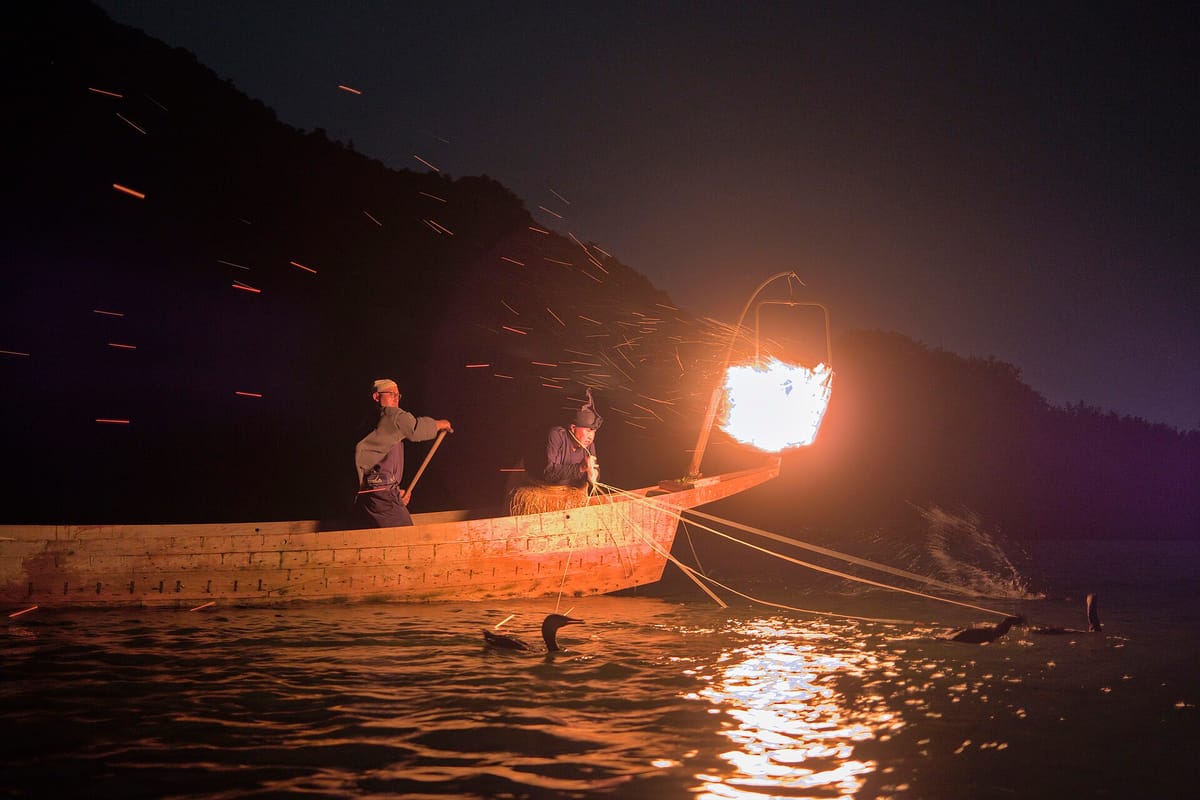
The spectacle is simple and unforgettable. The river is dark, the hills of Mount Kinka rise behind, and the fishing boats come down the current with their fire baskets roaring and sparks flying. The ushō handles a dozen or so leashes at once, calling hō, hō to the birds, while a boatman steers and another crew member helps. The whole scene lasts less than an hour and passes close enough to hear the birds splash.
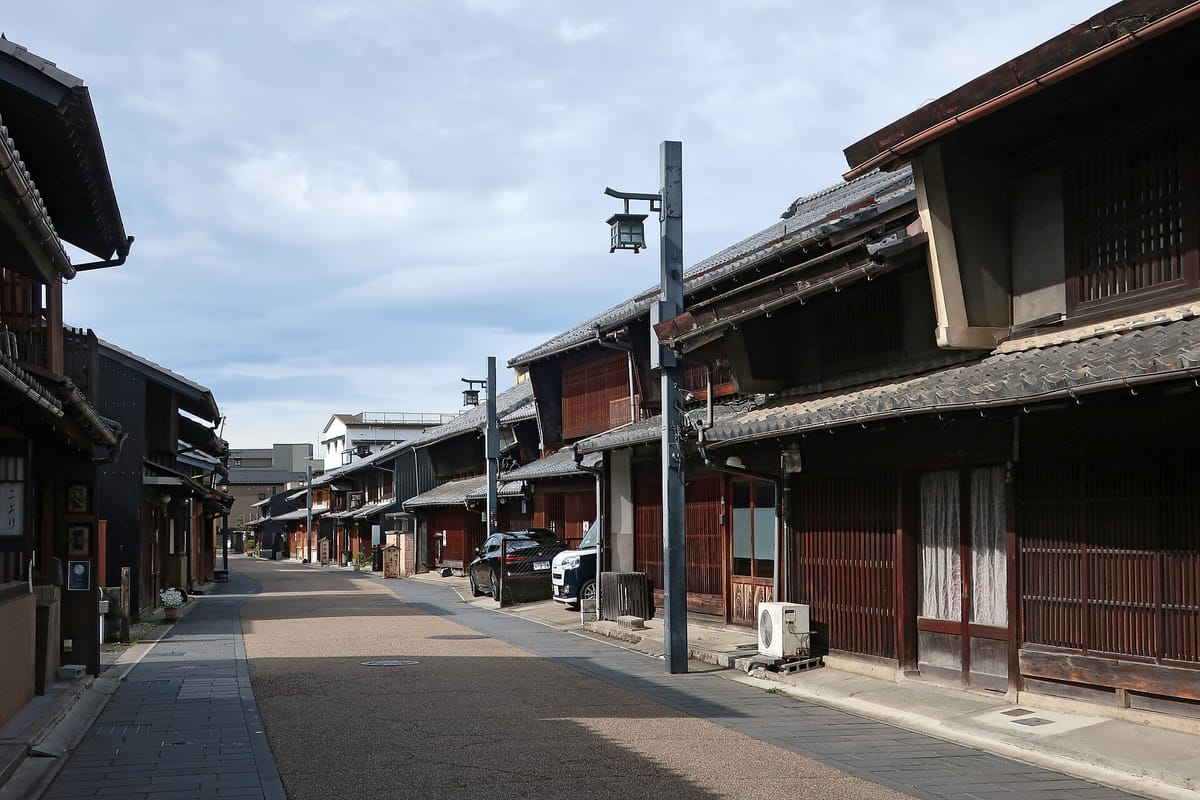
The river itself is part of the attraction: the middle reaches of the Nagara are known for their clean water, and the city's old quarter, Kawaramachi, with its wooden merchant houses, stands right beside the boarding area. For a learner, the evening is a relaxed few hours on a boat with a boatman who explains everything, in Japanese, while you wait for the fishing to start.
Getting there: Gifu Station and the Nagarabashi bus stop
Gifu is about twenty minutes from Nagoya on JR or Meitetsu trains. From JR Gifu or Meitetsu Gifu station, take a Gifu Bus that runs via Nagarabashi, such as those bound for Takatomi or the city loop line, and get off at Nagarabashi-minami Kawaramachi, about twenty minutes. The cormorant fishing boat office and the boarding area are a minute's walk from the stop.
Parking near the river is very busy on fishing nights, and the official site asks visitors to use public transport. Arrive with time to spare: boats leave in the early evening, then moor in a viewing area to wait for the fishing, which usually begins after dark.
| Japanese | Romaji | Meaning |
|---|---|---|
| 長良橋を通るバスはどれですか。 | Nagarabashi o tōru basu wa dore desu ka. | Which bus goes via Nagarabashi? |
| 長良橋南・川原町で降ります。 | Nagarabashi-minami Kawaramachi de orimasu. | I'm getting off at Nagarabashi-minami Kawaramachi. |
| 鵜飼観覧船の乗り場はどこですか。 | Ukai kanransen no noriba wa doko desu ka. | Where do the cormorant fishing viewing boats leave from? |
| 予約した者ですが、受付はこちらですか。 | Yoyaku shita mono desu ga, uketsuke wa kochira desu ka. | I have a reservation. Is this the reception? |
| 帰りのバスは何時までありますか。 | Kaeri no basu wa nanji made arimasu ka. | Until what time are there buses back? |
On the river: what you will see
The evening follows a set rhythm. Viewing boats, long wooden craft with a roof and tatami or seats, are taken upstream to a mooring area, where you eat and drink while the light fades. The crew explain the fishing while you wait. Then the fishing boats appear upstream with their fires lit and drift down past you.
The climax is in two parts. First comes kari-kudari, when your viewing boat runs alongside a fishing boat as it hunts downstream, giving a close view of the ushō and the birds. Then comes sōgarami, when the fishing boats line up across the river and drive the fish together in one final sweep of fire and splashing birds.
- Ushō: the cormorant masters, in dark robes, straw skirts and a pointed linen hat.
- Ubune: the fishing boats, each with a fire basket, kagaribi, hanging over the bow.
- U: the cormorants, working on leashes and diving for ayu.
- Kari-kudari: your boat running alongside a fishing boat as it hunts.
- Sōgarami: the finale, when all the fishing boats sweep the river together.
- Kawaramachi: the old merchant street beside the boarding area, lovely for a stroll before sailing.
- Gifu Castle: on the summit of Mount Kinka above the river, reached by ropeway in the daytime.
Words on the signs and in the boat
The kanji 鵜, u, cormorant, is rare outside this context, and it is the key to everything here: 鵜飼, ukai, cormorant keeping or fishing, 鵜匠, ushō, cormorant master, and 鵜舟, ubune, the fishing boat. Viewing boats are 観覧船, kanransen, literally boats for looking.
The fish is 鮎, ayu, sweetfish, a slim river fish prized in summer and usually grilled on a skewer with salt. You will see it on menus all over Gifu, and grilled ayu is sometimes sold near the boarding area.
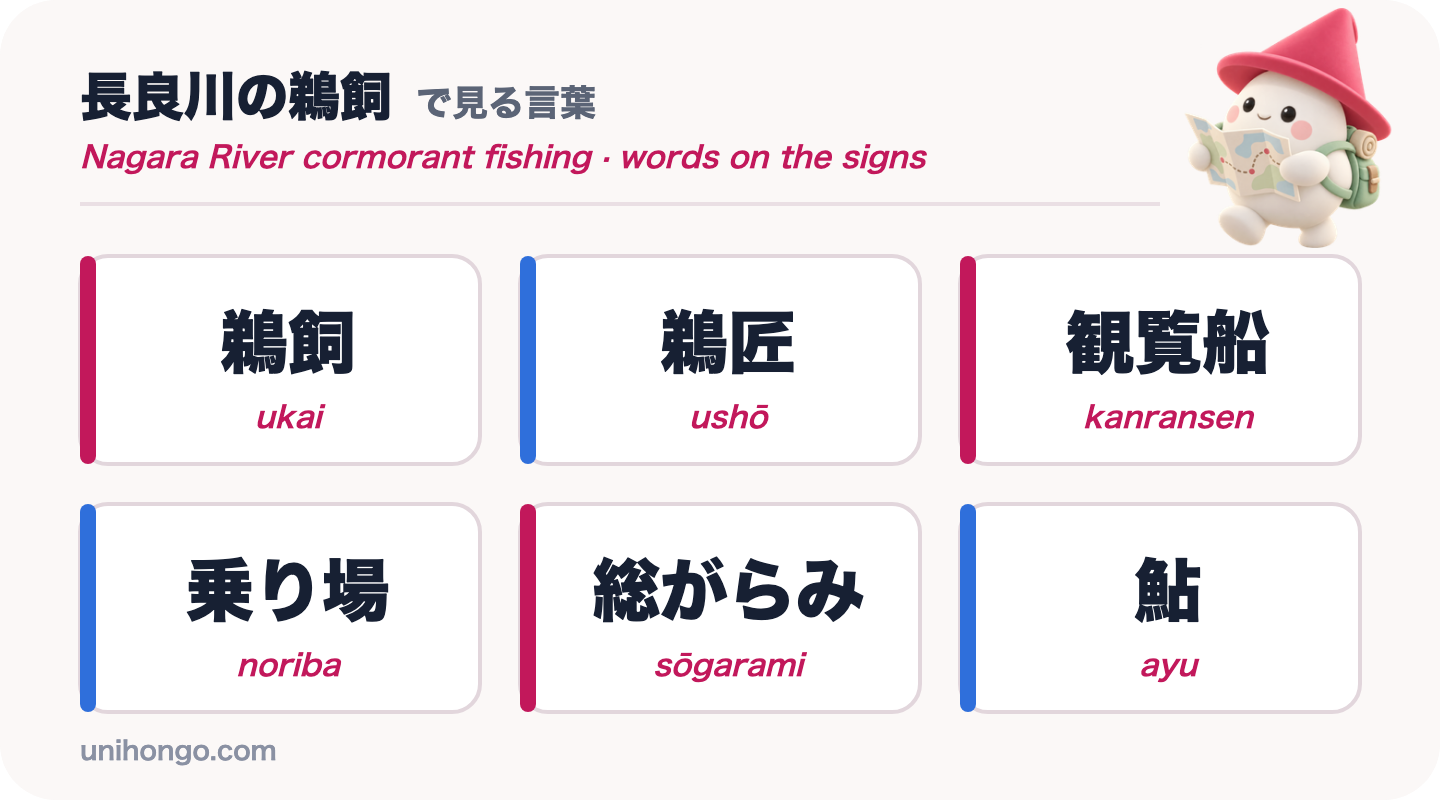
| Word | Reading | Meaning |
|---|---|---|
| 鵜飼 | ukai | Cormorant fishing |
| 鵜匠 | ushō | Cormorant master |
| 鵜舟 | ubune | The cormorant fishing boat |
| 観覧船 | kanransen | Viewing boat |
| 乗り場 | noriba | Boarding point |
| 篝火 | kagaribi | The fire basket that lights the fishing |
| 狩り下り | kari-kudari | Following a fishing boat downstream |
| 総がらみ | sōgarami | The finale with all the boats together |
| 鮎 | ayu | Sweetfish, the fish the cormorants catch |
Japanese for booking and boarding a viewing boat
There are two main kinds of viewing boat: shared boats, noriaisen, where you book seats alongside other passengers, and charter boats, kashikiri, for a group. Most visitors book a shared boat. Boarding times vary, so check the time on your booking and arrive at the office early to check in.
Once aboard, the boatman is your guide. He will explain where you are going, when the fishing will start and what to watch for. Short questions work best, and he will be pleased you asked.
| Japanese | Romaji | Meaning |
|---|---|---|
| 乗合船を二人分予約したいんですが。 | Noriaisen o futaribun yoyaku shitai n desu ga. | I would like to book two places on a shared boat. |
| 何時までに来ればいいですか。 | Nanji made ni kureba ii desu ka. | By what time should I arrive? |
| 食べ物を持ち込んでもいいですか。 | Tabemono o mochikonde mo ii desu ka. | May I bring food on board? |
| 今日は鵜飼がありますか。 | Kyō wa ukai ga arimasu ka. | Is there cormorant fishing today? |
| 鵜は何羽いますか。 | U wa nanwa imasu ka. | How many cormorants are there? |
| 写真を撮ってもいいですか。 | Shashin o totte mo ii desu ka. | May I take photos? |
Timing, weather and practical tips
Ukai depends on the river, and a few habits make the evening go smoothly.
- Check on the day whether the fishing is on; after heavy rain, high water can cancel it.
- Bring food and drinks, or reserve a bento in advance; there are very few shops near the boarding area.
- Bring insect repellent and a light layer; river evenings can be humid, then cool.
- Turn off your flash when the fishing boats pass; the fire is the light, and flashes spoil it for others.
- Stay seated when the boat is moving, and follow the boatman's instructions when boarding and landing.
- Visit Gifu Castle and the Kawaramachi district in the afternoon, then walk to the boarding area.
Practise talking to your boatman
The boatman's answer uses goro, about, with a time: shichiji-han goro, around half past seven. Listen for it in any reply about times. The second answer contains narande, side by side, the word that describes the kari-kudari. Practise the four lines below until you can say them without reading.
Then practise with a partner. In Unihongo, choose the Seasonal Events topic and ask your AI Sensei to play a boatman on the Nagara River, or choose Sightseeing and ask about the history of ukai. Having said the lines once before, you will catch far more of the boatman's explanation on the night.
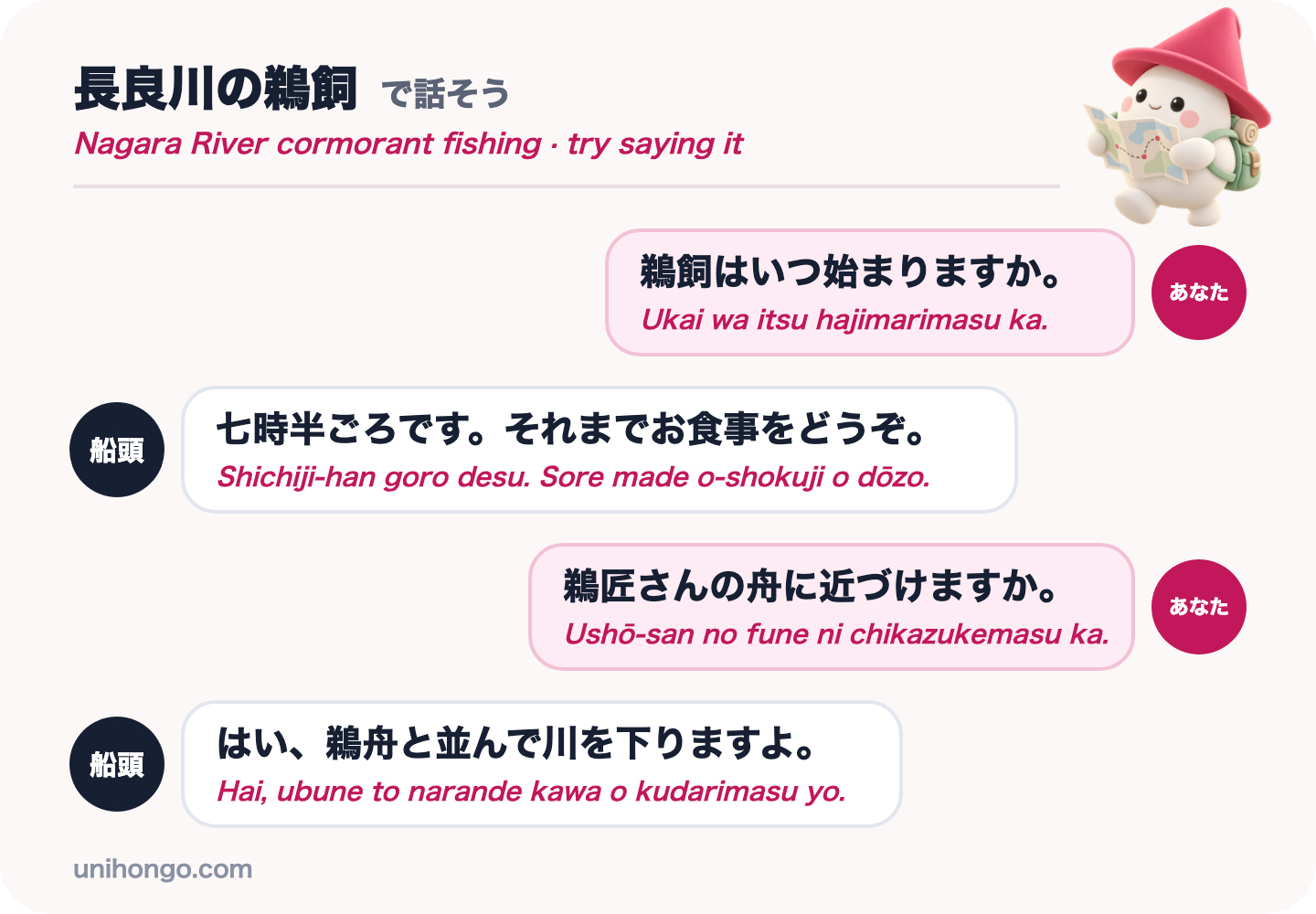
| Japanese | Romaji | Meaning |
|---|---|---|
| 鵜飼はいつ始まりますか。 | Ukai wa itsu hajimarimasu ka. | When does the cormorant fishing start? |
| 七時半ごろです。それまでお食事をどうぞ。 | Shichiji-han goro desu. Sore made o-shokuji o dōzo. | Around half past seven. Enjoy your meal until then. |
| 鵜匠さんの舟に近づけますか。 | Ushō-san no fune ni chikazukemasu ka. | Can we get close to the cormorant master's boat? |
| はい、鵜舟と並んで川を下りますよ。 | Hai, ubune to narande kawa o kudarimasu yo. | Yes, we go down the river alongside the fishing boats. |
Official information
The Gifu city cormorant fishing boat office publishes the season calendar, fees, booking and access details, and a page in English on catering for the boats. Check it before you book and again on the day.