

Arriving and choosing your time
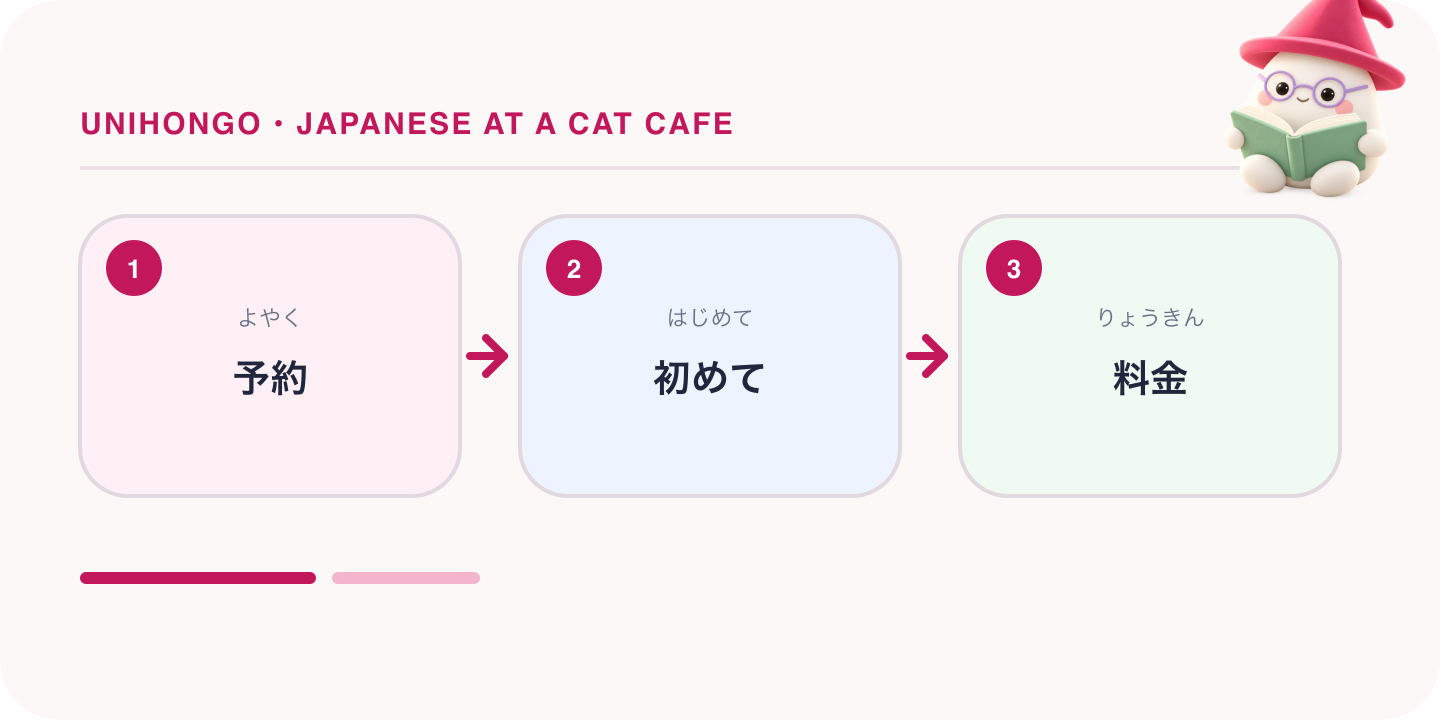
Most cat cafés have a small entrance area separated from the cat room by a double door, so the cats cannot slip out. Staff will greet you and usually ask whether it is your first visit, since first-timers get the rules explained. Popular cafés may have a waiting list or take reservations, yoyaku, especially on weekends.
The price board, ryōkin hyō, shows how the fees work. The standard model charges for a first block of time and then an extension fee, enchō ryōkin, for every extra block, often counted automatically from the time on your ticket. Some cafés offer furī taimu, a flat price for unlimited time, on certain days. Many require one drink per person, wan dorinku-sei, or include a self-service drink bar. Prices and systems vary a lot, so read the board or ask.
| Japanese | Romaji | Meaning |
|---|---|---|
| 二人です。予約はしていません。 | Futari desu. Yoyaku wa shite imasen. | Two people. We don't have a reservation. |
| 初めてです。 | Hajimete desu. | It's my first time. |
| 料金システムを教えてください。 | Ryōkin shisutemu o oshiete kudasai. | Could you explain how the prices work? |
| とりあえず一時間でお願いします。 | Toriaezu ichi-jikan de onegai shimasu. | An hour for now, please. |
| 延長はできますか。 | Enchō wa dekimasu ka. | Can we extend later? |
| ワンドリンク制ですか。 | Wan dorinku-sei desu ka. | Do we have to order a drink? |
| どのくらい待ちますか。 | Dono kurai machimasu ka. | About how long is the wait? |
Signs and words on the price board
Before you go in, it helps to recognise the words on the price board and the entrance signs. They follow a small set of patterns that repeat across almost every animal café in Japan.
| Sign | Reading | Meaning |
|---|---|---|
| 料金表 | ryōkin hyō | Price list |
| 入場料 | nyūjōryō | Entry fee |
| 延長料金 | enchō ryōkin | Extension fee |
| 10分ごと | juppun goto | Per 10 minutes |
| フリータイム | furī taimu | Unlimited time for a set price |
| ワンドリンク制 | wan dorinku-sei | One drink per person required |
| ドリンクバー | dorinku bā | Self-service drink bar |
| 平日 | heijitsu | Weekdays |
| 土日祝 | donichi-shuku | Weekends and public holidays |
| 小学生以下 | shōgakusei ika | Children of primary school age and under |
| 入店制限 | nyūten seigen | Entry restrictions |
Many cafés have age limits, for example not admitting young children, or requiring them to be with an adult. The details vary, and they are usually on the board next to nyūten seigen.
Hand washing, lockers and the rules briefing
Before entering the cat room, you will usually be asked to take off your shoes or put on slippers, leave bags in a locker, rokkā, and wash or disinfect your hands, te-arai and shōdoku. This protects the cats and keeps the room calm.
Next comes the rules briefing, rūru setsumei, often with a laminated card in several languages. Staff speak quickly and politely, and they use a lot of -naide kudasai, please don't, and kinshi, prohibited. The rules are there because the cats live in the café, and following them is the single biggest part of cat café etiquette.
| Japanese | Romaji | Meaning |
|---|---|---|
| 靴を脱いでお上がりください。 | Kutsu o nuide o-agari kudasai. | Please take off your shoes and come in. |
| お荷物はロッカーにお入れください。 | O-nimotsu wa rokkā ni o-ire kudasai. | Please put your bags in a locker. |
| 手の消毒をお願いします。 | Te no shōdoku o onegai shimasu. | Please disinfect your hands. |
| ルールをご説明します。 | Rūru o go-setsumei shimasu. | I'll explain the rules. |
| 猫ちゃんの抱っこは禁止です。 | Neko-chan no dakko wa kinshi desu. | Picking up the cats is not allowed. |
| 寝ている子は起こさないでください。 | Nete iru ko wa okosanaide kudasai. | Please don't wake cats that are sleeping. |
| わかりました。 | Wakarimashita. | Understood. |
Touching, feeding and photo rules
Rules vary by café, but a common set is: do not pick cats up, do not chase them, do not wake them, and do not touch the tail or paws. Let the cat come to you, and stroke gently on the head or back. Many cafés also ask you not to give the cats any food or treats except the ones sold by the café, often called oyatsu, and some limit how many treats each guest can buy.
Photos are usually welcome without flash. Some cafés ban video, selfie sticks or tripods, and some ask you not to post photos of particular cats. If you want to play, look for nekojarashi, the feather or wand toys; staff sometimes ask you to use only the café's toys.
| Rule | Reading | Meaning |
|---|---|---|
| 抱っこ禁止 | dakko kinshi | No picking up |
| フラッシュ禁止 | furasshu kinshi | No flash photography |
| 動画撮影禁止 | dōga satsuei kinshi | No video recording |
| 食べ物の持ち込み禁止 | tabemono no mochikomi kinshi | No outside food |
| おやつは一人一回まで | oyatsu wa hitori ikkai made | One treat per person |
| 追いかけないでください | oikakenaide kudasai | Please don't chase the cats |
| しっぽを触らないでください | shippo o sawaranaide kudasai | Please don't touch the tails |
If you are not sure whether something is allowed, ask before doing it. Staff are always happier to answer a question than to stop you mid-action.
Talking about the cats
Staff at cat cafés know every cat well and are usually glad to talk about them. There is often a board with photos, names, ages and personalities of each cat, and talking about a favourite is a natural way to practise Japanese. Staff call the cats kono ko or ano ko, this one or that one, and often add -chan to names.
Describing a cat's personality uses a small, useful set of words: amaenbō, one who loves attention; hitomishiri, shy with strangers; kōkishin ōsei, very curious; and maipēsu, doing things at its own pace.
| Japanese | Romaji | Meaning |
|---|---|---|
| この子の名前は何ですか。 | Kono ko no namae wa nan desu ka. | What's this cat's name? |
| 何歳ですか。 | Nansai desu ka. | How old is it? |
| オスですか、メスですか。 | Osu desu ka, mesu desu ka. | Is it male or female? |
| 何という種類ですか。 | Nan to iu shurui desu ka. | What breed is it? |
| 撫でても大丈夫ですか。 | Nadete mo daijōbu desu ka. | Is it all right to stroke it? |
| 人見知りなんですね。 | Hitomishiri nan desu ne. | It's shy with strangers, isn't it? |
| かわいいですね。 | Kawaii desu ne. | Isn't it cute? |
Cat vocabulary
These words turn up on the café's profile boards and in conversation with staff. Coat patterns in particular have their own everyday names, and hearing them is a sign you are talking about a real cat rather than cats in general.
| Word | Reading | Meaning |
|---|---|---|
| 猫 | neko | Cat |
| 子猫 | koneko | Kitten |
| 肉球 | nikukyū | Paw pads |
| しっぽ | shippo | Tail |
| ひげ | hige | Whiskers |
| ゴロゴロ | gorogoro | Purring |
| ニャー | nyā | Miaow |
| 三毛猫 | mikeneko | Calico cat |
| 黒猫 | kuroneko | Black cat |
| 茶トラ | chatora | Ginger tabby |
| キジトラ | kijitora | Brown tabby |
| ハチワレ | hachiware | Cat with a split face marking |
| 猫じゃらし | nekojarashi | Wand toy |
If you want to review these words later, the free learning games in Unihongo are a quick way to drill katakana words like chatora and kijitora until you can read them on a café board at a glance.
Other animal cafés and rescue cafés
The same system applies at most animal cafés: time-based fees, hand washing and a rules briefing. You will find usagi kafe (rabbits), fukurō kafe (owls), inu kafe (dogs), kotori kafe (small birds) and cafés for more unusual animals. The vocabulary changes, but the phrases for fees, rules and asking questions stay the same.
A hogo neko kafe is a rescue cat café, where the cats are waiting for new homes. The words to know are jōto, rehoming, and satooya, a foster or adoptive owner. Adoption usually involves screening and conditions set by each café, and it is generally only possible for people living in Japan.
Animal welfare standards differ between cafés, and some types of animal café have attracted criticism. If you care about this, look at how the animals are housed, whether they can retreat to a quiet space, and whether the café limits handling. Choosing cafés with clear rules that protect the animals is a good rule of thumb.
| Japanese | Romaji | Meaning |
|---|---|---|
| 保護猫カフェです。 | Hogo neko kafe desu. | It's a rescue cat café. |
| 譲渡の条件を教えてください。 | Jōto no jōken o oshiete kudasai. | Could you tell me the conditions for adoption? |
| フクロウに触ってもいいですか。 | Fukurō ni sawatte mo ii desu ka. | Is it all right to touch the owls? |
| 動物たちは何時まで働いていますか。 | Dōbutsu-tachi wa nanji made hataraite imasu ka. | Until what time are the animals out? |
When something goes wrong and paying
The most common problems are small: a cat scratches or nips you, you spill a drink, or you lose track of time. Tell the staff straight away if you are scratched, hikkakareta, or bitten, kamareta; they will have plasters and disinfectant and will want to know which cat it was. If a cat seems unwell or gets into something it should not, let the staff know rather than dealing with it yourself.
When you are ready to leave, go to the counter and say o-kaikei onegai shimasu. Staff will calculate the time from your card and add any drinks, treats or extensions. If you want to stay longer, tell them before your time ends so the extension is clear.
| Japanese | Romaji | Meaning |
|---|---|---|
| 猫に引っかかれてしまいました。 | Neko ni hikkakarete shimaimashita. | I got scratched by a cat. |
| 絆創膏をもらえますか。 | Bansōkō o moraemasu ka. | Could I have a plaster? |
| 飲み物をこぼしてしまいました。 | Nomimono o koboshite shimaimashita. | I've spilled my drink. |
| あの子の様子が少し変です。 | Ano ko no yōsu ga sukoshi hen desu. | That cat seems a bit unwell. |
| 三十分延長お願いします。 | Sanjuppun enchō onegai shimasu. | I'd like to extend by thirty minutes. |
| お会計お願いします。 | O-kaikei onegai shimasu. | The bill, please. |