

Why Mount Mitake is Tokyo's sacred mountain
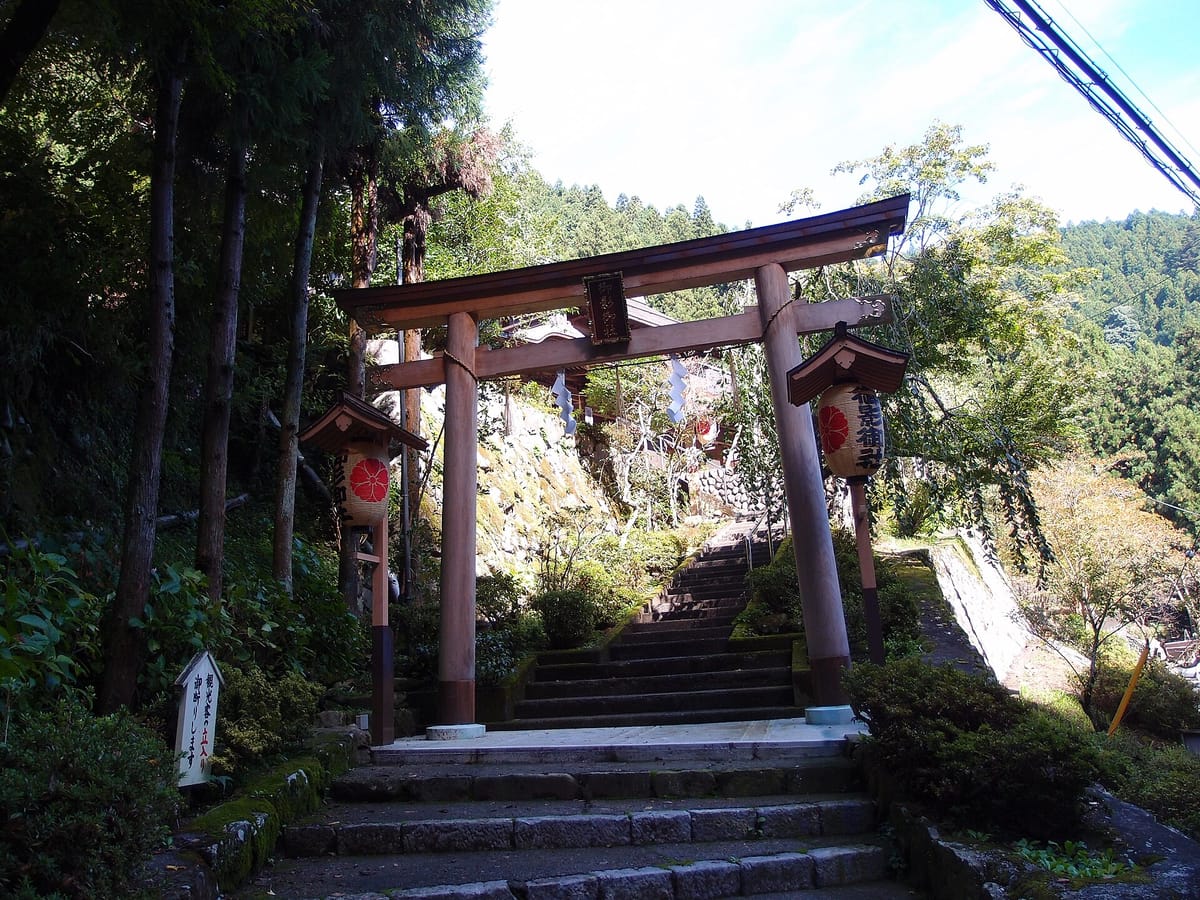
Musashi Mitake Jinja traces its founding, by tradition, to the reign of Emperor Sujin, which legend places in the first century BC. For centuries the mountain was a centre of mountain worship and ascetic training, and the shrine was revered as a protector of the farmland of Musashi, the old province that covered today's Tokyo and Saitama. Groups of pilgrims, called kō, came from villages across the Kantō plain to pray here, and the lodges that housed them are still on the mountain.
Those lodges are the shukubō, and they are what makes Mitake unusual. The top of the mountain is a real village, with steep lanes, cedar trees, souvenir shops and a cluster of traditional inns, many of them run by families who have served the shrine for generations. Some offer takigyō, a purification ritual under a waterfall, led by a priest before dawn.
For a Japanese learner, Mitake is a compact, friendly place to read shrine vocabulary and trail signposts, and to use the questions every hiker needs: how far, how long, which way, and when is the last cable car. The trails are well marked, the distances are short, and the people you pass on the path usually greet you with a konnichiwa.
Getting there: the Ōme Line, the bus and the cable car
The journey has three stages. First, take the JR Chūō Line from Shinjuku to Ōme and change to the JR Ōme Line for Mitake Station, Mitake-eki; on weekends some trains run straight through. Next, take the Nishi Tokyo Bus from outside Mitake Station to the Kēburu-shita stop, literally below the cable car, which takes about ten minutes, and walk a few minutes uphill to Takimoto Station.
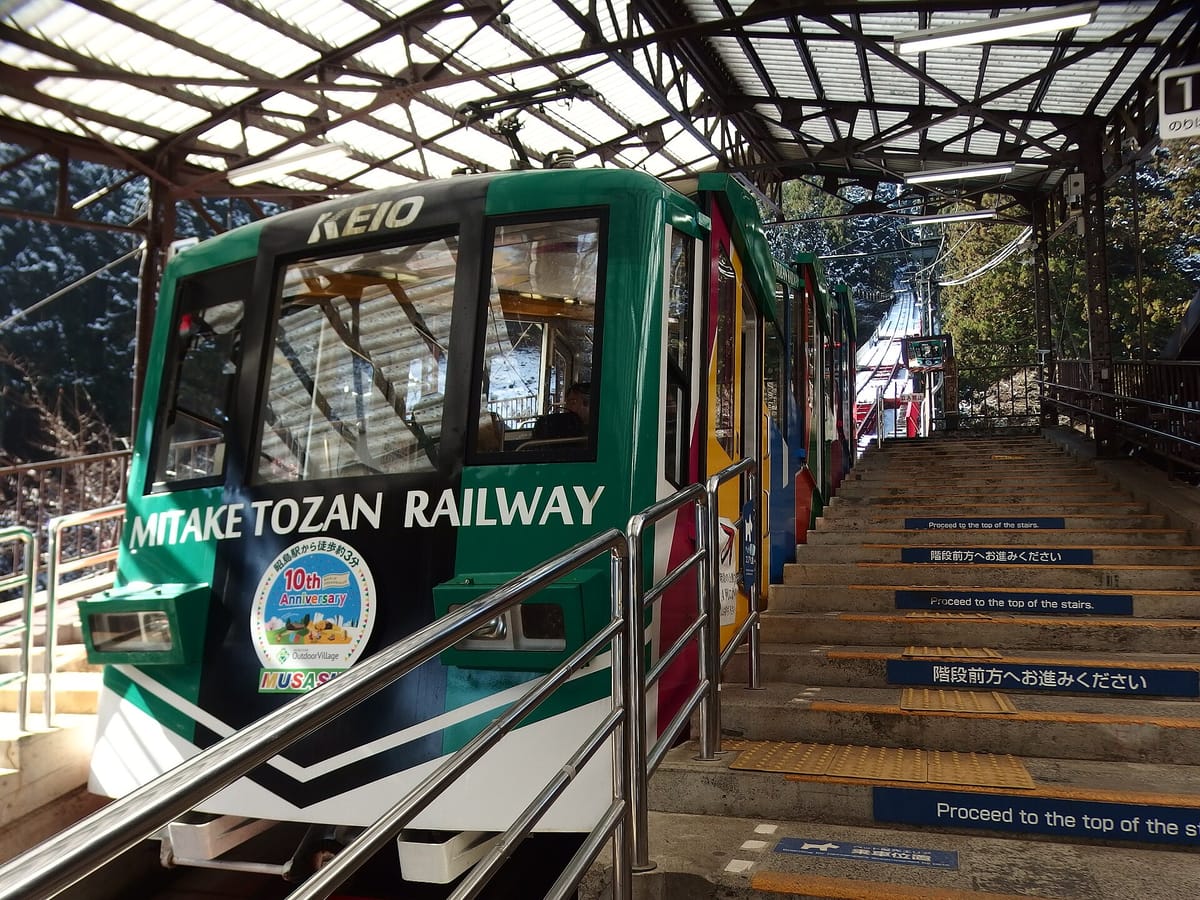
Finally, the Mitake Tozan Railway cable car climbs from Takimoto Station, at 407.6 metres, to Mitakesan Station, at 831 metres, in about six minutes. The line was built in 1927 and is now run by a company of the Keiō group. From the top, a short lift runs from Mitakedaira up to the Daitenbōdai viewpoint, although it may stop in bad weather or out of season; the walk to the shrine from the top station takes 20 to 30 minutes. Suica and PASMO cards work on the bus, the cable car and the lift.
| Japanese | Romaji | Meaning |
|---|---|---|
| 御嶽駅に行くには青梅で乗り換えですか。 | Mitake-eki ni iku ni wa Ōme de norikae desu ka. | To get to Mitake Station, do I change at Ōme? |
| ケーブル下行きのバスはどこから出ますか。 | Kēburu-shita-yuki no basu wa doko kara demasu ka. | Where does the bus to Kēburu-shita leave from? |
| 滝本駅はどちらですか。 | Takimoto-eki wa dochira desu ka. | Which way is Takimoto Station? |
| 次のケーブルカーは何分発ですか。 | Tsugi no kēburukā wa nanpun hatsu desu ka. | At what minute does the next cable car leave? |
| 神社まで歩いて何分くらいですか。 | Jinja made aruite nanpun kurai desu ka. | About how many minutes' walk is it to the shrine? |
From the shrine to the waterfalls: what you will see
From the top station, the path runs through the cedar forest and into the village, past lodges with carved gates and small shops selling mochi and charms. On the mountain, look for the Tengu no Koshikake Sugi, the goblin's seat cedar, a tree estimated at around 350 years old and 60 metres tall. A last flight of stone steps climbs to the shrine, painted vermilion, with a view over the Kantō plain on clear days and stone guardian wolves where you might expect lion-dogs.
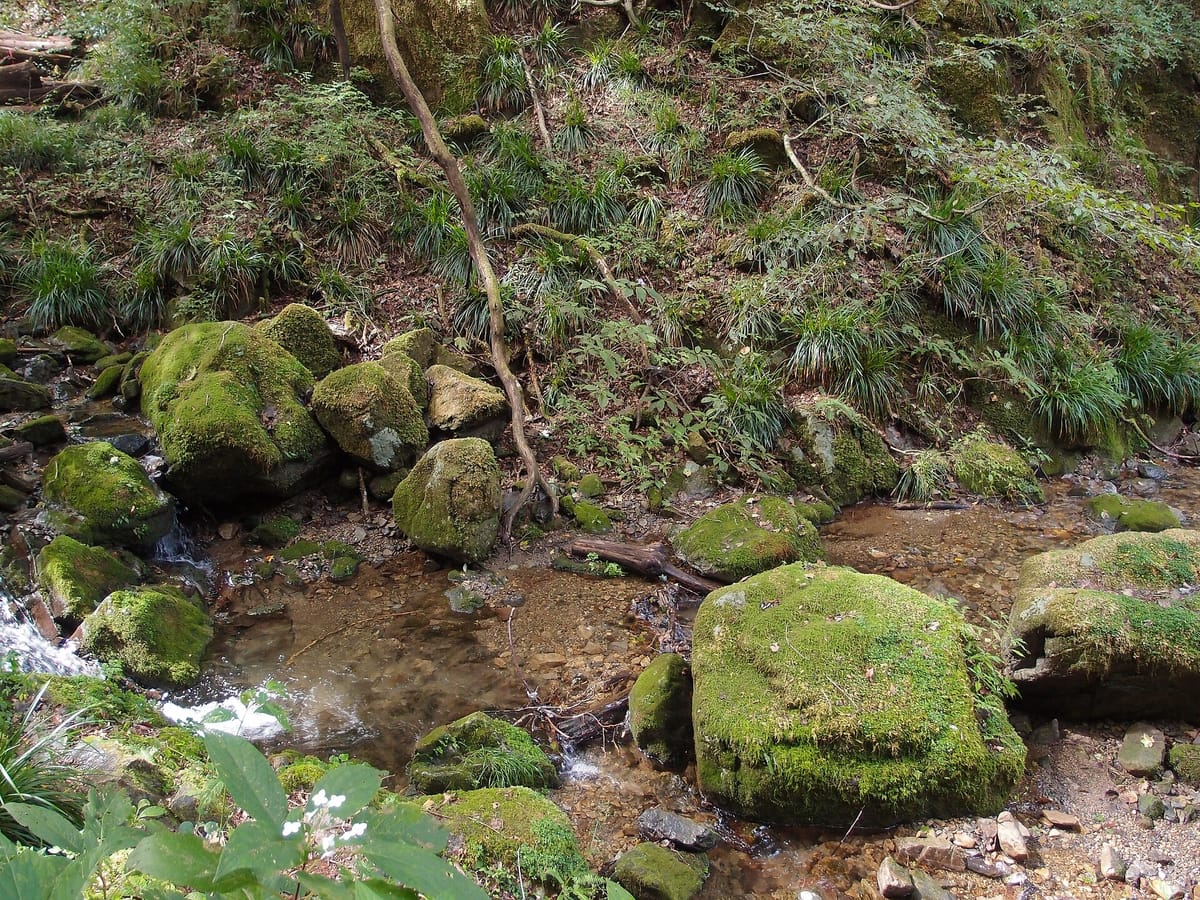
Behind the shrine, the trails lead down into the forest. The usual loop descends to Nanayo no Taki, a waterfall at the bottom of a steep staircase, then follows the Rock Garden, a stream valley of moss-covered boulders, for about 1.5 kilometres to Ayahiro no Taki, the waterfall used for takigyō. From the Rock Garden, experienced hikers can continue to Mount Ōtake, at 1,267 metres, in roughly 40 to 60 minutes more, or carry on over the mountains towards Okutama.
- Musashi Mitake Jinja: the summit shrine, with wolf guardians and a view over the plain.
- Tengu no Koshikake Sugi: a huge old cedar, one of the sacred trees of the mountain.
- Mitake Visitor Center: about ten minutes' walk from the top station, with detailed trail maps.
- Nanayo no Taki: the first waterfall of the loop, at the foot of steep steps.
- Rokku Gāden: the Rock Garden, a mossy stream valley about 1.5 km long.
- Ayahiro no Taki: the waterfall at the end of the Rock Garden, used for purification.
- Fujimine-enchi: a slope near the lift where around 50,000 rengeshōma, a pale purple woodland flower, bloom in August.
Words on the signposts on Mount Mitake
Trail signposts on Mitake are wooden boards with an arrow and a destination, often with a walking time in minutes. The names repeat: the two cable car stations, the shrine, the two waterfalls and the Rock Garden, written in katakana as ロックガーデン. Once you can read these, you can navigate the whole loop.
Watch for the two ways of writing Mitake. The mountain and the upper cable car station use 御岳, while the shrine and the JR station use 御嶽. Both are read Mitake, and both mean the sacred peak, so do not be thrown when the same name looks different from one sign to the next.
| Word | Reading | Meaning |
|---|---|---|
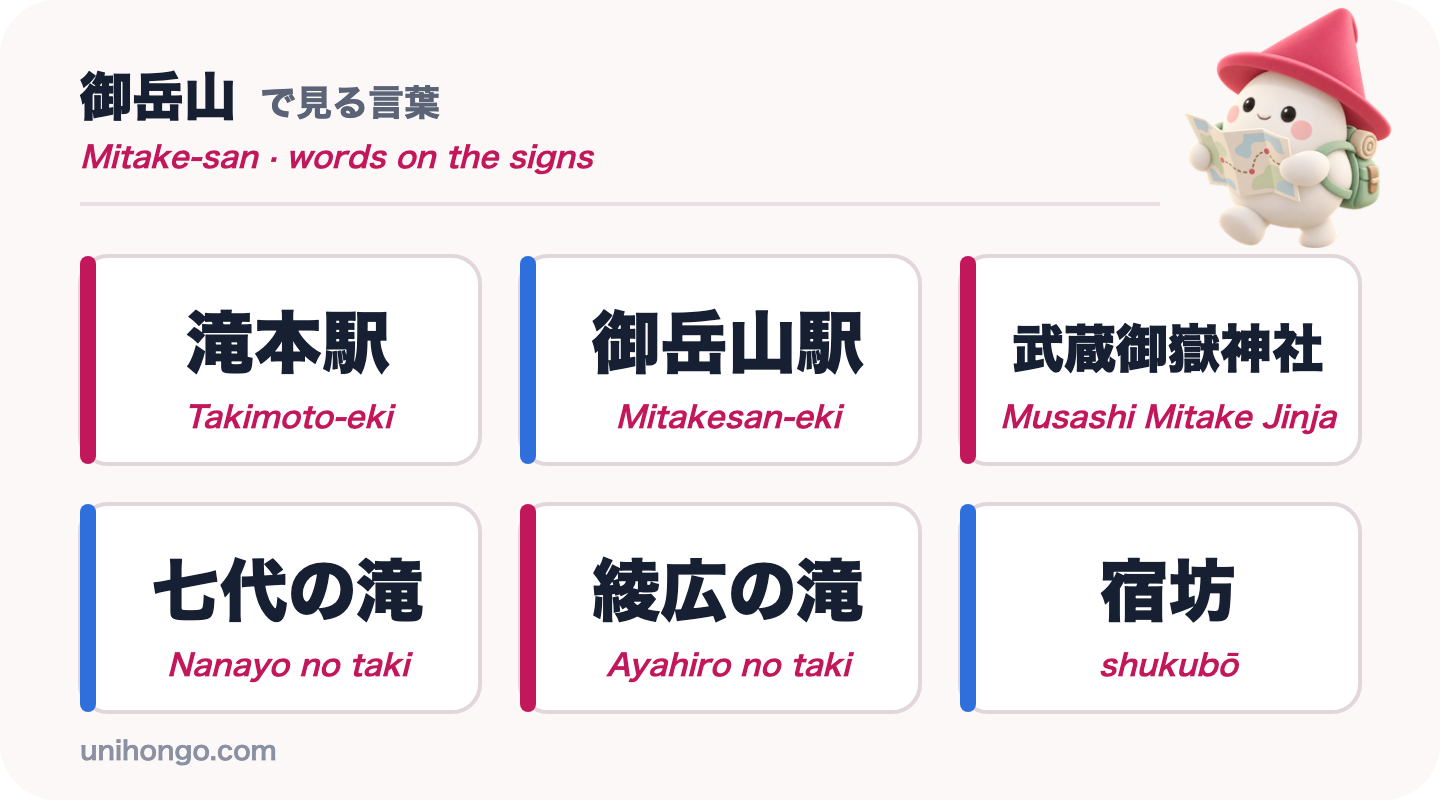
| 御嶽駅 | Mitake-eki | JR Mitake Station on the Ōme Line |
| 滝本駅 | Takimoto-eki | Lower cable car station |
| 御岳山駅 | Mitakesan-eki | Upper cable car station |
| 御岳平 | Mitakedaira | The open area at the top station, start of the lift |
| 大展望台 | Daitenbōdai | The main viewpoint at the top of the lift |
| 武蔵御嶽神社 | Musashi Mitake Jinja | The summit shrine |
| 七代の滝 | Nanayo no taki | Nanayo waterfall |
| ロックガーデン | rokku gāden | The Rock Garden stream trail |
| 綾広の滝 | Ayahiro no taki | Ayahiro waterfall, used for takigyō |
| 宿坊 | shukubō | Pilgrim lodge |
| 登山道 | tozandō | Mountain trail |
Japanese for the cable car, a dog blessing and a night in a shukubō
The cable car ticket window is where most visitors first speak Japanese on the mountain. Return tickets are sold, dogs travel with their own ticket, and staff can tell you whether the lift is running that day. A short, polite sentence is all you need, and the replies are practical and quick.
If you stay the night, a shukubō is closer to a family ryokan than to a temple lodging: tatami rooms, futons, a shared bath and a dinner of local mountain food. Check-in and dinner times matter because the kitchen works to a schedule, and some lodges can arrange takigyō at Ayahiro Falls or an early visit to the shrine. Ask when you book.
| Japanese | Romaji | Meaning |
|---|---|---|
| 御岳山駅まで往復二枚お願いします。 | Mitakesan-eki made ōfuku nimai onegai shimasu. | Two return tickets to Mitakesan Station, please. |
| 犬も乗れますか。 | Inu mo noremasu ka. | Can dogs ride too? |
| リフトは今日動いていますか。 | Rifuto wa kyō ugoite imasu ka. | Is the lift running today? |
| 交通系ICカードは使えますか。 | Kōtsūkei IC kādo wa tsukaemasu ka. | Can I use a transport IC card? |
| 今夜、宿坊に二人で泊まれますか。 | Kon'ya, shukubō ni futari de tomaremasu ka. | Can two of us stay at the shukubō tonight? |
| 夕食は何時からですか。 | Yūshoku wa nanji kara desu ka. | What time is dinner? |
| 滝行を体験できますか。 | Takigyō o taiken dekimasu ka. | Can I try takigyō? |
Etiquette, timing and trail tips
Mitake is a gentle mountain, but it is still a mountain, and the shrine is an active place of worship. A few habits make the day safer and more pleasant.
- Wear proper walking shoes. The Rock Garden path is rocky and slippery after rain, and the steps down to Nanayo Falls are steep.
- Check the time of the last cable car down before you leave the top station, and allow a margin; walking down to Takimoto takes much longer than the ride.
- At the shrine, rinse your hands at the temizuya, bow twice, clap twice, pray and bow once more, as at other Shinto shrines.
- If you bring a dog, keep it on a lead, carry water and clean up after it; the shrine and the cable car welcome dogs because owners are careful.
- Carry your rubbish down with you, and bring enough water and a snack for the trails, where there are few places to buy either.
- August brings the rengeshōma flowers and cooler air than the city, while autumn leaves colour the valley later in the year. Weekday mornings are quietest.
Practise the trail before you go
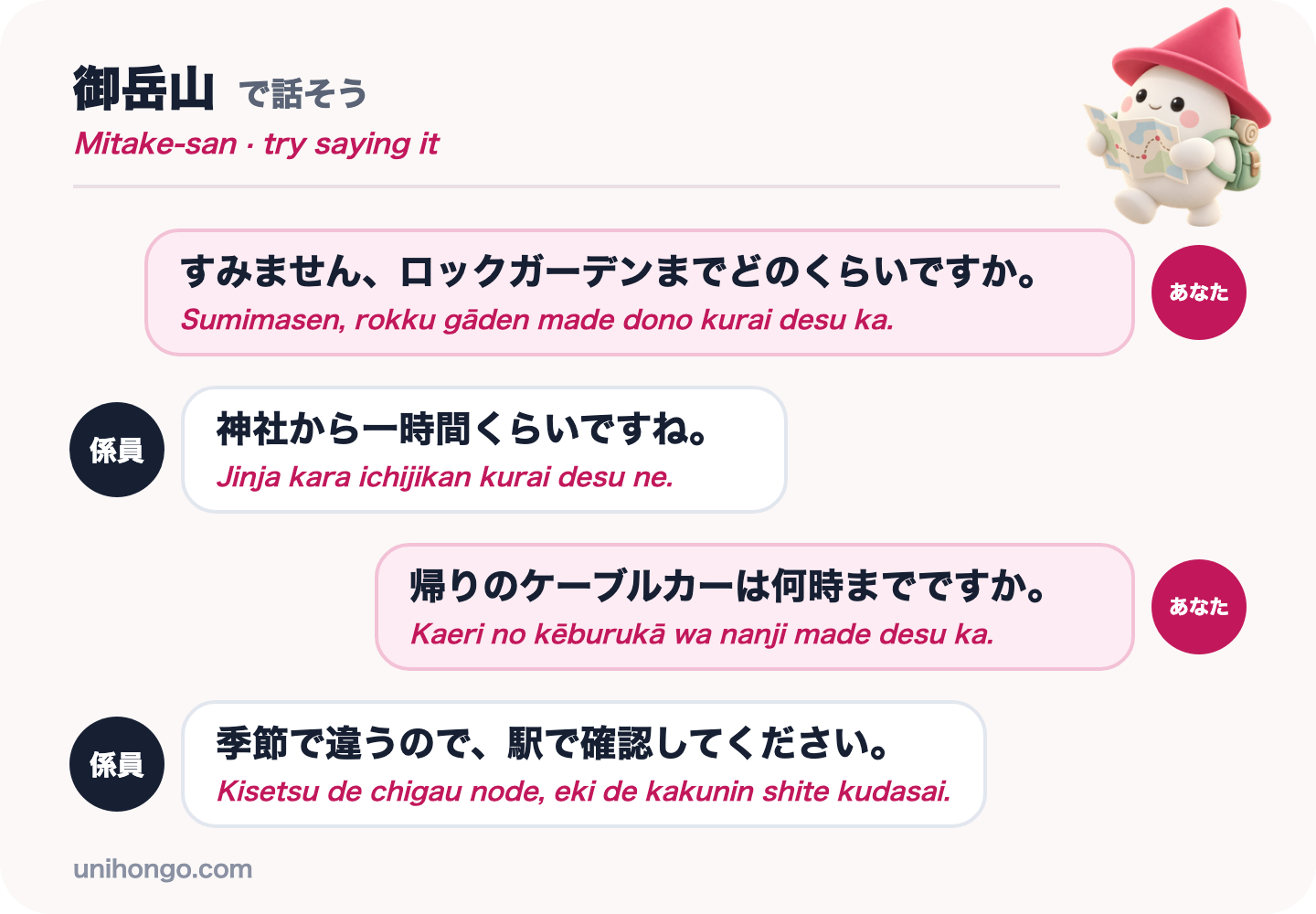
The questions that matter on Mitake are about distance and the return trip. Practise the four lines below until you can say them without reading, and in the replies listen for the time words ichijikan, one hour, and kisetsu, season, which tells you the timetable changes through the year.
Then practise with a partner who answers back. In Unihongo, choose the Sightseeing topic and ask your AI Sensei to play the staff at the visitor centre, or pick the Train Tickets topic to rehearse the change at Ōme. Saying the lines once before you travel is what makes them come out on the mountain.
| Japanese | Romaji | Meaning |
|---|---|---|
| すみません、ロックガーデンまでどのくらいですか。 | Sumimasen, rokku gāden made dono kurai desu ka. | Excuse me, how far is it to the Rock Garden? |
| 神社から一時間くらいですね。 | Jinja kara ichijikan kurai desu ne. | About an hour from the shrine. |
| 帰りのケーブルカーは何時までですか。 | Kaeri no kēburukā wa nanji made desu ka. | Until what time does the cable car run back down? |
| 季節で違うので、駅で確認してください。 | Kisetsu de chigau node, eki de kakunin shite kudasai. | It depends on the season, so please check at the station. |
Official information
The Mitake Tozan Railway publishes cable car and lift times, fares and monthly operating notices; the shrine posts its prayer hours and events; and the Tokyo Metropolitan Government's natural parks site describes the trails and sights. Check them before you go, especially for the lift and the last cable car.