

Why Gunkanjima is worth the boat ride
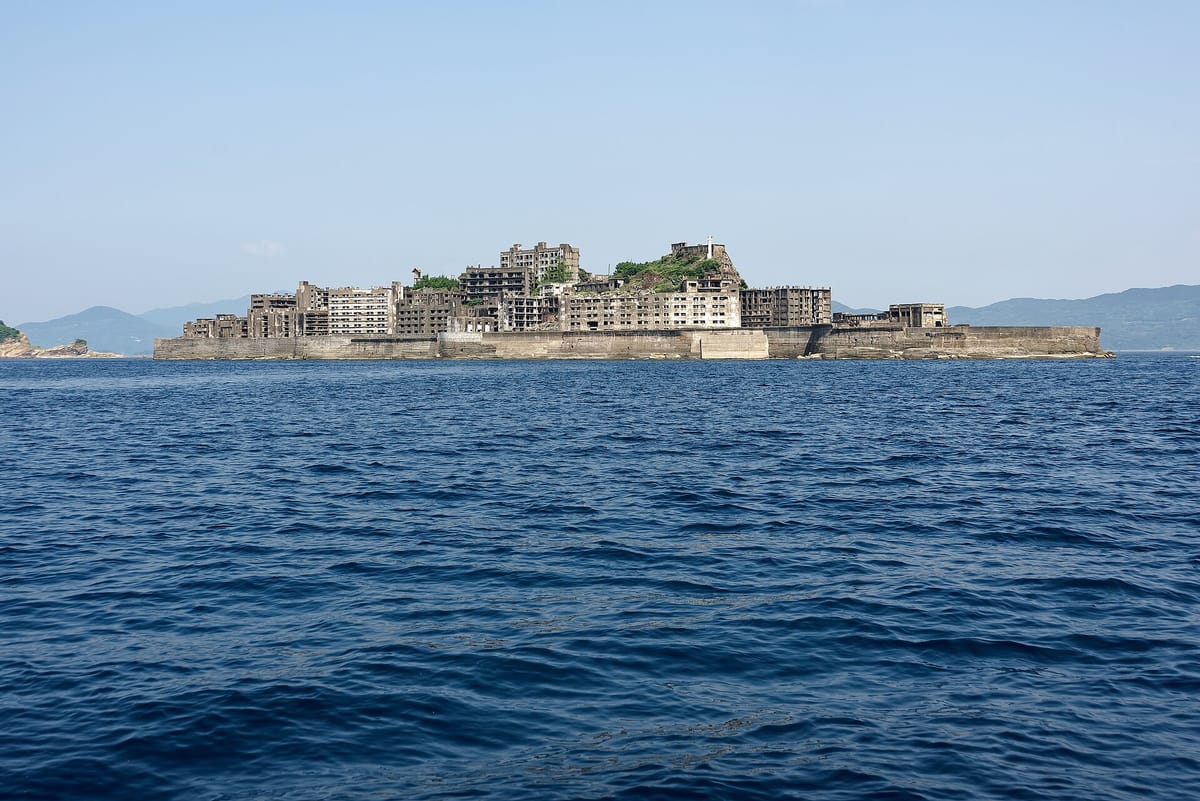
Hashima began as a small reef. Coal was found beneath it in the nineteenth century, and from 1890 Mitsubishi ran a mine that followed the seams deep under the seabed. To house the miners and their families the island was enlarged with landfill and surrounded by high walls, and blocks of flats rose on every spare metre. Building No. 30, completed in 1916, is often described as Japan's oldest reinforced-concrete apartment block.
By 1960 the island held 5,267 people, with schools, shops, a hospital, a cinema and shrines, all within an area you can walk around in minutes. Then Japan's energy shifted from coal to oil. The mine closed in January 1974 and the last residents left the same year. Salt, wind and typhoons have been taking the buildings apart ever since.
The island is now one of the components of the World Heritage site for the Meiji industrial revolution, listed in 2015. It is also a place with painful memories. Labourers from the Korean Peninsula and China worked in its mine during the war under harsh conditions, and a full visit means keeping that history in mind alongside the story of Japan's rapid industrialisation.
Getting there: tours from Nagasaki Port
You cannot go to Hashima independently. Several tour companies licensed by Nagasaki City run boats from terminals around Nagasaki Port, including the area near Ōhato and Tokiwa, a short tram ride from Nagasaki Station. Each operator has its own departure point, so check the address on your booking and allow time to find it. The crossing takes roughly forty to fifty minutes each way, and some tours pass the Mitsubishi shipyards and other industrial sites on the way out.
Book online in advance. On the day, you check in at the operator's counter, hand in your signed safety pledge, the seiyakusho, and pay the city's small facility fee if it is not included. Staff announce there whether landing looks possible.
| Japanese | Romaji | Meaning |
|---|---|---|
| 予約した田中です。 | Yoyaku shita Tanaka desu. | I'm Tanaka. I have a booking. |
| 軍艦島ツアーの受付はどこですか。 | Gunkanjima tsuā no uketsuke wa doko desu ka. | Where is the check-in for the Gunkanjima tour? |
| 誓約書はここで書けますか。 | Seiyakusho wa koko de kakemasu ka. | Can I fill in the safety pledge here? |
| 船は何時に出ますか。 | Fune wa nanji ni demasu ka. | What time does the boat leave? |
| 常盤ターミナルはどちらですか。 | Tokiwa tāminaru wa dochira desu ka. | Which way is Tokiwa Terminal? |
What you see on a landing tour
When landing is possible, the boat ties up at a pier on the island and a guide leads the group along a fenced walkway to a series of viewing areas. You do not enter the buildings: they are unstable, and most of the island is closed. The guide explains what each ruin was, with old photographs, in Japanese; some operators offer English audio guides or English-speaking staff.
On the boat you usually circle the island as well, which is when the battleship silhouette appears. Many visitors find the view from the sea more striking than the landing itself, so do not be too disappointed if the waves keep you on board.
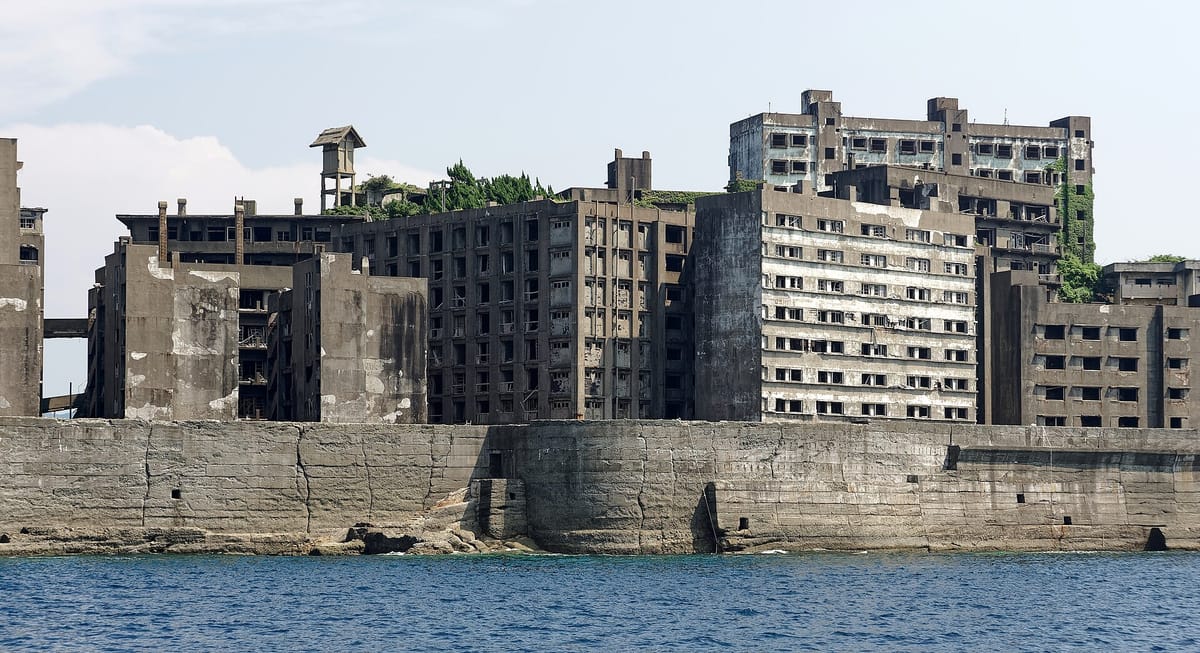
- The sea walls: the high concrete walls that turned a reef into a fortress-like island.
- Mine facilities: the remains of the shaft buildings and the brick walls of the general office.
- Apartment blocks: including Building No. 30, among the oldest reinforced-concrete flats in Japan.
- The island's silhouette: best seen from the boat as it circles, especially from the south-west.
- Mitsubishi's Nagasaki shipyard and the harbour: passed on the way out on many tours.
Words on the tickets and signs
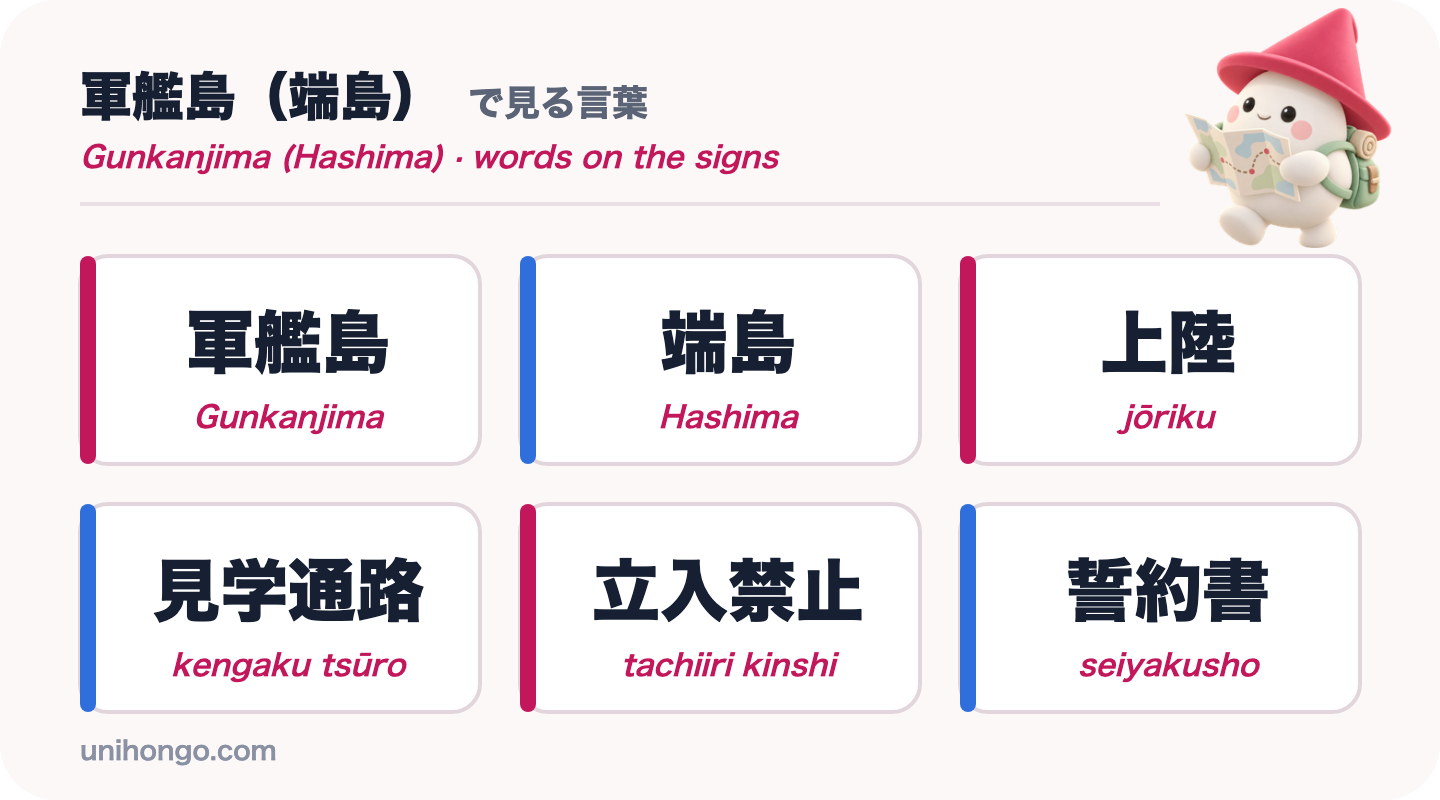
Booking pages, pledges and announcements use a small set of words, and the most important one is 上陸, landing. Tours are described as 上陸ツアー, landing tours, or 周遊, cruising around, and the difference decides your day.
| Word | Reading | Meaning |
|---|---|---|
| 軍艦島 | Gunkanjima | Battleship Island, the nickname |
| 端島 | Hashima | The island's official name |
| 上陸 | jōriku | Landing, going ashore |
| 周遊 | shūyū | Cruising around the island without landing |
| 見学通路 | kengaku tsūro | Visitor walkway |
| 立入禁止 | tachiiri kinshi | No entry |
| 誓約書 | seiyakusho | Written pledge, the safety agreement you sign |
| 欠航 | kekkō | Sailing cancelled |
| 施設使用料 | shisetsu shiyōryō | Facility fee charged for landing |
Japanese for weather, landing and cancellations
The key conversation happens at the desk and on the boat, when staff tell you whether you can land. They use polite, fixed phrases, and the verbs dekiru, can, and naru, becomes, do most of the work. Listen for jōriku dekimasu, landing is possible, and shūyū nomi ni narimasu, it will be a cruise only.
| Japanese | Romaji | Meaning |
|---|---|---|
| 今日は上陸できますか。 | Kyō wa jōriku dekimasu ka. | Can we land today? |
| 波が高いので、周遊のみになります。 | Nami ga takai node, shūyū nomi ni narimasu. | The waves are high, so it will be a cruise only. |
| 上陸できなかったら、どうなりますか。 | Jōriku dekinakattara, dō narimasu ka. | What happens if we can't land? |
| 欠航の場合は連絡がありますか。 | Kekkō no baai wa renraku ga arimasu ka. | Will you contact us if the sailing is cancelled? |
| 英語の音声ガイドはありますか。 | Eigo no onsei gaido wa arimasu ka. | Is there an English audio guide? |
| 船酔いの薬はありますか。 | Funayoi no kusuri wa arimasu ka. | Do you have medicine for seasickness? |
Safety rules and practical tips
The island is a ruin surrounded by open sea, and the rules are strict. You sign a pledge before boarding promising to follow them, and guides enforce them.
- Stay on the designated walkway and inside the viewing areas at all times.
- Follow the guide's instructions immediately; the group moves together.
- Wear flat shoes with good grip; sandals and high heels are not suitable.
- Bring a raincoat instead of an umbrella, plus a hat and a drink. There are no shops or vending machines.
- There are no toilets on the island; use the ones at the terminal or on the boat.
- Take seasickness medicine beforehand if you need it; the open sea can be rough.
- Do not drink alcohol before the tour; operators can refuse boarding.
- Keep in mind that cancellations are common in winter and the typhoon season.
Practise the boarding desk before you go
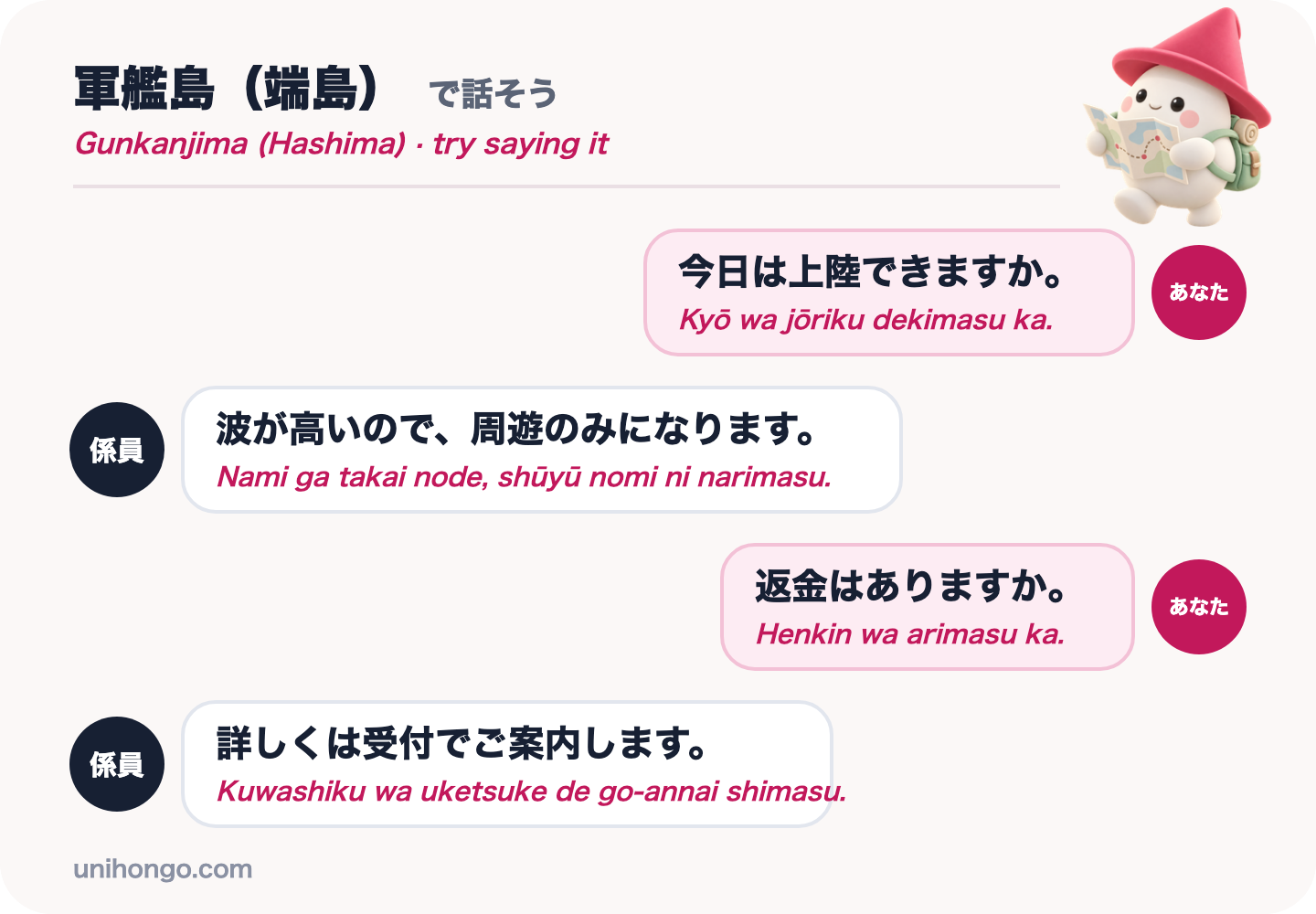
The conversation that matters takes place before you board, when you hear whether the boat will land. Practise the four lines below until you can say them without reading, and listen carefully for nomi, only, in the reply.
Then practise with a partner who answers back. In Unihongo, choose the Sightseeing topic and ask your AI Sensei to play the tour desk staff, giving you a different weather report each time. Practising both answers, landing and cruise only, means you will not be caught off guard on the day.
| Japanese | Romaji | Meaning |
|---|---|---|
| 今日は上陸できますか。 | Kyō wa jōriku dekimasu ka. | Can we land today? |
| 波が高いので、周遊のみになります。 | Nami ga takai node, shūyū nomi ni narimasu. | The waves are high, so it will be a cruise only. |
| 返金はありますか。 | Henkin wa arimasu ka. | Is there a refund? |
| 詳しくは受付でご案内します。 | Kuwashiku wa uketsuke de go-annai shimasu. | We will explain the details at reception. |
Official information
Nagasaki's official visitor guide explains the landing tours, the rules and what to bring, and links to the licensed operators. Check your operator's own site for departure points and the day's sailing status.