

Why Kakunodate is called the Little Kyoto of Michinoku
Kakunodate's town plan dates from 1620, when the Ashina clan laid it out at the foot of a castle hill. It later passed to a branch of the Satake family, the lords of Akita, and flourished as a castle town for the rest of the Edo period. Michinoku is the old name for the far north of Honshū, and the nickname Little Kyoto of Michinoku reflects the town's elegance: wide streets, dark wooden fences and gardens of tall trees.
The town was split in two by a firebreak with an earthen bank. To the north lay Uchimachi, the inner town, where the samurai lived; to the south, Tomachi, the outer town, where merchants and craftspeople lived and traded. The layout of over four hundred years ago survives, and even the place names still show the division.
For a learner, Kakunodate is a place to read history from the street signs. The names of streets and houses tell you who lived where, and the town's crafts and food come with their own vocabulary.
Getting there: the Komachi Shinkansen to Kakunodate Station
Kakunodate Station is on the Akita Shinkansen, served by the red Komachi trains that run from Tokyo, coupled to a Tōhoku Shinkansen train as far as Morioka, then on through the mountains to Akita. Kakunodate is between Morioka and Akita. Seats on the Komachi are all reserved, so book ahead, especially in cherry season.
From the station, walk about twenty minutes through the town to the samurai district, or take a taxi. The route passes through the merchants' quarter, where old storehouses and shops line the streets, including a soy sauce and miso maker whose shop has been trading for more than 170 years.
| Japanese | Romaji | Meaning |
|---|---|---|
| 角館まで、こまちの指定席を一枚お願いします。 | Kakunodate made, Komachi no shiteiseki o ichimai onegai shimasu. | One reserved seat on the Komachi to Kakunodate, please. |
| 武家屋敷通りはどちらですか。 | Bukeyashiki-dōri wa dochira desu ka. | Which way is the samurai house street? |
| ここから歩いて何分くらいですか。 | Koko kara aruite nanpun kurai desu ka. | About how many minutes on foot from here? |
| 観光マップをいただけますか。 | Kankō mappu o itadakemasu ka. | Could I have a sightseeing map? |
| 荷物を預けられる所はありますか。 | Nimotsu o azukerareru tokoro wa arimasu ka. | Is there somewhere I can leave my luggage? |
Samurai houses, cherry trees and the river bank
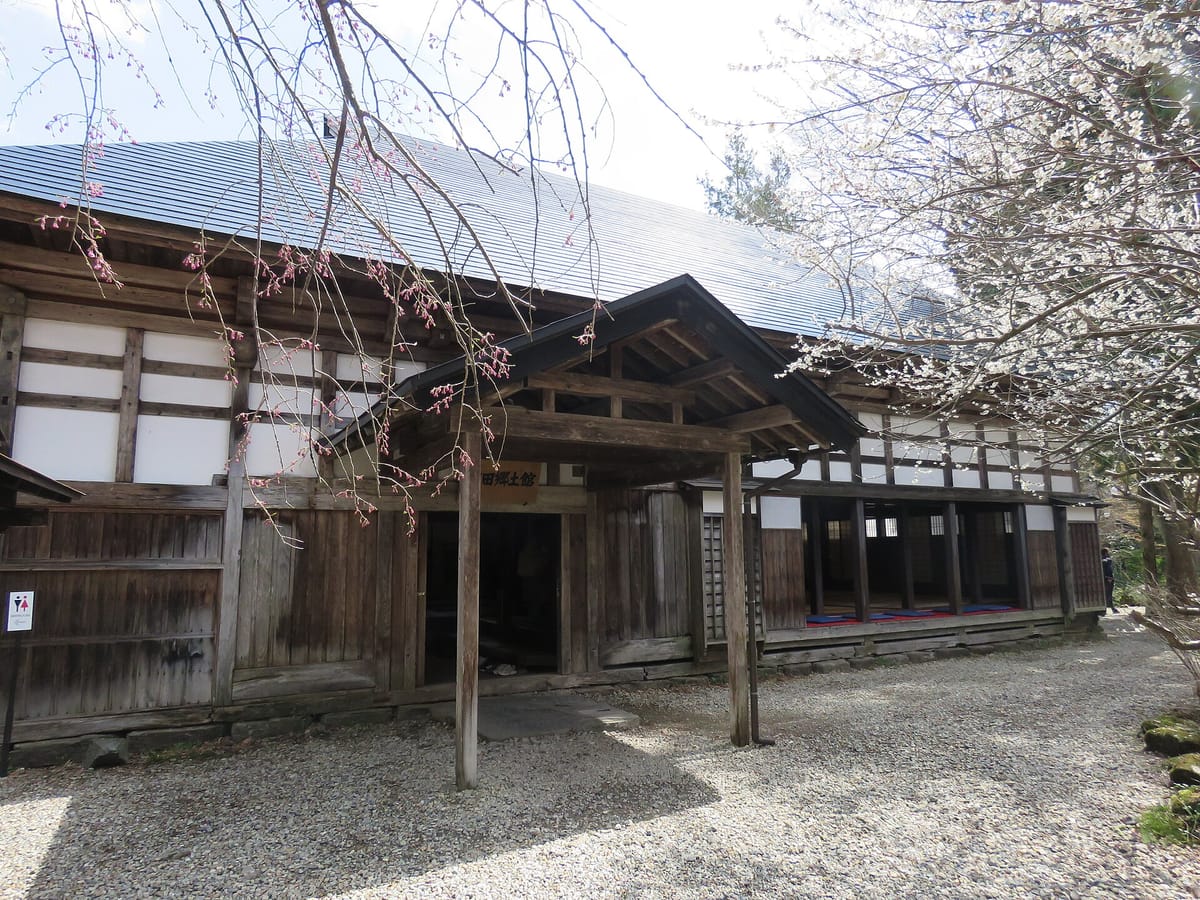
The samurai street is lined with black board fences, gates and old trees, and six houses are open to visitors. The Ishiguro house belonged to one of the highest-ranking families in the town. The Aoyagi house has become a small history village of several buildings, with collections of armour, swords and everyday objects. The Kawarada, Iwahashi, Odano and Matsumoto houses show smaller residences of different ranks, and three of them are free to enter.
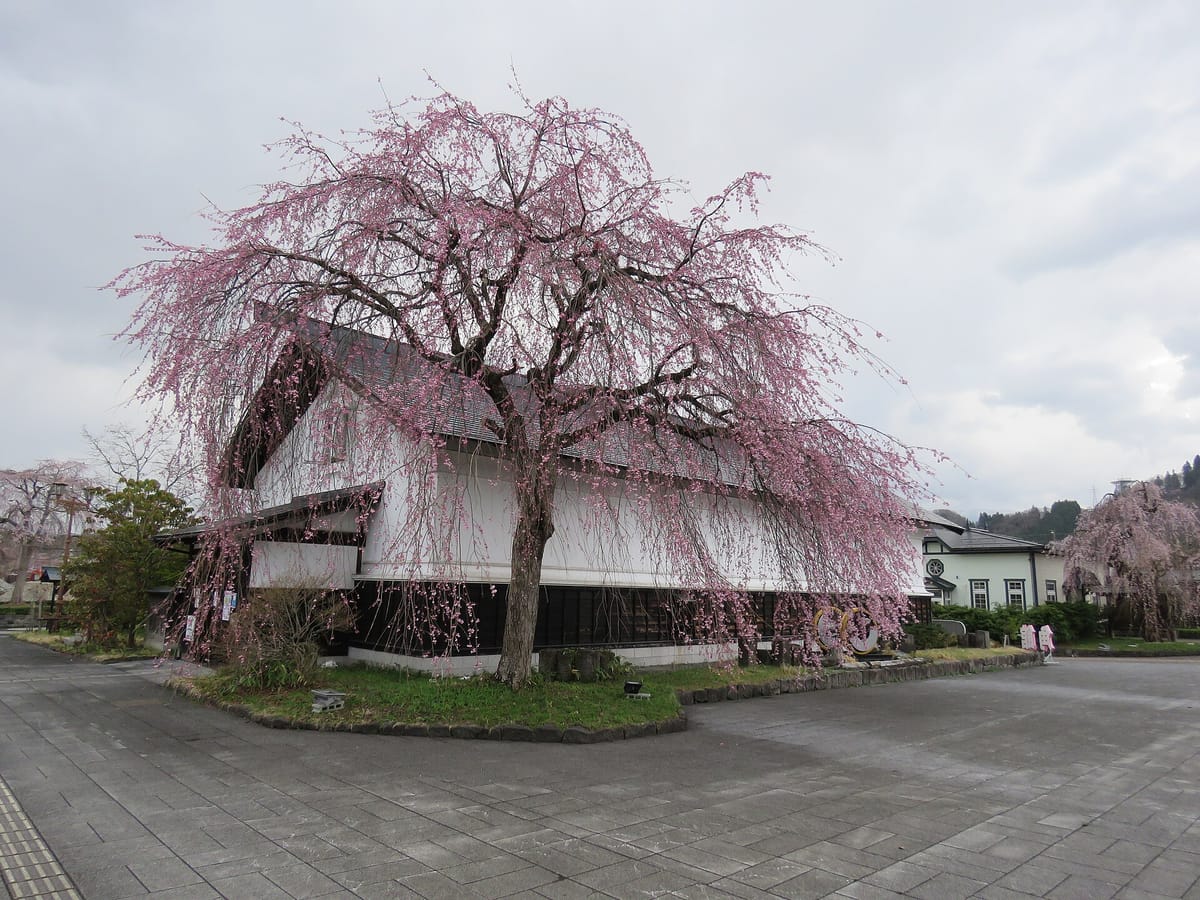
In spring the weeping cherries of the samurai district, shidarezakura, hang their pink branches over the fences; some are more than three hundred years old, and some are protected as natural monuments. A short walk west, a two-kilometre avenue of Somei Yoshino cherries lines the bank of the Hinokinai River, blooming just after the weeping cherries. The weeping cherries are lit up in the evening during the festival.
- Ishiguro house: a high-ranking samurai family's home, entry fee.
- Aoyagi house: a history village of several buildings with collections, entry fee.
- Kawarada house: a samurai residence with a garden, entry fee.
- Iwahashi, Odano and Matsumoto houses: smaller residences, free to enter.
- Weeping cherries: along the samurai street, some over three hundred years old.
- Hinokinai River bank: two kilometres of Somei Yoshino cherries.
- Kabazaiku Denshōkan: the craft hall for cherry-bark work, with demonstrations and a shop.
Words on the signs in Kakunodate
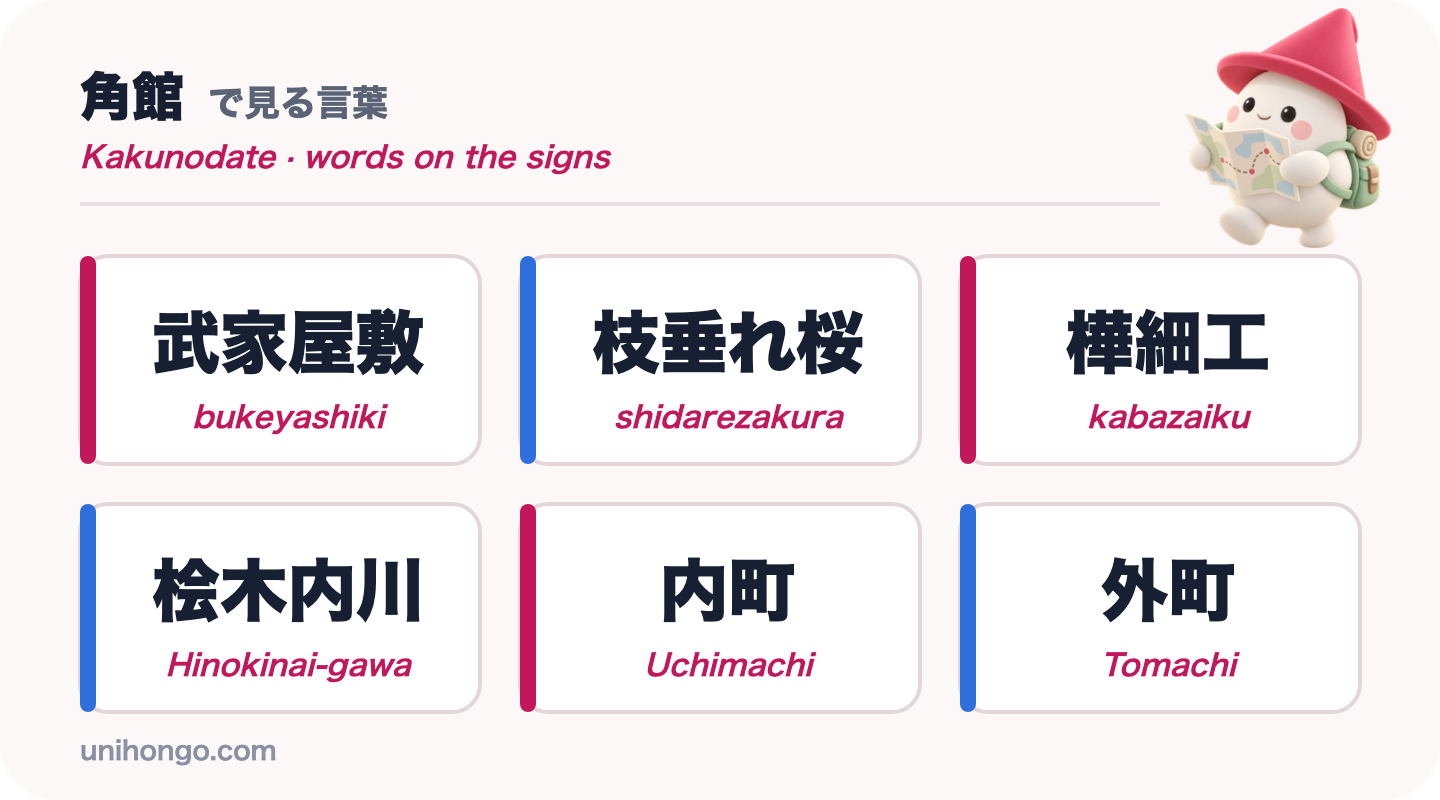
Two small kanji do a lot of work in Kakunodate: 町, read machi or chō, a town or district, and 内 and 外, inside and outside. 内町, Uchimachi, is the inner town of the samurai, and 外町, Tomachi, the outer town of merchants. In the district names, 町 read chō usually marks a samurai area, while machi marks a townspeople's area.
Signs for the cherries use 桜, sakura, often in the compound 枝垂れ桜, weeping cherry, literally a cherry with hanging branches. The table below covers the rest.
| Word | Reading | Meaning |
|---|---|---|
| 武家屋敷 | bukeyashiki | Samurai residence |
| 枝垂れ桜 | shidarezakura | Weeping cherry tree |
| 樺細工 | kabazaiku | Cherry-bark craft |
| 桧木内川 | Hinokinai-gawa | The river with the cherry avenue |
| 内町 | Uchimachi | The inner town, the samurai quarter |
| 外町 | Tomachi | The outer town of merchants |
| 火除け | hiyoke | Firebreak between the two quarters |
| 天然記念物 | tennen kinenbutsu | Natural monument |
| 入館料 | nyūkanryō | Entry fee for a house or hall |
Japanese for the craft shop: kabazaiku and gifts
Kabazaiku, the local craft, covers wooden tea caddies, boxes, trays and small accessories with glossy bark from wild mountain cherry trees, polished until it shines a deep reddish brown. It began as side work for the town's samurai and is now Kakunodate's best-known souvenir. The Kabazaiku Denshōkan shows how it is made, and shops across town sell it at every price level.
Shopkeepers are happy to explain their pieces, and the questions below help you choose and buy. Gift wrapping is taken seriously in Japan, and asking for it is completely normal.
| Japanese | Romaji | Meaning |
|---|---|---|
| これは何の木でできていますか。 | Kore wa nan no ki de dekite imasu ka. | What wood is this made of? |
| 茶筒を見せていただけますか。 | Chazutsu o misete itadakemasu ka. | Could you show me a tea caddy? |
| もう少し小さいのはありますか。 | Mō sukoshi chiisai no wa arimasu ka. | Do you have a slightly smaller one? |
| お土産にちょうどいいものはどれですか。 | O-miyage ni chōdo ii mono wa dore desu ka. | Which would be just right as a souvenir? |
| 贈り物なので、包んでいただけますか。 | Okurimono na node, tsutsunde itadakemasu ka. | It's a present, so could you wrap it? |
| カードで払えますか。 | Kādo de haraemasu ka. | Can I pay by card? |
Etiquette, seasons and timing
Kakunodate is a living town, and the samurai district is a residential street as well as a sight.
- Take off your shoes where asked when entering a house, and do not step onto tatami in slippers.
- Do not lean on or climb the old fences and gates, and keep off private gardens not marked as open.
- Cherry season is very busy. Arrive early in the morning, or walk the lit-up streets in the evening.
- Book Komachi seats and hotels early for late April and early May.
- Autumn brings red and gold leaves to the samurai street and is much quieter than spring.
- Winter is snowy; the town holds a fire and snow festival with kamakura snow huts, so dress warmly.
Practise the craft shop before you go
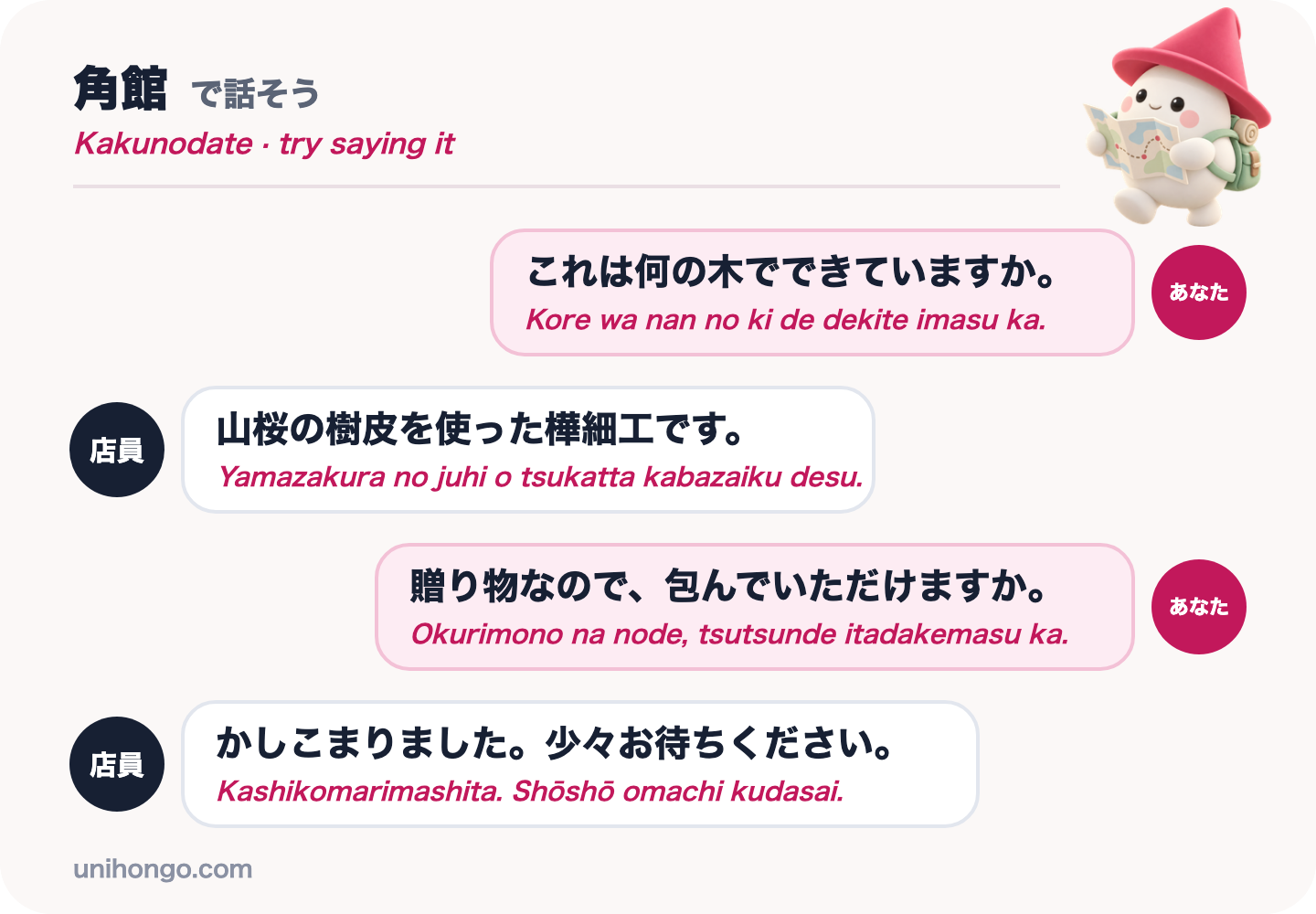
The conversation you are most likely to have in Kakunodate is in a craft shop. Practise the four lines below until you can say them without reading, and listen for the key words in the answers: yamazakura, mountain cherry, and juhi, tree bark.
Then practise with a partner who answers back. In Unihongo, choose the Shopping topic and ask your AI Sensei to play the owner of a kabazaiku shop, or choose Sightseeing to rehearse asking about the samurai houses. Saying the lines once before you arrive is what makes them easy in the shop.
| Japanese | Romaji | Meaning |
|---|---|---|
| これは何の木でできていますか。 | Kore wa nan no ki de dekite imasu ka. | What wood is this made of? |
| 山桜の樹皮を使った樺細工です。 | Yamazakura no juhi o tsukatta kabazaiku desu. | It's kabazaiku, made with mountain cherry bark. |
| 贈り物なので、包んでいただけますか。 | Okurimono na node, tsutsunde itadakemasu ka. | It's a present, so could you wrap it? |
| かしこまりました。少々お待ちください。 | Kashikomarimashita. Shōshō omachi kudasai. | Certainly. Please wait a moment. |
Official information
The Tazawako-Kakunodate tourism site publishes information on the samurai houses, the cherry blossom festival and seasonal events in English. Check it for opening days and bloom updates before you go.