

Why the Tokyo National Museum is worth a morning
The Tokyo National Museum is the oldest national museum in Japan, founded in 1872, and the country's largest art museum. It holds a collection of well over a hundred thousand objects, among them dozens of National Treasures and hundreds of Important Cultural Properties, and it cares for many more on deposit from temples, shrines and private owners. If you want to see Japanese art in one place, from Jōmon pottery to Edo-period kimono, this is where to come.
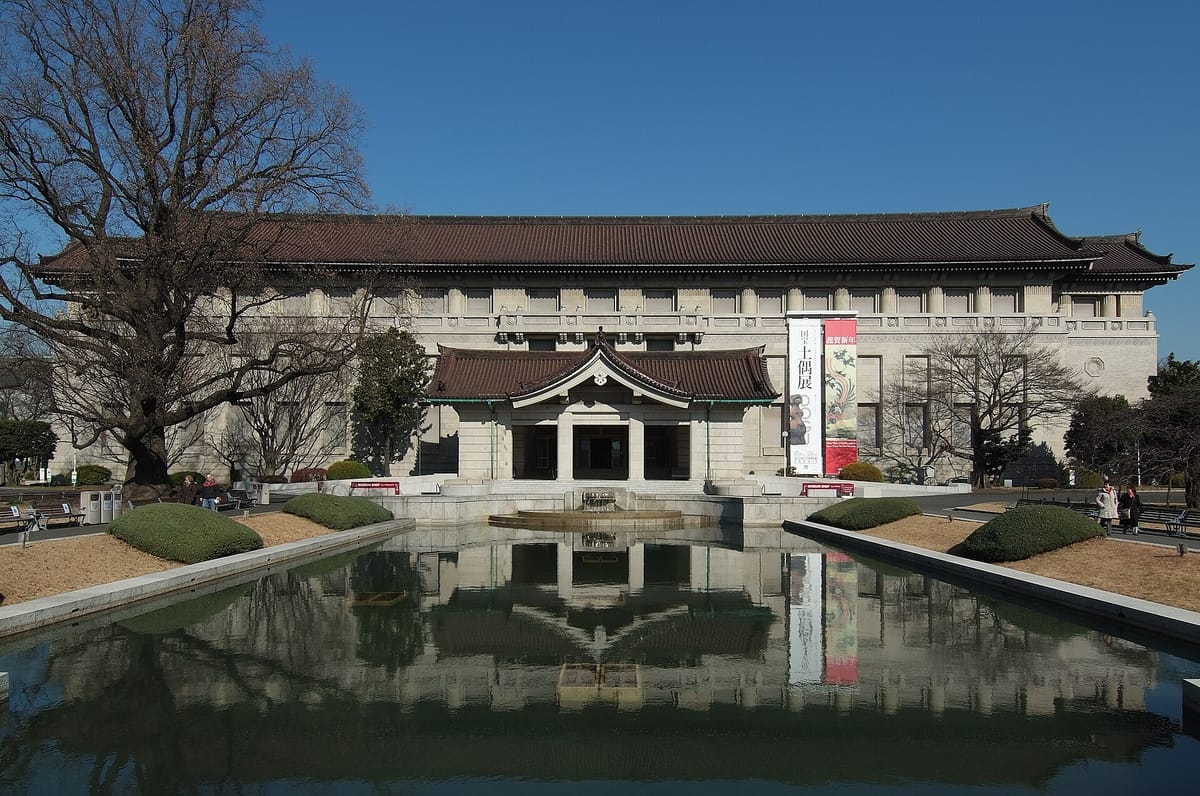
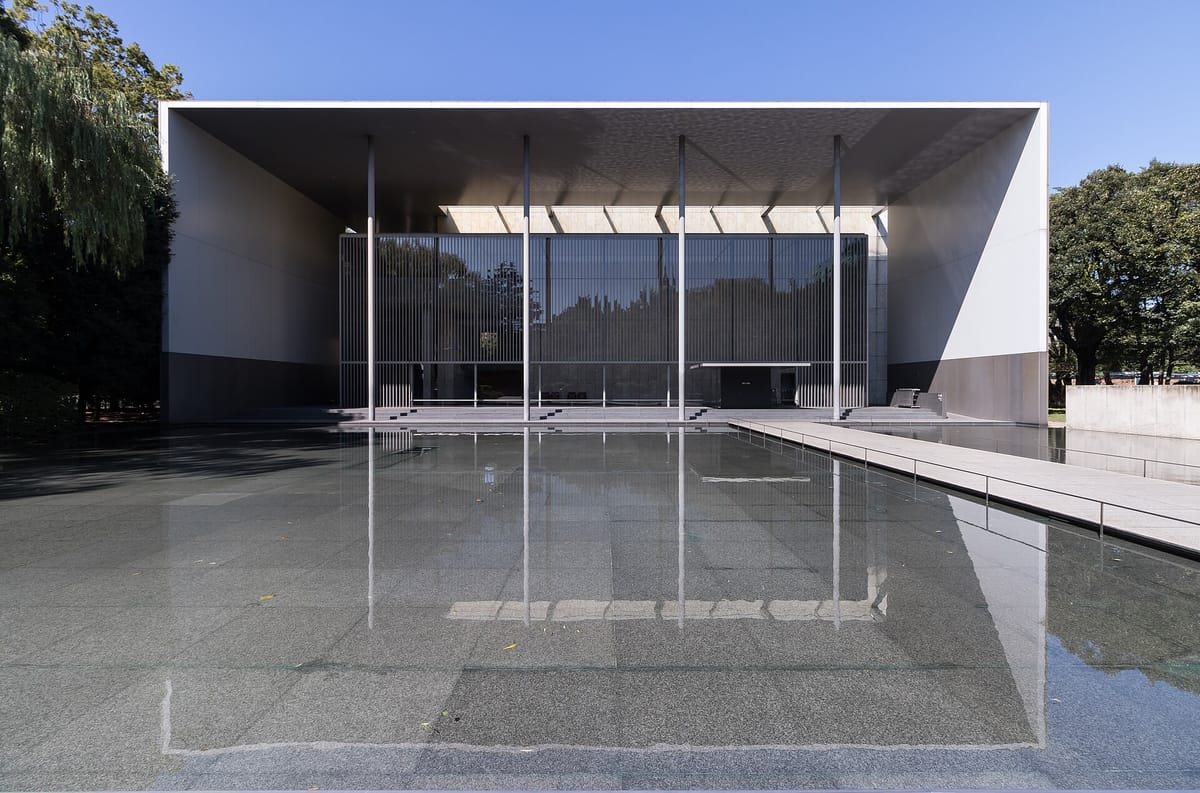
The museum's main building, the Honkan, was completed in 1938 in the so-called Imperial Crown style: a concrete Western-style hall topped with a heavy tiled Japanese roof. It is itself an Important Cultural Property. Around it stand five more buildings from different eras, from the domed Hyōkeikan of 1909 to the glass and stone Gallery of Hōryū-ji Treasures opened in 1999, so a walk around the grounds is also a walk through a century of Japanese architecture.
For a learner, the museum is a reading room. Every object carries a label with its name, period and designation, and the room names on the floor plan are all short compounds built from a few kanji: 館 for building, 室 for room, 展 for exhibition. By the time you leave you will recognise the words for National Treasure and Important Cultural Property on sight.
Getting there: Ueno Park and the Main Gate
The museum's official access page gives about ten minutes on foot from JR Ueno Station or JR Uguisudani Station, and about fifteen minutes from Ueno Station on the Ginza and Hibiya subway lines, Nezu Station on the Chiyoda Line or Keisei Ueno Station. From JR Ueno, the park exit, kōen-guchi, puts you straight into Ueno Park; walk north through the park past the fountain and the museum's Main Gate, seimon, is across the road at the far end.
All visitors enter through the Main Gate, where the ticket counters are. There is no parking at the museum. The gate now has a security screening with metal detectors and bag checks, and since August 2026 suitcases have not been allowed into the museum, so leave large luggage in a station locker before you come.
| Japanese | Romaji | Meaning |
|---|---|---|
| 東京国立博物館はどちらですか。 | Tōkyō Kokuritsu Hakubutsukan wa dochira desu ka. | Which way is the Tokyo National Museum? |
| 公園口はどこですか。 | Kōen-guchi wa doko desu ka. | Where is the park exit? |
| 正門まで歩いて何分くらいですか。 | Seimon made aruite nanpun kurai desu ka. | About how many minutes on foot to the Main Gate? |
| 駅にコインロッカーはありますか。 | Eki ni koin rokkā wa arimasu ka. | Are there coin lockers in the station? |
| スーツケースは持って入れますか。 | Sūtsukēsu wa motte hairemasu ka. | Can I take a suitcase in? |
What you will see: the six buildings
Start in the Honkan. Its rooms are numbered and follow Japanese art in order: the second floor runs from the earliest pottery and Buddhist art through courtly painting, the tea ceremony, samurai armour and swords, folding screens, Noh and kabuki, to ukiyo-e and Edo fashion. The first floor is arranged by type, with sculpture, lacquer, metalwork and ceramics, the arts of the Ainu and Ryūkyū, and modern art. Objects are changed regularly to protect them from light, which is why the museum publishes a weekly list of what has changed.
Then choose one or two of the other buildings. Each has its own character, and the walk between them across the grounds is part of the pleasure.
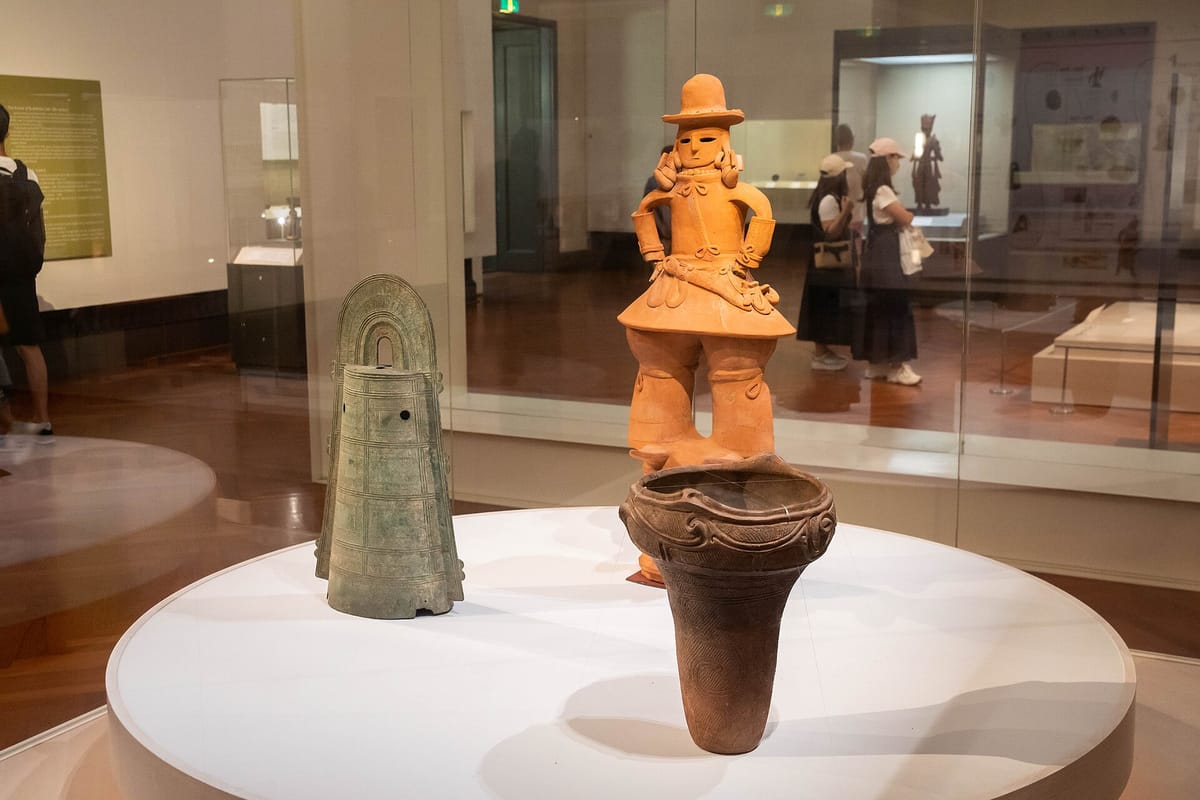
- Honkan, the Japanese Gallery: the core of the museum and the best introduction, from Jōmon pottery to the nineteenth century.
- Heiseikan: large special exhibitions on the second floor, and the Japanese Archaeology Gallery, with haniwa and early pottery, on the first.
- Tōyōkan, the Asian Gallery: sculpture, ceramics, textiles and painting from China, Korea, India, Southeast Asia and beyond, spread over several levels.
- Hōryū-ji Hōmotsukan, the Gallery of Hōryū-ji Treasures: objects presented to the imperial household by the Nara temple Hōryū-ji in 1878, shown in dim, quiet rooms.
- Hyōkeikan: the domed Meiji-era building of 1909, an Important Cultural Property, open only for special exhibitions and events.
- Kuroda Memorial Hall: a separate building just outside the main grounds showing work by the painter Kuroda Seiki, with free admission.
- The garden and teahouses behind the Honkan, open to visitors for limited periods in spring and autumn.
Words on the gallery signs and labels
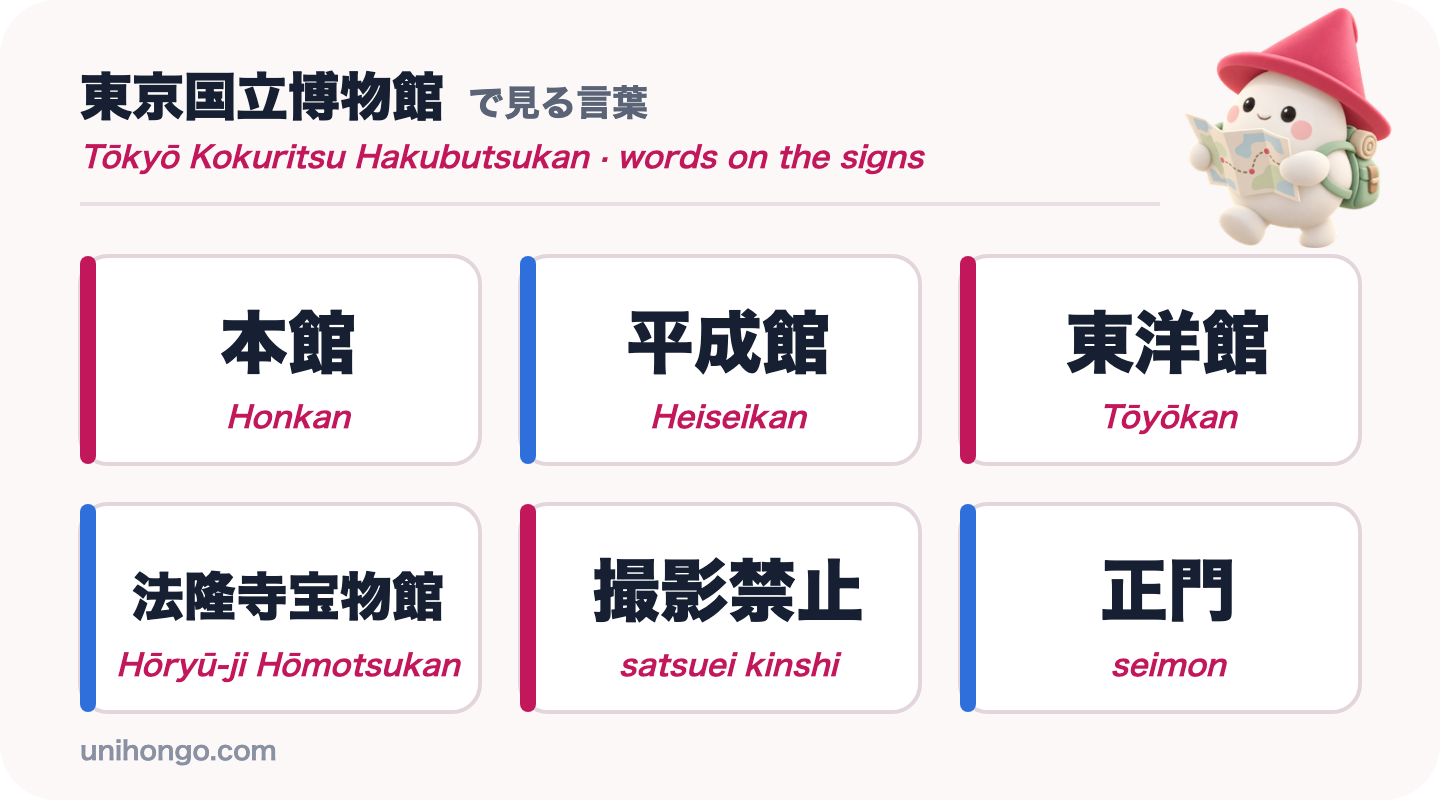
The map you pick up at the gate uses the Japanese building names, so it helps to know them: the Honkan, Heiseikan and Tōyōkan are named with 館, building or hall, and the Gallery of Hōryū-ji Treasures is the Hōryū-ji Hōmotsukan, literally the treasure-house of Hōryū-ji. The regular displays across all the buildings are called the sōgō bunkaten, the collection exhibitions, and the ticketed shows in the Heiseikan are tokubetsuten, special exhibitions.
On the labels, watch for two stamps. 国宝, kokuhō, is National Treasure, and 重要文化財, jūyō bunkazai, is Important Cultural Property. The sign with a crossed-out camera and the words 撮影禁止 means no photography for that object, even in a room where photos are otherwise fine.
| Word | Reading | Meaning |
|---|---|---|
| 正門 | seimon | Main Gate, the visitor entrance |
| 本館 | Honkan | Japanese Gallery, the main building |
| 平成館 | Heiseikan | Special exhibitions and archaeology |
| 東洋館 | Tōyōkan | Asian Gallery |
| 法隆寺宝物館 | Hōryū-ji Hōmotsukan | Gallery of Hōryū-ji Treasures |
| 表慶館 | Hyōkeikan | Domed Meiji-era gallery |
| 撮影禁止 | satsuei kinshi | No photography |
| 国宝 | kokuhō | National Treasure |
| 重要文化財 | jūyō bunkazai | Important Cultural Property |
| 総合文化展 | sōgō bunkaten | Collection exhibitions, the regular displays |
| 特別展 | tokubetsuten | Special exhibition, with its own ticket |
Japanese for tickets and questions in the galleries
Tickets for the collection exhibitions can be bought at the Main Gate or online on your phone, and the museum recommends buying online because the queue at the counters can take more than half an hour on busy days. Counters accept major credit cards and IC cards such as Suica. Special exhibitions sell their own tickets through their own websites, and those tickets include the collection galleries on the same day.
Inside, gallery attendants sit quietly in the corner of most rooms. They speak in polite keigo, and a short, polite question is always welcome, especially about photography, which depends on the object as well as the room.
| Japanese | Romaji | Meaning |
|---|---|---|
| 総合文化展のチケットを一枚ください。 | Sōgō bunkaten no chiketto o ichimai kudasai. | One ticket for the collection exhibitions, please. |
| 特別展のチケットで本館にも入れますか。 | Tokubetsuten no chiketto de Honkan ni mo hairemasu ka. | Can I also enter the Honkan with a special exhibition ticket? |
| 英語の館内マップはありますか。 | Eigo no kannai mappu wa arimasu ka. | Do you have a museum map in English? |
| この作品は撮影してもいいですか。 | Kono sakuhin wa satsuei shite mo ii desu ka. | May I photograph this work? |
| 国宝室はどこですか。 | Kokuhōshitsu wa doko desu ka. | Where is the National Treasure room? |
| 傘はどこに置けばいいですか。 | Kasa wa doko ni okeba ii desu ka. | Where should I leave my umbrella? |
| カフェはどの建物にありますか。 | Kafe wa dono tatemono ni arimasu ka. | Which building is the café in? |
Etiquette, timing and closures in 2026-27
The museum's guidelines are short and sensible, and following them keeps the fragile objects safe for the next visitor.
- Do not touch the objects or lean on the showcases, and keep your voice low; phones should be on silent mode in the galleries.
- If you take notes, use a pencil: ballpoint pens, ink pens and brushes are not allowed near the exhibits.
- No flash, extra lighting, tripods, monopods or selfie sticks, and no photos where you see 撮影禁止 or anywhere in the Heiseikan special exhibition galleries.
- Leave wet umbrellas in the umbrella lockers outside the galleries, and put large bags in the lockers.
- Go on a weekday morning to avoid the longest queues, and check whether a popular special exhibition is on, since it fills the whole site.
- Several rooms are scheduled to close for maintenance: Honkan Room 4 from late October 2026, Rooms 2 and 3, including the National Treasure room, from mid-December 2026, all reopening in late April 2027, and Honkan Rooms 17 to 20 and the Asian Gallery through December 2026.
Practise the gallery conversation before you go
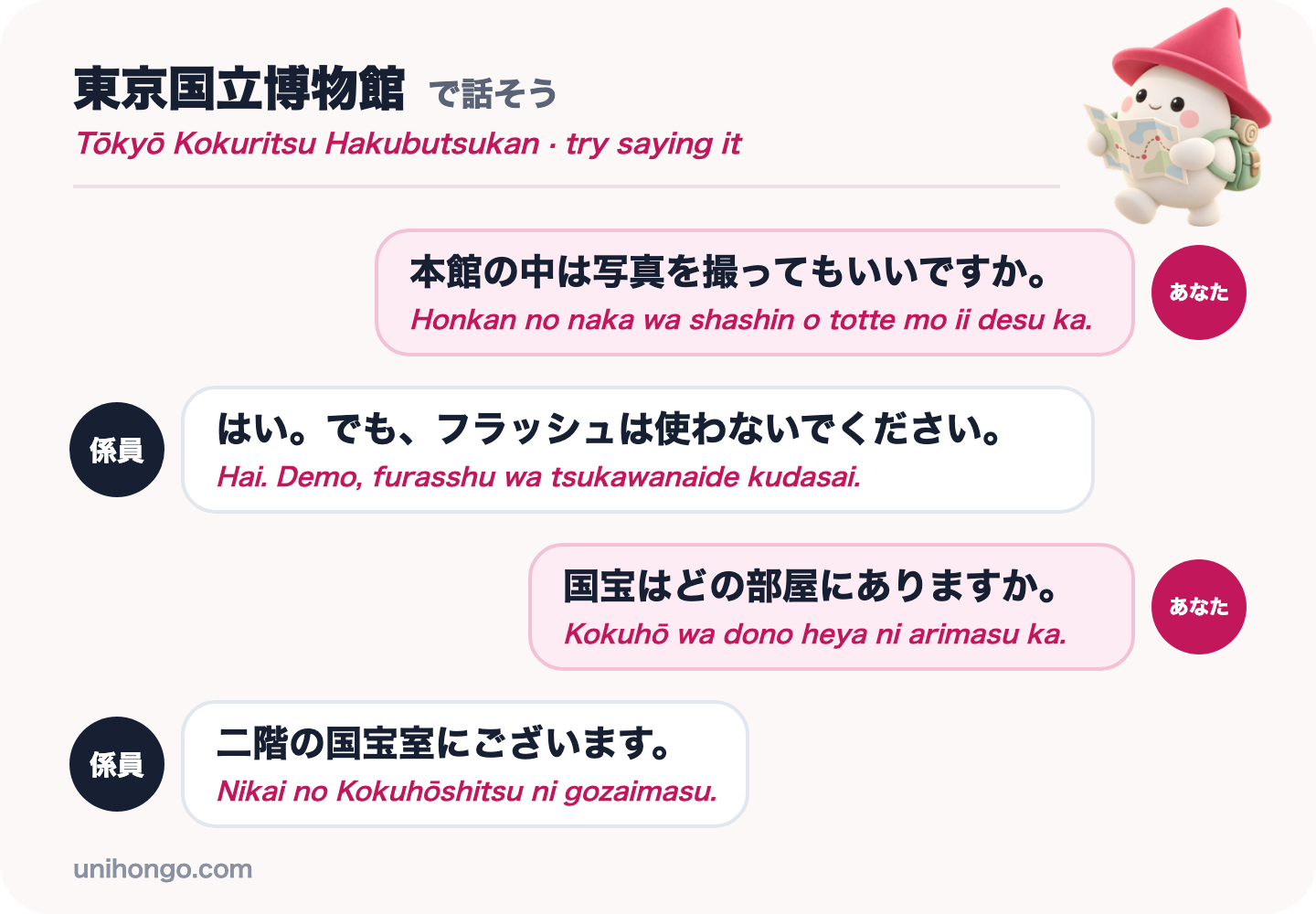
The two questions visitors ask most in the Honkan are whether they may take photos and where the famous pieces are. The attendant's answers use the polite forms you will hear across the museum: a gentle request with kudasai, and gozaimasu in place of arimasu. Listen for nikai, second floor, which is where the National Treasure room is.
Practise the four lines aloud until you can say them smoothly, then rehearse with a partner who answers back. In Unihongo, choose the Sightseeing topic and ask your AI Sensei to play a museum attendant using keigo, or try the Cultural Etiquette topic to practise quiet, polite requests in public places.
| Japanese | Romaji | Meaning |
|---|---|---|
| 本館の中は写真を撮ってもいいですか。 | Honkan no naka wa shashin o totte mo ii desu ka. | May I take photos inside the Honkan? |
| はい。でも、フラッシュは使わないでください。 | Hai. Demo, furasshu wa tsukawanaide kudasai. | Yes. But please don't use the flash. |
| 国宝はどの部屋にありますか。 | Kokuhō wa dono heya ni arimasu ka. | Which room is the National Treasure in? |
| 二階の国宝室にございます。 | Nikai no Kokuhōshitsu ni gozaimasu. | It is in the National Treasure room on the second floor. |
Official information
The museum publishes its hours, fees, closed days, room closures and the weekly list of changed exhibits on its website. Check the visitor information page before you go, especially around the New Year and when a large special exhibition is running.