

Why Churaumi is worth the drive north
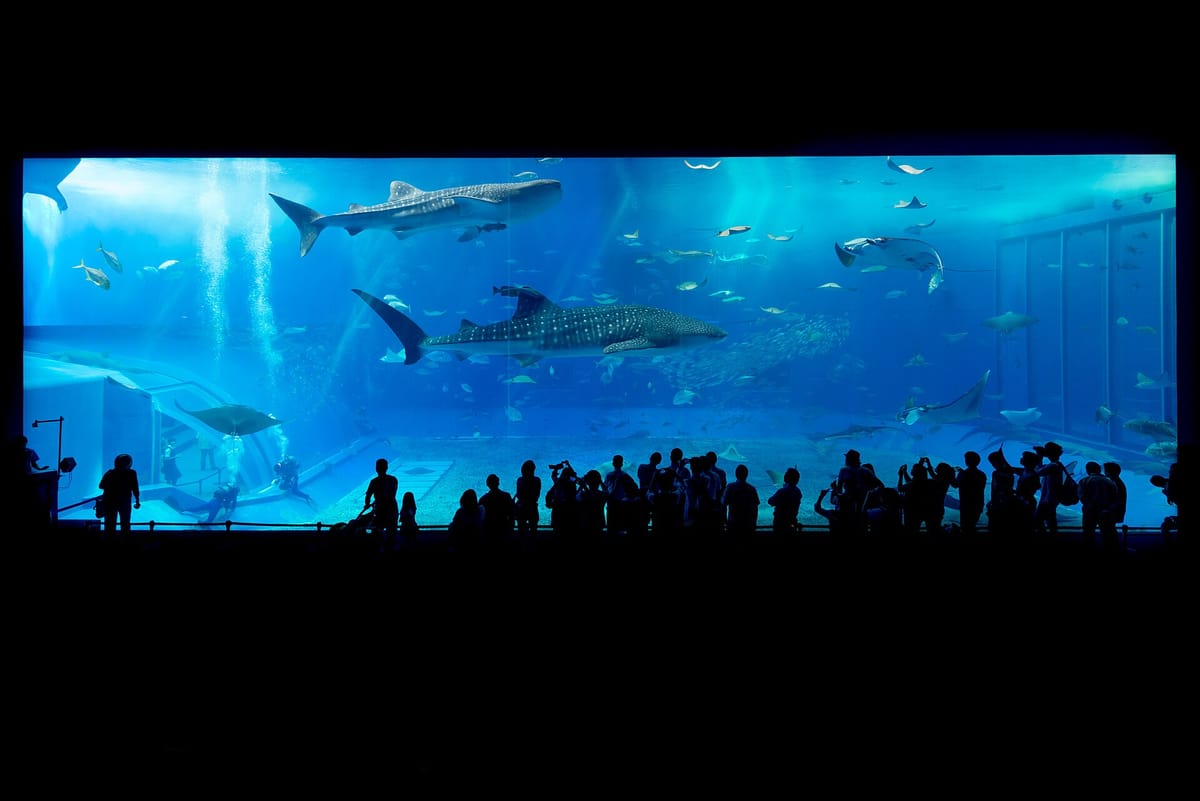
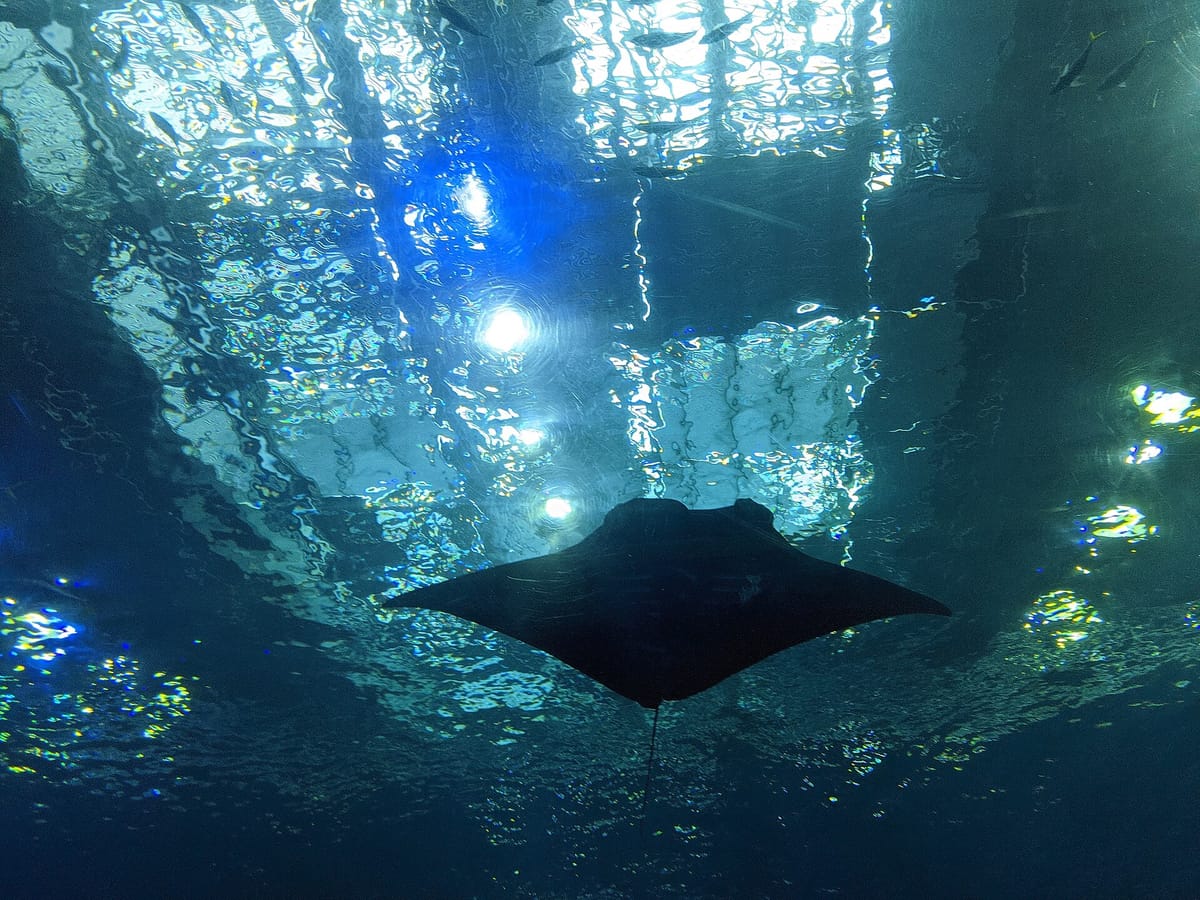
Okinawa Churaumi Aquarium is one of the best-known aquariums in Japan, and the reason is a single window. The Kuroshio Sea tank, named after the warm Kuroshio current that flows past Okinawa, holds 7,500 cubic metres of water behind a vast acrylic panel, and whale sharks, the largest fish in the world, glide past it alongside manta rays and shoals of tuna and jacks. Most visitors simply stop and stare.
The aquarium is also a research centre. Its recent announcements include the birth of a bottlenose dolphin calf in 2026 and world-first breeding successes with several species of sharks and deep-sea fish, and the exhibits change as new animals arrive. The focus throughout is on the seas around Okinawa: coral reefs, the open ocean and the deep sea.
For a Japanese learner, the name is the first lesson. Chura, beautiful, is Okinawan, and you will meet it again on shop signs and products all over the islands. Inside, the signs are short and clear, and the staff at the entrance, the café and the shows are used to visitors asking simple questions.
Getting there: Naha to Motobu by car or bus
The aquarium is in Ocean Expo Park, Kaiyōhaku Kōen, in Motobu town on the north-west coast of Okinawa Island. By car it takes about two hours from Naha Airport using the Okinawa Expressway, and the closest parking is the multi-storey car park by the park's north gate. By bus the aquarium gives about three hours; express buses run from the airport and Naha, and local buses connect from Nago. Check the bus companies' timetables before you travel.
Driving is the most flexible option and lets you combine the aquarium with the rest of the Motobu Peninsula. Remember that Japan drives on the left, and that the expressway uses tolls, which you can pay in cash or with an ETC card fitted to the rental car.
| Japanese | Romaji | Meaning |
|---|---|---|
| 美ら海水族館行きのバスはどこから出ますか。 | Churaumi Suizokukan-yuki no basu wa doko kara demasu ka. | Where does the bus to Churaumi Aquarium leave from? |
| 水族館まで何時間くらいかかりますか。 | Suizokukan made nanjikan kurai kakarimasu ka. | About how many hours does it take to the aquarium? |
| ETCカードは付いていますか。 | ETC kādo wa tsuite imasu ka. | Does the car have an ETC card? |
| 海洋博公園の駐車場はどこですか。 | Kaiyōhaku Kōen no chūshajō wa doko desu ka. | Where is the Ocean Expo Park car park? |
| 帰りのバスは何時が最後ですか。 | Kaeri no basu wa nanji ga saigo desu ka. | What time is the last bus back? |
Through the aquarium: reef, Kuroshio and the deep sea
You enter on the upper floor and walk down, following the sea from the shore to the depths. The route is one way and clearly signed, so you cannot get lost, and there is no time limit.
- Invitation to the Great Sea (4F): the entrance, with shallow pools of the creatures of Okinawa's shores.
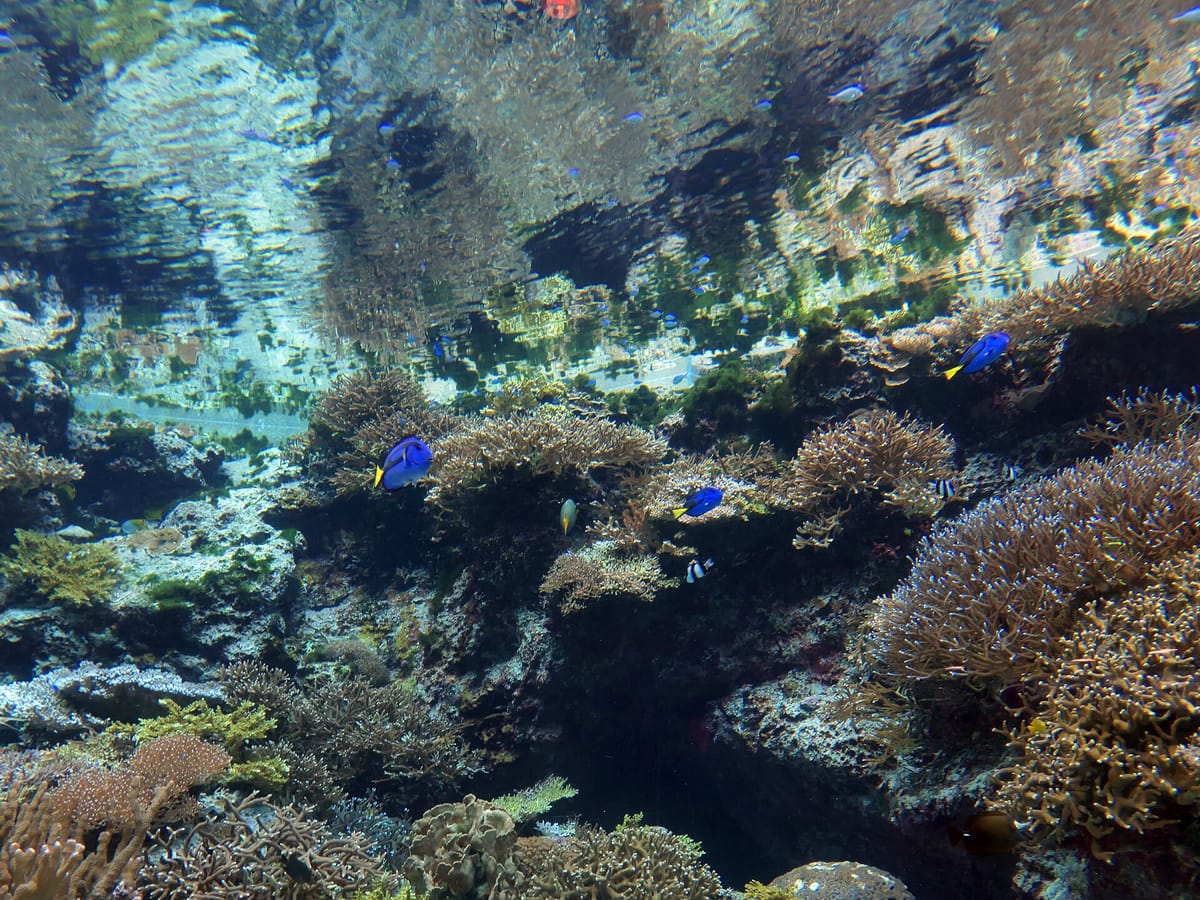
- Journey to a Coral Reef (3F): the Coral Sea tank, lit by natural sunlight, and reef fish in bright colours.
- Journey to the Kuroshio (2F): the Kuroshio Sea tank with whale sharks and manta rays, the Churaumi Theater and the Shark Research Lab.
- Aqua Room: a seating area under an acrylic ceiling where the big fish pass overhead.
- Journey into the Deep Sea (1F): strange creatures from the dark waters off Okinawa, and the exit and shops.
- Outside, in Ocean Expo Park: the Okichan Theater dolphin show, the Dolphin Lagoon, the Sea Turtle Pool, the Manatee Pool and Emerald Beach.
Words on the signs at the aquarium
Animal names in Japanese are usually written in katakana on signs, even when they have kanji, so the fish labels are good katakana practice. The whale shark is jinbē zame, named after the jinbei, a light summer jacket, because its spotted skin was thought to look like the pattern. The manta ray is simply manta.
The practical words are near the exit and in the park: sainyūkan for re-entry, the show names and the directions to the car parks and gates.
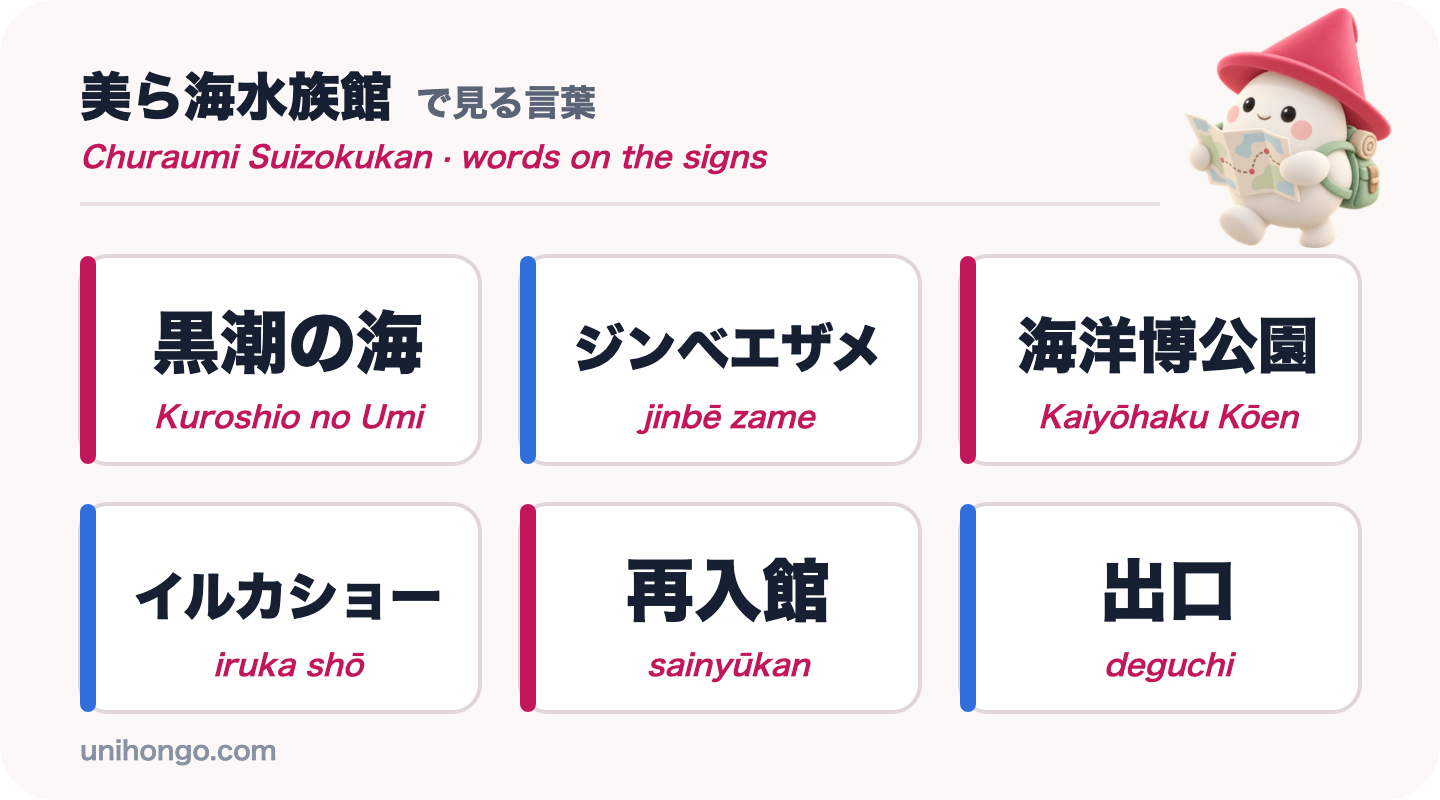
| Word | Reading | Meaning |
|---|---|---|
| 美ら海水族館 | Churaumi Suizokukan | Churaumi Aquarium |
| 黒潮の海 | Kuroshio no Umi | The Kuroshio Sea, the main tank |
| ジンベエザメ | jinbē zame | Whale shark |
| マンタ | manta | Manta ray |
| 海洋博公園 | Kaiyōhaku Kōen | Ocean Expo Park |
| イルカショー | iruka shō | Dolphin show |
| 再入館 | sainyūkan | Re-entry to the building |
| 出口 | deguchi | Exit |
| 給餌 | kyūji | Feeding time |
Japanese for tickets, shows and the café
Most of your conversations will be short: at the ticket counter, with staff by the tanks, at the café beside the Kuroshio Sea and at the shows. The key words are times and places: nanji, what time; doko, where; and the names of the shows and pools.
If you want to see a feeding or a show, check the programme boards near the entrance and in the park, where times for the day are posted, and plan your route around them.
| Japanese | Romaji | Meaning |
|---|---|---|
| 大人二枚、子ども一枚お願いします。 | Otona nimai, kodomo ichimai onegai shimasu. | Two adults and one child, please. |
| イルカショーはどこでやっていますか。 | Iruka shō wa doko de yatte imasu ka. | Where is the dolphin show held? |
| 次のショーは何時からですか。 | Tsugi no shō wa nanji kara desu ka. | What time does the next show start? |
| ウミガメのプールは無料ですか。 | Umigame no pūru wa muryō desu ka. | Is the sea turtle pool free? |
| あの大きい魚は何ですか。 | Ano ōkii sakana wa nan desu ka. | What is that big fish? |
| カフェの席は空いていますか。 | Kafe no seki wa aite imasu ka. | Are there seats free in the café? |
Aquarium manners, Okinawan words and practical tips
The aquarium publishes a short list of rules for visitors, and a few Okinawan words make the day more fun. Chura is the one you already know; here are two more that you will hear across Okinawa, with their standard Japanese equivalents.
| Japanese | Romaji | Meaning |
|---|---|---|
| めんそーれ | Mensōre | Welcome (Uchināguchi; standard Japanese: irasshaimase or yōkoso) |
| にふぇーでーびる | Nifē dēbiru | Thank you (Uchināguchi; standard Japanese: arigatō gozaimasu) |
- Do not bring food into the aquarium; drinks are allowed only in resealable bottles, and there are no vending machines inside.
- Photography for personal use is allowed, but do not use selfie sticks, and keep out of other visitors' way at the big windows.
- Do not livestream inside, and do not post photos that show other visitors or staff in a way that invades their privacy.
- Bring an umbrella on rainy days; the path from the car park to the aquarium is uncovered.
- The dolphin show and other outdoor programmes can be cancelled for weather or typhoons, and are suspended from 4 to 9 January 2027.
- Check the aquarium's own congestion forecast and arrive early or late in the day to avoid the busiest hours.
Practise the entrance conversation before you go
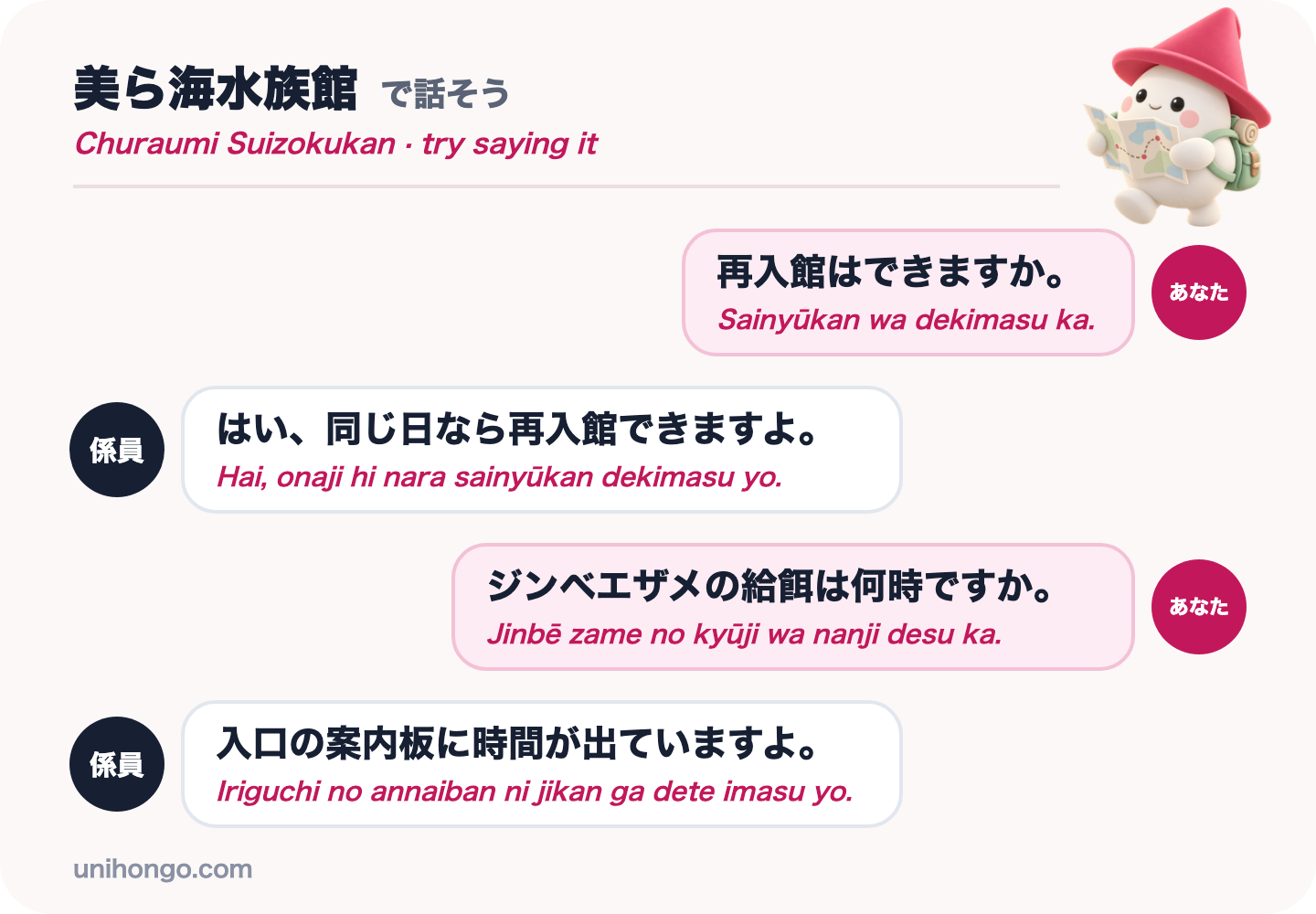
Two questions help you plan the day: can you leave and come back, and when is the feeding or show you want to see. Practise the four lines below until you can say them without reading, and listen for onaji hi, the same day, and annaiban, the information board, in the replies.
Then practise with someone who answers back. In Unihongo, choose the Sightseeing topic and ask your AI Sensei to play the aquarium staff, or pick Regional Dialects to explore Okinawan words like chura. Saying the lines once before you arrive is what makes them come out at the gate.
| Japanese | Romaji | Meaning |
|---|---|---|
| 再入館はできますか。 | Sainyūkan wa dekimasu ka. | Can I re-enter? |
| はい、同じ日なら再入館できますよ。 | Hai, onaji hi nara sainyūkan dekimasu yo. | Yes, you can re-enter on the same day. |
| ジンベエザメの給餌は何時ですか。 | Jinbē zame no kyūji wa nanji desu ka. | What time are the whale sharks fed? |
| 入口の案内板に時間が出ていますよ。 | Iriguchi no annaiban ni jikan ga dete imasu yo. | The times are on the information board at the entrance. |
Official information
Hours, admission, show schedules, suspensions and access information are published by the aquarium. Check them on the day, especially in the typhoon season and around holidays.