

Why teamLab Planets is worth the queue
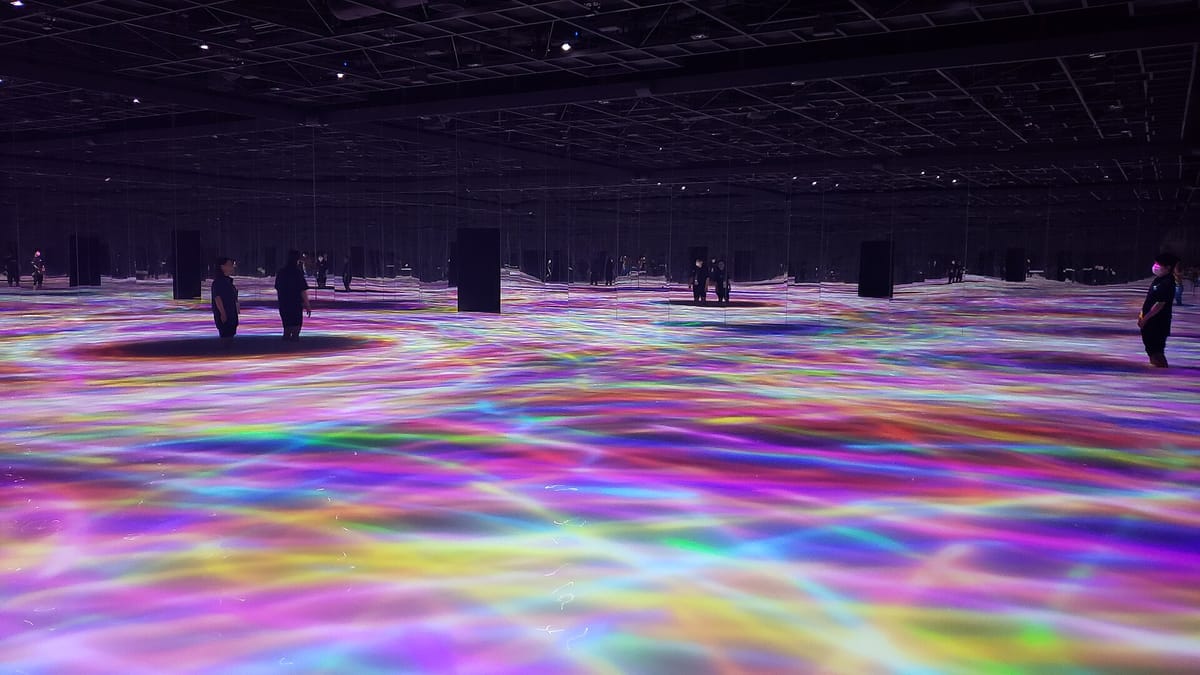
teamLab is an art collective founded in Tokyo in 2001, and Planets is its museum built around a single idea: that you should experience the art with your whole body rather than look at it from a distance. There are no frames and no labels to read beside each work. Instead you walk through a series of large, mostly dark rooms, barefoot, and the projections, lights and sounds change in response to where you stand and how you move. No two visits look the same, because the works are rendered live by computer rather than played back from a recording.
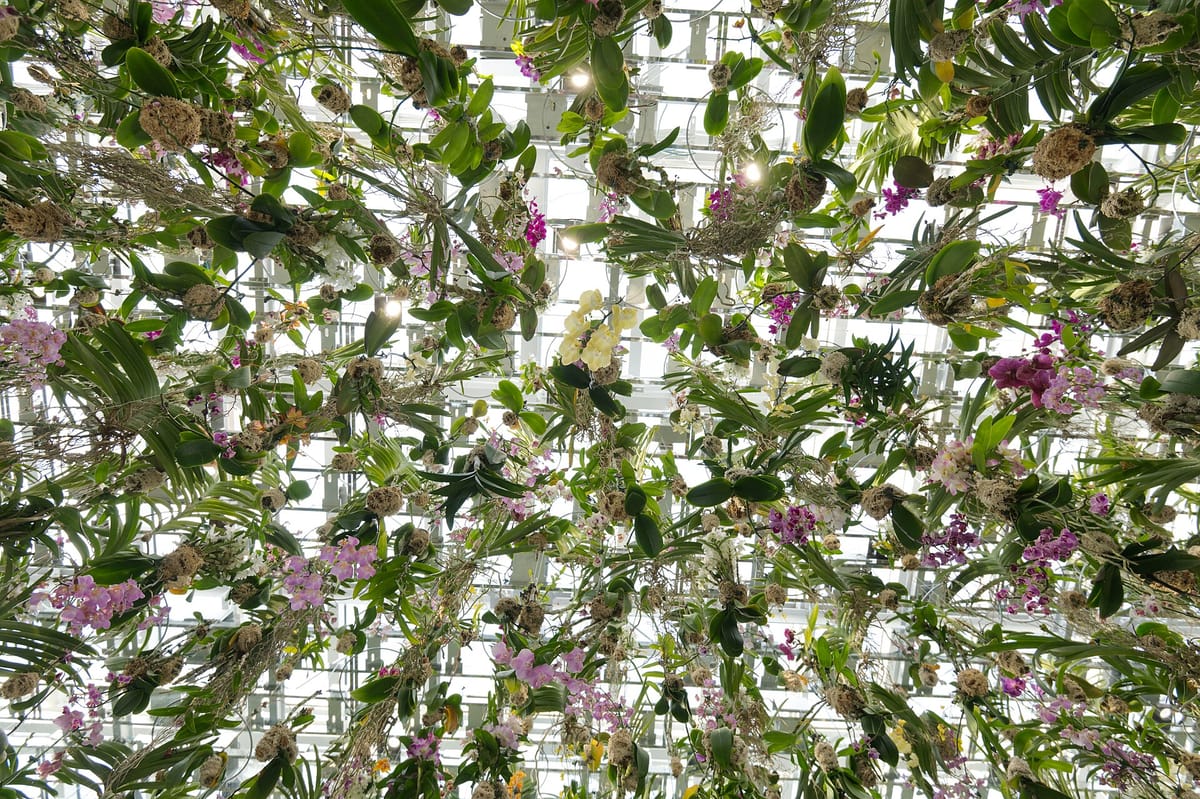
The route is fixed and the first part feels like a journey. You climb a slope where water runs over your feet, cross soft floors that sink as you walk, and wade into a room of knee-deep water where projected koi swim around your legs and burst into flowers when they touch you. Later rooms fill with floating spheres, falling petals and lines of light that stretch away in mirrors. Outside the water area there is a garden of living orchids hanging from the ceiling, a moss garden that glows after sunset and a newer area of rooms designed for climbing, jumping and drawing.
For a Japanese learner it is a surprisingly practical place. The instructions at the entrance, the lockers and the water rooms are all explained quickly by staff, and the few words you need, suashi for bare feet, tanpan for shorts, rokkā for locker, come up again and again. Understanding them means you move through the entrance calmly instead of watching what everyone else does.
Getting there: Shin-Toyosu, Toyosu and the bay
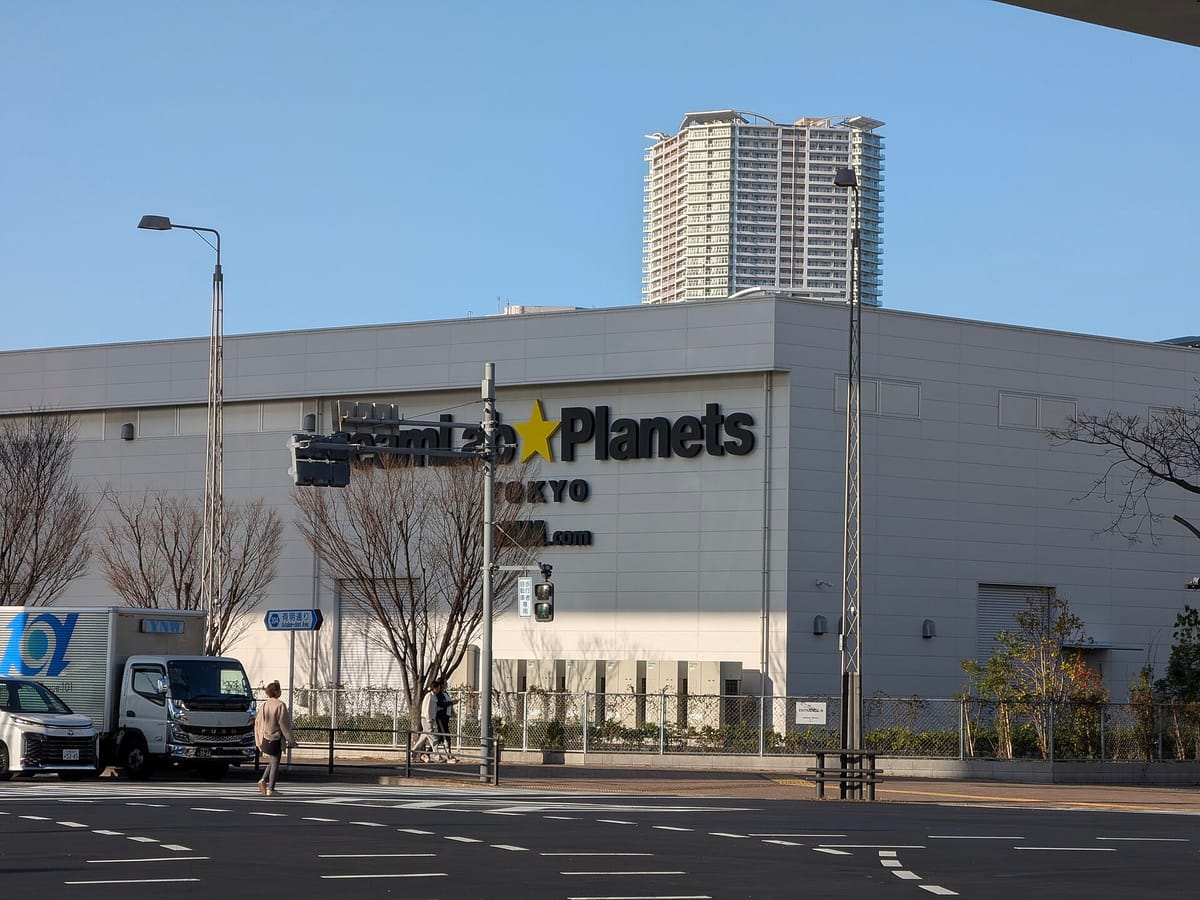
The closest station is Shin-Toyosu, Shin-Toyosu-eki, on the Yurikamome, the driverless waterfront train that runs from Shimbashi across Tokyo Bay. The official site puts the entrance about a minute on foot from the north exit, kitaguchi. Shijō-mae Station, one stop further, is around five minutes away and serves Toyosu Market, so the two are easy to combine in one morning.
If you prefer the subway, take the Tokyo Metro Yūrakuchō Line to Toyosu Station and use exit 7; the walk is about ten minutes past the shopping centre. Taxis stop where the security guards direct them rather than at the door. A paid shuttle bus runs from GINZA SIX in Ginza, while the museum warns that public buses from Tokyo Station and Ginza towards Shin-Toyosu are very crowded and suggests using other routes.
| Japanese | Romaji | Meaning |
|---|---|---|
| 新豊洲駅は何番線ですか。 | Shin-Toyosu-eki wa nanbansen desu ka. | Which platform is it for Shin-Toyosu Station? |
| チームラボプラネッツはどちらですか。 | Chīmurabo Puranettsu wa dochira desu ka. | Which way is teamLab Planets? |
| 北口はどちらですか。 | Kitaguchi wa dochira desu ka. | Which way is the north exit? |
| ここから歩いて何分くらいですか。 | Koko kara aruite nanpun kurai desu ka. | About how many minutes on foot from here? |
| ゆりかもめは交通系ICカードで乗れますか。 | Yurikamome wa kōtsūkei IC kādo de noremasu ka. | Can I ride the Yurikamome with a transport IC card? |
What you will see: water, flowers and the Athletics Forest
The museum is divided into areas, and you move through them in order. The Water area is the heart of the visit and is where you walk barefoot; the Garden area includes indoor and outdoor gardens; the Athletics Forest is a set of rooms where you move your body, climb and play, and it is especially popular with children. The official site lists the current works for each area, and new works are added from time to time.
Take your time in each room. Many of the works change slowly, and some only reveal themselves when you stand still or lie down. The Floating in the Falling Universe of Flowers dome, for example, is meant to be watched lying on your back, and the Moss Garden outside looks completely different after sunset, when its egg-shaped objects begin to glow.
- Drawing on the Water Surface Created by the Dance of Koi and People - Infinity: the knee-deep room with projected koi that turn into flowers when they touch you.
- The Infinite Crystal Universe: a mirrored room of hanging lights, which you can change with your smartphone.
- Floating in the Falling Universe of Flowers: a dome where flowers bloom and scatter across the ceiling as you lie on the floor.
- Expanding Three-dimensional Existence in Transforming Space: a room packed with large glowing spheres that change colour when you push them.
- Floating Flower Garden: thousands of living orchids that rise as you approach, leaving a space around you.
- Moss Garden of Resonating Microcosms: an outdoor moss garden with ovoids that glow after dark, closed in typhoon-level wind or heavy rain.
- Athletics Forest: climbing, bouncing and drawing rooms, including Graffiti Nature and Sketch works where your drawing appears on the walls.
Words on the signs at the entrance and lockers
Most signs at teamLab Planets are also in English, but the Japanese versions are short and worth reading. The entrance is marked as the nyūjōguchi, the place where you enter with a ticket, and the ticket itself is chiketto. Once inside, the lockers, rokkā, come first; you put everything in them except your phone and, if you like, a small towel.
Two warnings matter. Ashimoto chūi, watch your step, appears wherever the floor changes from hard to soft or from dry to wet, and sainyūjō fuka means that once you leave, you cannot come back in on the same ticket. Visit the toilets, o-tearai, before you go through.
| Word | Reading | Meaning |
|---|---|---|
| 新豊洲駅 | Shin-Toyosu-eki | Shin-Toyosu Station, the nearest Yurikamome stop |
| 入場口 | nyūjōguchi | Entrance for ticket holders |
| ロッカー | rokkā | Lockers, where shoes and bags go |
| 足元注意 | ashimoto chūi | Watch your step |
| 再入場不可 | sainyūjō fuka | No re-entry |
| お手洗い | o-tearai | Toilets |
| 素足 | suashi | Bare feet |
| 貸出 | kashidashi | Lending, items you can borrow |
| 撮影 | satsuei | Photography or filming |
Japanese for tickets, lockers and the water rooms
Staff at teamLab Planets deal with visitors from all over the world and will help in English, but the entrance moves quickly and a short question in Japanese often gets you a faster and friendlier answer. The key moments are showing your ticket, finding a locker, deciding whether to borrow shorts and checking what you can carry inside.
Your ticket is usually a QR code on your phone. Rental shorts are free, in sizes from extra small to very large, and you return them on your way out. Your phone can come with you, and photos and video are allowed, but there is water everywhere, so hold it firmly or use a strap.
| Japanese | Romaji | Meaning |
|---|---|---|
| 十時のチケットを持っています。 | Jūji no chiketto o motte imasu. | I have a ticket for ten o'clock. |
| このQRコードで入れますか。 | Kono QR kōdo de hairemasu ka. | Can I get in with this QR code? |
| ロッカーはどこですか。 | Rokkā wa doko desu ka. | Where are the lockers? |
| 靴下も脱いだほうがいいですか。 | Kutsushita mo nuida hō ga ii desu ka. | Should I take my socks off too? |
| 短パンを借りられますか。 | Tanpan o kariraremasu ka. | Can I borrow shorts? |
| もう少し大きいサイズはありますか。 | Mō sukoshi ōkii saizu wa arimasu ka. | Do you have a slightly bigger size? |
| タオルを借りたいんですが。 | Taoru o karitai n desu ga. | I'd like to rent a towel. |
| スマホは持って入れますか。 | Sumaho wa motte hairemasu ka. | Can I take my smartphone in? |
Etiquette, timing and what to wear
The rules at teamLab Planets are about safety and keeping the water clean, and staff explain them before you enter. A little preparation makes the visit far more comfortable.
- Arrive at the start of your entry slot and join the queue; the time on your ticket is when you enter, not how long you may stay.
- Wear trousers that roll up above the knee, or plan to borrow shorts. A long skirt is awkward in the water and in the mirrored rooms.
- Put everything except your phone in the free locker. Large suitcases do not fit and are kept separately, so travel light if you can.
- Hold your phone tightly or use a strap in the water rooms, and turn off the flash so the projections stay dark for everyone.
- Keep moving at a gentle pace in the busiest rooms; at peak times staff may ask people to move on.
- Children under 13 must enter with an adult, and there must be one adult for every three children.
- The vegan ramen shop and café inside can only be used after you have entered with your ticket.
Practise the entrance before you go
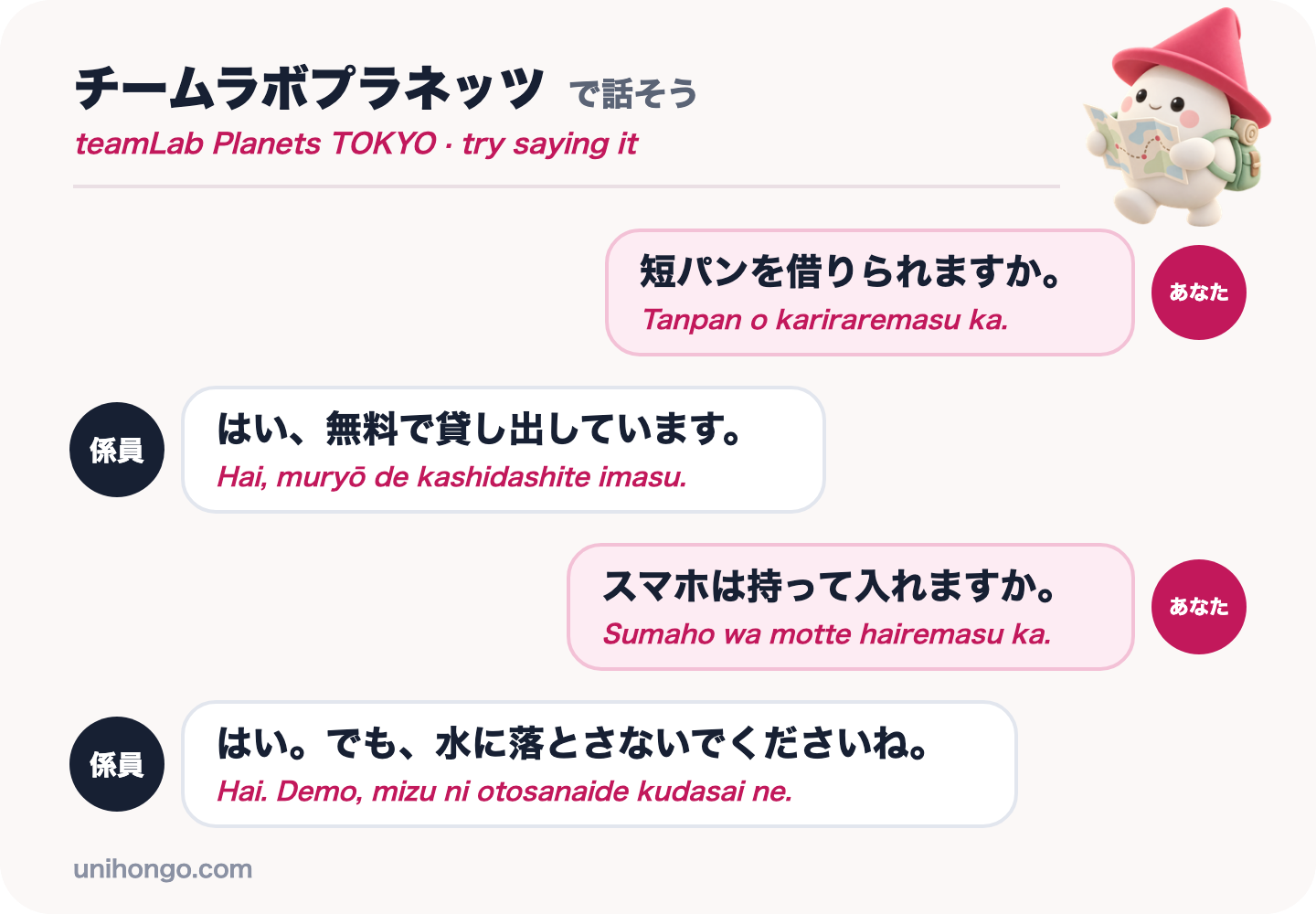
The conversation you are most likely to have happens between the locker room and the first water room, when a staff member asks whether you have everything you need. Two questions cover it: can I borrow shorts, and can I take my phone in. Listen for muryō, free of charge, and for the polite warning at the end of the reply.
Practise these lines aloud until you can say them without looking, then rehearse with a partner who answers back. In Unihongo, choose the Sightseeing topic and ask your AI Sensei to play the teamLab staff member. Speaking the lines once before you arrive is what makes them come out naturally when you are standing barefoot in the queue.
| Japanese | Romaji | Meaning |
|---|---|---|
| 短パンを借りられますか。 | Tanpan o kariraremasu ka. | Can I borrow shorts? |
| はい、無料で貸し出しています。 | Hai, muryō de kashidashite imasu. | Yes, we lend them free of charge. |
| スマホは持って入れますか。 | Sumaho wa motte hairemasu ka. | Can I take my smartphone in? |
| はい。でも、水に落とさないでくださいね。 | Hai. Demo, mizu ni otosanaide kudasai ne. | Yes. But please don't drop it in the water. |
Official information
Ticket prices change with demand, and the museum occasionally closes for a day or updates its works. Check the official site for this season's hours, closed days and access notes, and buy tickets only through the official store or an authorised seller, since resold tickets are refused at the door.