
Hokkaido winter Japanese in four lines
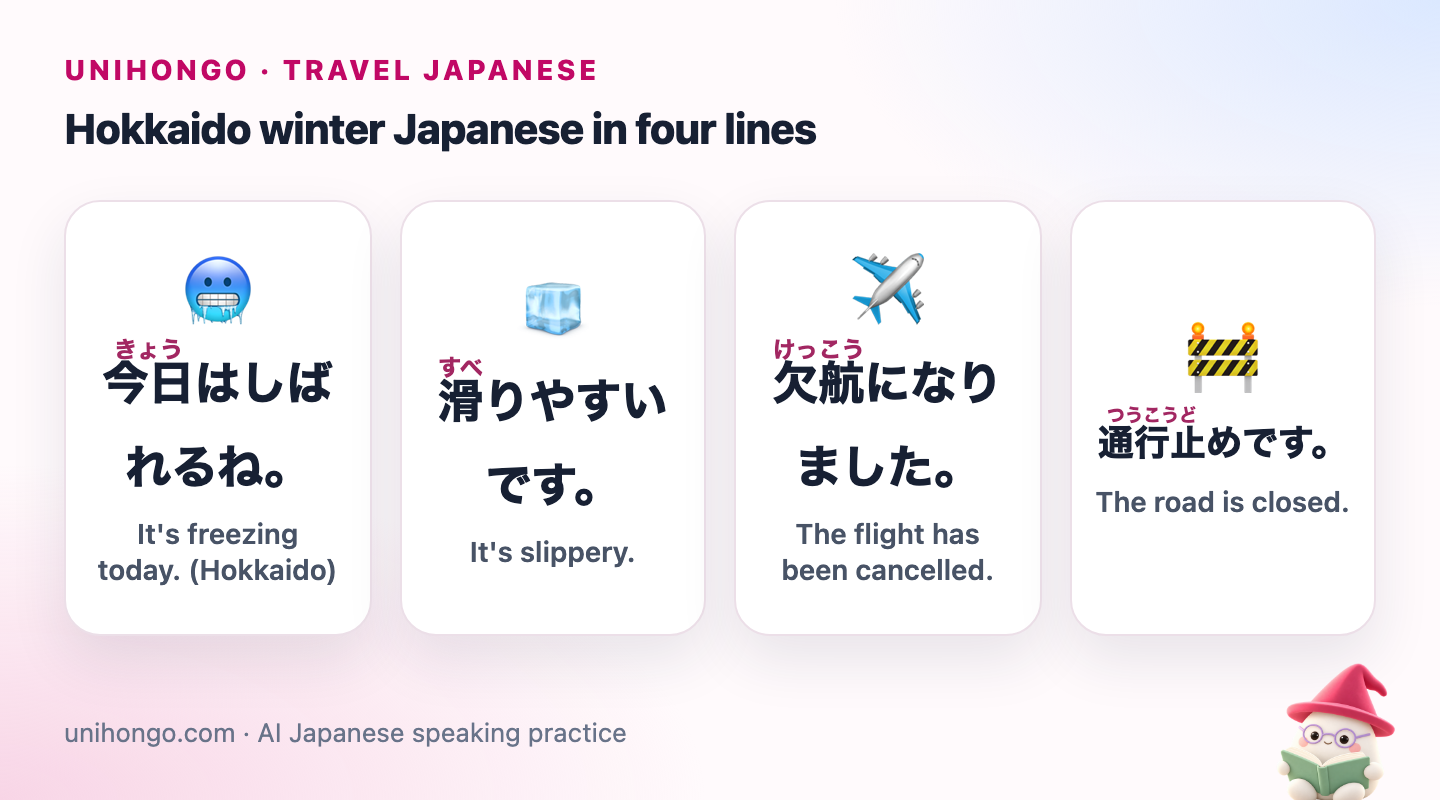
Start with these four. The first is local small talk that will win you smiles at every counter. The second is the warning you will hear again and again. The last two are the problems most likely to change your plans.
| Japanese | Romaji | Meaning |
|---|---|---|
| 今日はしばれるね。 | Kyō wa shibareru ne. | It's freezing today. (Hokkaido) |
| 滑りやすいです。 | Suberiyasui desu. | It's slippery. |
| 欠航になりました。 | Kekkō ni narimashita. | The flight has been cancelled. |
| 通行止めです。 | Tsūkōdome desu. | The road is closed. |
Walking on ice and buying snow gear
Visitors often expect the cold, but not the ice. In Hokkaido towns, compacted snow on pavements polishes into ice, especially at crossings and building entrances. Locals walk with small, flat steps and their weight slightly forward, and many visitors buy grips that attach to their shoes, sold at convenience stores, shoe shops and some stations. Boots with good soles help more than any coat.
If you arrive without the right clothes, outdoor and sports shops sell everything, and ski resorts rent wear and equipment. These lines will get you what you need.
| Japanese | Romaji | Meaning |
|---|---|---|
| 靴に付ける滑り止めはありますか。 | Kutsu ni tsukeru suberidome wa arimasu ka. | Do you have grips to attach to shoes? |
| 滑らない靴を探しています。 | Suberanai kutsu o sagashite imasu. | I'm looking for non-slip shoes. |
| 手袋とネックウォーマーをください。 | Tebukuro to nekku wōmā o kudasai. | Gloves and a neck warmer, please. |
| ウェアをレンタルできますか。 | Wea o rentaru dekimasu ka. | Can I rent ski wear? |
| 気をつけて、滑るよ。 | Ki o tsukete, suberu yo. | Careful, it's slippery. (casual) |
Cancelled flights and trains
Blizzards, fubuki (吹雪), can cancel flights and trains, sometimes for a whole day. A cancelled flight is kekkō (欠航); a cancelled train is unkyū (運休). Airlines usually offer to change your booking or refund the fare, and the queue at the counter can be long, so many travellers also check the airline's app or website while they wait. Have your booking number ready and keep your questions short.
| Japanese | Romaji | Meaning |
|---|---|---|
| 予約していた便が欠航になったんですが。 | Yoyaku shite ita bin ga kekkō ni natta n desu ga. | My booked flight was cancelled. |
| 次の便に変更できますか。 | Tsugi no bin ni henkō dekimasu ka. | Can I change to the next flight? |
| 払い戻しはできますか。 | Haraimodoshi wa dekimasu ka. | Can I get a refund? |
| 明日の朝の便は空いていますか。 | Ashita no asa no bin wa aite imasu ka. | Are there seats on tomorrow morning's flight? |
| 特急は運休ですか。 | Tokkyū wa unkyū desu ka. | Is the limited express cancelled? |
| 今夜泊まるところを探しています。 | Kon'ya tomaru tokoro o sagashite imasu. | I'm looking for a place to stay tonight. |
Asking about road conditions
If you drive, rental cars in Hokkaido usually come with studless winter tyres, but roads can still close for snow or drifting. Mountain passes, tōge (峠), are the most likely to close. Ask at your hotel, the rental car office or a roadside station, michi no eki (道の駅), before you set off, and allow far more time than the map suggests. Fubuki can cause a whiteout, howaito auto (ホワイトアウト), in which you cannot see the road at all.
| Japanese | Romaji | Meaning |
|---|---|---|
| この先の道路状況はどうですか。 | Kono saki no dōro jōkyō wa dō desu ka. | How are the road conditions ahead? |
| 峠は通れますか。 | Tōge wa tōremasu ka. | Can we get over the pass? |
| 小樽まで何時間くらいかかりますか。 | Otaru made nanjikan kurai kakarimasu ka. | About how many hours to Otaru? |
| 吹雪がひどいので、今日はやめたほうがいいですよ。 | Fubuki ga hidoi node, kyō wa yameta hō ga ii desu yo. | Staff: The blizzard is bad, so you'd better not go today. |
| 冬タイヤですか。 | Fuyu taiya desu ka. | Does it have winter tyres? |
Ski lessons and the slopes
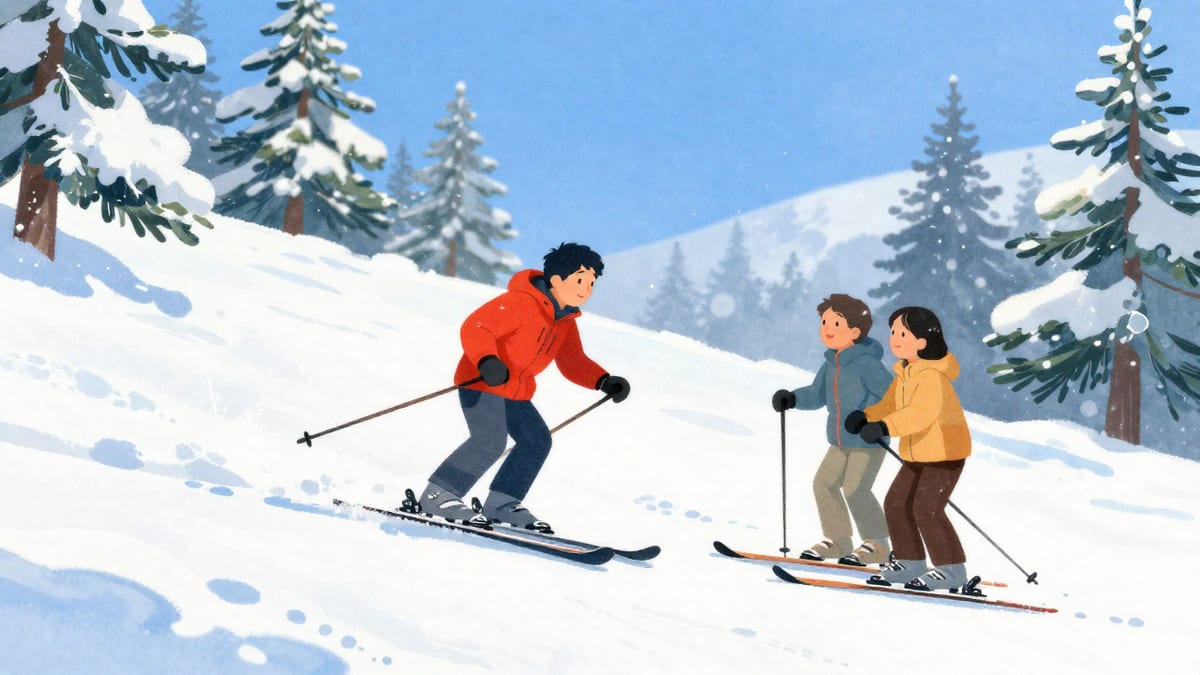
Many Hokkaido resorts have instructors who speak English, but booking and chatting in Japanese is good practice, and at smaller local hills it may be the only option. Tell them your level honestly: shoshinsha (初心者) is a complete beginner, and chūkyūsha (中級者) is intermediate. A lift pass is a rifuto ken (リフト券).
| Japanese | Romaji | Meaning |
|---|---|---|
| 初心者向けのレッスンはありますか。 | Shoshinsha muke no ressun wa arimasu ka. | Do you have lessons for beginners? |
| スキーは初めてです。 | Sukī wa hajimete desu. | It's my first time skiing. |
| リフト券を二枚ください。 | Rifuto ken o nimai kudasai. | Two lift passes, please. |
| もう一度見せてもらえますか。 | Mō ichido misete moraemasu ka. | Could you show me once more? |
| 足が疲れたので、少し休みます。 | Ashi ga tsukareta node, sukoshi yasumimasu. | My legs are tired, so I'll rest a bit. |
| 今日の雪質はどうですか。 | Kyō no yukishitsu wa dō desu ka. | How is the snow today? |
Hokkaido is famous for dry, light powder snow, which skiers call powder, paudā (パウダー). Yukishitsu (雪質), snow quality, is the word locals use when they talk about conditions. On very cold days, take breaks indoors, keep your fingers moving, and listen to staff if they close a lift for wind; kaze de unkyū chū, closed because of wind, is a common notice on exposed slopes.
Onsen and snow festivals
An outdoor bath, rotenburo (露天風呂), with snow falling around you is a highlight of any winter trip. Wash thoroughly at the shower stations before entering, keep your small towel out of the water, and go in slowly, because the contrast with the freezing air is strong. Tattoo rules differ by facility: many still refuse visible tattoos, some allow them, and some accept small ones covered with a sticker, so check before you go and follow what they say. Many inns and some baths offer private baths, kashikiri buro (貸切風呂).
Winter also brings snow festivals across Hokkaido, from the large city festival in Sapporo to small town events with ice lanterns and snow slides. Dates change each year, so check the official schedule for the festival you want to see.
| Japanese | Romaji | Meaning |
|---|---|---|
| タトゥーがあっても入れますか。 | Tatū ga atte mo hairemasu ka. | Can I go in if I have a tattoo? |
| 貸切風呂は予約できますか。 | Kashikiri buro wa yoyaku dekimasu ka. | Can I book the private bath? |
| 雪見風呂、最高ですね。 | Yukimiburo, saikō desu ne. | A bath with a snow view is the best. |
| 雪まつりはいつからですか。 | Yuki matsuri wa itsu kara desu ka. | When does the snow festival start? |
Hokkaido words and a mini dialogue
Hokkaido Japanese is close to standard Japanese, but a few local words are famous. Shibareru means freezing cold. Namara means very, as in namara samui. Using them lightly with locals is friendly; they will know you learned them on purpose. Do not overdo it, though: one dialect word in a conversation is charming, and a whole sentence of it can sound like you are imitating people. Standard polite Japanese is always correct.
| Japanese | Romaji | Meaning |
|---|---|---|
| いらっしゃいませ。外、しばれるでしょう。 | Irasshaimase. Soto, shibareru deshō. | Shopkeeper: Welcome. It must be freezing outside. |
| はい、なまら寒いです! | Hai, namara samui desu! | You: Yes, it's really cold! |
| はは、北海道弁ですね。どこから来たんですか。 | Haha, Hokkaidō ben desu ne. Doko kara kita n desu ka. | Shopkeeper: Ha, that's Hokkaido dialect. Where are you from? |
| カナダです。でも、ここのほうが寒いです。 | Kanada desu. Demo, koko no hō ga samui desu. | You: Canada. But it's colder here. |
Common mistakes: wearing city shoes on icy pavements, planning tight connections in blizzard season, and assuming every onsen accepts tattoos. Build a spare day into your trip if you can.