

Why Chichibu is Tokyo's favourite mountain day trip
Chichibu is a city of mountains and shrines in the far west of Saitama Prefecture, on the edge of the Chichibu-Tama-Kai National Park. The forested peaks around the basin have been centres of mountain worship for centuries, and the town grew as a market for silk and a stop for pilgrims. Today it is where Tokyo goes for a breath of mountain air without an overnight trip: close enough for a day, far enough to feel like somewhere else.
The skyline is dominated by Mount Bukō, Bukōzan, whose limestone face has been quarried for cement, giving it a distinctive terraced look. At its foot lie the town centre, Chichibu Shrine, Hitsujiyama Park and the stations, all within walking distance of each other. Further out are Mitsumine Shrine, high in the mountains, and the Nagatoro gorge, twenty minutes down the Chichibu Railway, which deserves a day of its own.
For a learner, Chichibu is gentle practice. The town is used to visitors from Tokyo but far less international than Kyoto or Hakone, so you will read real Japanese signs, order from Japanese menus and hear plain, friendly Japanese at the ticket windows and food stalls. The phrases in this guide cover almost every exchange of a typical day.
Getting there: the Laview from Ikebukuro to Seibu-Chichibu
The Seibu Laview is the easiest way in. These limited express trains, tokkyū, run on the Seibu Ikebukuro Line and Seibu Chichibu Line from Ikebukuro to Seibu-Chichibu in about eighty minutes, with stops such as Tokorozawa, Hannō and Yokoze. All seats are reserved, so you need both an ordinary ticket, or an IC card for the fare, and a limited express ticket, the tokkyūken, for a specific train and seat. Tickets go on sale about a month ahead from station machines and windows, and weekend morning trains in spring and autumn can sell out, so buy your return early too.
Seibu-Chichibu Station is a modern building with a hot spring and food hall attached. Ohanabatake Station on the Chichibu Railway is about five minutes' walk away, and from there local trains run to Chichibu Station, closest to the shrine, and on to Nagatoro. If you are coming from the north, JR trains reach Kumagaya, where you change to the Chichibu Railway for a slow, scenic ride of about seventy minutes. Mitsumine Shrine needs a bus from Seibu-Chichibu of well over an hour each way.
| Japanese | Romaji | Meaning |
|---|---|---|
| 西武秩父までの特急券をください。 | Seibu-Chichibu made no tokkyūken o kudasai. | A limited express ticket to Seibu-Chichibu, please. |
| 次の特急は何時ですか。 | Tsugi no tokkyū wa nanji desu ka. | What time is the next limited express? |
| 帰りの特急も今買えますか。 | Kaeri no tokkyū mo ima kaemasu ka. | Can I buy the return express ticket now too? |
| 御花畑駅はどちらですか。 | Ohanabatake-eki wa dochira desu ka. | Which way is Ohanabatake Station? |
| 秩父神社まで歩いて何分くらいですか。 | Chichibu Jinja made aruite nanpun kurai desu ka. | About how many minutes' walk is it to Chichibu Shrine? |
| この電車は長瀞に止まりますか。 | Kono densha wa Nagatoro ni tomarimasu ka. | Does this train stop at Nagatoro? |
What to see: the shrine, the flower hill and the festival
Chichibu Shrine, Chichibu Jinja, is the heart of the town and one of the oldest shrines in the region; the present buildings date from 1592 and were built with the support of Tokugawa Ieyasu. Walk round the main hall rather than just praying at the front, because the carvings are the reason to come. Look for the tsunagi no ryū, the chained dragon, attributed to the legendary carver Hidari Jingorō. The shrine's story is that whenever a dragon from a nearby pond ran wild, a puddle appeared under this carving, so the carved dragon was chained in place, and the trouble stopped. On the south side a family of tigers honours Ieyasu, who was born in the year of the tiger, and on the north side an owl faces the opposite way from its body to watch over the shrine's deity.
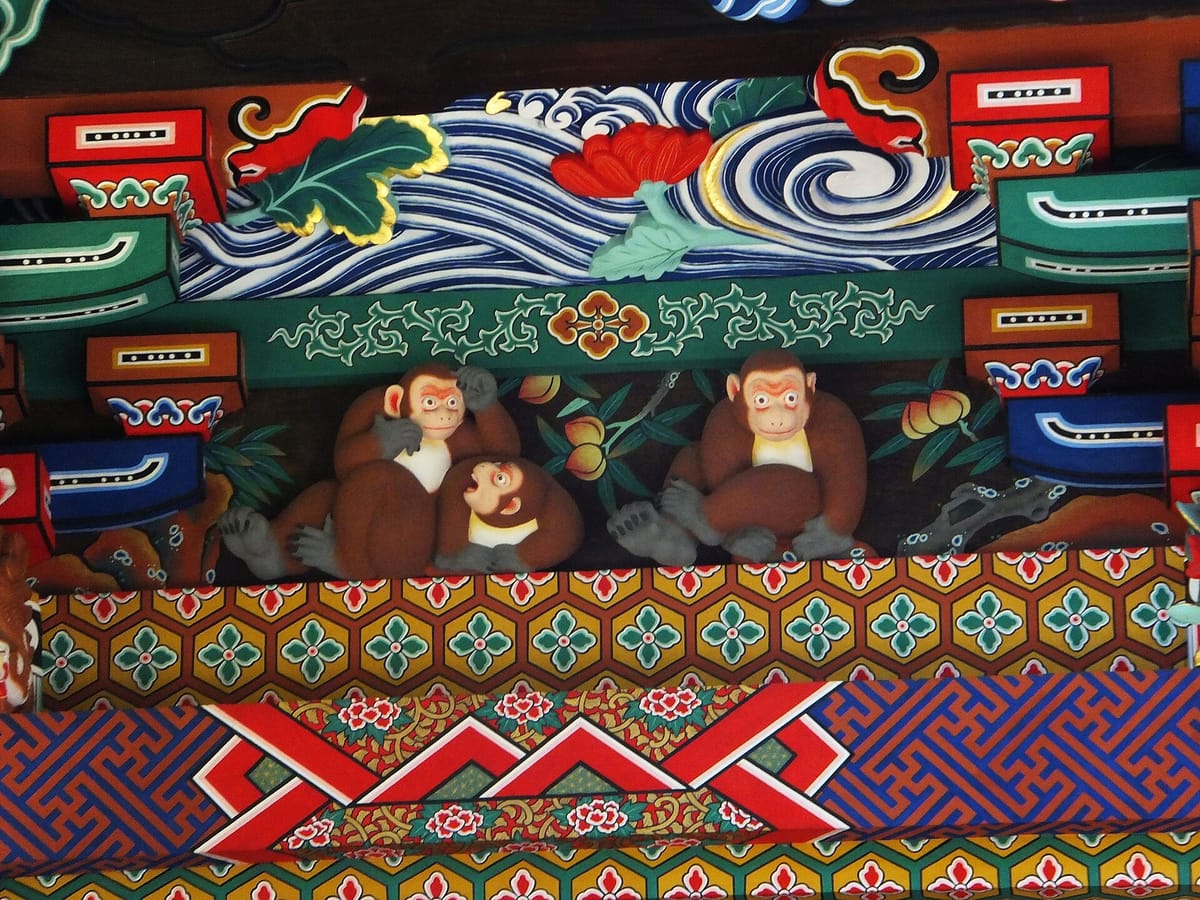
The most famous carving is the o-genki sanzaru, the lively three monkeys. Where the three monkeys of Nikkō famously see no evil, hear no evil and speak no evil, Chichibu's monkeys are shown looking, listening and speaking well, which makes them a good mascot for a language learner.
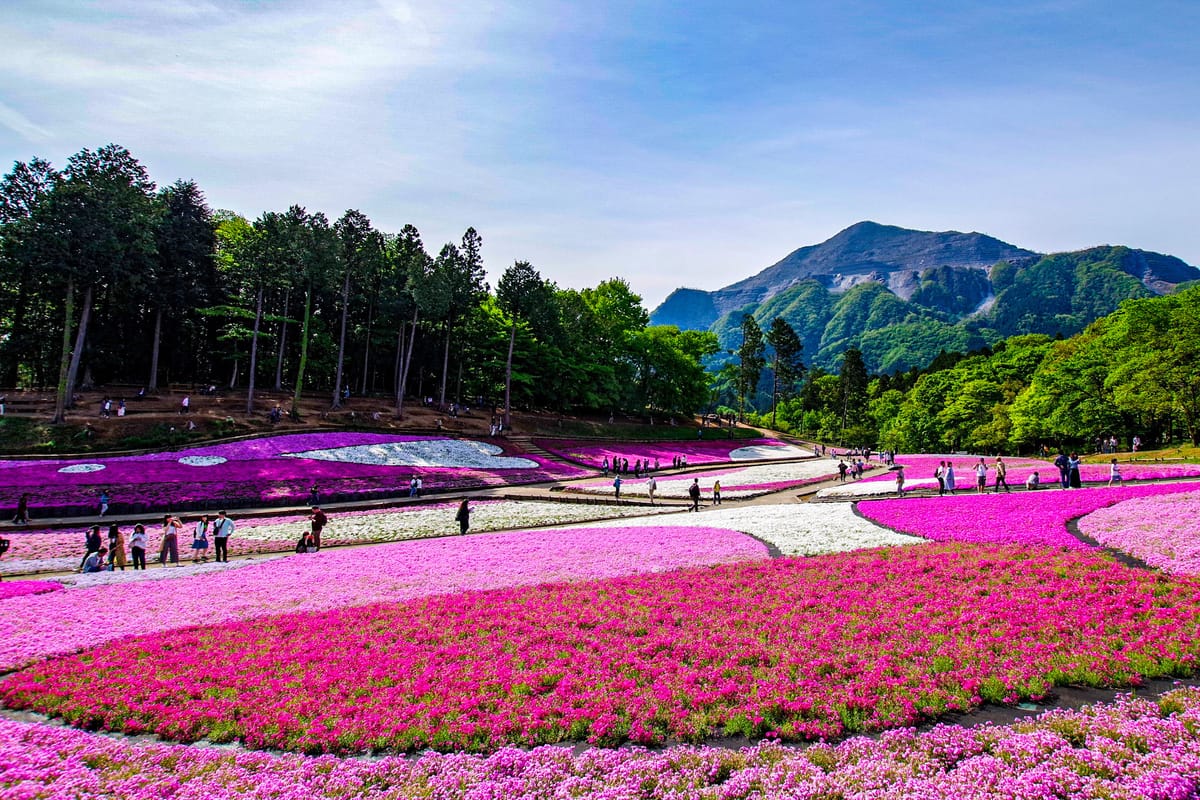
In spring the crowds head to Hitsujiyama Park, sheep-mountain park, on a hill about 1.5 kilometres from Seibu-Chichibu Station. Its Shibazakura no Oka, moss phlox hill, covers around 17,600 square metres with more than 400,000 plants in about ten varieties of pink, white and purple, laid out in patterns inspired by the costumes worn on the Night Festival floats. The colour usually starts in mid-April and peaks in early May.
- Chichibu Jinja: the carved main hall, free to visit, next to Chichibu Station.
- Chichibu Matsuri Kaikan: the festival hall beside the shrine, with full-size floats on display; a small fee applies.
- Hitsujiyama Kōen and the Shibazakura no Oka: the moss phlox hill, best from mid-April to early May.
- Mitsumine Jinja: a mountain shrine with wolf guardians instead of lion-dogs, reached by a long bus ride.
- The Chichibu thirty-four Kannon pilgrimage: small temples, fudasho, dotted around the town and valleys.
- Local food: waraji katsudon, a pork cutlet as big as a straw sandal on rice, and miso potato, fried potato with sweet miso sauce.
Words on the signs in Chichibu
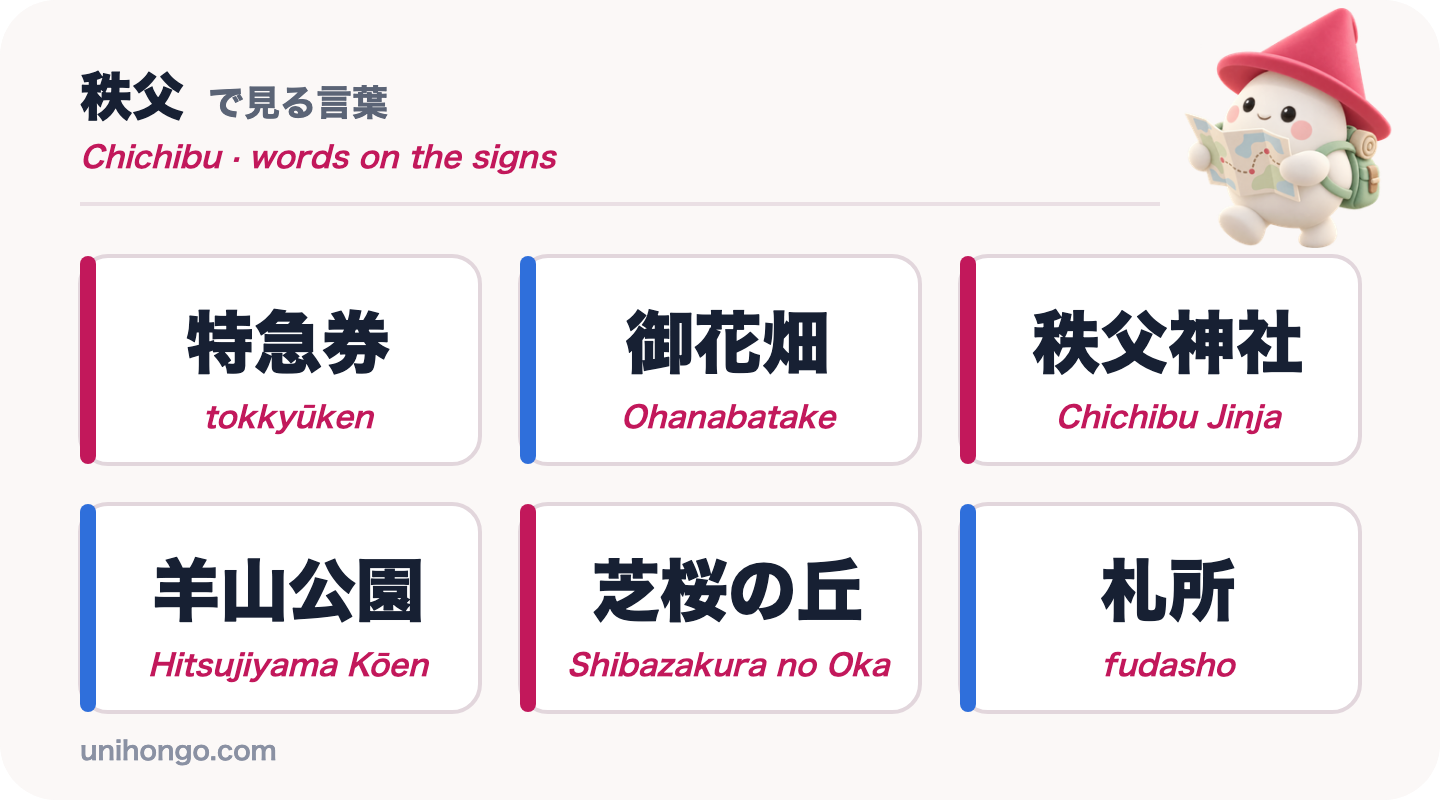
Chichibu's signs mix railway words, shrine words and the names of places whose readings are hard to guess. 御花畑, Ohanabatake, means flower field and is a station name you will need if you change to the Chichibu Railway. 羊山, Hitsujiyama, is literally sheep mountain, a name that is easy to remember once you know 羊, sheep.
The flower itself is written 芝桜, shibazakura, lawn cherry, because the tiny five-petalled flowers look like cherry blossom but spread across the ground like grass. On the temple side, look for 札所 followed by a number: that is a pilgrimage temple, and the number tells you where it sits on the route.
| Word | Reading | Meaning |
|---|---|---|
| 特急券 | tokkyūken | Limited express ticket, needed for the Laview |
| 指定席 | shiteiseki | Reserved seat |
| 御花畑 | Ohanabatake | Chichibu Railway station near Seibu-Chichibu |
| 秩父神社 | Chichibu Jinja | Chichibu Shrine, home of the Night Festival |
| 羊山公園 | Hitsujiyama Kōen | Sheep-mountain park, site of the flower hill |
| 芝桜の丘 | Shibazakura no Oka | The moss phlox hill |
| 札所 | fudasho | Numbered temple on a pilgrimage route |
| 秩父夜祭 | Chichibu Yomatsuri | The Chichibu Night Festival in December |
| 入園料 | nyūenryō | Entry fee for a park or garden |
Japanese for the Laview ticket window and the flower festival
Buying a reserved express ticket is the one exchange that is hard to avoid on a Chichibu trip, and it is a useful skill for every private railway in Japan. Machines work in English, but at a busy window on a holiday morning it is often quicker to say what you want: the destination, the number of people, the time and the seat. Staff will ask whether you want a window seat, madogawa, or an aisle seat, tsūrogawa, and they may tell you that a train is full, manseki, and offer the next one.
At the flower hill the only essential exchange is the entry fee during the festival weeks, plus the questions every visitor has: where the best view is, and where to buy a snack. Food stalls at the festival sell local specialities, and miso potato is a good one to try your ordering on.
| Japanese | Romaji | Meaning |
|---|---|---|
| 十時の特急で、大人二枚お願いします。 | Jūji no tokkyū de, otona nimai onegai shimasu. | Two adults on the ten o'clock express, please. |
| 窓側の席はありますか。 | Madogawa no seki wa arimasu ka. | Is there a window seat? |
| 満席なら、次の特急でもいいです。 | Manseki nara, tsugi no tokkyū demo ii desu. | If it's full, the next express is fine. |
| 入園料は一人いくらですか。 | Nyūenryō wa hitori ikura desu ka. | How much is the entry fee per person? |
| 一番きれいに見える場所はどこですか。 | Ichiban kirei ni mieru basho wa doko desu ka. | Where is the best place to see it? |
| みそポテトを一つください。 | Miso poteto o hitotsu kudasai. | One miso potato, please. |
| 御朱印をいただけますか。 | Goshuin o itadakemasu ka. | May I have a goshuin? |
Timing, festivals and practical tips
Chichibu has two peak moments and a long, calm season in between. The moss phlox weeks from mid-April to early May and the Night Festival on 2 and 3 December bring huge crowds, traffic restrictions and sold-out express trains. The rest of the year the town is quiet, and autumn colour in the surrounding mountains in November is a good reason to come.
- Reserve Laview seats in both directions as soon as you know your dates, especially for holiday weekends in spring and the festival days in December.
- For the flower hill, go on a weekday morning. The festival asks visitors to use public transport, and parking queues on holidays are long.
- Hitsujiyama Park is on a hill: the walk from the stations is about 1.5 kilometres with slopes, and there is no shuttle bus, so wear comfortable shoes.
- At Chichibu Shrine, bow at the torii, rinse your hands at the temizuya, then bow twice, clap twice, pray and bow once more.
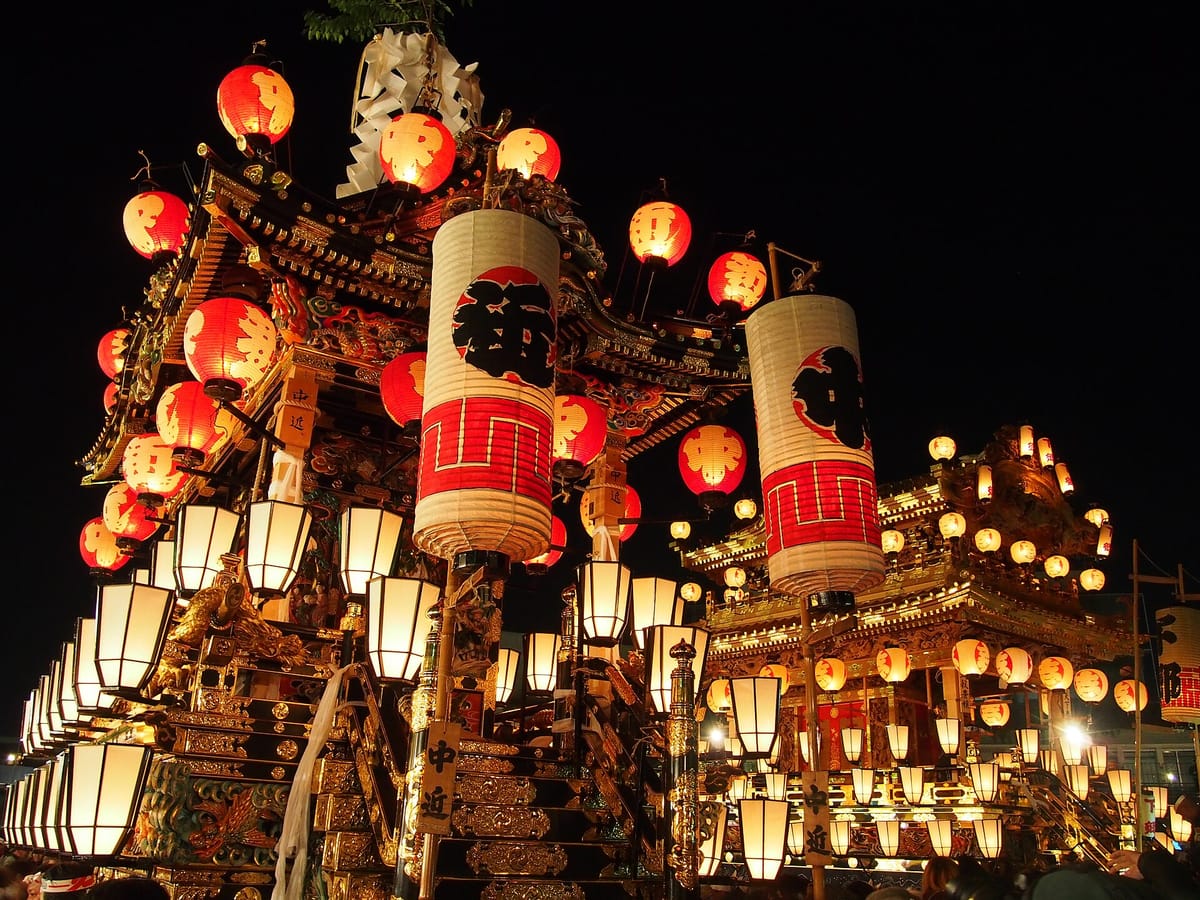
- For the Night Festival, dress for a cold mountain night and arrive early; the float hauling up the Dangozaka slope happens on the evening of 3 December.
- Mitsumine Shrine buses are infrequent. Check the return times before you set off and allow a full half-day.
Practise the ticket window before you go
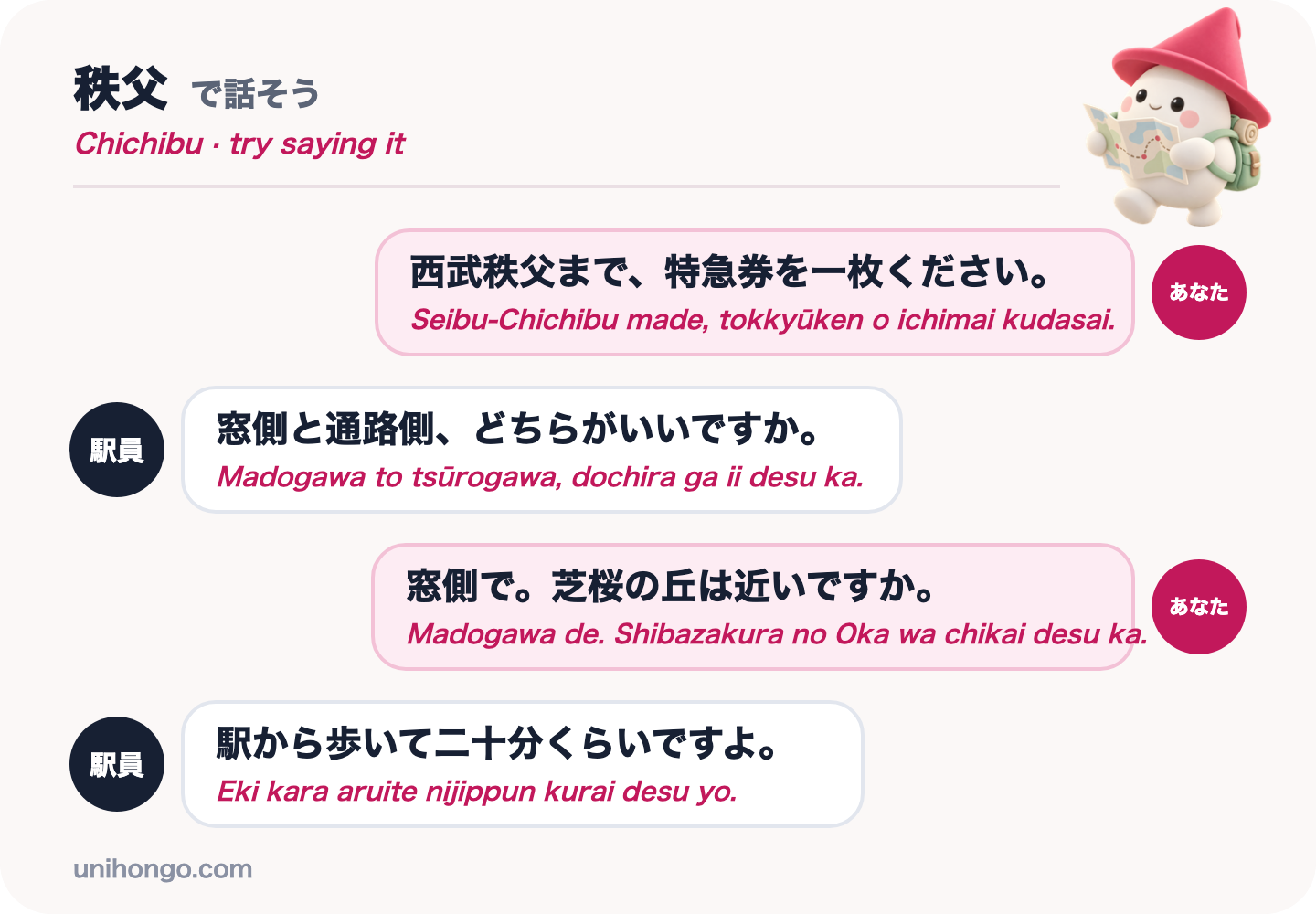
This short exchange covers the part of the trip that most visitors find stressful: getting a reserved seat on the right train. Practise the four lines below until they come out without reading, and listen for the two seat words in the reply, madogawa and tsūrogawa, and the walking time at the end.
Then practise with a partner who answers back. In Unihongo, choose the Train Tickets topic and ask your AI Sensei to play the ticket clerk at Ikebukuro, or try the Catch the Right Train mission to rehearse finding the platform and checking the departure board. Saying the lines once before your trip is what makes them come out at the window.
| Japanese | Romaji | Meaning |
|---|---|---|
| 西武秩父まで、特急券を一枚ください。 | Seibu-Chichibu made, tokkyūken o ichimai kudasai. | One limited express ticket to Seibu-Chichibu, please. |
| 窓側と通路側、どちらがいいですか。 | Madogawa to tsūrogawa, dochira ga ii desu ka. | Window or aisle, which would you like? |
| 窓側で。芝桜の丘は近いですか。 | Madogawa de. Shibazakura no Oka wa chikai desu ka. | Window, please. Is the moss phlox hill close? |
| 駅から歩いて二十分くらいですよ。 | Eki kara aruite nijippun kurai desu yo. | It's about twenty minutes' walk from the station. |
Official information
Seibu Railway publishes the Laview timetable, fares and ticket rules on its English site. The Chichibu tourist association posts each year's moss phlox festival dates, entry fee and bloom reports, and Chichibu Shrine has its own site with festival information. Check them before you go, as seasonal details change every year.