

Why the Adachi Museum's gardens are famous
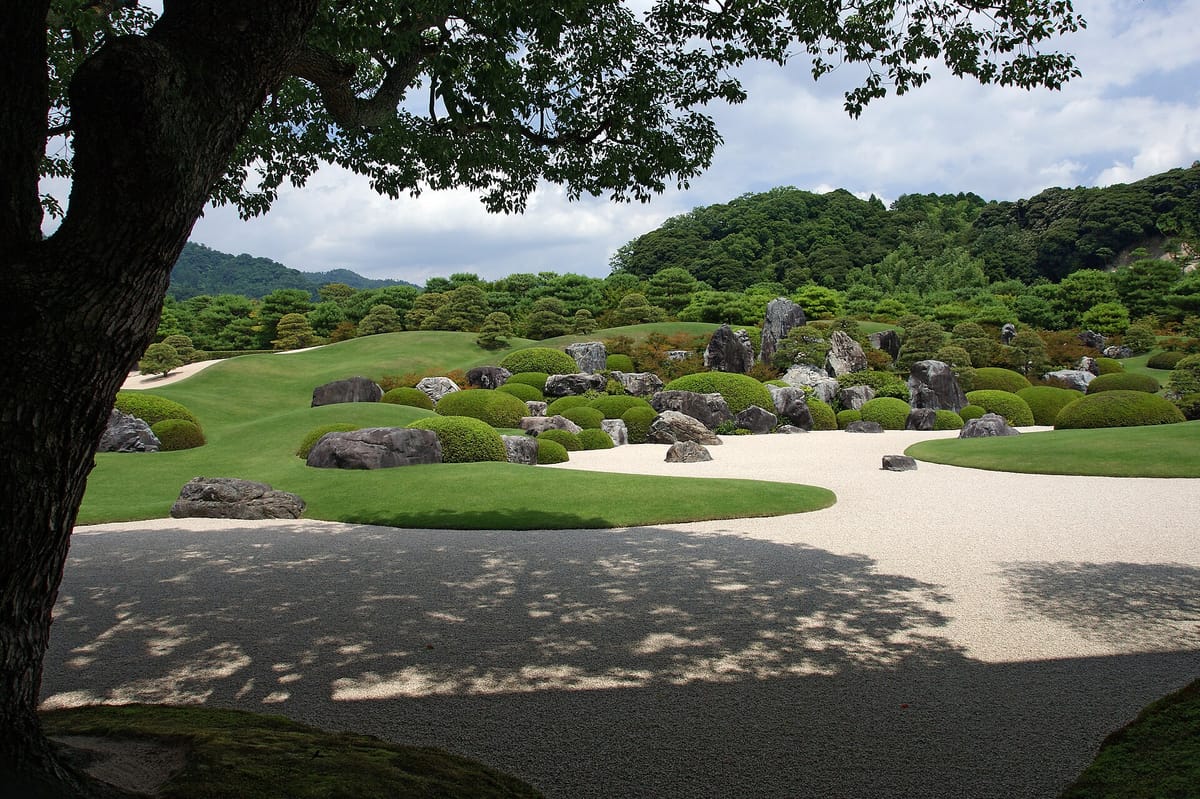
Adachi Zenkō was born in the village where the museum now stands, made his fortune in business and spent his later years building the garden he had imagined. He believed that a garden, like a painting, is a work of art, and he tended his until he died at the age of ninety-one. The result is not a stroll garden but a sequence of views, each designed to be seen from a particular window or veranda, with the natural hills behind acting as a painted background.
The gardens are famous for their perfection: the pines are shaped, the gravel raked and the moss kept immaculate by gardeners who tend them every day. The museum has been ranked first in Japan by the Journal of Japanese Gardening, an American publication, for more than two decades running, and it holds three stars in the Michelin Green Guide Japan.
Inside, the collection of modern Japanese paintings, nihonga, is one of the most important in the country, with a large collection of works by Yokoyama Taikan at its heart. Exhibitions rotate with the seasons, so the paintings change alongside the gardens.
Getting there: Yasugi Station and the free shuttle bus
Yasugi Station is on the JR San'in Line between Matsue and Yonago; from Matsue the train takes about twenty-five minutes. At Yasugi, leave by the main exit and turn right: the museum's free shuttle bus stop is about fifteen metres away. The bus runs every day, goes straight to the museum and takes around twenty minutes. Seats are first come, first served and cannot be reserved.
For the return trip, pick up a shuttle ticket in the museum lobby. There are coin lockers at Yasugi Station for large luggage, which may not be allowed on the bus when it is crowded, and free lockers at the museum's entrance, where the coin is returned.
| Japanese | Romaji | Meaning |
|---|---|---|
| 足立美術館行きの無料バスはどこですか。 | Adachi Bijutsukan-yuki no muryō basu wa doko desu ka. | Where is the free bus to the Adachi Museum? |
| 次のバスは何時ですか。 | Tsugi no basu wa nanji desu ka. | What time is the next bus? |
| 大きい荷物は乗せられますか。 | Ōkii nimotsu wa noseraremasu ka. | Can I bring large luggage on board? |
| 駅にコインロッカーはありますか。 | Eki ni koin rokkā wa arimasu ka. | Are there coin lockers at the station? |
| 帰りのバスは何時までありますか。 | Kaeri no basu wa nanji made arimasu ka. | Until what time are there buses back? |
The gardens, window by window
The route through the museum leads past the gardens in order, with verandas and wide windows at each. Take your time: the view changes with the weather and the time of day, and the gardens are at their most dramatic after rain, in autumn colour and under snow.
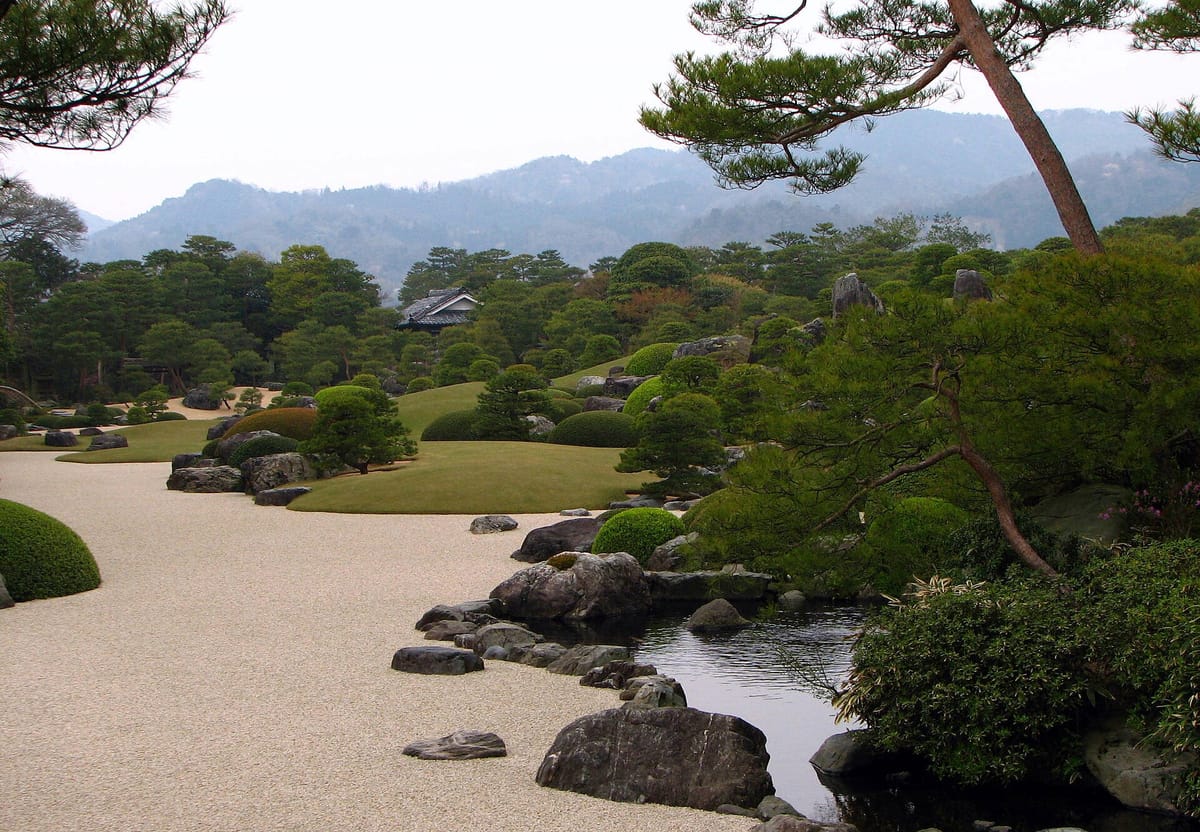
- Karesansui-tei, the Dry Landscape Garden: upright rocks for steep mountains above a river of white gravel.
- Hakusha Seishō-tei, the White Gravel and Pine Garden: red pines on white gravel, inspired by a painting by Yokoyama Taikan.
- Koke-niwa, the Moss Garden: a quiet garden of haircap moss in the style of Kyoto.
- Ike-niwa, the Pond Garden: a large pond with black pines on one side and red pines on the other, and a tea house.
- Kikaku-no-taki: a fifteen-metre waterfall created on the hill in 1978, inspired by Taikan's painting of the Nachi waterfall.
- Iki no gakue: a window whose frame turns the garden into a living framed picture.
- Iki no kakejiku: an opening in a wall shaped like a hanging scroll, framing a landscape.
After the gardens, the galleries show the museum's collection of modern Japanese painting, with works by Yokoyama Taikan always on show, a ceramics collection and exhibitions that rotate with the seasons.
Words on the signs
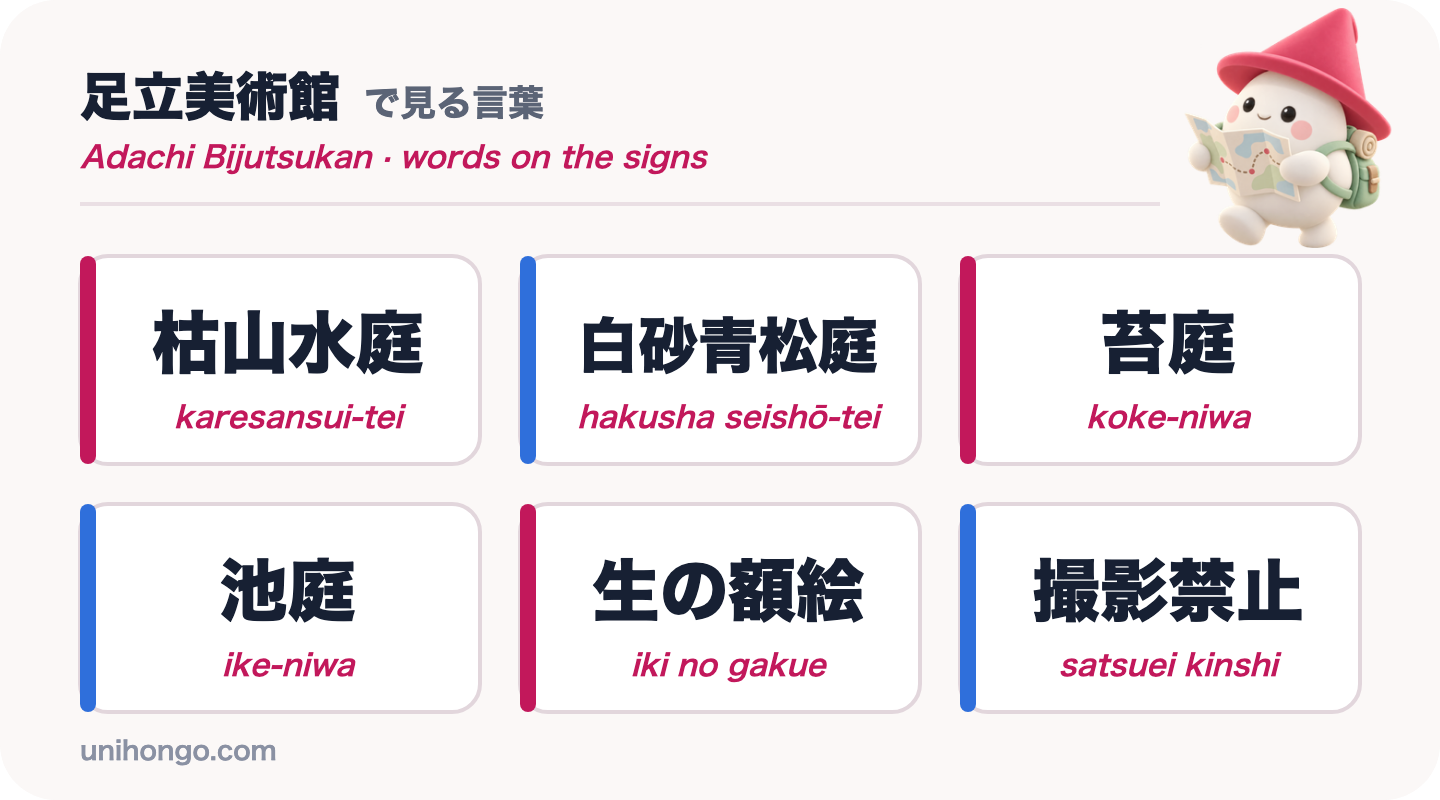
Garden names are built from simple kanji. 庭, niwa or tei, is garden; 池, ike, pond; 苔, koke, moss; 石, ishi, stone. Karesansui, 枯山水, literally dry mountain water, is the style of garden that uses rocks and gravel in place of water. And near the gallery doors, 撮影禁止, satsuei kinshi, means no photography.
| Word | Reading | Meaning |
|---|---|---|
| 枯山水庭 | karesansui-tei | The Dry Landscape Garden |
| 白砂青松庭 | hakusha seishō-tei | The White Gravel and Pine Garden |
| 苔庭 | koke-niwa | The Moss Garden |
| 池庭 | ike-niwa | The Pond Garden |
| 生の額絵 | iki no gakue | The living framed picture window |
| 生の掛軸 | iki no kakejiku | The living hanging scroll window |
| 亀鶴の滝 | Kikaku no Taki | The Kikaku waterfall |
| 撮影禁止 | satsuei kinshi | No photography |
| 日本画 | nihonga | Modern Japanese-style painting |
Japanese for photos, tea and the café
Staff are stationed at the gallery entrances and along the garden verandas, and they are used to questions about photography. Ask before you raise your camera in any doubtful spot, and put it away completely in the galleries.
The tea room, Juraku-an, serves matcha with a sweet, facing a garden view, and the museum's cafés, Midori and Taikan, offer drinks, desserts and meals. You do not need to know tea ceremony etiquette at the tea room; lift the bowl with both hands, enjoy the sweet first, and drink.
| Japanese | Romaji | Meaning |
|---|---|---|
| ここで写真を撮ってもいいですか。 | Koko de shashin o totte mo ii desu ka. | May I take a photo here? |
| 三脚は使えますか。 | Sankyaku wa tsukaemasu ka. | Can I use a tripod? |
| 寿楽庵はどちらですか。 | Juraku-an wa dochira desu ka. | Which way is the Juraku-an tea room? |
| 抹茶とお菓子をお願いします。 | Matcha to o-kashi o onegai shimasu. | Matcha and a sweet, please. |
| 庭が見える席はありますか。 | Niwa ga mieru seki wa arimasu ka. | Is there a seat with a view of the garden? |
| 横山大観の作品はどこにありますか。 | Yokoyama Taikan no sakuhin wa doko ni arimasu ka. | Where are the works by Yokoyama Taikan? |
Etiquette, timing and practical tips
The museum is quiet and orderly, and it is best enjoyed slowly.
- Keep your voice low on the verandas; people are sitting and looking.
- Do not lean out of windows or over rails to get a better photo, and never try to step into a garden.
- Put your camera away in the galleries: photography of the artworks is not allowed at all.
- Arrive in the morning, when the light on the gardens is soft and the tour groups have not yet arrived.
- Each season changes the gardens: new green in spring, deep green in summer, red maples in autumn and snow in winter.
- Check the shuttle times back to Yasugi when you arrive, and pick up the return ticket in the lobby.
Practise the visit before you go
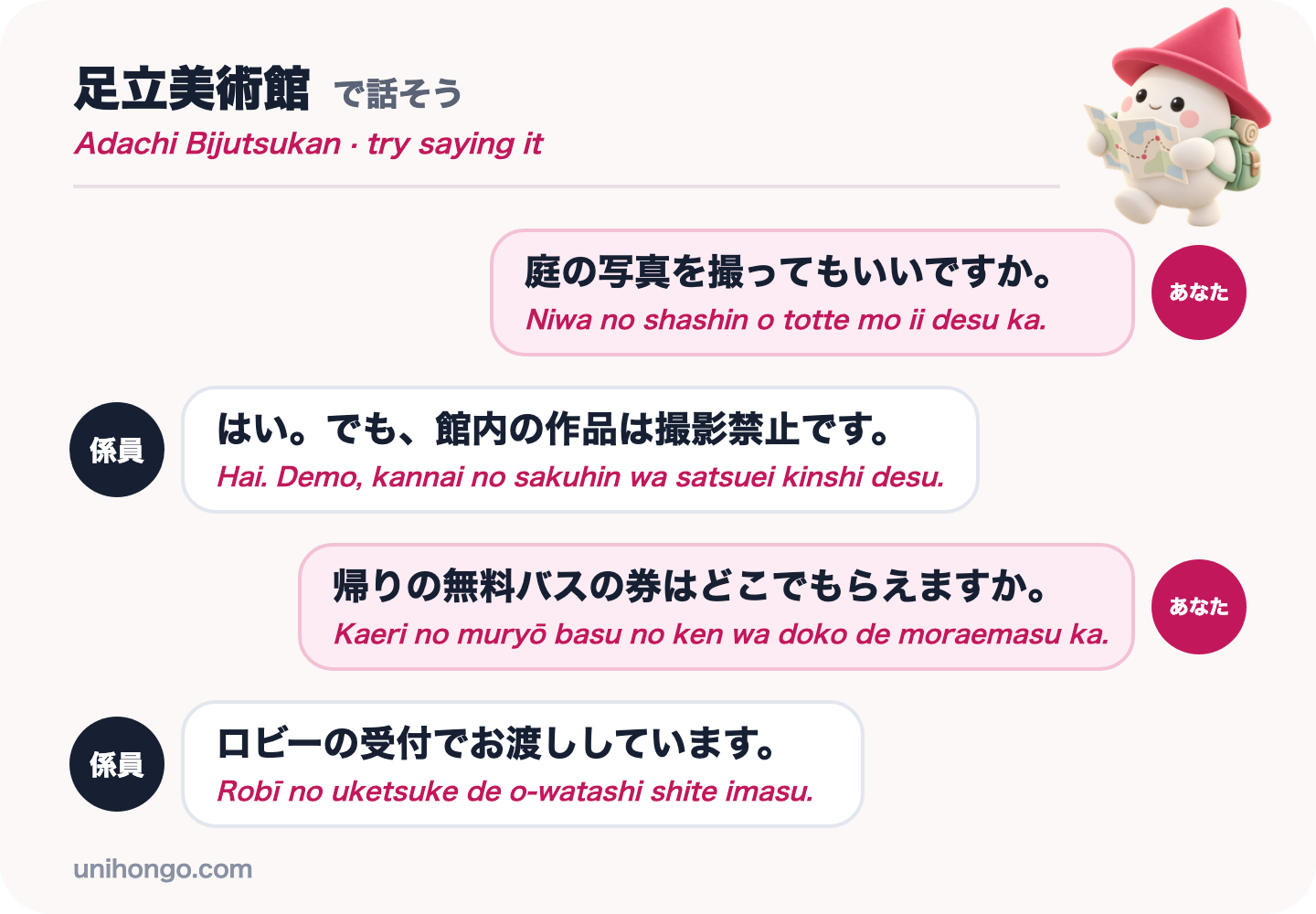
These are the two questions most visitors need. Listen for demo, but, in the first answer: it introduces the rule for the galleries. The second answer uses the humble o-watashi shite imasu, we hand them out, a form staff use about their own actions.
Then practise with a partner who answers back. In Unihongo, choose the Sightseeing topic and ask your AI Sensei to play a staff member at the museum, or use the Tea Ceremony topic to rehearse the tea room. Saying the lines once before you go makes them easy on the day.
| Japanese | Romaji | Meaning |
|---|---|---|
| 庭の写真を撮ってもいいですか。 | Niwa no shashin o totte mo ii desu ka. | May I take photos of the garden? |
| はい。でも、館内の作品は撮影禁止です。 | Hai. Demo, kannai no sakuhin wa satsuei kinshi desu. | Yes. But photography of the artworks inside is not allowed. |
| 帰りの無料バスの券はどこでもらえますか。 | Kaeri no muryō basu no ken wa doko de moraemasu ka. | Where can I get a ticket for the free bus back? |
| ロビーの受付でお渡ししています。 | Robī no uketsuke de o-watashi shite imasu. | We hand them out at the lobby reception. |
Official information
The museum publishes its hours, exhibitions, shuttle timetable and a detailed FAQ on photography and facilities. Check the shuttle times in particular before you go.