
Checking in
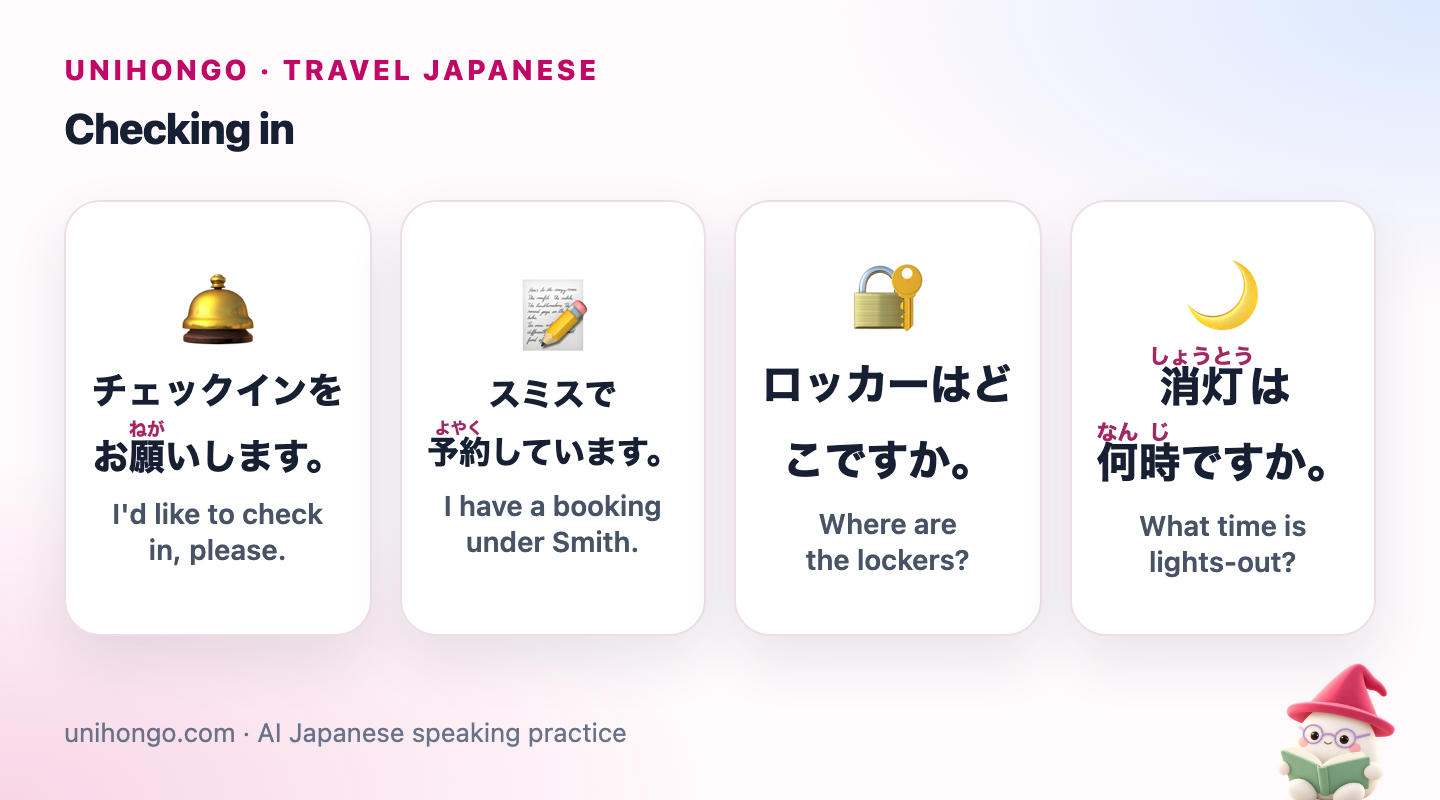
The check-in line is short. Say you would like to check in, then give the name on the booking. Yoyaku shite imasu means I have a reservation; putting your name and de in front of it gives you name + de yoyaku shite imasu, I have a booking under this name. The staff will then ask for your passport, which foreign visitors are normally required to show, and may ask how many nights you are staying.
| Japanese | Romaji | Meaning |
|---|---|---|
| チェックインをお願いします。 | Chekkuin o onegai shimasu. | I'd like to check in, please. |
| スミスで予約しています。 | Sumisu de yoyaku shite imasu. | I have a booking under Smith. |
| ロッカーはどこですか。 | Rokkā wa doko desu ka. | Where are the lockers? |
| 消灯は何時ですか。 | Shōtō wa nanji desu ka. | What time is lights-out? |
| パスポートを見せていただけますか。 | Pasupōto o misete itadakemasu ka. | Staff: May I see your passport? |
| 三泊です。 | Sanpaku desu. | Three nights. |
Understanding the house rules
At check-in, staff often walk you through the rules, usually with a printed sheet. Listen for these words. Kutsu wa koko de nuide kudasai (please take your shoes off here) is common in guesthouses in old houses. Kinen (no smoking) applies almost everywhere indoors. Kyōyō (共用) means shared, as in kyōyō kitchin, the shared kitchen, and kyōyō toire, the shared toilets.
| Japanese | Romaji | Meaning |
|---|---|---|
| 靴はここで脱いでください。 | Kutsu wa koko de nuide kudasai. | Staff: Please take your shoes off here. |
| 十一時以降はお静かにお願いします。 | Jūichiji ikō wa oshizuka ni onegai shimasu. | Staff: Please keep quiet after eleven. |
| キッチンは何時まで使えますか。 | Kitchin wa nanji made tsukaemasu ka. | Until what time can I use the kitchen? |
| タオルは借りられますか。 | Taoru wa kariraremasu ka. | Can I borrow a towel? |
| Wi-Fiのパスワードを教えてください。 | Wai-fai no pasuwādo o oshiete kudasai. | Please tell me the Wi-Fi password. |
| 門限はありますか。 | Mongen wa arimasu ka. | Is there a curfew? |
Mongen (門限) is a curfew: the time the front door locks. Many hostels give guests a code or key instead, but small guesthouses sometimes have one, so it is worth asking before a late night out.
In the dorm: lockers, bunks and quiet
A dorm room is a dormitorī or, in more Japanese wording, an aibeya (相部屋), a shared room. You will usually sleep in a bunk bed (nidan beddo), often with a curtain, and keep valuables in a locker. Japanese dorms tend to be quiet: people whisper, phones are on silent, and calls are taken outside.
The biggest source of complaints in dorms is noise at night and early in the morning: rustling bags, alarms that ring and ring, and bright lights. Pack the night before, put your alarm on vibrate, and use a small light rather than the room light.
| Japanese | Romaji | Meaning |
|---|---|---|
| 上の段と下の段、どちらですか。 | Ue no dan to shita no dan, dochira desu ka. | Is it the top bunk or the bottom bunk? |
| ロッカーの鍵をなくしました。 | Rokkā no kagi o nakushimashita. | I've lost my locker key. |
| すみません、うるさかったですか。 | Sumimasen, urusakatta desu ka. | Sorry, was I being noisy? |
| 明日の朝早く出ます。 | Ashita no asa hayaku demasu. | I'm leaving early tomorrow morning. |
The shared kitchen
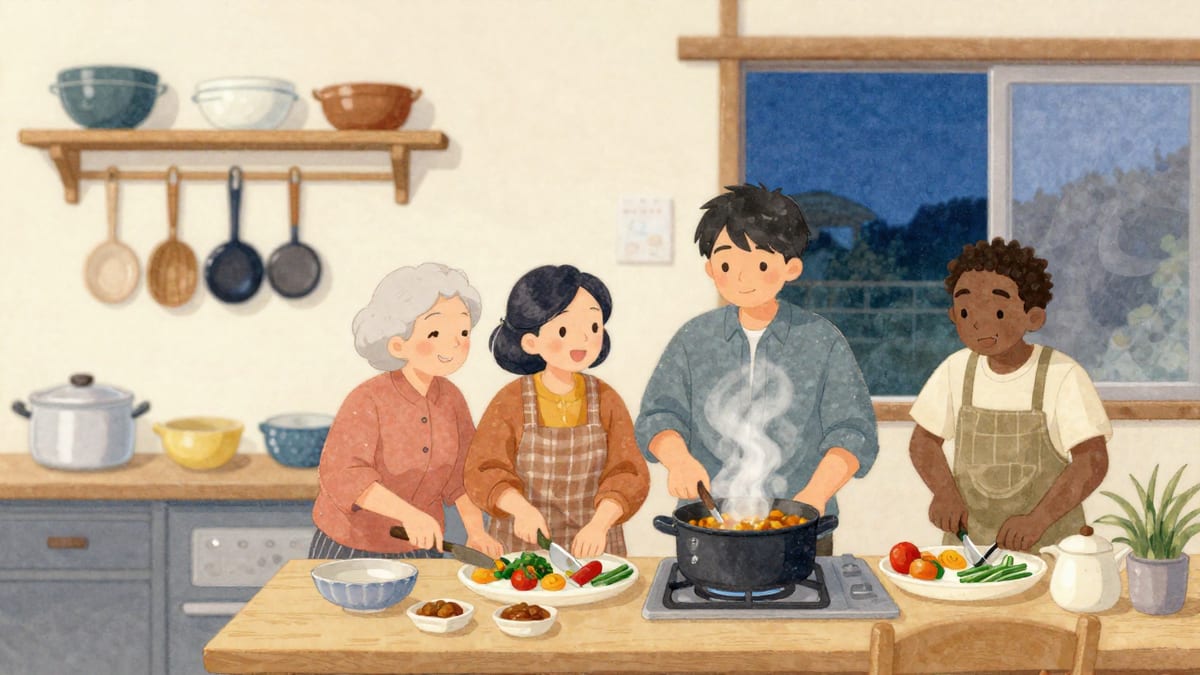
The shared kitchen is where conversations start. It also has the most rules. Most hostels ask you to write your name and departure date on anything you put in the fridge, because unlabelled food is cleared out regularly. Wash, dry and put away what you use straight after eating, and check whether the shared spices and rice are free to use: some are left by past guests, some belong to the house.
| Japanese | Romaji | Meaning |
|---|---|---|
| この調味料は使ってもいいですか。 | Kono chōmiryō wa tsukatte mo ii desu ka. | May I use these seasonings? |
| 冷蔵庫に名前を書いておきます。 | Reizōko ni namae o kaite okimasu. | I'll write my name on my things in the fridge. |
| このフライパン、使ってますか。 | Kono furaipan, tsukattemasu ka. | Are you using this frying pan? |
| いい匂いですね。何を作ってるんですか。 | Ii nioi desu ne. Nani o tsukutteru n desu ka. | That smells good. What are you making? |
Talking with other guests
Japanese travellers at hostels are often happy to chat, but they may wait for you to start. The classic opener is doko kara kita n desu ka (where are you from?), followed by where you are going next. Among travellers of similar age, people often switch to casual speech quickly. A good rule is to start polite and follow the other person's lead.
| Japanese | Romaji | Meaning |
|---|---|---|
| どこから来たんですか。 | Doko kara kita n desu ka. | Where are you from? |
| 大阪から来ました。 | Ōsaka kara kimashita. | Guest: I came from Osaka. |
| 明日はどこに行くんですか。 | Ashita wa doko ni iku n desu ka. | Where are you going tomorrow? |
| おすすめの店、知ってますか。 | Osusume no mise, shittemasu ka. | Do you know any good places to eat? |
| よかったら、一緒にご飯行きませんか。 | Yokattara, issho ni gohan ikimasen ka. | If you like, shall we go and eat together? |
| じゃあ、また明日! | Jā, mata ashita! | See you tomorrow, then! (casual) |
Yokattara (if you like) softens an invitation and gives the other person an easy way out. If they answer chotto... with a smile, that is a polite no, so let it go.
Checking out and saying goodbye
Check-out is usually simple: you strip your bed if the house asks you to, return your key or locker key, and settle anything extra, such as a towel rental. Many hostels have a basket for used sheets; ask shītsu wa doko ni okeba ii desu ka if you are not sure.
Saying goodbye well leaves a good memory. To staff, osewa ni narimashita (thank you for looking after me) is the classic polite farewell. To the guests you met, a casual tanoshikatta, arigatō and an exchange of contacts is natural if you got along.
| Japanese | Romaji | Meaning |
|---|---|---|
| チェックアウトをお願いします。 | Chekkuauto o onegai shimasu. | I'd like to check out, please. |
| シーツはどこに置けばいいですか。 | Shītsu wa doko ni okeba ii desu ka. | Where should I put the sheets? |
| 荷物を夕方まで預けてもいいですか。 | Nimotsu o yūgata made azukete mo ii desu ka. | May I leave my luggage until the evening? |
| お世話になりました。 | Osewa ni narimashita. | Thank you for everything (to staff). |
| 楽しかった、ありがとう! | Tanoshikatta, arigatō! | That was fun, thanks! (casual, to a guest) |
| よかったら、LINEを交換しませんか。 | Yokattara, rain o kōkan shimasen ka. | If you like, shall we swap LINE contacts? |
Common mistakes to avoid
- Saying watashi wa yoyaku ga arimasu. It is understandable, but name + de yoyaku shite imasu is what staff expect to hear.
- Walking into the guesthouse in shoes when there is a step up at the entrance (genkan). The raised floor is the signal to take them off.
- Chatting in the dorm late at night. Move to the lounge; in Japan, the dorm is for sleeping.
- Leaving dishes to soak. In a shared kitchen, wash up straight away.
- Switching to casual speech with staff. Stay polite with staff even if they are your age; save casual speech for guests who use it first.