

Why Ōmihachiman is Shiga's most charming old town
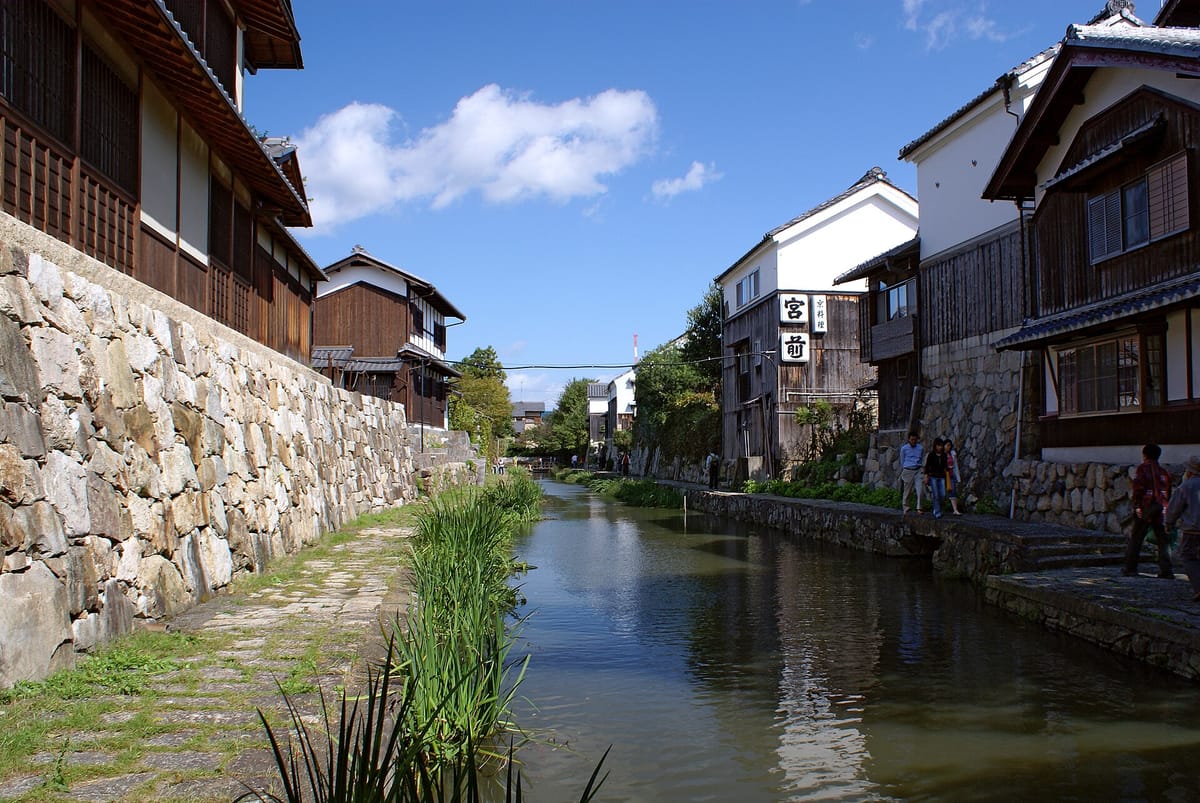
According to the city's tourism association, the Hachiman-bori was dug in 1585, when Toyotomi Hidetsugu, nephew of Toyotomi Hideyoshi, built Hachiman-yama Castle on the hill above the town. The canal protected the castle, but more importantly it connected the town with Lake Biwa, and through the lake with the great trade routes between Hokkaidō and Osaka. The castle was abandoned only ten years later, yet the canal kept working, and the town's merchants spread across Japan.
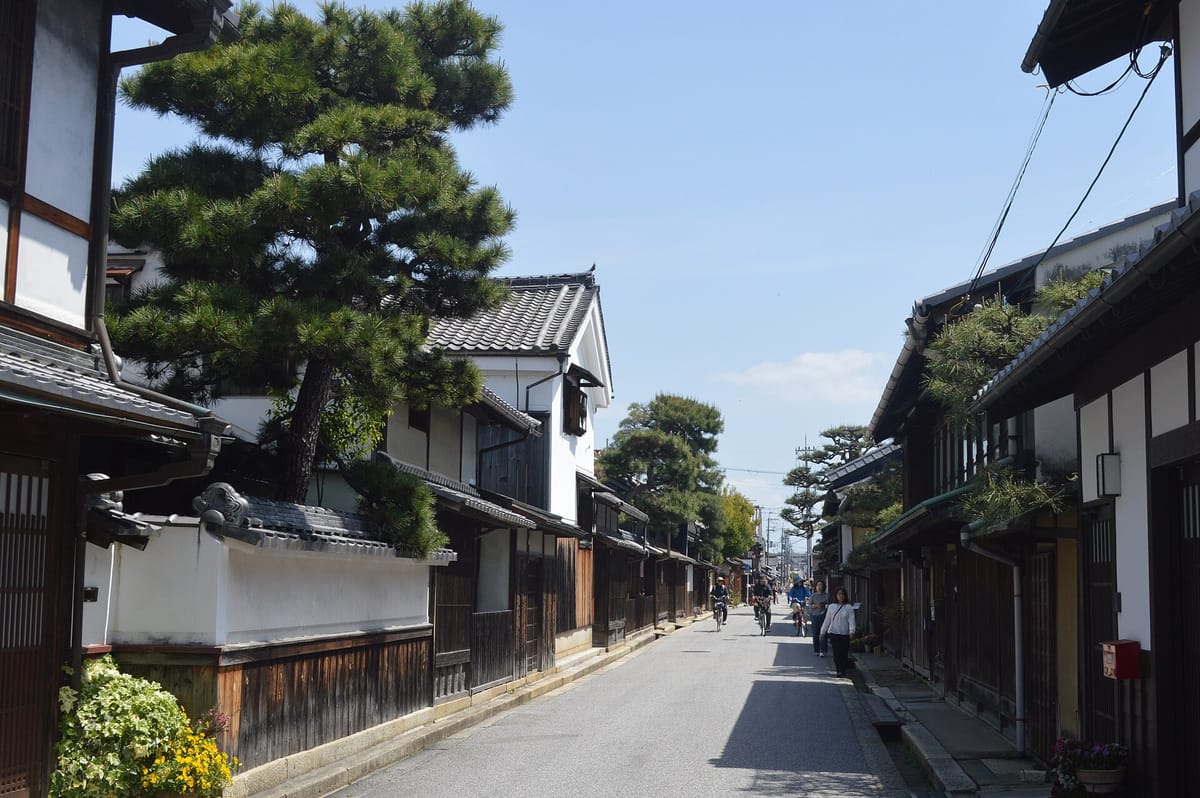
The canal almost disappeared. By the 1970s it had become polluted and there were plans to fill it in, but local residents campaigned to save it and cleaned it up themselves. Today the canal and the streets beside it, Shinmachi-dōri and Nagahara-machi-dōri, are designated a nationally protected district of historic buildings, and the town is a favourite filming location for period dramas.
For a Japanese learner, Ōmihachiman is a quiet, walkable place to practise everyday sightseeing Japanese: buying boat tickets, asking the time of the next departure, ordering local sweets and reading signs written in beautiful old-style kanji.
Getting there: Ōmi-Hachiman Station and the bus to the canal
Ōmi-Hachiman Station is on the JR Biwako Line, the stretch of the Tōkaidō Main Line along Lake Biwa. Special rapid trains from Kyoto take around thirty-five minutes, and from Osaka a little over an hour. The Ōmi Railway's Yōkaichi Line also stops here.
The old town is about thirty minutes' walk north of the station, so most visitors take the bus. From the north exit, Ōmi Railway buses bound for Chōmei-ji leave from stand 6; get off at Hachiman-bori, just after the bus passes the great torii of Himure Hachimangū. The tourist information centre and the ropeway station are close by.
| Japanese | Romaji | Meaning |
|---|---|---|
| 近江八幡まで一枚お願いします。 | Ōmi-Hachiman made ichimai onegai shimasu. | One ticket to Ōmi-Hachiman, please. |
| 長命寺行きのバスは何番乗り場ですか。 | Chōmeiji-yuki no basu wa nanban noriba desu ka. | Which stand is the bus for Chōmei-ji? |
| 八幡堀で降りたいです。 | Hachiman-bori de oritai desu. | I'd like to get off at Hachiman-bori. |
| 観光案内所はどこですか。 | Kankō annaijo wa doko desu ka. | Where is the tourist information centre? |
| ラ コリーナへはどうやって行きますか。 | Ra Korīna e wa dō yatte ikimasu ka. | How do I get to La Collina? |
The canal, the shrine, the ropeway and the merchant streets
The Hachiman-bori runs for several kilometres around the foot of Hachiman-yama, but the most beautiful stretch is the short section in the centre of town, between stone bridges, white storehouses and willow trees. A stone path runs along the water, and two companies run boat tours from separate landings, each about thirty-five minutes: one in roofed wooden boats from near the Hakuun-bashi bridge, the other in hand-rowed boats from near the Meiji-bashi, where the boatman tells the story of the canal as he rows.
Just above the canal stands Himure Hachimangū, the shrine that gave the town its name. Behind it, the Hachiman-yama Ropeway climbs the hill in a few minutes to the ruins of Hidetsugu's castle, the temple Zuiryū-ji at the summit, and wide views over the town, the reed beds and Lake Biwa. South of the canal, Shinmachi-dōri is lined with the tall wooden houses of Ōmi merchants, some open as museums.
Ōmihachiman also has an unexpected Western layer. The American architect and missionary William Merrell Vories settled here in the early twentieth century, and several of his buildings survive around town. Outside the centre, La Collina Ōmihachiman is the flagship of the local confectioners Taneya and Club Harie, a grass-roofed complex famous for freshly baked baumkuchen. Local specialities include Ōmi beef, red konnyaku and decchi yōkan, a simple bean jelly once eaten by shop apprentices.
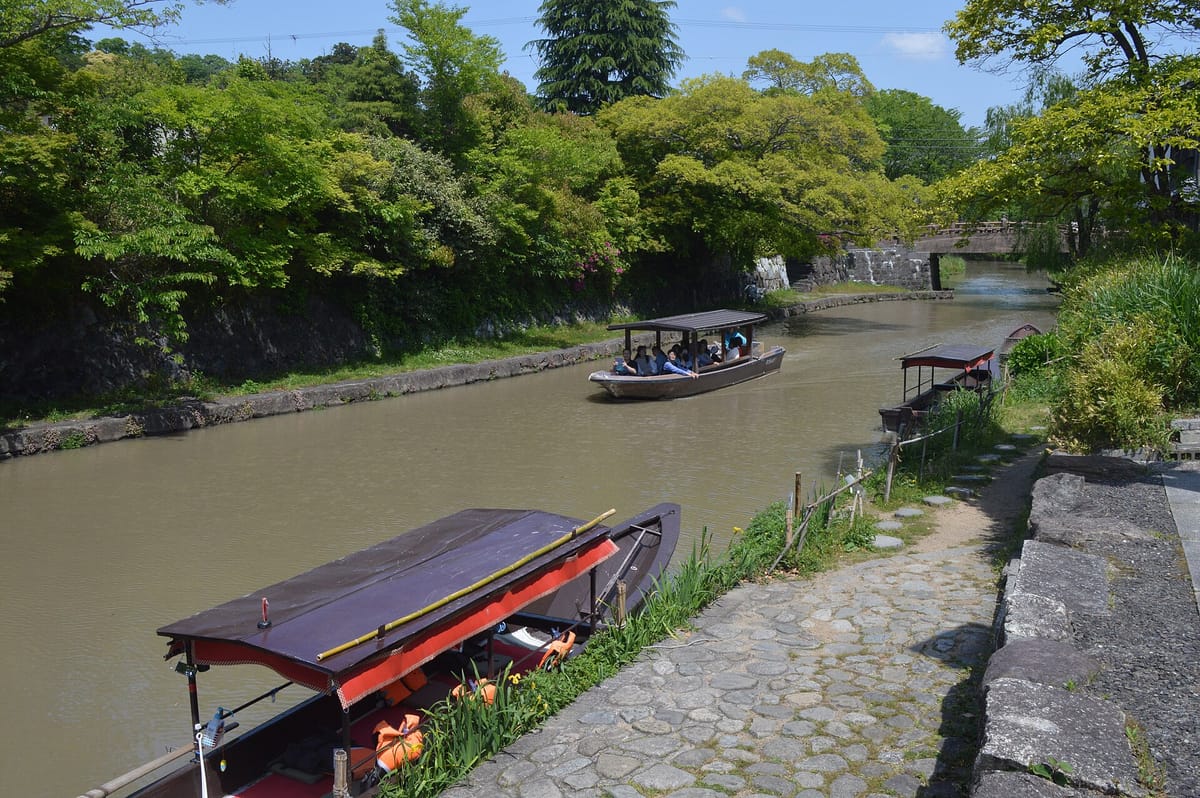
- Hachiman-bori: the stone-walled canal and its waterside path.
- Canal boat tours: about thirty-five minutes, from two different landings.
- Himure Hachimangū: the town's shrine, home of the spring fire festivals.
- Hachiman-yama Ropeway: up to the castle ruins and lake views.
- Shinmachi-dōri: the street of Ōmi merchant houses.
- Vories buildings: early twentieth-century Western-style architecture around town.
- La Collina Ōmihachiman: the confectionery garden with baumkuchen baked on site.
Words on the signs in Ōmihachiman
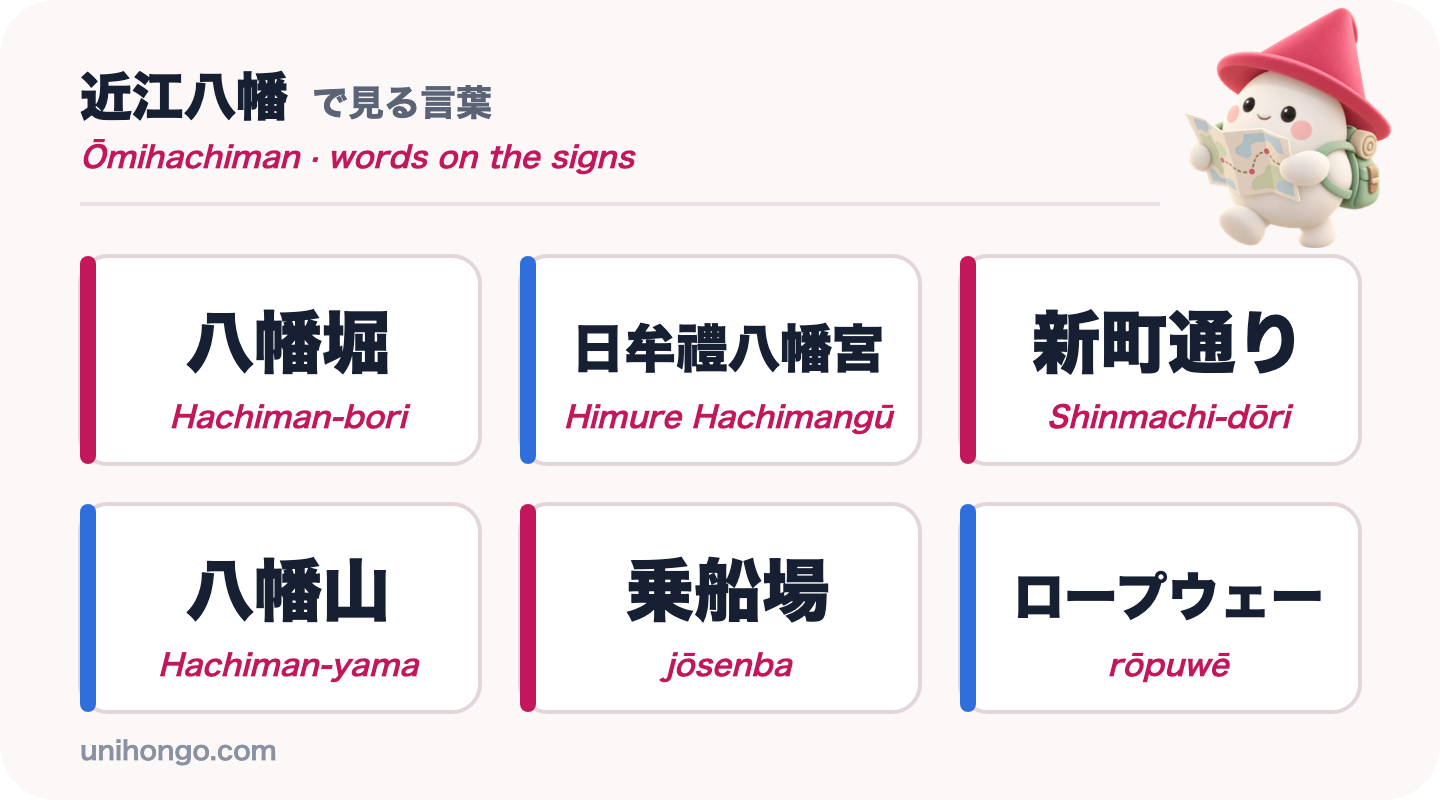
The name of the town is built from two words you will see everywhere: 近江, Ōmi, the old name of Shiga Prefecture, and 八幡, Hachiman, the deity of Himure Hachimangū. The shrine's name uses the old kanji 禮 instead of the modern 礼, which is typical of historic names.
Around the canal the most useful signs are for the boat landings, 乗船場, and the ticket counters, 乗船券, for the boats.
| Word | Reading | Meaning |
|---|---|---|
| 八幡堀 | Hachiman-bori | The historic canal |
| 日牟禮八幡宮 | Himure Hachimangū | The town's main shrine |
| 新町通り | Shinmachi-dōri | Street of Ōmi merchant houses |
| 八幡山 | Hachiman-yama | The hill with the castle ruins |
| 乗船場 | jōsenba | Boat landing |
| 乗船券 | jōsenken | Boat ticket |
| ロープウェー | rōpuwē | Ropeway, cable car |
| 近江商人 | Ōmi shōnin | Merchants of Ōmi |
| 観光案内所 | kankō annaijo | Tourist information centre |
| 丁稚羊羹 | decchi yōkan | Local bean jelly sweet |
Japanese for the canal boat and the sweet shops
Boat tickets are bought at a small counter at each landing, and boats leave either on a timetable or when enough passengers are waiting, so the first question is always when the next one goes. The boatman's commentary is in Japanese; even if you catch only the place names and dates, it is great listening practice.
In the sweet shops and at La Collina, ordering is simple: point, name the item and give a number. Staff will ask whether it is for you now or a gift, and whether you want a bag.
| Japanese | Romaji | Meaning |
|---|---|---|
| 次の船は何時に出ますか。 | Tsugi no fune wa nanji ni demasu ka. | What time does the next boat leave? |
| 乗船券はどこで買えますか。 | Jōsenken wa doko de kaemasu ka. | Where can I buy a boat ticket? |
| 何分くらいのコースですか。 | Nanpun kurai no kōsu desu ka. | About how long is the trip? |
| 英語の案内はありますか。 | Eigo no annai wa arimasu ka. | Is there a guide in English? |
| ロープウェーの往復券を二枚ください。 | Rōpuwē no ōfukuken o nimai kudasai. | Two return tickets for the ropeway, please. |
| これをお土産用に包んでもらえますか。 | Kore o omiyage-yō ni tsutsunde moraemasu ka. | Could you wrap this as a gift? |
| 焼きたてのバームクーヘンを一つください。 | Yakitate no bāmukūhen o hitotsu kudasai. | One freshly baked baumkuchen, please. |
Etiquette, timing and practical tips
Ōmihachiman is a lived-in town rather than a theme park, and a few habits keep your visit easy for residents and for you.
- The merchant streets are residential; keep your voice down and do not step into private doorways or gardens.
- Sit still in the boats and keep hands inside; the canal is narrow and the boats pass close to the stone walls.
- Come on a weekday morning for a quiet canal; weekends and holidays bring tour groups.
- Pair Ōmihachiman with Hikone, fifteen minutes away on the JR line, for a full day in Shiga.
- Check the Sagichō Matsuri in March and the Hachiman Matsuri in April: spectacular, but crowded, with traffic controls.
- La Collina is outside the old town; check the bus route or take a taxi, and expect queues at weekends.
Practise the canal Japanese before you go
The one conversation you are sure to have is at the boat landing. You ask when the next boat goes, the attendant tells you the minutes and the length of the trip, and you buy your tickets with a count of people: hitori, futari, sannin. Practise the four lines below until they come without reading.
Then practise with a partner who answers back. In Unihongo, choose the Sightseeing topic and ask your AI Sensei to play the ticket seller at the canal, or the Shopping topic to buy sweets and ask for gift wrapping. Saying the lines once before the trip is what makes them come out easily at the counter.
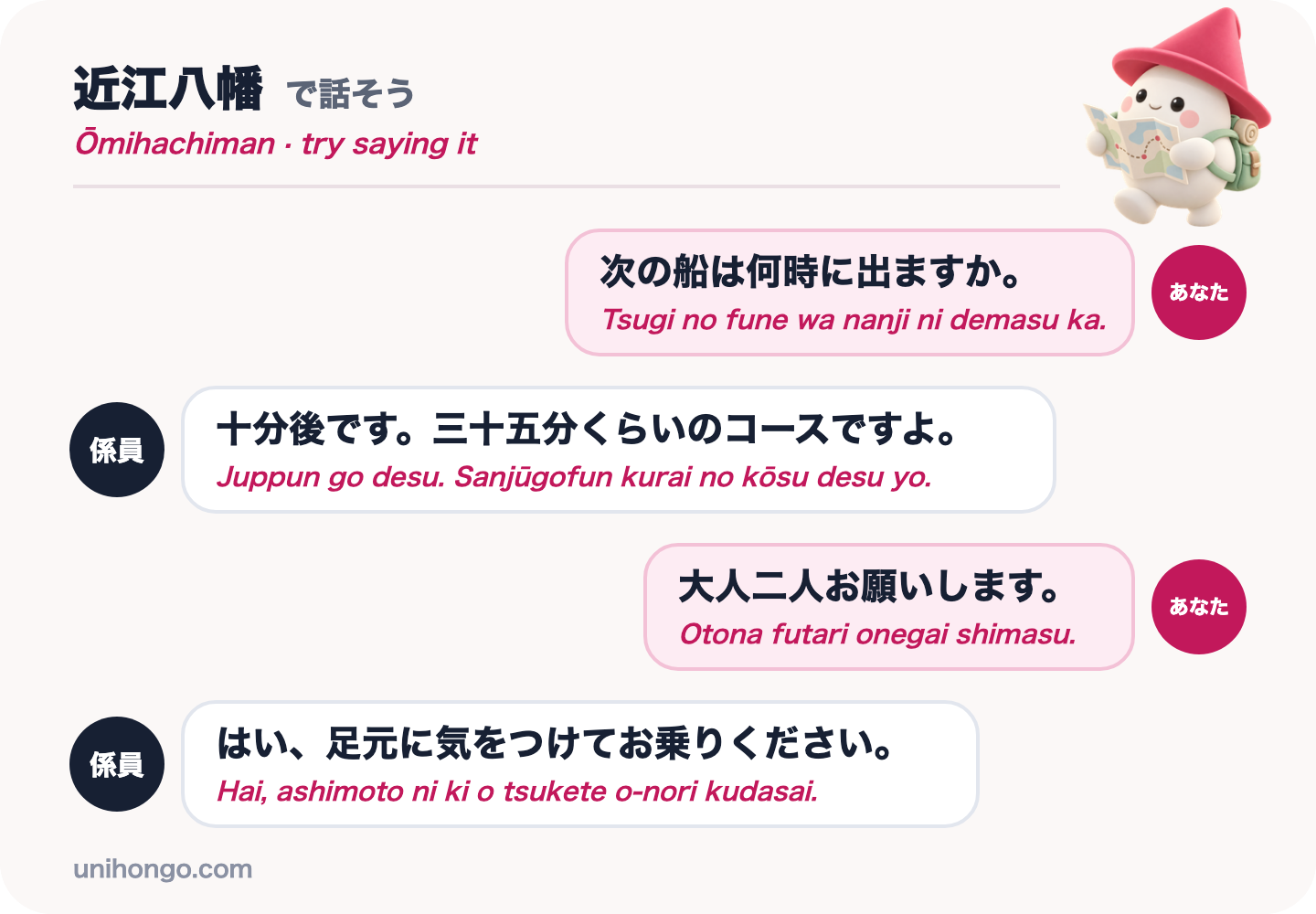
| Japanese | Romaji | Meaning |
|---|---|---|
| 次の船は何時に出ますか。 | Tsugi no fune wa nanji ni demasu ka. | What time does the next boat leave? |
| 十分後です。三十五分くらいのコースですよ。 | Juppun go desu. Sanjūgofun kurai no kōsu desu yo. | In ten minutes. The trip takes about thirty-five minutes. |
| 大人二人お願いします。 | Otona futari onegai shimasu. | Two adults, please. |
| はい、足元に気をつけてお乗りください。 | Hai, ashimoto ni ki o tsukete o-nori kudasai. | Here you are. Please watch your step as you board. |
Official information
The Ōmihachiman tourism association publishes the boat operators, events, bus and parking information, while Himure Hachimangū and the Hachiman-yama Ropeway publish their own schedules and fares. Check them before you go, especially around the spring fire festivals.