

Why Sendai deserves more than a changeover
Most travellers pass through Sendai on the way to somewhere else in Tōhoku. It deserves a night of its own. Date Masamune, the first lord of the Sendai domain, founded the city in 1600 and built his castle on Aobayama, the wooded hill above the Hirose River. Known as Dokuganryū, the one-eyed dragon, he is remembered for his crescent-moon helmet, his ambition and his taste for bold colour, and that taste survives in the buildings made for him and his family.
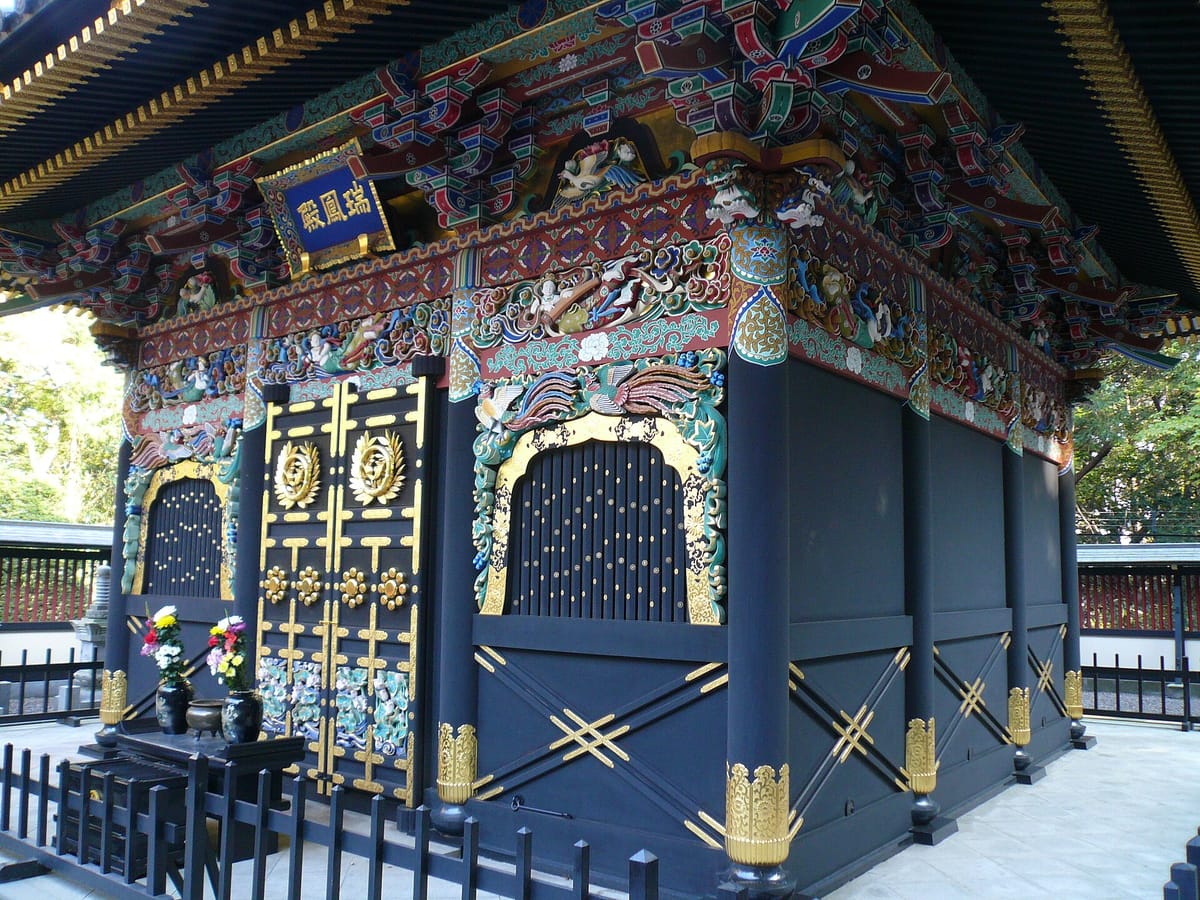
Zuihōden, his mausoleum, was completed in 1637, the year after his death, in the lavish Momoyama style: black lacquer, gold leaf and carvings painted in bright reds, blues and greens. The original burned in an air raid in 1945 and was rebuilt in 1979, and it now stands in a grove of tall cedars with the mausoleums of his son and grandson nearby. Ōsaki Hachimangū, the shrine Masamune had built for the city, is a National Treasure in the same style.
For a learner, Sendai is a comfortable place to talk. It is big enough for everything to work smoothly and small enough that people have time for you. You may also hear a little of the local dialect: sentences ending in dacchā, the Sendai way of saying da yo or desu yo, are a well-known marker of the city's speech.
Getting there: the Tōhoku Shinkansen and the Loople bus
Sendai Station is on the Tōhoku Shinkansen, about an hour and a half from Tokyo on the fastest Hayabusa trains. The station is huge, with the West Exit, nishiguchi, facing the city centre and the main bus terminal. Sendai Airport is linked to the station by a direct rail line.
The easiest way to see the sights is Loople Sendai, the retro-style sightseeing bus. It leaves from stop 16 at the West Exit bus terminal and runs one way round a loop of fifteen stops, taking about seventy minutes, with buses every fifteen to twenty minutes during the day. You tap an IC card, or buy a one-day pass, and hop on and off. The Tōzai subway line also runs to Kokusai Center Station, below the castle hill.
| Japanese | Romaji | Meaning |
|---|---|---|
| るーぷる仙台の乗り場はどこですか。 | Rūpuru Sendai no noriba wa doko desu ka. | Where does the Loople Sendai bus leave from? |
| 一日乗車券をください。 | Ichinichi jōshaken o kudasai. | A one-day pass, please. |
| このバスは瑞鳳殿に止まりますか。 | Kono basu wa Zuihōden ni tomarimasu ka. | Does this bus stop at Zuihōden? |
| 仙台城跡まで何分くらいですか。 | Sendai-jō ato made nanpun kurai desu ka. | About how many minutes to the Sendai Castle site? |
| 西口はどちらですか。 | Nishiguchi wa dochira desu ka. | Which way is the West Exit? |
A day in Sendai: what you will see
A good first day follows the Loople loop. Start at Zuihōden, climbing the stone steps through the cedars to the mausoleum. Continue to the Sendai Castle site on Aobayama, where the castle buildings are gone but tall stone walls remain, a rebuilt corner tower stands at the foot of the hill, and an equestrian statue of Masamune looks out over the whole city. Then ride on to Ōsaki Hachimangū, a black-lacquered shrine with gold fittings set at the top of a long flight of steps.
In the evening, walk the arcades of Ichibanchō and Clis Road, and the zelkova avenue of Jōzenji-dōri. Kokubunchō, just north, is the busiest nightlife district in Tōhoku, full of izakaya where you can try local sake alongside your gyūtan.
- Zuihōden: Masamune's gilded mausoleum in a cedar grove; paid entry.
- Sendai Castle site, Aobayama: the castle hill with its statue of Masamune on horseback and a view over the city.
- Ōsaki Hachimangū: a National Treasure shrine built for Masamune, famous for its Dontosai fire festival on 14 January.
- Jōzenji-dōri: a boulevard of zelkova trees, lit up for the Pageant of Starlight each December.
- Gyūtan-dōri and Zunda-kōji: food streets inside Sendai Station for beef tongue and zunda sweets.
- Day trips: Matsushima Bay, with its pine-covered islets, and the mountain temple of Yamadera.
Words on the signs and menus
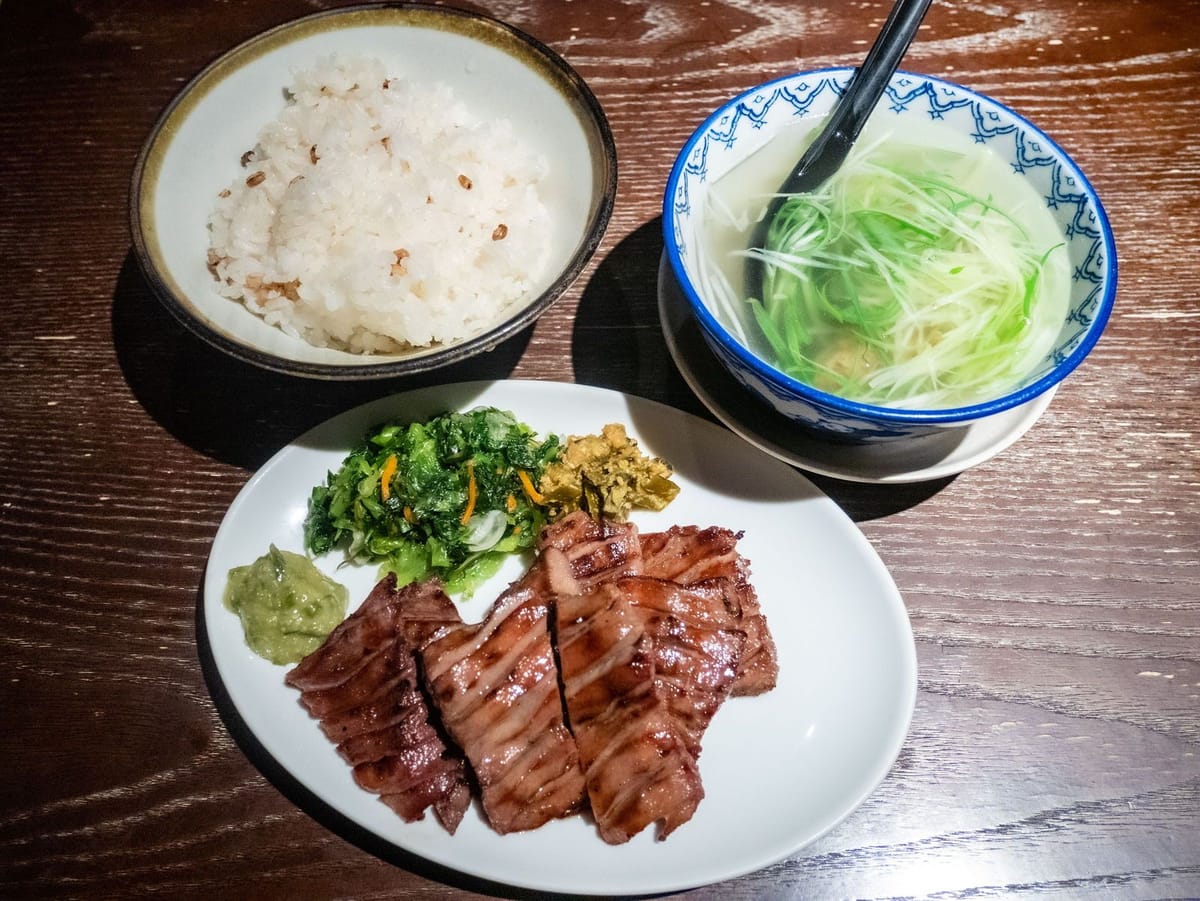
Sendai's menus are short and easy to read once you know the core words. A 定食, teishoku, is a set meal with rice, soup and pickles; 麦飯, mugimeshi, is rice cooked with barley; and テールスープ, tēru sūpu, is the oxtail soup that comes with gyūtan. Many restaurants offer the tongue in 塩, shio, salt, or 味噌, miso, flavour.
At the sights, look for 跡, ato, which means remains or site. 仙台城跡 is the Sendai Castle site, where only the stone walls and a rebuilt corner tower remain. The same kanji appears on historic places all over Japan.
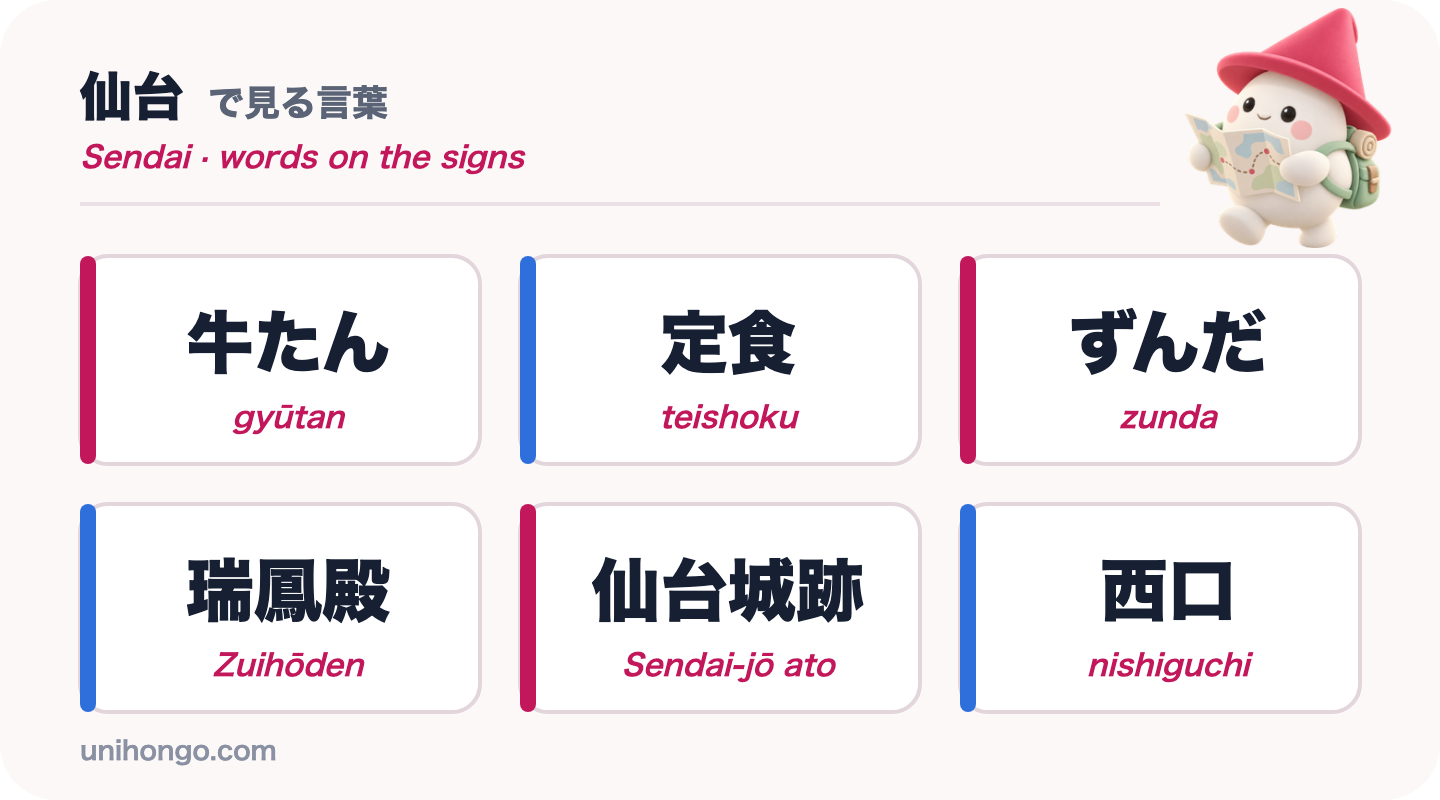
| Word | Reading | Meaning |
|---|---|---|
| 牛たん | gyūtan | Beef tongue, Sendai's signature dish |
| 定食 | teishoku | Set meal with rice and soup |
| 麦飯 | mugimeshi | Rice cooked with barley |
| テールスープ | tēru sūpu | Oxtail soup |
| ずんだ | zunda | Sweet paste of mashed edamame |
| 瑞鳳殿 | Zuihōden | Date Masamune's mausoleum |
| 仙台城跡 | Sendai-jō ato | Sendai Castle site on Aobayama |
| 大崎八幡宮 | Ōsaki Hachimangū | The National Treasure shrine |
| 西口 | nishiguchi | West Exit of the station |
Japanese for ordering gyūtan
Gyūtan restaurants follow a simple pattern. The menu lists set meals by the number of slices, and you choose a flavour: salt is the classic, and many places also offer miso or a sweet soy sauce. Rice refills, okawari, are common, and the staff may ask whether you want a regular or a large serving.
Popular shops have queues at lunchtime and in the evening, especially at the station. Write your name on the list by the door if there is one, and wait to be called.
| Japanese | Romaji | Meaning |
|---|---|---|
| 二人ですが、入れますか。 | Futari desu ga, hairemasu ka. | There are two of us. Can we get a table? |
| 牛タン定食を一つお願いします。 | Gyūtan teishoku o hitotsu onegai shimasu. | One gyūtan set meal, please. |
| 塩味でお願いします。 | Shioaji de onegai shimasu. | Salt flavour, please. |
| 麦飯を大盛りにできますか。 | Mugimeshi o ōmori ni dekimasu ka. | Can I have a large serving of barley rice? |
| ずんだシェイクを一つください。 | Zunda sheiku o hitotsu kudasai. | One zunda shake, please. |
| おすすめの地酒はありますか。 | Osusume no jizake wa arimasu ka. | Do you have a local sake you recommend? |
| お会計をお願いします。 | O-kaikei o onegai shimasu. | The bill, please. |
Tanabata, timing and practical tips
Sendai is easy to visit year-round, but two events change the city. In early August, the Tanabata festival fills the arcades with enormous streamers, and in December the Pageant of Starlight lights up Jōzenji-dōri.
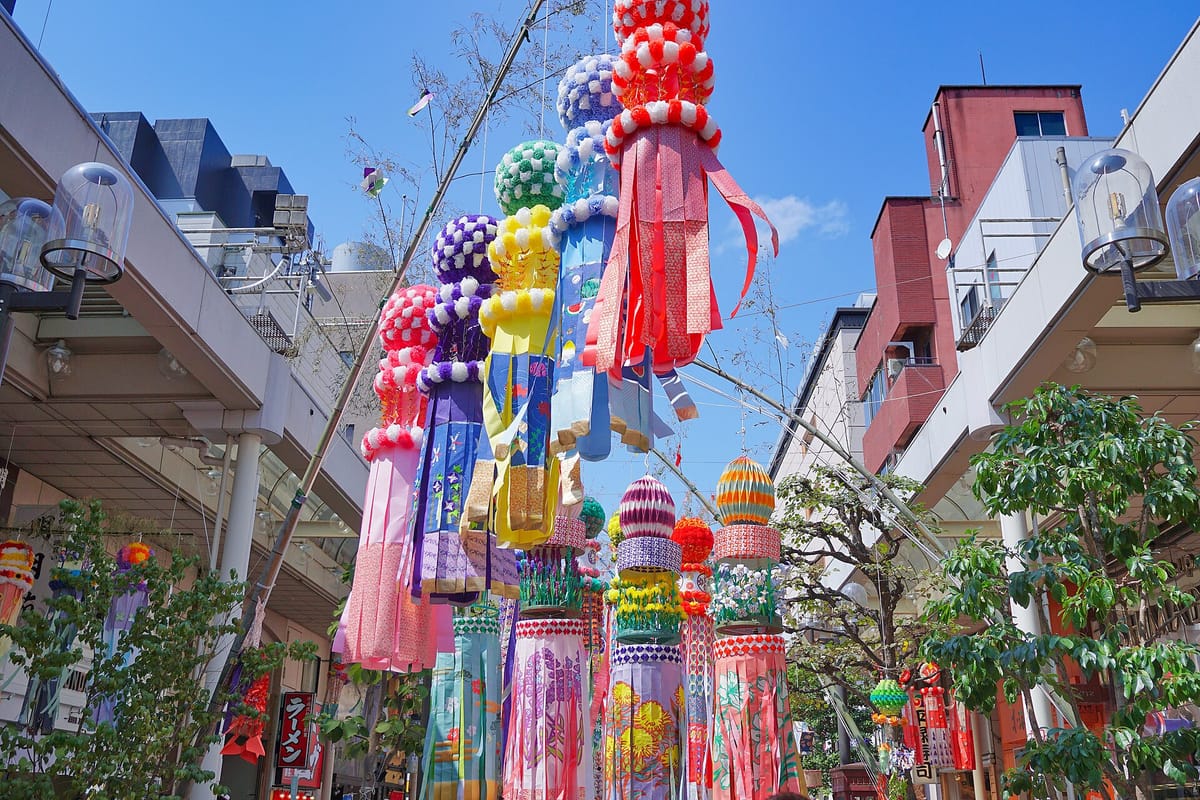
- Sendai Tanabata runs from 6 to 8 August; book rooms well ahead, as the city fills with visitors from all over Tōhoku.
- Ride the Loople bus in the morning; it runs only in the daytime, one way round the loop.
- Wear good shoes for Zuihōden and Ōsaki Hachimangū, which both have long stone staircases.
- Gyūtan shops at the station get long queues around noon; eat early or late.
- Buy zunda mochi to take away rather than for a long train ride; it is best eaten fresh.
- Use Sendai as a base for Matsushima and Yamadera, each reachable by JR local train.
Practise ordering before you go
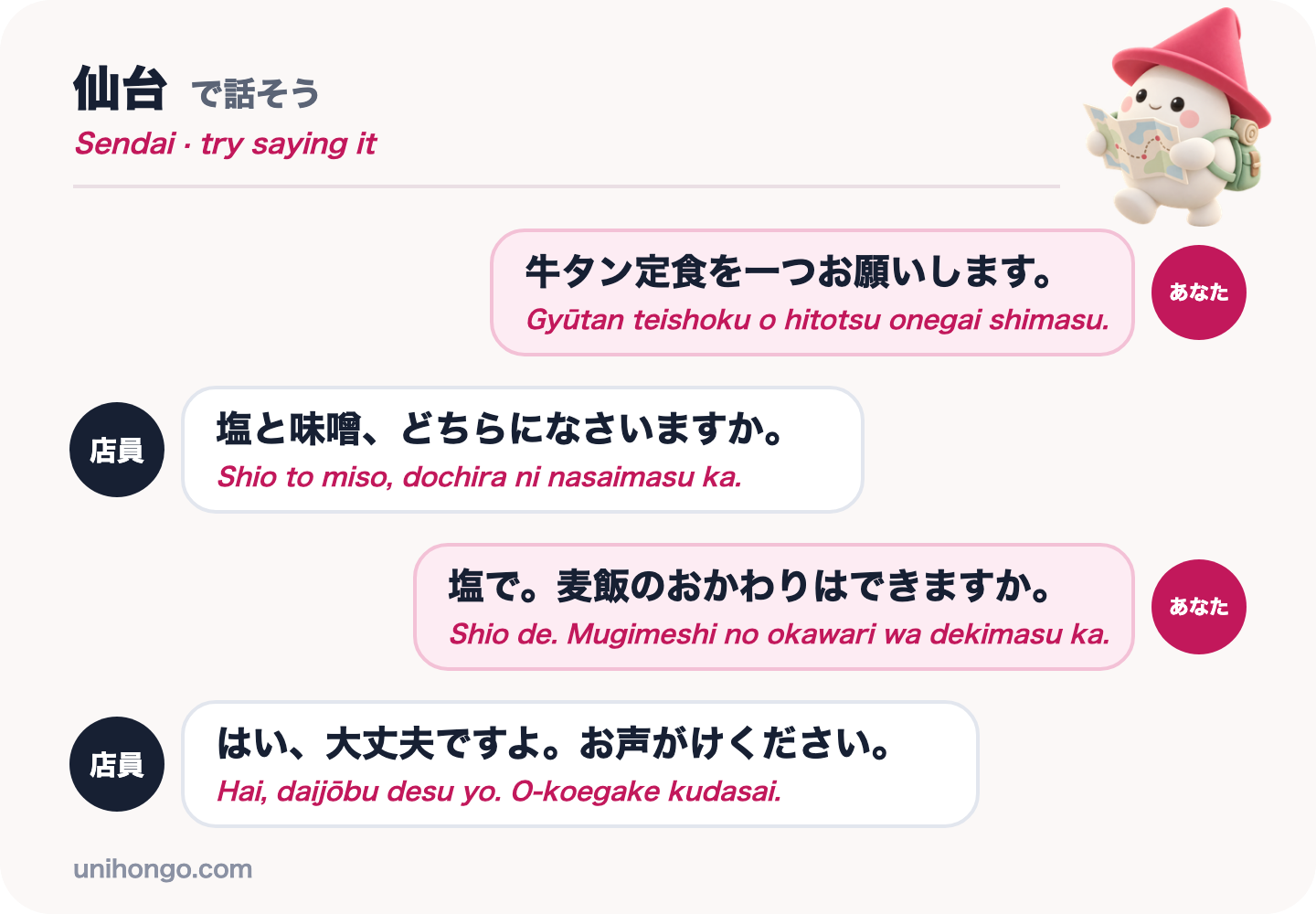
The server's question, dochira ni nasaimasu ka, which would you like, is the honorific form of dochira ni shimasu ka, and you will hear it in restaurants and shops all over Japan. Answer with the choice plus de: shio de, salt, please. Practise the four lines below until they come without reading.
Then practise with a partner. In Unihongo, choose the Restaurant topic and ask your AI Sensei to play a server at a gyūtan shop in Sendai, or choose the Japanese Cuisine topic to talk about what you ate. Saying the order aloud once before you go is what makes it easy at the counter.
| Japanese | Romaji | Meaning |
|---|---|---|
| 牛タン定食を一つお願いします。 | Gyūtan teishoku o hitotsu onegai shimasu. | One gyūtan set meal, please. |
| 塩と味噌、どちらになさいますか。 | Shio to miso, dochira ni nasaimasu ka. | Salt or miso, which would you like? |
| 塩で。麦飯のおかわりはできますか。 | Shio de. Mugimeshi no okawari wa dekimasu ka. | Salt, please. Can I have more barley rice? |
| はい、大丈夫ですよ。お声がけください。 | Hai, daijōbu desu yo. O-koegake kudasai. | Yes, no problem. Just let us know. |
Official information
Sendai's city tourism site lists sights, food and events, and the Loople Sendai site gives the route, the stops and the passes. Zuihōden publishes its hours and entry details on its own website; check them before you go.