

Why Kōchi is worth the trip across Shikoku
Kōchi faces the Pacific Ocean on the south side of Shikoku, cut off from the rest of Japan for centuries by the island's mountains. The old province of Tosa developed its own character: independent, outspoken and fond of food and drink. It produced Sakamoto Ryōma, one of the heroes of the Meiji Restoration, and today it is known across Japan for bonito, the Yosakoi dance festival and a dialect, Tosa-ben, that people from other regions love to imitate.
The city itself is compact and easy-going. The castle stands on a hill in the centre, a tram line runs through the main streets, and nearly everything a visitor wants is within a short walk. It is also a good base for the southern temples of the Shikoku pilgrimage and for Katsurahama beach.
For a Japanese learner, Kōchi is a chance to step outside textbook Japanese. Stall owners at Hirome Market and the Sunday Market are chatty, and you will hear Tosa dialect alongside standard Japanese. Ordering food and asking about it is the perfect way in.
Getting there: Kōchi Station, the tram and Harimayabashi
Kōchi Station is on the JR Dosan Line, reached by limited express from Okayama through the Ōboke area, and highway buses also link it with Matsuyama, Takamatsu and Osaka. From the station, the main street runs south to Harimayabashi, the city's central crossroads, about ten minutes' walk away.
The Tosaden trams cross at Harimayabashi: one line runs north to south from the station, the other east to west through the city. For the castle, change at Harimayabashi to a westbound tram and get off at Kōchijō-mae. Pay as you get off, and if you need to change trams, ask the driver for a transfer ticket, norikae-ken.
| Japanese | Romaji | Meaning |
|---|---|---|
| はりまや橋はどちらですか。 | Harimayabashi wa dochira desu ka. | Which way is Harimayabashi? |
| 高知城前で降りたいです。 | Kōchijō-mae de oritai desu. | I'd like to get off at Kōchijō-mae. |
| 乗り換え券をください。 | Norikae-ken o kudasai. | A transfer ticket, please. |
| ひろめ市場はここから近いですか。 | Hirome Ichiba wa koko kara chikai desu ka. | Is Hirome Market close to here? |
| 日曜市はどこでやっていますか。 | Nichiyō-ichi wa doko de yatte imasu ka. | Where is the Sunday Market held? |
Kōchi Castle, Hirome Market and the Sunday Market
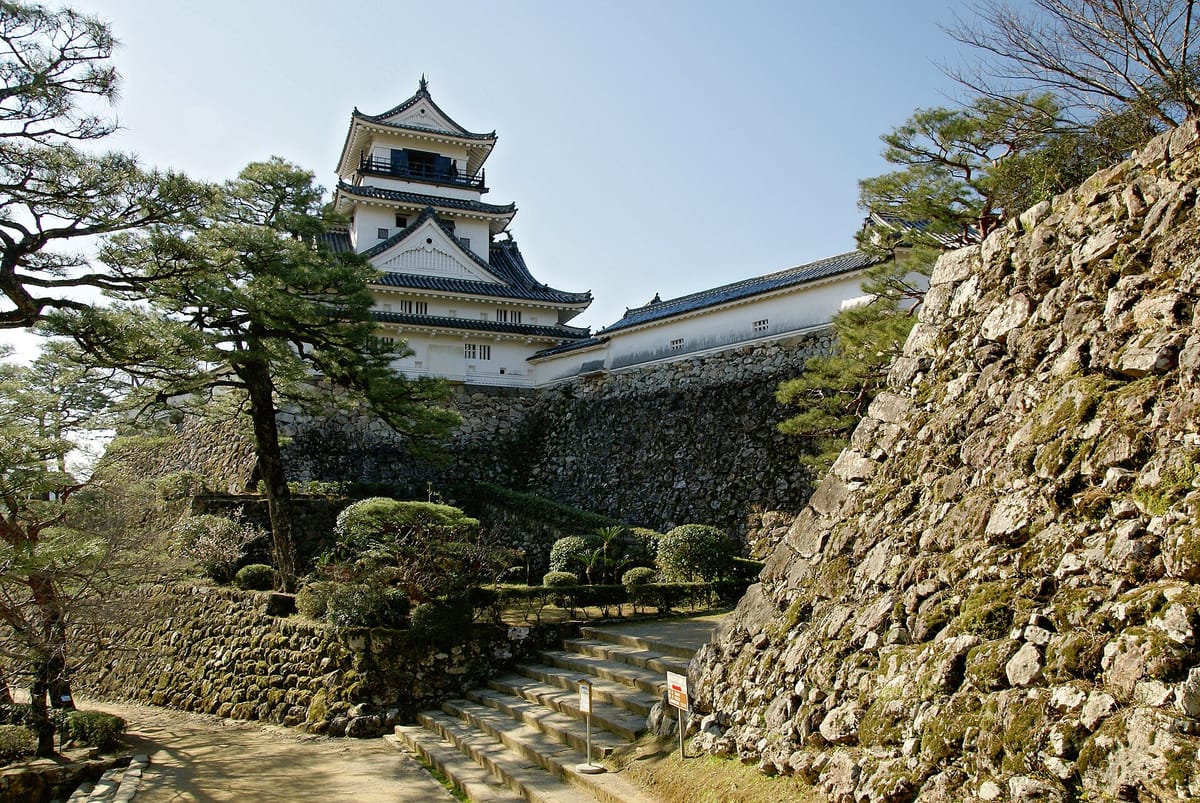
Kōchi Castle sits on a hill about 44 metres above sea level. The keep is 18.5 metres tall, with four roofs outside and five floors inside, and from the top you look out over the city towards the mountains. Inside, the keep and the adjoining palace, Kaitokukan, have displays about the Yamauchi lords and the castle. The castle provides free coin lockers, and volunteer guides offer tours.
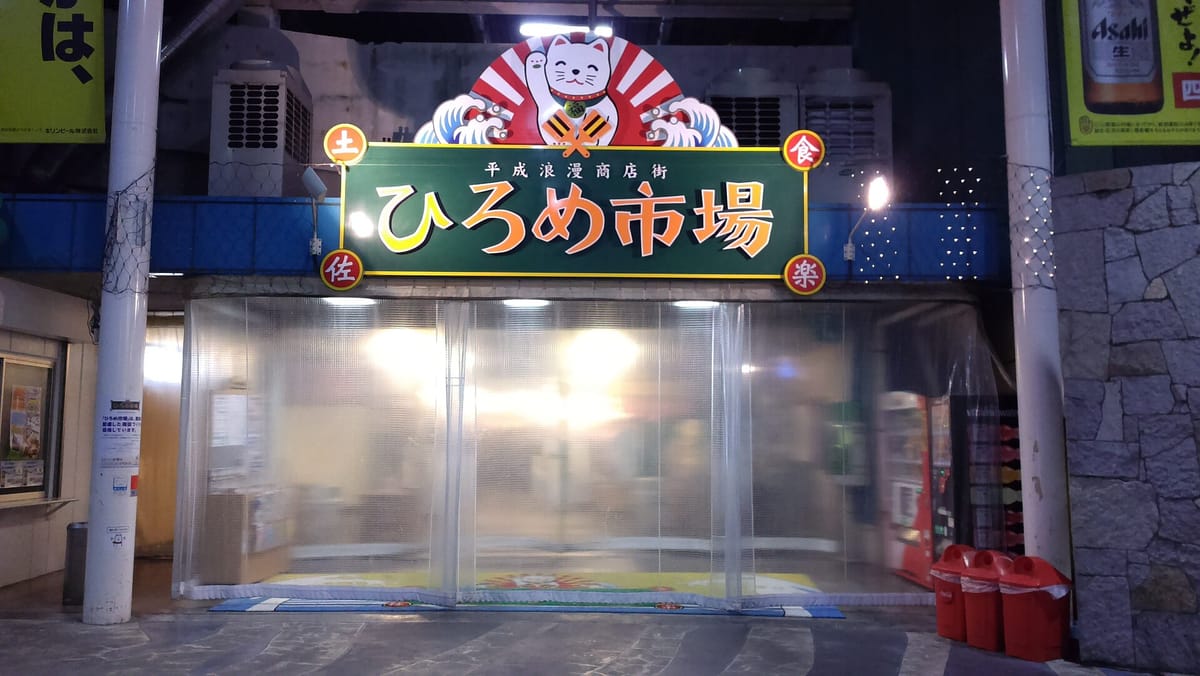
Hirome Market is the city's living room. It is a big covered hall packed with small stalls, each selling something different: tataki, fried snacks, sushi, local sake, beer and souvenirs. You buy from as many stalls as you like and carry everything to the shared tables. At busy times, finding a seat is part of the fun, and sharing a table with strangers is normal.
- Ōtemon (追手門): the main gate, the only major building to survive the fire of 1727, with the keep visible above it.
- Tenshu (天守): the keep, completed in 1749, one of Japan's twelve originals.
- Kaitokukan (懐徳館): the honmaru palace beside the keep, a rare surviving example of a lord's residence.
- Hirome Ichiba (ひろめ市場): the food hall of stalls and shared tables near the castle.
- Nichiyō-ichi (日曜市): the Sunday street market on Ōtesuji, held since 1690.
- Harimayabashi (はりまや橋): the small red bridge at the centre of the city's love story.
- Yosakoi Matsuri (よさこい祭り): Kōchi's summer dance festival in August, when teams dance through the streets with wooden clappers, naruko.
Words on the signs: castle, market and food
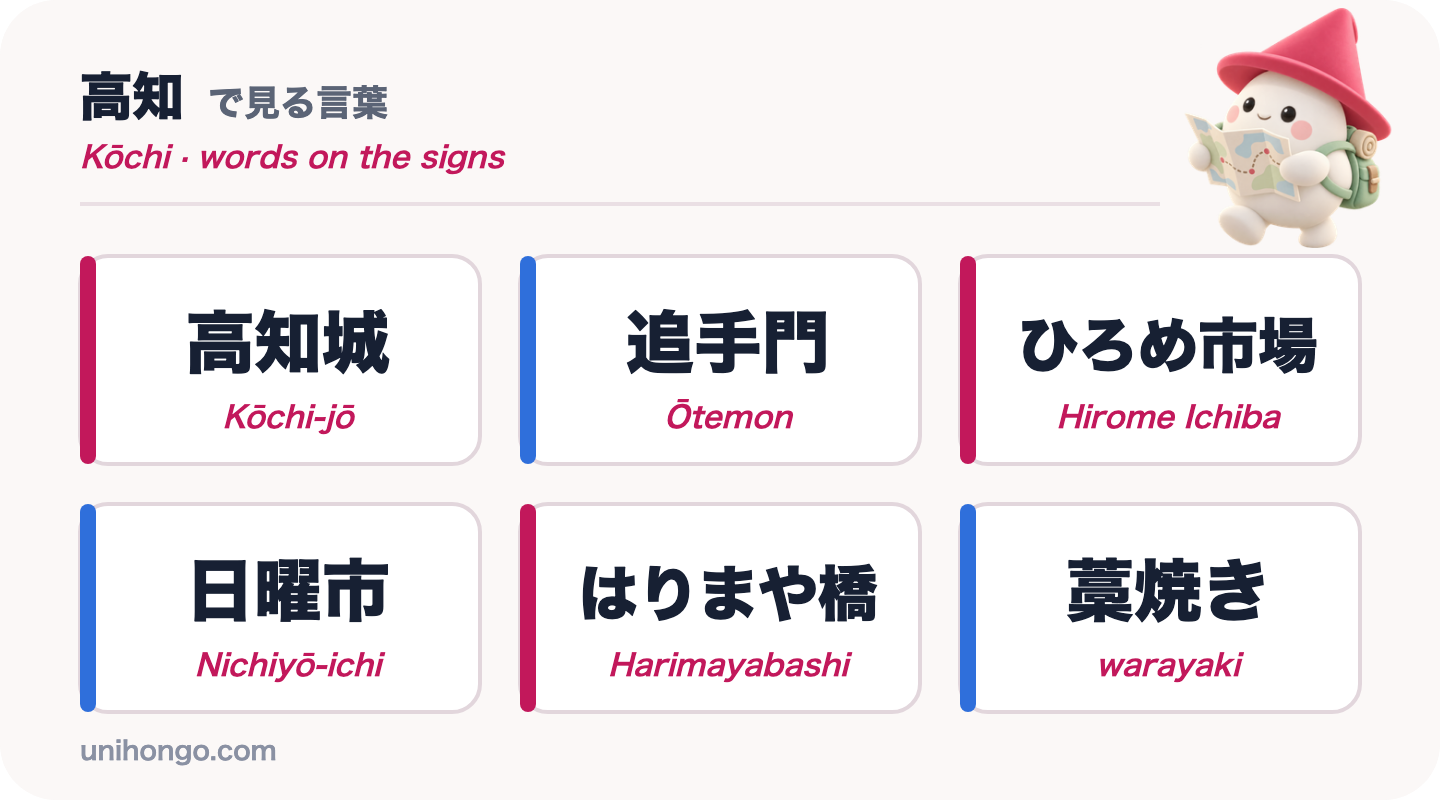
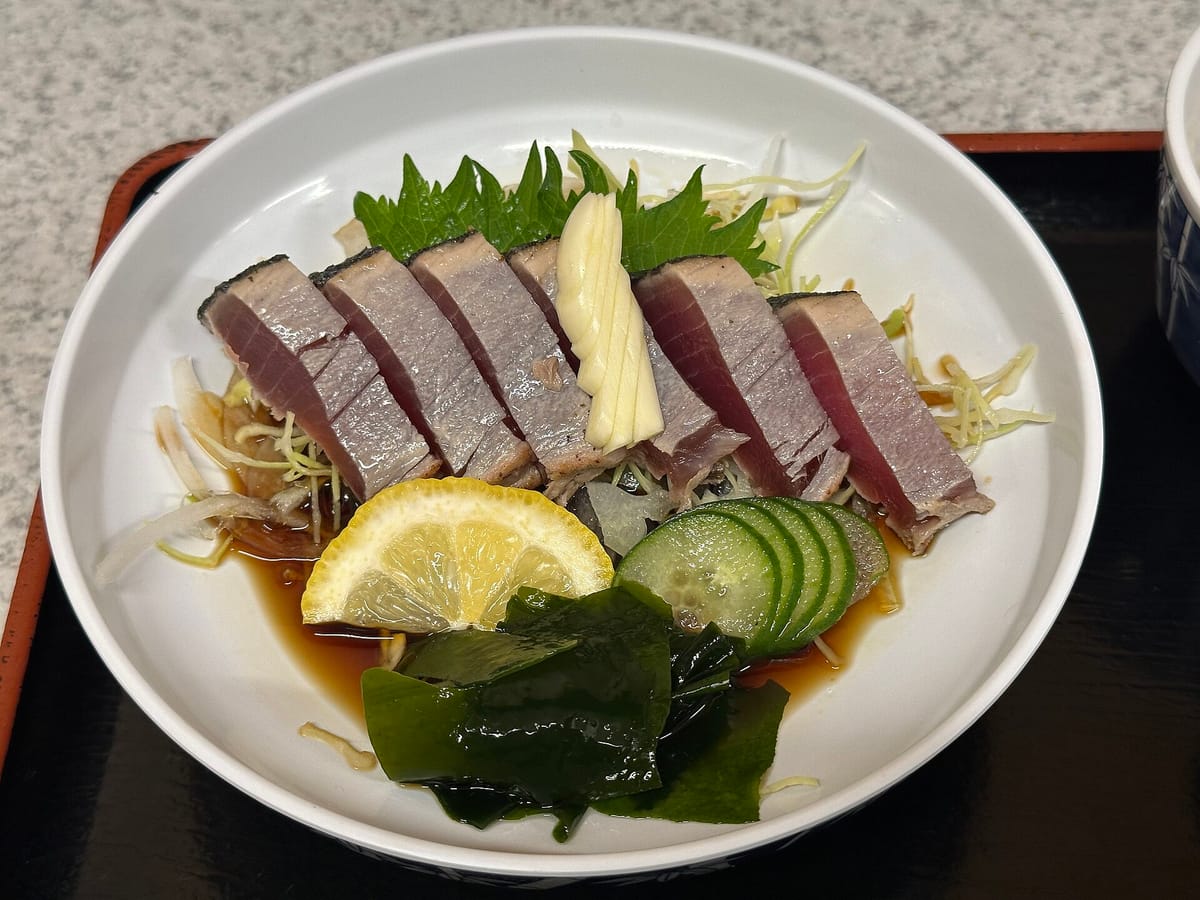
Signs in central Kōchi mix landmarks with food words. On the stalls at Hirome Market, look for 藁焼き, straw-seared, and 塩たたき, tataki with salt, which mark the places cooking bonito the traditional way. The table below adds the dishes and words you will meet on menus.
| Word | Reading | Meaning |
|---|---|---|
| 高知城 | Kōchi-jō | Kōchi Castle |
| 追手門 | Ōtemon | Main gate of the castle |
| ひろめ市場 | Hirome Ichiba | Hirome Market food hall |
| 日曜市 | Nichiyō-ichi | Sunday Market |
| はりまや橋 | Harimayabashi | The red bridge in the city centre |
| 鰹のたたき | katsuo no tataki | Seared bonito |
| 藁焼き | warayaki | Seared over burning straw |
| 塩たたき | shio tataki | Tataki served with salt |
| 土佐 | Tosa | The old name of Kōchi Prefecture |
Japanese for ordering at Hirome Market
Ordering at Hirome Market is simple: go to a stall, point or name the dish, pay, and either wait or come back when it is called. At the tataki stalls you may see the straw fire flare up as the fish is seared, and you will usually be asked whether you want salt or sauce.
When you sit down, a quick koko, ii desu ka, is this seat free, is all you need before joining a table. Kōchi has a strong drinking culture, and people at the next table may start a conversation; a few words about where you are from go a long way.
| Japanese | Romaji | Meaning |
|---|---|---|
| 藁焼きのたたきはどれですか。 | Warayaki no tataki wa dore desu ka. | Which is the straw-seared tataki? |
| おすすめは何ですか。 | Osusume wa nan desu ka. | What do you recommend? |
| ここ、空いていますか。 | Koko, aite imasu ka. | Is this seat free? |
| 土佐の地酒はありますか。 | Tosa no jizake wa arimasu ka. | Do you have local Tosa sake? |
| 持ち帰りはできますか。 | Mochikaeri wa dekimasu ka. | Can I take it away? |
| カードは使えますか。 | Kādo wa tsukaemasu ka. | Can I pay by card? |
| とてもおいしかったです。 | Totemo oishikatta desu. | It was delicious. |
Etiquette, timing and practical tips
Kōchi is relaxed, but its markets are busy and run on their own rhythms. A little timing makes all the difference.
- Visit on a Sunday if you can, and go to the Sunday Market early, when the produce is freshest and the crowds thinnest.
- Hirome Market is busiest at lunchtime and in the evening; go mid-afternoon for an easy seat.
- Check Hirome Market's calendar: it closes on some days each month.
- Carry cash; many market stalls do not take cards.
- Clear your table and return trays where indicated at Hirome Market, as locals do.
- Take off your shoes inside the castle keep, and mind the steep wooden stairs.
- Kōchi Castle closes over the New Year holiday; check the official site for this season's hours.
- In August, the Yosakoi festival fills the streets; book accommodation well ahead.
Practise ordering tataki before you go
The one exchange you will certainly have in Kōchi is ordering tataki. The stall worker's question, shio to tare, dochira ni shimasu ka, is the classic choice in Kōchi, and dochira ni shimasu ka, which will you have, is a pattern you will hear in restaurants all over Japan.
Say the four lines aloud until they come easily. Then open Unihongo, choose the Japanese Cuisine topic and ask your AI Sensei to play a Hirome Market stall owner who recommends other local dishes. For a challenge, try the Regional Dialects topic and ask the Sensei to answer with a few Tosa-ben endings.
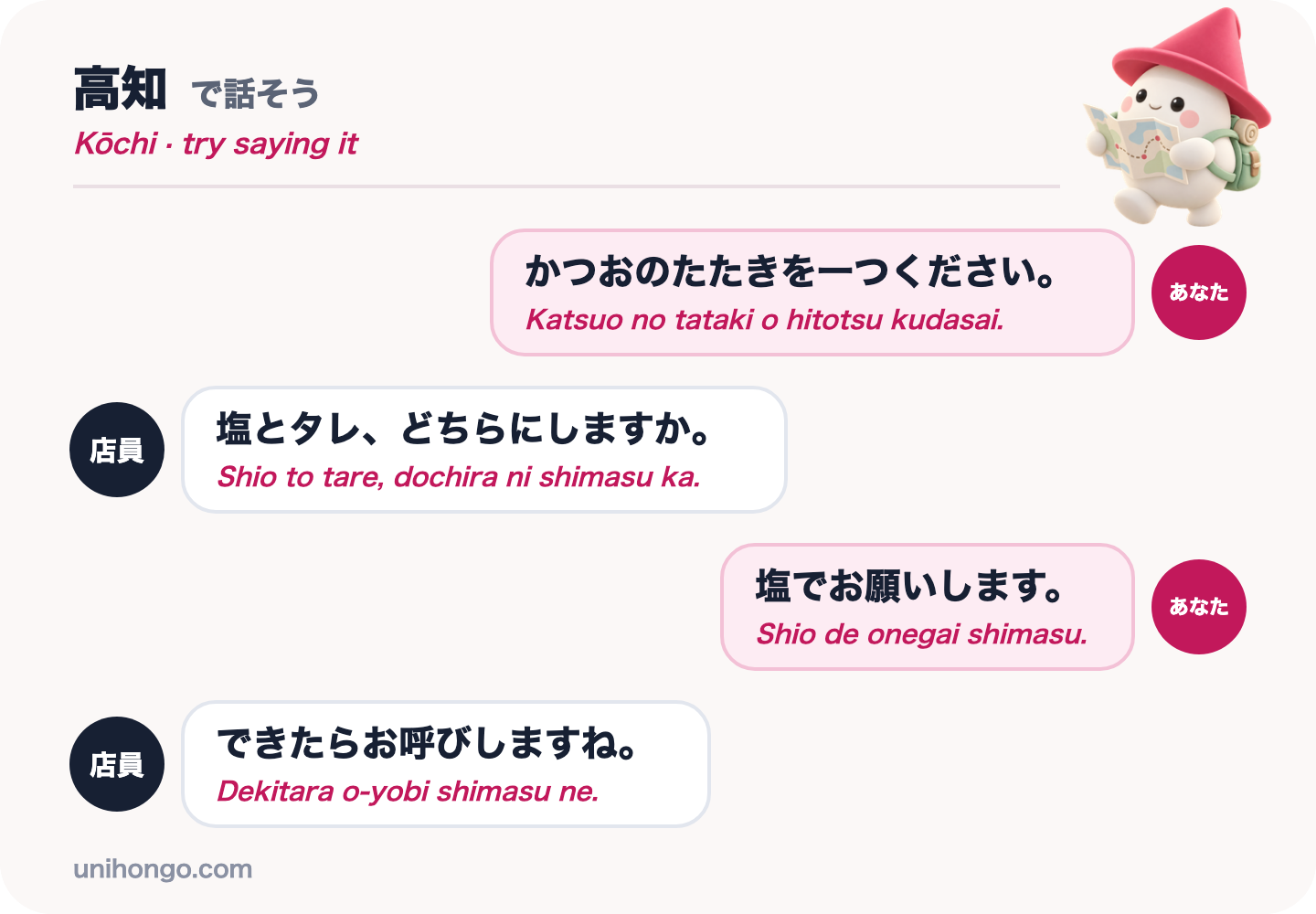
| Japanese | Romaji | Meaning |
|---|---|---|
| かつおのたたきを一つください。 | Katsuo no tataki o hitotsu kudasai. | One bonito tataki, please. |
| 塩とタレ、どちらにしますか。 | Shio to tare, dochira ni shimasu ka. | Salt or sauce, which would you like? |
| 塩でお願いします。 | Shio de onegai shimasu. | With salt, please. |
| できたらお呼びしますね。 | Dekitara o-yobi shimasu ne. | I'll call you when it's ready. |
Official information
Kōchi Castle's hours, closing days and volunteer guide tours are on the castle's official site, Hirome Market posts its closing days, and Kōchi City publishes the Sunday Market's schedule. Check them before you go.