

Why Minato Mirai is Yokohama's best walk
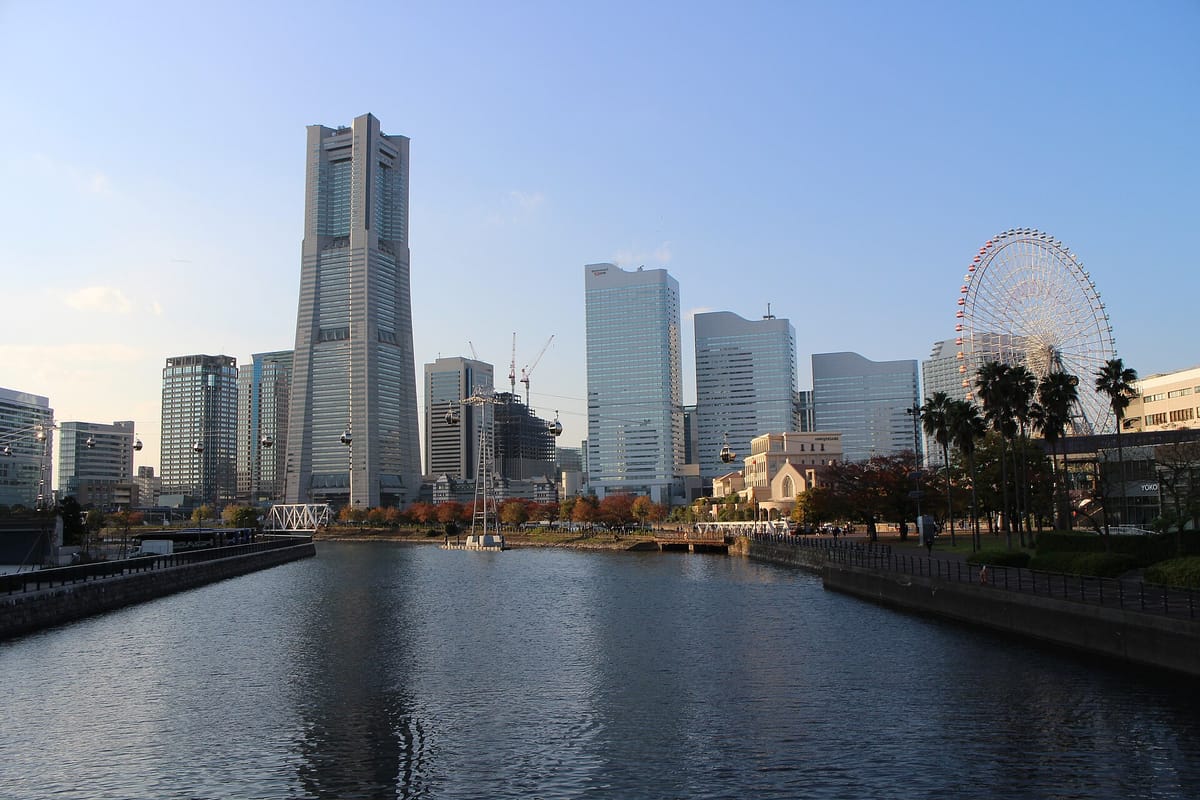
When Yokohama opened as a port in 1859, it became Japan's main window on the world, and the harbour still shapes the city. Minato Mirai 21 was planned in the 1980s to replace shipyards and freight yards with a new city centre, and it now holds offices, hotels, a large convention centre, museums and parks, all connected by waterside promenades. The Landmark Tower, 296 metres tall, was Japan's tallest building from 1993 until 2014.
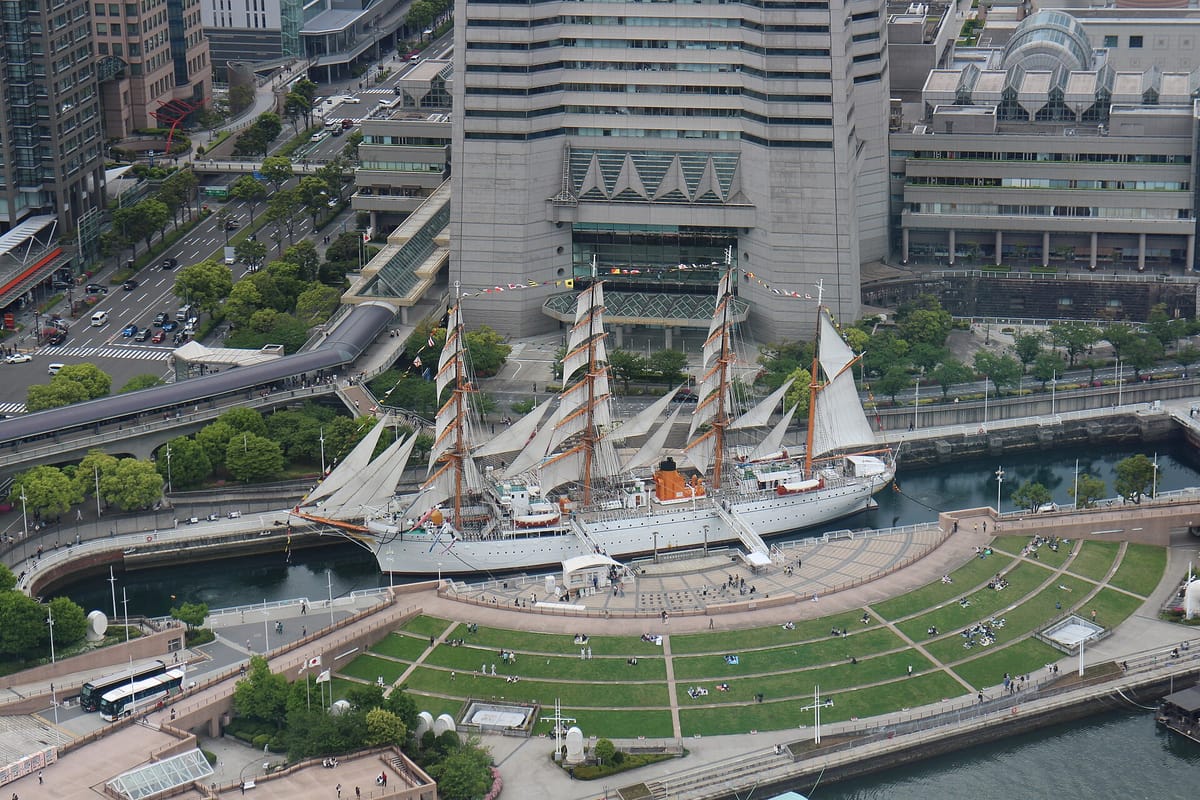
What makes the district a pleasure is that it is flat, open and walkable. You can start at Sakuragichō Station, follow the water past the Nippon Maru, cross the harbour on a promenade that used to be a railway, reach the Red Brick Warehouses and finish on Ōsanbashi Pier with the whole skyline in front of you, all in a couple of hours.
For a Japanese learner, Minato Mirai is a gentle start. Signs are bilingual, staff are used to visitors, and the district's own name is written in hiragana. It is an ideal place to try your first directions questions without the crowds of central Tokyo.
Getting there: Sakuragichō and Minato Mirai stations
Two stations serve the district. Minato Mirai Station, on the Minato Mirai Line, lies under the Queen's Square complex and is two stops from Yokohama Station. Sakuragichō Station, on the JR Negishi Line and the Yokohama Municipal Subway Blue Line, sits at the southern edge of Minato Mirai beside the Landmark Tower and the start of the Kishamichi; it is one stop from Yokohama on JR.
From Tokyo, the Tōkyū Tōyoko Line from Shibuya runs straight through onto the Minato Mirai Line on most trains, so you can ride from Shibuya to Minato Mirai Station without changing. From Tokyo Station, take the JR Tōkaidō Line to Yokohama and change, or ride a JR Keihin-Tōhoku Line train, which continues onto the Negishi Line to Sakuragichō. Suica and Pasmo work on all of these lines.
Within the district, the Yokohama Air Cabin, an urban ropeway of about 600 metres, links Sakuragichō Station with Unga Park near the Red Brick Warehouses, and Sea Bass boats run from near Yokohama Station's east exit to stops along the waterfront.
| Japanese | Romaji | Meaning |
|---|---|---|
| この電車はみなとみらい駅に行きますか。 | Kono densha wa Minato Mirai-eki ni ikimasu ka. | Does this train go to Minato Mirai Station? |
| 桜木町へは何番線ですか。 | Sakuragichō e wa nanbansen desu ka. | Which platform for Sakuragichō? |
| 赤レンガ倉庫はどの出口が近いですか。 | Aka-renga Sōko wa dono deguchi ga chikai desu ka. | Which exit is closest to the Red Brick Warehouses? |
| ここから大さん橋まで歩いて行けますか。 | Koko kara Ōsanbashi made aruite ikemasu ka. | Can I walk from here to Ōsanbashi Pier? |
| シーバスの乗り場はどこですか。 | Shībasu no noriba wa doko desu ka. | Where does the Sea Bass boat leave from? |
From the Nippon Maru to the Red Brick Warehouses: what you will see
From Sakuragichō, walk towards the water and you reach the Nippon Maru, a four-masted sailing ship built in 1930 as a training ship and now preserved in an old stone dock, with the Yokohama Port Museum beside it. On certain days a year volunteers unfurl all its sails, which is worth catching if the official calendar shows it.
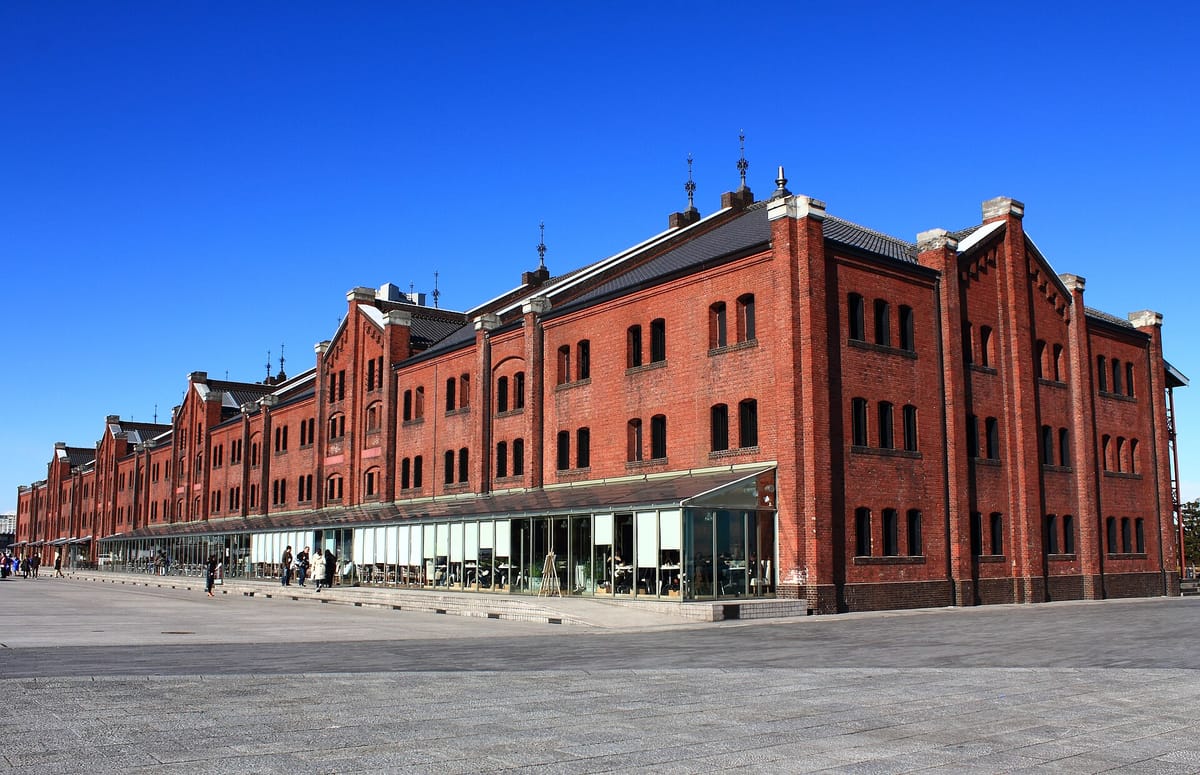
Next comes the Kishamichi, literally the steam train road, a promenade laid over the route of an old harbour railway line, with sections of track still set into the path. It crosses the water on bridges to Shinkō, the man-made island that holds the Cosmo World amusement park, the Cup Noodles Museum and, at its far end, the Red Brick Warehouses, the Aka-renga Sōko. The two brick buildings were built in the early twentieth century as government bonded warehouses and reopened in 2002 as shops, restaurants and a hall for events and markets.
From the warehouses it is a short walk to Ōsanbashi, the international passenger pier, whose wooden rooftop deck is open to the public and gives the best free view back over the Minato Mirai skyline. Yamashita Park and Chinatown are a little further on.
- Nippon Maru and the Yokohama Port Museum: the 1930 sailing ship and the story of the port.
- Kishamichi: the promenade on an old railway line, with rails still in the path.
- Yokohama Air Cabin: the ropeway from Sakuragichō over the harbour.
- Cosmo World and Cosmo Clock 21: a free-entry amusement park where you pay per ride, and its clock-faced Ferris wheel.
- Cup Noodles Museum: instant noodle history, and a workshop where you design your own cup.
- Red Brick Warehouses: shops, cafés and seasonal events in two restored warehouses.
- Ōsanbashi Pier: the cruise terminal with a public wooden roof deck facing the skyline.
Harbour words on the signs
Minato Mirai's signposts mix kanji, katakana and hiragana more than most places, which makes them good reading practice. The Red Brick Warehouses are usually written with renga, brick, in katakana, even though the word has its own kanji, 煉瓦, which hardly ever appears on signs, and the pier is Ōsanbashi, big pier, with the middle part in hiragana on most signs.
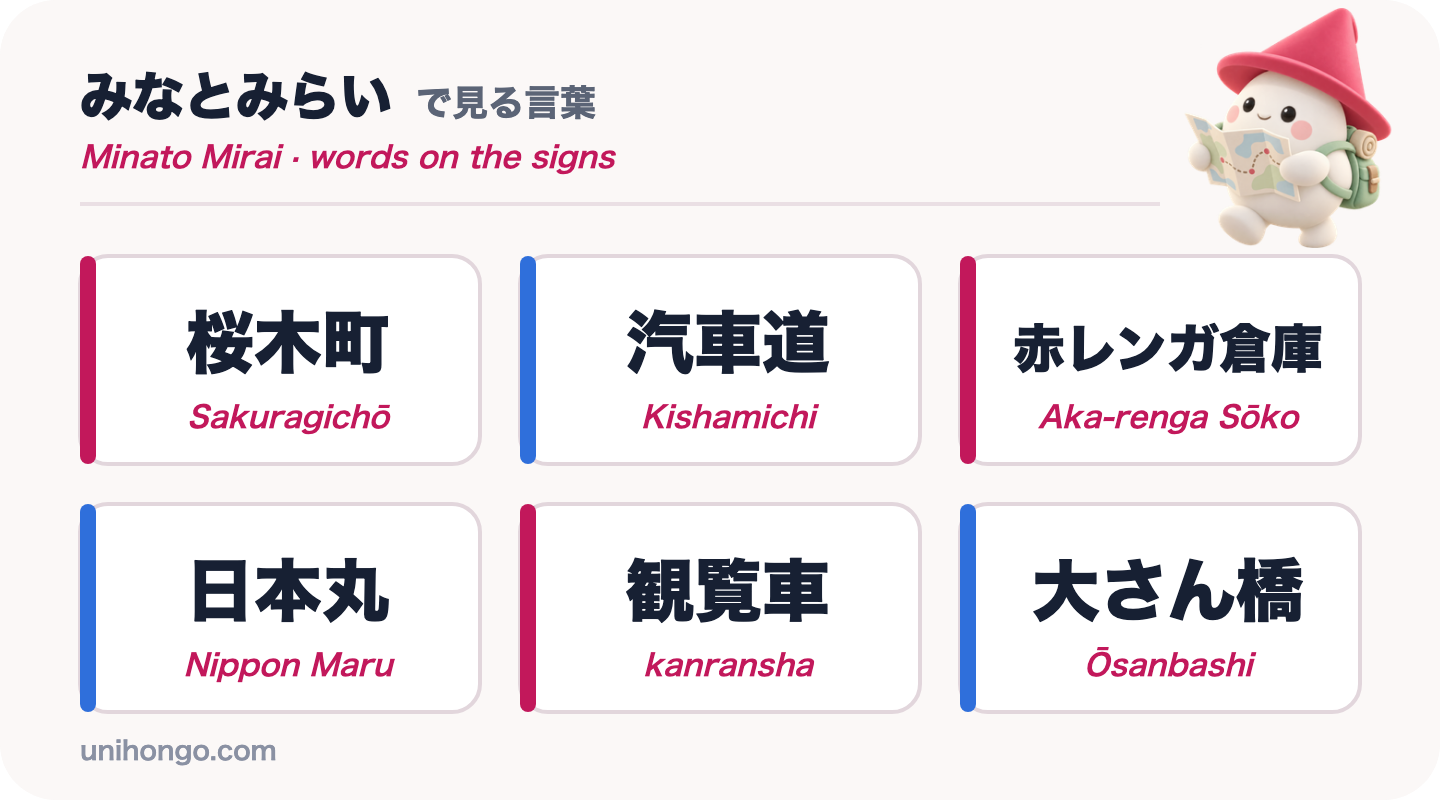
The table below collects the names and words you meet on the maps and signposts.
| Word | Reading | Meaning |
|---|---|---|
| みなとみらい | Minato Mirai | Harbour of the future, the district's name |
| 桜木町 | Sakuragichō | Station at the southern edge of the district |
| 汽車道 | Kishamichi | Promenade on the old harbour railway |
| 日本丸 | Nippon Maru | The preserved sailing ship |
| 赤レンガ倉庫 | Aka-renga Sōko | The Red Brick Warehouses |
| 観覧車 | kanransha | Ferris wheel |
| 大さん橋 | Ōsanbashi | The international passenger pier |
| 新港 | Shinkō | The man-made island district, literally new port |
| 展望台 | tenbōdai | Observation deck |
| 休館日 | kyūkanbi | Closing day of a museum or hall |
Japanese for the ropeway and the Cup Noodles Museum
Two places in Minato Mirai involve a bit of conversation. At the Air Cabin, you choose between a one-way ticket, katamichi, and a return, ōfuku, and many people ride one way and walk the Kishamichi back. At the Cup Noodles Museum, the My CUPNOODLES Factory lets you draw on a blank cup, then choose one soup and four toppings for the staff to seal inside; the Chicken Ramen Factory, where you make noodles by hand, needs a reservation.
The staff lines follow set patterns. At the counter you will hear o-kimari desu ka, have you decided, and at the topping station dochira ni nasaimasu ka, which will you have. Answer with the noun plus ni shimasu, I will go with, and point if you need to.
| Japanese | Romaji | Meaning |
|---|---|---|
| ロープウェイの往復を二枚お願いします。 | Rōpuwei no ōfuku o nimai onegai shimasu. | Two return tickets for the ropeway, please. |
| 片道だけでもいいですか。 | Katamichi dake demo ii desu ka. | Is a one-way ticket alone all right? |
| カップをデザインするのはここですか。 | Kappu o dezain suru no wa koko desu ka. | Is this where you design the cup? |
| スープはシーフードにします。 | Sūpu wa shīfūdo ni shimasu. | I will have the seafood soup. |
| トッピングはこれとこれでお願いします。 | Toppingu wa kore to kore de onegai shimasu. | These toppings, please. |
| 今日は予約なしで入れますか。 | Kyō wa yoyaku nashi de hairemasu ka. | Can I get in today without a reservation? |
Practical tips, timing and manners
Minato Mirai is spread out and exposed to the wind off the harbour, so a little planning goes a long way.
- Do not plan around the Landmark Tower's Sky Garden: it is closed for renovation, with reopening planned for 2028 or later.
- Museums in the area each have a weekly closing day, and they are not all the same day; check before you go.
- Come in the late afternoon and stay for the evening, when the towers, the Ferris wheel and the warehouses are lit.
- Weekends bring large crowds to the Red Brick Warehouses when markets and festivals are held there.
- Walk on the left on the busy promenades and step aside to take photos rather than stopping in the flow.
- Bring a layer even in summer: the wind on Ōsanbashi and the Kishamichi bridges can be strong.
Practise the harbour walk before you go
The first question most visitors ask at Sakuragichō is whether they can walk to the Red Brick Warehouses. The answer will name the route, Kishamichi o tōtte, by way of the Kishamichi, and give a time. Practise the four lines below until you can say them smoothly, and listen for the verb tōtte, passing through, which you will hear in directions everywhere.
Then practise with a partner who replies. In Unihongo, choose the Directions topic or the Ask the Way to the Station mission and ask your AI Sensei to play a station attendant at Sakuragichō, or choose Sightseeing to rehearse the ropeway and museum counters. One spoken run-through before the trip makes the real exchange much easier.
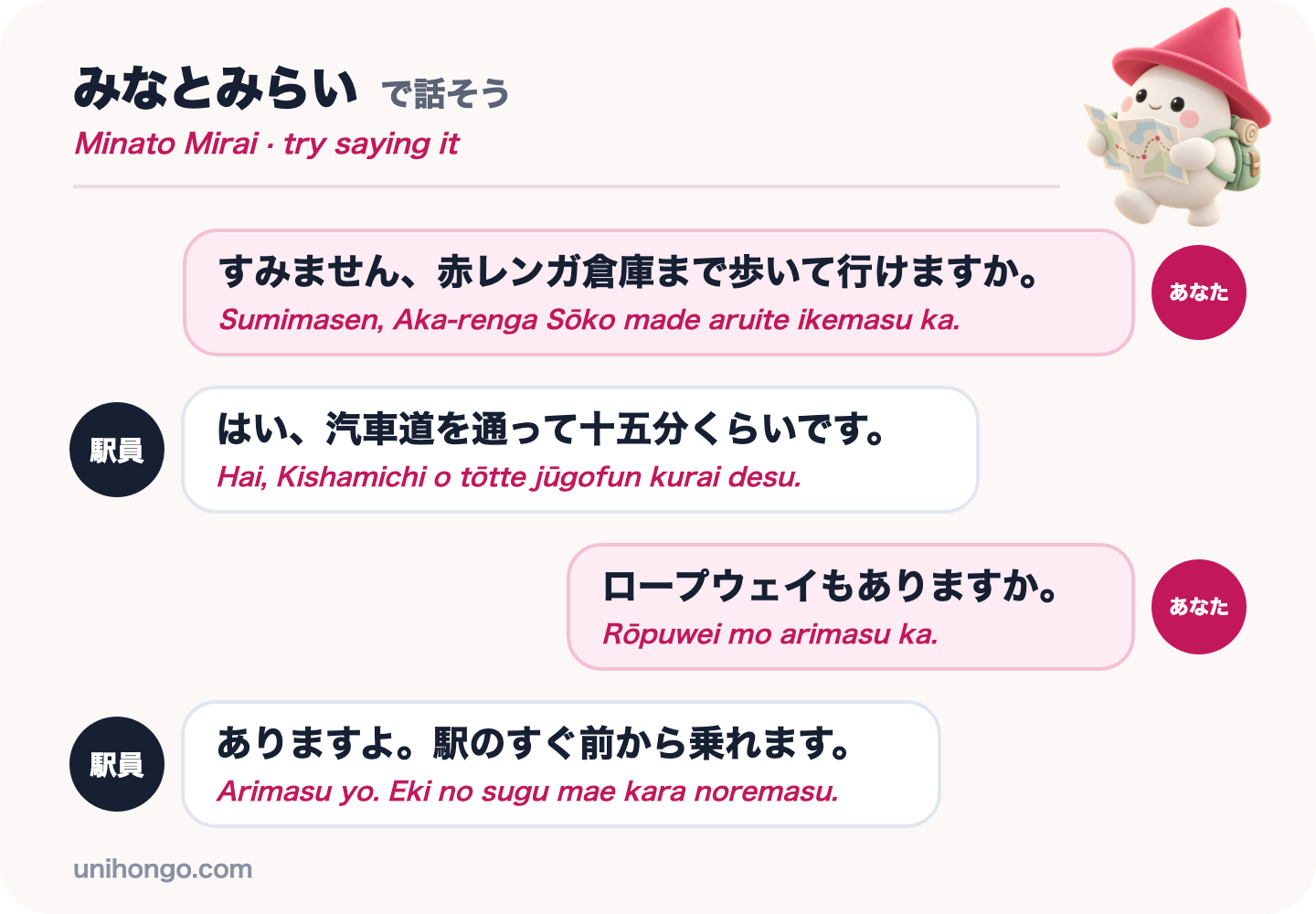
| Japanese | Romaji | Meaning |
|---|---|---|
| すみません、赤レンガ倉庫まで歩いて行けますか。 | Sumimasen, Aka-renga Sōko made aruite ikemasu ka. | Excuse me, can I walk to the Red Brick Warehouses? |
| はい、汽車道を通って十五分くらいです。 | Hai, Kishamichi o tōtte jūgofun kurai desu. | Yes, it is about fifteen minutes along the Kishamichi. |
| ロープウェイもありますか。 | Rōpuwei mo arimasu ka. | Is there a ropeway as well? |
| ありますよ。駅のすぐ前から乗れます。 | Arimasu yo. Eki no sugu mae kara noremasu. | There is. You can board right in front of the station. |
Official information
Opening hours, closing days and events change through the year, and the Landmark Tower's observatory is closed for renovation. Check the official sites below before you go.