

Why Nachi is the most dramatic stop in Kumano
Kumano Nachi Taisha is one of the Kumano Sanzan, the three grand shrines at the heart of the Kumano pilgrimage, together with Kumano Hongū Taisha and Kumano Hayatama Taisha. It sits about 350 metres up the side of Mount Nachi, above the fishing town of Katsuura, and it is part of the UNESCO World Heritage site covering the sacred sites and pilgrimage routes of the Kii Mountain Range.
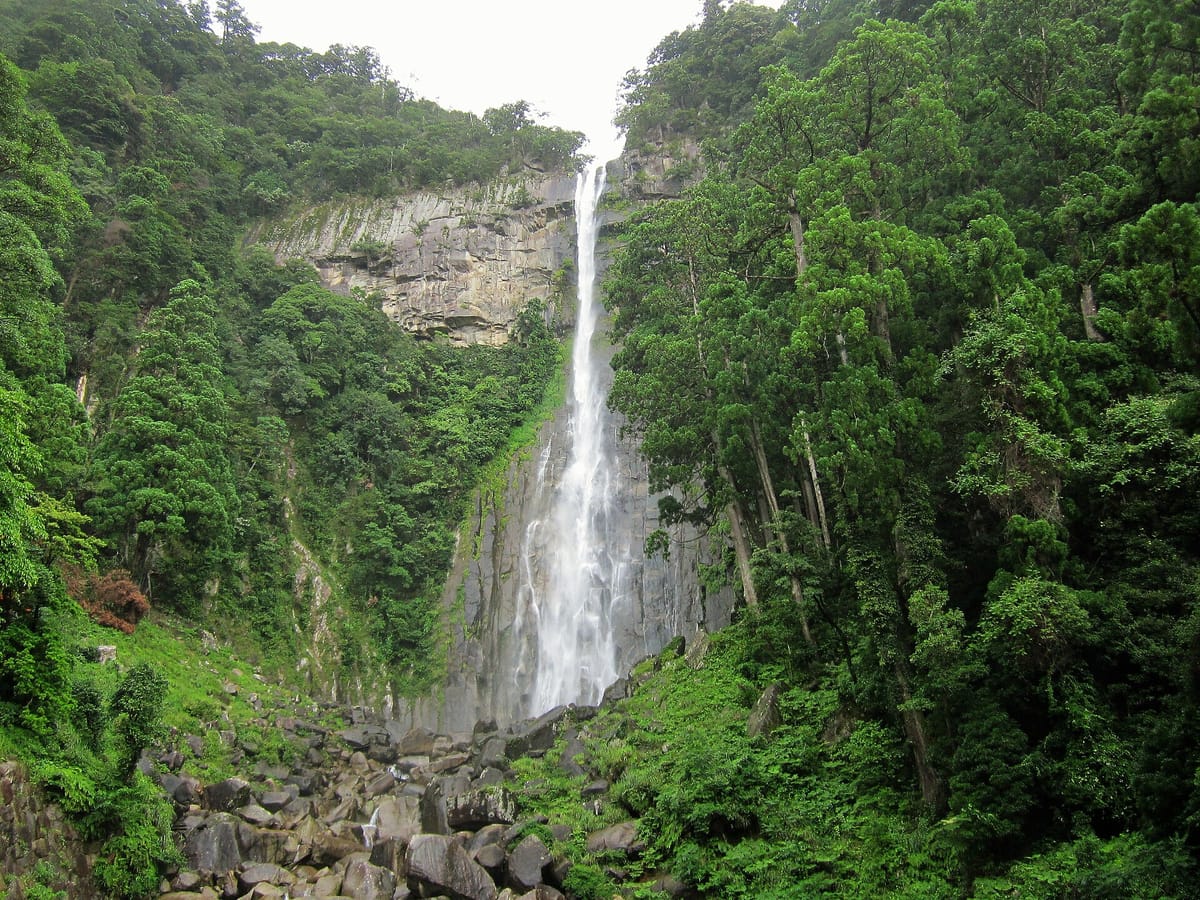
Worship here began with the waterfall. According to the shrine, Nachi no Ōtaki was revered as a deity long before any halls were built, and the shrine's buildings were later raised on the mountainside above it. The falls are 133 metres high and 13 metres wide at the top, the greatest single drop in Japan, fed by streams from the primeval forest behind. Right next to the shrine stands Seiganto-ji, a temple of the Tendai school and the first of the thirty-three temples of the Saigoku Kannon pilgrimage, a reminder that shrine and temple here were once one religious complex.
For a Japanese learner, Nachi is full of words you will meet at every shrine and temple in Japan, and a few special ones you will only meet here: the old kanji 瀧 for waterfall, the three-legged crow Yatagarasu, and a shrine with no hall at all.
Getting there: Kii-Katsuura Station and the bus to Nachi-san
The nearest station is Kii-Katsuura on the JR Kisei Line. From Shin-Osaka or Tennōji, the Kuroshio limited express takes about four hours along the coast; from Nagoya the Nanki limited express runs to Kii-Katsuura in a similar time. Many visitors combine Nachi with Shirahama, Hongū or the Kumano Kodō rather than coming just for the day.
From the bus stop in front of Kii-Katsuura Station, marked 勝浦駅, Katsuura-eki, local buses run up Mount Nachi to the terminus at Nachi-san in about 30 minutes. The classic approach is to get off at Daimon-zaka and walk the old stone steps up to the shrine; you can also ride to Nachi no Taki-mae for the waterfall or Nachi-san for the shrine and temple. Buses are not frequent, so check the return times when you arrive.
| Japanese | Romaji | Meaning |
|---|---|---|
| 紀伊勝浦までの特急券をお願いします。 | Kii-Katsuura made no tokkyūken o onegai shimasu. | A limited express ticket to Kii-Katsuura, please. |
| 那智山行きのバス乗り場はどこですか。 | Nachisan-yuki no basu noriba wa doko desu ka. | Where is the stop for the bus to Nachi-san? |
| 大門坂で降りたいです。 | Daimon-zaka de oritai desu. | I'd like to get off at Daimon-zaka. |
| 滝に行くには、どこで降りればいいですか。 | Taki ni iku ni wa, doko de orireba ii desu ka. | Where should I get off for the waterfall? |
| 駅に戻るバスは何時ですか。 | Eki ni modoru basu wa nanji desu ka. | What time is the bus back to the station? |
Daimon-zaka, the shrine, the pagoda and the falls
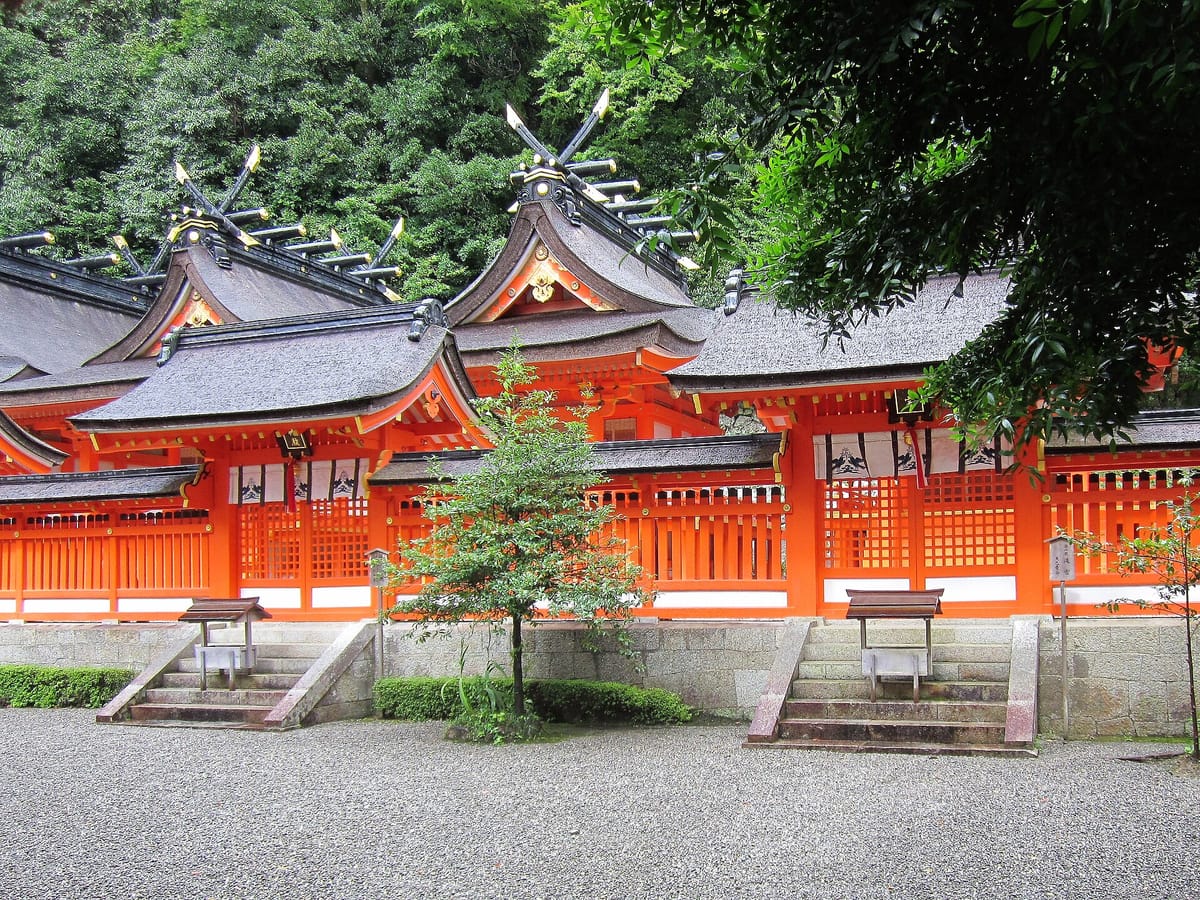
Daimon-zaka is a stone-paved section of the Kumano Kodō about 600 metres long, climbing under huge old cedars from the road to the shrine gate. It is steep but short, and it is the most atmospheric way to arrive. At the top, more steps lead to Kumano Nachi Taisha, a row of vermilion halls looking out over the valley. In the grounds you will see a statue of the Yatagarasu, the three-legged crow that guided the legendary first emperor and is the messenger of the Kumano deities, and the Karasu-ishi, a stone where the crow is said to have rested.
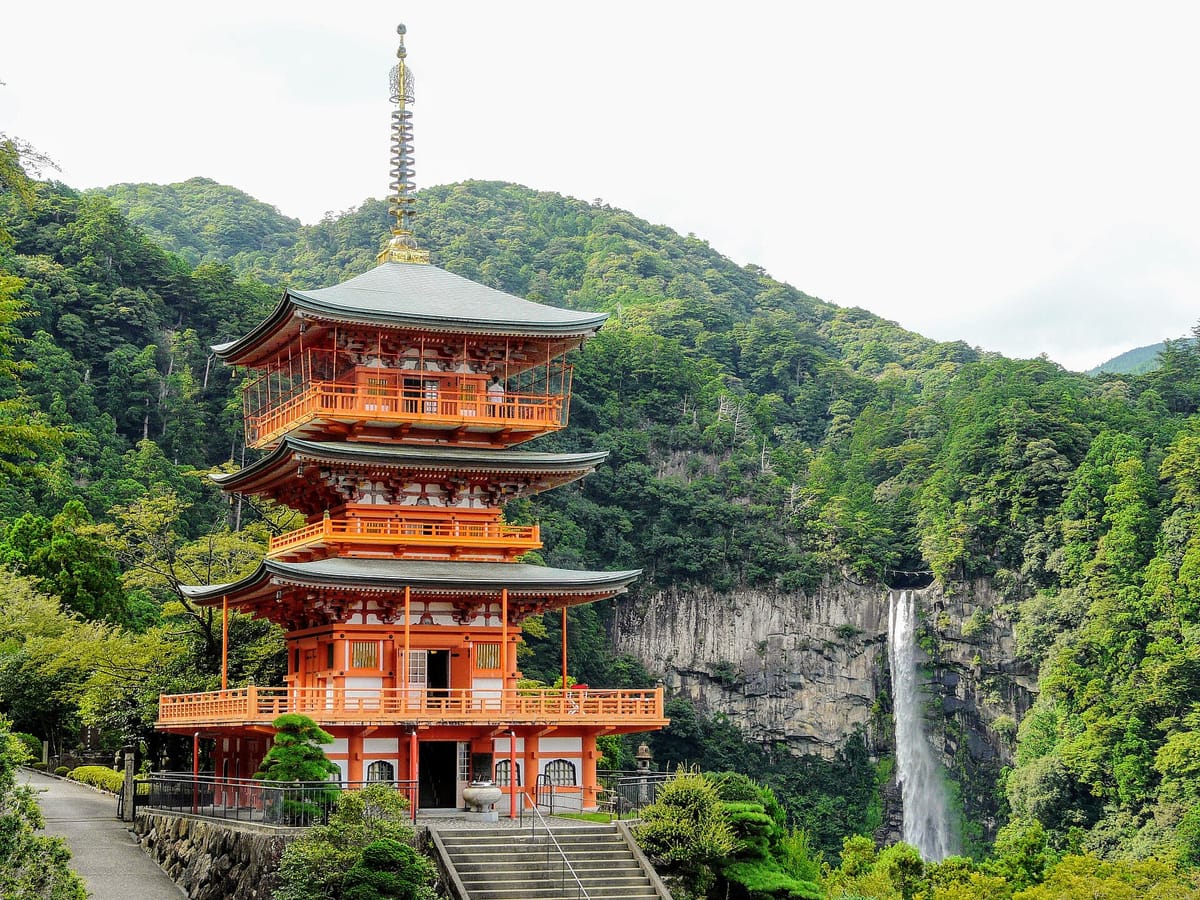
Also in the shrine grounds is a great camphor tree, estimated by the shrine to be around 850 years old, with a hollow trunk you can walk through. This tainai-kuguri, passing through the womb, is done while carrying a goma prayer stick or an ema, bought at the counter. Next door, Seiganto-ji's main hall faces the same slope, and a short walk below it brings you to the three-storey pagoda and the viewpoint that appears on every poster of Nachi.
From the pagoda, a path and steps lead down through the forest to Hirō Jinja at the foot of the falls. The torii and the open ground in front of the waterfall are free. For a small fee, the Otaki haisho, the waterfall worship platform, lets you walk right up to face the falls; on the way, water from the plunge pool flows from a dragon's mouth, and you can drink this water, said to bring long life. The bus stop Nachi no Taki-mae is at the bottom of the steps.
- Daimon-zaka: the cedar-lined stone steps of the old pilgrimage road.
- Kumano Nachi Taisha: the grand shrine, with the Yatagarasu statue and a valley view.
- Great camphor tree: walk through its hollow trunk with a prayer stick.
- Seiganto-ji: the temple next to the shrine, first stop of the Saigoku pilgrimage.
- Three-storey pagoda: the famous view of the pagoda and the waterfall.
- Hirō Jinja: the shrine of the waterfall, which has no main hall.
- Otaki haisho: the platform directly in front of the falls, with the water of long life.
Words on the signs at Nachi-san
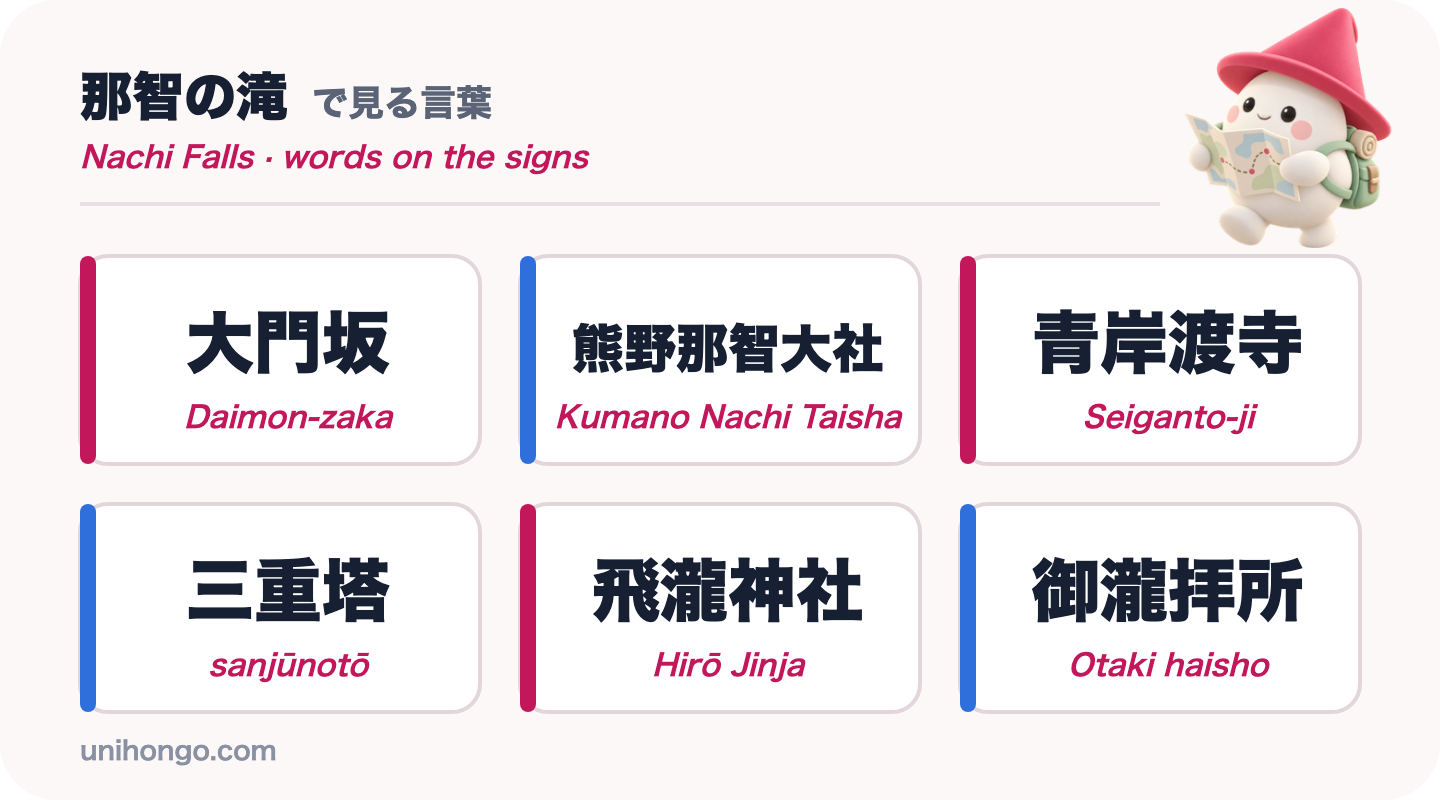
Signs on the mountain use the old, formal kanji 瀧 for waterfall instead of the everyday 滝, so you will see both. They are the same word, taki; 御瀧, otaki, adds the honorific o that marks it as sacred.
The words below cover the signposts, the bus stop names and the counters you will pass on the loop.
| Word | Reading | Meaning |
|---|---|---|
| 大門坂 | Daimon-zaka | The stone-paved slope of the old pilgrimage road |
| 熊野那智大社 | Kumano Nachi Taisha | The grand shrine of Nachi |
| 青岸渡寺 | Seiganto-ji | The Buddhist temple next to the shrine |
| 三重塔 | sanjūnotō | Three-storey pagoda |
| 飛瀧神社 | Hirō Jinja | Shrine at the foot of the waterfall |
| 御瀧拝所 | Otaki haisho | Worship platform in front of the falls |
| 那智の滝 | Nachi no Taki | Nachi Falls |
| 延命長寿の水 | enmei chōju no mizu | Water of long life |
| 胎内くぐり | tainai-kuguri | Passing through the hollow tree trunk |
| 八咫烏 | Yatagarasu | The three-legged crow of Kumano |
Japanese at the charm counter, the platform and the camphor tree
The key moments of the visit all happen at small counters: the shrine office where charms and goshuin are given out, the reception for the camphor tree, and the entrance to the waterfall platform. Staff are used to visitors and will help if you point, but a polite sentence makes each exchange smoother. Kumano charms often carry the Yatagarasu, the crow that guides people the right way, which makes them a popular gift for anyone starting something new.
At the waterfall platform you pay the small fee at the entrance, and on the way to the front of the falls you pass the dragon's mouth where the water flows. Near it you can also draw an omikuji whose message appears when you dip it in the waterfall's water.
| Japanese | Romaji | Meaning |
|---|---|---|
| 八咫烏のお守りはありますか。 | Yatagarasu no o-mamori wa arimasu ka. | Do you have a Yatagarasu charm? |
| 御朱印をお願いできますか。 | Goshuin o onegai dekimasu ka. | Could I ask for a goshuin? |
| 胎内くぐりをしたいんですが。 | Tainai-kuguri o shitai n desu ga. | I'd like to walk through the tree. |
| 護摩木に願い事を書くんですか。 | Gomagi ni negaigoto o kaku n desu ka. | Do I write my wish on the prayer stick? |
| 三重塔には上がれますか。 | Sanjūnotō ni wa agaremasu ka. | Can I go up inside the pagoda? |
| 水みくじはどこですか。 | Mizu mikuji wa doko desu ka. | Where is the water fortune? |
| 写真を撮ってもいいですか。 | Shashin o totte mo ii desu ka. | May I take a photo? |
Etiquette, timing and practical tips
Nachi-san is a steep mountain site with a lot of stone steps and a working shrine and temple, so a little planning goes a long way.
- Wear shoes with grip. Daimon-zaka and the steps down to the falls are uneven and slippery after rain.
- Walk up Daimon-zaka and down to the falls, and catch the bus back from Nachi no Taki-mae, to avoid climbing all the steps twice.
- At the shrine, bow at the torii, rinse your hands at the temizuya, then bow twice, clap twice, pray and bow once.
- At Seiganto-ji, do not clap: bow with your hands together instead.
- Arrive early for quieter paths and softer light on the pagoda view; midday and holidays bring tour buses.
- On 14 July the Nachi Fire Festival fills the mountain; expect crowds, road controls and closed viewing spots.
- The area is very wet; after heavy rain the falls are at their most powerful, but paths can close. Check notices on the day.
Practise the visit before you go
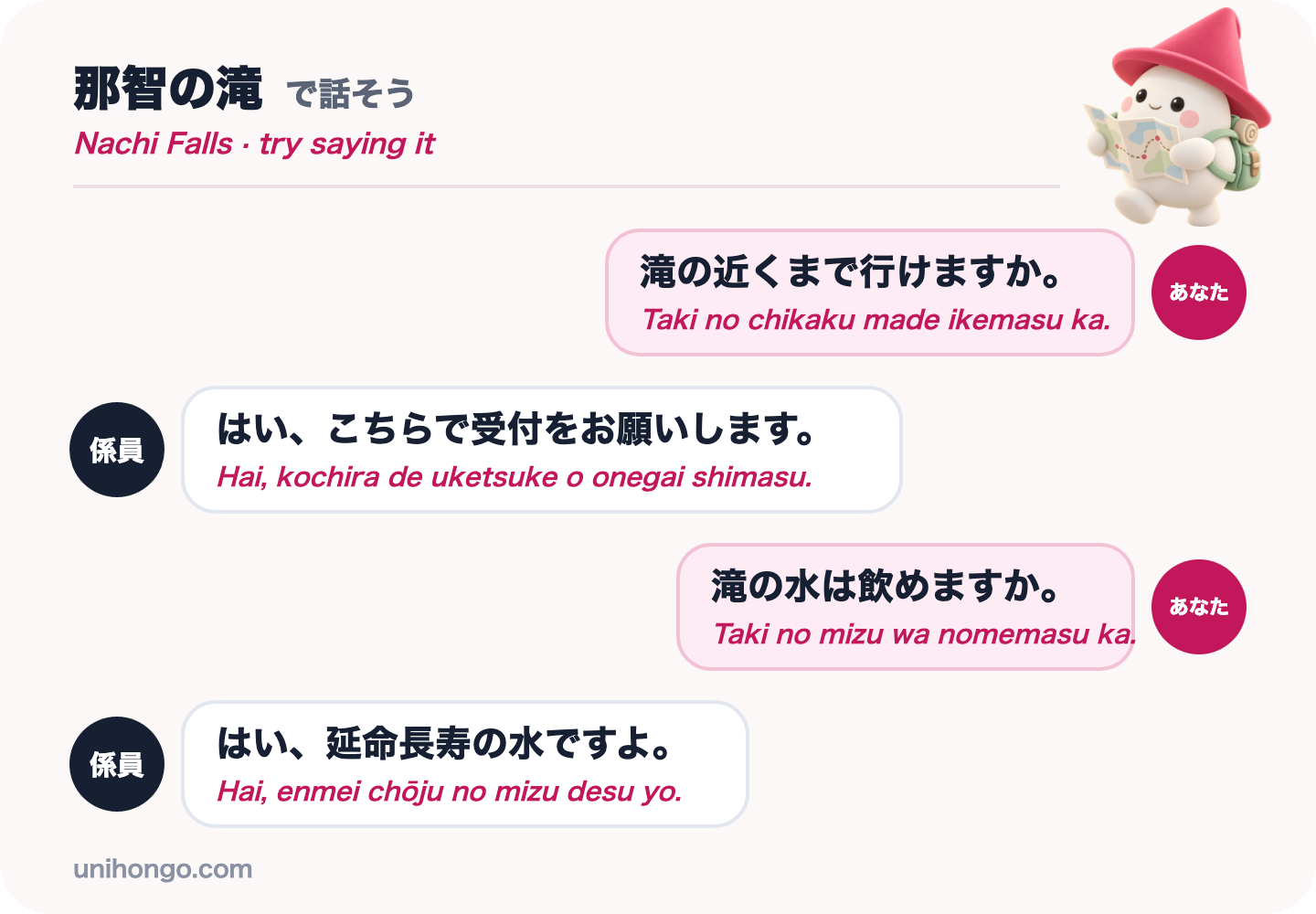
The one exchange nearly every visitor has is at the entrance to the waterfall platform. The phrase ikemasu ka, can I go, and nomemasu ka, can I drink, are both potential forms, the most useful grammar for any sightseeing question. Practise the four lines below until they come without reading, and listen for uketsuke, reception, in the reply.
Then practise with a partner who answers back. In Unihongo, choose the Shrine Visit topic and ask your AI Sensei to play an attendant at Kumano Nachi Taisha, or choose Sightseeing to rehearse the bus ride and asking the way down to the falls. Saying the lines once before the trip is what makes them easy on the day.
| Japanese | Romaji | Meaning |
|---|---|---|
| 滝の近くまで行けますか。 | Taki no chikaku made ikemasu ka. | Can I go close to the falls? |
| はい、こちらで受付をお願いします。 | Hai, kochira de uketsuke o onegai shimasu. | Yes, please register here. |
| 滝の水は飲めますか。 | Taki no mizu wa nomemasu ka. | Can I drink the waterfall's water? |
| はい、延命長寿の水ですよ。 | Hai, enmei chōju no mizu desu yo. | Yes, it's the water of long life. |
Official information
Kumano Nachi Taisha publishes its access information, festival dates and details of the waterfall platform, and Seiganto-ji its opening times and any hall closures. Check both before you go, especially around the July fire festival and after heavy rain.