

Why the Kurobe torokko is worth the trip
The Kurobe River cuts one of the deepest V-shaped gorges in Japan through the Northern Alps of Toyama Prefecture, and for most of its length there is no road. The railway was built to change that: the first section, from Unazuki to Nekomata, opened in 1926 to serve the hydroelectric power stations of what is now Kansai Electric Power, and the line reached Keyakidaira in 1937. It began carrying ordinary passengers in 1953, and it is still owned by the power company today.
The track is only 762 millimetres wide, the trains are small and slow, and most of the carriages have no windows at all. That is the point. You sit on a bench with the cold air of the tunnels and the sound of the river coming straight in, crossing red bridges high above water that is a startling shade of green, passing dams and power stations built into the cliffs. The ride from Unazuki to Keyakidaira is about twenty kilometres and takes around eighty minutes each way.
For a learner, the railway is a compact lesson in travel Japanese: a ticket window, a reservation, a car number, a platform, a handful of station names in kanji and a recorded commentary on board. Everything happens at a gentle pace, and you will use the same words again on every train in Japan.
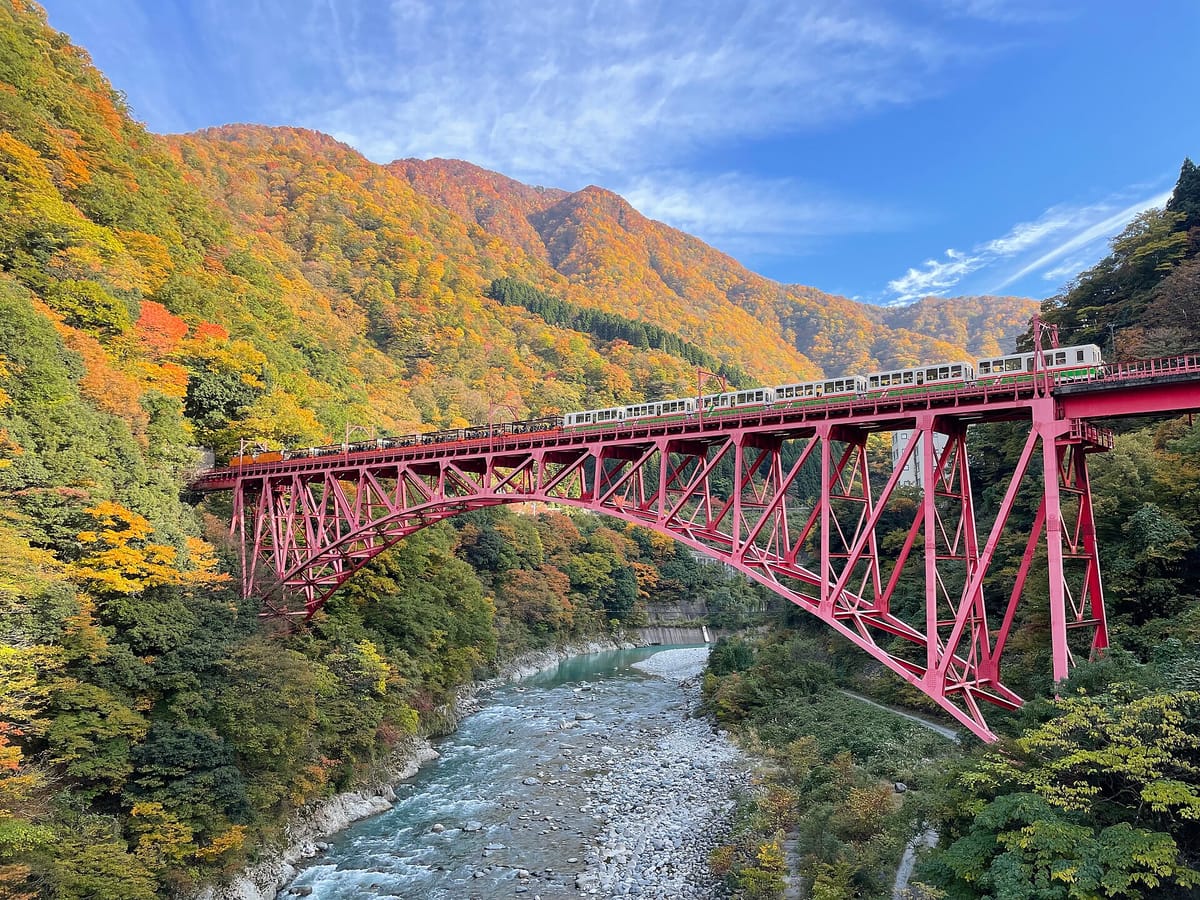
The 2026 season: full line to Keyakidaira from 1 October
The earthquake that struck the Noto Peninsula on 1 January 2024 caused rockfalls and damage in the gorge, including around Kanetsuri, and the line beyond Nekomata could not be used. For the 2024 and 2025 seasons trains ran only between Unazuki and Nekomata and turned back there. The 2026 season began on 20 April on the same shortened route, running to Nekomata until 30 September.
From the first train on 1 October 2026, the railway runs the full line again between Unazuki and Keyakidaira, for the first time in three seasons, and the season is scheduled to end on 30 November. The stations in use are Unazuki, Kuronagi, Kanetsuri and Keyakidaira; Nekomata, which served as the turning point, is no longer a stop. At Keyakidaira, restricted zones remain while restoration continues, so for now you can visit the station building, its rooftop viewpoint and the visitor centre, but not the walking trails. Conditions can change, so check the official notices shortly before you travel.
| Japanese | Romaji | Meaning |
|---|---|---|
| 今日は欅平まで運行していますか。 | Kyō wa Keyakidaira made unkō shite imasu ka. | Are trains running to Keyakidaira today? |
| 猫又駅では降りられないんですよね。 | Nekomata-eki de wa orirarenai n desu yo ne. | You can't get off at Nekomata, right? |
| 欅平で散策路は歩けますか。 | Keyakidaira de sansakuro wa arukemasu ka. | Can I walk the trails at Keyakidaira? |
| ビジターセンターは開いていますか。 | Bijitā sentā wa aite imasu ka. | Is the visitor centre open? |
Getting there: Kurobe-Unazukionsen and Unazuki Onsen
From Tokyo or Kanazawa, take the Hokuriku Shinkansen to Kurobe-Unazukionsen Station, 黒部宇奈月温泉駅, about two and a half hours from Tokyo. Right next to it is Shin-Kurobe Station, 新黒部駅, on the Toyama Chihō Railway, where local trains run up the valley to Unazuki Onsen Station, 宇奈月温泉駅, in about twenty-five minutes. Toyama Chihō Railway trains also run from Dentetsu-Toyama, beside JR Toyama Station, which is a longer ride.
The torokko starts from the railway's own Unazuki Station, 宇奈月駅, a few minutes' walk from Unazuki Onsen Station through the hot spring town. Unazuki is worth a night in its own right: a small onsen resort whose hot water is piped down from springs further up the gorge, with foot baths and ryokan along the river. Staying there lets you take an early train, when seats are easier to find and the light in the gorge is soft.
| Japanese | Romaji | Meaning |
|---|---|---|
| 新黒部駅はどこですか。 | Shin-Kurobe-eki wa doko desu ka. | Where is Shin-Kurobe Station? |
| 宇奈月温泉行きの電車は何番線ですか。 | Unazuki Onsen-yuki no densha wa nanbansen desu ka. | Which platform is the train to Unazuki Onsen? |
| トロッコ電車の宇奈月駅はどちらですか。 | Torokko densha no Unazuki-eki wa dochira desu ka. | Which way is Unazuki Station for the torokko train? |
| ここから歩いて何分くらいですか。 | Koko kara aruite nanpun kurai desu ka. | About how many minutes on foot from here? |
| 荷物を預けられる場所はありますか。 | Nimotsu o azukerareru basho wa arimasu ka. | Is there somewhere I can leave my luggage? |
What you will see from the train
The best views come early. Minutes after leaving Unazuki the train crosses the red Shin-Yamabiko Bridge, the symbol of the line, and runs along the lake behind Unazuki Dam. From then on the gorge narrows, the cliffs rise and the train dives in and out of tunnels, passing power stations and small dams. Heading up the gorge, the right-hand side generally has the better view.
At the far end, Keyakidaira sits deep in the mountains beside the river. Before the earthquake, most visitors walked from here to the Okukane bridge, the Sarutobi gorge where the river squeezes through a narrow slot, and the Hitokui-iwa, a rock overhang above the path. For now those trails are closed, and the visit at Keyakidaira is a view from the station building and its rooftop, and the exhibits in the visitor centre, before the ride back.
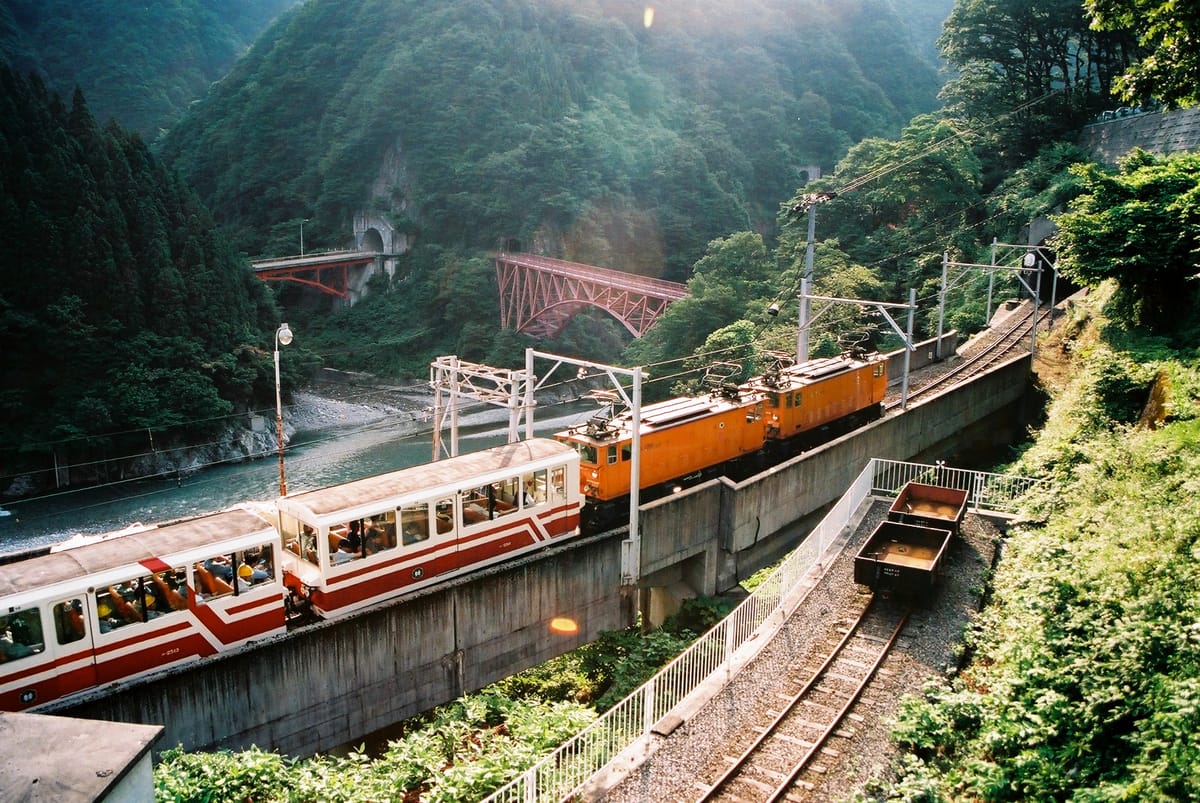
- Unazuki: the starting station, in the hot spring town at the mouth of the gorge.
- Shin-Yamabiko Bridge: the red arch bridge just after departure, the classic photo of the line.
- Unazuki Dam: the first dam and its lake, seen from the train soon after the bridge.
- Kuronagi: the first intermediate station, surrounded by steep forest.
- Kanetsuri: a station deep in the gorge, back in use from October 2026.
- Keyakidaira: the terminus, with a station rooftop viewpoint and a visitor centre.
Words on the signs at Kurotetsu
The station names on this line are hard even for Japanese readers. 欅, keyaki, is the zelkova tree, a kanji with many strokes, and 平 means a flat place, so Keyakidaira is the zelkova flat. 鐘釣, Kanetsuri, is written with the kanji for bell and fishing, and 黒薙, Kuronagi, with black and mow. Learn them as shapes and you will recognise them on the departure board and the ticket.
The ticket is a jōshaken, and the car types are shown with short labels. 普通客車, futsū kyakusha, are the ordinary open cars; リラックス客車, rirakkusu kyakusha, are the enclosed cars with windows and forward-facing seats, for a small supplement. At Keyakidaira this season, watch for 立入禁止, no entry, on the areas still closed.
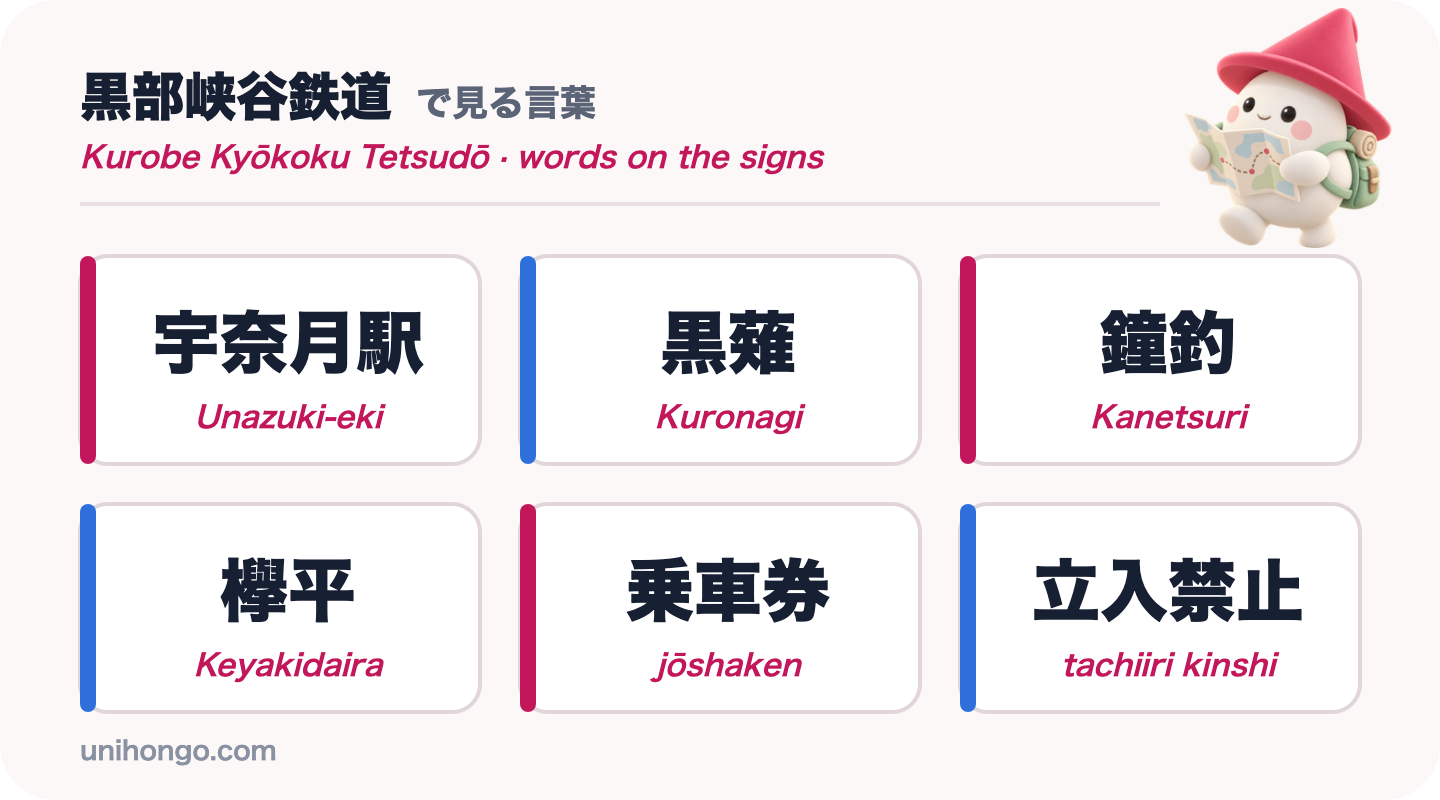
| Word | Reading | Meaning |
|---|---|---|
| 宇奈月駅 | Unazuki-eki | The starting station of the torokko |
| 黒薙 | Kuronagi | First intermediate station |
| 鐘釣 | Kanetsuri | Station deep in the gorge |
| 欅平 | Keyakidaira | The terminus |
| 猫又 | Nekomata | Former turning point; no stop from October 2026 |
| 乗車券 | jōshaken | Ticket |
| 往復 | ōfuku | Return, there and back |
| 普通客車 | futsū kyakusha | Ordinary open carriage |
| リラックス客車 | rirakkusu kyakusha | Enclosed carriage with windows |
| 立入禁止 | tachiiri kinshi | No entry |
Japanese at the ticket window and on the platform
Tickets are sold by train and car: when you reserve or buy, you get a departure time and a car number, and inside the car seats are first come, first served, one person per seat. Because the railway limits the number of passengers, it is wise to reserve ahead, especially in late October and November when the autumn colours peak. Reservations open three months ahead and close in the afternoon the day before; check the official site for how to book the Keyakidaira section this season.
At the window you will be asked where you are going, one way or return, and which kind of car. The phrases below cover the whole exchange.
| Japanese | Romaji | Meaning |
|---|---|---|
| 欅平まで往復二枚お願いします。 | Keyakidaira made ōfuku nimai onegai shimasu. | Two return tickets to Keyakidaira, please. |
| 予約してあります。名前はスミスです。 | Yoyaku shite arimasu. Namae wa Sumisu desu. | I have a reservation. The name is Smith. |
| リラックス客車に変更できますか。 | Rirakkusu kyakusha ni henkō dekimasu ka. | Can I change to an enclosed carriage? |
| 何号車に乗ればいいですか。 | Nangōsha ni noreba ii desu ka. | Which car number should I board? |
| 帰りの電車は何時ですか。 | Kaeri no densha wa nanji desu ka. | What time is the train back? |
| 上着は持っていったほうがいいですか。 | Uwagi wa motte itta hō ga ii desu ka. | Should I take a jacket? |
Tips for riding the torokko
The open cars are the classic experience, and they are also the coldest. Even on a warm day in the valley, the tunnels are chilly and damp, and in October and November the air in the upper gorge is cold.
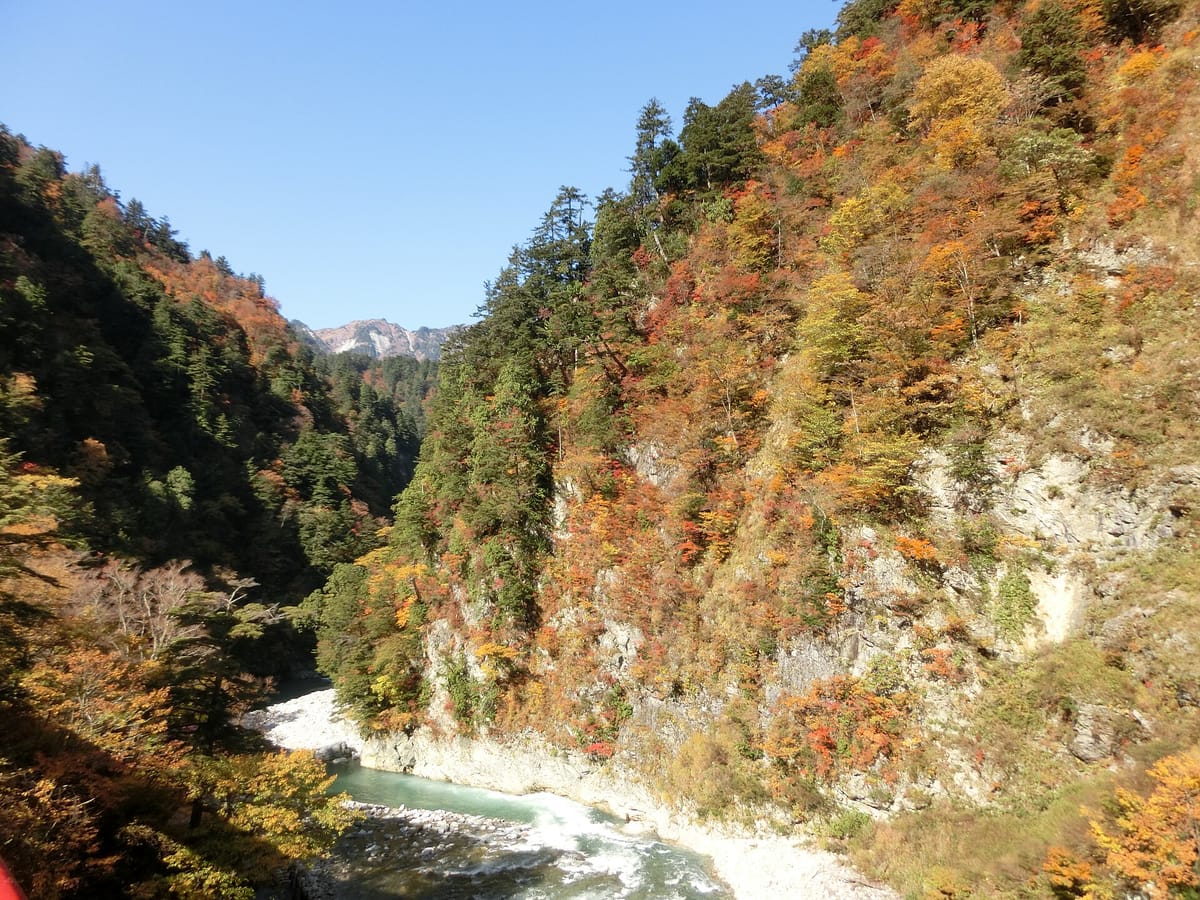
- Bring a warm layer and a rain jacket; the open cars have a roof but no sides.
- Keep your hands, head and camera inside the car, especially in the tunnels, and hold on to hats and phones.
- Arrive at Unazuki Station early to find your platform and car; trains leave on time.
- Late October to mid-November is the peak of the autumn colours and the busiest time; reserve well ahead.
- Plan your time at Keyakidaira around the return train, as there is little to do beyond the station and visitor centre for now.
- Stay a night in Unazuki Onsen to ride an early train and finish the day in a hot spring.
Practise the ride before you go
With the line newly reopened, the first question most visitors have is how far the train goes today, and the second is where to sit. Practise the four lines below until you can say them without reading, and listen for two words in the replies: zensen, the whole line, and migigawa, the right-hand side.
Then practise with someone who answers back. In Unihongo, choose the Train Tickets topic and ask your AI Sensei to play the staff at Unazuki Station, or the Hotel topic to rehearse checking in at Unazuki Onsen the night before. Saying the lines once before you arrive is what makes them easy at the window.
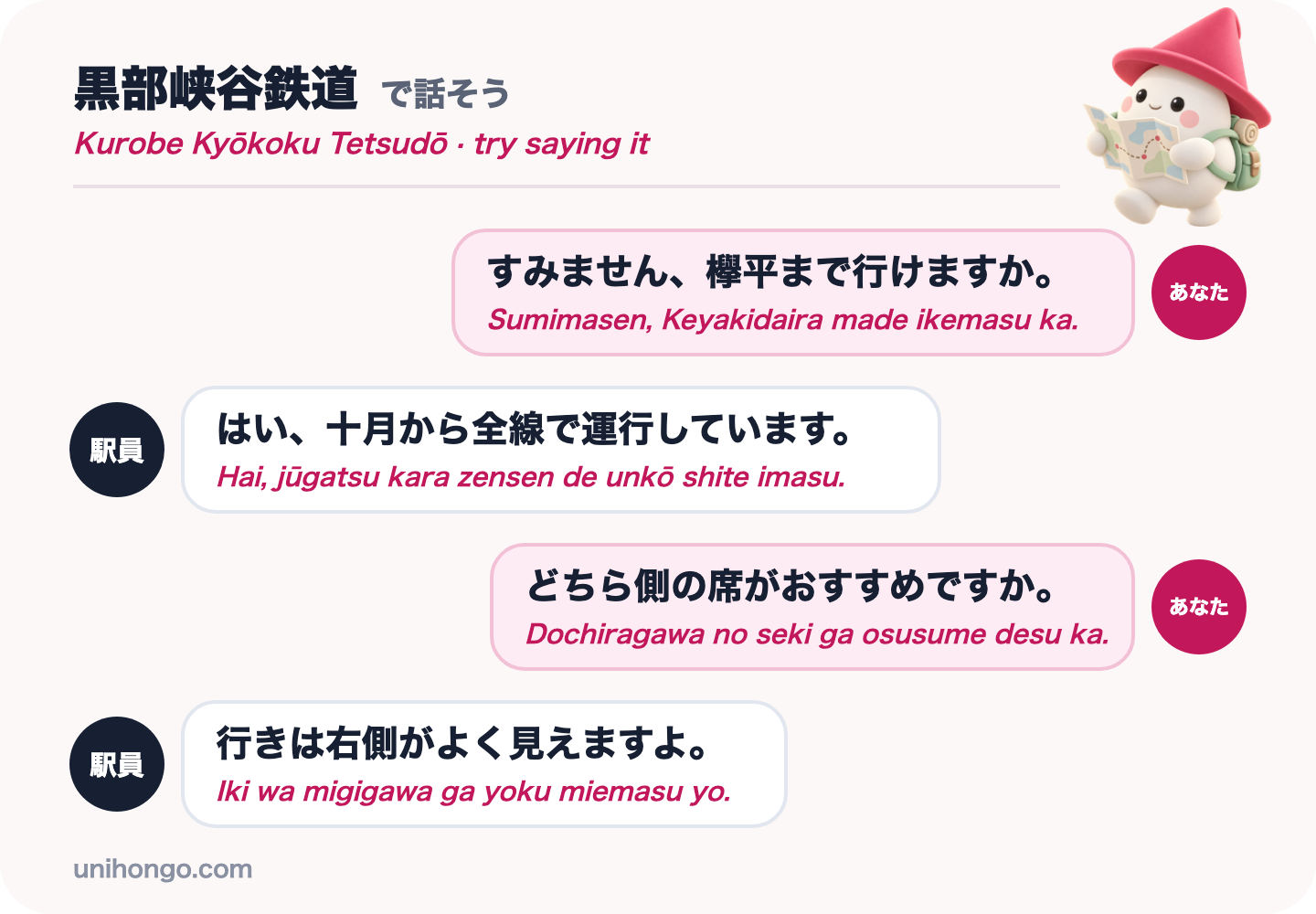
| Japanese | Romaji | Meaning |
|---|---|---|
| すみません、欅平まで行けますか。 | Sumimasen, Keyakidaira made ikemasu ka. | Excuse me, can I go as far as Keyakidaira? |
| はい、十月から全線で運行しています。 | Hai, jūgatsu kara zensen de unkō shite imasu. | Yes, the whole line has been running since October. |
| どちら側の席がおすすめですか。 | Dochiragawa no seki ga osusume desu ka. | Which side would you recommend sitting on? |
| 行きは右側がよく見えますよ。 | Iki wa migigawa ga yoku miemasu yo. | On the way up, you can see well from the right. |
Official information
The railway publishes its operating section, timetable, reservation rules and notices about Keyakidaira on its website, in English and in more detail in Japanese. The Kurobe Unazuki Canyon Route has its own site. Check both shortly before you travel, as the restoration work is still in progress.