

Why Awaji Island is worth crossing the bridge
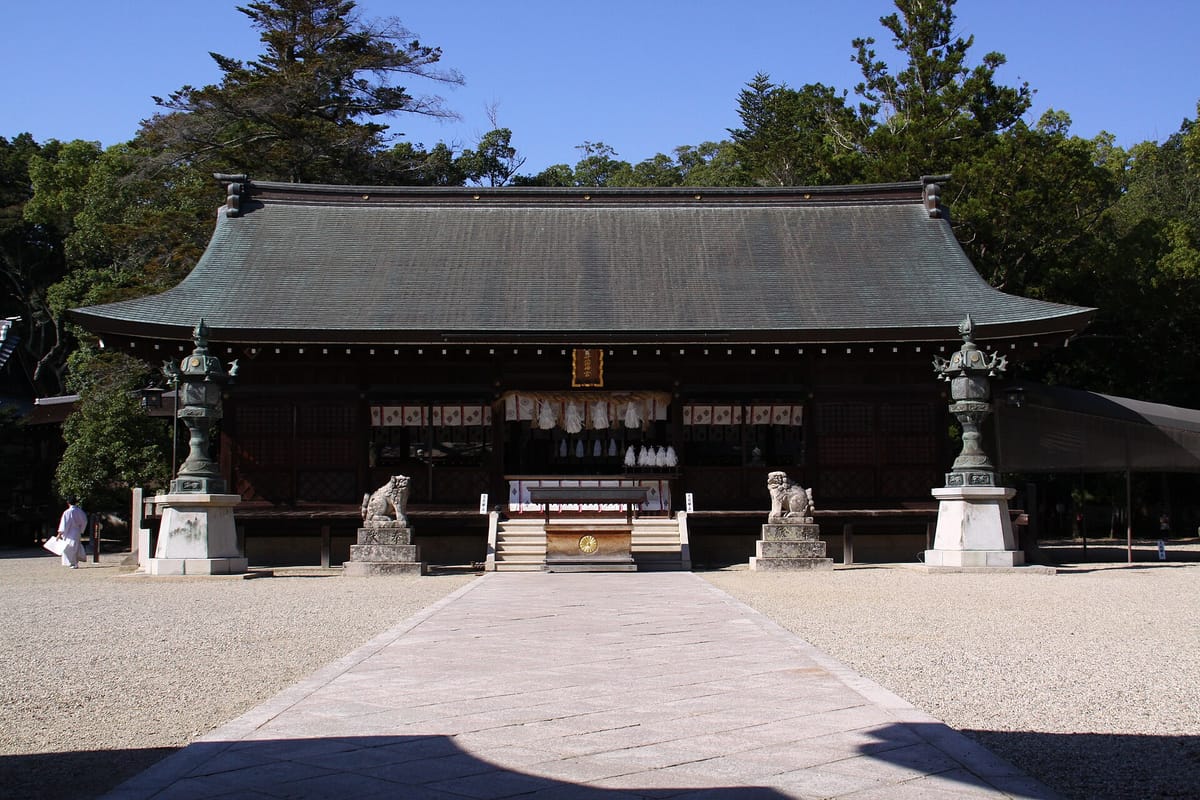
In Japan's creation myth, the gods Izanagi and Izanami stirred the sea with a jewelled spear, and the first land to form was Awaji. The island's tourism association calls it the first island formed for Japan, and Izanagi Jingū, in the middle of the island, is described as the oldest shrine in Japan, built where Izanagi is said to have spent his last days. Smaller sites linked to the myth, such as Onokoro-jima Shrine and the islets of Eshima and Nushima, are scattered around the coast.
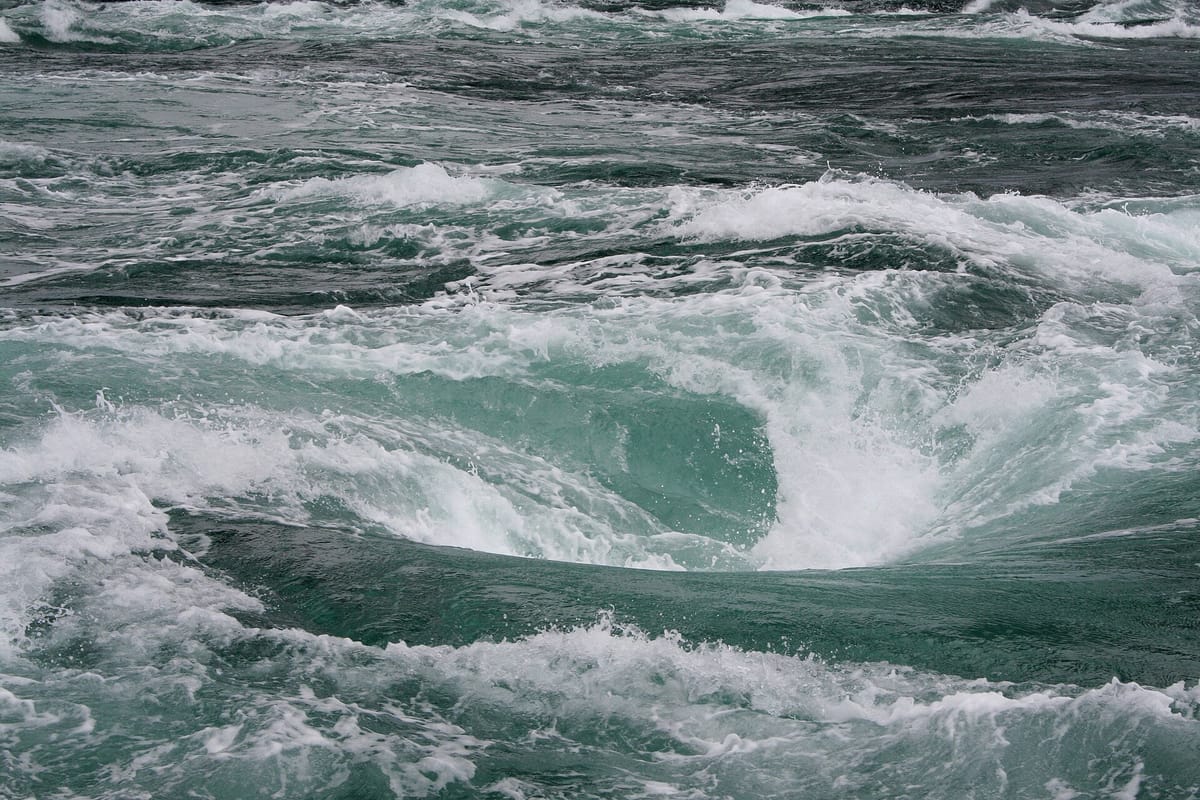
The island is also a working landscape of farms and fishing ports. Its food supplied the imperial court from ancient times, and today Awaji beef, sweet onions and seafood draw people from Kobe and Osaka for lunch. In the south, the Naruto Strait separates Awaji from Shikoku, and twice a day the tides rush through it so fast that whirlpools form, among the largest in the world.
For a Japanese learner, Awaji is a chance to use Japanese outside the big cities: on highway buses, at boat counters, in roadside stations selling local produce, and in restaurants where menus are written only in Japanese.
Getting there: highway buses, the Akashi ferry and getting around
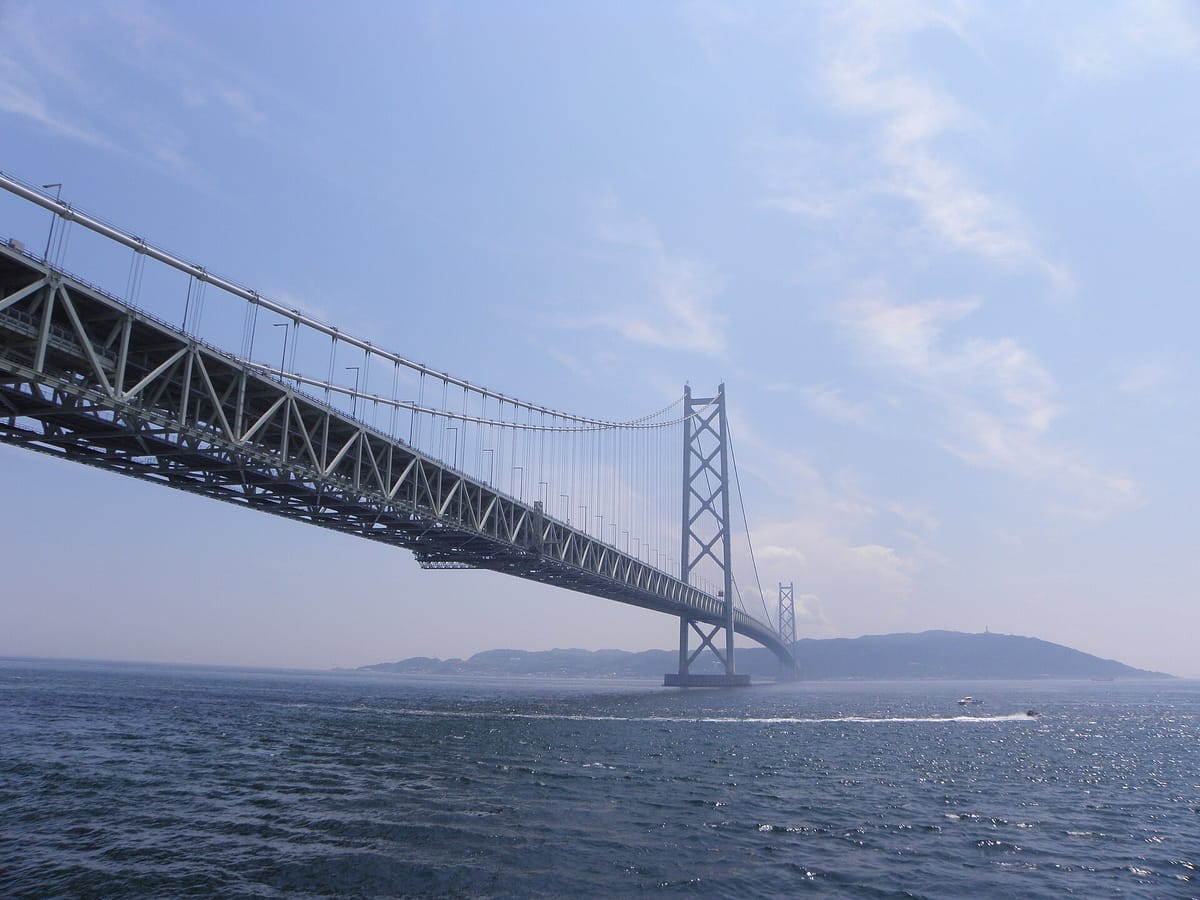
Awaji has no railway, so most visitors arrive by highway bus over the Akashi Kaikyō Bridge, which opened in 1998 and is one of the longest suspension bridges in the world. Buses leave from Sannomiya and Shin-Kobe in Kobe, from Osaka and from the Kansai airports, and run down the island to towns such as Sumoto and to Fukura in the south. According to the tourism association, Awaji is about thirty minutes from Kobe and within an hour of Osaka by road.
By sea, the Awaji Genova Line ferry crosses from Akashi to Iwaya at the northern tip in a few minutes, a pleasant way to see the bridge from below. Once on the island, local buses connect the main towns, but they are infrequent, so many visitors rent a car to combine the north, the centre and the south in one day.
| Japanese | Romaji | Meaning |
|---|---|---|
| 福良行きの高速バスはどこから出ますか。 | Fukura-yuki no kōsoku basu wa doko kara demasu ka. | Where does the highway bus to Fukura leave from? |
| このバスは予約が必要ですか。 | Kono basu wa yoyaku ga hitsuyō desu ka. | Do I need a reservation for this bus? |
| 岩屋行きのフェリーは何時ですか。 | Iwaya-yuki no ferī wa nanji desu ka. | What time is the ferry to Iwaya? |
| 帰りの最終バスは何時ですか。 | Kaeri no saishū basu wa nanji desu ka. | What time is the last bus back? |
| レンタカーを一日借りたいです。 | Rentakā o ichinichi karitai desu. | I'd like to rent a car for a day. |
The whirlpools, Izanagi Jingū and Awaji Yumebutai
The highlight for most visitors is the Naruto whirlpools. The Uzushio Cruise sails from Fukura port, beside a roadside station with shops and restaurants, and takes you out into the strait towards the Ōnaruto Bridge to watch the water spin. According to the tourism association, the current can reach about 20 kilometres an hour and the whirlpools can grow to about 30 metres across. Their size depends on the tide, so the cruise's timetable rates each sailing by how big the whirlpools are expected to be.
Fukura is also home to the Awaji Ningyō Jōruri, a traditional puppet theatre with a history of about five hundred years on the island; Osaka's famous bunraku puppet theatre has its roots here. In the middle of the island, Izanagi Jingū is a large, quiet shrine with a sacred camphor tree, honoured as the place where the creator god rested.
In the north, near the bridge, Awaji Yumebutai is a complex of gardens, terraces and buildings designed by the architect Tadao Ando on a hillside that had been cut away for earth in the 1960s, and replanted to bring nature back. Its terraced flower beds and concrete walkways look out over Osaka Bay. Around the island, flower parks, beaches, hot springs at Sumoto and roadside produce stalls fill the rest of a day.
- Uzushio Cruise: boats from Fukura port to the Naruto whirlpools.
- Awaji Ningyō Jōruri: traditional puppet theatre in Fukura.
- Izanagi Jingū: the shrine of the creator god, in the centre of the island.
- Onokoro-jima Shrine: a shrine with a huge red torii, linked to the creation myth.
- Awaji Yumebutai: Tadao Ando's gardens and terraces near the bridge.
- Akashi Kaikyō Bridge: the great suspension bridge to Kobe.
- Sumoto: the main town, with a castle hill and hot spring hotels.
Words on the signs on Awaji Island
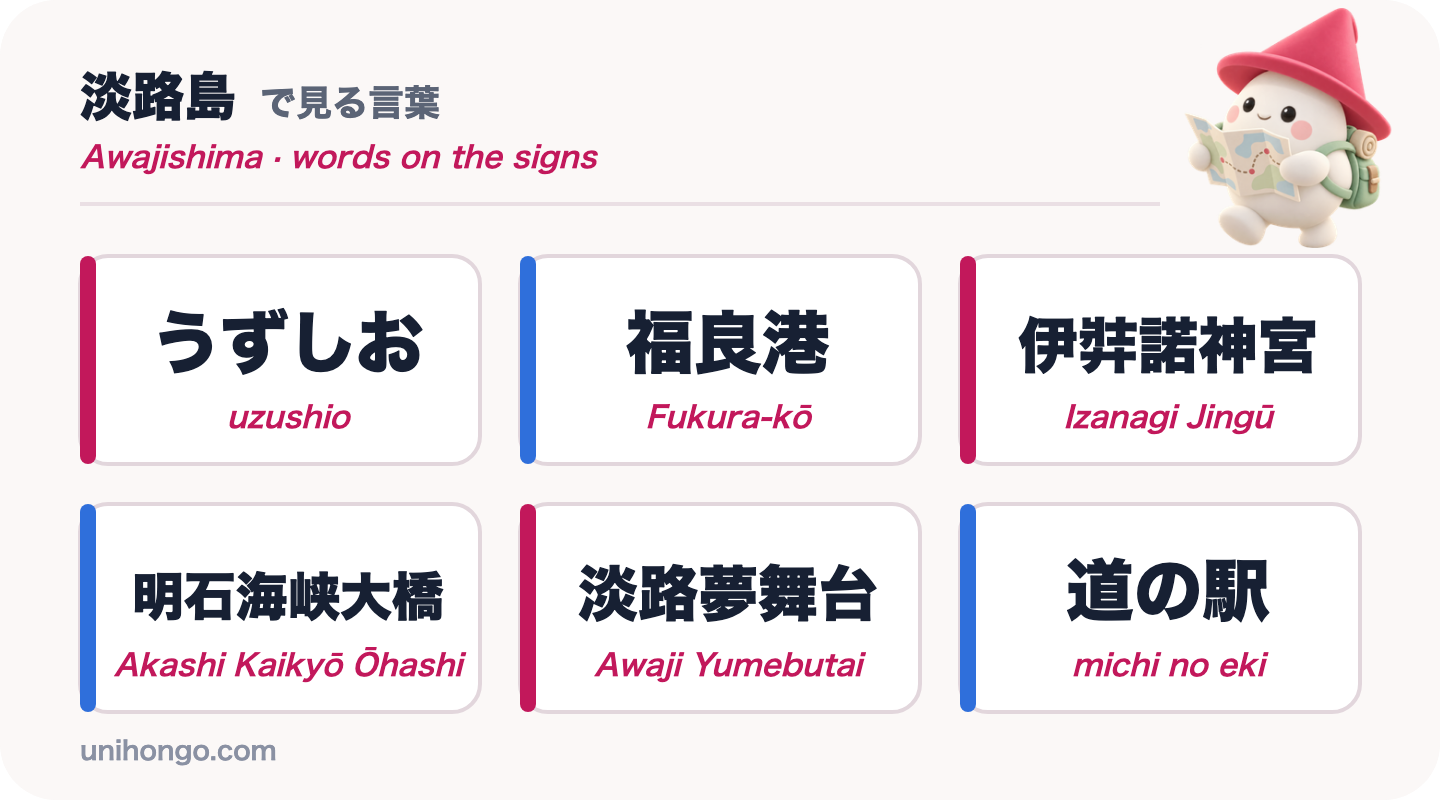
Road signs and bus fronts on Awaji show place names in kanji, and several are hard to guess. 伊弉諾 is Izanagi, written with rare characters you will meet almost nowhere else, and 洲本 is Sumoto, the main town.
If you drive, the most useful word is 道の駅, michi no eki, a roadside station with toilets, food and local produce. Fukura's cruise port is right next to one.
| Word | Reading | Meaning |
|---|---|---|
| 淡路島 | Awajishima | Awaji Island |
| うずしお | uzushio | Tidal whirlpools |
| 福良港 | Fukura-kō | Fukura port, where the whirlpool cruise leaves |
| 伊弉諾神宮 | Izanagi Jingū | Shrine of the creator god Izanagi |
| 明石海峡大橋 | Akashi Kaikyō Ōhashi | Akashi Kaikyō Bridge |
| 淡路夢舞台 | Awaji Yumebutai | Tadao Ando's gardens and terraces |
| 道の駅 | michi no eki | Roadside station with food and shops |
| 洲本 | Sumoto | The island's main town |
| 出航 | shukkō | Departure of a boat |
| 欠航 | kekkō | Sailing cancelled |
Japanese for the whirlpool cruise and island food
At the Uzushio Cruise counter in Fukura you buy or collect tickets for a particular sailing, bin. Staff can tell you which sailing is expected to have the best whirlpools that day, and when to come back to board. Outside on the open deck it is windy, so keep hats and phones secure.
For lunch, the roadside station and restaurants around the island serve Awaji beef bowls, seafood rice bowls and dishes built around the island's onions. Menus may be in Japanese only, so a few ordering phrases help.
| Japanese | Romaji | Meaning |
|---|---|---|
| 今日はうずしおが見えますか。 | Kyō wa uzushio ga miemasu ka. | Can we see the whirlpools today? |
| 一番おすすめの便はどれですか。 | Ichiban osusume no bin wa dore desu ka. | Which sailing do you recommend most? |
| 予約の確認をお願いします。 | Yoyaku no kakunin o onegai shimasu. | I'd like to check in for my booking. |
| 何分くらいのクルーズですか。 | Nanpun kurai no kurūzu desu ka. | About how long is the cruise? |
| 淡路牛の丼を一つお願いします。 | Awaji-gyū no donburi o hitotsu onegai shimasu. | One Awaji beef bowl, please. |
| 玉ねぎのお土産はどれが人気ですか。 | Tamanegi no omiyage wa dore ga ninki desu ka. | Which onion souvenir is popular? |
Etiquette, timing and practical tips
Awaji is rural and spread out, so planning matters more than on the mainland.
- Check the cruise's tide forecast before choosing your day and sailing; small-whirlpool days can be disappointing.
- Arrive at Fukura about thirty minutes before your sailing, and check for weather cancellations.
- Buses are infrequent; note the return times as soon as you arrive anywhere.
- If you drive, remember that Japan drives on the left and you need an International Driving Permit valid in Japan.
- At Izanagi Jingū, bow at the torii, purify your hands, and pray with two bows, two claps and one bow.
- Spring and autumn are pleasant for sightseeing and the flower parks; summer weekends bring heavy traffic over the bridge.
Practise the cruise Japanese before you go
The exchange you will have in Fukura is at the cruise counter. You ask whether the whirlpools will be visible, the attendant recommends a sailing, you book it, and you are told when to come back. Practise the four lines below until they come without reading, and listen for the time and mae, before, in the last line.
Then practise with a partner who answers back. In Unihongo, choose the Sightseeing topic and ask your AI Sensei to play the cruise ticket seller, or the Car Rental topic to rehearse picking up a car for the island. Saying the lines once before the trip makes them come out easily at the counter.
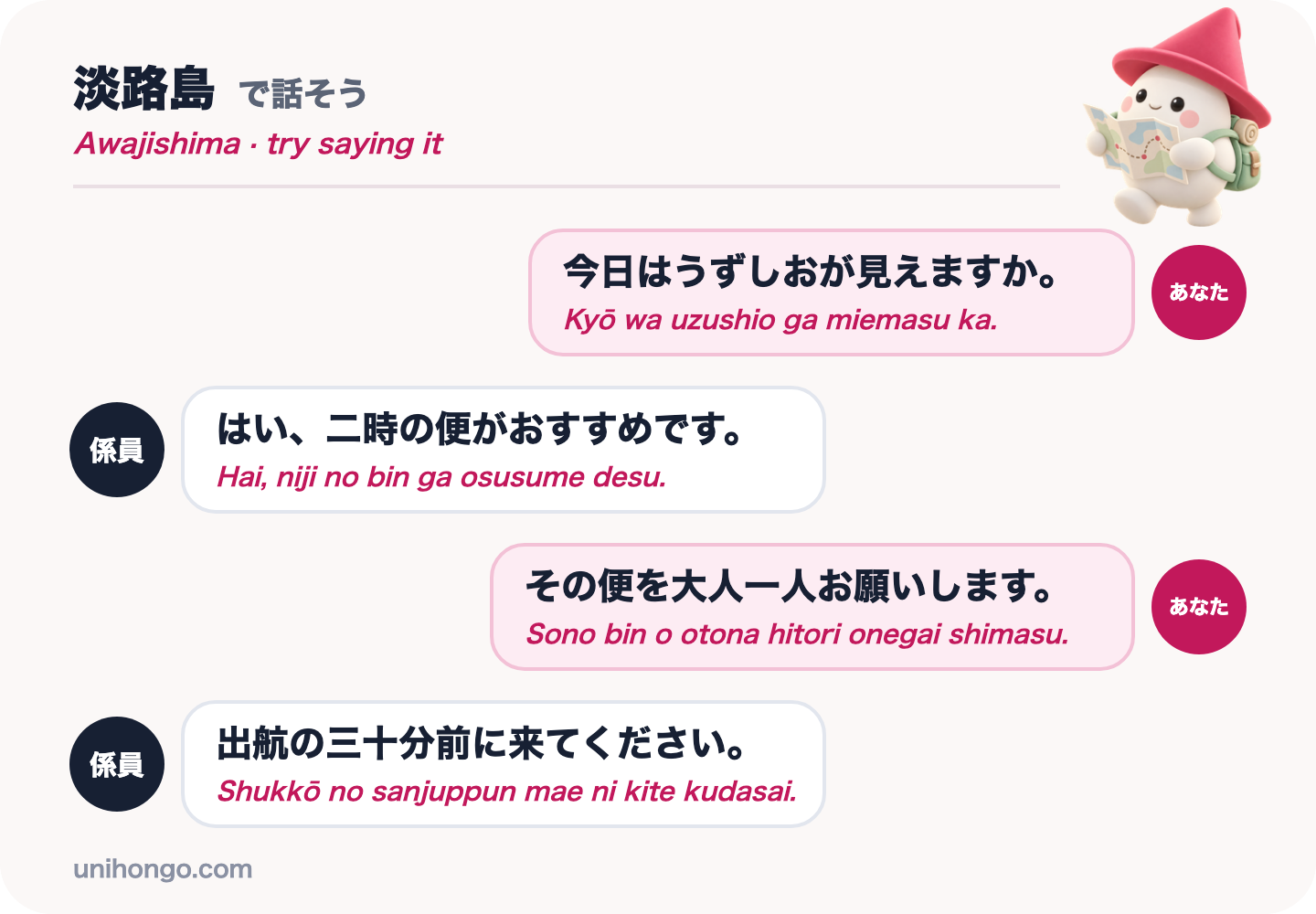
| Japanese | Romaji | Meaning |
|---|---|---|
| 今日はうずしおが見えますか。 | Kyō wa uzushio ga miemasu ka. | Can we see the whirlpools today? |
| はい、二時の便がおすすめです。 | Hai, niji no bin ga osusume desu. | Yes, the two o'clock sailing is the one I'd recommend. |
| その便を大人一人お願いします。 | Sono bin o otona hitori onegai shimasu. | One adult on that sailing, please. |
| 出航の三十分前に来てください。 | Shukkō no sanjuppun mae ni kite kudasai. | Please come thirty minutes before departure. |
Official information
The Awaji Island Tourist Association publishes access information for buses and ferries, sights and food, while the Uzushio Cruise site shows sailing times, tide forecasts and cancellations. Check both before you go.