

Why Rabbit Island is more than rabbits
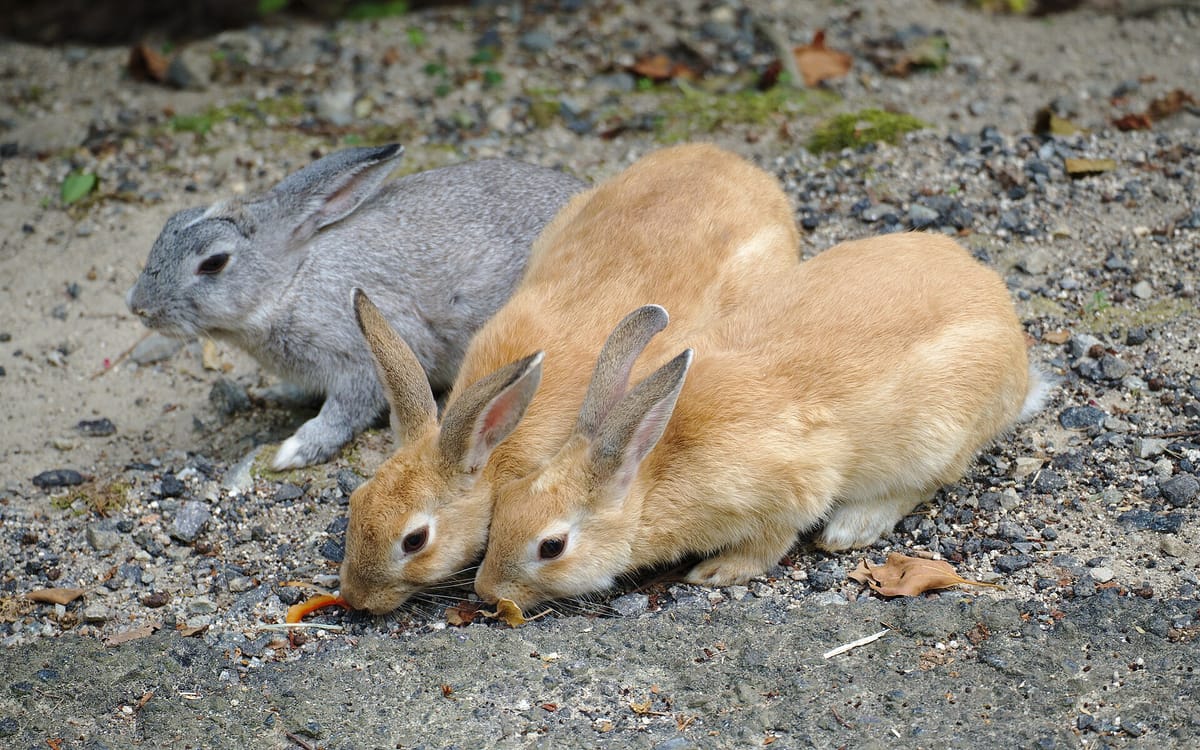
Ōkunoshima's fame is easy to explain: step off the ferry and rabbits come running. There are several hundred of them, of many colours, living wild across the island. No one is entirely sure how the population began; the most common story traces it to a handful of rabbits released on the island around the 1970s. With no foxes or dogs and a steady supply of visitors, they have thrived.
The island's older history is darker. Ōkunoshima was fortified with gun batteries in the Meiji era, and from 1929 the army turned it into a factory for poison gas. The work was kept secret, and many workers suffered lasting harm to their health. After the war the stocks were disposed of, and the island later became a national resort with a hotel and walking paths. The ruins were left in place.
For a visitor the two sides sit side by side: a rabbit dozing in the doorway of a ruined power station. For a Japanese learner the island is a pleasant, low-pressure place to practise: short signs, friendly staff and simple questions about food, ferries and time.
Getting there: Tadanoumi Station and the ferry
Tadanoumi Station is on the JR Kure Line, which runs along the coast between Mihara and Kure. Most visitors change at Mihara, which has shinkansen and San'yō Line services, and take a local train from there. From Tadanoumi Station, walk about five minutes towards the sea to Tadanoumi port, 忠海港. The ferry ticket office and a shop selling rabbit food are at the port.
The ferry crossing takes about fifteen minutes. On the island, the pier is at one end of the flat coastal road that loops right round. The hotel, Kyūkamura Ōkunoshima, is a walk along the coast from the pier, with the visitor centre and the Poison Gas Museum close by. Check the ferry timetable at the port and note the last sailing back before you set off.
| Japanese | Romaji | Meaning |
|---|---|---|
| 忠海港はどちらですか。 | Tadanoumi-kō wa dochira desu ka. | Which way is Tadanoumi port? |
| 大久野島まで往復でお願いします。 | Ōkunoshima made ōfuku de onegai shimasu. | A return ticket to Ōkunoshima, please. |
| 次の船は何時ですか。 | Tsugi no fune wa nanji desu ka. | What time is the next boat? |
| 帰りの最終便は何時ですか。 | Kaeri no saishūbin wa nanji desu ka. | What time is the last boat back? |
| この近くにスーパーはありますか。 | Kono chikaku ni sūpā wa arimasu ka. | Is there a supermarket near here? |
Around the island: rabbits, ruins and the coast path
A walk right round the coastal road takes about an hour at a steady pace, longer with rabbit stops. The road is flat and quiet, with sea views to the islands of the Shimanami area. The hotel rents bicycles if you would rather ride. Rabbits are most active in the morning and late afternoon; in the heat of the day they rest in the shade under trees and buildings.
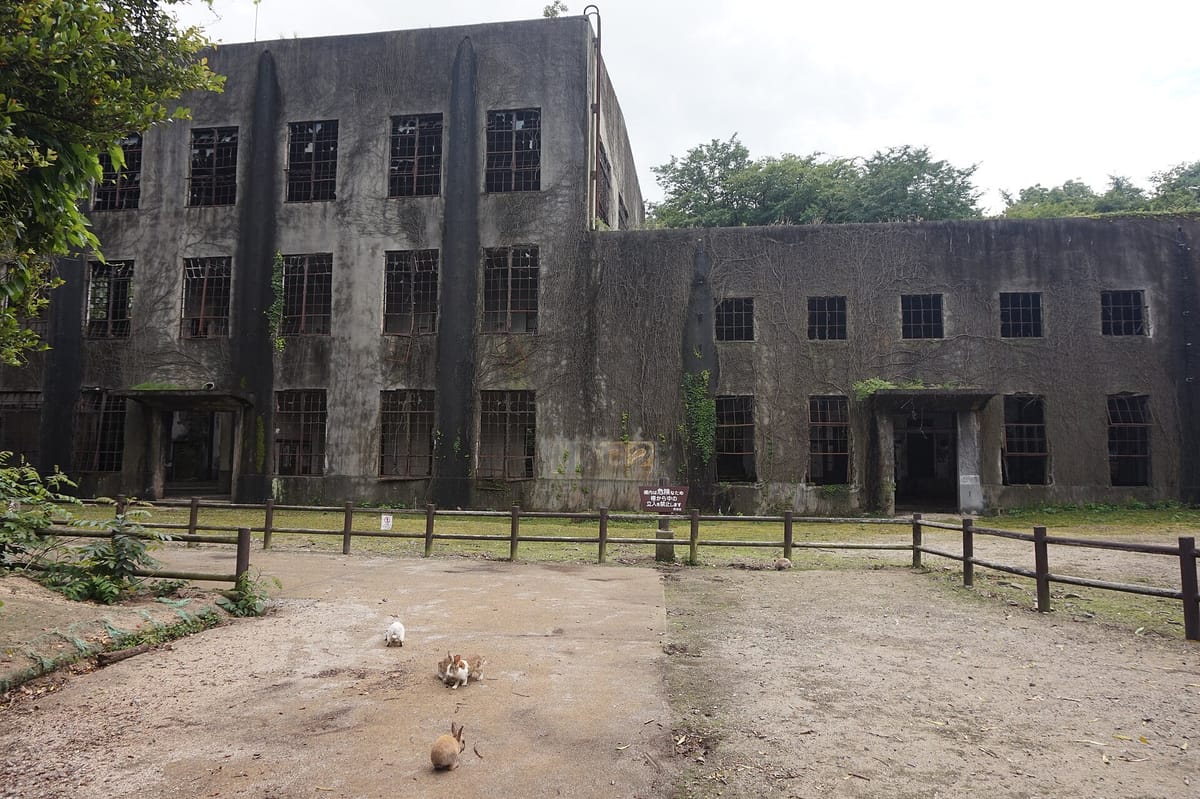
- Sanbashi: the ferry pier, where the first welcoming committee of rabbits usually waits.
- Kyūkamura Ōkunoshima: the island's only hotel, with a restaurant, a café corner, a hot spring bath and bicycle hire.
- Ōkunoshima Visitor Centre: displays on the island's nature and wildlife, near the hotel.
- Dokugasu Shiryōkan, the Poison Gas Museum: a small museum on the wartime factory and its victims.
- Hatsudenjō ato: the ruined power station, a large concrete shell by the road.
- Hōdai ato: the Meiji-era gun battery ruins, in the woods at the north, centre and south of the island.
Some of the hillside paths to the island's high point have been closed since heavy rain in 2018. Stick to the coastal road and the marked paths, and check at the visitor centre before trying anything steeper.
Words on the signs
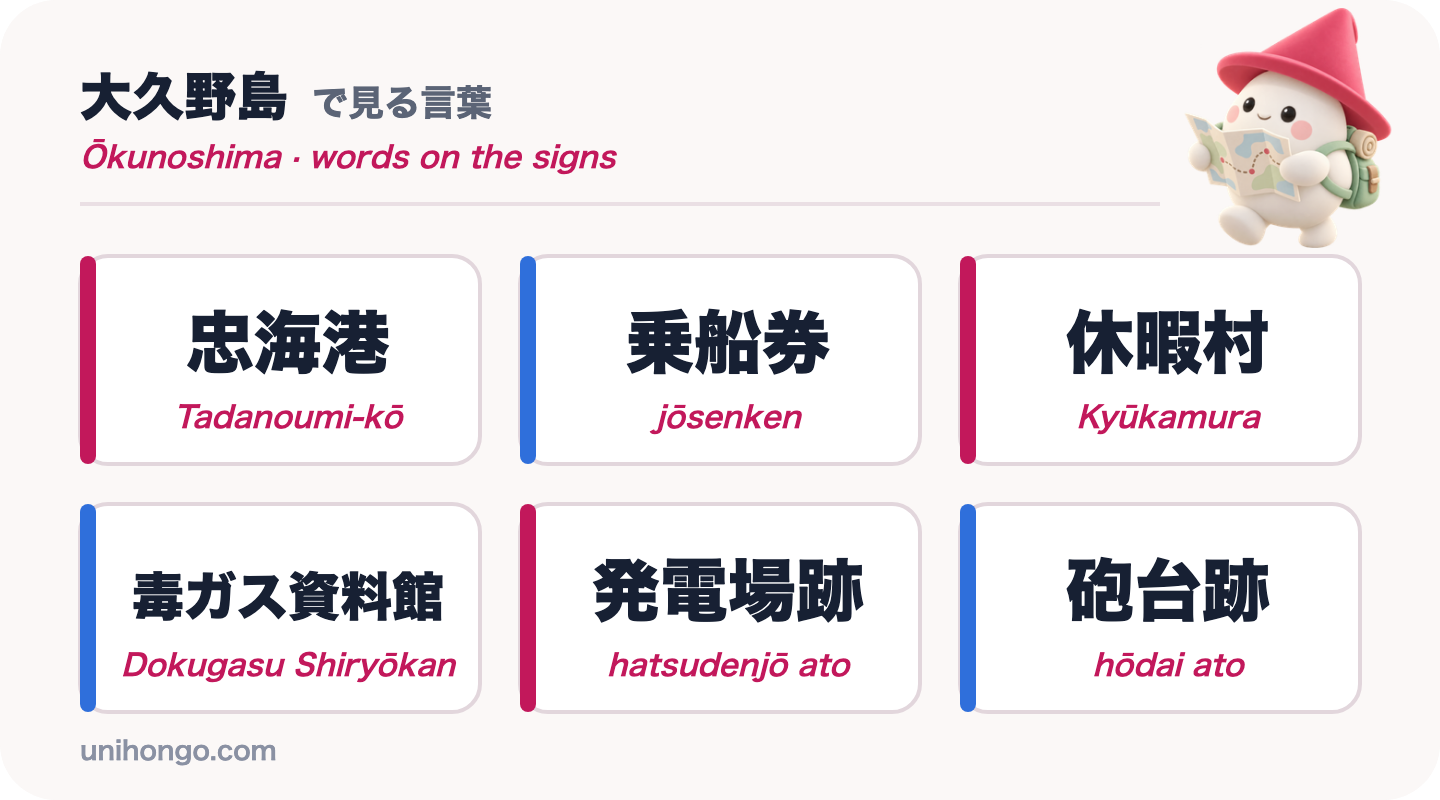
Many of the signs on the island end in the kanji 跡, ato, which means remains or site. It marks every ruin: the power station, the batteries and the gas storage buildings. The other common ending is 港, kō, port, as in Tadanoumi-kō. The rules for the rabbits are posted at the pier and around the island, usually with pictures, and it is worth reading them slowly.
| Word | Reading | Meaning |
|---|---|---|
| 忠海港 | Tadanoumi-kō | Tadanoumi port, the mainland ferry terminal |
| 乗船券 | jōsenken | Ferry ticket |
| 休暇村 | Kyūkamura | The national resort hotel chain; the island's hotel |
| 毒ガス資料館 | Dokugasu Shiryōkan | The Poison Gas Museum |
| 発電場跡 | hatsudenjō ato | Ruins of the power station |
| 砲台跡 | hōdai ato | Ruins of a gun battery |
| うさぎ | usagi | Rabbit |
| エサ | esa | Animal feed |
| 持ち帰り | mochikaeri | Take home with you |
Japanese for buying rabbit feed and following the rules
The most important shopping you will do is on the mainland. The shop at Tadanoumi port sells bags of rabbit pellets, and supermarkets and convenience stores near the station sell cabbage and carrots. There is nowhere on the island to buy feed, and the only place to buy human food is the hotel, so bring water and a snack as well.
On the island, the rules are simple and the staff are happy to explain them. Place food on the ground, not in your hand, away from the road. Stay with it until it is eaten, and take what is left back with you. Rabbits that gather on roads are at risk from the island's few vehicles.
| Japanese | Romaji | Meaning |
|---|---|---|
| うさぎのエサはありますか。 | Usagi no esa wa arimasu ka. | Do you have rabbit feed? |
| 何袋あれば足りますか。 | Nan-fukuro areba tarimasu ka. | How many bags will be enough? |
| キャベツはうさぎにあげても大丈夫ですか。 | Kyabetsu wa usagi ni agete mo daijōbu desu ka. | Is it all right to give cabbage to the rabbits? |
| ここでエサをあげてもいいですか。 | Koko de esa o agete mo ii desu ka. | May I feed them here? |
| 残ったエサは持って帰ります。 | Nokotta esa wa motte kaerimasu. | I'll take the leftover feed home. |
| 自転車を借りたいんですが。 | Jitensha o karitai n desu ga. | I'd like to rent a bicycle. |
Etiquette, timing and practical tips
The island's appeal depends on the rabbits staying healthy, and the guidelines are there for them rather than for show.
- Do not pick up, chase or hold the rabbits, and never take one off the island.
- Feed pellets or fresh leafy vegetables only; no bread, crisps, sweets or onions.
- Put food on the ground away from roads and buildings, and watch until it is eaten.
- Pets are not allowed on the island.
- Go on a weekday if you can. Weekends and holidays bring far bigger crowds, and the rabbits are less hungry by afternoon.
- Summer on the island is hot with little shade on the road. Bring water, a hat and sun cream.
- Visit the Poison Gas Museum with the respect you would bring to any memorial.
Practise the visit before you go
The one conversation you are almost certain to have is at the shop at Tadanoumi port. It is short, and the assistant will probably add a reminder about the rules, so listen for kudasai ne, please do, at the end.
Then practise with a partner who answers back. In Unihongo, choose the Shopping topic and ask your AI Sensei to play the shop assistant at the port, adding a question about the ferry. Saying the lines once before you travel makes them feel natural when a queue is waiting behind you.
| Japanese | Romaji | Meaning |
|---|---|---|
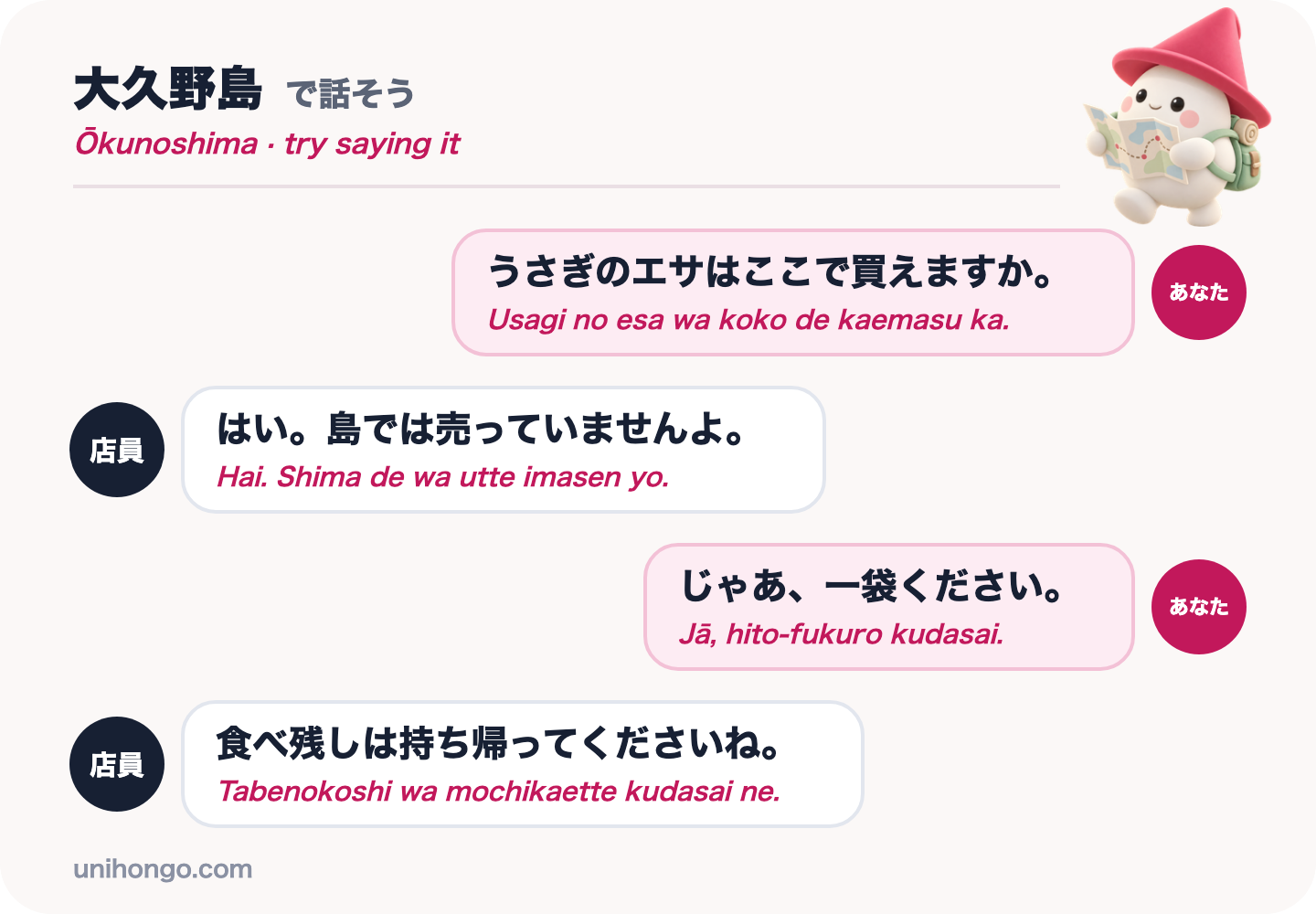
| うさぎのエサはここで買えますか。 | Usagi no esa wa koko de kaemasu ka. | Can I buy rabbit feed here? |
| はい。島では売っていませんよ。 | Hai. Shima de wa utte imasen yo. | Yes. It isn't sold on the island. |
| じゃあ、一袋ください。 | Jā, hito-fukuro kudasai. | Then one bag, please. |
| 食べ残しは持ち帰ってくださいね。 | Tabenokoshi wa mochikaette kudasai ne. | Please take any leftovers home with you. |
Official information
The Takehara tourism association publishes access details and the rabbit guidelines, and the island's hotel lists its facilities and any notices. Check both before you go, along with the ferry timetable.