
Sizes first: nami, ōmori, tokumori
Every bowl on the menu has a row of sizes beside it, and staff expect you to name one. The size changes the amount of rice and, at most chains, the amount of topping as well.
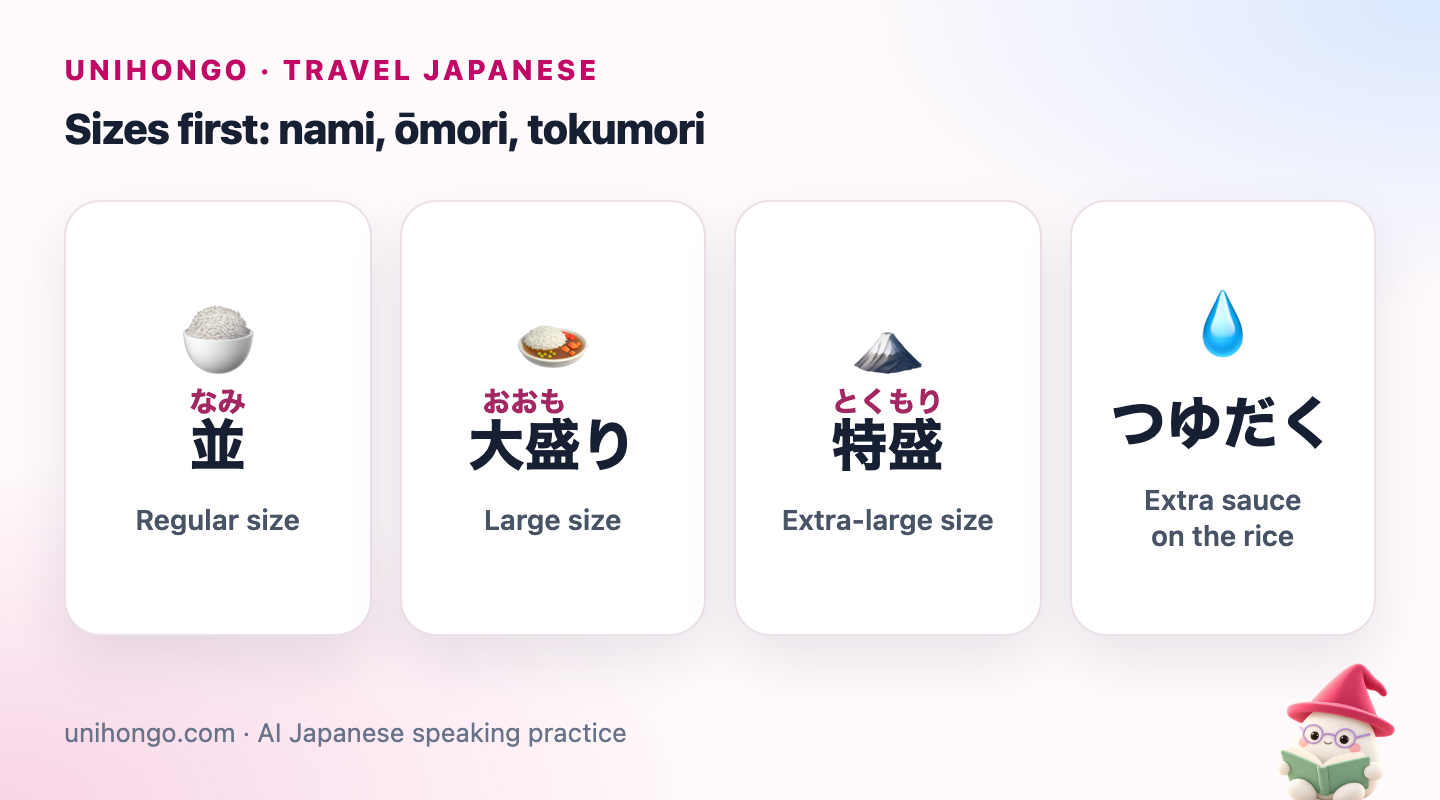
| Japanese | Romaji | Meaning |
|---|---|---|
| 並 | Nami | Regular size |
| 大盛り | Ōmori | Large size |
| 特盛 | Tokumori | Extra-large size |
| つゆだく | Tsuyudaku | Extra sauce on the rice |
| 小盛 | Komori | Small size |
| ご飯少なめ | Gohan sukuname | Less rice |
| つゆ抜き | Tsuyunuki | Sauce drained off |
Nami is also written namimori (並盛). The names between and beyond these three differ by chain, so read the size row once before you order. Ōmori is a word worth owning: it works for rice, noodles and curry all over Japan.
The bowls you will see on almost any menu
| Japanese | Romaji | Meaning |
|---|---|---|
| 牛丼 | Gyūdon | Simmered beef and onion bowl |
| 親子丼 | Oyakodon | Chicken and egg bowl |
| カツ丼 | Katsudon | Pork cutlet and egg bowl |
| 天丼 | Tendon | Tempura bowl |
| 海鮮丼 | Kaisendon | Raw seafood bowl |
| 鉄火丼 | Tekkadon | Raw tuna bowl |
| うな丼 | Unadon | Grilled eel bowl |
| 豚丼 | Butadon | Pork bowl |
Gyūdon, oyakodon and katsudon are hot, soft and slightly sweet, cooked with onion in a soy broth. Tendon is tempura glazed with a sweet soy sauce. Kaisendon and tekkadon are cold raw fish over rice, and the rice under tekkadon is usually vinegared like sushi rice. Unadon is grilled eel with a dark sweet glaze; the same dish in a lacquered box is unajū (うな重).
Local versions exist. In some regions katsudon means a cutlet in sauce with no egg, and butadon is strongly linked with Obihiro in Hokkaido, where the pork is grilled with a sweet soy glaze.
Ticket machine or spoken order: how it starts
Rice bowl chains use different systems, and the same chain may use more than one. Look for a machine by the door before you sit down.
- Ticket machine: choose the dish and size on the kenbaiki (券売機), pay, and hand the ticket, called a shokken (食券), to staff. You may be asked nothing more than eat in or take away.
- Spoken order: sit at the counter, wait for water or tea to arrive, and say the order. You pay at the register on the way out.
- Tablet: tap the dish, then the size, then any changes. The size words on screen are the same kanji as above.
The counter exchange, line by line
Here is the whole conversation in order. Staff speak in set polite phrases, and customers answer in fragments ending in de or with onegai shimasu. That is not lazy Japanese; it is how the counter works.
| Japanese | Romaji | Meaning |
|---|---|---|
| 店内でお召し上がりですか。 | Tennai de omeshiagari desu ka. | Staff: Are you eating in? |
| はい、店内で。 | Hai, tennai de. | You: Yes, eating in. |
| 持ち帰りでお願いします。 | Mochikaeri de onegai shimasu. | You: To take away, please. |
| ご注文をどうぞ。 | Gochūmon o dōzo. | Staff: Your order, please. |
| 牛丼の並を一つお願いします。 | Gyūdon no nami o hitotsu onegai shimasu. | You: One regular beef bowl, please. |
| つゆだくでお願いします。 | Tsuyudaku de onegai shimasu. | You: With extra sauce, please. |
| 以上でよろしいですか。 | Ijō de yoroshii desu ka. | Staff: Will that be all? |
| はい、以上です。 | Hai, ijō desu. | You: Yes, that is all. |
Omeshiagari is the honorific word for eating, used only about the customer. You never use it about yourself: you answer with the plain place word, tennai de, in the shop. Regulars shorten the order to Nami, tsuyudaku de, but the full sentence is always safe.
Small changes and what is on the counter
Gyūdon counters allow a few changes without fuss. Tsuyudaku (つゆだく) means extra sauce ladled over the rice, and tsuyunuki is the reverse. Negi nuki (ねぎ抜き) leaves out the onion. Not every chain accepts every request, so add dekimasu ka when you are unsure.
On the counter you will find beni shōga (紅しょうが), red pickled ginger, and shichimi (七味), a chili spice mix. Both are there for you to add yourself. A raw egg, nama tamago (生卵), and miso soup are common side orders.
| Japanese | Romaji | Meaning |
|---|---|---|
| ご飯少なめでお願いします。 | Gohan sukuname de onegai shimasu. | Less rice, please. |
| ねぎ抜きはできますか。 | Negi nuki wa dekimasu ka. | Can you make it without onion? |
| 味噌汁と卵もお願いします。 | Misoshiru to tamago mo onegai shimasu. | Miso soup and an egg too, please. |
| 紅しょうが | Beni shōga | Red pickled ginger |
Paying and leaving
If you bought a ticket, you are already done: finish, say thank you and go. If not, take the slip to the register or tell staff you are ready to pay. Either way the closing line is the same, said towards the kitchen as you stand up.
| Japanese | Romaji | Meaning |
|---|---|---|
| お会計お願いします。 | Okaikei onegai shimasu. | The bill, please. |
| ごちそうさまでした。 | Gochisōsama deshita. | Thank you for the meal. |
Holding the bowl in one hand and eating quickly is ordinary manners at a donburi counter. People come, eat and leave without lingering, and nobody will think you rude for doing the same.