

Why Shimokitazawa is Tokyo's favourite afternoon wander
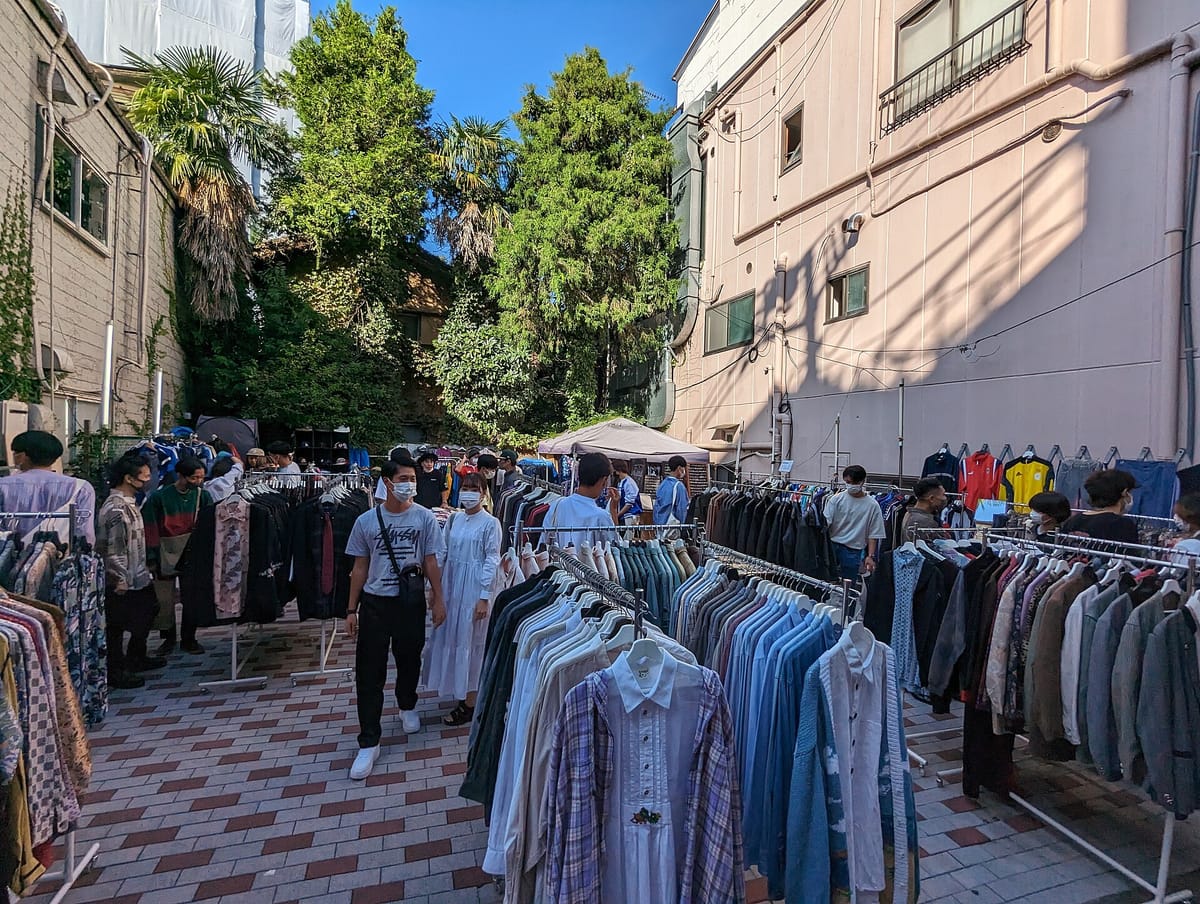
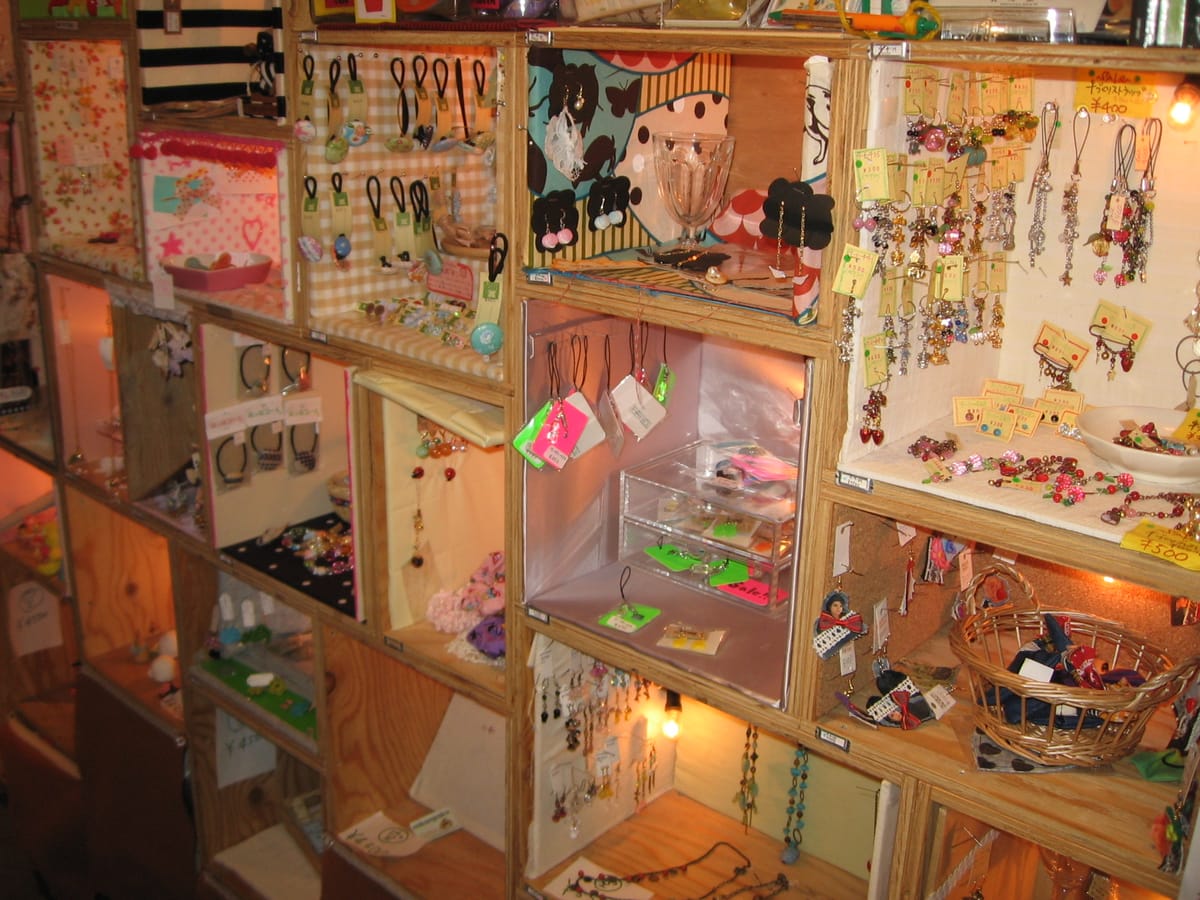
Shimokitazawa feels like a small town that happens to be in Tokyo. The streets around the station are narrow and tangled, cars are rare, and the shops are small and personal: a vintage clothing shop run by one owner, a café with six seats, a bookshop that serves beer, a record store with crates on the pavement. It is a place to browse slowly rather than to tick off sights.
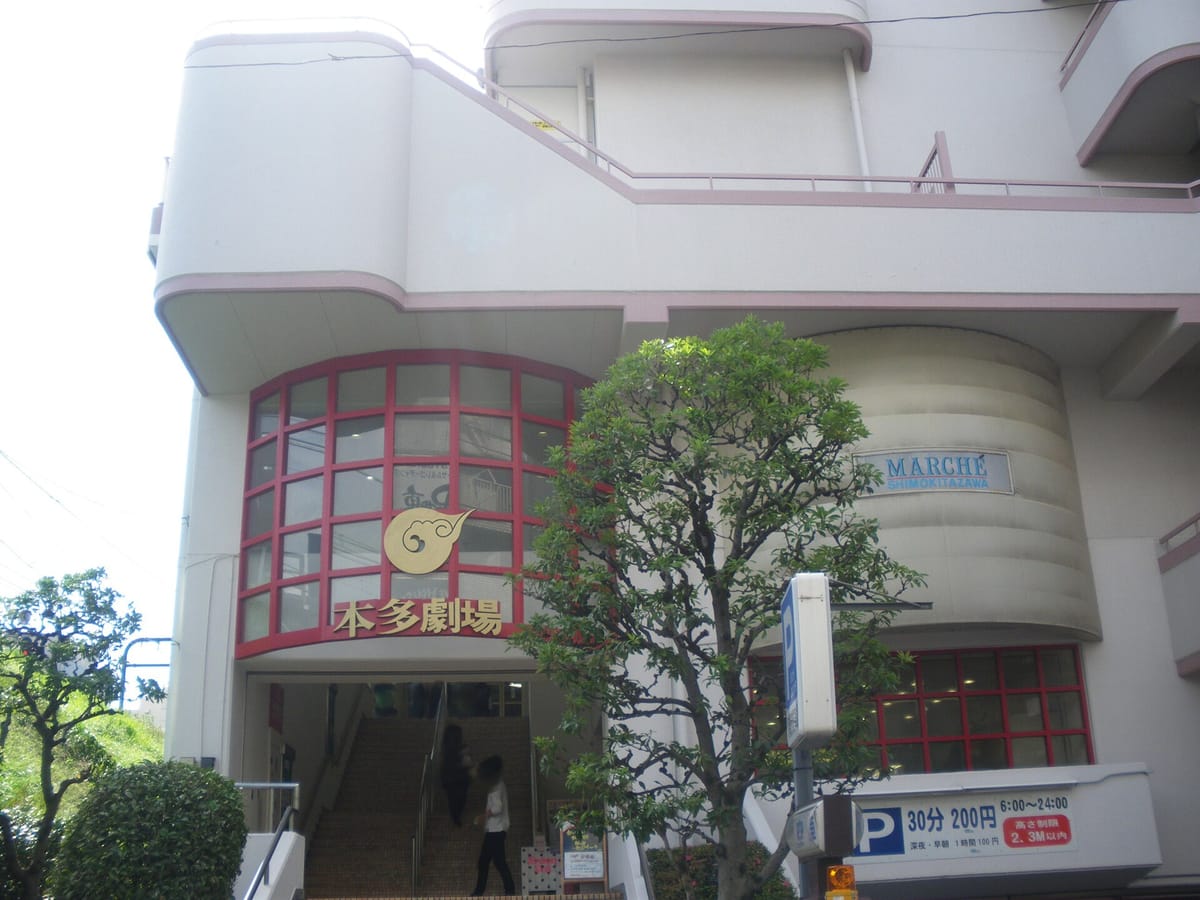
Its reputation as a creative neighbourhood comes from theatre and music. The Honda Gekijō opened in 1982, and the Honda Theatre Group now runs several small stages around the station, while live houses in basements host bands most nights. Students, actors and musicians have given the area its relaxed, slightly bohemian style for decades.
For a Japanese learner, Shimokitazawa is ideal because so many shops are run by their owners. Conversations are short, friendly and unhurried, and asking a question about a jacket or a record is a natural way to start one.
Getting there: the Odakyu and Keiō Inokashira lines
Shimokitazawa Station is where two private railways cross. The Odakyu Odawara Line runs from Shinjuku, about seven minutes away, and its platforms moved underground in 2013. The Keiō Inokashira Line runs from Shibuya, a few stops away, towards Kichijōji, which makes Shimokitazawa easy to combine with Kichijōji and Inokashira Park on the same day.
The station has several exits, and the neighbourhood spreads out on all sides. The shopping streets spread out on all sides of the station, while Senrogai, built on the former Odakyu tracks, stretches east towards Higashi-Kitazawa and west towards Setagaya-Daita. Central Shimokita is compact enough to explore entirely on foot.
| Japanese | Romaji | Meaning |
|---|---|---|
| 下北沢に行きたいんですが、どの電車に乗ればいいですか。 | Shimokitazawa ni ikitai n desu ga, dono densha ni noreba ii desu ka. | I want to go to Shimokitazawa. Which train should I take? |
| この電車は下北沢に止まりますか。 | Kono densha wa Shimokitazawa ni tomarimasu ka. | Does this train stop at Shimokitazawa? |
| 井の頭線の乗り場はどこですか。 | Inokashira-sen no noriba wa doko desu ka. | Where do I board the Inokashira Line? |
| 本多劇場はどの出口が近いですか。 | Honda Gekijō wa dono deguchi ga chikai desu ka. | Which exit is closest to the Honda Theatre? |
| ボーナストラックまで歩いて行けますか。 | Bōnasu Torakku made aruite ikemasu ka. | Can I walk to Bonus Track? |
What you will see: vintage shops, Senrogai and small theatres
Shimokitazawa has no single landmark, so the best plan is to walk in loops from the station, dipping into anything that catches your eye. These are the places that define the area.
- Vintage clothing shops, 古着屋, furugiya: dozens of them, from bargain racks to carefully curated American workwear, including one in a building that used to be a public bath.
- Shimokita Senrogai, 下北線路街: the 1.7-kilometre strip on the former Odakyu tracks between Higashi-Kitazawa and Setagaya-Daita, with shops, green spaces and an open event space.
- Bonus Track: a small cluster of shop-houses on Senrogai with a bookshop, cafés and independent food shops around an open central space.
- reload: a low, open complex of small shops and cafés on the old line, designed with terraces and benches for sitting.
- Mikan Shimokita: a complex by the station, with restaurants from around the world and a bookshop.
- Honda Gekijō, 本多劇場, and its sister theatres: a group of small stages near the station, the centre of Shimokitazawa's theatre scene.
- Live houses, ライブハウス: small music venues, often in basements, with bands on most evenings.
- Curry and coffee: Shimokitazawa is known for its curry shops, and every autumn the neighbourhood holds a curry festival.
Shop signs, stages and the words on the signs
Shimokitazawa's shop signs are a mix of English, katakana and handwritten Japanese. The most useful word is 古着, furugi, second-hand clothes, which appears on shop fronts, racks and flyers everywhere.
At the theatres, look for 当日券, tōjitsuken, same-day ticket, on the box office board. You may also see 前売り, maeuri, advance sale, and 完売, kanbai, sold out. Shows list 開場, kaijō, doors open, and 開演, kaien, curtain up, as two separate times.
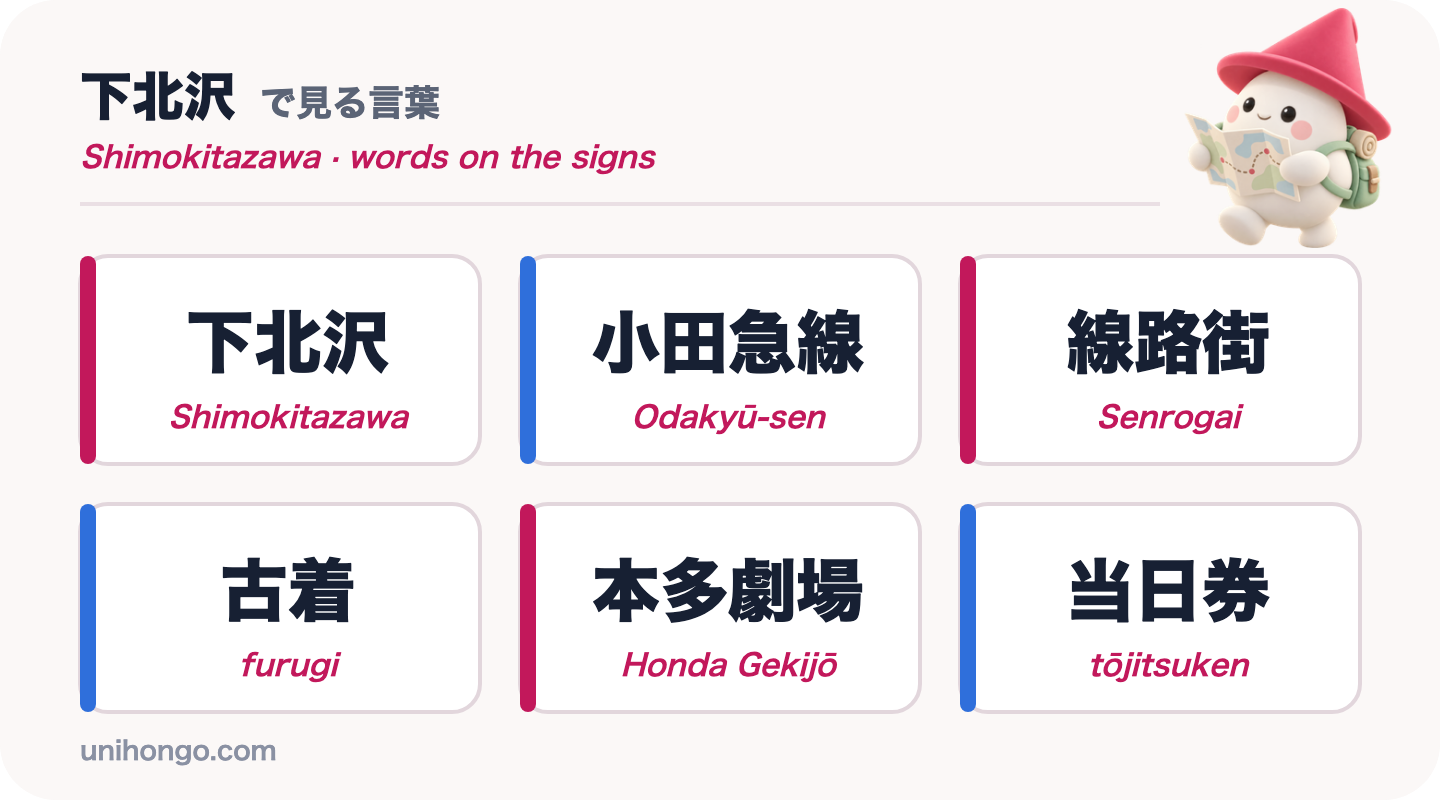
| Word | Reading | Meaning |
|---|---|---|
| 下北沢 | Shimokitazawa | The station and neighbourhood |
| 小田急線 | Odakyū-sen | The Odakyu Line from Shinjuku |
| 井の頭線 | Inokashira-sen | The Keiō Inokashira Line from Shibuya |
| 線路街 | Senrogai | Street built on the old railway tracks |
| 古着 | furugi | Second-hand clothes |
| 本多劇場 | Honda Gekijō | The Honda Theatre |
| 当日券 | tōjitsuken | Same-day ticket |
| 開場 | kaijō | Doors open |
| 開演 | kaien | Performance starts |
| 完売 | kanbai | Sold out |
Japanese for vintage shopping and the box office
In vintage shops, sizes are the main puzzle: American and European clothes may be labelled in inches or foreign sizes, and one-off items cannot be ordered in another size. Staff are happy to measure a garment or let you try it on. Prices are fixed; asking for a discount is not the custom, although many shops hold sales.
For a theatre, most tickets are sold in advance online, but some performances keep same-day tickets at the box office. Arrive early, ask politely, and be ready to pay in cash. Even if you follow little of the dialogue, a small theatre in Shimokitazawa is a memorable glimpse of Tokyo's stage culture.
| Japanese | Romaji | Meaning |
|---|---|---|
| これは何年代のものですか。 | Kore wa nan-nendai no mono desu ka. | Which decade is this from? |
| このジャケット、試着できますか。 | Kono jaketto, shichaku dekimasu ka. | Can I try on this jacket? |
| サイズを測ってもらえますか。 | Saizu o hakatte moraemasu ka. | Could you measure the size for me? |
| セールの商品はどれですか。 | Sēru no shōhin wa dore desu ka. | Which items are on sale? |
| 今日の当日券はまだありますか。 | Kyō no tōjitsuken wa mada arimasu ka. | Are there still same-day tickets for today? |
| 英語の字幕はありますか。 | Eigo no jimaku wa arimasu ka. | Are there English subtitles? |
| 上演時間はどのくらいですか。 | Jōen jikan wa dono kurai desu ka. | How long is the performance? |
Local manners, timing and practical tips
Shimokitazawa is relaxed, but it is also a residential neighbourhood with narrow lanes and small shops. A few habits help.
- Come after midday: many shops open late, and the area comes alive in the afternoon and evening.
- Ask before taking photos inside small shops; some owners prefer that you do not.
- Handle vintage clothes gently and put them back on the hanger as you found them.
- Keep to the side of narrow streets, and watch for bicycles and the occasional delivery van.
- Carry some cash: small shops, bars and theatre box offices may not take cards.
- Keep your voice down in the residential lanes late at night after the bars and live houses close.
- Combine the day with Kichijōji and Inokashira Park by taking the Keiō Inokashira Line west.
Practise the box office before you go
The box office conversation is short but full of theatre words: tōjitsuken, same-day ticket, kaien, curtain up, and kaijō, doors open. Practise them until they come out naturally, and listen for the time in the answer.
Then practise with a partner who answers back. In Unihongo, choose the Shopping topic and ask your AI Sensei to play a box office attendant or a vintage shop owner in Shimokitazawa, or try the Order at a Café mission for the coffee afterwards. Saying the lines once before you go makes them come out at the counter.
| Japanese | Romaji | Meaning |
|---|---|---|
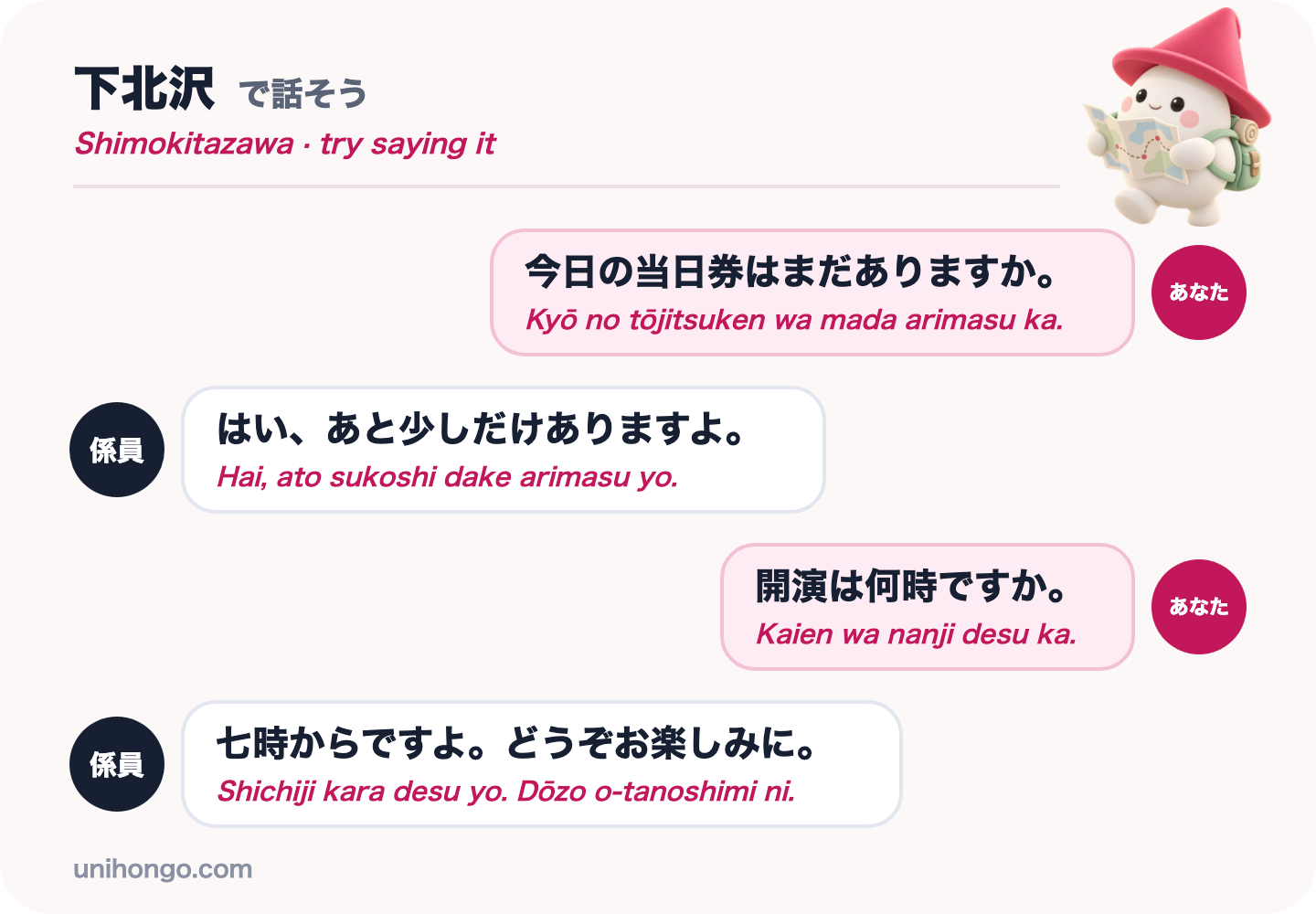
| 今日の当日券はまだありますか。 | Kyō no tōjitsuken wa mada arimasu ka. | Are there still same-day tickets for today? |
| はい、あと少しだけありますよ。 | Hai, ato sukoshi dake arimasu yo. | Yes, there are just a few left. |
| 開演は何時ですか。 | Kaien wa nanji desu ka. | What time does the performance start? |
| 七時からですよ。どうぞお楽しみに。 | Shichiji kara desu yo. Dōzo o-tanoshimi ni. | It starts at seven. Enjoy the show. |
Official information
Shops and venues in Shimokitazawa set their own hours, so check each one before a special trip. The Tokyo Convention and Visitors Bureau covers the area, Shimokita Senrogai lists its shops and events, and the Honda Theatre Group publishes the programmes of its stages.