

Why Dazaifu Tenmangū is worth the trip
Sugawara no Michizane was one of the great scholars of the Heian court, a poet and minister who was demoted by rivals and sent to Dazaifu, then the government outpost for Kyushu. He died here in 903. When disasters struck the capital in the years that followed, people blamed his angry spirit, and he was honoured as Tenjin, a deity. Over the centuries the fearsome spirit became a gentle patron of scholarship, which is why the shrine is now full of students and parents praying for exam success.
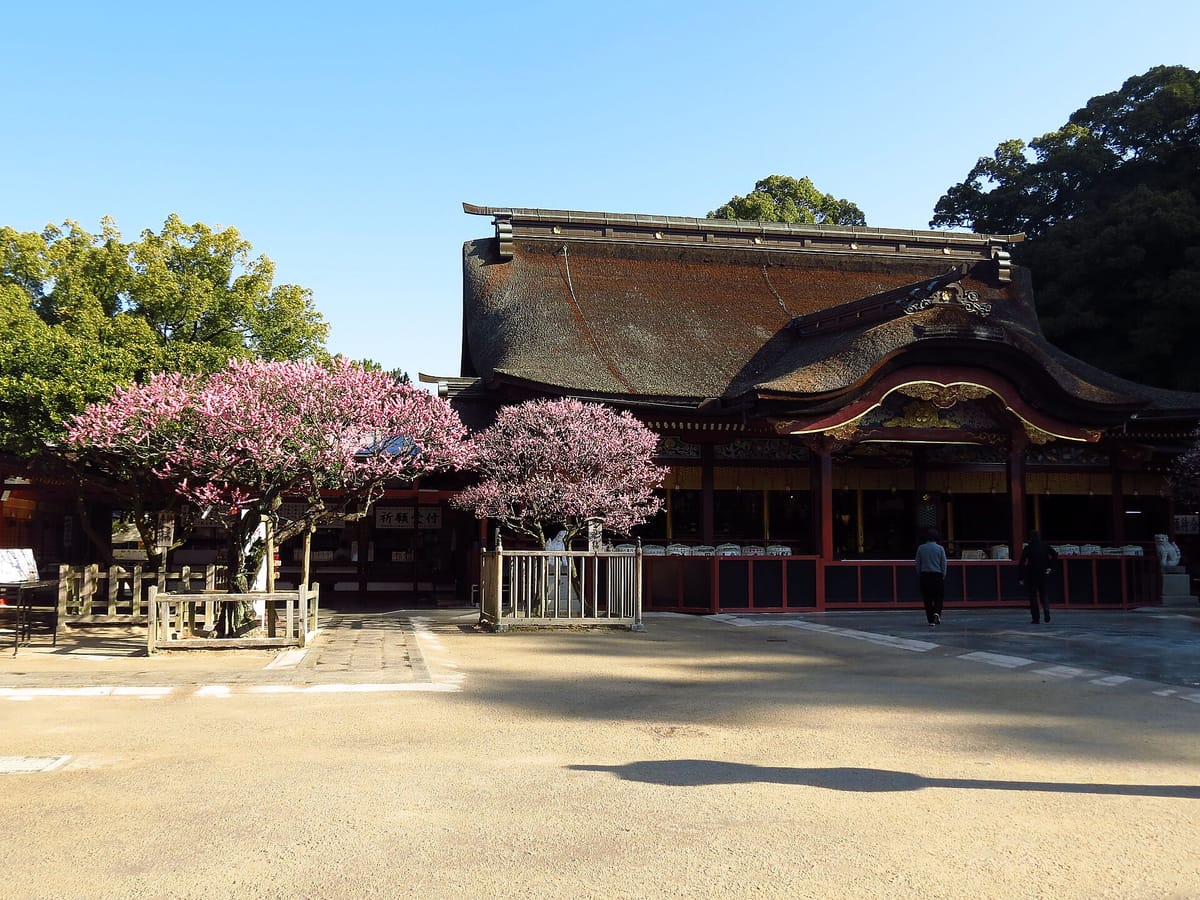
The main hall, the honden, was rebuilt in 1591 and is an Important Cultural Property. In 2023 it began its first large-scale restoration in 124 years. While the work went on, prayers were held at a striking temporary hall designed by the architect Sou Fujimoto, with a small forest planted on its roof. The shrine announced that from 19 September 2026 visitors could once again pray in front of the restored main hall.
For a Japanese learner, it is a friendly shrine: the paths are short, the signs are clear, and the charm counters are used to visitors from abroad. Many of the words you learn here, like 学業, 合格 and 御守, appear at every Tenjin shrine in Japan.
Getting there from Fukuoka
The train is the classic route. From Nishitetsu Fukuoka (Tenjin) Station, take the Nishitetsu Tenjin Ōmuta Line south to Nishitetsu Futsukaichi, then change to the two-stop Dazaifu Line to Dazaifu Station, the terminus. The whole journey takes around half an hour to forty minutes, and a few trains run through without a change. If you are staying near Hakata Station, a direct Nishitetsu bus runs from Hakata Bus Terminal to Dazaifu.
From Dazaifu Station, walk up the sandō, the approach street, lined with shops selling umegae mochi, sweets and souvenirs. The large stone torii and the pond are about five minutes ahead. Remember that Futsukaichi is written 二日市, second-day market, which helps you spot it on the departure boards.
| Japanese | Romaji | Meaning |
|---|---|---|
| 太宰府に行きたいんですが、どの電車に乗ればいいですか。 | Dazaifu ni ikitai n desu ga, dono densha ni noreba ii desu ka. | I want to go to Dazaifu. Which train should I take? |
| 二日市で乗り換えですか。 | Futsukaichi de norikae desu ka. | Do I change at Futsukaichi? |
| 太宰府行きは何番線ですか。 | Dazaifu-yuki wa nanbansen desu ka. | Which platform is the train for Dazaifu? |
| 太宰府天満宮はどちらですか。 | Dazaifu Tenmangū wa dochira desu ka. | Which way is Dazaifu Tenmangū? |
| 博多から太宰府行きのバスはありますか。 | Hakata kara Dazaifu-yuki no basu wa arimasu ka. | Is there a bus from Hakata to Dazaifu? |
From the bridges to the main hall: what you will see
The approach leads through the stone torii to Shinjiike, a pond shaped like the character 心, heart. Three vermilion bridges cross it in a row: an arched bridge, a flat one and another arched one. They are said to represent the past, present and future, and you cross them on the way to pray.
Beyond the bridges and the purification basin, the two-storey Rōmon gate opens onto the courtyard of the main hall. To the right of the hall grows the Tobiume, the flying plum. Legend says that Michizane's favourite plum tree in Kyoto missed him so much that it flew to Dazaifu overnight. Around it the grounds hold about six thousand plum trees.
- Shinjiike and the three bridges: the pond and the taikobashi, the arched bridges you cross first.
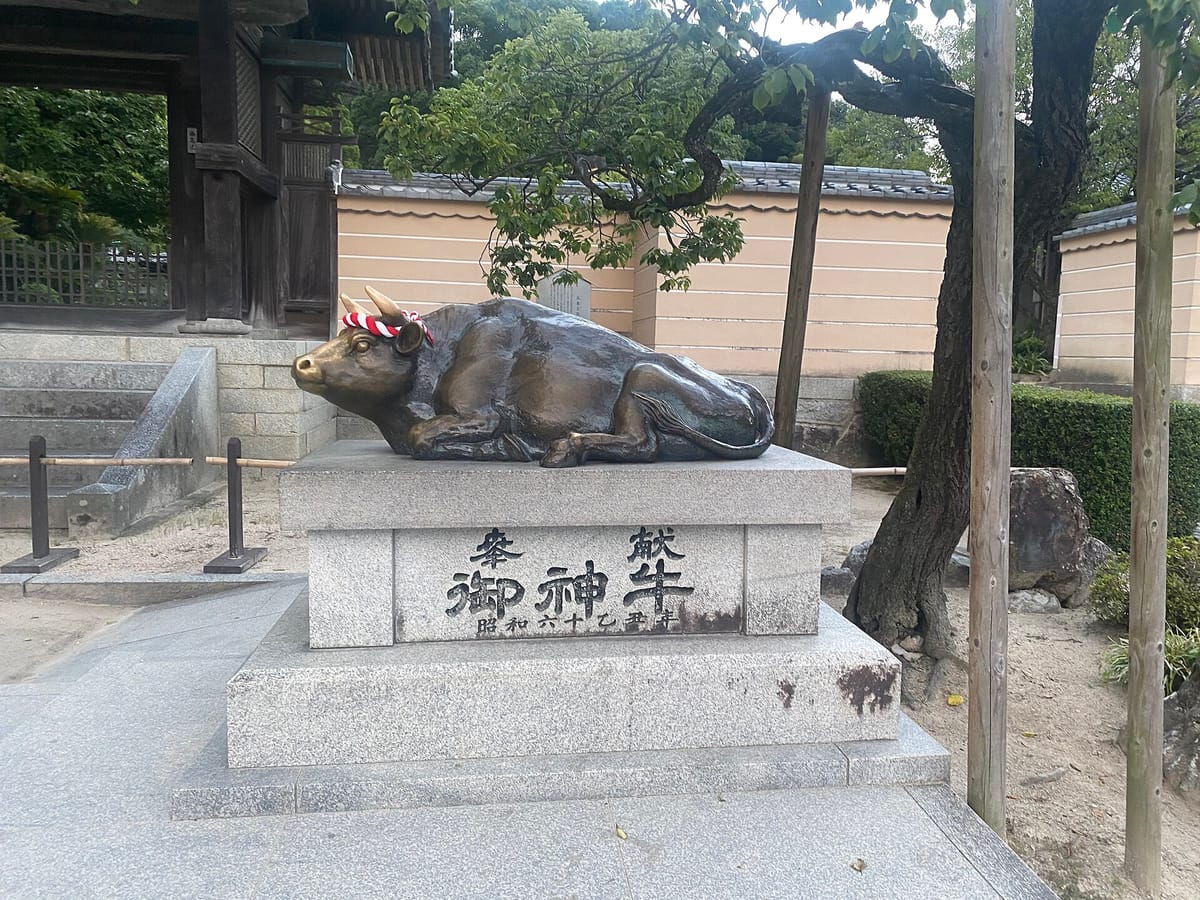
- Goshingyū: bronze bulls around the grounds. Michizane is linked with the ox, and touching a bull's head is said to bring wisdom.
- Honden: the main hall of 1591, freshly restored.
- Tobiume: the flying plum tree, to the right of the main hall, usually among the first to bloom.
- Dazaifu Tenmangū Museum and Treasure Hall: shrine treasures and the story of Michizane's life.
- Kyushu National Museum: reached by an escalator and moving walkway from the shrine grounds.
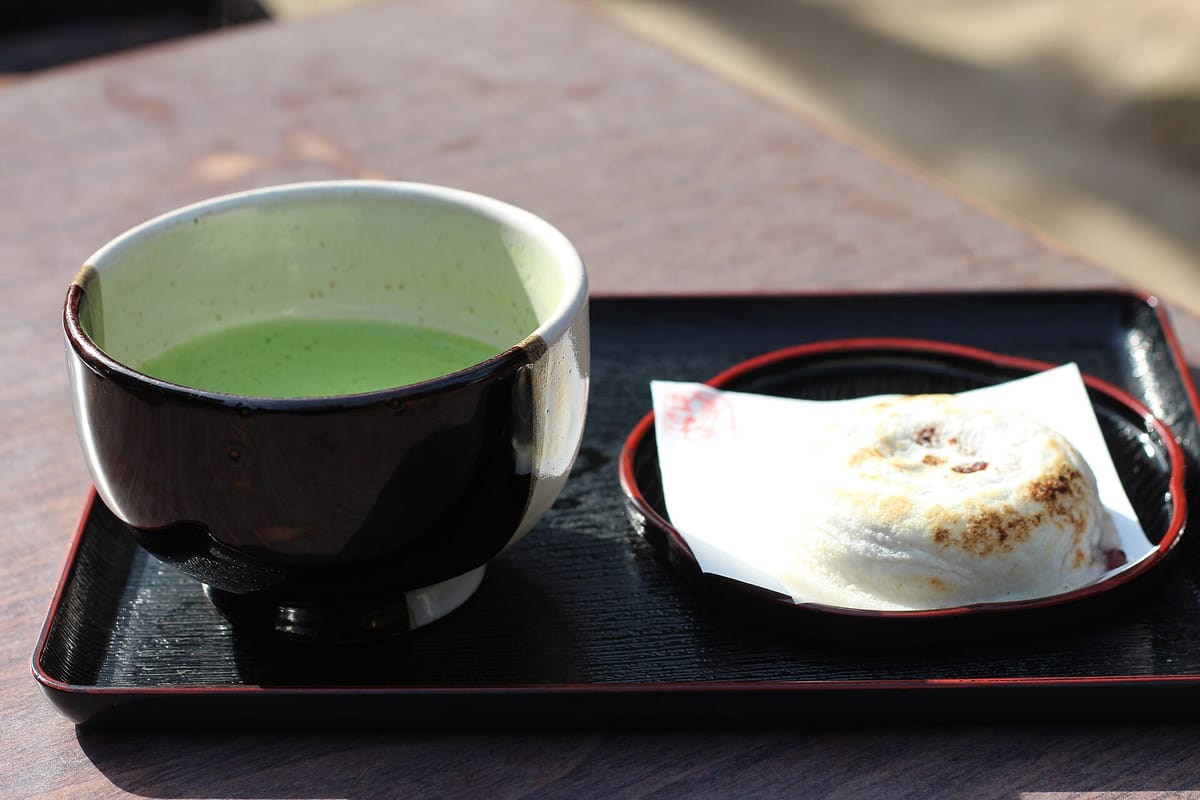
- The approach street: shops selling umegae mochi, grilled rice cakes stamped with a plum blossom.
Plums, bridges and the words on the signs
Signs at the shrine are mostly kanji, but the vocabulary is small and repeats. Plum, 梅, ume, is everywhere: on the shrine crest, the lanterns, the charms and the rice cakes. Once you can read 梅, 牛 and 天満宮, you can follow the grounds without a map.
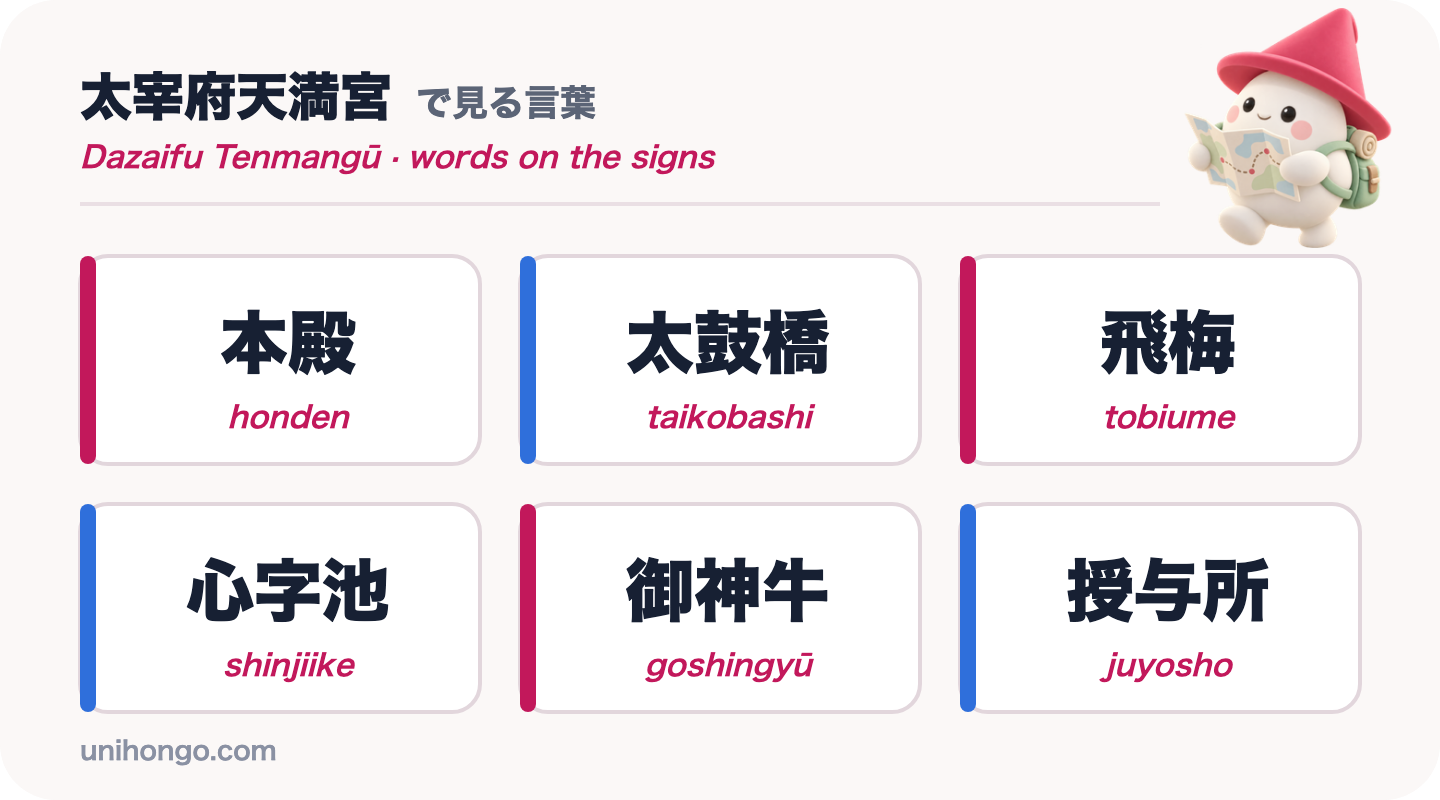
| Word | Reading | Meaning |
|---|---|---|
| 本殿 | honden | Main hall |
| 太鼓橋 | taikobashi | Arched bridge, literally drum bridge |
| 飛梅 | tobiume | The flying plum tree beside the main hall |
| 心字池 | shinjiike | The pond shaped like the character for heart |
| 御神牛 | goshingyū | Sacred bull statue |
| 授与所 | juyosho | Office where charms and fortunes are given |
| 楼門 | rōmon | Two-storey gate before the main hall |
| 参道 | sandō | Approach street to the shrine |
| 梅ヶ枝餅 | umegae mochi | Grilled rice cake with sweet bean paste |
Japanese at the charm counter: study charms, ema and goshuin
The juyosho is where you receive charms, omamori, and fortunes, omikuji. The best-known charms here are for studies, gakugyō, and for passing exams, gōkaku. Wooden prayer boards, ema, are sold nearby, and many carry the plum crest or a bull. The goshuin, the ink-and-stamp seal collected in a special book, is issued at a separate counter; ask where.
Shrine staff talk about receiving, itadaku, rather than buying. Itadakemasu ka is the polite way to ask for something, and staff will answer kochira desu, here it is, as they hand it to you.
| Japanese | Romaji | Meaning |
|---|---|---|
| 学業のお守りはどれですか。 | Gakugyō no o-mamori wa dore desu ka. | Which charm is for studies? |
| 合格祈願のお守りをいただけますか。 | Gōkaku kigan no o-mamori o itadakemasu ka. | May I have a charm for passing exams? |
| この絵馬をください。 | Kono ema o kudasai. | This ema, please. |
| 絵馬はどこに掛ければいいですか。 | Ema wa doko ni kakereba ii desu ka. | Where should I hang the ema? |
| 御朱印もお願いできますか。 | Goshuin mo onegai dekimasu ka. | Could I also ask for a goshuin? |
| 梅ヶ枝餅を二つください。 | Umegae mochi o futatsu kudasai. | Two umegae mochi, please. |
Etiquette and timing
Dazaifu Tenmangū is busy, especially in plum season and around the exams, but it is also a working shrine where people come to pray for things that matter to them.
- Bow at the torii and walk to the side of the approach, leaving the centre for the deity.
- Rinse your hands and mouth at the temizuya, then pray at the main hall: two bows, two claps, a prayer and one more bow.
- Take photos of the ema from a respectful distance and do not photograph other people's wishes up close.
- Come early on weekends and in plum season; the approach street fills by late morning.
- Umegae mochi are best eaten hot, straight from the grill; most shops will hand you one to eat as you walk to a bench.
- Allow half a day if you want to add the Kyushu National Museum or the quiet moss garden of Kōmyōzen-ji nearby.
Practise the visit before you go
The conversation at the charm counter is short and polite, and the attendant usually answers with kochira, this one, and a gesture. Practise the four lines below until they come out smoothly, and listen for the words achira and uketsuke, over there and reception, in the reply.
Then practise with a partner who answers back. In Unihongo, choose the Shrine Visit topic and ask your AI Sensei to play a shrine attendant at Dazaifu, or choose Sightseeing to rehearse the train change at Futsukaichi. Saying the lines once before the trip makes them easy on the day.
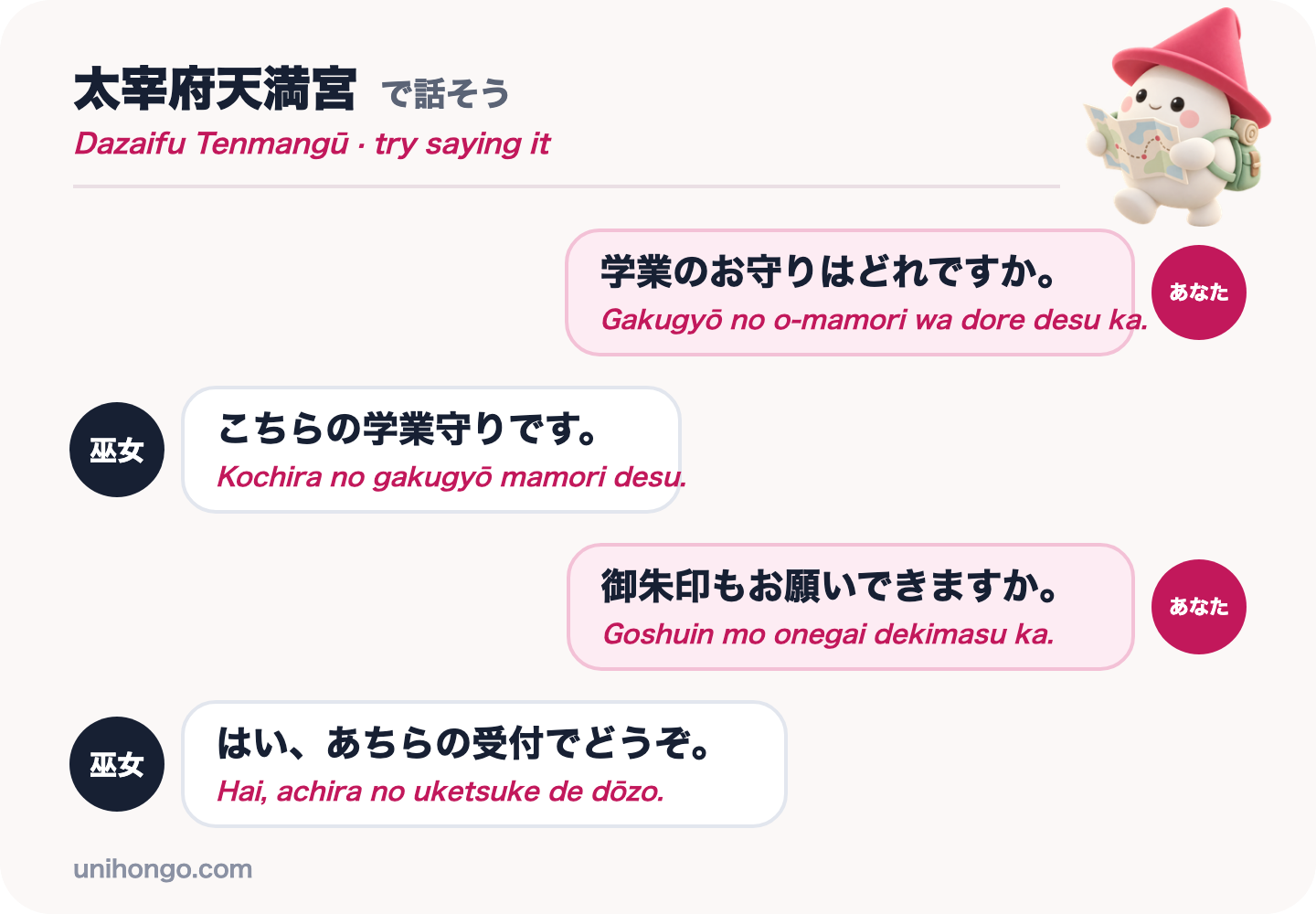
| Japanese | Romaji | Meaning |
|---|---|---|
| 学業のお守りはどれですか。 | Gakugyō no o-mamori wa dore desu ka. | Which charm is for studies? |
| こちらの学業守りです。 | Kochira no gakugyō mamori desu. | It is this study charm here. |
| 御朱印もお願いできますか。 | Goshuin mo onegai dekimasu ka. | Could I also ask for a goshuin? |
| はい、あちらの受付でどうぞ。 | Hai, achira no uketsuke de dōzo. | Yes, please go to the reception over there. |
Official information
The shrine publishes festival dates, notices about closures, gate hours and ongoing works in the grounds, and news about the main hall. Check before you go, especially around New Year and the plum season.