

Why Yufuin is worth a night
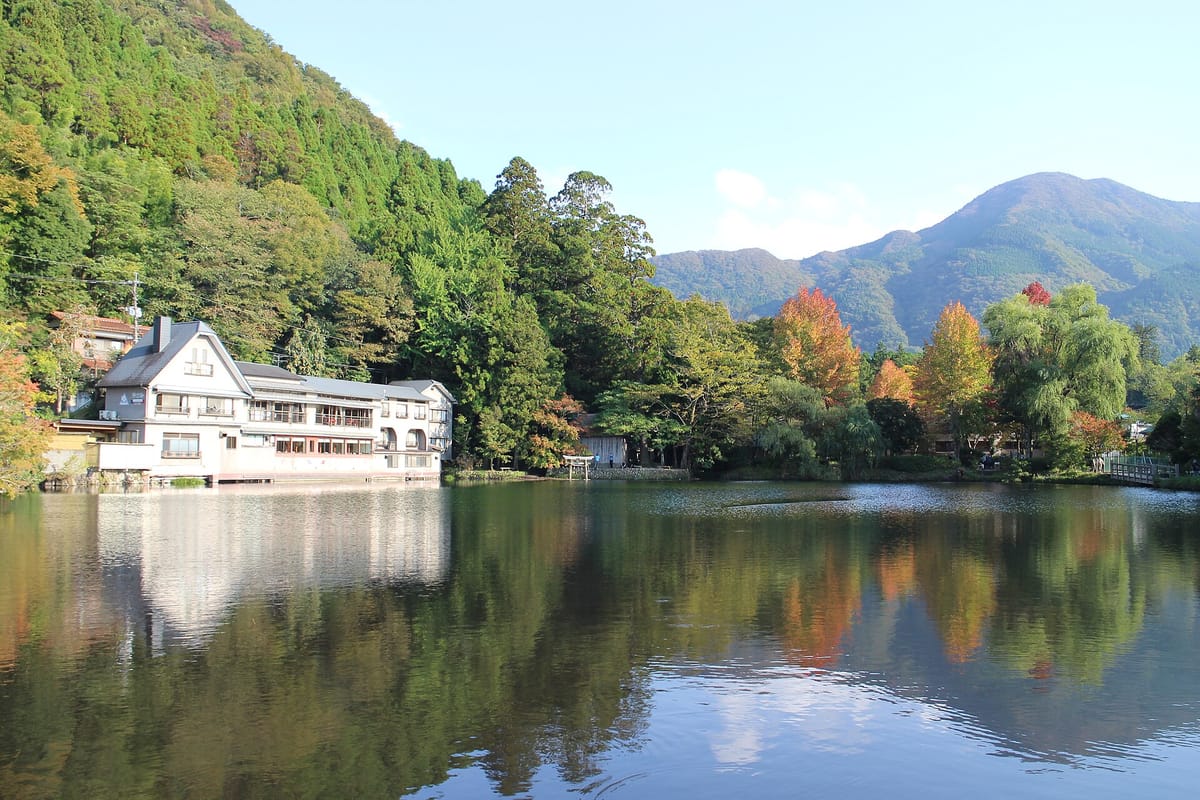
Yufuin lies in a basin surrounded by mountains, dominated by Yufudake, a 1,583-metre volcano with two peaks. Hot springs rise all over the basin, and the town grew up as a quiet farming village with baths. When many onsen towns built large hotels in the post-war boom, Yufuin's residents chose to keep it small, and its reputation today rests on that choice: low buildings, ryokan in gardens and woods, and views of fields and mountains.
The town is busy with day-trippers from late morning to late afternoon, especially along the shopping street, but the evenings and early mornings are peaceful. Staying one night lets you see the lake in the morning mist and enjoy the baths when the crowds have gone.
For a learner, Yufuin is a good place to practise onsen Japanese. The words on the curtains and signs repeat everywhere, and the ryokan staff are used to visitors asking about day bathing and private baths.
Getting there: JR Yufuin Station and buses
Yufuin Station is on the JR Kyūdai Main Line between Kurume and Ōita. The Limited Express Yufuin no Mori, a green resort train with large windows, runs from Hakata in a little over two hours; seats must be reserved and sell out at weekends. The station building itself, with its high timber hall, was designed by the architect Arata Isozaki.
Highway buses run from Fukuoka and Fukuoka Airport, and local buses connect Yufuin with Beppu in about an hour, which makes it easy to combine the two. From the station, Lake Kinrin is about twenty to thirty minutes on foot along the Yunotsubo Kaidō.
| Japanese | Romaji | Meaning |
|---|---|---|
| ゆふいんの森の指定席はありますか。 | Yufuin no Mori no shiteiseki wa arimasu ka. | Are there reserved seats on the Yufuin no Mori? |
| 由布院行きのバスは何番乗り場ですか。 | Yufuin-yuki no basu wa nanban noriba desu ka. | Which stop does the bus for Yufuin leave from? |
| 金鱗湖はどちらですか。 | Kinrinko wa dochira desu ka. | Which way is Lake Kinrin? |
| 荷物を預けられますか。 | Nimotsu o azukeraremasu ka. | Can I leave my luggage? |
| ここから歩いて何分くらいですか。 | Koko kara aruite nanpun kurai desu ka. | About how many minutes on foot from here? |
Lake Kinrin, the Yunotsubo street and Mount Yufu
Lake Kinrin, Kinrinko, is a small pond at the eastern edge of town, fed by both hot and cold springs. Its name means golden scales, after fish whose scales were said to shine gold in the setting sun. On cold mornings the warm water sends up mist that drifts across the surface and the trees around it, and this is the picture on every Yufuin poster.
The Yunotsubo Kaidō, the street from the station towards the lake, is lined with shops selling local sweets, crafts and snacks such as croquettes and roll cakes. It is busy but fun, and quieter lanes lead off it.
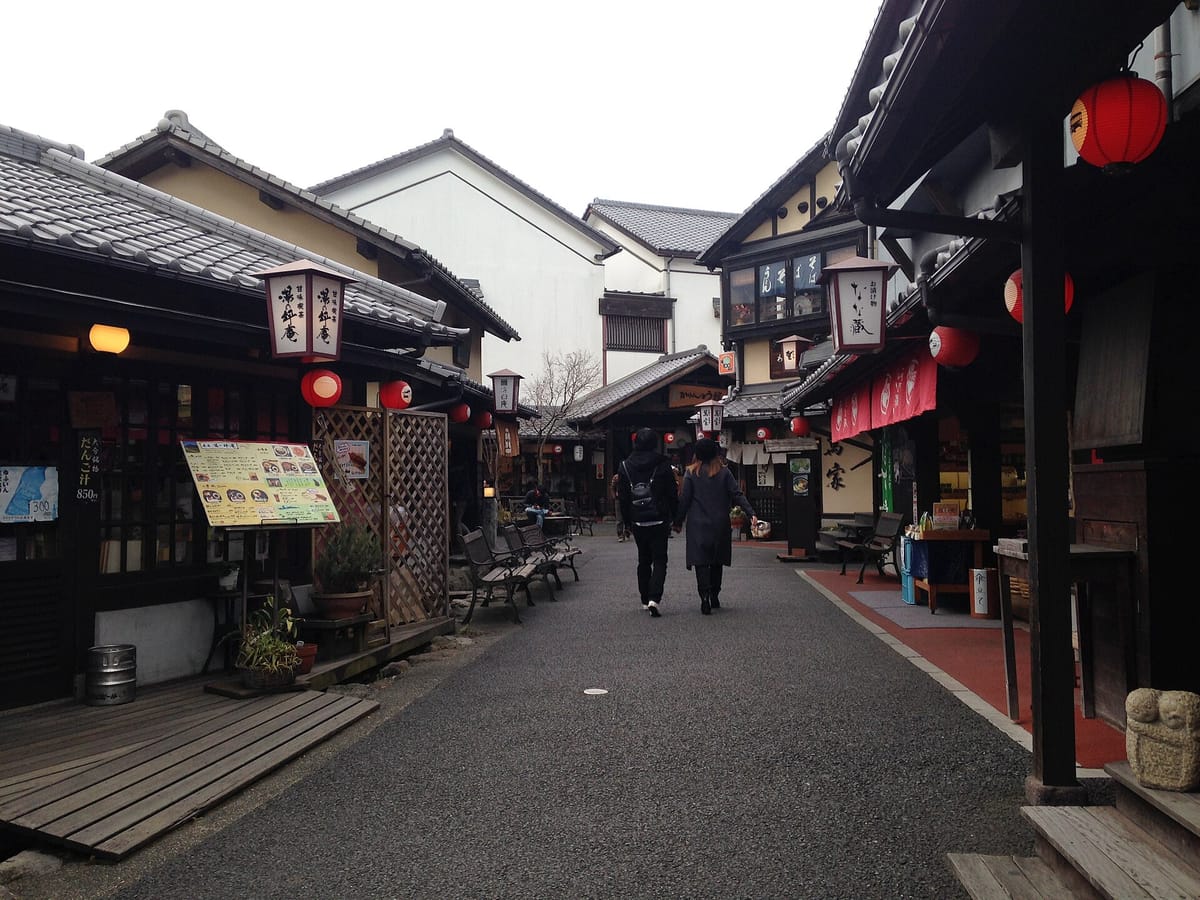
- Kinrinko: the lake with morning mist, best at sunrise in the colder months.
- Yunotsubo Kaidō: the shopping and snack street between the station and the lake.
- Yufudake: the twin-peaked mountain behind the town, a popular half-day hike for fit walkers.
- Yufuin Station: the timber station building designed by Arata Isozaki.
- Ryokan baths: many open to day visitors, some with private baths.
- The rice fields: walk or cycle the lanes around town for views of Mount Yufu.
Words on the onsen signs
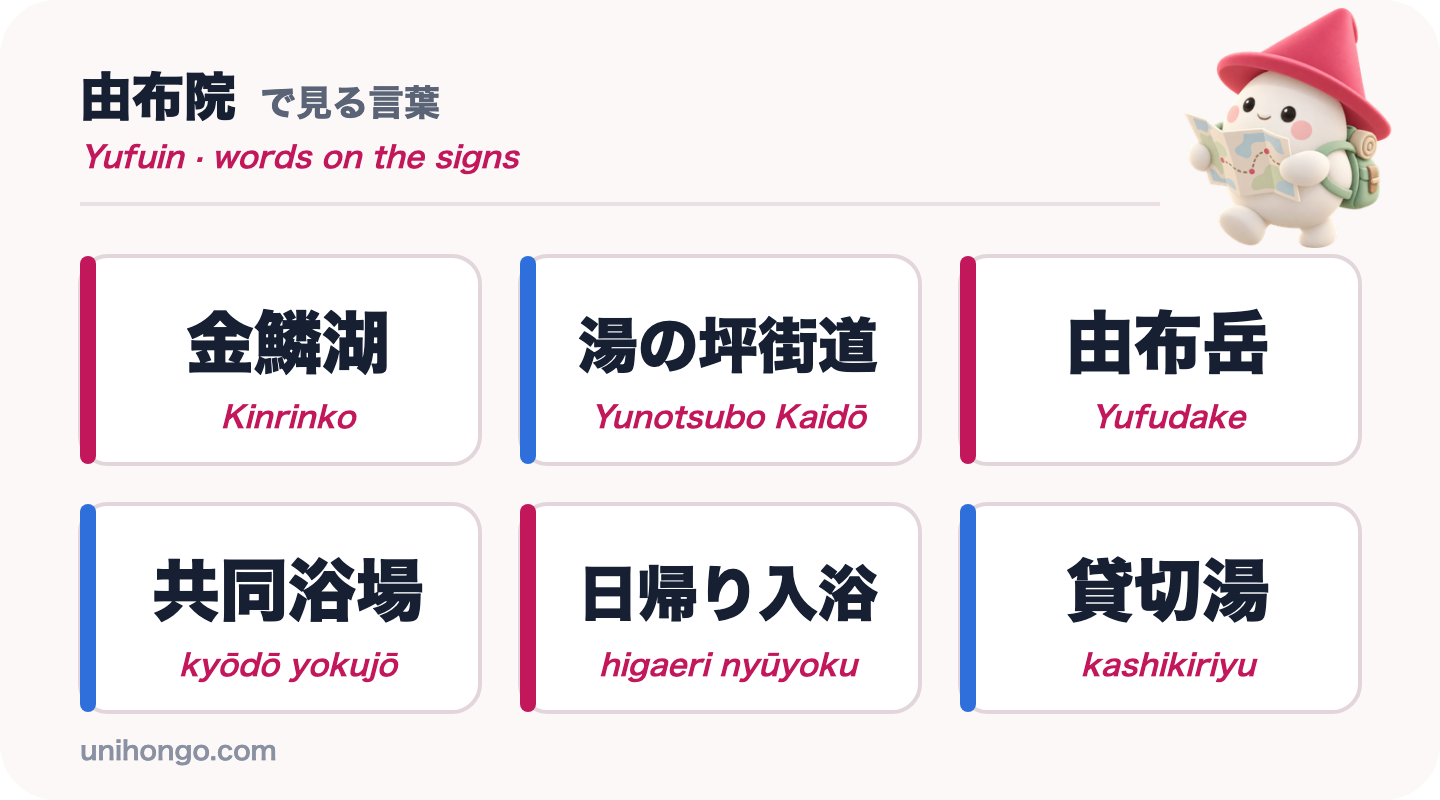
Onsen signs use a small set of words. Curtains marked 男 and 女 show the men's and women's baths, and boards outside ryokan list whether day visitors are welcome and whether private baths are available.
| Word | Reading | Meaning |
|---|---|---|
| 金鱗湖 | Kinrinko | Lake Kinrin, the lake of golden scales |
| 湯の坪街道 | Yunotsubo Kaidō | The main shopping street |
| 由布岳 | Yufudake | Mount Yufu |
| 共同浴場 | kyōdō yokujō | Communal bathhouse |
| 日帰り入浴 | higaeri nyūyoku | Bathing for day visitors |
| 貸切湯 | kashikiriyu | Private bath you book for a set time |
| 男湯 | otokoyu | Men's bath |
| 女湯 | onnayu | Women's bath |
| 家族風呂 | kazoku-buro | Family bath, another name for a private bath |
Japanese for day bathing and private baths
Day bathing is usually arranged at the front desk of a ryokan or at the counter of a bathhouse. You may be asked how many people, how long you want a private bath for, and whether you have your own towel. Towels are often sold or rented.
| Japanese | Romaji | Meaning |
|---|---|---|
| 日帰り入浴はできますか。 | Higaeri nyūyoku wa dekimasu ka. | Can day visitors use the bath? |
| 貸切湯を一時間お願いします。 | Kashikiriyu o ichijikan onegai shimasu. | A private bath for one hour, please. |
| 今、空いていますか。 | Ima, aite imasu ka. | Is it free now? |
| 何時まで入れますか。 | Nanji made hairemasu ka. | Until what time can I bathe? |
| タオルを借りられますか。 | Taoru o kariraremasu ka. | Can I borrow a towel? |
| タトゥーがあるんですが、大丈夫ですか。 | Tatū ga aru n desu ga, daijōbu desu ka. | I have a tattoo. Is that all right? |
Onsen etiquette and timing
Yufuin's baths follow the same etiquette as everywhere in Japan, and the town is small enough that visitors are noticed.
- Wash and rinse your body at the taps before getting into the bath.
- Keep your small towel out of the water; put it on your head or at the side.
- Tie up long hair so it does not touch the water.
- Do not swim, splash or use soap in the bath itself.
- Drink water before and after bathing, and do not bathe after drinking alcohol.
- Visit Kinrinko early in the morning and the shopping street late in the afternoon to avoid the busiest hours.
Practise the ryokan front desk before you go
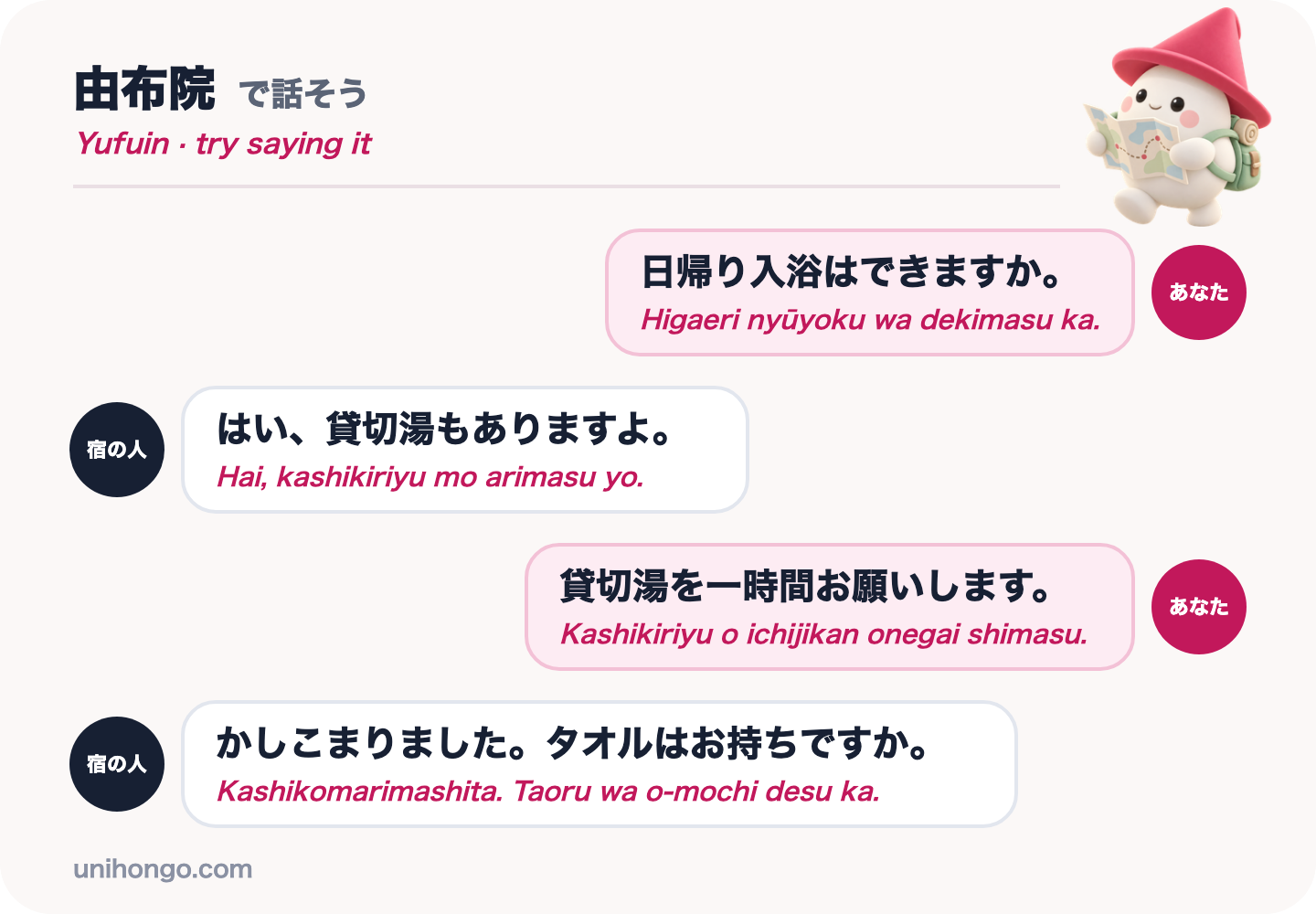
The front desk conversation is the one you need for day bathing. Practise the four lines below until you can say them smoothly, and listen for kashikomarimashita, certainly, and o-mochi desu ka, do you have, in the reply.
Then practise with a partner who answers back. In Unihongo, choose the Onsen topic and ask your AI Sensei to play the front desk of a Yufuin ryokan, or choose Ryokan Stay to rehearse checking in for the night.
| Japanese | Romaji | Meaning |
|---|---|---|
| 日帰り入浴はできますか。 | Higaeri nyūyoku wa dekimasu ka. | Can day visitors use the bath? |
| はい、貸切湯もありますよ。 | Hai, kashikiriyu mo arimasu yo. | Yes, and we have private baths too. |
| 貸切湯を一時間お願いします。 | Kashikiriyu o ichijikan onegai shimasu. | A private bath for one hour, please. |
| かしこまりました。タオルはお持ちですか。 | Kashikomarimashita. Taoru wa o-mochi desu ka. | Certainly. Do you have a towel with you? |
Official information
Yufu City's official travel guide lists ryokan with day bathing, events such as the autumn music festival, and access information. Check it before you go.