

Why Kurashiki's canal quarter is worth the detour
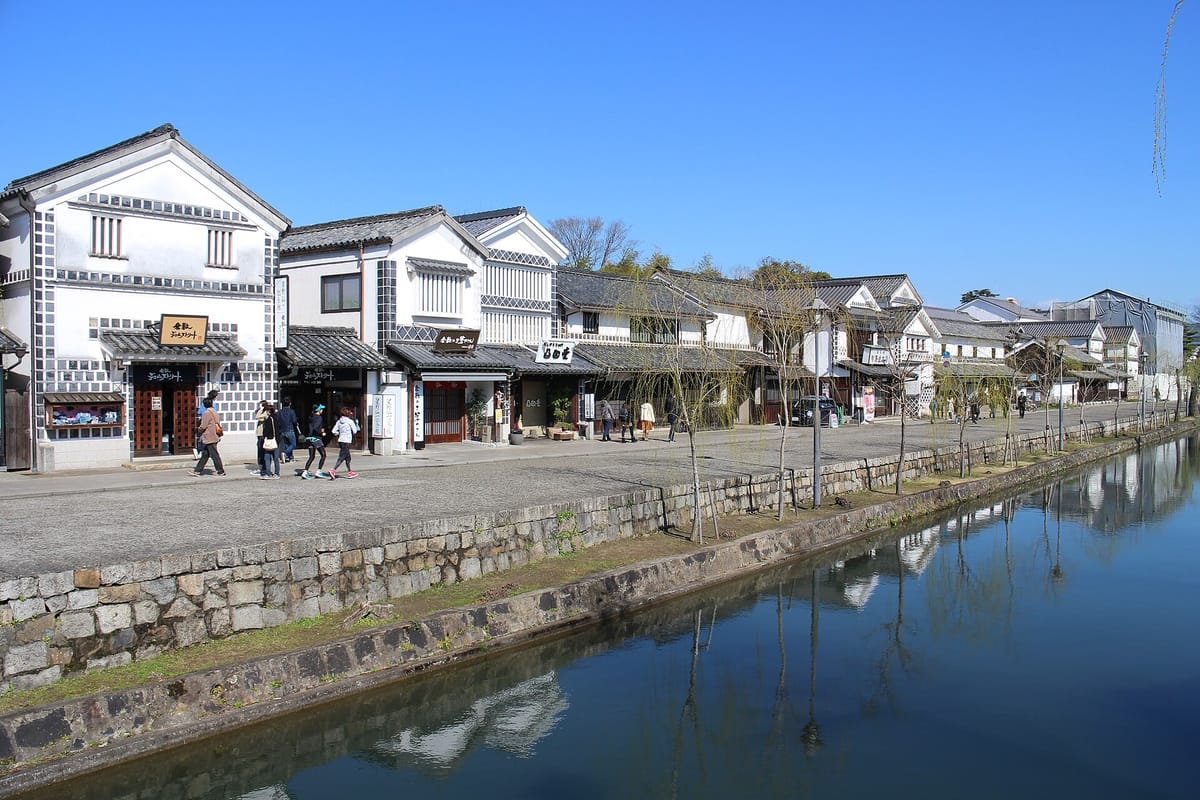
In the Edo period Kurashiki was governed directly by the shogunate and served as a collection point for rice and goods from the fertile plains of Bitchū. Barges carried cargo along the canal, Kurashiki-gawa, to the sea, and merchants built rows of storehouses along the banks. The name Kurashiki is usually explained as a place of storehouses, from kura, storehouse.
The town's second rise came with cotton. In 1889 the Kurashiki Spinning Company built a mill on the site of the old magistrate's office, and its president, Ōhara Magosaburō, later founded the Ōhara Museum of Art in 1930, collecting European paintings long before most Japanese had seen one in person. The mill is now Ivy Square, a hotel and shopping complex in red brick covered in ivy.
Walking the quarter is a good reading lesson in itself: shop curtains, noren, carry the names of old businesses in brushed characters, and small signs explain each building in Japanese first. You can read your way along the canal one sign at a time.
Getting there: Kurashiki Station and the walk to the canal
Kurashiki Station is on the JR San'yō Line, about fifteen minutes by local train from Okayama, where the shinkansen stops. Leave by the south exit and walk south along Chūō-dōri, the wide main road, for around ten to fifteen minutes. The quarter begins where the road meets the canal; turn left along the water and the storehouses start at once.
The Kurashiki-kan tourist information office, a white western-style building from the early twentieth century, stands on the canal in the middle of the quarter. It is the place for maps, for boat tickets and for questions, and it is a landmark to give when you ask the way.
| Japanese | Romaji | Meaning |
|---|---|---|
| 美観地区はどちらですか。 | Bikan Chiku wa dochira desu ka. | Which way is the Bikan quarter? |
| 南口から出ればいいですか。 | Minamiguchi kara dereba ii desu ka. | Should I go out of the south exit? |
| 倉敷館はどこですか。 | Kurashiki-kan wa doko desu ka. | Where is Kurashiki-kan? |
| 歩いて何分くらいですか。 | Aruite nanpun kurai desu ka. | About how many minutes on foot? |
| コインロッカーはありますか。 | Koin rokkā wa arimasu ka. | Are there coin lockers? |
Along the canal: what you will see
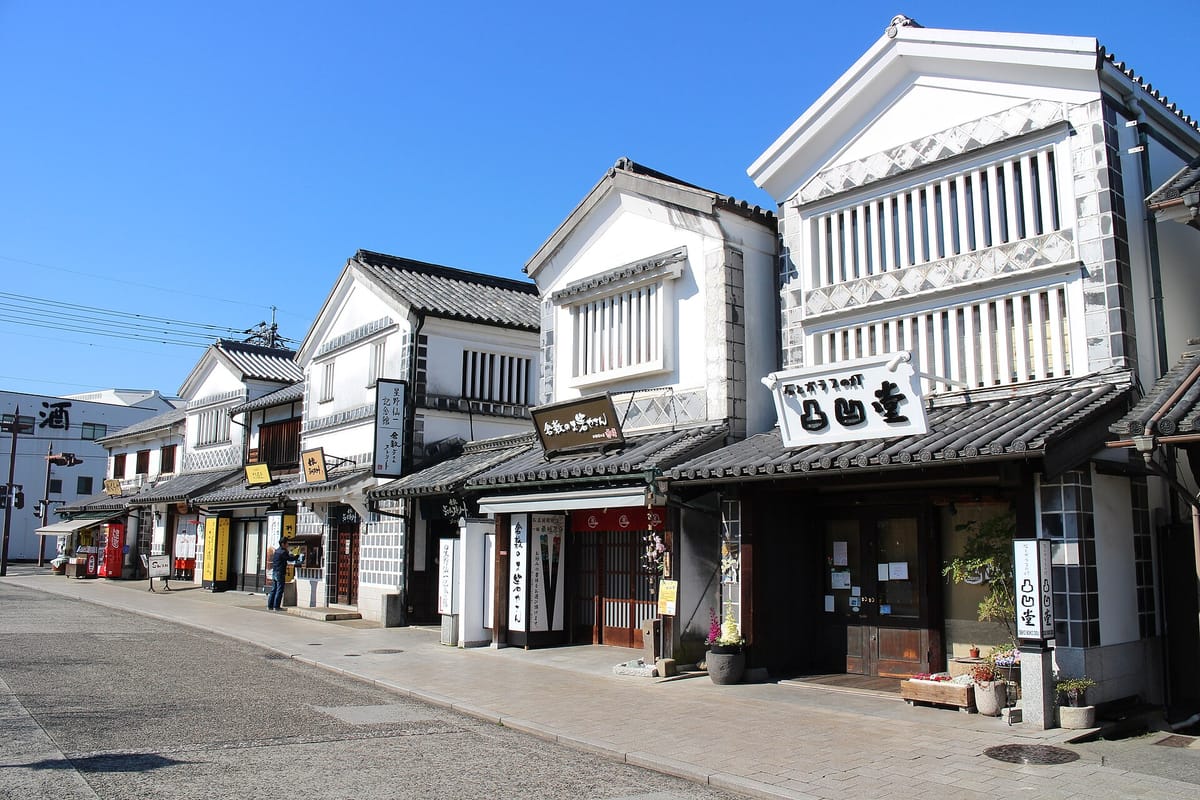
The heart of the quarter is only a few hundred metres of canal, but side streets lead off in every direction, and it is easy to spend hours here. The storehouse walls are covered in namako-kabe, black tiles set in raised white plaster joints, a pattern designed to protect against fire and rain. Many storehouses are now cafés, galleries and shops selling local denim, canvas goods and fruit desserts.
- Kurashiki-gawa: the willow-lined canal, with stone bridges and the canal boats.
- Ōhara Bijutsukan, the Ōhara Museum of Art: its Greek-temple-style main building faces the canal.
- Kurashiki-kan: the tourist office in a white western-style building on the canal.
- Ōhashi-ke Jūtaku: a large Edo-period merchant house open to visitors.
- Honmachi and Higashimachi: quieter streets of old townhouses behind the canal.
- Achi Jinja: a shrine on the hill above the quarter, reached by stone steps, with a view over the rooftops.
- Ivy Square: the red-brick former cotton mill, now a hotel with shops and a museum of the spinning company.
In the evening the quarter is lit, and after the day visitors leave, the canal becomes quiet enough to hear the water. If you are staying in the area, walk it once in daylight and once after dark.
Words on the signs
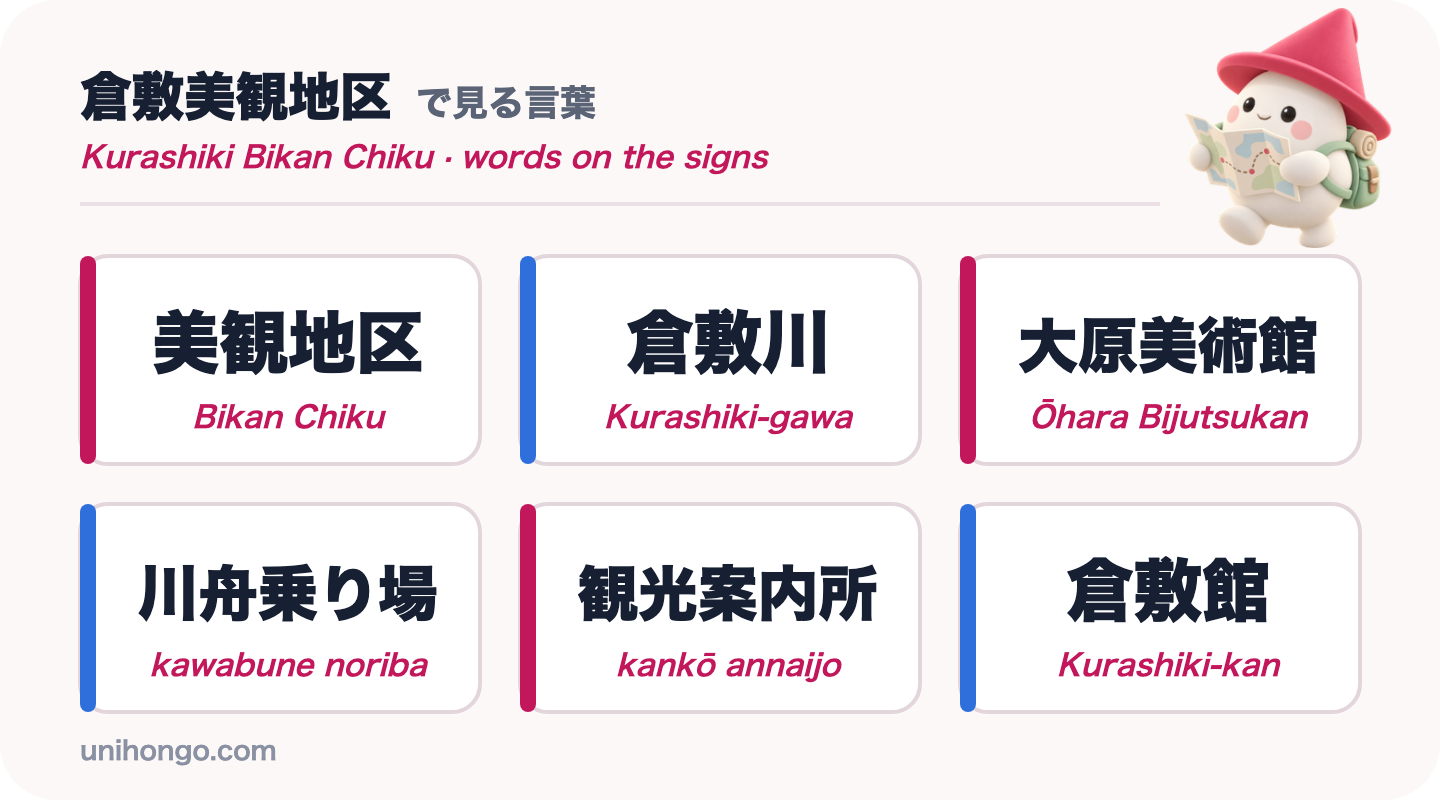
The kanji 館, kan, hall or building, appears on almost every important sign here: the art museum, bijutsukan, and the tourist office, Kurashiki-kan. So does 川, kawa, river, which becomes gawa after the name: Kurashiki-gawa. The boat ride is written 川舟流し, kawabune nagashi, literally letting a river boat drift.
| Word | Reading | Meaning |
|---|---|---|
| 美観地区 | Bikan Chiku | The historic quarter |
| 倉敷川 | Kurashiki-gawa | The Kurashiki canal |
| 大原美術館 | Ōhara Bijutsukan | The Ōhara Museum of Art |
| 川舟乗り場 | kawabune noriba | Canal boat boarding point |
| 観光案内所 | kankō annaijo | Tourist information office |
| 倉敷館 | Kurashiki-kan | The tourist office building on the canal |
| 蔵 | kura | Storehouse |
| なまこ壁 | namako-kabe | Wall of tiles in raised white plaster joints |
| 川舟流し | kawabune nagashi | The canal boat ride |
Japanese for the canal boat and the shops
The canal boat is small, sailings are limited and seats go quickly on busy days. The Kurashiki-kan office sells tickets for each departure from the morning on the day, first come, first served; buy early and then explore until your time comes round. From October 2026 part of each sailing can also be booked online in advance. The boatman steers with a long pole and usually talks about the sights in Japanese, so a few words of vocabulary about the canal and its buildings will help you follow.
In the shops, staff are used to visitors and will often switch to English, but a question in Japanese is welcome. Denim goods from nearby Kojima and canvas bags, hanpu, are local specialities.
| Japanese | Romaji | Meaning |
|---|---|---|
| 川舟のチケットはまだありますか。 | Kawabune no chiketto wa mada arimasu ka. | Are there still tickets for the canal boat? |
| 一番早い便は何時ですか。 | Ichiban hayai bin wa nanji desu ka. | What time is the earliest boat? |
| 乗り場はどこですか。 | Noriba wa doko desu ka. | Where do we board? |
| 雨の日も出ますか。 | Ame no hi mo demasu ka. | Does it run on rainy days? |
| これは倉敷の帆布ですか。 | Kore wa Kurashiki no hanpu desu ka. | Is this Kurashiki canvas? |
| 大原美術館の入口はどこですか。 | Ōhara Bijutsukan no iriguchi wa doko desu ka. | Where is the entrance to the Ōhara Museum? |
Etiquette, timing and practical tips
The quarter is lived in and worked in, and it is compact, so it feels crowded quickly at the busiest times.
- Arrive early. The streets are calm before mid-morning, and the boat tickets go on sale early.
- Many shops close in the late afternoon; plan shopping before then and the lit-up canal walk after.
- Do not sit on the canal walls with your feet over the water, and keep off private doorsteps for photos.
- The Ōhara Museum is closed on some days each week and season; check its calendar before planning around it.
- Eating while walking is frowned on in busy lanes. Stop at the shop counter or a bench to finish your snack.
- Okayama is a fruit region: look for white peach and muscat grape desserts in season.
Practise the ticket desk before you go
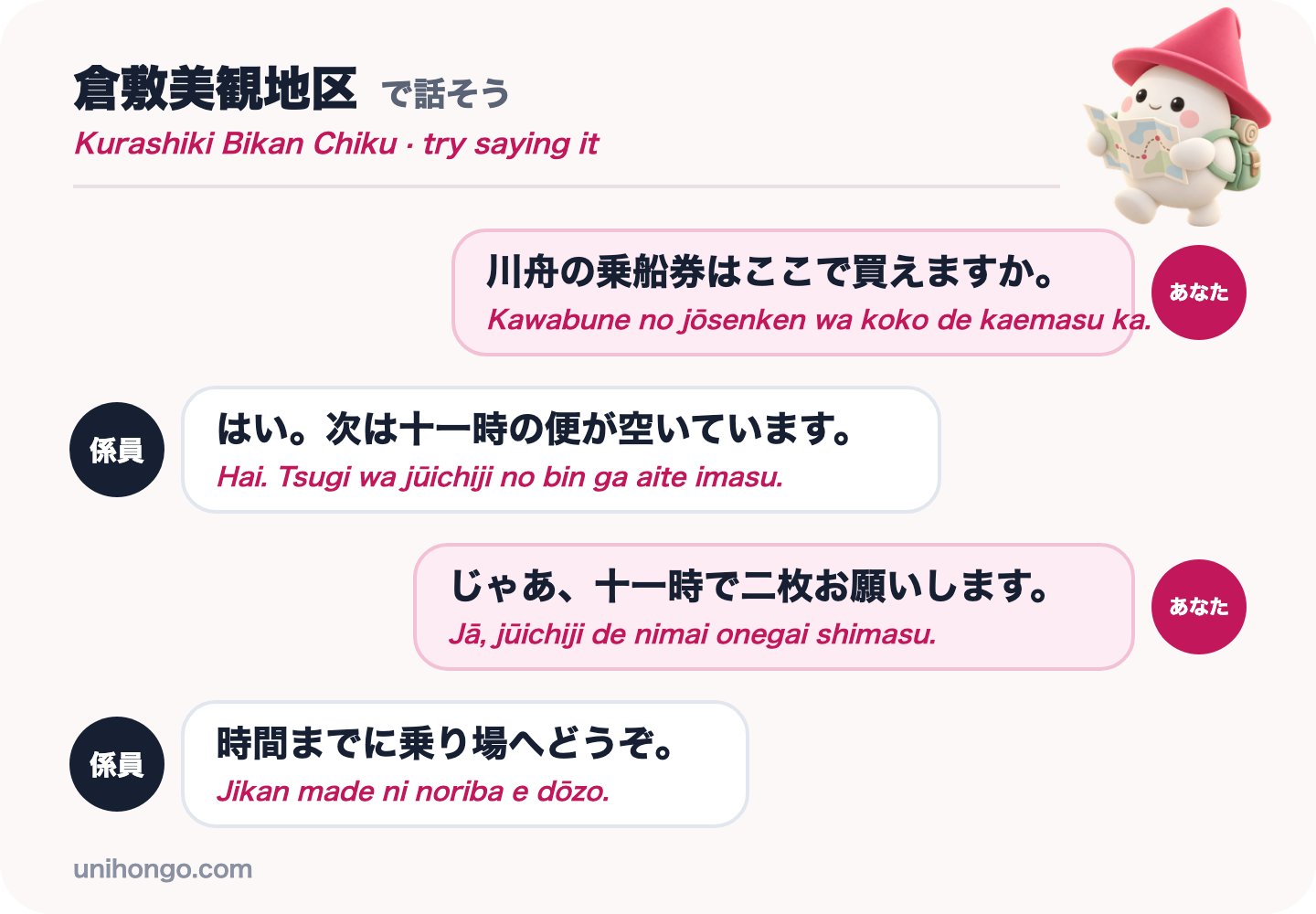
The key moment is at the tourist office counter, where you ask for a boat and get a time back. Listen for ji, o'clock, and aite imasu, is available. Practise the four lines until they come without reading.
Then practise with a partner who answers back. In Unihongo, choose the Sightseeing topic and ask your AI Sensei to play the staff at the Kurashiki-kan counter, changing the times so you practise hearing numbers. Say the lines once in advance, and asking on the day will feel natural.
| Japanese | Romaji | Meaning |
|---|---|---|
| 川舟の乗船券はここで買えますか。 | Kawabune no jōsenken wa koko de kaemasu ka. | Can I buy canal boat tickets here? |
| はい。次は十一時の便が空いています。 | Hai. Tsugi wa jūichiji no bin ga aite imasu. | Yes. The next one with space is the eleven o'clock. |
| じゃあ、十一時で二枚お願いします。 | Jā, jūichiji de nimai onegai shimasu. | Then two for eleven o'clock, please. |
| 時間までに乗り場へどうぞ。 | Jikan made ni noriba e dōzo. | Please be at the boarding point by then. |
Official information
The Kurashiki tourism bureau publishes the canal boat's operating days, ticket rules and online booking, and the Ōhara Museum posts its calendar. Check both before you go.