

Why Kinugawa Onsen is worth a night
The springs of Kinugawa were discovered in 1691, and the first bathing place was known as Taki Onsen, the waterfall spring. For much of the Edo period ordinary people could not use it: the water was kept for daimyō, the feudal lords, and for monks travelling to and from the temples and shrines of Nikkō. The resort took its present name in 1927, when it combined with a neighbouring spring, and the railway that arrived around the same time turned it into a holiday town for Tokyo.
Kinugawa grew fast in the boom years and struggled after them. Some large hotels along the gorge have closed and stand empty, and you will see them from the bridges. Others have been rebuilt or replaced by new resorts, and the town is busy again at weekends. The mix of grand old buildings, quiet shells and the river roaring below them gives it a character that newer spa towns do not have.
The water itself is an alkaline simple spring, clear, nearly odourless and gentle, which is why it has long been recommended for tired muscles, stiff shoulders and first-time bathers. For a Japanese learner, Kinugawa is where you can try every kind of bath, from a free footbath to a ryokan with dinner in your room, and practise the short, polite exchanges that go with each.
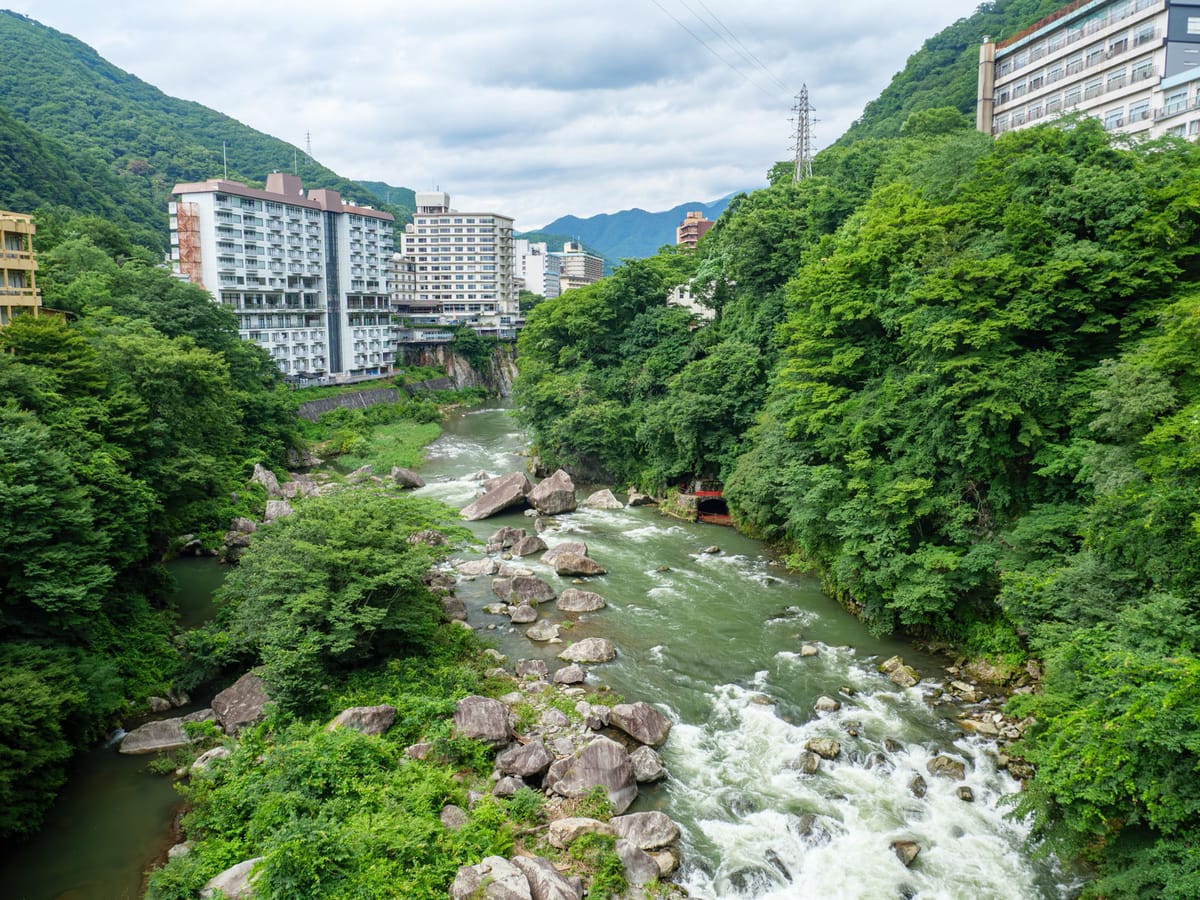
Getting there: Tōbu limited expresses to Kinugawa-Onsen Station
Kinugawa-Onsen Station, Kinugawa-onsen-eki, is on the Tōbu Kinugawa Line, which branches off the main line to Nikkō at Shimo-Imaichi. The easiest way from Tokyo is a limited express from Tōbu Asakusa Station: the Spacia X and the Revaty run through to Kinugawa-Onsen in about two hours. From Shinjuku, the JR and Tōbu through limited express Kinugawa takes about the same time, running over JR tracks and then onto the Tōbu line. All of these need a limited express ticket with a reserved seat on top of the fare.
Kinugawa-Kōen Station, one stop further north, is closer to some hotels at the upper end of the gorge, so check which station your hotel recommends. Many ryokan run a shuttle from the station; ask when you book. The tourist information office is inside the station building, and the bus terminal and taxi rank are in the plaza outside.
| Japanese | Romaji | Meaning |
|---|---|---|
| 鬼怒川温泉まで特急券を一枚お願いします。 | Kinugawa Onsen made tokkyūken o ichimai onegai shimasu. | One limited express ticket to Kinugawa Onsen, please. |
| この特急は鬼怒川温泉に行きますか。 | Kono tokkyū wa Kinugawa Onsen ni ikimasu ka. | Does this limited express go to Kinugawa Onsen? |
| 下今市で乗り換えですか。 | Shimo-Imaichi de norikae desu ka. | Do I change at Shimo-Imaichi? |
| ホテルの送迎バスはどこから出ますか。 | Hoteru no sōgei basu wa doko kara demasu ka. | Where does the hotel shuttle bus leave from? |
| 観光案内所はどこですか。 | Kankō annaijo wa doko desu ka. | Where is the tourist information office? |
Between the baths: bridge, gorge and steam train
Most of the town is on one bank of the river, and the best walk crosses it. The Kinu Tateiwa Ōtsuribashi, the great suspension bridge, is a free footbridge about 140 metres long that opened in 2009. It crosses from the hotel side to Tateiwa, a sheer rock on the far bank, and is sometimes called a bridge for tying the knot, en-musubi, because it joins the river and the rock. A path continues on the far side to viewpoints over the gorge.
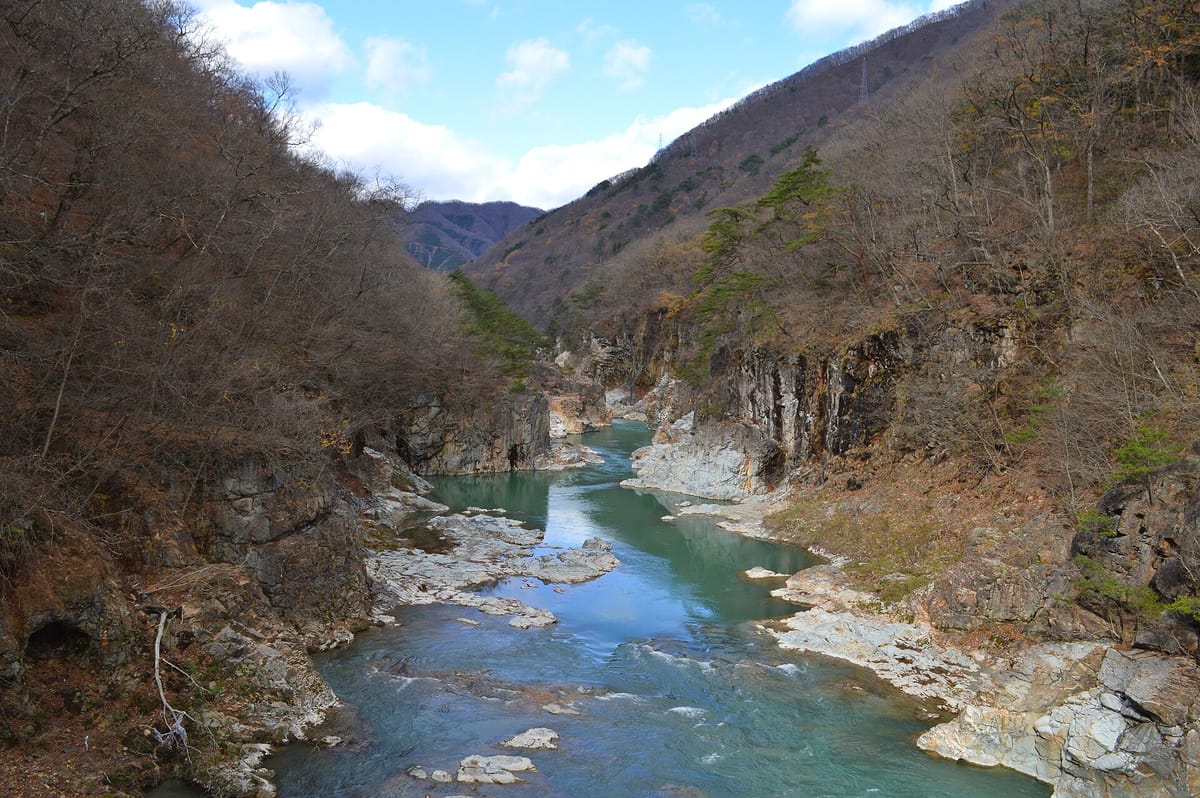
Further up the river, Ryūōkyō, the Dragon King Gorge, is about three kilometres of cliffs and rapids formed from old volcanic rock, with a walking trail, a small waterfall called Nijimi no taki and the Musasabi-bashi bridge. Its sections are named for the colour of the rock: white, blue and purple dragon. Ryūōkyō Station, on the Yagan Railway line that continues from Kinugawa-Onsen towards Aizu, is right at the start of the trail.
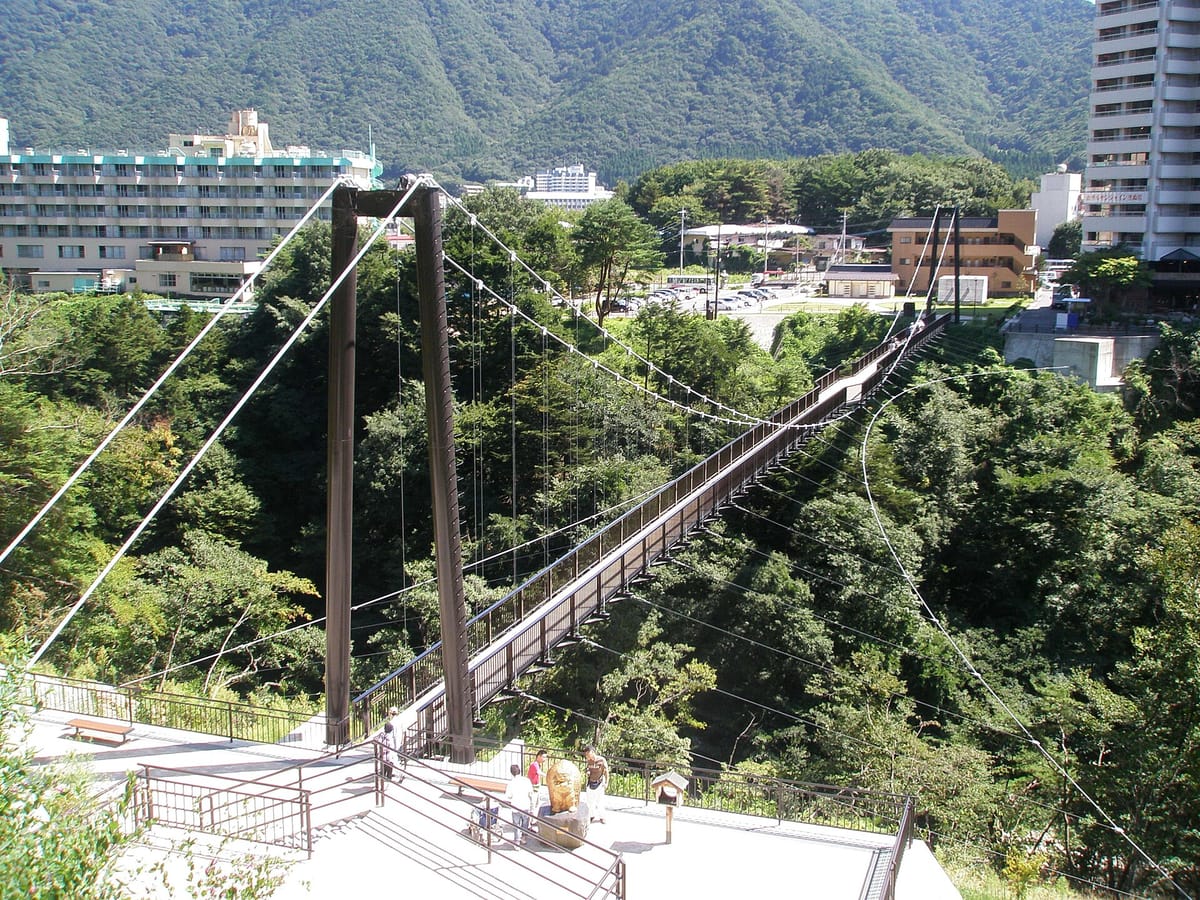
- Kinutarō no yu: the free footbath in front of Kinugawa-Onsen Station, named after the ogre mascot.
- Tenshadai hiroba: the turntable plaza by the station, where the SL Taiju steam locomotive is turned round.
- SL Taiju: a steam-hauled tourist train on the Tōbu line to Kinugawa-Onsen on operating days; seats are reserved in advance.
- Kinu Tateiwa Ōtsuribashi: the free 140-metre suspension bridge across the gorge.
- Kinugawa Line Kudari: a traditional boat trip down the river's rapids, usually run from spring to late autumn.
- The ropeway: a short cable car to a hilltop viewpoint where Japanese macaques are kept.
- Ryūōkyō: the Dragon King Gorge, a riverside trail a few stops up the line.
- Edo Wonderland and Tōbu World Square: two theme parks nearby, one an Edo-period town, the other with scale models of world landmarks.
Words on the signs at Kinugawa Onsen
The most important sign in any onsen town is on the curtains, noren, that hang at the bath entrances. 男 is man and 女 is woman, and the curtains are often colour-coded too, commonly blue for men and red for women. Hotels sometimes swap the men's and women's baths in the evening so that guests can try both, so read the sign every time rather than going by where you went yesterday.
Outside the hotels, look for 日帰り入浴 on boards by the entrance, which means the bath is open to day visitors, and 源泉かけ流し, a claim that the water flows straight from the spring without being recirculated. 足湯 is a footbath, and 大吊橋 is the great suspension bridge.
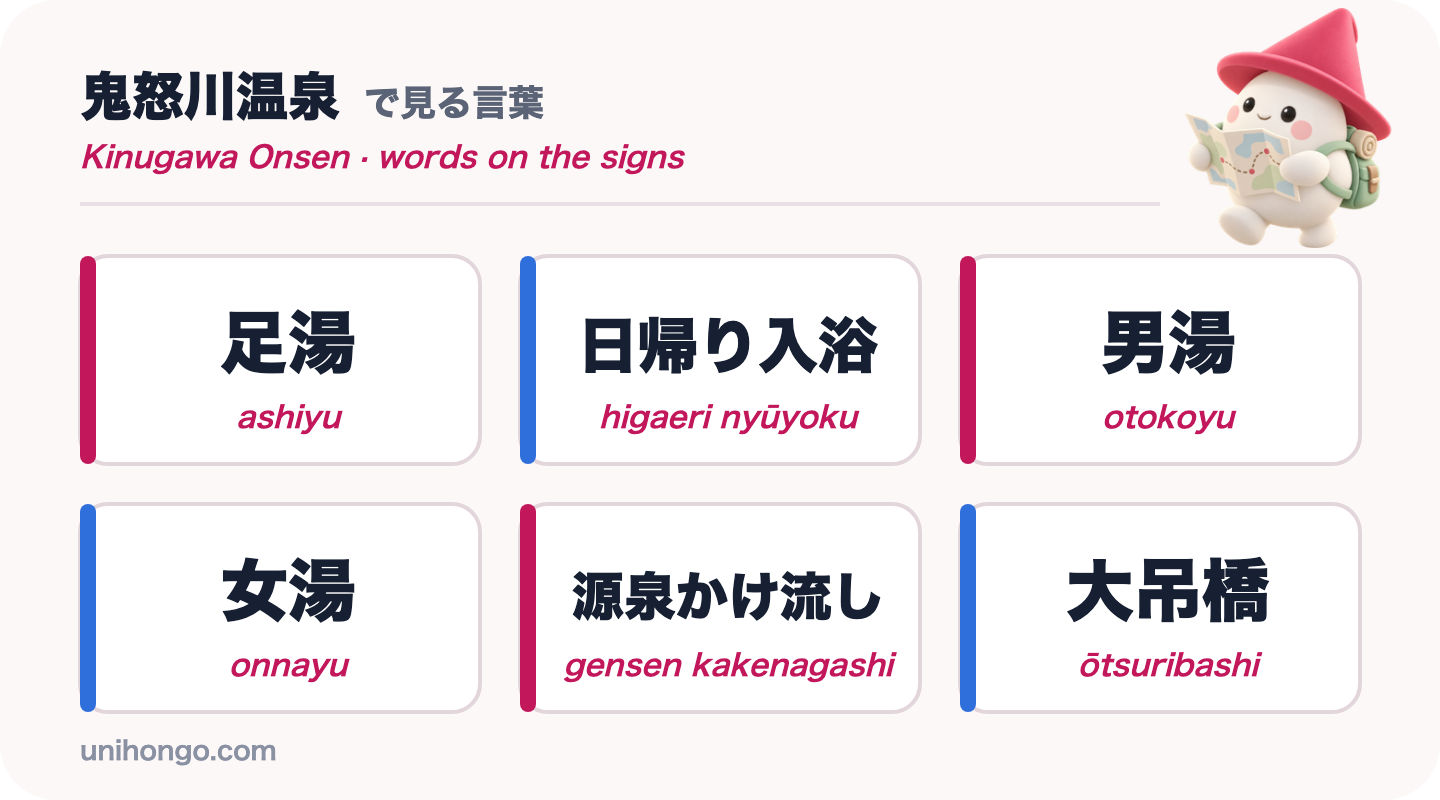
| Word | Reading | Meaning |
|---|---|---|
| 足湯 | ashiyu | Footbath, free at the station |
| 日帰り入浴 | higaeri nyūyoku | Bathing for day visitors |
| 男湯 | otokoyu | Men's bath |
| 女湯 | onnayu | Women's bath |
| 源泉かけ流し | gensen kakenagashi | Water flowing straight from the spring |
| 露天風呂 | rotenburo | Open-air bath |
| 貸切風呂 | kashikiri buro | Private bath you can book |
| 大吊橋 | ōtsuribashi | Great suspension bridge |
| 温泉 | onsen | Hot spring |
Japanese for day bathing and a ryokan stay
Whether you are dropping in for a day bath or staying the night, the conversations happen at the front desk, furonto, and they are short. For a day bath you pay at the desk, may be asked to rent or buy a towel, and are pointed to the baths. For a stay, check-in usually comes with questions about dinner and breakfast times and about when the baths are open, and many ryokan lend you a yukata to wear around the building.
The phrases below cover both. The replies you will hear most are kochira desu, this way, and go-annai shimasu, I will show you, followed by a walk to the bath or your room.
| Japanese | Romaji | Meaning |
|---|---|---|
| 日帰りで温泉に入りたいんですが。 | Higaeri de onsen ni hairitai n desu ga. | I would like to use the hot spring as a day visitor. |
| タオルは付いていますか。 | Taoru wa tsuite imasu ka. | Is a towel included? |
| 露天風呂はありますか。 | Rotenburo wa arimasu ka. | Is there an open-air bath? |
| 男湯はどちらですか。 | Otokoyu wa dochira desu ka. | Which way is the men's bath? |
| 予約したスミスです。チェックインをお願いします。 | Yoyaku shita Sumisu desu. Chekkuin o onegai shimasu. | I have a reservation; my name is Smith. I would like to check in, please. |
| お風呂は何時まで入れますか。 | O-furo wa nanji made hairemasu ka. | Until what time can I use the bath? |
| 貸切風呂は予約できますか。 | Kashikiri buro wa yoyaku dekimasu ka. | Can I book the private bath? |
| 浴衣のサイズを替えてもらえますか。 | Yukata no saizu o kaete moraemasu ka. | Could I change the size of my yukata? |
Onsen etiquette, timing and practical tips
Kinugawa's baths follow the same rules as every onsen in Japan, and the staff will assume you know them. A few habits, and a little planning around the trains, make the stay easy.
- Wash and rinse thoroughly at the shower stools before you get into the bath, and keep your small towel out of the water; people fold it on their heads.
- Swimsuits are not worn in the main baths; the footbath is the place to try the water fully dressed.
- Do not swim, splash or dip your head under, and tie long hair up.
- Drink water before and after bathing, and get out if you feel dizzy; the water is hotter than it feels at first.
- Reserve limited express seats for Friday evenings, weekends and holidays, when the trains from Tokyo fill up.
- If you want to ride the SL Taiju, check the operating days and book the seat in advance.
- Combine a night here with Nikkō's shrines, which are around half an hour away, rather than trying both in one rushed day.
Practise the front desk before you go
The first conversation of the day is likely to be at a hotel front desk, asking to use the bath. Practise the four lines below until you can say them without reading, and listen for two key parts of the answers: yūgata made, until the evening, which tells you how long you have, and o-watashi shimasu, I will hand it to you.
Then practise with a partner who answers back. In Unihongo, choose the Onsen topic and ask your AI Sensei to play the front desk of a Kinugawa hotel, or choose Ryokan Stay to rehearse a full check-in with dinner and breakfast times. Saying the lines once before you arrive is what makes them come out at the desk.
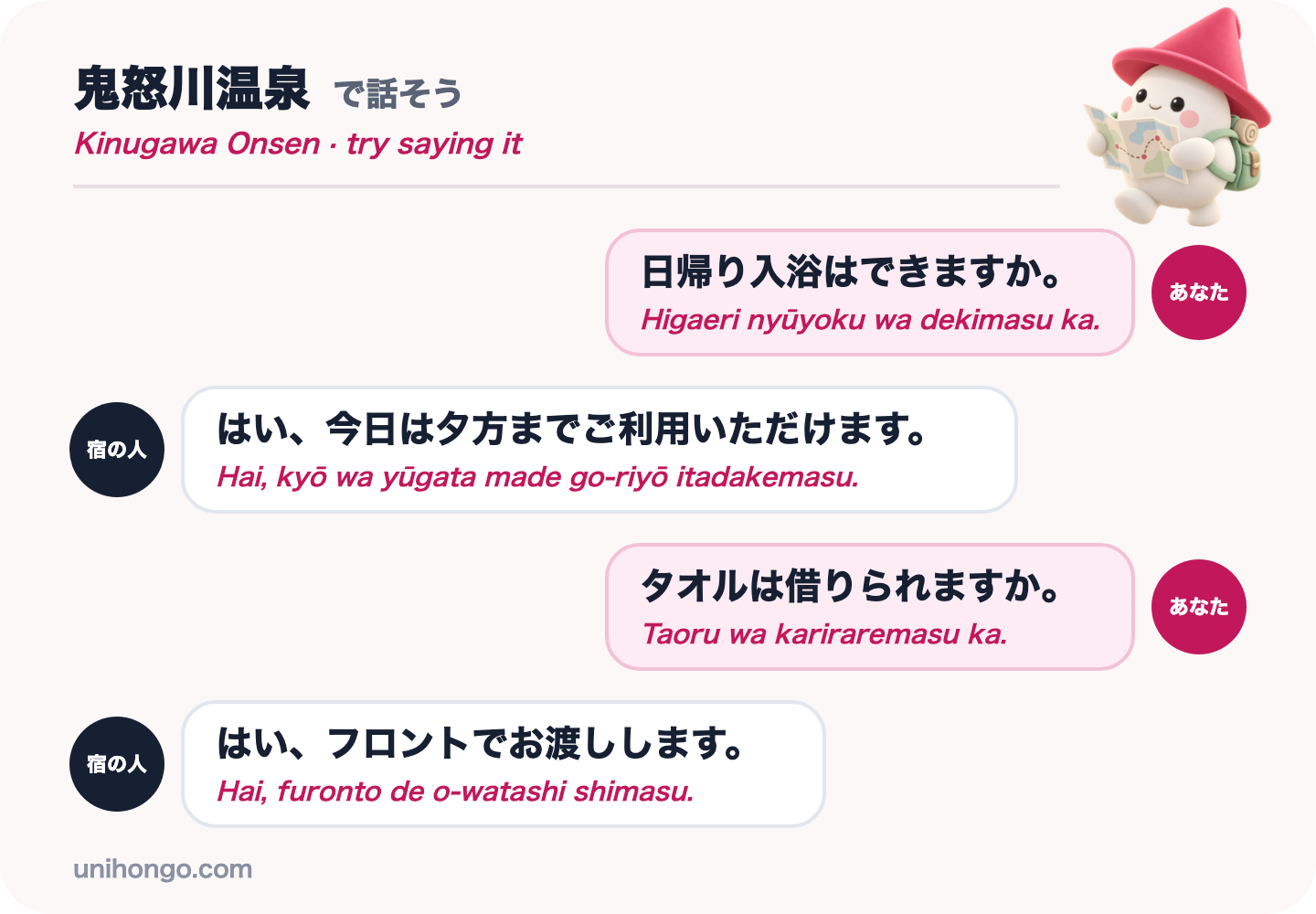
| Japanese | Romaji | Meaning |
|---|---|---|
| 日帰り入浴はできますか。 | Higaeri nyūyoku wa dekimasu ka. | Can I use the bath as a day visitor? |
| はい、今日は夕方までご利用いただけます。 | Hai, kyō wa yūgata made go-riyō itadakemasu. | Yes, today you can use it until the evening. |
| タオルは借りられますか。 | Taoru wa kariraremasu ka. | Can I borrow a towel? |
| はい、フロントでお渡しします。 | Hai, furonto de o-watashi shimasu. | Yes, we will give you one at the front desk. |
Official information
The Nikkō city tourism association lists Kinugawa Onsen with its access and nearby sights, and Tōbu Railway publishes the SL Taiju operating days, timetables and seat booking. Hotel day-bathing hours change often, so check with the hotel or the tourist office in the station on the day.