

Why the Alpine Route is worth a full day
Few places let you cross a major mountain range without hiking. The Alpine Route opened fully in 1971 and still feels like an engineering adventure: a funicular up a cliff, a bus across a high plateau, tunnels bored under 3,000-metre peaks, and a ropeway that swings across a valley with no support towers at all. It climbs from under 500 metres to 2,450 metres and back down again, within Chūbu Sangaku National Park.
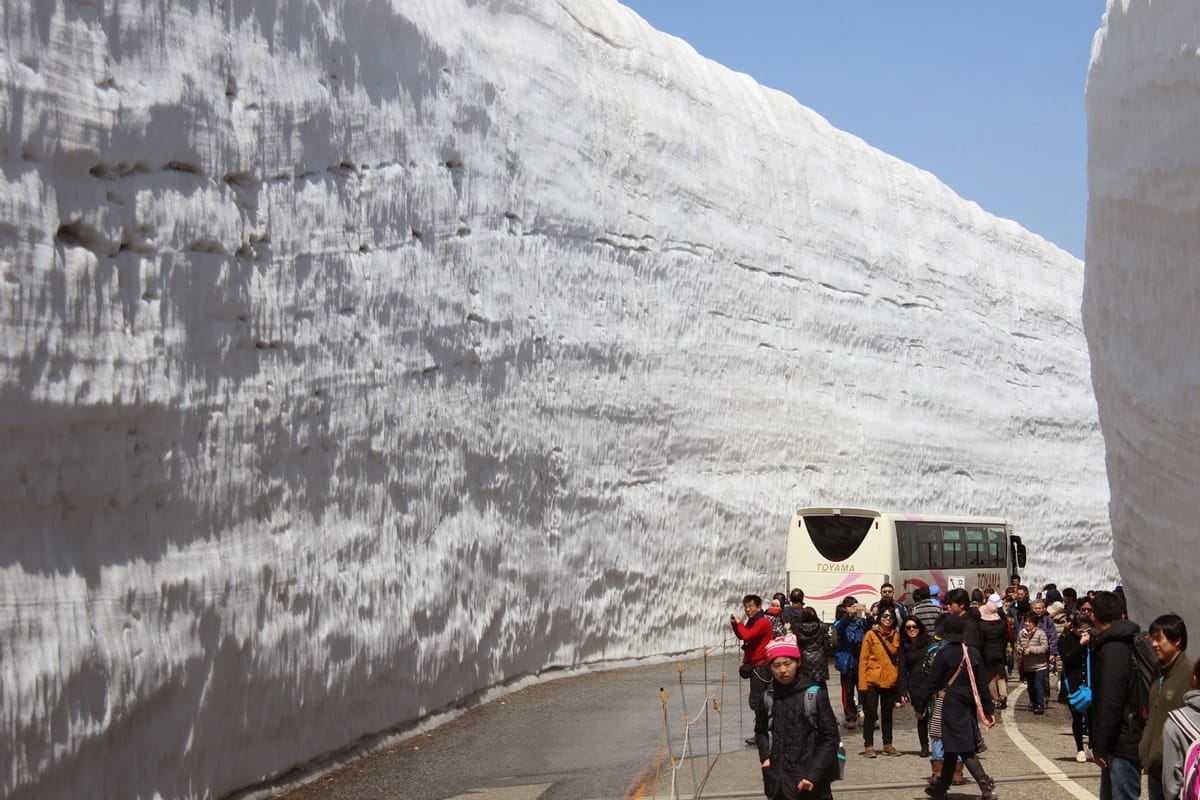
The highlights change with the season. From mid-April the famous snow walls line the road near Murodō; in summer the plateau is green, with alpine flowers and ponds; from late September the slopes turn red and gold, descending the mountain through October. At the Nagano end, Kurobe Dam is a destination in its own right.
For a Japanese learner, the route is a chain of small, practical conversations: buying and showing tickets, checking the next departure, finding the right platform and sending luggage ahead. Each is short and predictable, which makes it ideal practice.
Getting there: Toyama at one end, Ōgizawa at the other
On the Toyama side, take the Toyama Chihō Railway from Dentetsu-Toyama Station, next to JR Toyama Station on the Hokuriku Shinkansen, to Tateyama Station, about an hour. Drivers can park at Tateyama Station.
On the Nagano side, the route ends at Ōgizawa, reached by bus from Shinano-Ōmachi Station on the JR Ōito Line, about forty minutes, or by express bus from Nagano Station in about an hour and three-quarters. You can travel in either direction, and many people do a round trip from one end to Murodō or Kurobe Dam and back instead of crossing.
If you cross with luggage, big suitcases are awkward on the crowded vehicles and cost extra to carry. A luggage delivery service between the two ends lets you send them ahead and travel light.
| Japanese | Romaji | Meaning |
|---|---|---|
| 立山駅まで一枚お願いします。 | Tateyama-eki made ichimai onegai shimasu. | One ticket to Tateyama Station, please. |
| 電鉄富山駅はどこですか。 | Dentetsu-Toyama-eki wa doko desu ka. | Where is Dentetsu-Toyama Station? |
| 扇沢行きのバスは何番のりばですか。 | Ōgizawa yuki no basu wa nanban noriba desu ka. | Which stop does the bus to Ōgizawa leave from? |
| ウェブチケットを予約しています。 | Webu chiketto o yoyaku shite imasu. | I've reserved a web ticket. |
| 乗る時間を変更できますか。 | Noru jikan o henkō dekimasu ka. | Can I change my departure time? |
Stage by stage from Tateyama to Ōgizawa
Here is the route from west to east. Each stage has its own station and ticket check, and the busiest ones use timed boarding.
- Tateyama Cable Car (立山ケーブルカー): a steep funicular from Tateyama Station to Bijodaira, about seven minutes.
- Tateyama Kōgen Bus (立山高原バス): about fifty minutes across the plateau, past old cedars and waterfalls, up to Murodō and through Yuki no Ōtani in spring.
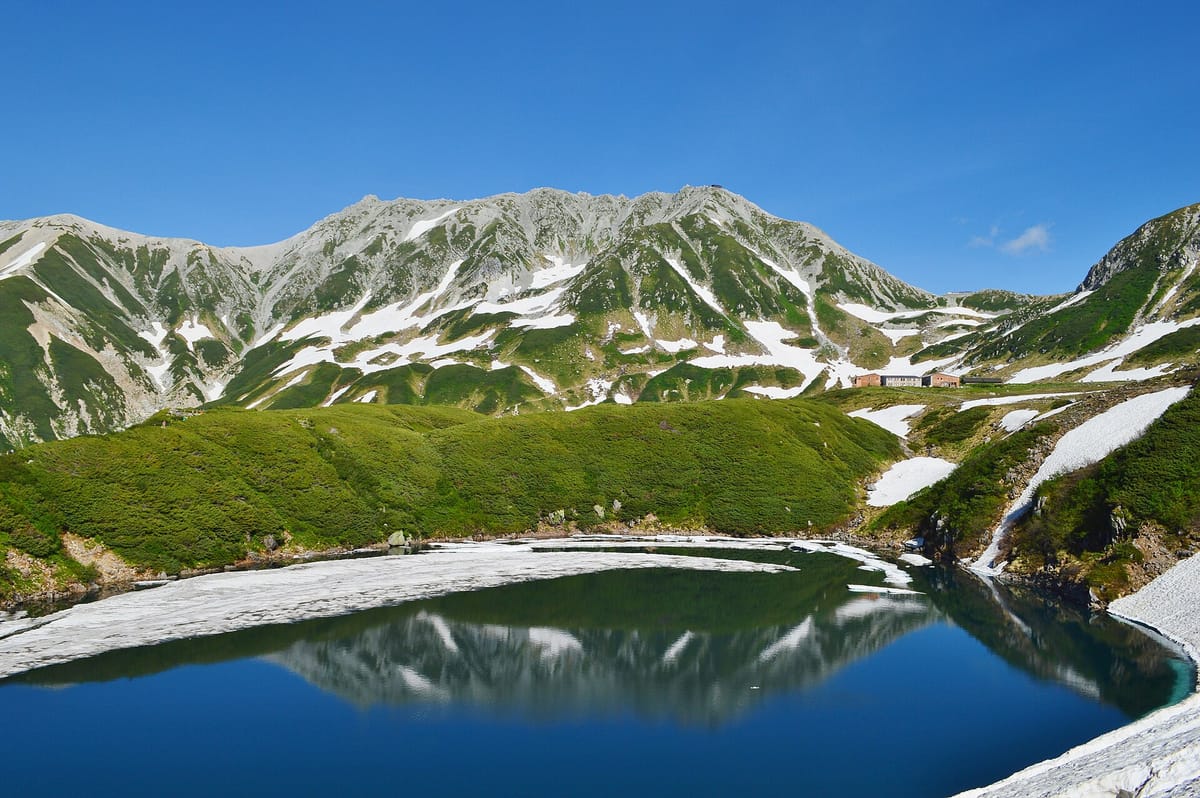
- Murodō (室堂): the highest point of the route at 2,450 metres, with Mikurigaike pond, walking paths, hotels and a view of Mount Tateyama.
- Tateyama Tunnel Electric Bus (立山トンネル電気バス): through the mountain to Daikanbō; it replaced Japan's last trolleybus in 2025.
- Tateyama Ropeway (立山ロープウェイ): a long single span from Daikanbō to Kurobedaira with no towers in between, over a wide valley.
- Kurobe Cable Car (黒部ケーブルカー): an underground funicular down to Kurobeko, beside Lake Kurobe.
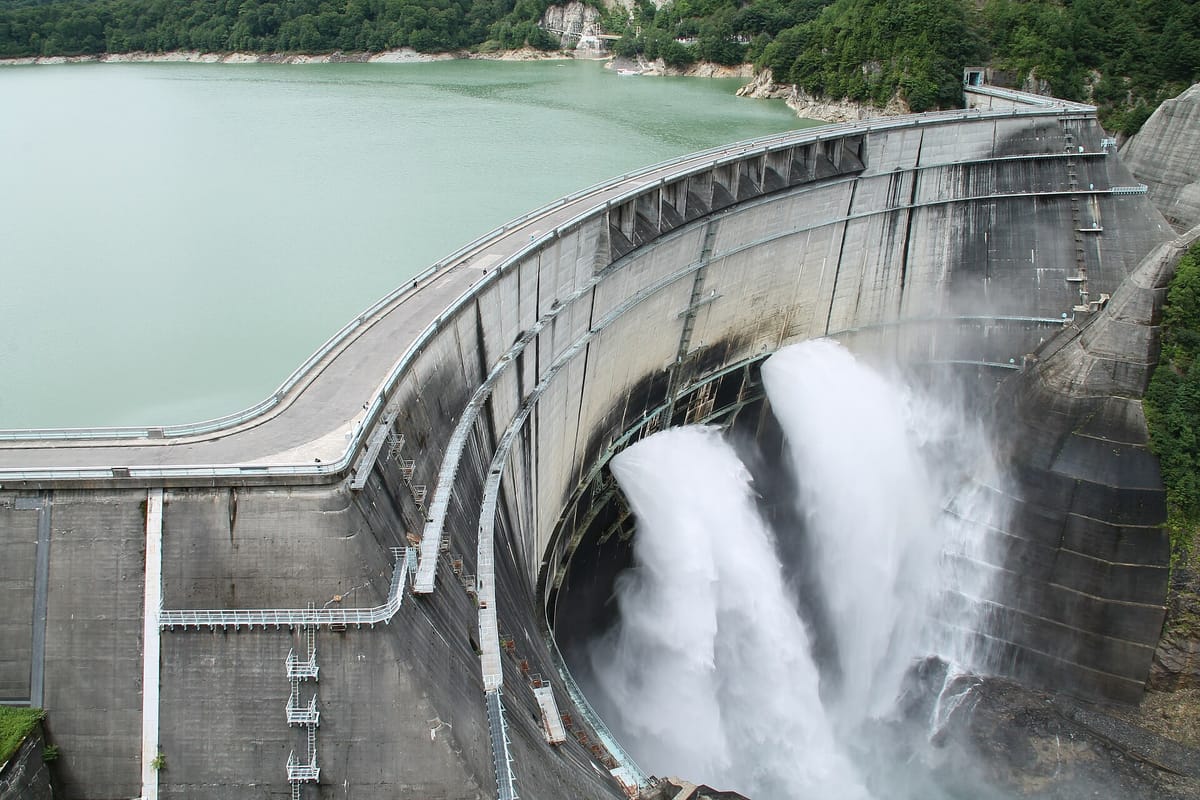
- Kurobe Dam (黒部ダム): a fifteen-minute walk across the top of the 186-metre dam, Japan's tallest, completed in 1963.
- Kanden Tunnel Electric Bus (関電トンネル電気バス): the last stage, through the mountain to Ōgizawa in Nagano.
Words on the signs along the route
Station names on the route are short and repeated on every screen, so learning to read them saves a lot of time. The word you most need, though, is 整理券, seiriken. At busy times, staff hand out numbered or timed boarding tickets, and you queue again when your number or time is called.
Departure boards also use 発, hatsu, departs, after a time, and 行き, yuki, bound for, after a place, as in 室堂行き, for Murodō.
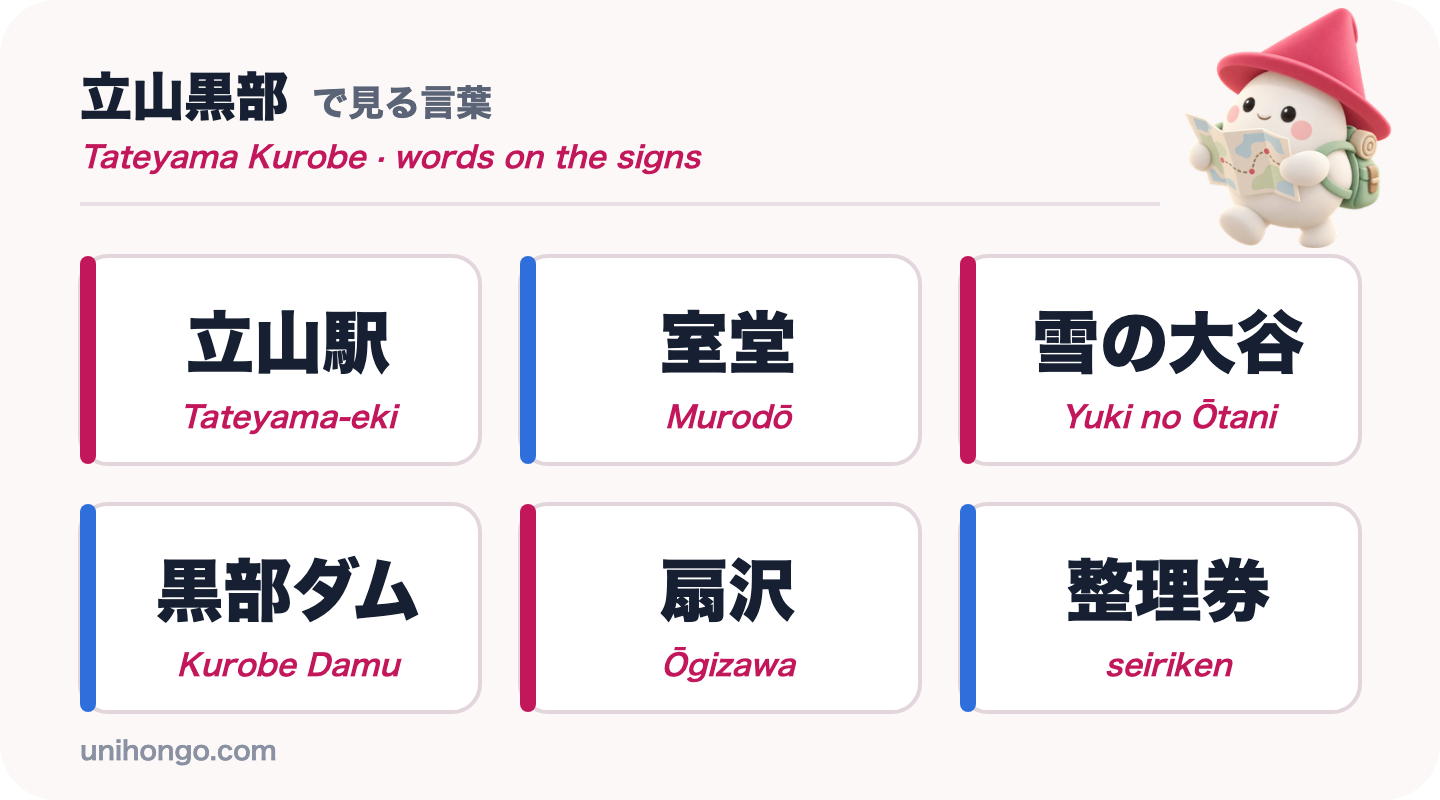
| Word | Reading | Meaning |
|---|---|---|
| 立山駅 | Tateyama-eki | Tateyama Station, the Toyama end |
| 室堂 | Murodō | The high plateau at 2,450 metres |
| 雪の大谷 | Yuki no Ōtani | The snow corridor near Murodō |
| 黒部ダム | Kurobe Damu | Kurobe Dam |
| 扇沢 | Ōgizawa | The Nagano end of the route |
| 整理券 | seiriken | Numbered or timed boarding ticket |
| 乗車時刻 | jōsha jikoku | Boarding time |
| 大観峰 | Daikanbō | Viewpoint station at the top of the ropeway |
| 雷鳥 | raichō | Rock ptarmigan, the alpine bird of Murodō |
Japanese for tickets, departures and luggage
Staff on the Alpine Route move large crowds quickly and use set phrases. You will hear o-machi kudasai, please wait, junban ni goannai shimasu, we will guide you in order, and your boarding time read out as a number. It helps to know the questions you will ask back.
If you have a web ticket, show the QR code at the first station. If you are buying on the day, ask for a through ticket, tōshi, to the far end, or a round trip, ōfuku, to where you plan to turn back.
| Japanese | Romaji | Meaning |
|---|---|---|
| 扇沢まで通しで大人一枚お願いします。 | Ōgizawa made tōshi de otona ichimai onegai shimasu. | One adult through ticket to Ōgizawa, please. |
| 室堂までの往復をください。 | Murodō made no ōfuku o kudasai. | A return ticket to Murodō, please. |
| 雪の大谷ウォークはいつまでですか。 | Yuki no Ōtani wōku wa itsu made desu ka. | Until when is the Yuki no Ōtani walk open? |
| この整理券の時間に並べばいいですか。 | Kono seiriken no jikan ni narabeba ii desu ka. | Should I queue at the time on this ticket? |
| 大きい荷物は追加料金がかかりますか。 | Ōkii nimotsu wa tsuika ryōkin ga kakarimasu ka. | Is there an extra charge for large luggage? |
| 黒部ダムの放水は今日ありますか。 | Kurobe Damu no hōsui wa kyō arimasu ka. | Is there a water release at Kurobe Dam today? |
Timing, weather and etiquette
The Alpine Route runs to a timetable, and the weather at 2,450 metres can change within an hour. A little planning makes the day smoother.
- Start early. Morning departures are less crowded, and clouds often build on the peaks after midday.
- Book web tickets as soon as your dates are fixed for late April to May and for October.
- Wear sunglasses and sunscreen at Murodō in spring: the glare off the snow is intense.
- Stay on marked paths around Murodō; the alpine plants are protected and some areas have volcanic gas.
- Do not chase or feed the ptarmigans, and keep your distance if you see one.
- Queue calmly for each stage and keep your ticket handy; staff check it every time.
- If you feel light-headed at Murodō, slow down and drink water; the altitude affects some people.
Practise the ticket gate before you go
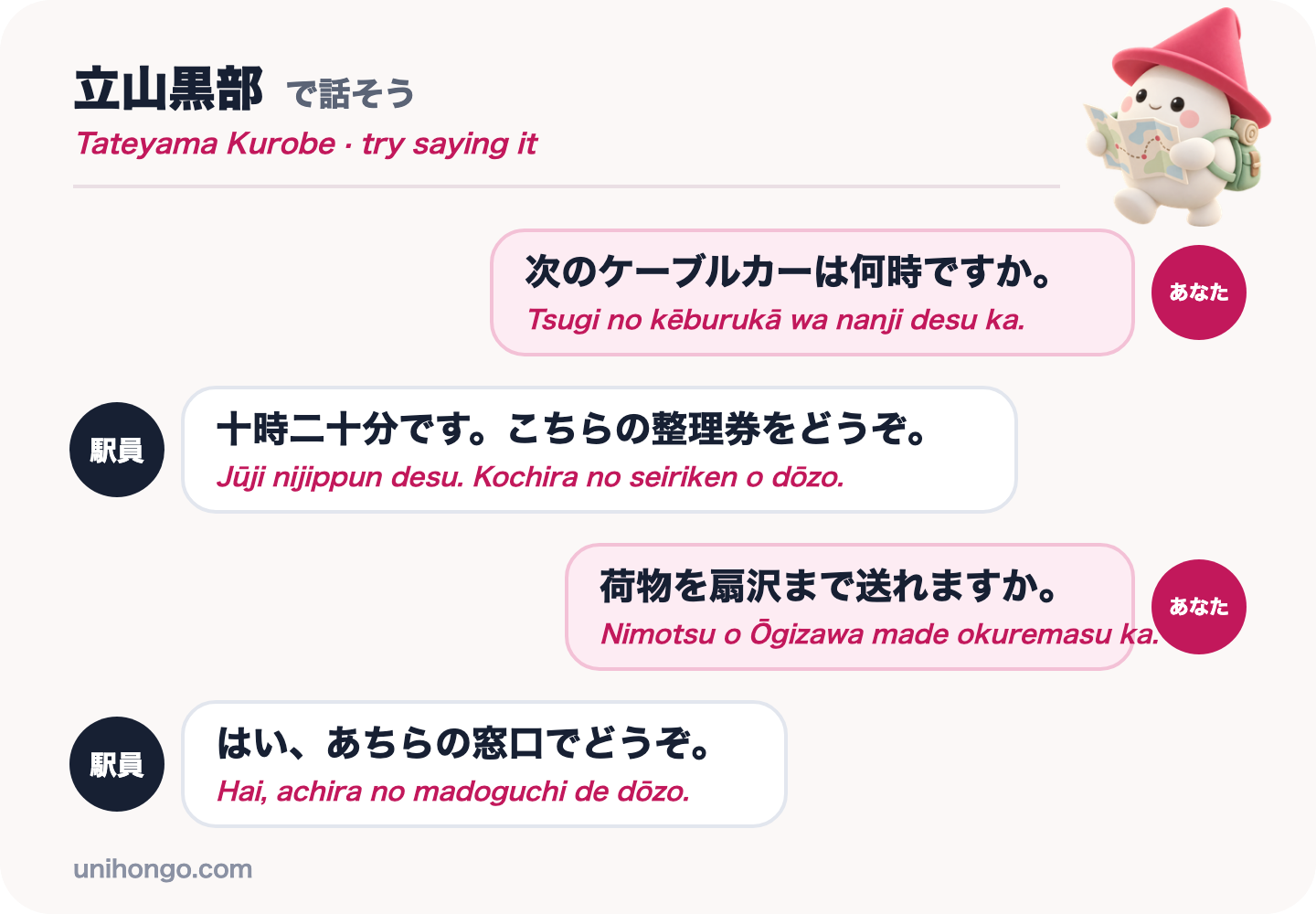
At Tateyama Station, the first stage, you will probably ask about the next cable car and your luggage. Staff answer with a time and hand you a seiriken, so listen for hours with ji and minutes with fun or pun.
Practise the four lines until you can say them without reading. Then rehearse with a partner who answers back: in Unihongo, choose the Train Tickets topic and ask your AI Sensei to play the station staff, changing the departure time each round.
| Japanese | Romaji | Meaning |
|---|---|---|
| 次のケーブルカーは何時ですか。 | Tsugi no kēburukā wa nanji desu ka. | What time is the next cable car? |
| 十時二十分です。こちらの整理券をどうぞ。 | Jūji nijippun desu. Kochira no seiriken o dōzo. | Ten twenty. Here is your boarding ticket. |
| 荷物を扇沢まで送れますか。 | Nimotsu o Ōgizawa made okuremasu ka. | Can I send my luggage to Ōgizawa? |
| はい、あちらの窓口でどうぞ。 | Hai, achira no madoguchi de dōzo. | Yes, please go to that counter over there. |
Official information
Season dates, web tickets, timetables, the snow walk and dam release periods and luggage services are published on the official Alpine Route site. The Toyama tourism site has a useful overview in English.