
What a michi no eki is
Michi no eki (道の駅) means road station. The name plays on the idea of a railway station: a place where travellers stop, rest and find what they need. The system started in the 1990s, and today you will find these stations along ordinary roads everywhere from Hokkaido to Okinawa, often a short drive apart on rural routes.
Three things are standard: free parking, free toilets and information about the road and the area. Most stations add a market hall, called a chokubaijo (直売所), where local farmers sell directly. Beyond that every station is different. Some have a hot-spring footbath, some a view of the sea, some a museum about a local craft.
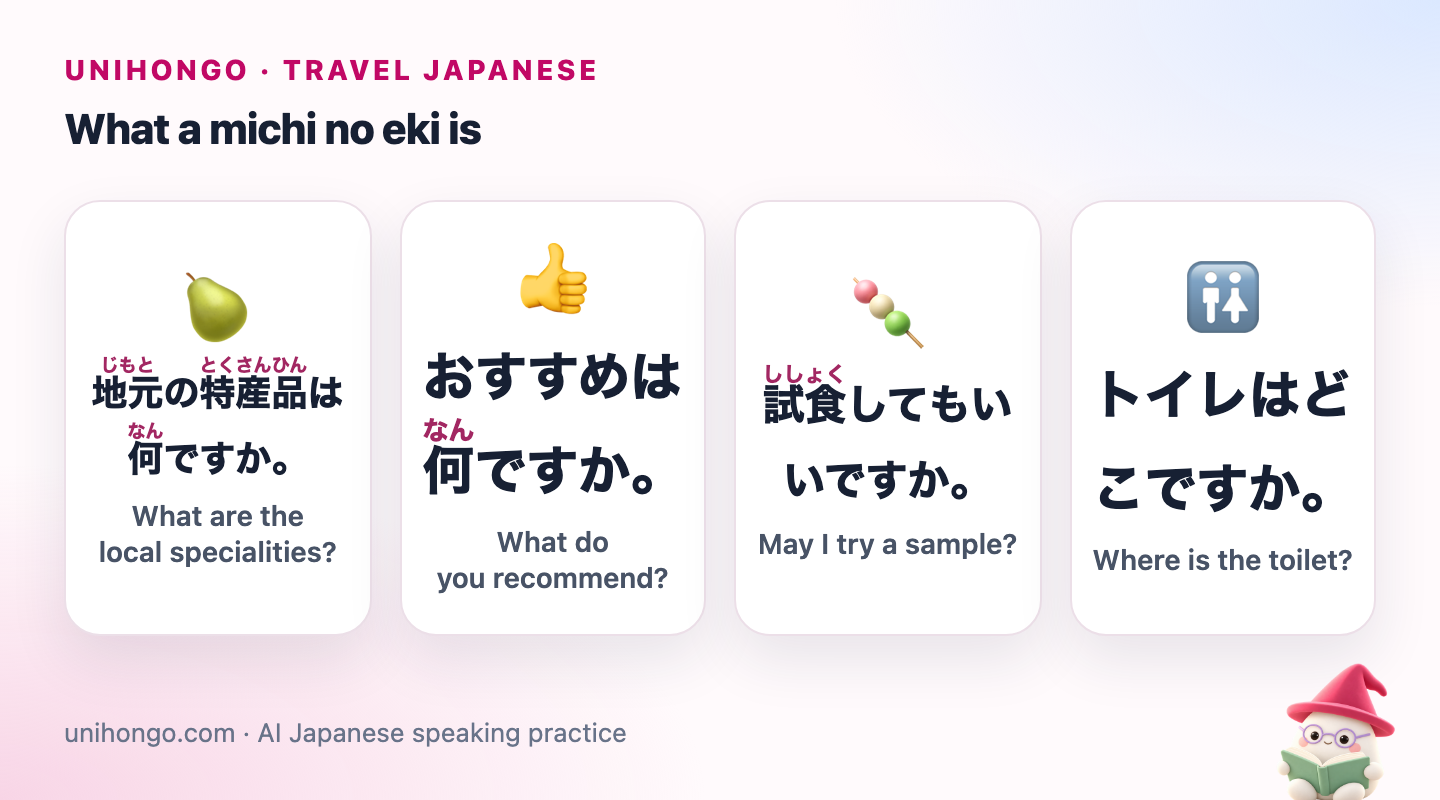
| Japanese | Romaji | Meaning |
|---|---|---|
| 地元の特産品は何ですか。 | Jimoto no tokusanhin wa nan desu ka. | What are the local specialities? |
| おすすめは何ですか。 | Osusume wa nan desu ka. | What do you recommend? |
| 試食してもいいですか。 | Shishoku shite mo ii desu ka. | May I try a sample? |
| トイレはどこですか。 | Toire wa doko desu ka. | Where is the toilet? |
Asking what is local
Every region of Japan takes pride in its products, and roadside stations are where that pride is on display. Three words do most of the work. Jimoto (地元) means the local area, where someone is from. Tokusanhin (特産品) means a special product of a place. Meibutsu (名物) means a famous local thing, often a dish or a sweet, and it is the word people use most in conversation.
To ask where something comes from, use doko de toremashita ka for crops and fish (toreru means to be harvested or caught) and doko de tsukutte imasu ka for things that are made, such as pickles or sake.
| Japanese | Romaji | Meaning |
|---|---|---|
| この辺の名物は何ですか。 | Kono hen no meibutsu wa nan desu ka. | What is this area famous for? |
| これは地元の野菜ですか。 | Kore wa jimoto no yasai desu ka. | Are these local vegetables? |
| どこで採れましたか。 | Doko de toremashita ka. | Where was this grown? |
| 今が旬ですか。 | Ima ga shun desu ka. | Is it in season now? |
| どうやって食べるんですか。 | Dō yatte taberu n desu ka. | How do you eat it? |
| お土産にいいものはありますか。 | Omiyage ni ii mono wa arimasu ka. | Is there anything good as a souvenir? |
Reading the produce shelf
Produce at a chokubaijo is often packed by the farmers themselves, and the small labels follow a pattern. You may see the producer's name (seisansha, 生産者), sometimes with a photo, the place it was grown, and a price per bag rather than per weight. You do not need to read every label; knowing a few words lets you ask the right question.
| Word | Reading | Meaning |
|---|---|---|
| 生産者 | seisansha | Producer, the farmer who grew it |
| 産地 | sanchi | Place of origin |
| 朝採れ | asadore | Picked this morning |
| 無農薬 | munōyaku | Grown without pesticides (as stated by the seller) |
| 訳あり | wakeari | Imperfect-looking, sold cheaper |
| 要冷蔵 | yōreizō | Keep refrigerated |
Wakeari (訳あり) items are a favourite with locals: fruit with a scratch or an odd shape, sold at a lower price but just as tasty.
A mini dialogue at the market counter
Staff at roadside stations are often local people, and some speak with a regional accent. If you miss something, mō ichido onegai shimasu (once more, please) is always welcome.
| Japanese | Romaji | Meaning |
|---|---|---|
| すみません、この辺の名物は何ですか。 | Sumimasen, kono hen no meibutsu wa nan desu ka. | Traveller: Excuse me, what is this area famous for? |
| このあたりは梨が有名ですよ。 | Kono atari wa nashi ga yūmei desu yo. | Staff: Around here, it's famous for pears. |
| 試食してもいいですか。 | Shishoku shite mo ii desu ka. | Traveller: May I try one? |
| どうぞ。今朝採れたばかりです。 | Dōzo. Kesa toreta bakari desu. | Staff: Go ahead. They were picked just this morning. |
| 甘いですね!これを一袋ください。 | Amai desu ne! Kore o hitofukuro kudasai. | Traveller: They're sweet! One bag of these, please. |
| 冷蔵庫に入れてくださいね。 | Reizōko ni irete kudasai ne. | Staff: Keep them in the fridge, okay? |
Rest, toilets and lunch
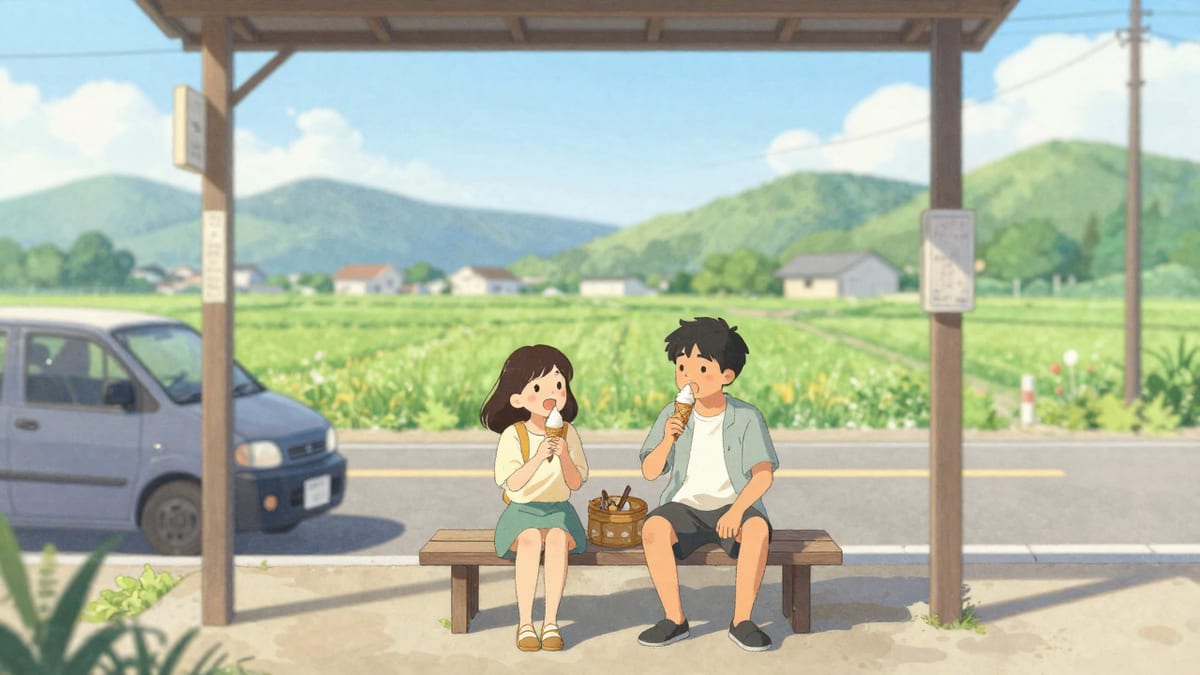
A michi no eki is first of all a place to rest. Drivers stretch, buy a drink from the vending machines, use the toilets and look at the area map. Many stations have a restaurant or food stalls serving the area's dish: noodles, a rice bowl with local fish, grilled skewers, or a soft-serve ice cream in a local flavour such as wasabi, melon or black sesame. Eat where food is meant to be eaten, take your rubbish with you or use the bins provided, and keep your voice down in the rest area.
Overnight stays are a sensitive topic. A short nap in the car is part of safe driving, but camping overnight in your car, called shachūhaku (車中泊), is something many stations ask drivers not to do, while others offer special spaces for it. Look for the station's guidance or ask at the information desk.
| Japanese | Romaji | Meaning |
|---|---|---|
| ここで少し休憩しましょう。 | Koko de sukoshi kyūkei shimashō. | Let's take a short break here. |
| ご当地ソフトクリームを食べてみたいです。 | Go-tōchi sofuto kurīmu o tabete mitai desu. | I want to try the local soft-serve ice cream. |
| ここで車中泊はできますか。 | Koko de shachūhaku wa dekimasu ka. | Can I sleep overnight in my car here? |
| この近くにガソリンスタンドはありますか。 | Kono chikaku ni gasorin sutando wa arimasu ka. | Is there a petrol station near here? |
Regional food and souvenirs to look for
Every station sells something it is proud of, and that is the fun of stopping at several on one trip. Look for the area's fruit and vegetables, local rice, pickles (tsukemono), miso and soy sauce from nearby makers, sake or craft juice, and sweets made with local ingredients. Many stations also sell bentō and onigiri made in the area that morning, which make a good lunch for the road.
Go-tōchi (ご当地), meaning of this locality, is a useful prefix: go-tōchi gurume is local food, go-tōchi sofuto is the local soft-serve flavour, and go-tōchi kyara are the mascot characters many towns use. Some stations also have a stamp you can press into a notebook as a record of your visit; ask sutanpu wa doko desu ka if you collect them.
| Japanese | Romaji | Meaning |
|---|---|---|
| この辺のご当地グルメは何ですか。 | Kono hen no go-tōchi gurume wa nan desu ka. | What is the local food around here? |
| 日持ちはしますか。 | Himochi wa shimasu ka. | Does it keep for a while? |
| お土産用に包んでもらえますか。 | Omiyage-yō ni tsutsunde moraemasu ka. | Could you wrap it as a gift? |
| スタンプはどこですか。 | Sutanpu wa doko desu ka. | Where is the stamp? |
| お弁当はまだありますか。 | Obentō wa mada arimasu ka. | Do you still have lunch boxes? |
Etiquette and common mistakes
- Asking for a discount at the market stalls. Prices are set by the farmers; just choose and pay.
- Eating samples without asking. When a plate of samples is out, help yourself to one piece; otherwise ask shishoku shite mo ii desu ka first.
- Confusing toreru and tsukuru. Vegetables and fish are toreta (harvested, caught); pickles, sweets and sake are tsukutta (made).
- Assuming the station is open all night. Toilets and parking often are, but shops and restaurants keep their own hours, which vary by station.
- Using meibutsu for people. It describes famous local things and dishes; for a famous person say yūmeijin.