

Why Shimogamo Jinja is worth the walk
Shimogamo Jinja is the shrine of the Kamo clan, who lived in the Kyoto basin long before the capital moved here in 794. Its formal name, Kamo-mioya Jinja, means the shrine of the ancestors of Kamo, and it enshrines Tamayorihime and her father, Kamo Taketsunumi. Two main halls, East and West, stand side by side in the inner courtyard and are National Treasures. The writer Kamo no Chōmei, author of the classic essay Hōjōki, was born into the family of its priests.
What makes the shrine special is the setting. Tadasu no Mori, the forest on the approach, is a wood of tall trees, streams and dappled light that feels far from the city, though it is only a few minutes from busy streets. The long, straight path through it is used by locals for walks and runs, and it becomes a festival ground at times such as the Aoi Matsuri in May and a used-book fair in summer.
For a learner, Shimogamo is a lesson in how shrines divide their blessings. Each sub-shrine has a speciality, from beauty to matchmaking to your zodiac year, and each counter uses the same few polite phrases. You can practise them several times in one visit.
Getting there: Demachiyanagi and the forest path
The usual approach is from Demachiyanagi Station, the northern terminus of the Keihan Main Line and the starting point of the Eizan Railway. From there, walk north across the Kamo River or along the Kamogawa Delta, where the Kamo and Takano rivers meet, to the southern end of Tadasu no Mori, then follow the forest path to the gate. It takes about ten to fifteen minutes.
City buses, including routes from Kyoto Station, stop at Shimogamo-jinja-mae on the west side of the shrine, which is closer to the gate but skips the forest walk. If you have time, come from Demachiyanagi: the path through the trees is the heart of the visit. Kawai Jinja stands near the southern end of the forest, so you pass it first on the way in.
| Japanese | Romaji | Meaning |
|---|---|---|
| 出町柳駅から下鴨神社まで歩けますか。 | Demachiyanagi-eki kara Shimogamo Jinja made arukemasu ka. | Can I walk from Demachiyanagi Station to Shimogamo Jinja? |
| 糺の森の入口はどちらですか。 | Tadasu no Mori no iriguchi wa dochira desu ka. | Which way is the entrance to Tadasu no Mori? |
| 下鴨神社前に止まるバスはどれですか。 | Shimogamo-jinja-mae ni tomaru basu wa dore desu ka. | Which bus stops at Shimogamo-jinja-mae? |
| 河合神社はこの道でいいですか。 | Kawai Jinja wa kono michi de ii desu ka. | Is this the right way to Kawai Jinja? |
| 鴨川デルタはどこですか。 | Kamogawa deruta wa doko desu ka. | Where is the Kamogawa Delta? |
Through the forest: what you will see
Walking north from the southern end of the forest, you first reach Kawai Jinja, a sub-shrine dedicated to Tamayorihime and long regarded as a guardian of women. Its mirror-shaped ema, kagami-ema, have a blank face on which you draw the face you would like to have, using your own make-up if you wish, and then write your wish on the back. Beside it stands a reconstruction of the tiny hut in which Kamo no Chōmei wrote Hōjōki.
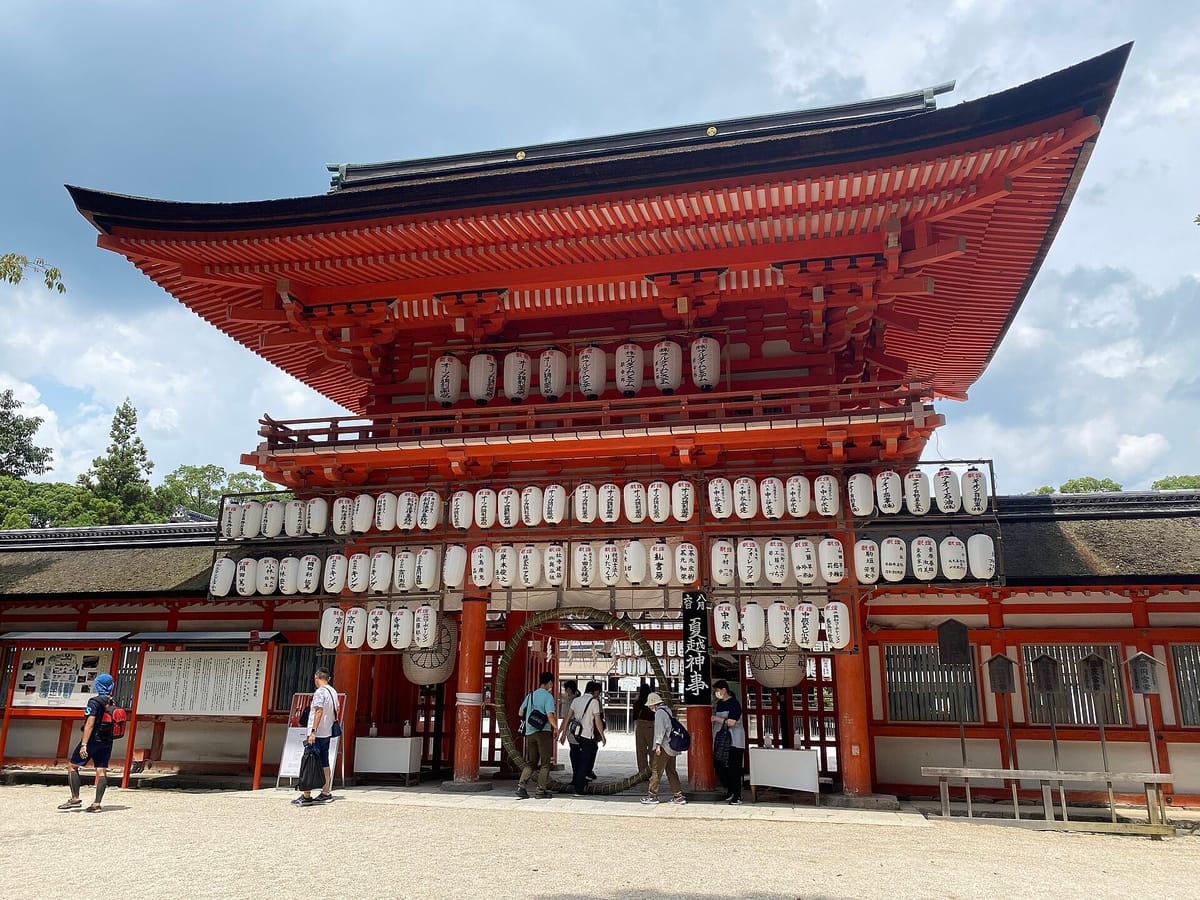
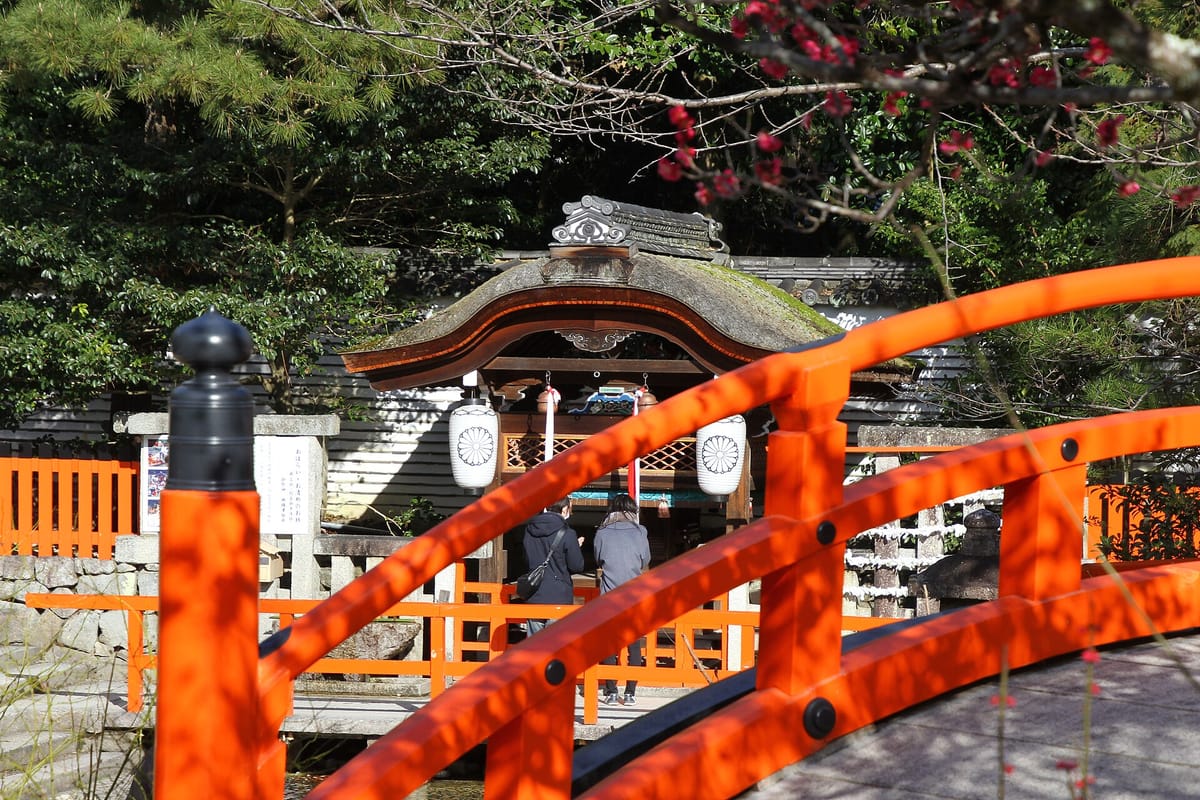
The path continues through the trees to a great torii and the Rōmon. Near the gate, the Aioi-sha is the shrine for en-musubi, good relationships, with a sacred tree made of two trees grown into one. Inside the gate are the Kotosha, the zodiac shrines, and the two main halls. Beyond the main halls is the Mitarashi-sha, reached over a small vermilion bridge, with the spring-fed pond that gave its name to mitarashi dango.
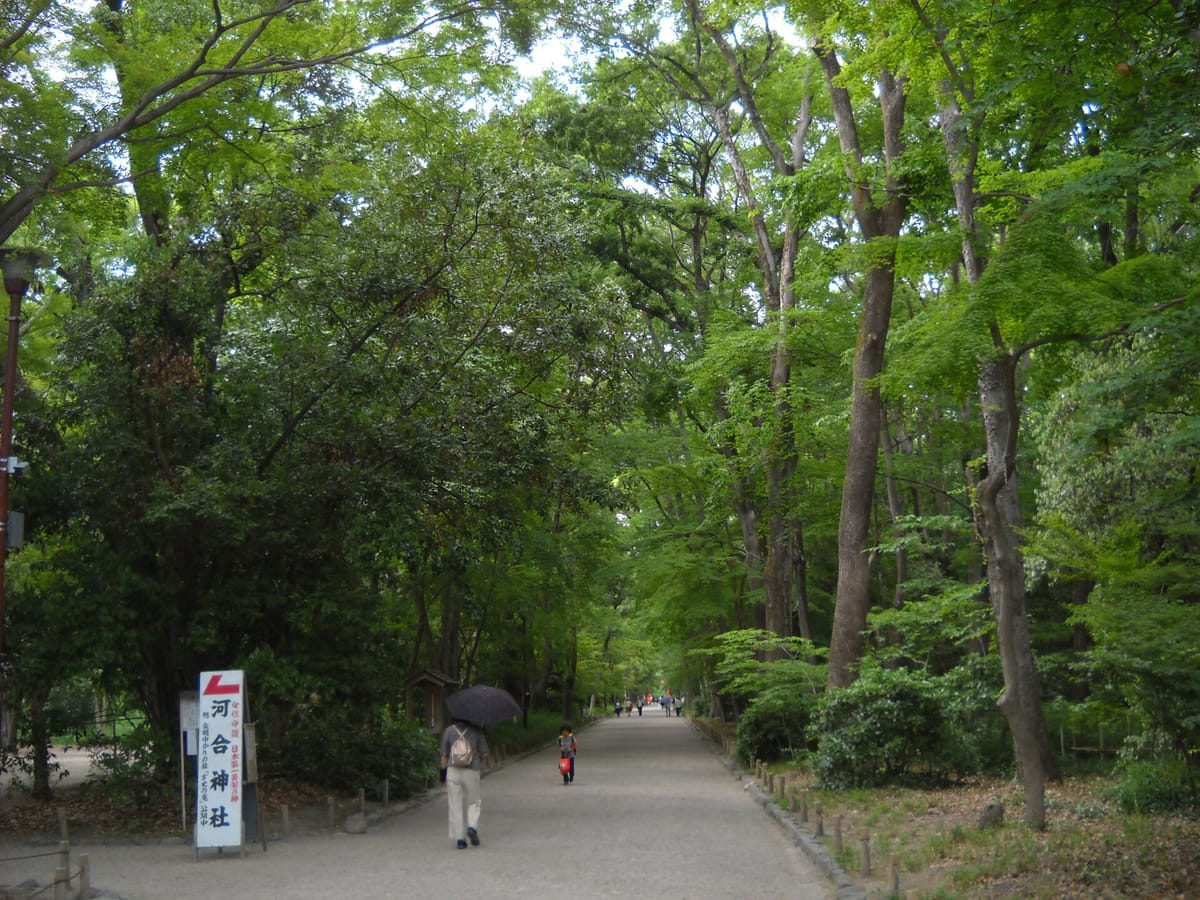
- Tadasu no Mori: the old forest along the approach.
- Kawai Jinja: the sub-shrine for women and beauty, with mirror ema.
- Hōjōan: a reconstruction of Kamo no Chōmei's small hut.
- Aioi-sha: the shrine for good relationships, beside a tree of two trunks grown together.
- Rōmon: the vermilion tower gate.
- Kotosha: seven small shrines for the zodiac signs.
- Mitarashi-sha: the shrine above the Mitarashi pond, source of the dango legend.
Words on the signs at Shimogamo Jinja
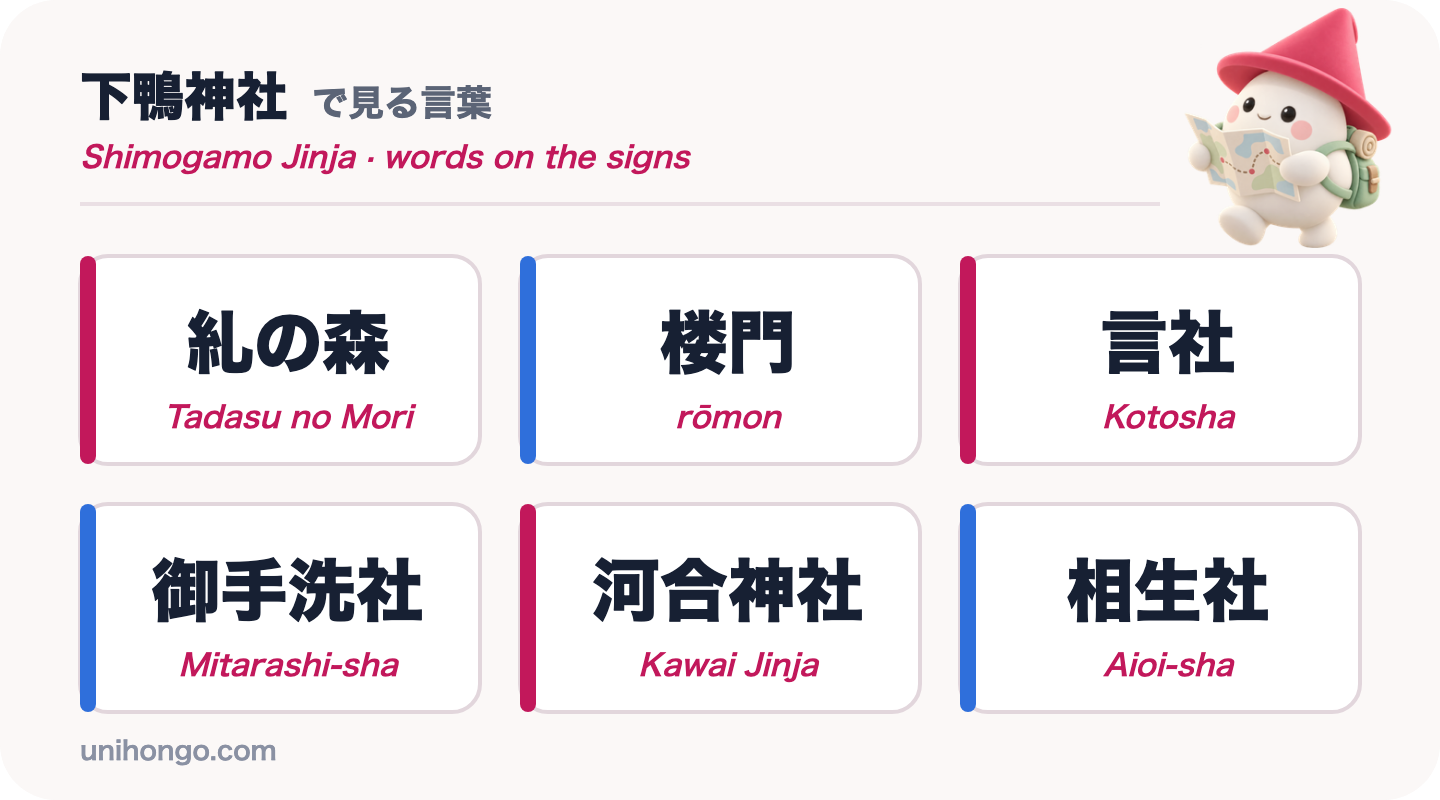
The signposts at Shimogamo mostly give the names of sub-shrines, which end in 社, sha, a shrine, or 神社, jinja. Several names use readings that surprise even Japanese visitors: 糺 is read tadasu, and 御手洗 is read mitarashi here, although the same kanji are also read otearai, the everyday word for a toilet.
The zodiac signs at the Kotosha are written with their own special kanji, such as 子 for rat and 卯 for rabbit, which are different from the everyday words for the animals. The table below covers the words you will meet on the way round.
| Word | Reading | Meaning |
|---|---|---|
| 糺の森 | Tadasu no Mori | The forest on the approach |
| 楼門 | rōmon | Two-storey tower gate |
| 言社 | Kotosha | The seven zodiac shrines |
| 干支 | eto | Chinese zodiac sign |
| 御手洗社 | Mitarashi-sha | The shrine above the Mitarashi pond |
| 河合神社 | Kawai Jinja | Sub-shrine for women and beauty |
| 鏡絵馬 | kagami-ema | Mirror-shaped ema for beauty wishes |
| 相生社 | Aioi-sha | Shrine for good relationships |
| 縁結び | en-musubi | Tying good relationships, matchmaking |
Japanese for ema, charms and your zodiac shrine
Each sub-shrine has its own counter or offering box, so it helps to ask where to receive the item you want. At Kawai Jinja you receive a kagami-ema and are shown where to draw and hang it; at the main counter you can ask for charms and a goshuin.
As at other shrines, itadakemasu ka, may I receive, sounds more natural than kaemasu ka, can I buy. The phrases below cover the counters and the zodiac shrines.
| Japanese | Romaji | Meaning |
|---|---|---|
| 鏡絵馬を一つお願いします。 | Kagami-ema o hitotsu onegai shimasu. | One mirror ema, please. |
| 絵馬に自分の化粧品を使ってもいいですか。 | Ema ni jibun no keshōhin o tsukatte mo ii desu ka. | May I use my own make-up on the ema? |
| 縁結びのお守りはありますか。 | En-musubi no o-mamori wa arimasu ka. | Do you have a charm for good relationships? |
| 私は辰年です。どのお社ですか。 | Watashi wa tatsudoshi desu. Dono o-yashiro desu ka. | I was born in the year of the dragon. Which shrine is mine? |
| 御朱印はどこでいただけますか。 | Goshuin wa doko de itadakemasu ka. | Where can I receive a goshuin? |
| みたらし団子はどこで食べられますか。 | Mitarashi dango wa doko de taberaremasu ka. | Where can I eat mitarashi dango? |
Etiquette, seasons and practical tips
Shimogamo is a quiet shrine outside festival days, and the forest rewards a slow walk.
- Bow at the torii and the Rōmon, purify your hands at the temizuya, then bow twice, clap twice, pray and bow once.
- Keep to the paths in Tadasu no Mori and do not pick plants or climb the trees.
- Kawai Jinja closes earlier than the main gate, so visit it first if you arrive late in the afternoon.
- Come on 15 May for the Aoi Matsuri, or in high summer for the Mitarashi Matsuri foot-soaking ritual.
- Early morning is the calmest time for the forest walk.
- Pair the visit with the Kamogawa Delta and the streets of Demachiyanagi, or with Kamigamo Jinja upstream.
Practise the shrine visit before you go
The two questions visitors ask most are about the mirror ema and the zodiac shrines. Practise the four lines below until you can say them without looking, and listen for juyosho, the counter, and Kotosha in the replies.
Then practise with a partner who answers back. In Unihongo, choose the Shrine Visit topic and ask your AI Sensei to play a shrine attendant at Shimogamo, or try the Seasonal Events topic to talk about the Aoi Matsuri. Saying the lines once before you arrive is what makes them easy at the counter.
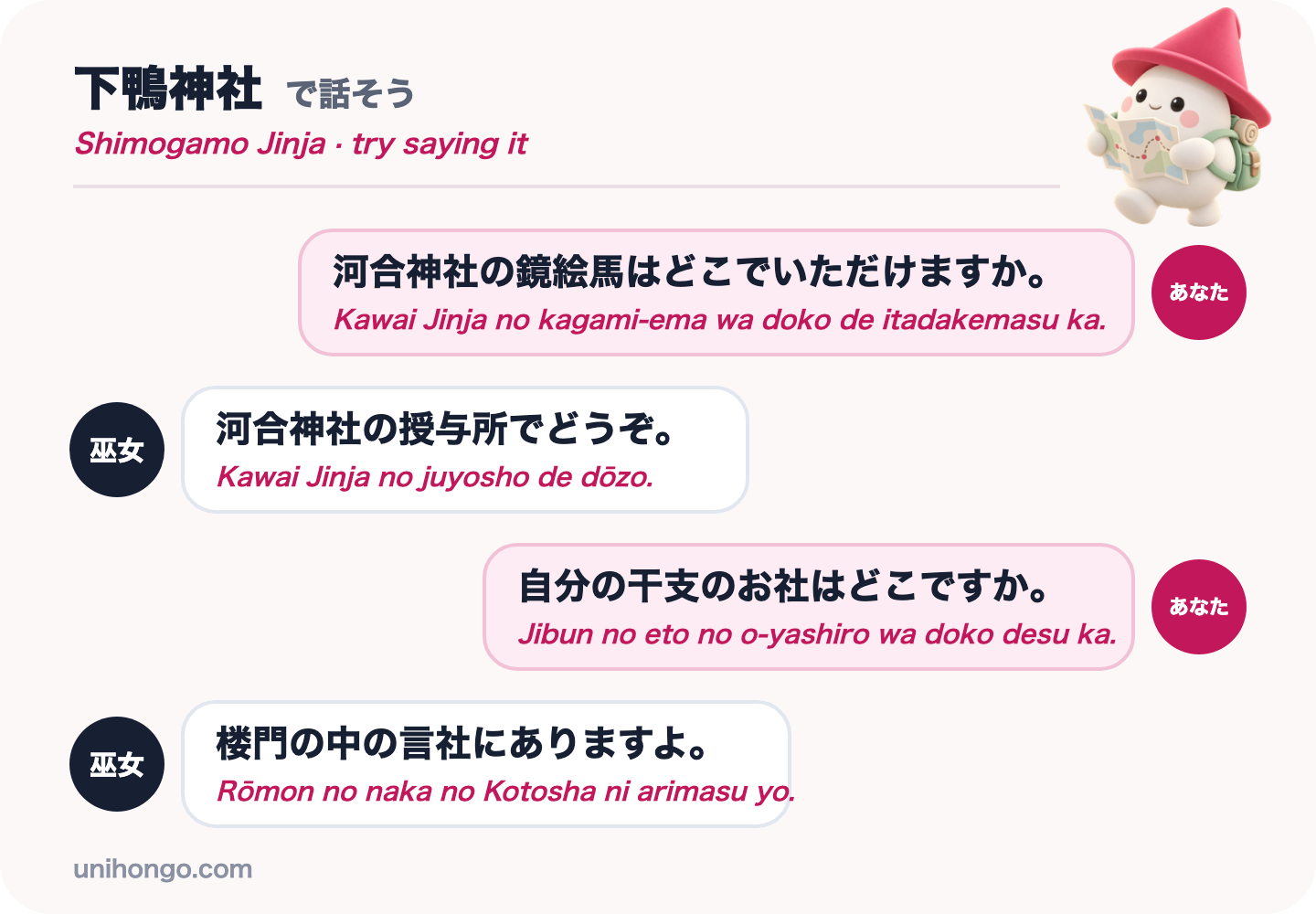
| Japanese | Romaji | Meaning |
|---|---|---|
| 河合神社の鏡絵馬はどこでいただけますか。 | Kawai Jinja no kagami-ema wa doko de itadakemasu ka. | Where can I receive a mirror ema for Kawai Jinja? |
| 河合神社の授与所でどうぞ。 | Kawai Jinja no juyosho de dōzo. | Please go to the Kawai Jinja counter. |
| 自分の干支のお社はどこですか。 | Jibun no eto no o-yashiro wa doko desu ka. | Where is the shrine for my zodiac sign? |
| 楼門の中の言社にありますよ。 | Rōmon no naka no Kotosha ni arimasu yo. | It is at the Kotosha, inside the Rōmon. |
Official information
Shimogamo Jinja publishes its opening times, festival dates, including the Aoi Matsuri and the Mitarashi Matsuri, and news on its website, with an English section.