

Why Yanaka is the old Tokyo worth slowing down for
Tokyo has been burned, shaken and rebuilt so many times that very little of the old city survives. Yanaka is an exception. Its temples, many moved here in the Edo period, gave the area a quiet, green character that it still keeps, and it avoided the worst of the 1923 earthquake and the 1945 air raids. Walk a few minutes from Nippori Station and you are among wooden houses with potted plants at the door, temple gates, small galleries and shops that have served the same street for generations.
This is shitamachi, the old low city, the Tokyo of merchants and craftspeople rather than samurai. Yanaka, Nezu and Sendagi are grouped together as Yanesen, and the whole area rewards slow wandering with no plan. Nothing here is a big-ticket sight; the pleasure is in the details: a cat asleep on a wall, a shop selling handmade crafts, a bathhouse turned into an art gallery.
For a Japanese learner, Yanaka is the place to talk to people. Shopkeepers on Yanaka Ginza sell to neighbours every day and are used to short, friendly exchanges, which makes it far easier to practise here than in a busy department store.
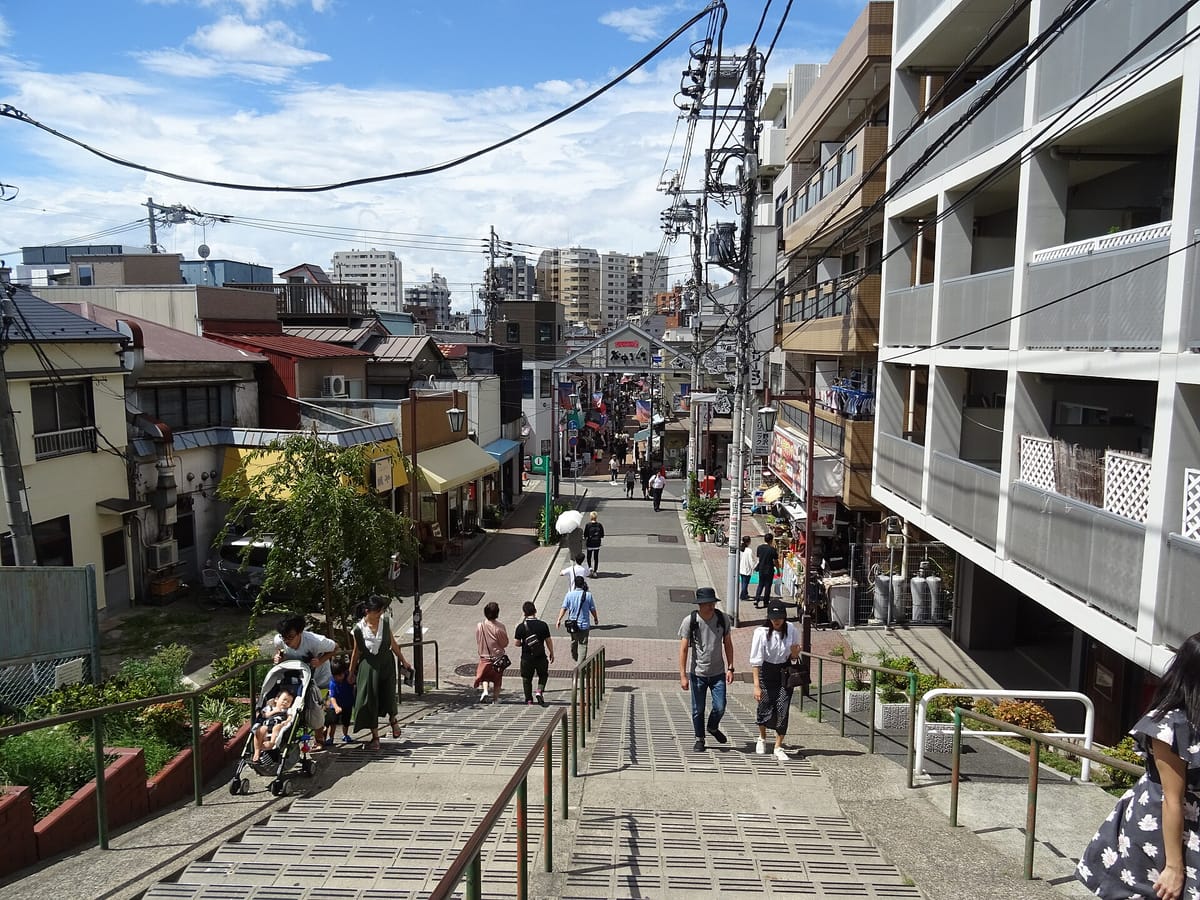
Getting there: Nippori, Sendagi and Nezu stations
Nippori Station, 日暮里駅, is the usual starting point. It is on the JR Yamanote and Keihin-Tōhoku lines, and the Keisei Line from Narita Airport stops here too, so you can even visit on your way into Tokyo if you leave your luggage in a locker. Leave by the west exit, nishi-guchi, and climb the slope: Yanaka Cemetery is just a few minutes away, and Yanaka Ginza is about five to ten minutes on foot beyond it.
Sendagi Station, 千駄木駅, on the Tokyo Metro Chiyoda Line, is close to the other end of Yanaka Ginza, and Nezu Station, 根津駅, one stop south, is best for Nezu Shrine. A good walking route is to start at Nippori, cross the cemetery, go down the Yūyake Dandan steps into Yanaka Ginza, then wander south through the lanes to Nezu and take the Chiyoda Line from there. You can also walk to Ueno Park in about fifteen minutes from the cemetery.
| Japanese | Romaji | Meaning |
|---|---|---|
| 日暮里駅の西口はどちらですか。 | Nippori-eki no nishi-guchi wa dochira desu ka. | Which way is the west exit of Nippori Station? |
| 谷中銀座はどう行けばいいですか。 | Yanaka Ginza wa dō ikeba ii desu ka. | How do I get to Yanaka Ginza? |
| 谷中霊園を通って行けますか。 | Yanaka Reien o tōtte ikemasu ka. | Can I go through Yanaka Cemetery? |
| 根津神社まで歩いて何分くらいですか。 | Nezu Jinja made aruite nanpun kurai desu ka. | About how many minutes' walk to Nezu Shrine? |
| コインロッカーはどこにありますか。 | Koin rokkā wa doko ni arimasu ka. | Where are the coin lockers? |
What you will see: steps, shops, temples and the cemetery
Yanaka is compact, and a relaxed half day covers the main sights with time for a coffee. The cemetery and the temples sit on the higher ground near Nippori; the shopping street and the lanes run down towards Sendagi and Nezu.
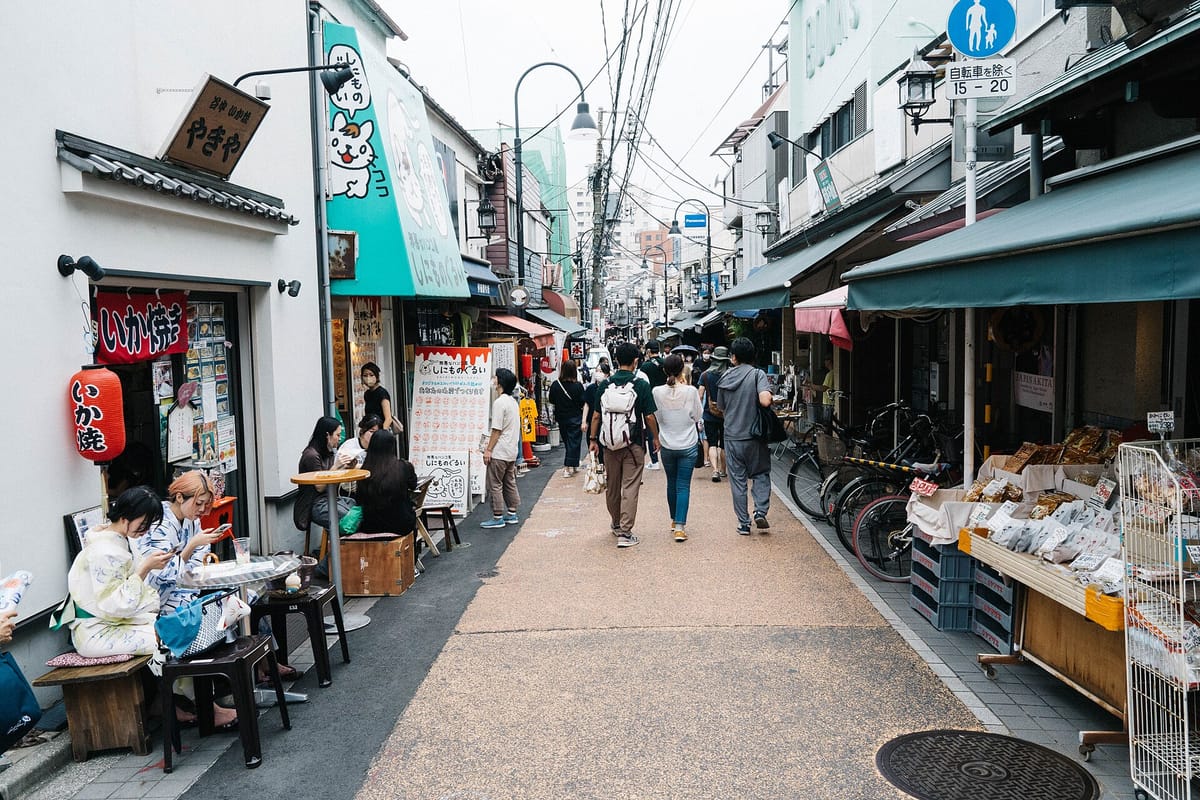
- Yanaka Ginza, 谷中銀座: a shopping street that grew up around 1945, with butchers frying croquettes, sweet shops, crackers, crafts and cafés.
- Yūyake Dandan, 夕やけだんだん: the short flight of steps at the top of Yanaka Ginza, known for its sunset view down the street.
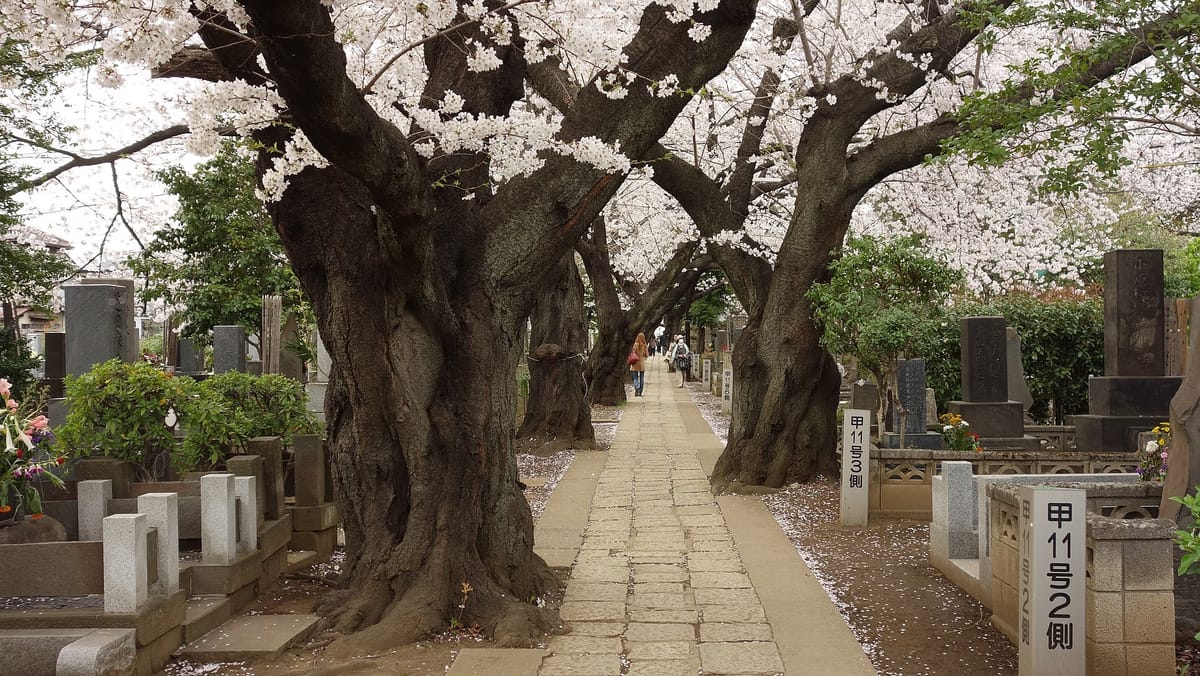
- Yanaka Reien, 谷中霊園: a public cemetery opened in 1874 on land taken from Tennōji temple, about ten hectares of graves, trees and quiet paths.
- Sakura-dōri: the cemetery's central avenue, a tunnel of cherry blossom in spring, with the site of a five-storey pagoda that burned in 1957.
- The grave of Tokugawa Yoshinobu, the last shogun, in a fenced plot next to the cemetery.
- Tennōji, 天王寺: a temple beside the cemetery with a large seated bronze Buddha in its grounds.
- Nezu Jinja, 根津神社: a shrine a short walk south, with a tunnel of small red torii and an azalea festival in April.
- Galleries and cafés: SCAI The Bathhouse, a contemporary art gallery in an old public bath, and Kayaba Coffee in a 1916 wooden building.
Streets, temples and the words on the signs
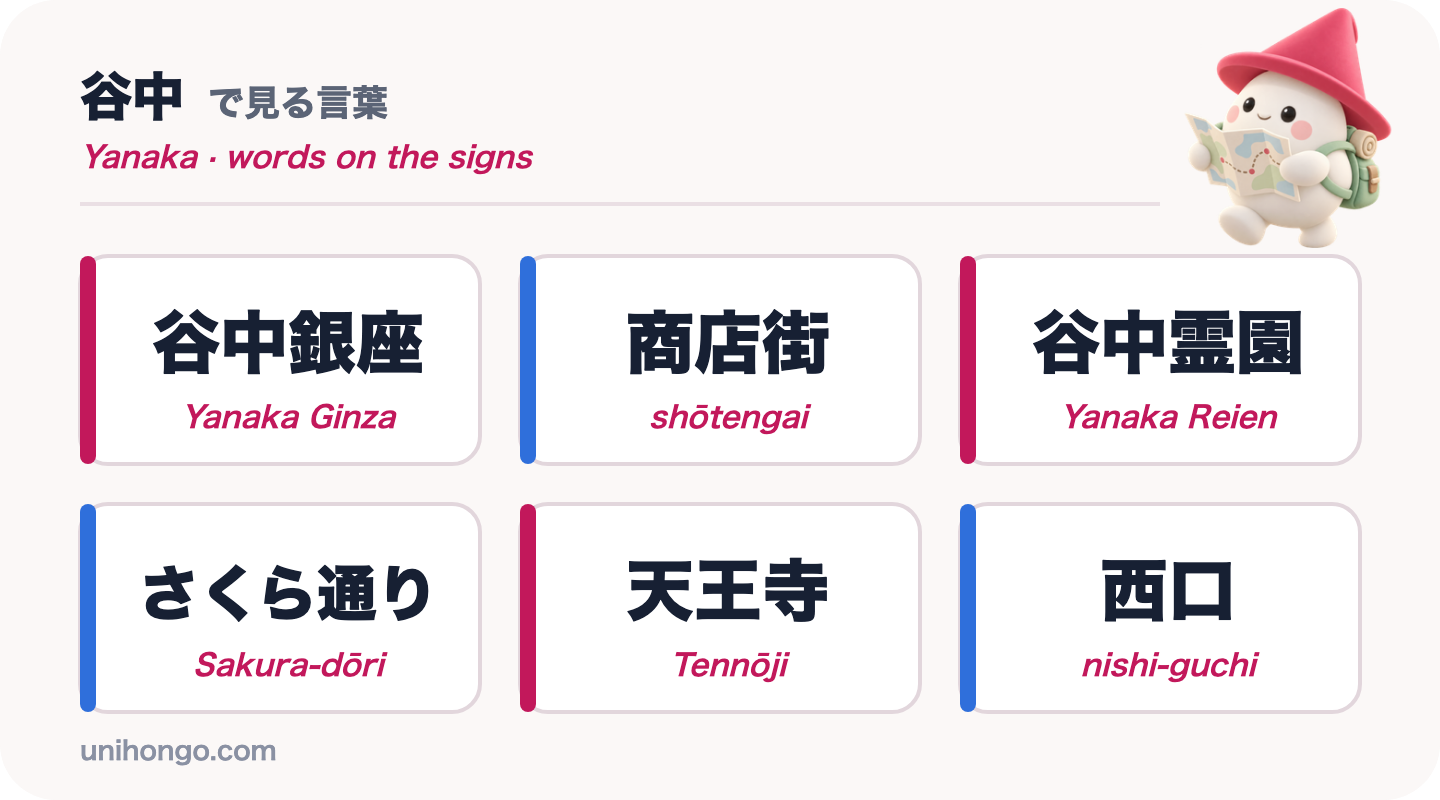
Yanaka's signs are smaller and more old-fashioned than central Tokyo's, and some are only in Japanese. The good news is that you need very few words. 商店街, shōtengai, is a shopping street, the kind of covered or open street of small shops found in every Japanese neighbourhood. 霊園, reien, is a cemetery, a slightly formal word for a large, park-like one. And 寺, tera or -ji, marks a temple, of which Yanaka has dozens.
In the shops, look for handwritten price cards and the words for freshly made food. A butcher selling fried snacks will often have a sign for 揚げたて, agetate, just fried, which is the moment to buy.
| Word | Reading | Meaning |
|---|---|---|
| 谷中銀座 | Yanaka Ginza | Yanaka's shopping street |
| 商店街 | shōtengai | Shopping street |
| 夕やけだんだん | Yūyake Dandan | The sunset steps above the shopping street |
| 谷中霊園 | Yanaka Reien | Yanaka Cemetery |
| さくら通り | Sakura-dōri | The cemetery's cherry-lined central avenue |
| 天王寺 | Tennōji | Temple beside the cemetery |
| 西口 | nishi-guchi | West exit |
| 揚げたて | agetate | Freshly fried |
| 定休日 | teikyūbi | Regular closing day |
Shopping street Japanese: croquettes, sweets and a chat
Yanaka Ginza is a street for grazing. Butchers fry menchi katsu, minced meat cutlets, and korokke, croquettes; sweet shops sell taiyaki, dango and cat-shaped biscuits; and there are rice crackers, pickles and tea. Most shops take cash, and many small ones take only cash, so carry coins.
In Japan it is generally better manners not to eat while walking through a crowded street, and some shops have a bench or a spot in front where you can eat. Ask before you start: koko de tabete mo ii desu ka, may I eat here? It is polite, it shows you know the custom, and it often leads to a conversation.
| Japanese | Romaji | Meaning |
|---|---|---|
| このメンチカツをひとつください。 | Kono menchi katsu o hitotsu kudasai. | One of these minced meat cutlets, please. |
| コロッケをふたつお願いします。 | Korokke o futatsu onegai shimasu. | Two croquettes, please. |
| ここで食べてもいいですか。 | Koko de tabete mo ii desu ka. | May I eat here? |
| おすすめはどれですか。 | Osusume wa dore desu ka. | Which one do you recommend? |
| 持ち帰りでお願いします。 | Mochikaeri de onegai shimasu. | To take away, please. |
| カードは使えますか。 | Kādo wa tsukaemasu ka. | Do you take cards? |
| ごちそうさまでした。おいしかったです。 | Gochisōsama deshita. Oishikatta desu. | Thank you for the food. It was delicious. |
Cemetery manners, neighbourhood manners and practical tips
Yanaka is a residential neighbourhood first and a sight second. People live in the houses you photograph and visit family graves in the cemetery, and a few habits keep you welcome.
- In the cemetery, walk quietly, keep to the paths, do not sit on or touch graves, and do not photograph people who are paying their respects.
- Try not to eat while walking along the crowded street; eat where the shop says you can, and take your rubbish with you.
- Do not feed the cats, and do not pick them up; many belong to someone.
- Keep to the side of narrow lanes, let bicycles pass, and do not photograph inside people's homes or gardens.
- Bring cash and small coins; many shops do not take cards.
- Visit on a weekday if you can, and remember that many shops close on one fixed day a week, often Monday.
- Come back for the sunset: the view from the top of the Yūyake Dandan steps is the reason for their name.
Practise the shopping street before you go
The owner of a Yanaka Ginza shop will speak casually and warmly, often with ne and yo at the end of sentences, and may add a little advice, such as that the food is hot. Practise both your order and the reply, so the extra words do not throw you.
Then practise with a partner who answers back. In Unihongo, choose the Shopping topic and ask your AI Sensei to play a butcher on Yanaka Ginza, or the Festival Food topic to practise ordering street snacks. Speaking the lines aloud once before you go is what makes them come out at the stall.
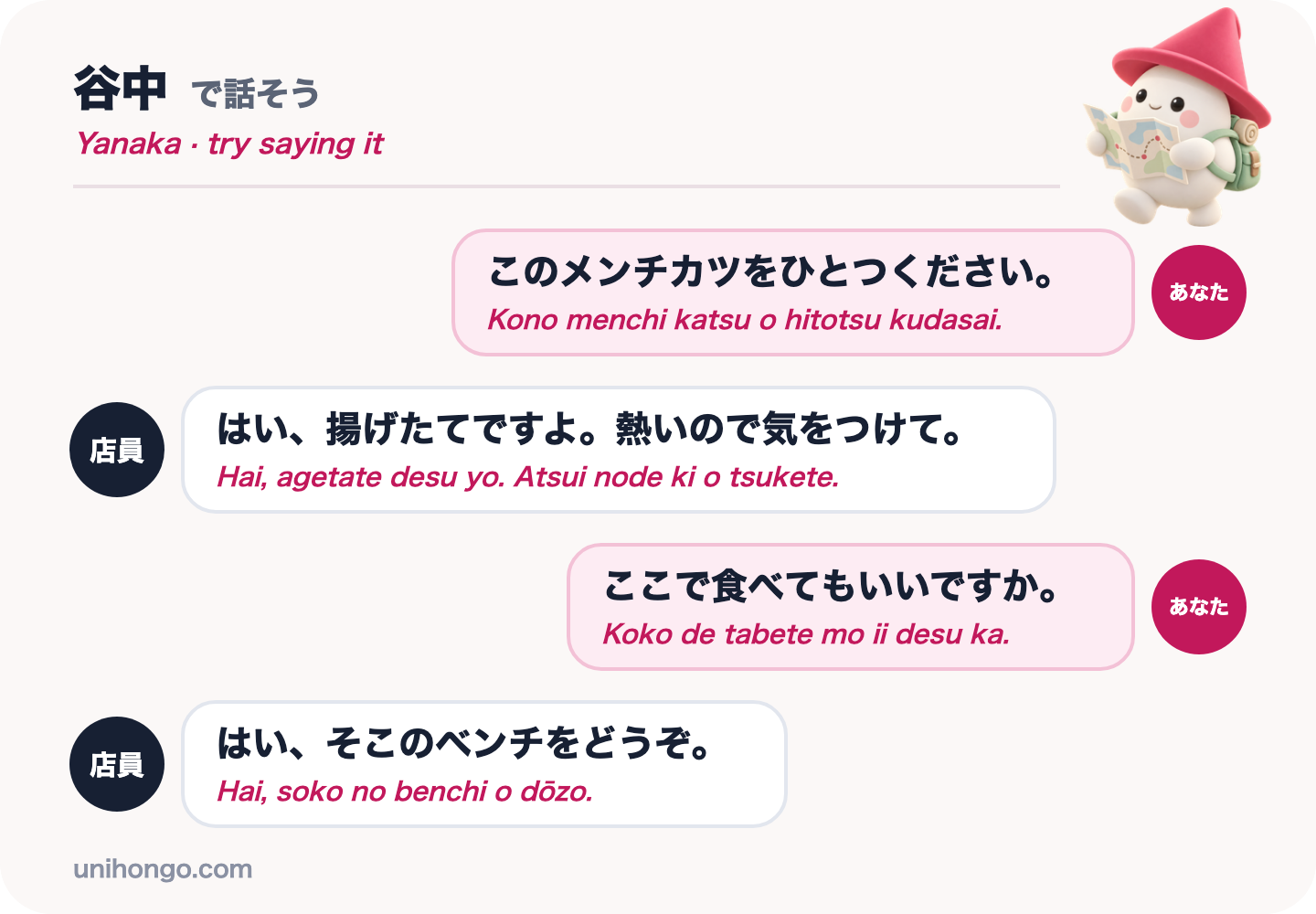
| Japanese | Romaji | Meaning |
|---|---|---|
| このメンチカツをひとつください。 | Kono menchi katsu o hitotsu kudasai. | One of these minced meat cutlets, please. |
| はい、揚げたてですよ。熱いので気をつけて。 | Hai, agetate desu yo. Atsui node ki o tsukete. | Here you are, just fried. It's hot, so be careful. |
| ここで食べてもいいですか。 | Koko de tabete mo ii desu ka. | May I eat it here? |
| はい、そこのベンチをどうぞ。 | Hai, soko no benchi o dōzo. | Yes, please use the bench there. |
Official information
Shops set their own hours and closing days, so check the shop list on the Yanaka Ginza shopkeepers' association site. The Tokyo Convention and Visitors Bureau's official guide covers the wider Yanaka and Nezu area and the cemetery.