

Why Kichijōji and Inokashira Park make a perfect Tokyo day off
Most visitors to Tokyo never go further west than Shinjuku. Kichijōji is a reason to. Fifteen minutes on the train brings you to a neighbourhood with its own character: less hectic than the centre, but busy, young and full of independent cafés, secondhand shops, bakeries and bars. It regularly appears near the top of surveys of where Tokyo people would like to live, and it is easy to see why.
The park is the heart of it. Inokashira Onshi Kōen was given to the city by the imperial household and opened in 1917 as one of Japan's first suburban parks, around a spring-fed pond that has supplied the Kanda River since the Edo period. Tall trees, boats on the water, street musicians on weekends and a red temple hall on the pond give it a gentle, old-fashioned feel.
For a Japanese learner, Kichijōji is full of short, everyday exchanges: renting a boat, ordering a coffee, buying a snack, asking the way. It is also a good place to hear ordinary Tokyo Japanese spoken at a relaxed pace.
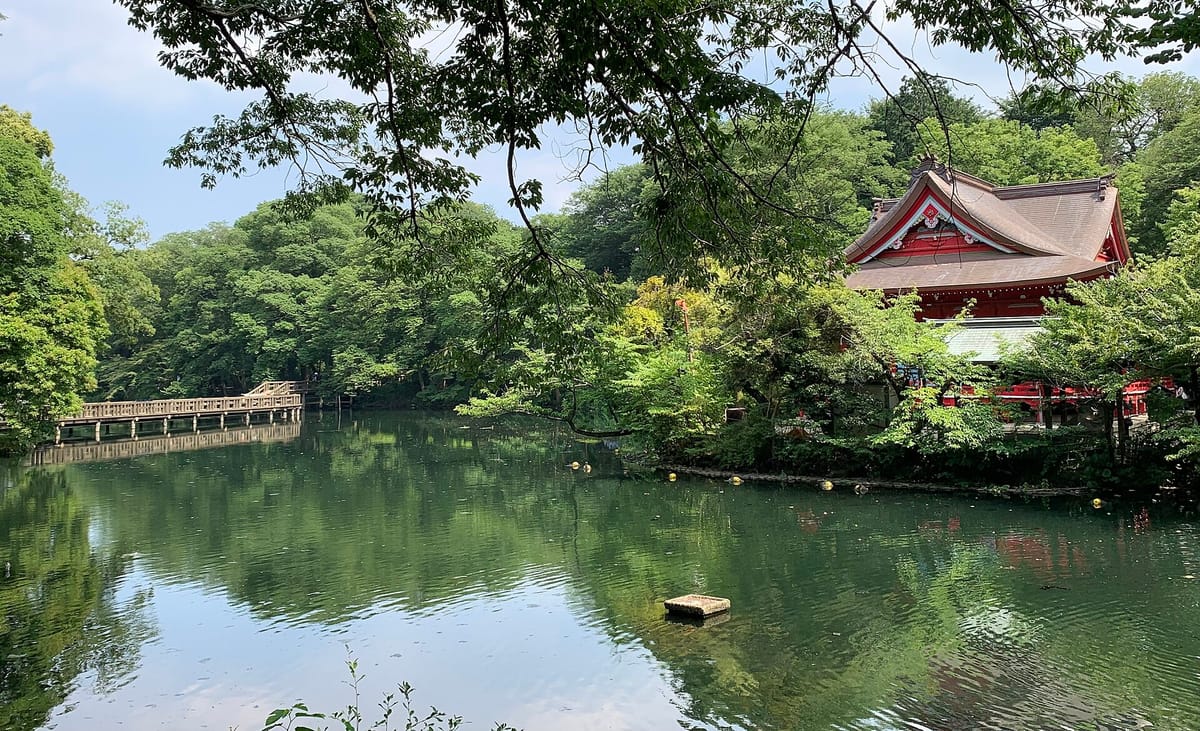
Getting there: JR Kichijōji and Inokashira-kōen stations
Kichijōji Station is on the JR Chūō Line (rapid) and Chūō-Sōbu Line, about fifteen minutes from Shinjuku, and it is the western terminus of the Keiō Inokashira Line from Shibuya, which passes through Shimokitazawa. That makes it easy to combine Kichijōji with Shimokitazawa on the same day.
For the park, use the Park Exit, 公園口, kōen-guchi, on the south side of the JR station, and walk down the sloping street to the pond in about five minutes. For the shops and Harmonica Yokochō, use the North Exit. If you are coming on the Keiō Inokashira Line, you can also get off one stop early at Inokashira-kōen Station, a minute from the park, walk through it and finish in Kichijōji.
| Japanese | Romaji | Meaning |
|---|---|---|
| 井の頭公園はどの出口ですか。 | Inokashira Kōen wa dono deguchi desu ka. | Which exit is for Inokashira Park? |
| 公園口はどちらですか。 | Kōen-guchi wa dochira desu ka. | Which way is the Park Exit? |
| 池まで歩いて何分くらいですか。 | Ike made aruite nanpun kurai desu ka. | About how many minutes' walk to the pond? |
| ハモニカ横丁はどこですか。 | Hamonika Yokochō wa doko desu ka. | Where is Harmonica Yokochō? |
| 井の頭線の乗り場はどこですか。 | Inokashira-sen no noriba wa doko desu ka. | Where do I board the Inokashira Line? |
What you will see: the pond, Benzaiten, the zoo and the alleys
Plan a loop: out through the Park Exit to the pond, round the water and the woods, then back to the station and north into the arcades for food and drink. Half a day is enough; a whole day is better if you add the zoo or the Ghibli Museum.
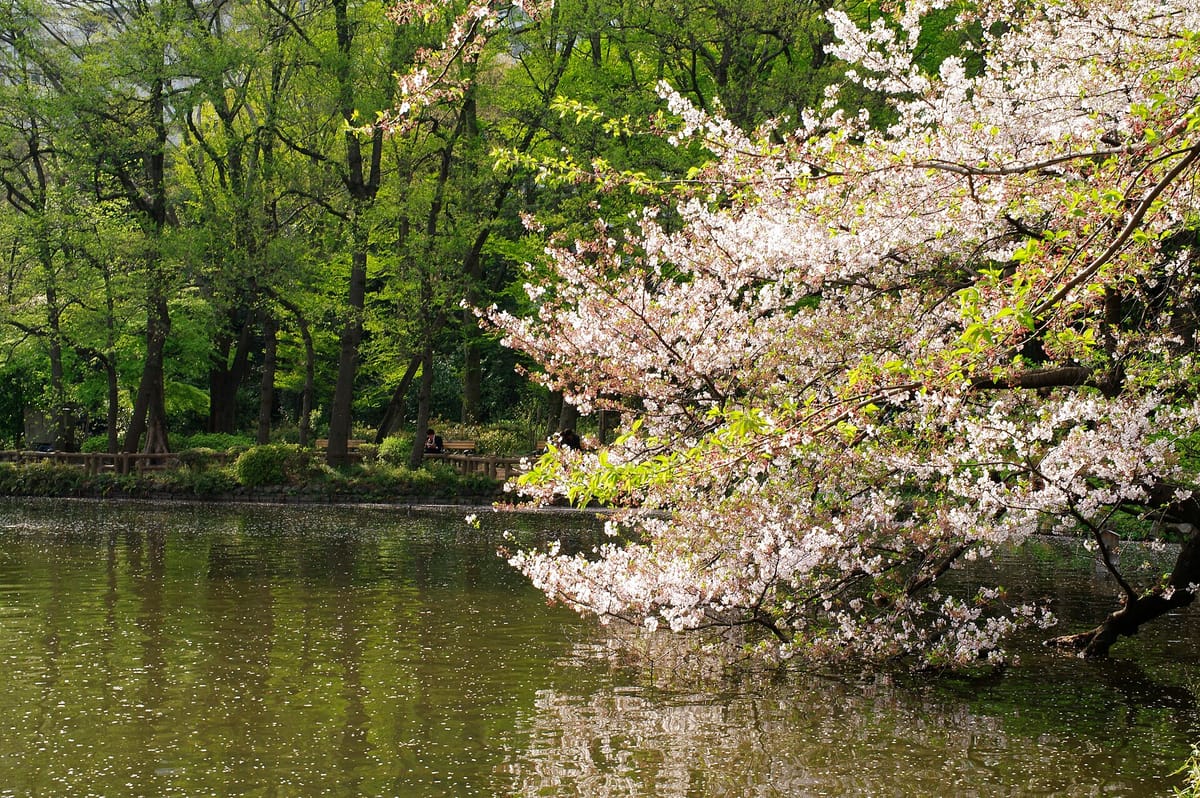
- Inokashira-ike, 井の頭池: the long, narrow pond at the centre of the park, lined with cherry trees and one of the sources of the Kanda River.
- Nanai-bashi, 七井橋: the bridge across the middle of the pond, the classic spot for cherry blossom views in early April.
- Inokashira Benzaiten, 井の頭弁財天: a red hall on the west side of the pond, dedicated to Benzaiten, goddess of music and fortune; the hall was rebuilt in the early Shōwa period after the 1923 earthquake.
- Boats, ボート: rowing boats, cycle boats and swan pedal boats rented from the dock on the pond.
- Inokashira Park Zoo, 井の頭自然文化園: a small zoo with a main garden and an aquatic life area by the pond; ticketed and closed on Mondays.
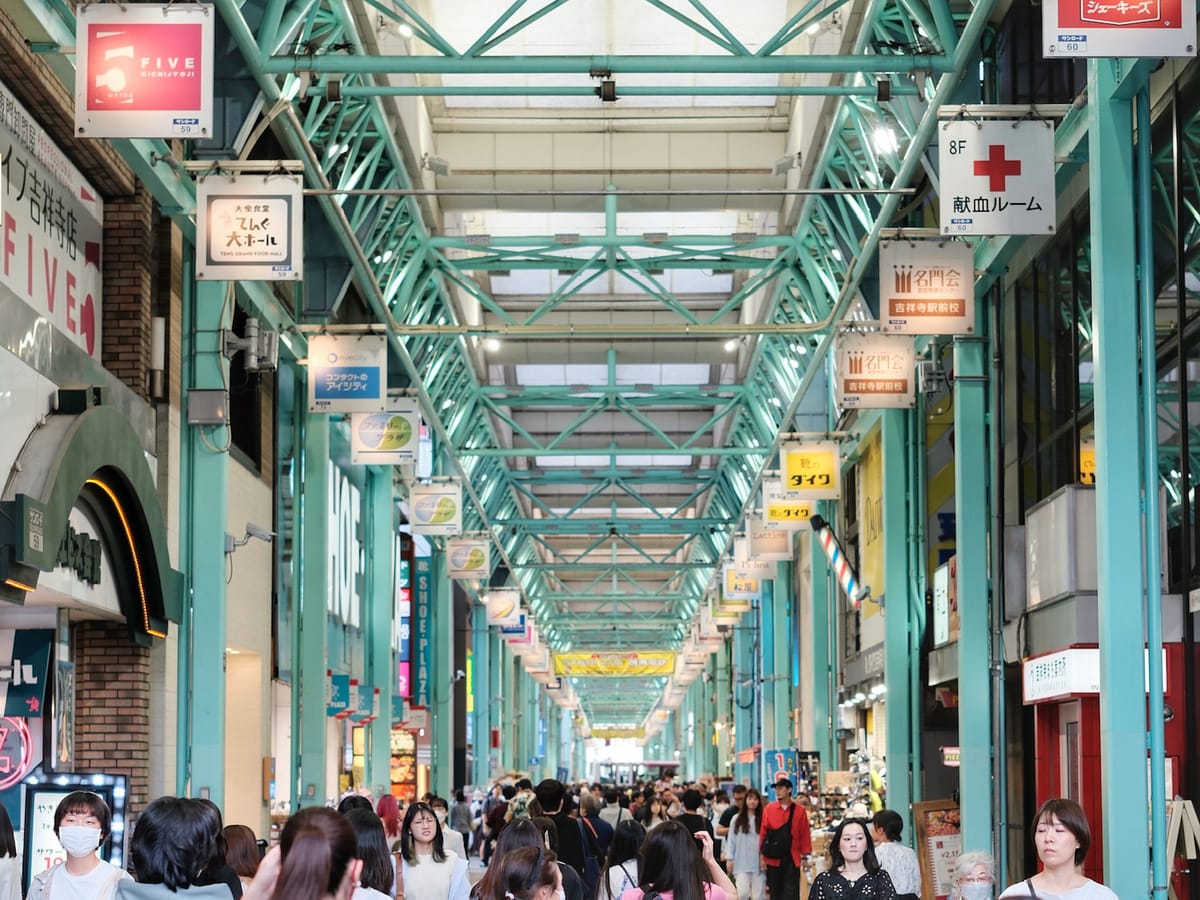
- Harmonica Yokochō, ハモニカ横丁: a grid of narrow alleys north of the station that grew from a black market of the late 1940s; a local critic named it after the rows of tiny shops, which looked like the holes of a harmonica.
- Sun Road, サンロード: the long covered shopping arcade running north from the station.
Park paths and the words on the signs
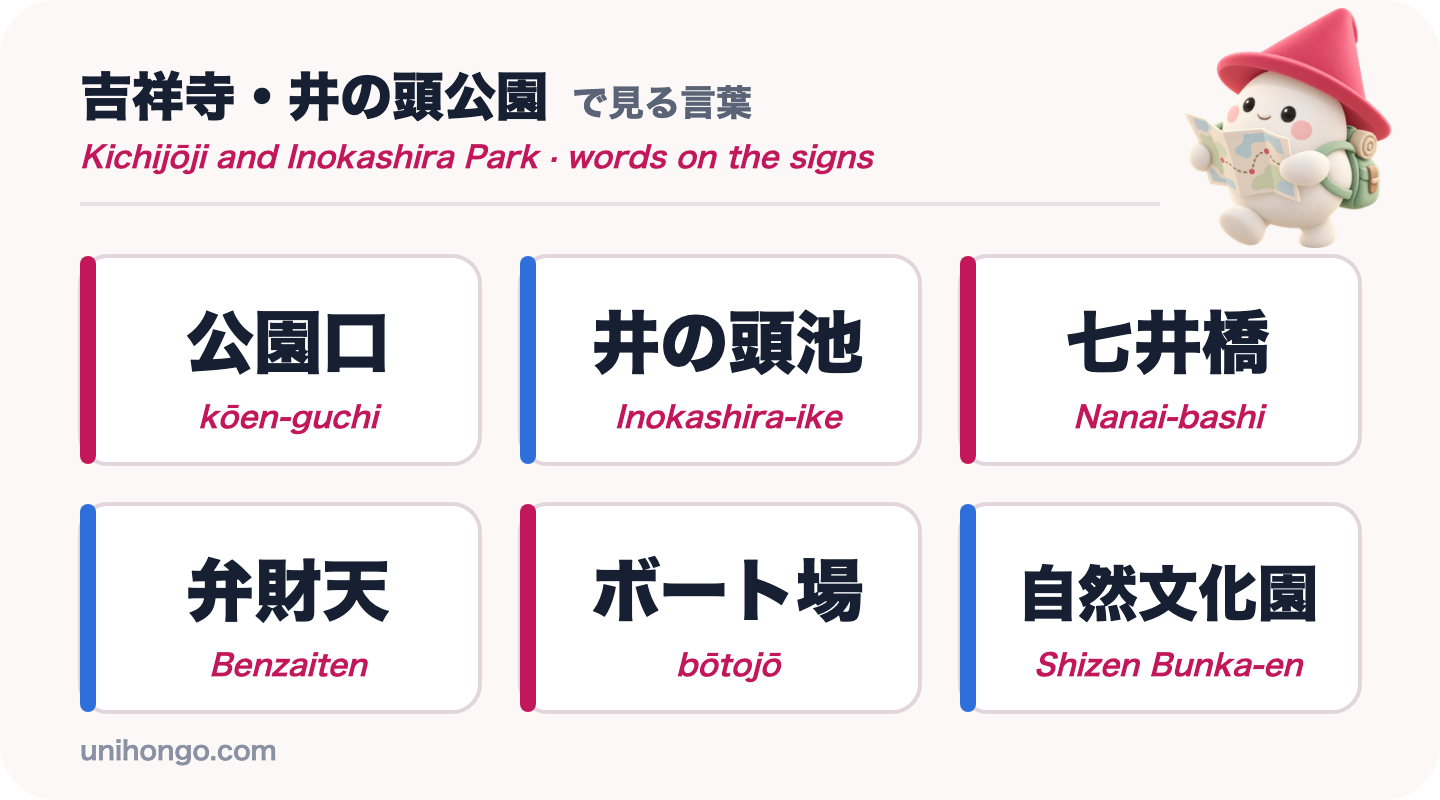
The park's signposts point to a handful of places, and the names are worth reading. 池, ike, is a pond; 橋, hashi or bashi, is a bridge; and 園, en, as in 自然文化園, the zoo's official name, literally the nature and culture garden, means grounds.
At the boat dock you will see the types of boat and the rental unit, usually per 30 minutes, 30分, on the price board, along with the number of people each boat takes. Hours change with the season, and the dock closes on Wednesdays in winter.
| Word | Reading | Meaning |
|---|---|---|
| 公園口 | kōen-guchi | Park Exit of Kichijōji Station |
| 井の頭池 | Inokashira-ike | Inokashira Pond |
| 七井橋 | Nanai-bashi | The bridge across the middle of the pond |
| 弁財天 | Benzaiten | Goddess of music and fortune, and her hall on the pond |
| ボート場 | bōtojō | Boat dock |
| ローボート | rō bōto | Rowing boat |
| スワンボート | suwan bōto | Swan pedal boat |
| 自然文化園 | Shizen Bunka-en | Inokashira Park Zoo |
| 横丁 | yokochō | Side alley, lane |
Japanese at the boat dock and in the alleys
Renting a boat is simple: choose the type, say how long you want it, pay, and board at the pier the attendant points to. Row boats take up to three adults; swan boats and cycle boats take two adults and one child. Boats are charged for each thirty minutes, so ask for sanjuppun or ichijikan, thirty minutes or an hour, and keep an eye on the time.
In the evening, Harmonica Yokochō is the place to try your izakaya Japanese. Many bars have only a handful of seats, so ask whether there is room before you sit down, and expect a small table charge in some places. Point at the menu if you need to, but a few phrases make the evening much more fun.
| Japanese | Romaji | Meaning |
|---|---|---|
| スワンボートに乗りたいんですが。 | Suwan bōto ni noritai n desu ga. | I'd like to take a swan boat. |
| 三十分でお願いします。 | Sanjuppun de onegai shimasu. | Thirty minutes, please. |
| 何人まで乗れますか。 | Nannin made noremasu ka. | How many people can ride? |
| 延長はできますか。 | Enchō wa dekimasu ka. | Can I extend the time? |
| 二人ですが、入れますか。 | Futari desu ga, hairemasu ka. | There are two of us. Is there room? |
| 生ビールをふたつください。 | Nama bīru o futatsu kudasai. | Two draught beers, please. |
| お会計をお願いします。 | O-kaikei o onegai shimasu. | The bill, please. |
Park manners, timing and practical tips
Inokashira Park is a neighbourhood park used every day by locals, dog walkers, families and musicians. A few habits keep it pleasant for everyone.
- Do not feed the ducks, carp or other birds on the pond.
- Return boats on time; the fee is charged for each thirty minutes, and the dock closes earlier in winter and on Wednesdays from December to February.
- In cherry blossom season, early April, the park is packed; picnic early in the day, keep your sheet small and take all rubbish home.
- Check the zoo's closing days before you go: it is normally closed on Mondays.
- Visit the zoo, the pond and the Ghibli Museum on the same day by walking south-west through the park.
- In Harmonica Yokochō, keep your voice down in the lanes and do not block the narrow alleys for photos.
- Autumn leaves in November and fresh green in May are quieter and just as beautiful as the cherry season.
Practise the boat dock before you go
The boat dock exchange uses polite service language: go-riyō, use, and dōzo, please go ahead. Practise both sides, and listen for numbers in the attendant's reply, since the time and the boarding place are what you need.
Then practise with a partner who answers back. In Unihongo, choose the Sightseeing topic and ask your AI Sensei to play the boat attendant, or try the First Round at an Izakaya mission to prepare for Harmonica Yokochō. Saying the lines aloud once before you go makes them come out at the dock.
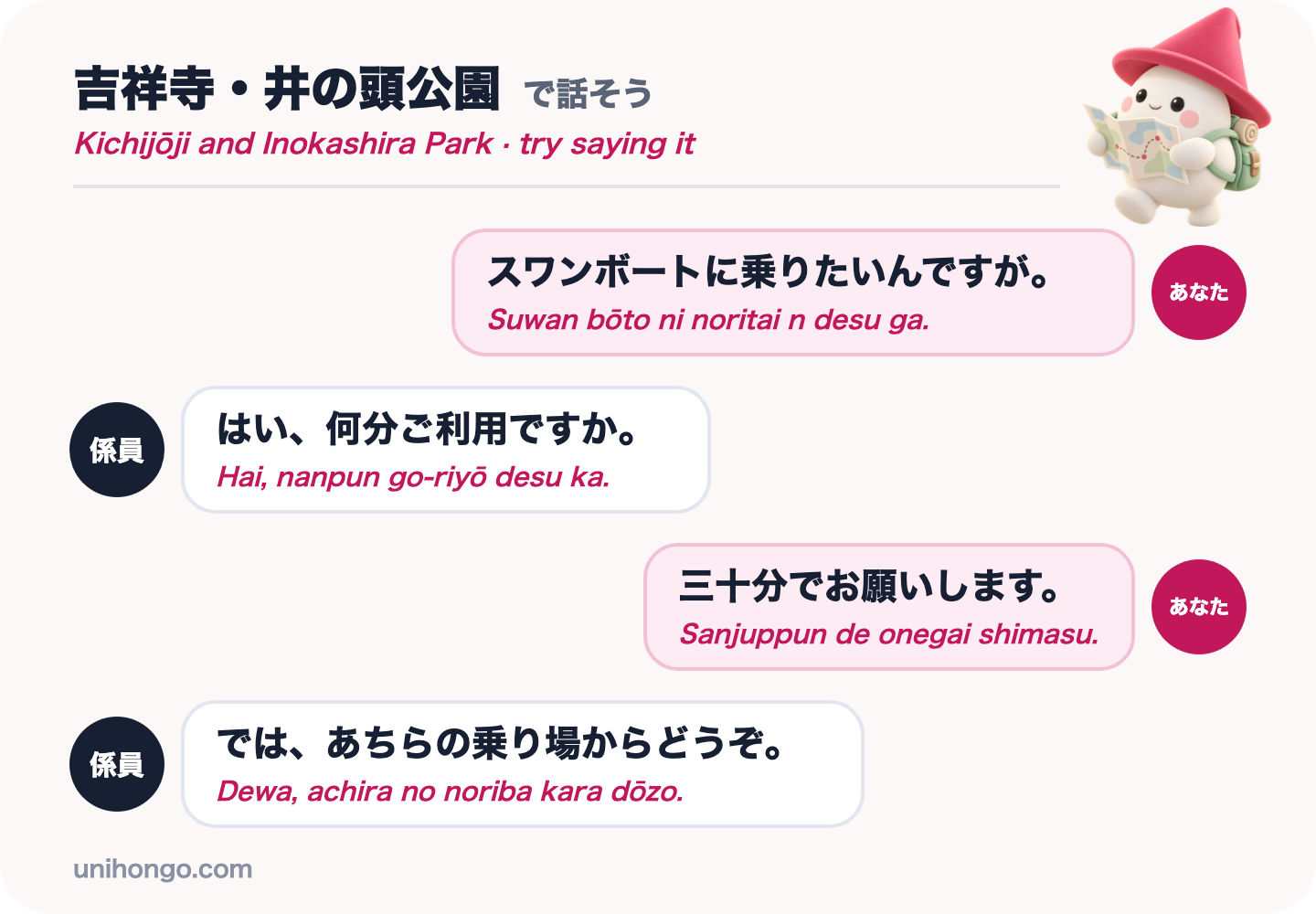
| Japanese | Romaji | Meaning |
|---|---|---|
| スワンボートに乗りたいんですが。 | Suwan bōto ni noritai n desu ga. | I'd like to take a swan boat. |
| はい、何分ご利用ですか。 | Hai, nanpun go-riyō desu ka. | Certainly. How many minutes would you like? |
| 三十分でお願いします。 | Sanjuppun de onegai shimasu. | Thirty minutes, please. |
| では、あちらの乗り場からどうぞ。 | Dewa, achira no noriba kara dōzo. | Then please board over there. |
Official information
Boat hours and closing days are published by the Tokyo Metropolitan Park Association, and the zoo's hours and fees by the Tokyo Zoological Park Society. The Tokyo Convention and Visitors Bureau covers Kichijōji and the shopping streets.