

Why Aizu-Wakamatsu is worth the detour
The first castle here was built in 1384 by Ashina Naomori and called Kurokawa Castle. Two centuries later the warlord Gamō Ujisato took over the Aizu region, renamed the castle Tsuruga, crane, and in 1593 built a huge seven-storey keep. Under the Matsudaira lords, close relatives of the Tokugawa shoguns, Aizu became famous for its samurai discipline and its loyalty to the shogunate.
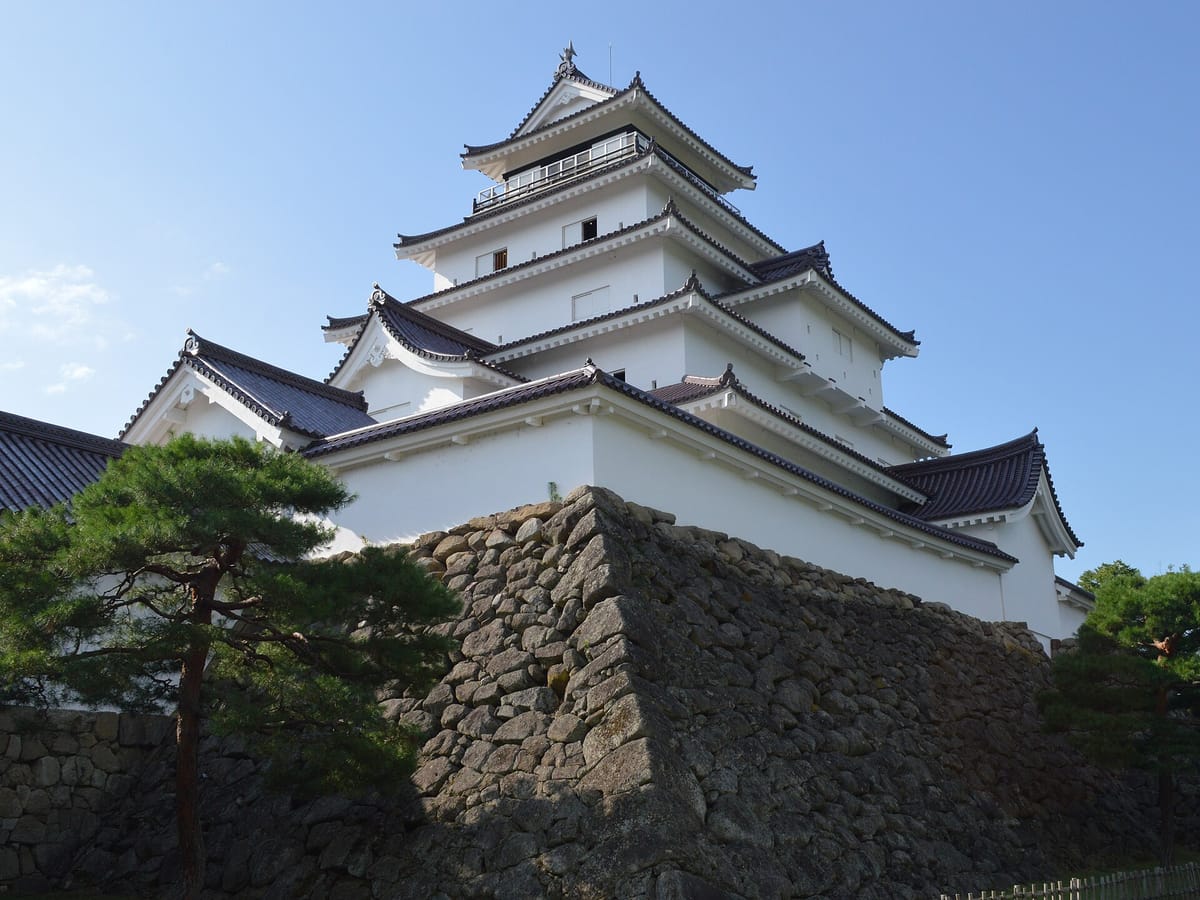
That loyalty decided its fate. In the Boshin War of 1868, the armies of the new Meiji government besieged the castle for about a month. It held, battered by artillery, until the domain surrendered. In 1874 the damaged buildings were demolished, leaving only the stone walls and moats. The keep you see today was rebuilt in 1965 as a city museum, and its red roof tiles were restored in 2011.
For a learner, Aizu-Wakamatsu is a city where history is still spoken about with feeling, and its signs, museums and stories are full of the vocabulary of the samurai and the end of the Edo period.
Getting there: Kōriyama, the Ban'etsu West Line and the castle
Aizu-Wakamatsu is not on the Shinkansen. From Tokyo, take the Tōhoku Shinkansen to Kōriyama, about ninety minutes, then the JR Ban'etsu West Line west through the mountains to Aizu-Wakamatsu, about sixty-five minutes. Highway buses also link the city with Tokyo, Sendai, Kōriyama and Niigata.
Tsuruga Castle is in the south of the city centre, too far from the station for a quick walk. Town loop buses run from the station past the main sights, including the castle, Iimoriyama and Nanokamachi, and a taxi is quick. The castle also rents bicycles, and the city is flat enough to ride between the sights. The tourist information office at the station can help with bus stops and passes.
| Japanese | Romaji | Meaning |
|---|---|---|
| 会津若松行きは何番線ですか。 | Aizu-Wakamatsu-iki wa nanbansen desu ka. | Which platform is the train for Aizu-Wakamatsu? |
| 鶴ヶ城に行くバスはどこから乗りますか。 | Tsuruga-jō ni iku basu wa doko kara norimasu ka. | Where do I catch the bus to Tsuruga Castle? |
| 鶴ヶ城に一番近いバス停はどこですか。 | Tsuruga-jō ni ichiban chikai basutei wa doko desu ka. | Which bus stop is closest to Tsuruga Castle? |
| 一日乗り放題の券はありますか。 | Ichinichi norihōdai no ken wa arimasu ka. | Is there an all-day pass? |
| 飯盛山まで自転車で何分くらいですか。 | Iimoriyama made jitensha de nanpun kurai desu ka. | About how many minutes by bike to Iimoriyama? |
The keep, the red tiles and the Rinkaku tea house
Inside the keep, the Wakamatsu Castle Keep Local Museum tells the story of the castle and the Aizu domain, from the Ashina and Gamō clans to the siege of 1868, with armour, swords and documents. At the top, a viewing floor looks out in all directions over the park, the city and the mountains around the Aizu basin. Look up as you leave: the red-glazed tiles are the castle's signature.
In the grounds stands Rinkaku, a tea house with an unusual history. When the tea master Sen no Rikyū was ordered to take his own life in 1591, Gamō Ujisato sheltered his son, Sen no Shōan, in Aizu, and the tea room is said to have been built for him. Shōan was pardoned and returned to Kyoto, where he revived the Sen family's tea tradition. After the Boshin War the tea house was moved out of the castle into the town, and in 1990 it was returned to its original site. Today you can sit and drink matcha with a sweet.
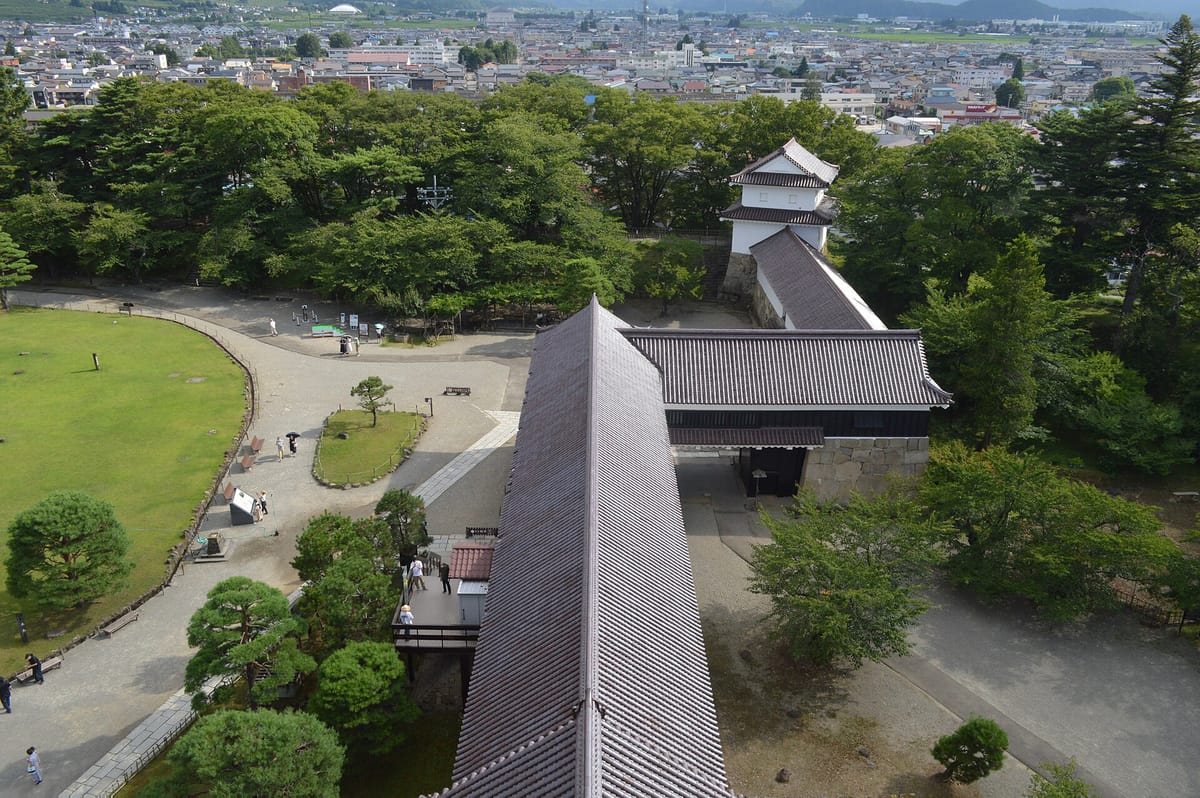
- Tenshukaku: the five-storey keep, rebuilt in 1965, now a museum with a viewing floor.
- Akagawara: the red-glazed roof tiles, restored in 2011.
- Rinkaku: the tea house linked to Sen no Shōan, serving matcha and a sweet.
- Stone walls and moats: the original structures of the castle, a National Historic Site.
- Oyakuen: a garden of medicinal plants around a pond, a short ride from the castle.
- Iimoriyama: the hill with the graves of the Byakkotai, and the Sazaedō at its foot.
- Nanokamachi: a street of old shops and Taishō-era buildings in the city centre.
Words on the signs at Tsuruga Castle
The castle has two names, and you will see both: 鶴ヶ城, Tsuruga-jō, Crane Castle, used by everyone in Aizu, and 若松城, Wakamatsu-jō, its official name as a historic site. The small ヶ in 鶴ヶ城 is not the katakana ke but an old way of writing ga, of, so the name is read Tsuruga, not Tsuruke.
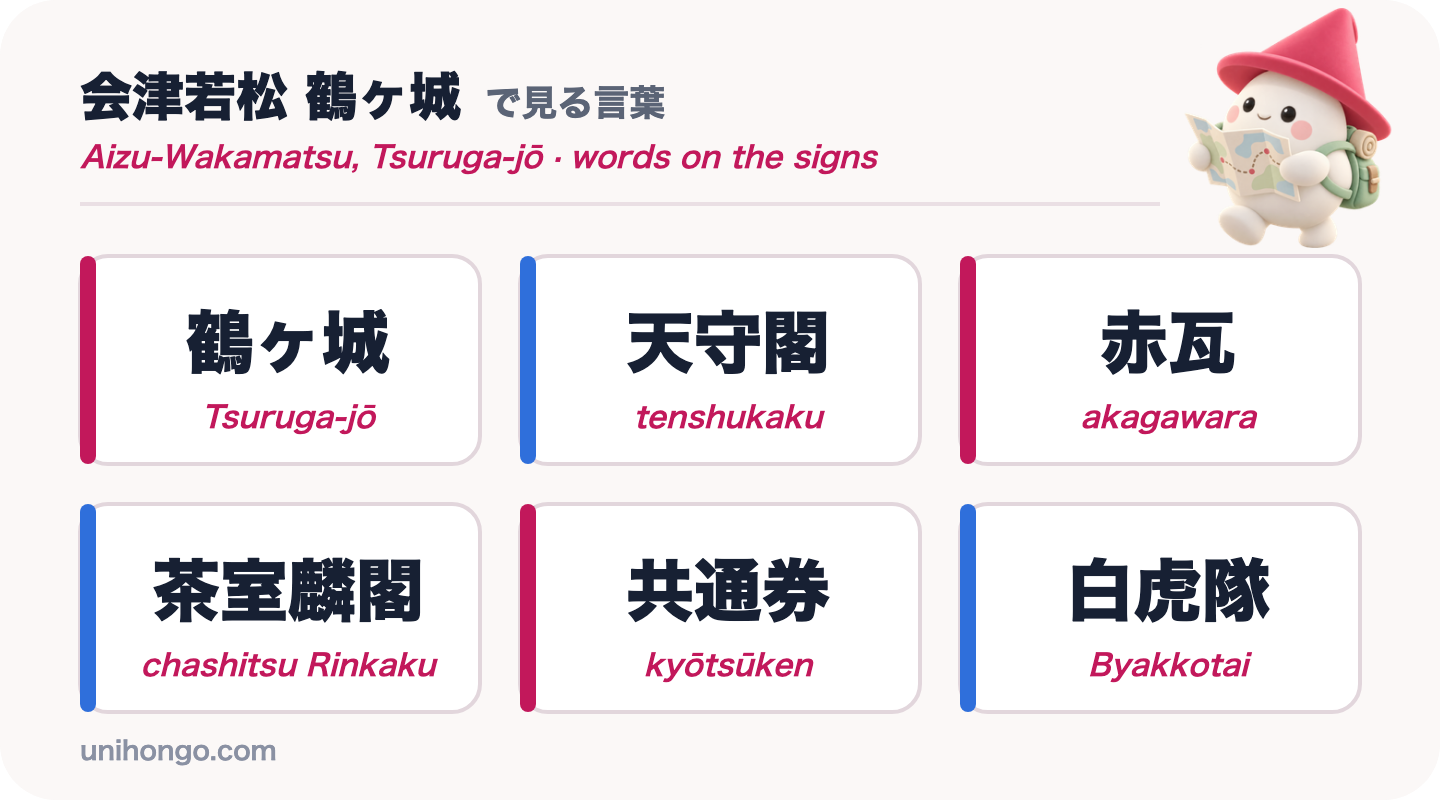
At the ticket windows, look for 共通券, kyōtsūken, a combined ticket. The table below covers the words on the signs around the castle and the city.
| Word | Reading | Meaning |
|---|---|---|
| 鶴ヶ城 | Tsuruga-jō | Crane Castle, the everyday name |
| 若松城 | Wakamatsu-jō | The castle's official name |
| 天守閣 | tenshukaku | Castle keep |
| 赤瓦 | akagawara | Red-glazed roof tiles |
| 茶室麟閣 | chashitsu Rinkaku | The Rinkaku tea house |
| 共通券 | kyōtsūken | Combined ticket |
| 白虎隊 | Byakkotai | The White Tiger Force of young samurai |
| 飯盛山 | Iimoriyama | The hill with the Byakkotai graves |
| さざえ堂 | Sazaedō | The double-spiral wooden hall at Iimoriyama |
Japanese for tickets and matcha at Rinkaku
At the ticket window, the combined ticket for the keep and Rinkaku is the useful one, and staff will usually ask how many people and whether you are all adults. At Rinkaku, you order matcha at the counter and are shown to a seat looking onto the garden.
You do not need to know the tea ceremony to enjoy a bowl, but a few gestures are appreciated: eat the sweet first, then lift the bowl with your right hand, place it on your left palm, turn it slightly so you do not drink from the front, and drink in a few sips. Otemae chōdai itashimasu, or simply itadakimasu, before you drink, and gochisōsama deshita afterwards, are the words to use.
| Japanese | Romaji | Meaning |
|---|---|---|
| 天守閣と麟閣の共通券を二枚ください。 | Tenshukaku to Rinkaku no kyōtsūken o nimai kudasai. | Two combined tickets for the keep and Rinkaku, please. |
| お抹茶を一つお願いします。 | O-matcha o hitotsu onegai shimasu. | One matcha, please. |
| お菓子は先にいただくんですか。 | O-kashi wa saki ni itadaku n desu ka. | Do I eat the sweet first? |
| お茶碗はどう持てばいいですか。 | O-chawan wa dō moteba ii desu ka. | How should I hold the tea bowl? |
| ここで写真を撮ってもいいですか。 | Koko de shashin o totte mo ii desu ka. | May I take photos here? |
| ごちそうさまでした。おいしかったです。 | Gochisōsama deshita. Oishikatta desu. | Thank you for the tea. It was delicious. |
Etiquette, seasons and timing
Aizu-Wakamatsu is proud of its history, and some places, especially Iimoriyama, are memorials as well as sights.
- At the Byakkotai graves on Iimoriyama, keep your voice down and do not pose for playful photos.
- Inside the keep museum, follow the signs about photography and keep to the route upwards.
- Take off your shoes at Rinkaku, and do not lean on the sliding doors or walk on the edges of the tatami.
- Spring brings cherry blossom around the moats, a popular time with long queues at the keep.
- Winter is snowy; the red tiles under snow are beautiful, but wear boots and allow extra travel time.
- Combine the castle with Iimoriyama, the Sazaedō and Nanokamachi for a full day, using the loop bus or a bicycle.
Practise the castle ticket window before you go
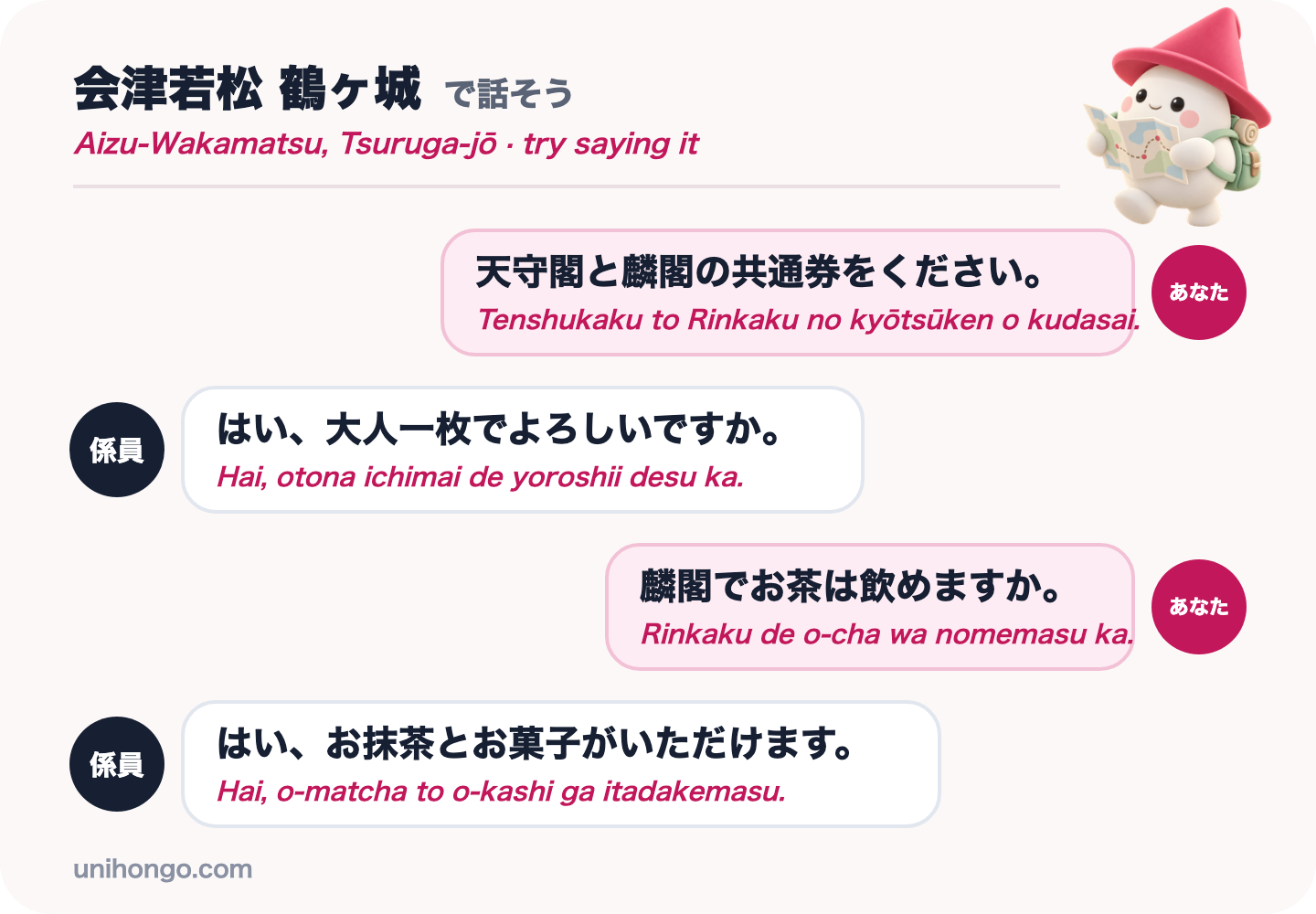
The conversation you are most likely to have at Tsuruga Castle is at the ticket window. Practise the four lines below until you can say them without reading, and listen for the staff's question, otona ichimai de yoroshii desu ka, is one adult ticket right, and the word itadakemasu, you can have.
Then practise with a partner who answers back. In Unihongo, choose the Sightseeing topic and ask your AI Sensei to play the ticket seller at the castle, then switch to the Tea Ceremony topic to rehearse your bowl of matcha at Rinkaku. Saying the lines once is what makes them come out at the window.
| Japanese | Romaji | Meaning |
|---|---|---|
| 天守閣と麟閣の共通券をください。 | Tenshukaku to Rinkaku no kyōtsūken o kudasai. | A combined ticket for the keep and Rinkaku, please. |
| はい、大人一枚でよろしいですか。 | Hai, otona ichimai de yoroshii desu ka. | Certainly. One adult ticket, is that right? |
| 麟閣でお茶は飲めますか。 | Rinkaku de o-cha wa nomemasu ka. | Can I have tea at Rinkaku? |
| はい、お抹茶とお菓子がいただけます。 | Hai, o-matcha to o-kashi ga itadakemasu. | Yes, you can have matcha and a sweet. |
Official information
Tsuruga Castle's official site publishes the keep's hours and fees, Rinkaku's tea service, access and seasonal news, and the city's tourism site covers Iimoriyama, the Sazaedō and the rest of Aizu-Wakamatsu. Check both before you go.