

Why Yakushima's cedar forest is worth the journey
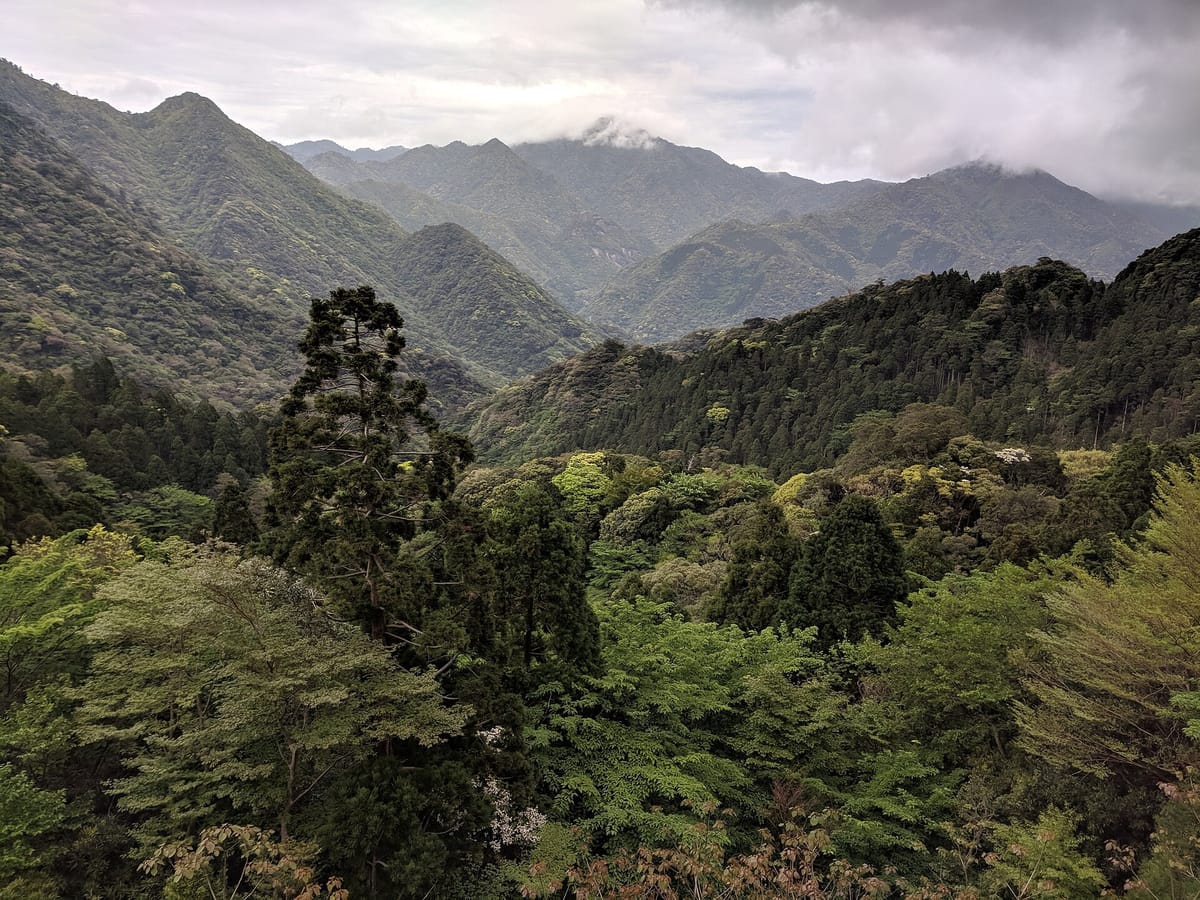
Yakushima lies in the sea about sixty kilometres south of the tip of Kyushu, a nearly round island of about five hundred square kilometres. It is almost all mountain: Miyanoura-dake, at 1,936 metres the highest peak in Kyushu, rises in the middle, and the forest runs from the beaches all the way up. Because the island climbs so fast, you pass through warm subtropical woods, cedar forest and cool highland scrub in a single day's walk.
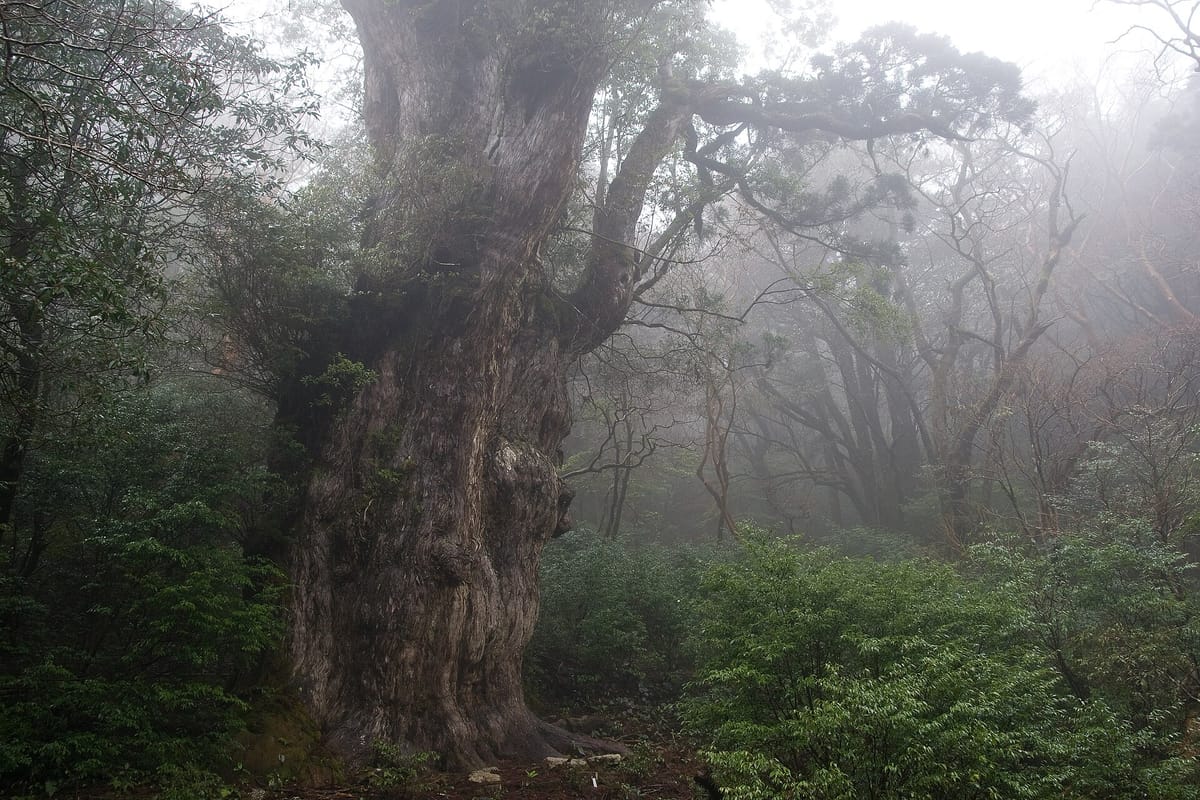
The stars are the yakusugi, cedars more than a thousand years old. They grow slowly in the island's thin granite soil, which makes their wood dense and rich in resin and helps them live for an extraordinary time. The largest known, Jōmon Sugi, was found in 1968 at about 1,300 metres; it is 25.3 metres tall with a trunk over sixteen metres round, and its age is estimated at more than two thousand years. The discovery helped turn the island from logging to protection, and in 1993 Yakushima became a UNESCO World Heritage Site.
Yakushima is also a place where you will use real Japanese. Guides, inn owners and bus drivers are used to visitors, but on a small island with early starts and changeable weather, being able to ask about times, conditions and gear in Japanese makes everything smoother.
Getting there: fast boats, ferries and flights from Kagoshima
Most visitors travel via Kagoshima. From Kagoshima Main Port, South Pier, the high-speed boats Toppy and Rocket make several trips a day to Miyanoura, the main port on the north-east coast, or to Anbō on the east coast, taking roughly two to three hours depending on the route and stops. The car ferry Yakushima 2 runs once a day to Miyanoura in about four hours, and a slower overnight ferry also runs from Kagoshima's Taniyama Port. Rough seas can cancel boats, so leave a spare day at the end of your trip.
Yakushima Airport, on the north-east coast, has flights from Kagoshima of about forty minutes, as well as a daily flight each from Fukuoka and Osaka Itami. On the island, two bus companies run along the coast road, rental cars are the most flexible option, and taxis must be booked by phone rather than hailed. Neither bus company covers the western forest road, and access to the Arakawa trailhead for Jōmon Sugi is by shuttle bus rather than private car, so check the current arrangements on the tourism site before you plan the hike.
| Japanese | Romaji | Meaning |
|---|---|---|
| 宮之浦行きの高速船は何時ですか。 | Miyanoura-yuki no kōsokusen wa nanji desu ka. | What time is the high-speed boat to Miyanoura? |
| 今日は船は出ますか。 | Kyō wa fune wa demasu ka. | Are the boats running today? |
| 安房港に着きますか。 | Anbō-kō ni tsukimasu ka. | Does it arrive at Anbō Port? |
| タクシーを一台お願いします。 | Takushī o ichidai onegai shimasu. | One taxi, please. |
| 荒川登山口へのバスはどこから乗りますか。 | Arakawa tozanguchi e no basu wa doko kara norimasu ka. | Where do I catch the bus to the Arakawa trailhead? |
Jōmon Sugi, Shiratani Unsuikyō and the island's other trails
The walk to Jōmon Sugi is the island's great day out. From the Arakawa trailhead the route follows an old logging railway, the torokko track, for several kilometres along the river, then leaves it to climb steeply through the forest past famous trees such as the Wilson stump, a huge hollow stump you can step inside. The Yakushima Tourism Association gives the round trip as about 22 kilometres and nine to ten hours, which is why hikers start in the dark. Jōmon Sugi itself is seen from a wooden viewing deck; you cannot touch or approach the tree.
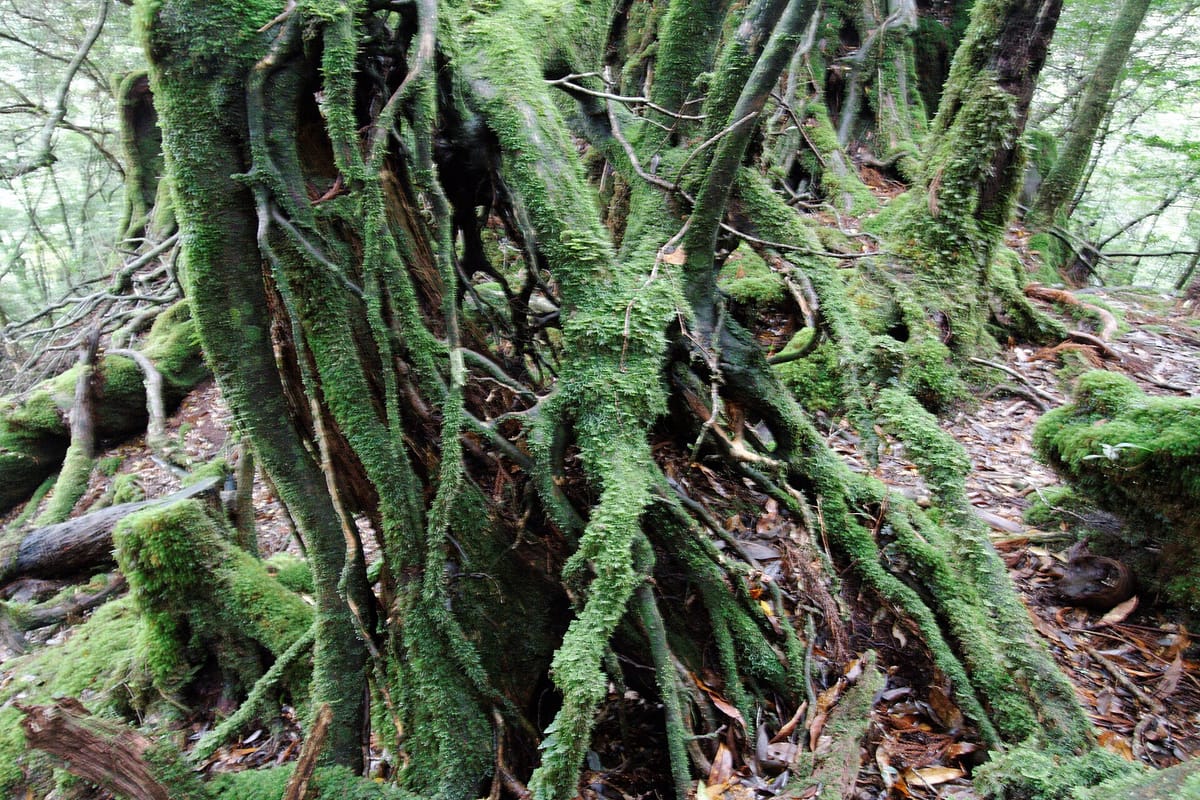
If you have less time or energy, Shiratani Unsuikyō, a gorge in the hills above Miyanoura, is the best introduction to the forest. Several marked courses take from about an hour to most of a day, and the longer ones reach the Koke-musu Mori, the moss-covered forest, and Taikoiwa, a rock with a view over the mountains. A small forest conservation fee is collected at the entrance.
- Jōmon Sugi: the oldest and largest known yakusugi, a long full-day hike.
- Wilson stump: a giant hollow stump on the Jōmon Sugi route, named after the botanist Ernest Wilson.
- Shiratani Unsuikyō: moss, streams and cedar in a gorge above Miyanoura, with courses of different lengths.
- Yakusugi Land: a forest park above Anbō with boardwalks and short trails among old cedars.
- Ōko-no-taki: a tall waterfall on the south-west coast that you can see from close to the car park.
- Nagata Inakahama: a beach on the north-west coast that is a major nesting site for loggerhead turtles.
Trail signs and the words to know
Trail signs on Yakushima are short and practical: the name of the next tree or landmark, the distance in kilometres, and warnings about the path. Many famous trees have their own name board, with the kanji 杉 somewhere in it, so learning that one character helps you read the whole forest.
One word surprises visitors: keitai toire, portable toilet. There are only a few toilets on the long trails, and the island asks hikers to use either those or portable toilet bags, which are sold on the island, in the special booths provided on the routes, then carry the used bag out.
| Word | Reading | Meaning |
|---|---|---|
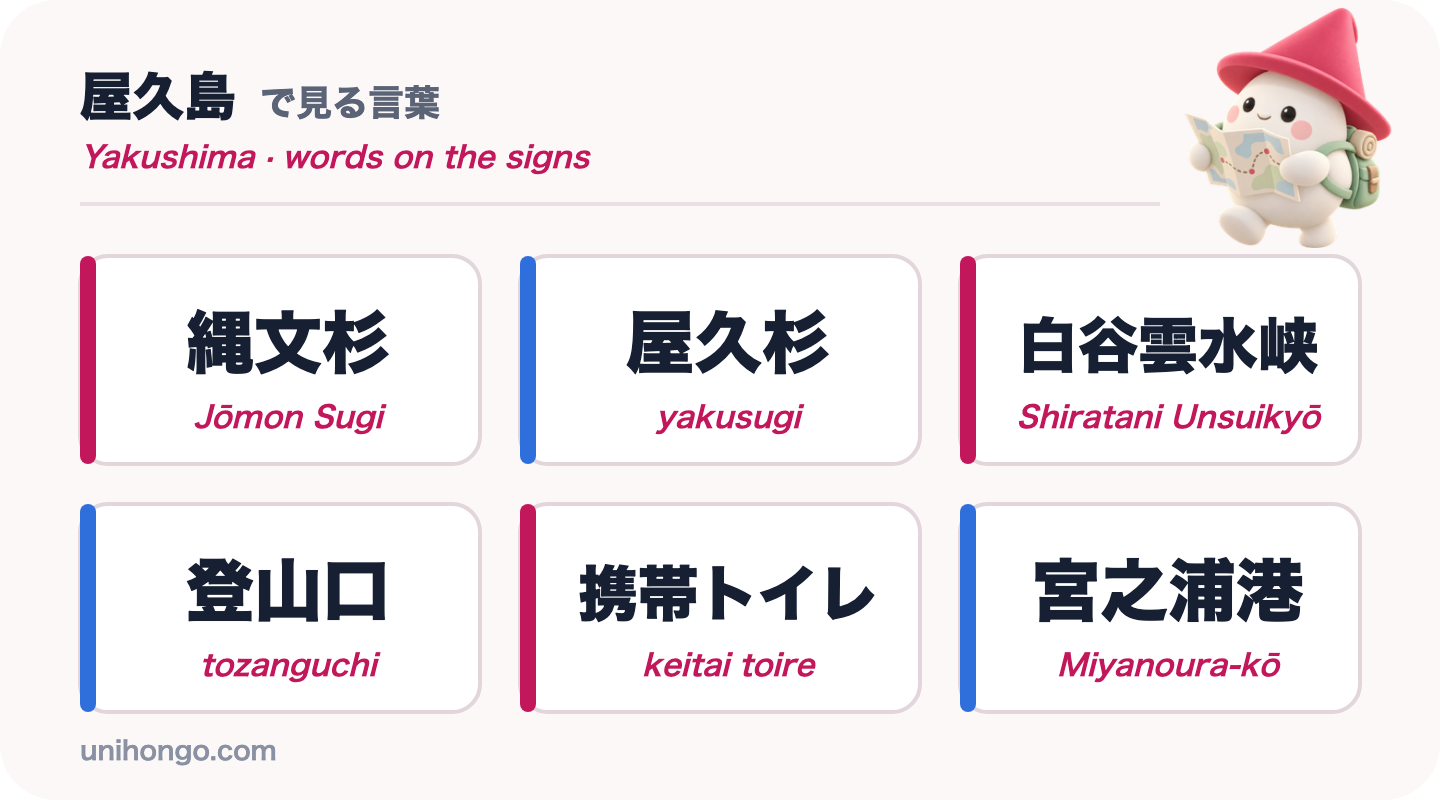
| 縄文杉 | Jōmon Sugi | The oldest and largest known cedar, named after the Jōmon period |
| 屋久杉 | yakusugi | Yakushima cedar over a thousand years old |
| 白谷雲水峡 | Shiratani Unsuikyō | The moss-forest gorge above Miyanoura |
| 登山口 | tozanguchi | Trailhead |
| 携帯トイレ | keitai toire | Portable toilet bag or booth |
| 宮之浦港 | Miyanoura-kō | Miyanoura Port, the main harbour |
| 欠航 | kekkō | Sailing or flight cancelled |
| 通行止め | tsūkōdome | Road or path closed |
| 登山届 | tozan todoke | Hiking plan you submit before a mountain walk |
Japanese for guides, packed lunches and gear
A Yakushima trek is mostly organised the day before. You book a guide or check the bus times, ask your inn to prepare an early breakfast and lunch, and rent anything you did not bring: rain gear, boots, a head torch. Many inns and guesthouses on the island will make a packed meal for hikers if you ask in advance; say so when you check in.
Gear rental shops near the ports and in the villages are used to hikers, and the staff will ask your shoe size and the date you will return things. Listen for saizu, size, and henkyaku, return.
| Japanese | Romaji | Meaning |
|---|---|---|
| 明日、縄文杉のガイドツアーに参加したいです。 | Ashita, Jōmon Sugi no gaido tsuā ni sanka shitai desu. | I would like to join a guided tour to Jōmon Sugi tomorrow. |
| お弁当を二つお願いできますか。 | O-bentō o futatsu onegai dekimasu ka. | Could I order two packed lunches? |
| 朝ご飯を早めにお願いできますか。 | Asagohan o hayame ni onegai dekimasu ka. | Could we have breakfast early? |
| 雨具と登山靴を借りたいです。 | Amagu to tozangutsu o karitai desu. | I would like to rent rain gear and hiking boots. |
| 靴のサイズは二十七センチです。 | Kutsu no saizu wa nijūnana senchi desu. | My shoe size is 27 centimetres. |
| 携帯トイレはどこで買えますか。 | Keitai toire wa doko de kaemasu ka. | Where can I buy a portable toilet bag? |
| 明日の天気はどうですか。 | Ashita no tenki wa dō desu ka. | What is the weather going to be like tomorrow? |
Trail etiquette, weather and practical tips
The Yakushima Tourism Association publishes a short set of manners for visitors. They are easy to follow and help keep a busy forest in good shape.
- Take all rubbish home with you; there are no bins on the trails.
- Stay on the marked path so you do not damage the moss and roots.
- Never feed the Yakushima macaques or the deer, and keep at least ten metres away from them.
- Give way on narrow sections, and fit rubber caps to the tips of trekking poles.
- Use the mountain toilets or portable toilets only, and carry used bags out.
- Carry rain gear, a warm layer, a head torch and more water and food than you think you need; weather in the mountains turns quickly.
- Try the island's food when you come down: flying fish, tobiuo, and kubiore saba, mackerel served as sashimi, are local specialities.
Practise the trek conversation before you go
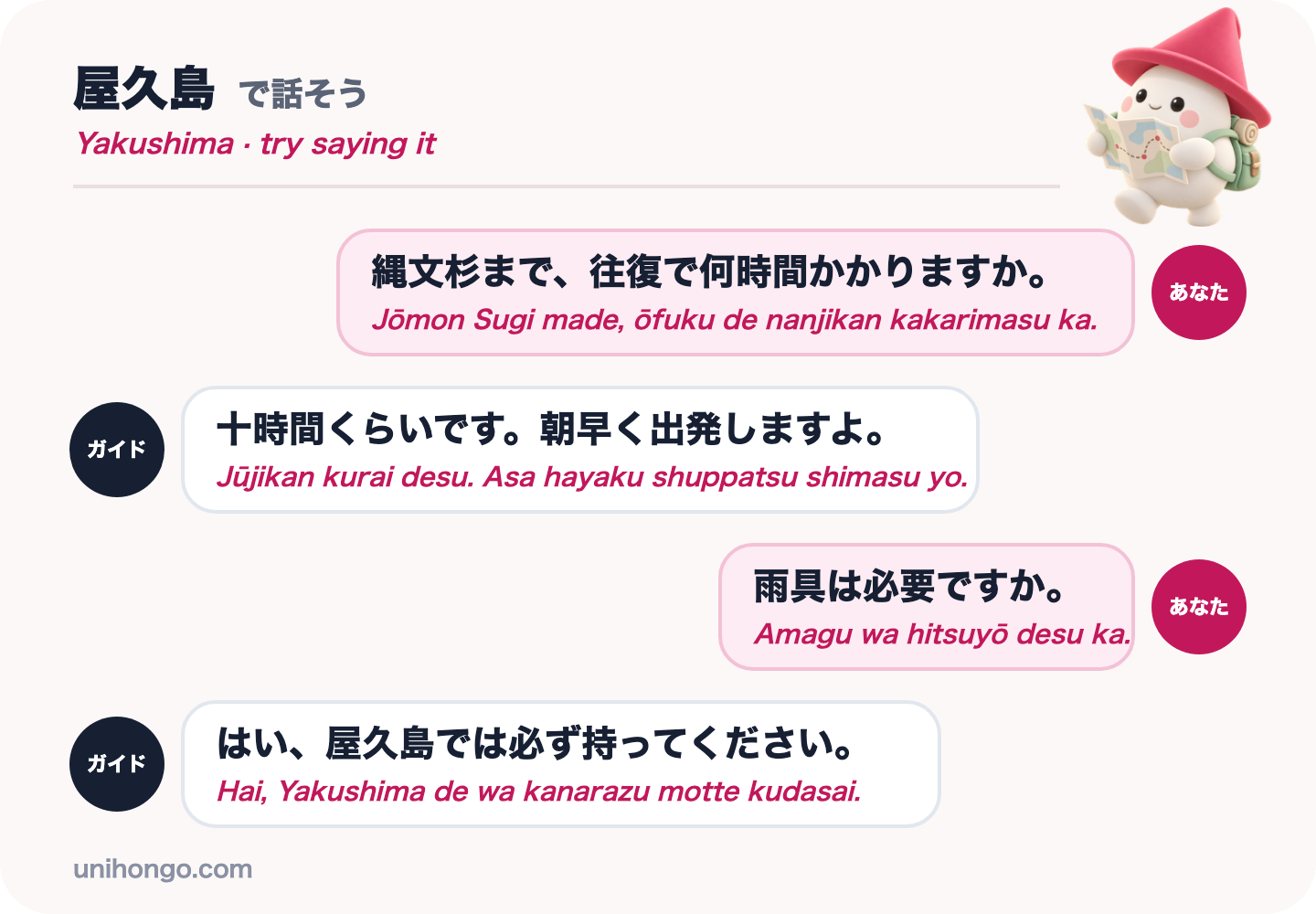
Before any Yakushima hike, you will have the same conversation with your guide, inn host or bus driver: how long it takes and what to bring. Practise the four lines below until you can say them without reading, and listen for the number of hours and the word kanarazu, without fail, in the reply.
Then practise with someone who answers back. In Unihongo, choose the Sightseeing topic and ask your AI Sensei to play a guide on Yakushima, or pick Ryokan Stay to arrange an early breakfast. Saying the lines once before you arrive is what makes them come out at five in the morning.
| Japanese | Romaji | Meaning |
|---|---|---|
| 縄文杉まで、往復で何時間かかりますか。 | Jōmon Sugi made, ōfuku de nanjikan kakarimasu ka. | How many hours does the round trip to Jōmon Sugi take? |
| 十時間くらいです。朝早く出発しますよ。 | Jūjikan kurai desu. Asa hayaku shuppatsu shimasu yo. | About ten hours. We leave early in the morning. |
| 雨具は必要ですか。 | Amagu wa hitsuyō desu ka. | Do I need rain gear? |
| はい、屋久島では必ず持ってください。 | Hai, Yakushima de wa kanarazu motte kudasai. | Yes, on Yakushima always bring it. |
Official information
Boat and flight times, the shuttle bus to the Arakawa trailhead, fees and road or trail closures change through the year. The Yakushima Tourism Association publishes current notices; check them before you book and again the day before you hike.