

Why Odaiba is worth a day by the bay
Most of Tokyo is a long way from the sea, even though the city sits on a bay. Odaiba is where you finally feel it: sea breeze, gulls, a sandy shore and a long wooden promenade looking back at the skyline. It has a relaxed, open feel quite unlike Shinjuku or Shibuya, and on a clear evening, with the bridge lit up and the fountain show running, it is one of the most beautiful places in the city.
Its history is short but striking. In 1853 Commodore Perry's warships sailed into Edo Bay, and the shogunate hurried to build a chain of island forts armed with cannon. Over the twentieth century most were demolished or swallowed by landfill, and the new land became a planned waterfront district in the 1990s, joined to the city by the Rainbow Bridge and the Yurikamome line.
For a Japanese learner, Odaiba is a good lesson in transport vocabulary. You will change trains, read line names in hiragana and kanji, buy a ticket for a line that is not JR, and ask which station to get off at, all in one short trip.
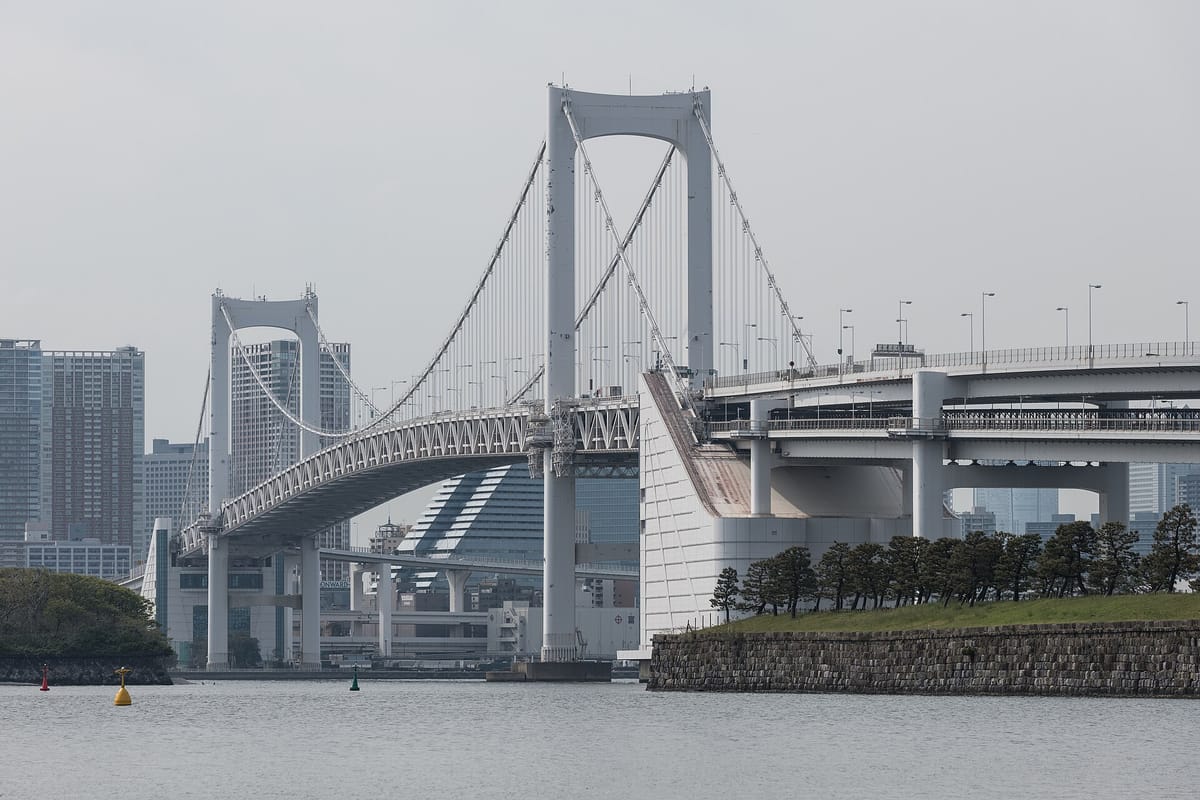
Getting there: the Yurikamome, the Rinkai Line and the water bus
The Yurikamome, ゆりかもめ, named after the black-headed gull that is Tokyo's official bird, runs from Shimbashi Station on the JR Yamanote Line to Toyosu. The trains have no driver, so the front seats have a clear view, and the line climbs in a full loop before crossing the Rainbow Bridge. From Shimbashi to Daiba takes about fifteen minutes. It is a separate company, so the Japan Rail Pass is not valid; pay with an IC card or a ticket, or look at the one-day passes sold online.
The Rinkai Line, りんかい線, runs underground from Ōsaki to Shin-Kiba, stopping at Tokyo Teleport for central Odaiba and Kokusai-tenjijō for Tokyo Big Sight. Some JR Saikyō Line trains continue straight onto it from Shinjuku and Shibuya, which is the fastest way from western Tokyo, but again JR passes do not cover this section. The most scenic way to arrive or leave is by water bus, 水上バス, from Hinode Pier or Asakusa to the pier at Odaiba Seaside Park.
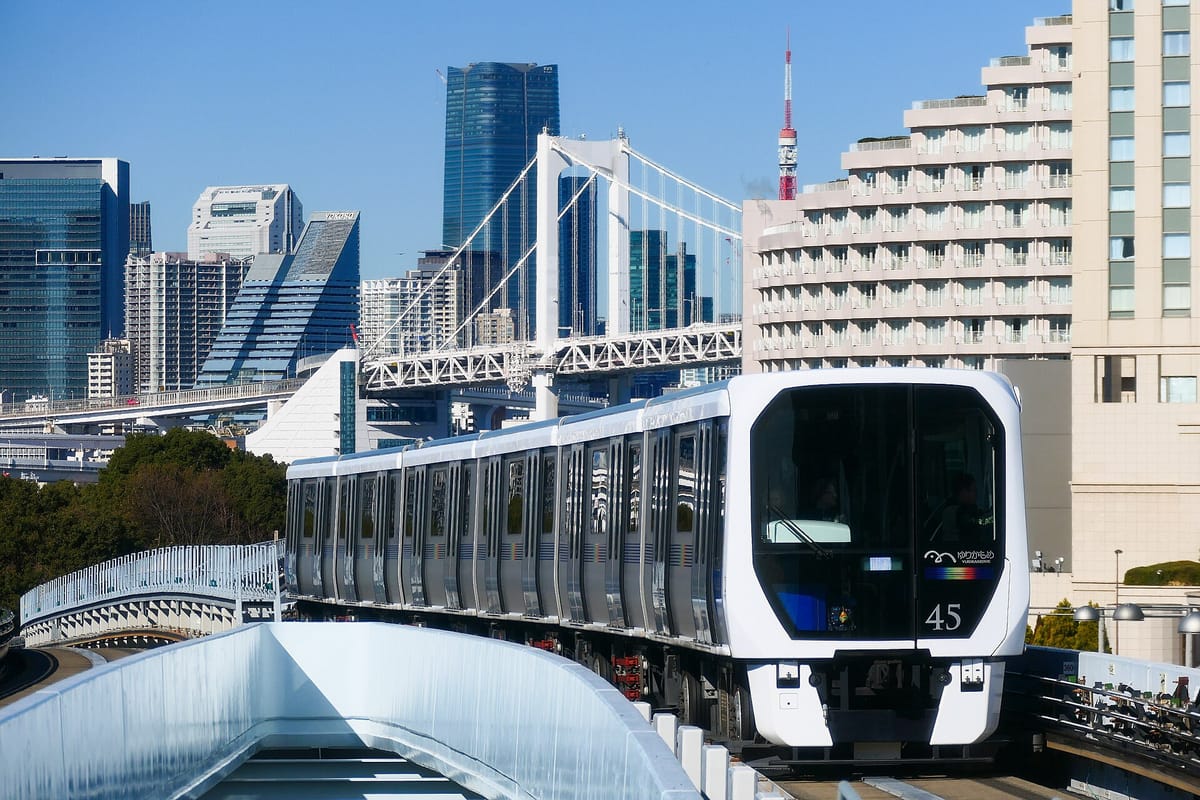
| Japanese | Romaji | Meaning |
|---|---|---|
| お台場に行きたいんですが、どの線に乗ればいいですか。 | Odaiba ni ikitai n desu ga, dono sen ni noreba ii desu ka. | I want to go to Odaiba. Which line should I take? |
| ゆりかもめの乗り場はどこですか。 | Yurikamome no noriba wa doko desu ka. | Where do I board the Yurikamome? |
| 台場駅まで何分くらいかかりますか。 | Daiba-eki made nanpun kurai kakarimasu ka. | About how many minutes to Daiba Station? |
| この電車は東京テレポートに止まりますか。 | Kono densha wa Tōkyō Terepōto ni tomarimasu ka. | Does this train stop at Tokyo Teleport? |
| 水上バスの切符はどこで買えますか。 | Suijō basu no kippu wa doko de kaemasu ka. | Where can I buy a water bus ticket? |
What you will see: from Seaside Park to the Miraikan
Odaiba is spread out, with most attractions linked by elevated walkways, so plan a rough line from north to south and follow the promenade. A full day is easy to fill; half a day covers the seaside park, a mall and the fountain.
- Odaiba Seaside Park, お台場海浜公園: a curving sandy beach and boardwalk facing the Rainbow Bridge, best at sunset.
- Tokyo Aqua Symphony, 東京アクアシンフォニー: the fountain show in the water off the seaside park, opened in March 2026, with a jet up to 150 metres high and a 250-metre-wide fountain shaped like a cherry blossom.
- Statue of Liberty replica: put up in 1998 for a French year in Japan and made permanent in 2000, with the bridge behind it.
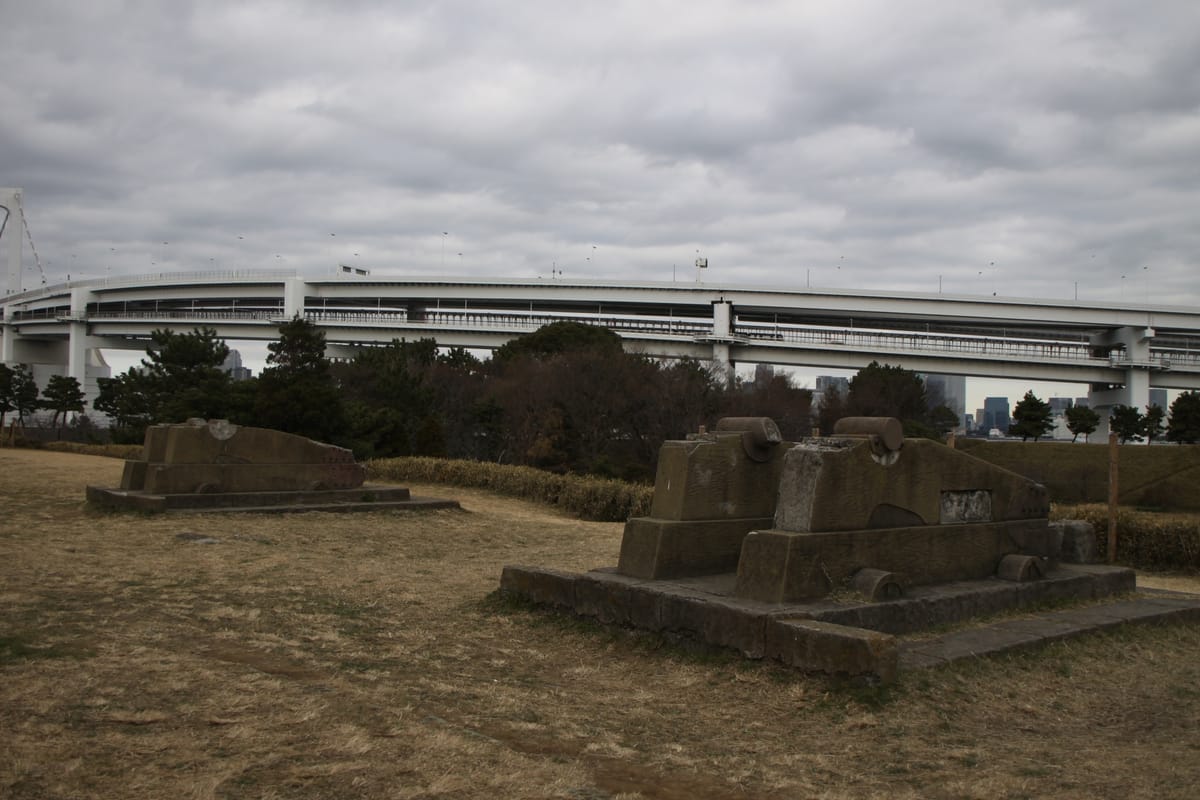
- Daiba Park, 台場公園: the surviving No. 3 battery of the 1850s forts, with the stone bases of its cannon emplacements.
- Fuji TV building: the headquarters of Fuji Television, with an observation deck in its famous metal sphere.
- Aqua City, Decks and DiverCity: shopping malls with bay-view terraces, restaurants and indoor attractions such as Tokyo Joypolis.
- Miraikan, 日本科学未来館: the National Museum of Emerging Science and Innovation, a hands-on, bilingual museum of science and technology.
Trains, forts and the words on the signs
Odaiba's signs are bilingual and well designed, but notice how Japanese mixes its scripts here. The Yurikamome is written in hiragana, ゆりかもめ; the Rinkai Line mixes hiragana and kanji, りんかい線; and the district itself adds the honorific o in hiragana to the kanji 台場.
On the waterfront, follow 遊歩道, yūhodō, promenade or footpath, and look for 噴水, funsui, fountain. The fort park is simply 台場公園, Daiba Kōen, the battery park.
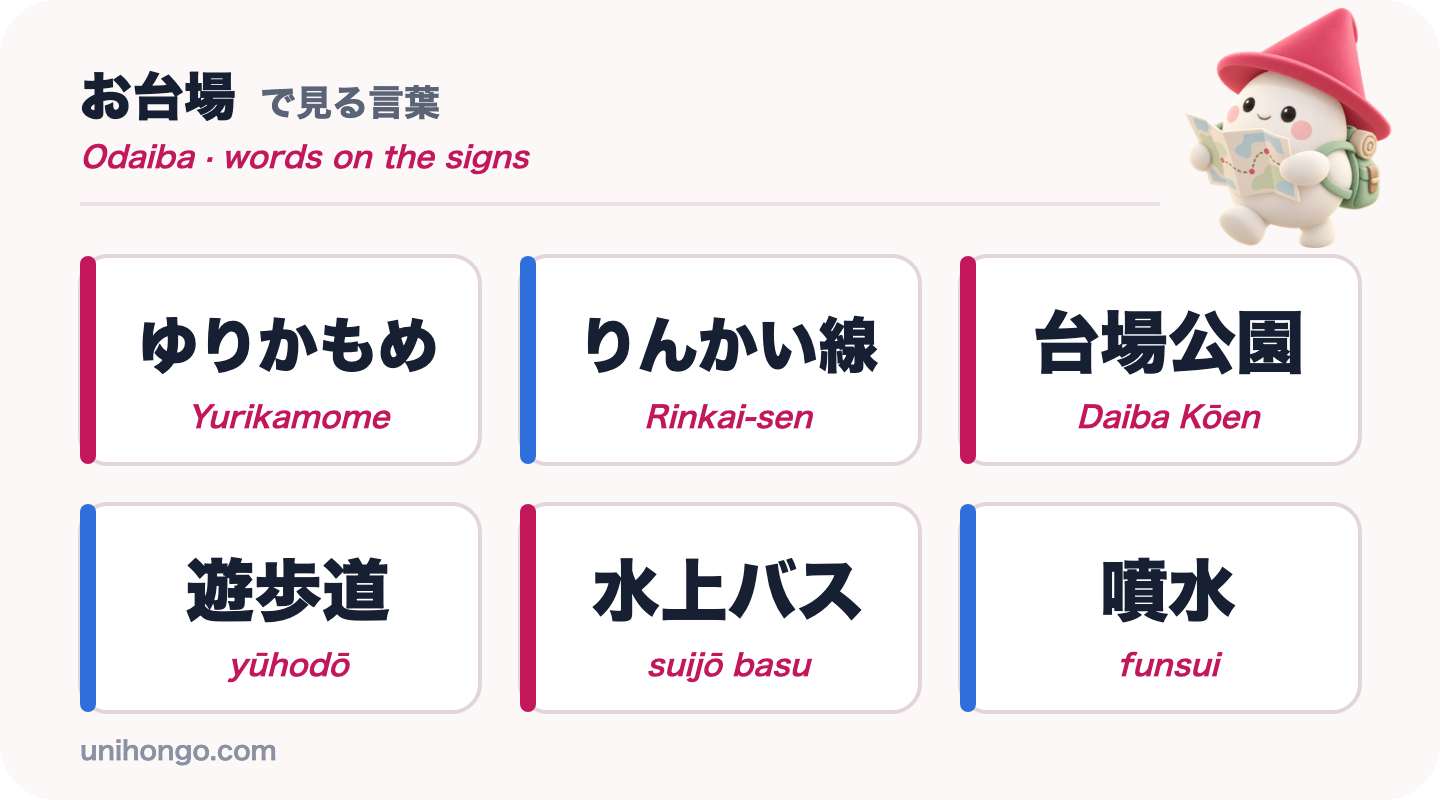
| Word | Reading | Meaning |
|---|---|---|
| ゆりかもめ | Yurikamome | The automated train line from Shimbashi |
| りんかい線 | Rinkai-sen | The Rinkai Line to Tokyo Teleport |
| 台場公園 | Daiba Kōen | Park on the surviving Edo-period fort |
| お台場海浜公園 | Odaiba Kaihin Kōen | Odaiba Seaside Park |
| 遊歩道 | yūhodō | Promenade, footpath |
| 水上バス | suijō basu | Water bus |
| 噴水 | funsui | Fountain |
| 乗り場 | noriba | Boarding place |
| 展望台 | tenbōdai | Observation deck |
Japanese for tickets, trains and the fountain show
The key moments on Odaiba are at stations: choosing the right line, checking where to change, and asking where to get off for the place you want. IC cards such as Suica and Pasmo work on both the Yurikamome and the Rinkai Line, so you rarely need to buy a paper ticket, but you will need to ask questions.
For the fountain, the nearest station is Daiba, about three minutes' walk. The show is free and needs no reservation; find a spot along the seaside park promenade and arrive a little early for the evening shows. If the wind is strong, shows are stopped, so check the official site before you make a special trip.
| Japanese | Romaji | Meaning |
|---|---|---|
| 新橋で乗り換えですか。 | Shinbashi de norikae desu ka. | Do I change at Shimbashi? |
| 一番前の席に座ってもいいですか。 | Ichiban mae no seki ni suwatte mo ii desu ka. | May I sit in the front seat? |
| ここは交通系ICカードが使えますか。 | Koko wa kōtsūkei IC kādo ga tsukaemasu ka. | Can I use a transport IC card here? |
| 噴水のショーはどこから見るのがいいですか。 | Funsui no shō wa doko kara miru no ga ii desu ka. | Where is a good place to watch the fountain show? |
| 今日はショーがありますか。 | Kyō wa shō ga arimasu ka. | Is there a show today? |
| レインボーブリッジは歩いて渡れますか。 | Reinbō burijji wa aruite wataremasu ka. | Can you walk across the Rainbow Bridge? |
Timing, weather and practical tips
Odaiba is exposed to the bay, so the weather matters more here than in central Tokyo. A few habits make the day better.
- Come in the afternoon and stay for sunset and the lit Rainbow Bridge; evenings are Odaiba at its best.
- Check the fountain schedule on the day; strong wind stops the shows.
- The bridge walkways close at night and on one Monday a month; check before you set off on foot.
- Bring a layer: the wind off the bay can be cold even when the city feels warm.
- Check closing days: the Miraikan normally closes on Tuesdays and the Fuji TV observation deck on Mondays.
- Take your rubbish home or to a bin in the malls; beach and park bins are few.
- On summer weekends and during big events at Tokyo Big Sight, trains and malls are very crowded; go early.
Practise the trip before you go
Station staff answer quickly and precisely, and you will hear the station name first, then the walking time. Practise the pattern ~ wa dono eki de orimasu ka, which station do I get off at for ~, and you can use it anywhere in Japan.
Then practise with a partner who answers back. In Unihongo, choose the Catch the Right Train mission and ask your AI Sensei to play station staff at Shimbashi, or choose the Directions topic to practise finding the seaside park from Daiba Station. Speaking the lines once before you go is what makes them come out on the platform.
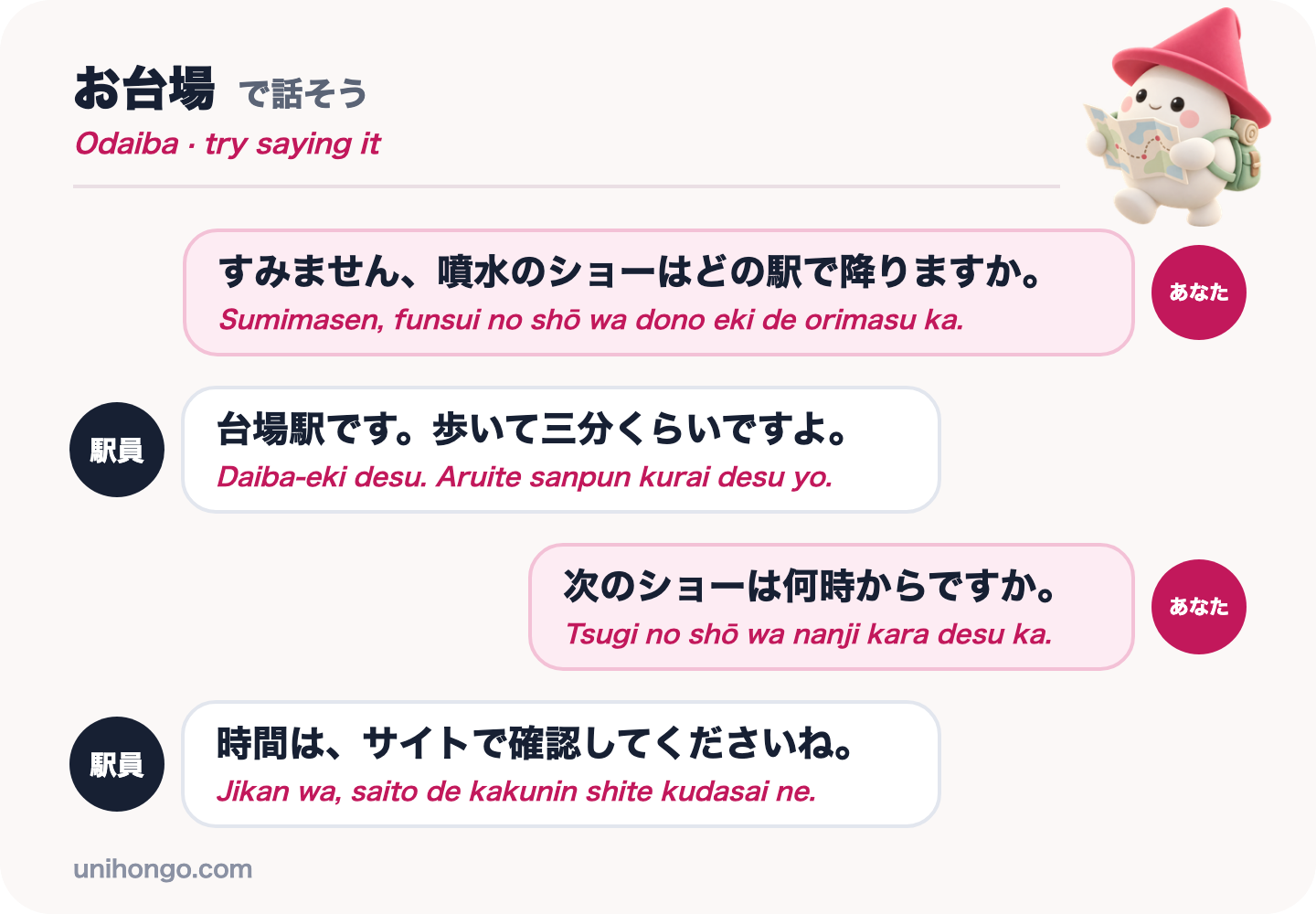
| Japanese | Romaji | Meaning |
|---|---|---|
| すみません、噴水のショーはどの駅で降りますか。 | Sumimasen, funsui no shō wa dono eki de orimasu ka. | Excuse me, which station do I get off at for the fountain show? |
| 台場駅です。歩いて三分くらいですよ。 | Daiba-eki desu. Aruite sanpun kurai desu yo. | Daiba Station. It's about three minutes' walk. |
| 次のショーは何時からですか。 | Tsugi no shō wa nanji kara desu ka. | What time does the next show start? |
| 時間は、サイトで確認してくださいね。 | Jikan wa, saito de kakunin shite kudasai ne. | Please check the times on the website. |
Official information
Fountain schedules, bridge walkway closures and museum hours change through the year. The Tokyo Metropolitan Government runs the Tokyo Aqua Symphony site, the Yurikamome publishes fares and passes, and the official Odaiba site lists events.