
The questions to ask at a temple stay
Most temple lodgings explain the schedule when you arrive: dinner time, bath time, lights-out and the morning service. Even so, each temple does things its own way, so polite questions are welcome. These four lines cover the things guests most want to know.
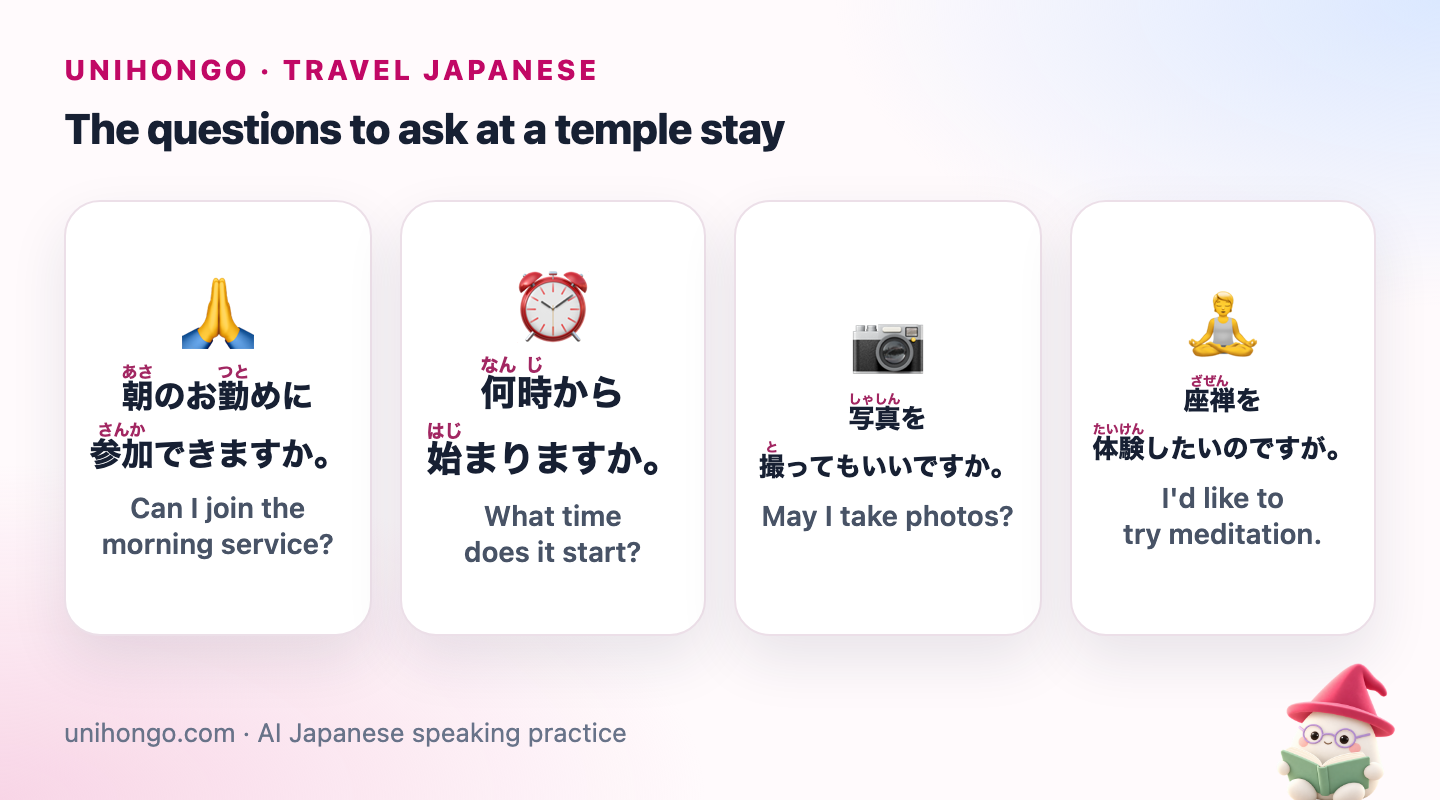
| Japanese | Romaji | Meaning |
|---|---|---|
| 朝のお勤めに参加できますか。 | Asa no otsutome ni sanka dekimasu ka. | Can I join the morning service? |
| 何時から始まりますか。 | Nanji kara hajimarimasu ka. | What time does it start? |
| 写真を撮ってもいいですか。 | Shashin o totte mo ii desu ka. | May I take photos? |
| 座禅を体験したいのですが。 | Zazen o taiken shitai no desu ga. | I'd like to try meditation. |
| お世話になります。 | Osewa ni narimasu. | Thank you for having me (on arrival). |
| お風呂は何時までですか。 | Ofuro wa nanji made desu ka. | Until what time is the bath open? |
Temple stay vocabulary
A handful of words will make the schedule and the explanations much easier to follow. Shukubo itself combines 宿 (lodging) and 坊 (a monk's dwelling).
| Japanese | Reading | Meaning |
|---|---|---|
| 宿坊 | shukubo | Temple lodging |
| 精進料理 | shōjin ryōri | Vegetarian Buddhist temple cuisine |
| お勤め | otsutome | Service with sutra chanting, often in the morning |
| 座禅 | zazen | Seated meditation, associated with Zen temples |
| 写経 | shakyō | Copying a sutra by hand with a brush |
| 本堂 | hondō | The main hall of the temple |
| 住職 | jūshoku | The head priest of a temple |
| 合掌 | gasshō | Pressing your palms together in respect |
Not every temple offers every activity. Zazen is most closely linked with Zen schools, while other schools may offer their own meditation or a fire ritual instead. Ask what this temple does rather than requesting something by name.
Speaking with monks politely
You do not need special temple language. Monks who host guests are used to visitors from all over the world, and clear, polite desu and masu Japanese is right. Start with sumimasen, keep your questions short, and say arigatō gozaimasu or, more formally, arigatō gozaimashita when you leave.
Titles differ by school. Jūshoku is the head priest of a particular temple, and some schools say oshō-san for a priest. Because usage varies, many guests simply avoid titles and speak politely, which is completely fine. Avoid calling a monk bōzu: it can sound disrespectful.
| Japanese | Romaji | Meaning |
|---|---|---|
| すみません、少しお聞きしてもよろしいですか。 | Sumimasen, sukoshi okiki shite mo yoroshii desu ka. | Excuse me, may I ask you something? |
| このお寺の歴史を教えていただけますか。 | Kono otera no rekishi o oshiete itadakemasu ka. | Could you tell me about this temple's history? |
| 初めてなので、作法がよくわかりません。 | Hajimete na node, sahō ga yoku wakarimasen. | It's my first time, so I don't really know the etiquette. |
| どうすればいいですか。 | Dō sureba ii desu ka. | What should I do? |
| お線香はこうですか。 | Osenkō wa kō desu ka. | Is this the right way to offer incense? |
Booking and arriving
Most temple lodgings take bookings by phone, email or through travel sites, and some areas, such as Kōyasan, have a central office that can help. When you book, mention dietary needs, ask about check-in time, and check whether the morning service or meditation needs to be reserved. Temples often set an early dinner time and a door-closing time in the evening, so plan your arrival.
On arrival, take your shoes off at the entrance and place them where you are shown. A staff member or a young monk usually shows you to your room and explains the schedule. Write the times down, and ask if anything is unclear.
| Japanese | Romaji | Meaning |
|---|---|---|
| 一泊二食でお願いします。 | Ippaku nishoku de onegai shimasu. | One night with dinner and breakfast, please. |
| 肉と魚が食べられないのですが、大丈夫ですか。 | Niku to sakana ga taberarenai no desu ga, daijōbu desu ka. | I can't eat meat or fish; is that all right? |
| チェックインは何時からですか。 | Chekkuin wa nanji kara desu ka. | From what time can I check in? |
| 夕食は何時ですか。 | Yūshoku wa nanji desu ka. | What time is dinner? |
| 門は何時に閉まりますか。 | Mon wa nanji ni shimarimasu ka. | What time does the gate close? |
Shōjin ryōri: the temple meal
Shōjin ryōri (精進料理) is vegetarian cuisine developed in Buddhist temples. A meal is usually served on lacquered trays in your room or a hall: tofu dishes such as sesame tofu (goma dōfu), simmered vegetables, pickles, soup and rice, beautifully arranged. Traditionally no meat or fish is used, and many temples also avoid pungent vegetables like garlic and onion.
Say itadakimasu before eating and gochisōsama deshita afterwards, perhaps with your palms together. Try to finish what you are given, since leaving food goes against the spirit of the meal. Eat quietly, and if you have an allergy or a dietary rule, tell the temple when you book rather than at the table.
| Japanese | Romaji | Meaning |
|---|---|---|
| いただきます。 | Itadakimasu. | Said before eating, with thanks. |
| ごちそうさまでした。 | Gochisōsama deshita. | Thank you for the meal (after eating). |
| これは何でできていますか。 | Kore wa nan de dekite imasu ka. | What is this made from? |
| とてもおいしかったです。 | Totemo oishikatta desu. | It was delicious. |
The morning service
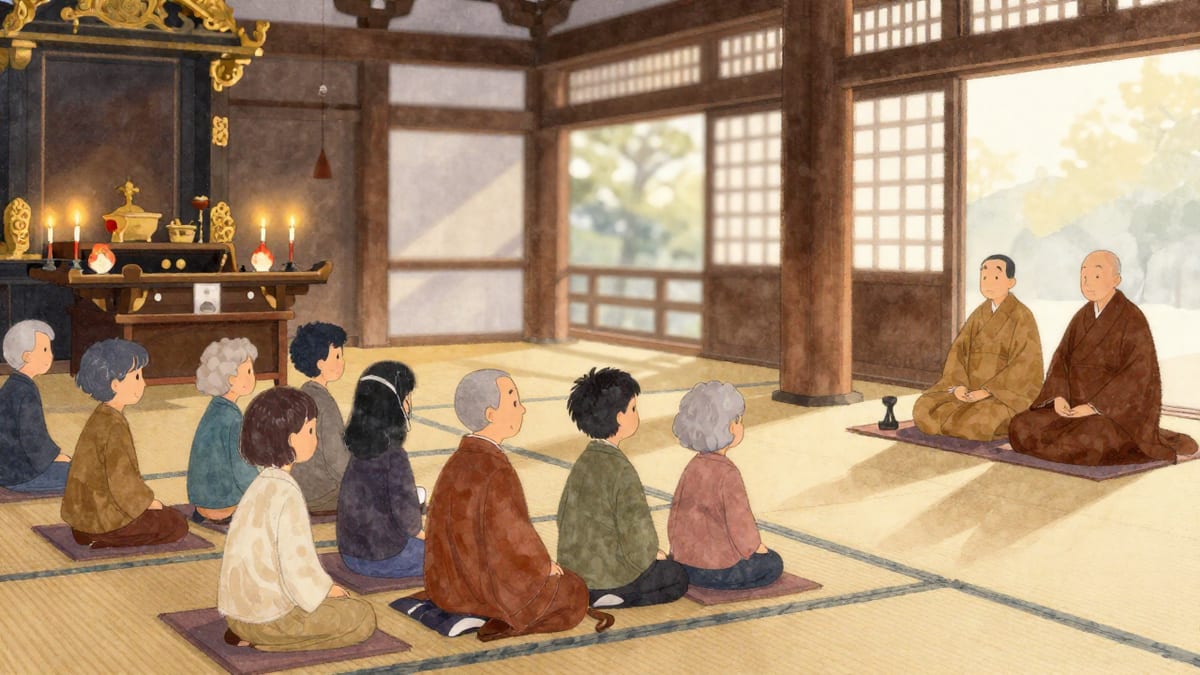
The morning service is often the highlight of a stay. Guests gather in the main hall early, sometimes before sunrise, and sit on the tatami or on chairs while the monks chant. You are usually not expected to chant; simply sit quietly, follow what others do when they bow, and keep your phone away. Some temples invite guests to offer incense at the end, and a monk may give a short talk.
| Japanese | Romaji | Meaning |
|---|---|---|
| 正座がつらいのですが、足を崩してもいいですか。 | Seiza ga tsurai no desu ga, ashi o kuzushite mo ii desu ka. | Kneeling is hard for me; may I sit more comfortably? |
| 足がしびれました。 | Ashi ga shibiremashita. | My legs have gone numb. |
| ありがとうございました。心が落ち着きました。 | Arigatō gozaimashita. Kokoro ga ochitsukimashita. | Thank you. I feel calm now. |
Evening at the temple: bath, futon and quiet
Evenings at a temple are quiet and early. Baths are often shared and open only for a set time, so check the hours and follow normal Japanese bath manners: wash before you get in and keep towels out of the water. Your futon may be laid out for you while you are at dinner, or you may be asked to lay it out yourself.
Sounds carry through wooden buildings and paper screens, so keep conversations soft and phone calls outside. Many guests find this the most restful part of the stay: no television, the sound of the wind in the trees, and an early night before the morning service.
| Japanese | Romaji | Meaning |
|---|---|---|
| お布団は自分で敷きますか。 | Ofuton wa jibun de shikimasu ka. | Do I lay out the futon myself? |
| 静かにしますね。 | Shizuka ni shimasu ne. | We'll be quiet. |
| おやすみなさい。 | Oyasuminasai. | Good night. |
Etiquette and common mistakes
- Taking photos in the main hall without asking. Some temples allow it outside services, many do not allow it during them; ask first.
- Being late for the morning service. Set an alarm and allow time to dress; arriving after the chanting starts disturbs everyone.
- Treating the temple like a hotel. There may be no room service, early lights-out and shared baths with fixed hours. That is part of the experience.
- Making assumptions about what is allowed. Alcohol, eating meat bought outside, or walking around late at night may be fine at one temple and not at another.
- Stepping on the raised threshold of a doorway or on the edges of tatami mats. Many Japanese consider it bad manners, so step over them.