

Why the Izu Peninsula is Tokyo's favourite escape
The Izu Peninsula, Izu Hantō, is the green, mountainous finger of land that points south into the Pacific from Shizuoka Prefecture. It lies about a hundred kilometres south-west of Tokyo, and its mild climate, hot springs and beaches have made it a weekend getaway for Tokyoites for generations. The east coast, with the cities of Atami, Itō and Shimoda, is the most developed; the south and west coasts are quieter, with rugged cliffs and small fishing ports.
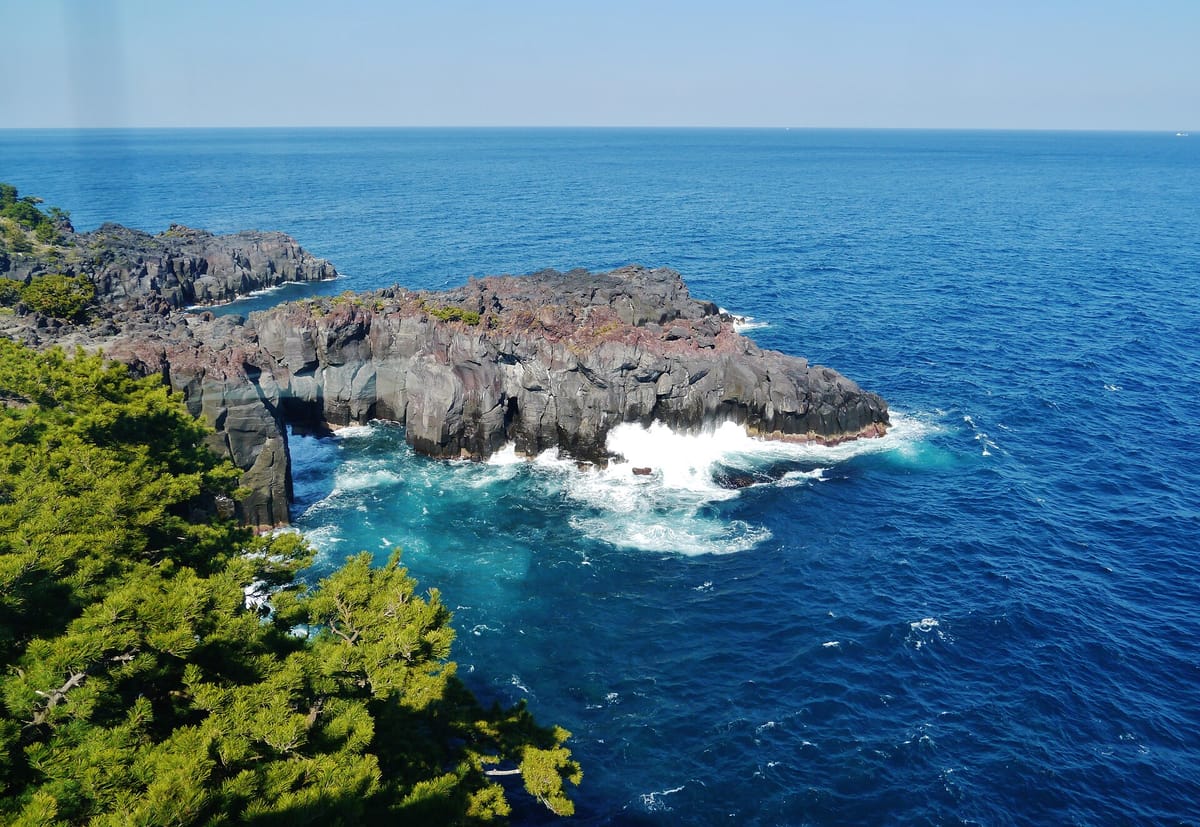
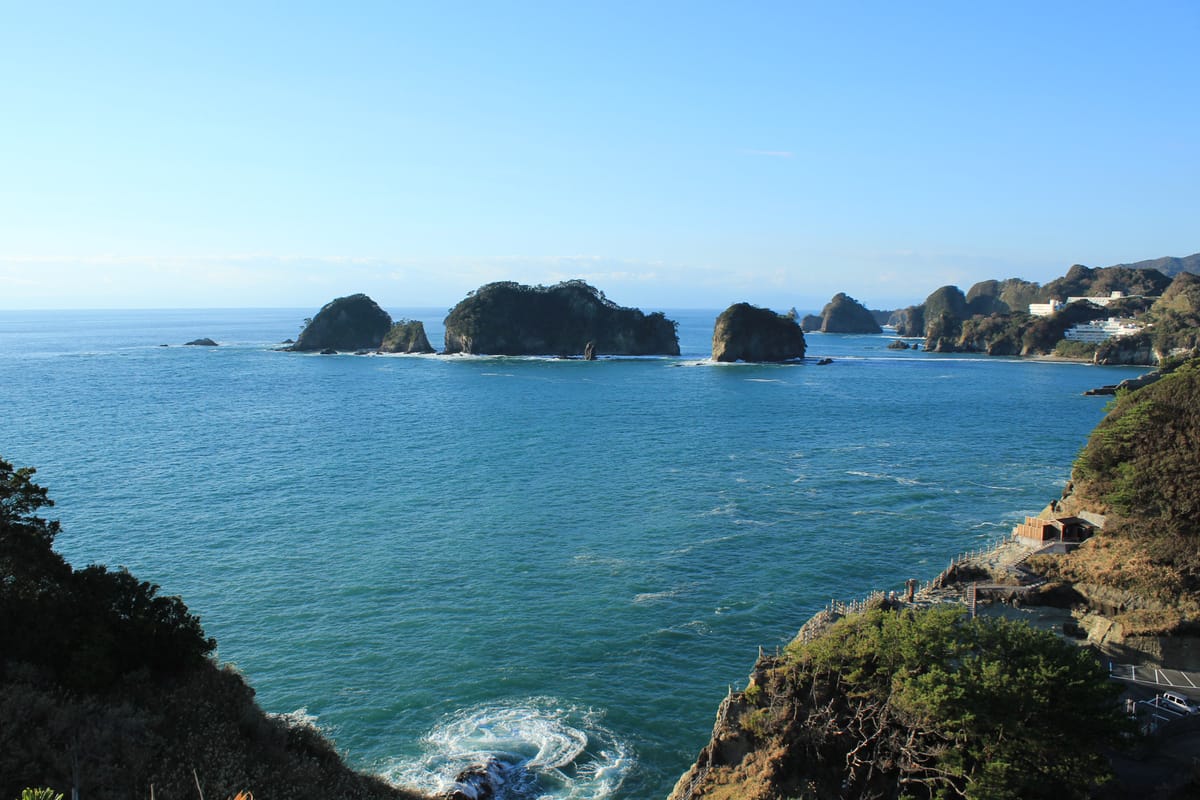
Izu's landscapes come from volcanoes. The land was built by undersea volcanoes far to the south and carried north on the Philippine Sea plate until it collided with Honshū, and the whole peninsula is now recognised as a UNESCO Global Geopark. That history explains the black lava coast at Jōgasaki, the perfect cone of Mount Ōmuro, the sea-carved rocks of Dōgashima and, above all, the hot water that bubbles up in dozens of onsen towns.
For a Japanese learner, Izu is ideal because so much of the travel is small-scale: a local train, a bus with a fare box, a ryokan front desk, a stall at a cherry festival. Every one of them is a chance to use a short, practical sentence.
Getting there and around: Odoriko, Izukyū and the buses
The east coast is the easiest. JR Odoriko limited express trains run from Tokyo along the coast to Atami and Itō, then continue on the private Izukyū line to Izukyū-Shimoda, about two and a half hours in all. You can also ride the Tōkaidō Shinkansen to Atami and change to a local train. A Japan Rail Pass covers JR as far as Itō; beyond that, on the Izukyū line, you pay a supplement.
For the centre of the peninsula, take the Shinkansen to Mishima and change to the Izuhakone Railway to Shuzenji Station, about thirty-five minutes, then a short bus or taxi ride into the hot spring town; a few Odoriko trains run directly from Tokyo to Shuzenji. The west coast has no railway, so Dōgashima and the villages around it are reached by bus from Shuzenji Station, about an hour and a half, or from Izukyū-Shimoda, about an hour. Check bus times in advance; some routes run only once an hour.
| Japanese | Romaji | Meaning |
|---|---|---|
| 下田まで踊り子の指定席を一枚お願いします。 | Shimoda made Odoriko no shiteiseki o ichimai onegai shimasu. | One reserved seat on the Odoriko to Shimoda, please. |
| このきっぷで伊豆急に乗れますか。 | Kono kippu de Izukyū ni noremasu ka. | Can I ride the Izukyū line with this ticket? |
| 修善寺行きは何番線ですか。 | Shuzenji yuki wa nanbansen desu ka. | Which platform is the train to Shuzenji? |
| 堂ヶ島行きのバスは何時に出ますか。 | Dōgashima yuki no basu wa nanji ni demasu ka. | What time does the bus to Dōgashima leave? |
| 降りるときに払えばいいですか。 | Oriru toki ni haraeba ii desu ka. | Do I pay when I get off? |
What you will see: from Shuzenji to Dōgashima
Izu is best seen as a set of small destinations rather than one sight. On the east coast, Itō is a large hot spring town, and south of it the Izu Kōgen area has the Jōgasaki coast, a walking trail along jagged lava cliffs with a suspension bridge high above the waves, and Mount Ōmuro, a grassy volcanic cone that you climb by chairlift; walking up is prohibited to protect it. At the southern tip, Shimoda is where Commodore Perry's black ships landed in 1854, and Ryōsen-ji temple, where a treaty with the United States was signed, stands at the end of the willow-lined Perry Road.
Inland, Shuzenji is one of the oldest hot spring towns in Izu, named after a temple founded by Kōbō Daishi about twelve centuries ago. Its best-known spring, Tokko-no-yu, in the middle of the river, is now a foot bath, and a small bamboo grove and old ryokan line the river. On the west coast, Dōgashima is famous for rock islands, cliffs and caves; sightseeing boats run short cruises that briefly enter a sea cave.
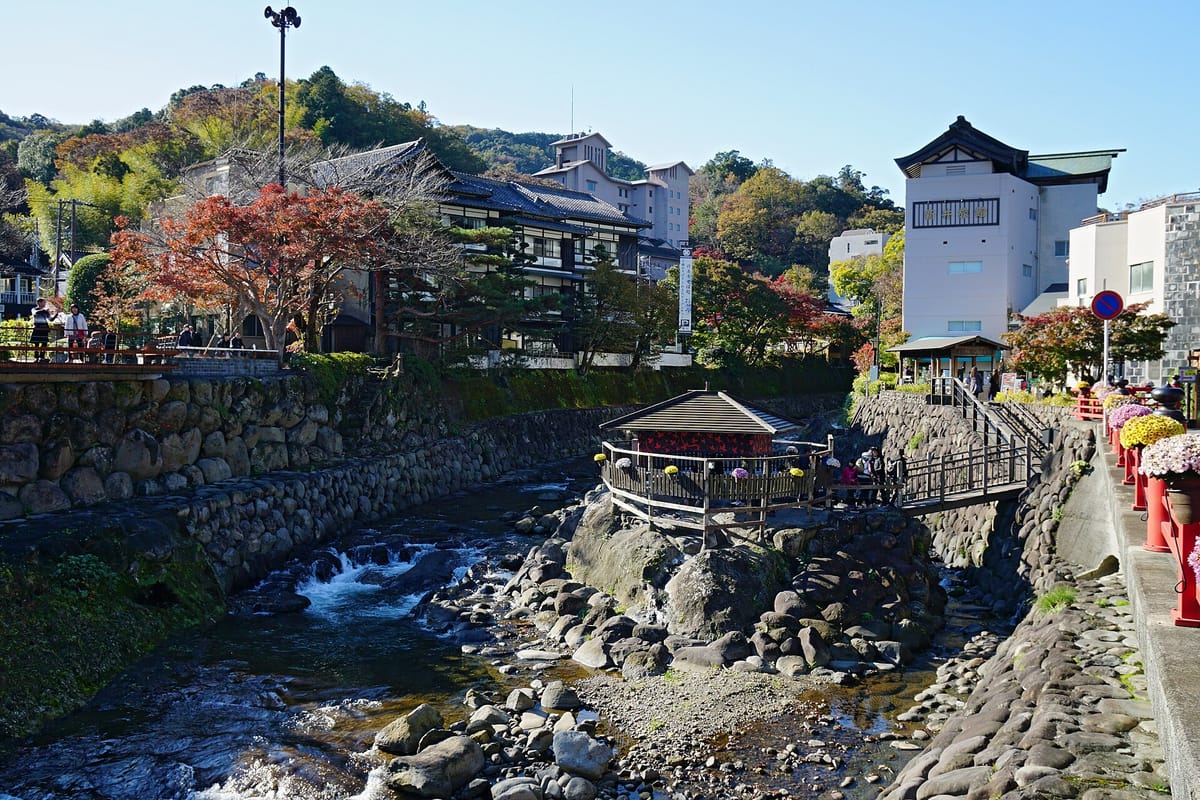
- Shuzenji Onsen: a riverside hot spring town with a temple, a bamboo path and the Tokko-no-yu foot bath.
- Jōgasaki Kaigan: a coastal trail of lava cliffs, with the Kadowakizaki suspension bridge and a lighthouse.
- Ōmuroyama: a volcanic cone near Itō, climbed by chairlift, with a walk around the crater rim.
- Kawazu: the town of the Kawazu cherry, with trees along about four kilometres of river and a festival in February.
- Shimoda: Perry Road, Ryōsen-ji, and white-sand Shirahama Beach just outside town.
- Dōgashima: sea caves and rock islands on the west coast, best seen from a sightseeing boat.
- Atami: the gateway onsen town at the north-east corner of the peninsula, with a separate guide of its own.
Words on the signs in Izu
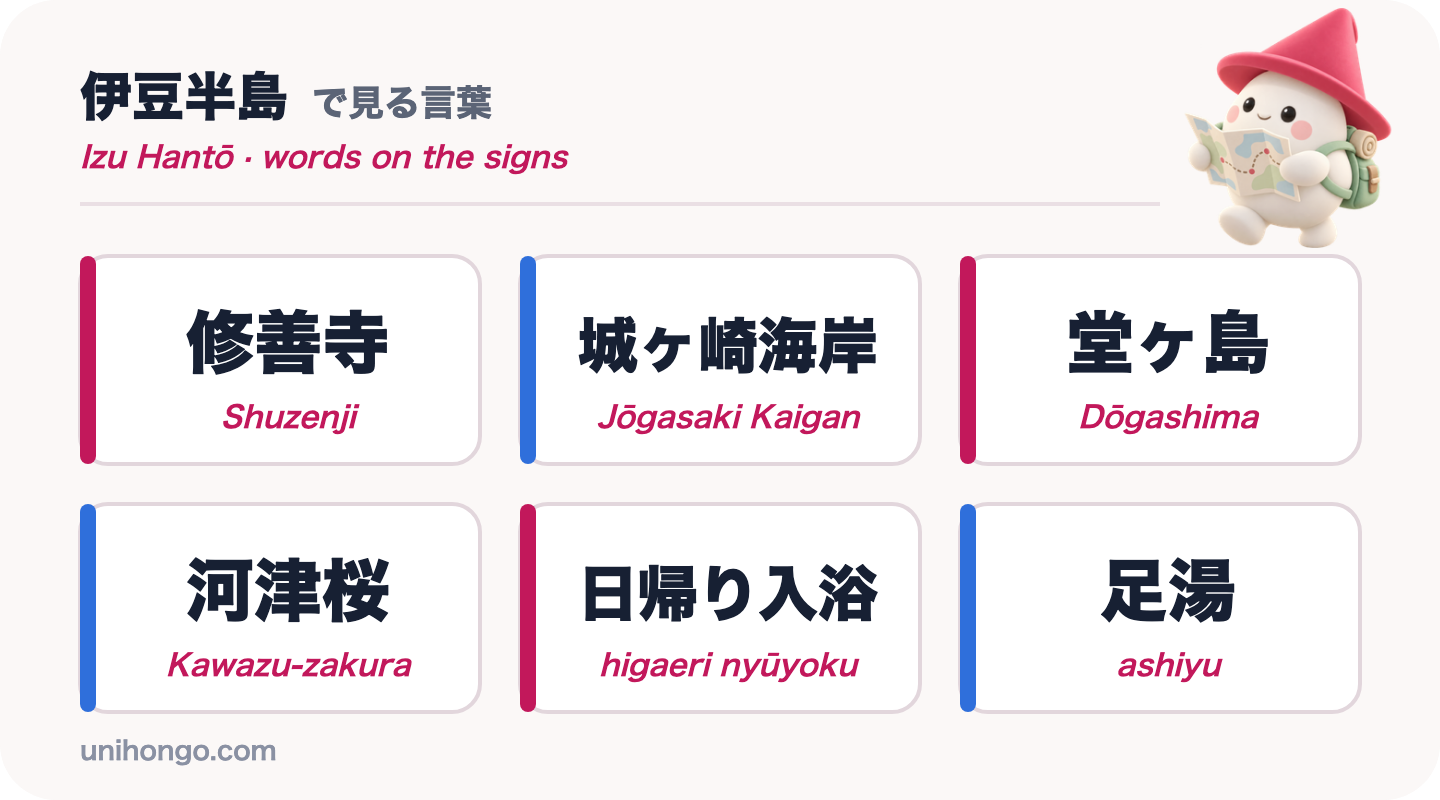
Izu place names are full of geography. 半島, hantō, is a peninsula; 海岸, kaigan, a coast; 島, shima or jima, an island; and 崎, saki, a cape. The small ヶ in 城ヶ崎 and 堂ヶ島 is an old possessive particle, read ga, which is why the names are Jōgasaki and Dōgashima.
At hot springs, two signs are worth knowing before you arrive. 日帰り入浴 means day bathing for visitors who are not staying the night, and 足湯 is a foot bath, free or very cheap, where you sit and soak your feet. You will also see 湯, yu, hot water, hanging on the noren curtains at bath entrances, and 男湯 and 女湯 for the men's and women's baths.
| Word | Reading | Meaning |
|---|---|---|
| 伊豆半島 | Izu Hantō | Izu Peninsula |
| 修善寺 | Shuzenji | The hot spring town in central Izu |
| 修禅寺 | Shuzen-ji | The temple in the town, written with 禅 |
| 城ヶ崎海岸 | Jōgasaki Kaigan | Jōgasaki coast |
| 堂ヶ島 | Dōgashima | Sea caves and rock islands on the west coast |
| 河津桜 | Kawazu-zakura | Early-flowering Kawazu cherry |
| 日帰り入浴 | higaeri nyūyoku | Day bathing for non-staying guests |
| 足湯 | ashiyu | Foot bath |
| 男湯・女湯 | otokoyu, onnayu | Men's bath, women's bath |
Japanese for a day trip to an onsen
The classic Izu day is a coastal walk followed by a soak. Many ryokan open their baths to non-staying visitors for a fee during set hours, and towns such as Shuzenji also have public bath houses. Ask at the front desk, pay, and you are usually given a key or a basket for your clothes. Towels may be included or cost extra.
Inside, the rules are the same everywhere: wash and rinse at the shower stools before you get into the bath, keep your small towel out of the water, and tie up long hair. Some baths restrict tattoos, so ask in advance if that applies to you. The phrases below cover the front desk.
| Japanese | Romaji | Meaning |
|---|---|---|
| 日帰り入浴は何時までですか。 | Higaeri nyūyoku wa nanji made desu ka. | Until what time is day bathing? |
| 大人一人お願いします。 | Otona hitori onegai shimasu. | One adult, please. |
| タオルを借りられますか。 | Taoru o kariraremasu ka. | Can I borrow a towel? |
| 貸切風呂はありますか。 | Kashikiri-buro wa arimasu ka. | Do you have a private bath? |
| タトゥーがあるんですが、入れますか。 | Tatū ga aru n desu ga, hairemasu ka. | I have a tattoo. Can I go in? |
| 荷物はどこに置けばいいですか。 | Nimotsu wa doko ni okeba ii desu ka. | Where should I leave my things? |
| いいお湯でした。ありがとうございました。 | Ii o-yu deshita. Arigatō gozaimashita. | That was a lovely bath. Thank you. |
Manners, seasons and practical tips
Izu is relaxed, but it is spread out, and planning saves a lot of waiting at bus stops. A few habits also keep you welcome in its baths and small towns.
- Plan around transport: trains are frequent on the east coast, but buses to the west coast and the interior can be hourly or less.
- At the Kawazu cherry festival, from early February to early March, trains and roads are crowded; go on a weekday morning if you can.
- At foot baths, dry your feet before you put your shoes back on, and do not wash your feet with soap in the water.
- On the Jōgasaki coast trail, stay behind railings; the cliffs are sheer and the rocks are slippery when wet.
- Check the weather before booking a boat at Dōgashima: cruises stop in high waves.
- Carry some cash for buses, foot baths and small ryokan, even though cards and IC cards are common in the bigger towns.
Practise the visit before you go
The conversation you are most likely to have in Izu is at a ryokan front desk, asking for a day bath. The staff answer uses ni narimasu, the soft, polite form you will hear in hotels and shops, and betsu ryōkin, a separate charge. Practise the four lines until you can say them without reading.
Then practise with someone who answers back. In Unihongo, choose the Onsen topic and ask your AI Sensei to play the ryokan front desk, or choose Ryokan Stay to rehearse checking in for the night. Speaking the lines aloud once before the trip makes them easy to use on the day.
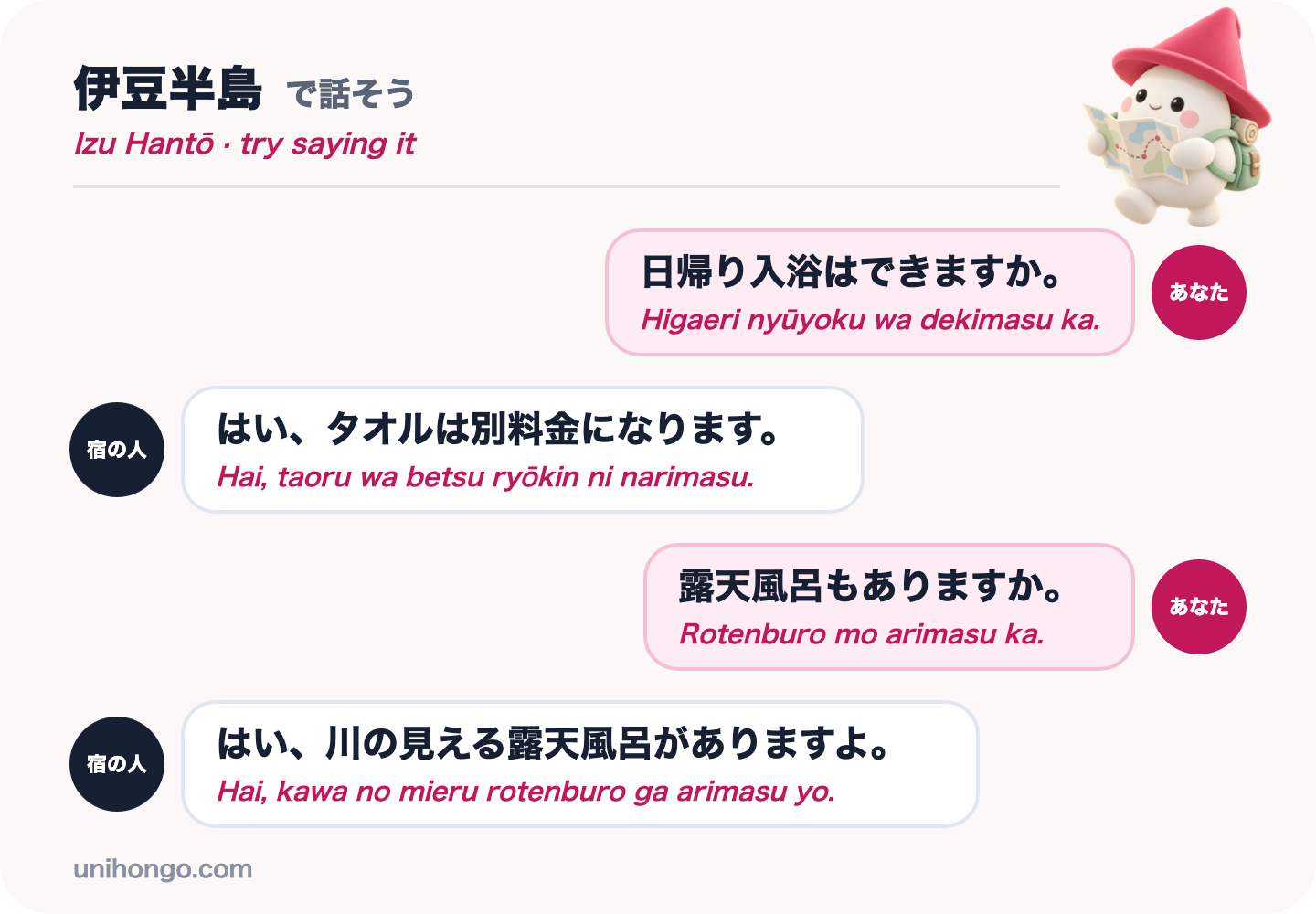
| Japanese | Romaji | Meaning |
|---|---|---|
| 日帰り入浴はできますか。 | Higaeri nyūyoku wa dekimasu ka. | Can I take a day bath here? |
| はい、タオルは別料金になります。 | Hai, taoru wa betsu ryōkin ni narimasu. | Yes. Towels are a separate charge. |
| 露天風呂もありますか。 | Rotenburo mo arimasu ka. | Is there an outdoor bath too? |
| はい、川の見える露天風呂がありますよ。 | Hai, kawa no mieru rotenburo ga arimasu yo. | Yes, we have an outdoor bath with a view of the river. |
Official information
Izu is covered by several local tourism organisations rather than one site. The Izu Peninsula Geopark explains the volcanic landscapes and trails, and the Shuzenji tourist association lists ryokan, day bathing and events in the hot spring town. Check local bus timetables before heading to the west coast.