

Booking a highway bus ticket
Highway bus tickets are usually reserved for a specific bus and seat. You can book on operator sites and bus booking platforms, some of which have English pages, and on some routes at the terminal ticket window, madoguchi. Fares, discounts and seat types vary a great deal by route, day and operator, so compare before you book rather than assuming one price.
When you book, you choose the date, the departure and arrival stops, the number of passengers and sometimes the seat type. Night buses may offer more spacious seats, seats with curtains, or seats reserved for women. You will then get a reservation number, yoyaku bangō, and either an electronic ticket or instructions to collect or pay for the ticket before departure.
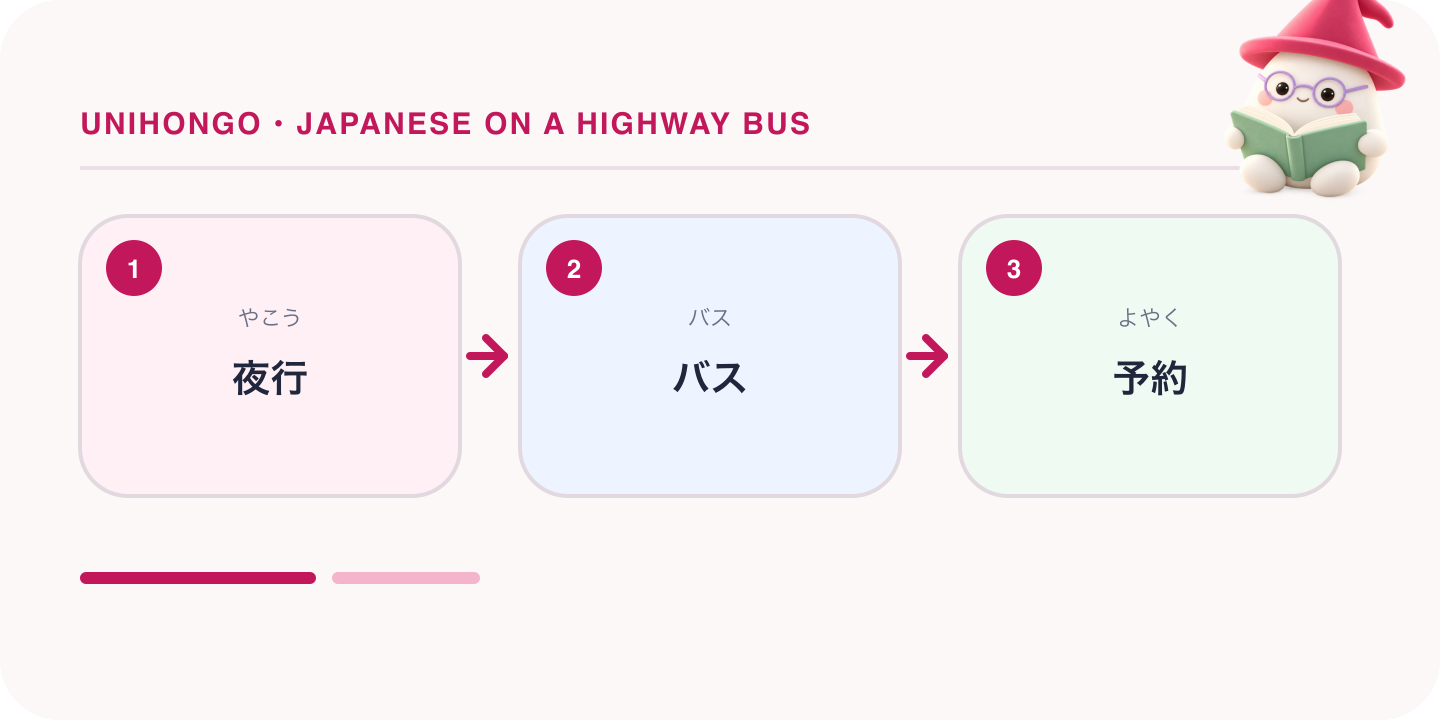
| Japanese | Romaji | Meaning |
|---|---|---|
| 東京行きの夜行バスを予約したいです。 | Tōkyō-yuki no yakō basu o yoyaku shitai desu. | I'd like to book a night bus to Tokyo. |
| 明日の便は空いていますか。 | Ashita no bin wa aite imasu ka. | Are there seats on tomorrow's bus? |
| 窓側の席をお願いします。 | Madogawa no seki o onegai shimasu. | A window seat, please. |
| 通路側でも大丈夫です。 | Tsūrogawa demo daijōbu desu. | An aisle seat is fine too. |
| キャンセルはいつまでできますか。 | Kyanseru wa itsu made dekimasu ka. | Until when can I cancel? |
Words on tickets and booking pages
Booking pages and printed tickets use a small, repeated vocabulary. Knowing these words lets you check the details of your reservation before you travel, even if the page is only in Japanese.
| Word | Reading | Meaning |
|---|---|---|
| 高速バス | kōsoku basu | Highway bus |
| 夜行バス | yakō basu | Night bus |
| 便 | bin | Service, departure |
| 出発 / 到着 | shuppatsu / tōchaku | Departure / arrival |
| 乗車日 | jōsha-bi | Travel date |
| 乗車券 | jōshaken | Ticket |
| 座席番号 | zaseki bangō | Seat number |
| 片道 / 往復 | katamichi / ōfuku | One way / return |
| 女性専用席 | josei senyō seki | Women-only seat |
| トイレ付き | toire-tsuki | With toilet on board |
| 払い戻し | haraimodoshi | Refund |
| 運休 | unkyū | Service cancelled |
At the bus terminal: finding your bay
Large cities have dedicated bus terminals, basu tāminaru, often next to a main station, while smaller towns may simply have a marked stop outside the station. Departure boards list the time, the destination, the operator and the noriba, the boarding bay. Arrive early; boarding often starts shortly before departure and buses leave on time.
When the bus pulls in, the driver or an attendant checks passengers on. They may ask your name, look at your ticket on your phone, or tick you off a passenger list. Give your surname clearly, and if you booked in English, say it the way it will appear on the list.
| Japanese | Romaji | Meaning |
|---|---|---|
| 大阪行きの乗り場はどこですか。 | Ōsaka-yuki no noriba wa doko desu ka. | Where is the bay for the Osaka bus? |
| このバスは京都駅に止まりますか。 | Kono basu wa Kyōto-eki ni tomarimasu ka. | Does this bus stop at Kyoto Station? |
| お名前をお願いします。 | O-namae o onegai shimasu. | Your name, please. |
| 予約したブラウンです。 | Yoyaku shita Buraun desu. | I have a reservation under Brown. |
| 乗車券を拝見します。 | Jōshaken o haiken shimasu. | May I see your ticket? |
| まもなく乗車を開始します。 | Mamonaku jōsha o kaishi shimasu. | Boarding will begin shortly. |
Luggage in the hold
Suitcases and large bags go in the hold under the bus, the toranku. The driver or a staff member loads them and may give you a luggage tag, nifuda, or a numbered claim stub; keep it until you have your bag back. Some operators set limits on the size or number of bags, so check the rules if you are carrying a lot.
Keep valuables, medicine, your phone charger and anything you need overnight with you, because the hold is not opened during the journey except at your stop.
| Japanese | Romaji | Meaning |
|---|---|---|
| 荷物はトランクにお預かりします。 | Nimotsu wa toranku ni o-azukari shimasu. | We'll put your luggage in the hold. |
| このスーツケースをお願いします。 | Kono sūtsukēsu o onegai shimasu. | Could you take this suitcase, please? |
| これは車内に持ち込みます。 | Kore wa shanai ni mochikomimasu. | I'll take this on board. |
| 荷札をなくさないでください。 | Nifuda o nakusanaide kudasai. | Please don't lose your luggage tag. |
| どこで降りますか。 | Doko de orimasu ka. | Where are you getting off? |
On board: seats, seatbelts and night bus manners
Find the seat number on your ticket and the matching number above or on the side of the seats. Wearing a seatbelt, shītoberuto, is expected and the driver will remind you before departure. The driver will also explain whether there is a toilet on board, how the rest stops work and when the lights will go out.
Night buses are quiet spaces. Talking on the phone is not done, conversations are kept to a whisper, and the lights go out, shōtō, soon after departure. Before you recline your seat, it is polite to check with the person behind you, especially on a full bus.
| Japanese | Romaji | Meaning |
|---|---|---|
| シートベルトをお締めください。 | Shītoberuto o o-shime kudasai. | Please fasten your seatbelt. |
| これより消灯いたします。 | Kore yori shōtō itashimasu. | We will now turn off the lights. |
| すみません、そこは私の席だと思います。 | Sumimasen, soko wa watashi no seki da to omoimasu. | Excuse me, I think that's my seat. |
| シートを倒してもいいですか。 | Shīto o taoshite mo ii desu ka. | Is it all right if I recline my seat? |
| トイレは後ろにあります。 | Toire wa ushiro ni arimasu. | The toilet is at the back. |
| カーテンを閉めてください。 | Kāten o shimete kudasai. | Please close the curtain. |
Rest stops: kyūkei at SA and PA
On longer journeys the bus stops at expressway service areas, sābisu eria or SA, and smaller parking areas, pākingu eria or PA. Service areas typically have toilets, food courts, shops and vending machines; parking areas can be much smaller. The driver announces how long the break is and when the bus leaves.
Before you get off, note the departure time and something that identifies your bus, such as its number or the operator's name on the side. Car parks at large service areas are full of similar buses, and the bus will not wait long for a missing passenger. On night buses, some stops are only for the drivers, and passengers may be asked to stay on board.
| Japanese | Romaji | Meaning |
|---|---|---|
| 足柄サービスエリアで十五分休憩します。 | Ashigara sābisu eria de jūgo-fun kyūkei shimasu. | We'll take a fifteen-minute break at Ashigara service area. |
| 出発は二時十分です。 | Shuppatsu wa niji juppun desu. | We depart at 2:10. |
| 時間までにお戻りください。 | Jikan made ni o-modori kudasai. | Please return by the departure time. |
| この休憩は乗務員の交代のためです。 | Kono kyūkei wa jōmuin no kōtai no tame desu. | This stop is for the driver change. |
| 車内でお待ちください。 | Shanai de o-machi kudasai. | Please wait on the bus. |
| 何分に出発しますか。 | Nanpun ni shuppatsu shimasu ka. | At what minute do we leave? |
Arrival and getting off
The driver announces each stop in advance, and on night buses the lights come back on shortly before the first morning stop. Collect your belongings, check under the seat, and wait by the hold for your luggage. Show your tag if you were given one.
Arrival times are estimates. Traffic jams, jūtai, weather and roadworks can make a bus early or late, so do not plan a tight connection straight after a highway bus arrival.
| Japanese | Romaji | Meaning |
|---|---|---|
| まもなく新宿に到着します。 | Mamonaku Shinjuku ni tōchaku shimasu. | We will soon arrive at Shinjuku. |
| お降りの際はお忘れ物のないようお願いします。 | O-ori no sai wa o-wasuremono no nai yō onegai shimasu. | Please take all your belongings when you get off. |
| 私の荷物は青いスーツケースです。 | Watashi no nimotsu wa aoi sūtsukēsu desu. | My luggage is a blue suitcase. |
| ありがとうございました。 | Arigatō gozaimashita. | Thank you. |
Delays, cancellations and missed buses
Heavy snow, typhoons and accidents can delay or cancel highway buses. Operators announce cancellations, unkyū, on their websites and at the terminal, and explain whether you can transfer or get a refund, haraimodoshi. Rules depend on the operator and the ticket, so ask rather than assume.
If you are running late for departure, call the operator immediately; the bus will generally leave on schedule. If you miss it, go to the counter or call, give your reservation number, and ask about the next bus.
| Japanese | Romaji | Meaning |
|---|---|---|
| 渋滞のため、到着が遅れる見込みです。 | Jūtai no tame, tōchaku ga okureru mikomi desu. | Due to traffic, we expect to arrive late. |
| バスに乗り遅れてしまいました。 | Basu ni noriokurete shimaimashita. | I missed my bus. |
| 次の便に変更できますか。 | Tsugi no bin ni henkō dekimasu ka. | Can I change to the next bus? |
| 払い戻しはできますか。 | Haraimodoshi wa dekimasu ka. | Can I get a refund? |
| 予約番号はこちらです。 | Yoyaku bangō wa kochira desu. | Here is my reservation number. |