

Why Hitachi Seaside Park is worth the early start
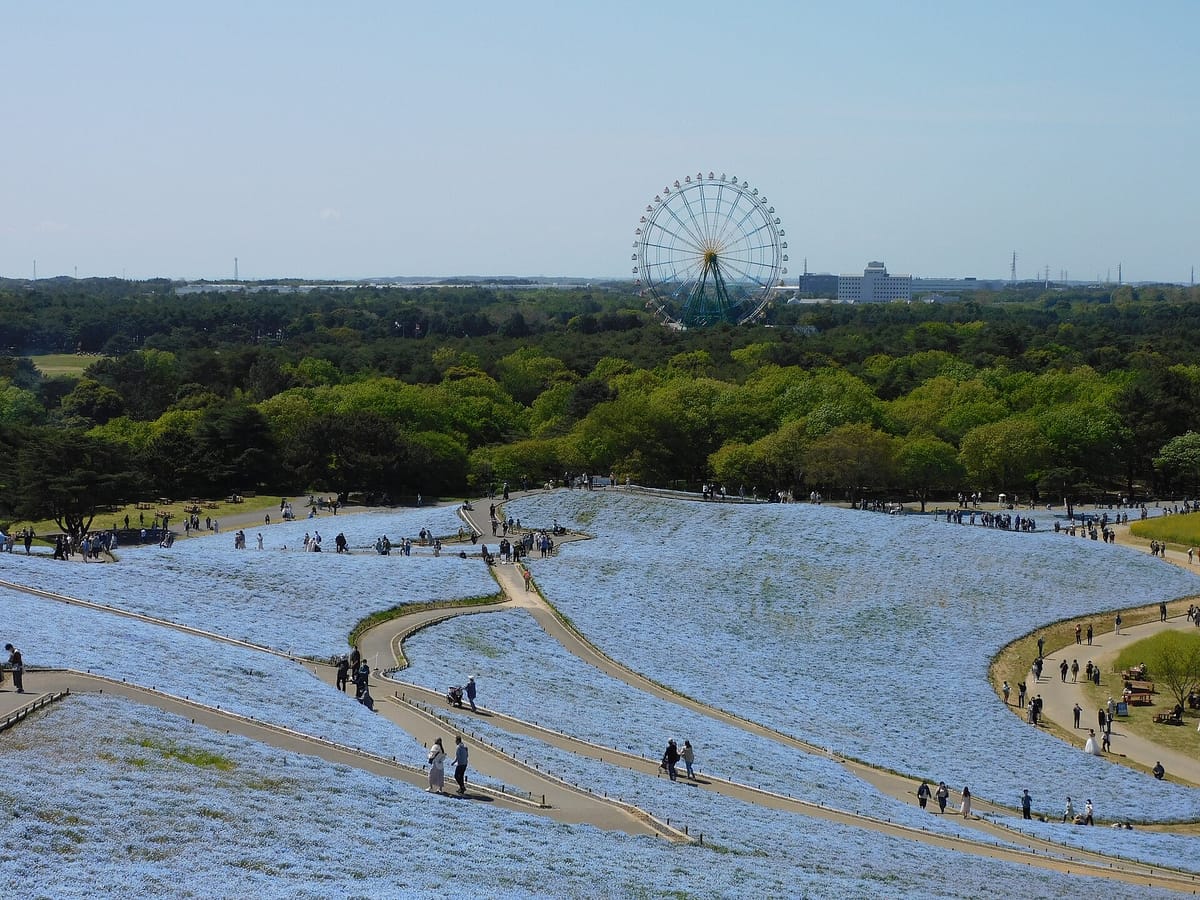
Few places in Japan are as closely tied to a single colour as Hitachi Seaside Park. In spring, the gentle slopes of Miharashi no Oka, the viewing hill, are sown so densely with nemophila that the hill, the sky and the Pacific Ocean behind it seem to merge into one sheet of blue. In autumn the same hill is covered with kochia, rounded bushes that turn from green to deep red, often with cosmos flowering around them.
The park is much more than one hill. It covers about 350 hectares, with woods where daffodils bloom in early spring, tulip gardens in April, roses, summer sunflowers and zinnias, a dune garden of native coastal plants, lakes, lawns, and an amusement park with a large Ferris wheel. Separate cycling paths loop around all of it.
For a learner, the day is a chain of small, useful exchanges: which bus stand, which gate, one ticket or two, where to rent a bicycle, and whether the flowers are at their best. The questions are short and the answers are numbers and place names, perfect for practice.
Getting there: Katsuta Station and the bus to the West Gate
The park is in Hitachinaka, Ibaraki Prefecture, north-east of Tokyo. The main route is the JR Jōban Line: limited express trains from Tokyo, Shinagawa or Ueno reach Katsuta Station, Katsuta-eki, in about 85 minutes from Tokyo Station. Katsuta is one stop past Mito, so check that your train stops there or change at Mito.
From Katsuta's east exit, higashi-guchi, local buses leave from stand 2 and reach the park's West Gate, Nishi-guchi, in about 15 minutes, continuing to the amusement park entrance and the South Gate. Direct services may run at busy times, but queues can be long. A slower, more charming option is the Hitachinaka Seaside Railway Minato Line, a small local line from Katsuta to Ajigaura, about 30 minutes, followed by a local bus to the West Gate or a walk of about 20 minutes to the South Gate. The bus company and the railway each sell day tickets that include park entry.
| Japanese | Romaji | Meaning |
|---|---|---|
| この特急は勝田に止まりますか。 | Kono tokkyū wa Katsuta ni tomarimasu ka. | Does this limited express stop at Katsuta? |
| 東口はどちらですか。 | Higashi-guchi wa dochira desu ka. | Which way is the east exit? |
| このバスは西口に行きますか。 | Kono basu wa Nishi-guchi ni ikimasu ka. | Does this bus go to the West Gate? |
| 阿字ヶ浦行きの電車はどこから出ますか。 | Ajigaura-yuki no densha wa doko kara demasu ka. | Where does the train to Ajigaura leave from? |
| 入園券付きのきっぷはありますか。 | Nyūenken-tsuki no kippu wa arimasu ka. | Is there a ticket that includes park entry? |
Miharashi no Oka and the rest of the park: what you will see
Miharashi no Oka, whose name means the hill with a view, is the park's centrepiece. Paths wind up and around it between the flower beds, and from the top you look over the Pacific on one side and the whole park on the other. The park sows the nemophila each November in narrow rows, so in spring the blue fills every slope; the kochia are planted for summer and autumn, bright green in July and August before they redden.
Elsewhere, the Suisen Garden in the woods near the main gate fills with daffodils from early spring, the tulip gardens bloom around April, and the Dune Garden shows the plants that grow wild on Japan's sandy coasts, a quiet corner even on busy days. The Pleasure Garden amusement park has rides and a large Ferris wheel that gives an aerial view of the flowers.
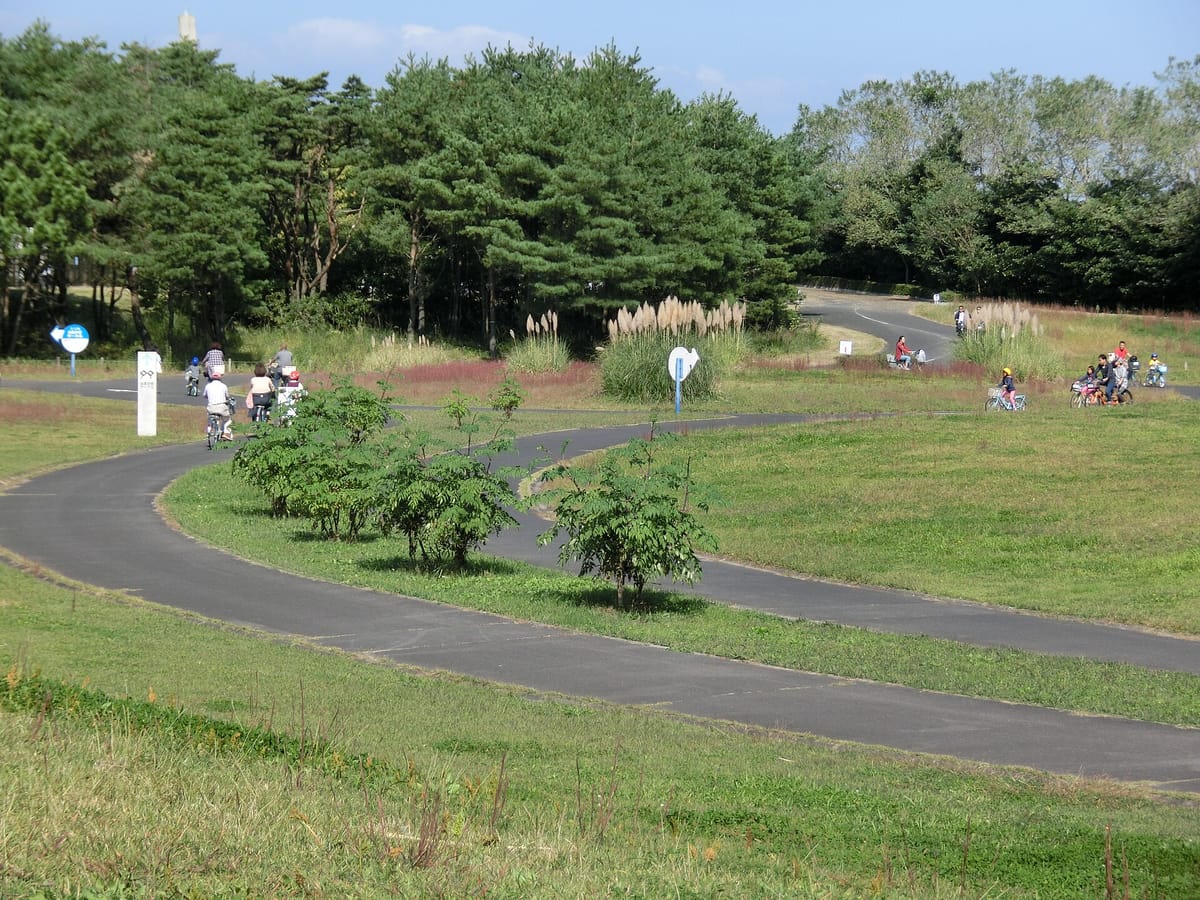
Distances are long, so plan how you will move. Rental bicycles run on nearly eleven kilometres of dedicated cycling paths, and the Seaside Train, a road train on tyres, loops round the park with stops at the main areas.
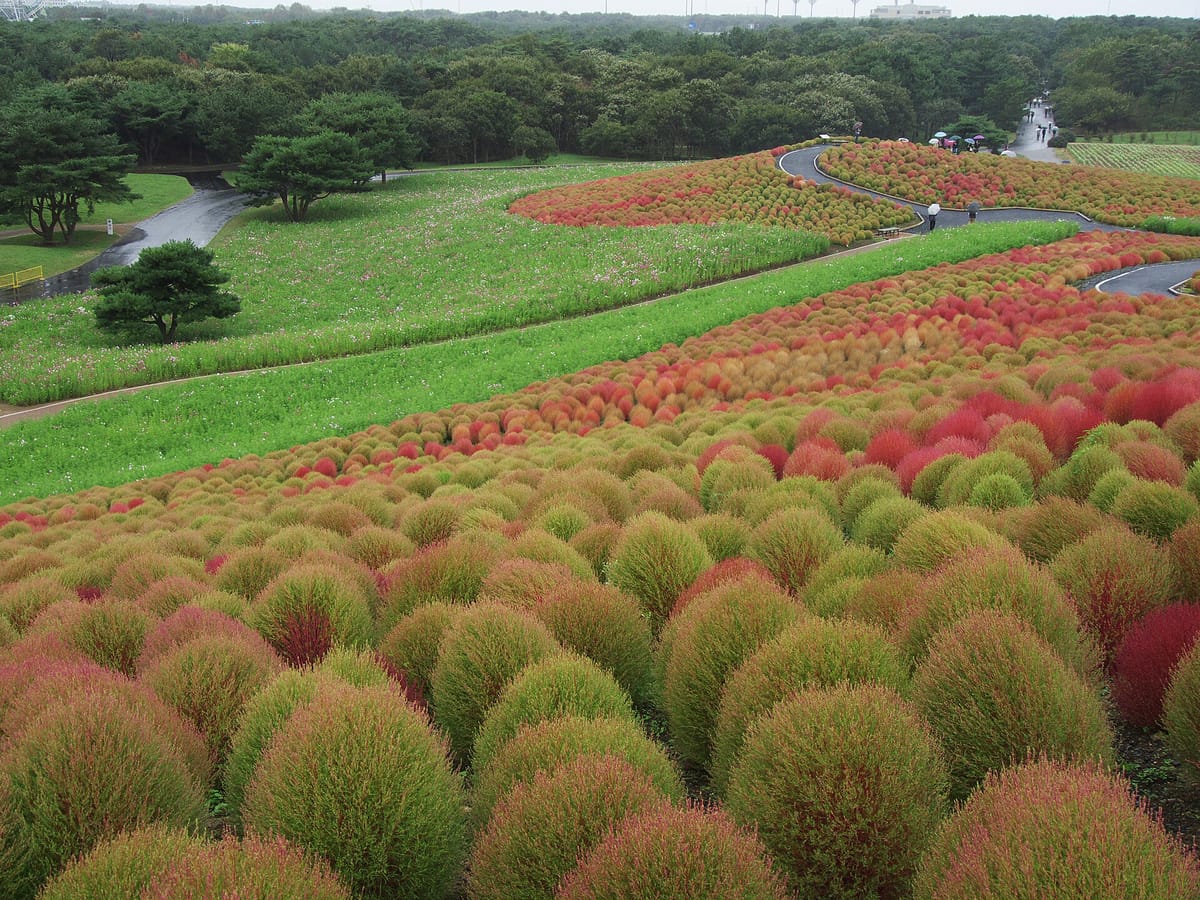
- Miharashi no Oka: the hill of nemophila in spring and kochia in autumn.
- Suisen Garden: daffodils in the woods from early spring.
- Tulip gardens: colourful beds around April.
- Dune Garden: native coastal plants and a quiet walk.
- Pleasure Garden: the amusement park and its Ferris wheel.
- Cycling paths: about eleven kilometres of bike-only routes.
- Seaside Train: the road train that circles the park.
Words on the signs and flower boards
Flower names at the park are mostly in katakana, since many of the plants are not native to Japan, while the place names use kanji or hiragana. The most important sign is 立入禁止, no entry, which marks the flower beds and fenced areas you must not step into, even for a photo.
The table below lists the words you will see on the way there and in the park.
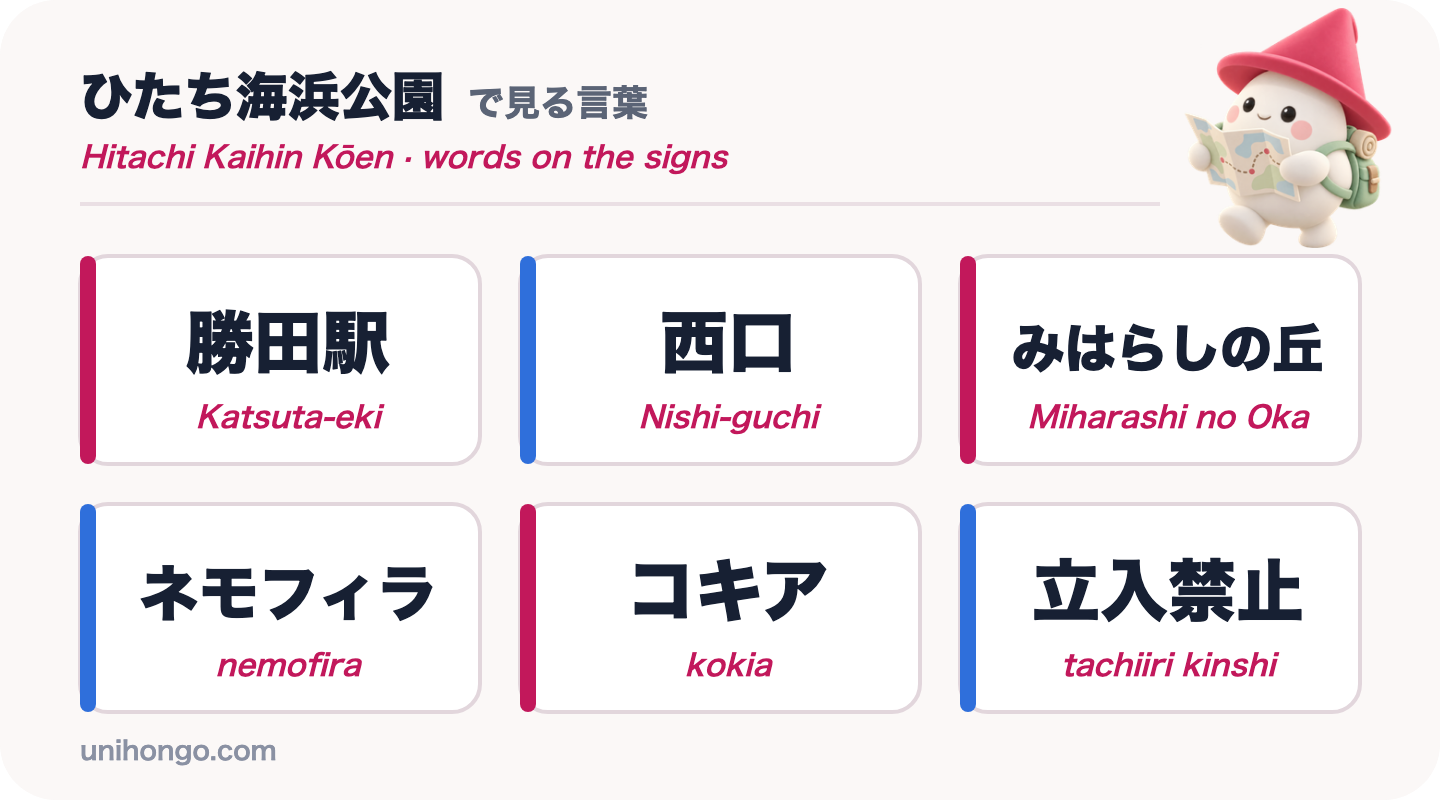
| Word | Reading | Meaning |
|---|---|---|
| 勝田駅 | Katsuta-eki | The JR station for the park |
| 東口 | higashi-guchi | East exit, where the buses leave |
| 西口 | Nishi-guchi | The West Gate, the main entrance |
| 南口 | Minami-guchi | The South Gate |
| みはらしの丘 | Miharashi no Oka | The hill with a view |
| ネモフィラ | nemofira | Nemophila, the blue spring flower |
| コキア | kokia | Kochia, the bushes that turn red |
| 見頃 | migoro | Best time to see flowers |
| 入園券 | nyūenken | Admission ticket for the park |
| サイクリングコース | saikuringu kōsu | Cycling path |
| 立入禁止 | tachiiri kinshi | No entry |
Japanese for tickets, bicycles and bloom questions
You buy admission at the gate, and bicycles and the Seaside Train at their own counters inside. At bicycle rental, staff will ask how long you want it, how many bikes, and may ask you to choose a type or size; answer with a number and the counter for hours, jikan. Remember that bicycles must stay on the cycling paths and cannot be ridden on the footpaths.
Because the flowers change week by week, the most useful question of all is whether they are at their best. Staff and the boards at the gate will tell you, often with the words migoro, ima ga migoro, or mō sukoshi, a little longer.
| Japanese | Romaji | Meaning |
|---|---|---|
| 入園券を大人二枚お願いします。 | Nyūenken o otona nimai onegai shimasu. | Two adult admission tickets, please. |
| ネモフィラは今、見頃ですか。 | Nemofira wa ima, migoro desu ka. | Are the nemophila at their best now? |
| 自転車を三時間借りたいんですが。 | Jitensha o sanjikan karitai n desu ga. | I would like to rent a bicycle for three hours. |
| 自転車はどこで返せばいいですか。 | Jitensha wa doko de kaeseba ii desu ka. | Where should I return the bicycle? |
| シーサイドトレインの乗り場はどこですか。 | Shīsaido Torein no noriba wa doko desu ka. | Where do I board the Seaside Train? |
| みはらしの丘はどちらですか。 | Miharashi no Oka wa dochira desu ka. | Which way is Miharashi no Oka? |
| 帰りのバスは何時までありますか。 | Kaeri no basu wa nanji made arimasu ka. | Until what time are there buses back? |
Park rules, timing and practical tips
The park publishes a clear list of requests for visitors. Following them keeps the flowers looking the way they do in the photos.
- Do not step into the flower beds or any fenced or 立入禁止 area, even for a photo.
- Drones are not allowed in the park, and do not pick plants.
- Ride bicycles only on the cycling paths, and walk on the footpaths.
- Take your rubbish home with you.
- At the nemophila and kochia peaks, arrive at opening time; buses from Katsuta and the hill itself are very crowded by late morning, especially at weekends and in Golden Week.
- Outside the busy seasons the park closes on Tuesdays, so check the calendar before you go.
- The hill is exposed to sun and sea wind; bring a hat, water and a layer.
Practise the bus question before you go
At Katsuta Station, the question is which stand, noriba, the bus to the park leaves from. The answer is a number, niban, stand two, and the ride time follows. Practise the four lines below until the question comes out smoothly, and listen for the counter -ban, number, which you will hear at every bus terminal in Japan.
Then practise with a partner who answers back. In Unihongo, choose the Directions topic and ask your AI Sensei to play the bus staff at Katsuta, or the Catch the Right Train mission to rehearse the Jōban Line leg. One spoken run-through makes the real day much easier.
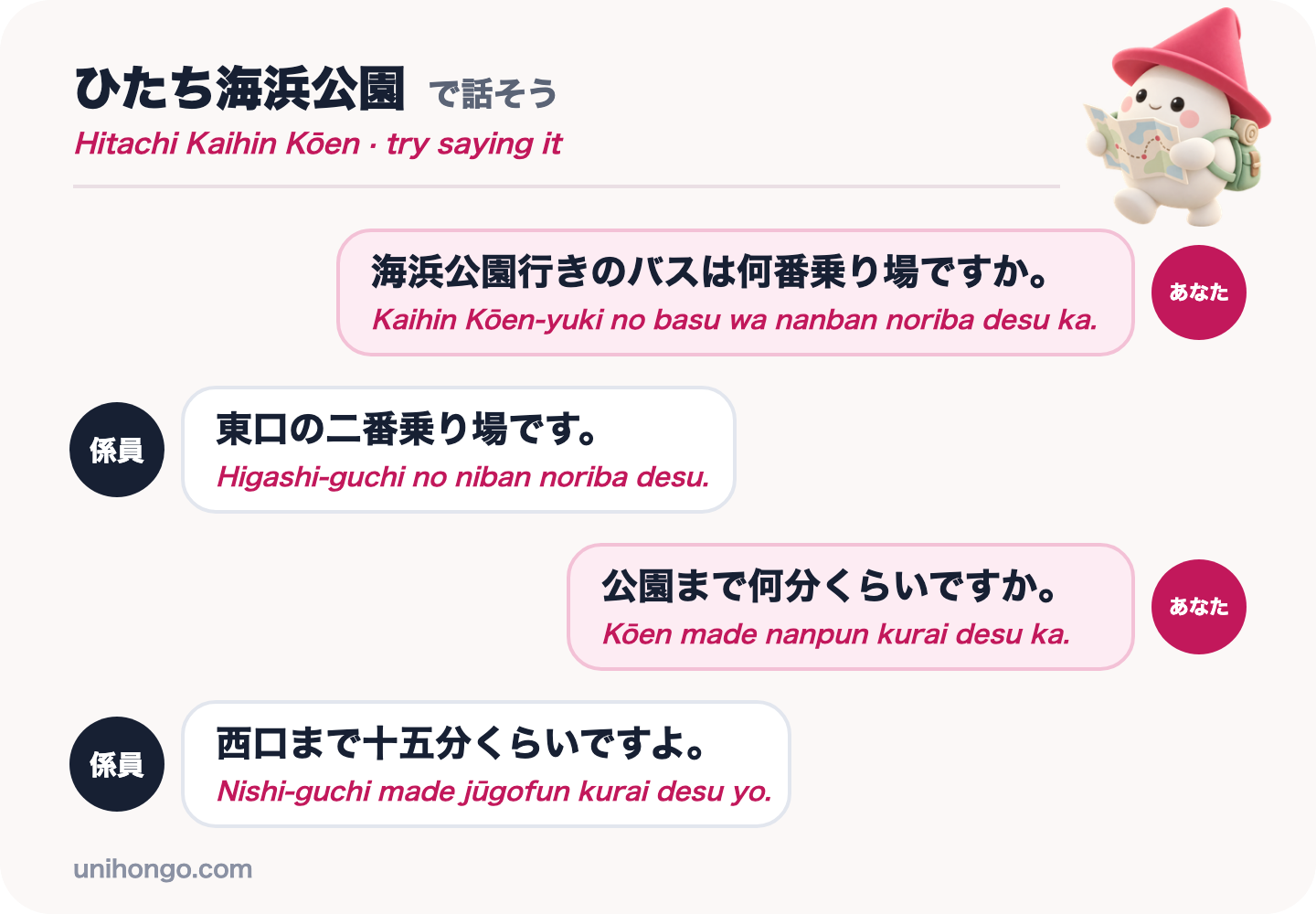
| Japanese | Romaji | Meaning |
|---|---|---|
| 海浜公園行きのバスは何番乗り場ですか。 | Kaihin Kōen-yuki no basu wa nanban noriba desu ka. | Which stand does the bus to the Seaside Park leave from? |
| 東口の二番乗り場です。 | Higashi-guchi no niban noriba desu. | Stand 2 at the east exit. |
| 公園まで何分くらいですか。 | Kōen made nanpun kurai desu ka. | About how many minutes to the park? |
| 西口まで十五分くらいですよ。 | Nishi-guchi made jūgofun kurai desu yo. | About fifteen minutes to the West Gate. |
Official information
Bloom reports, the forecast for the kochia colour, seasonal charges, opening days and access details are published by the park, which updates its flower information through each season. Check it before you travel, as peaks shift with the weather.